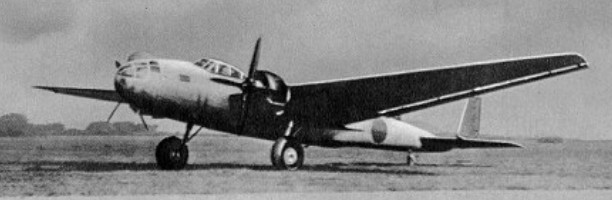
Mitsubishi G3M / Ka-15 / L3Y

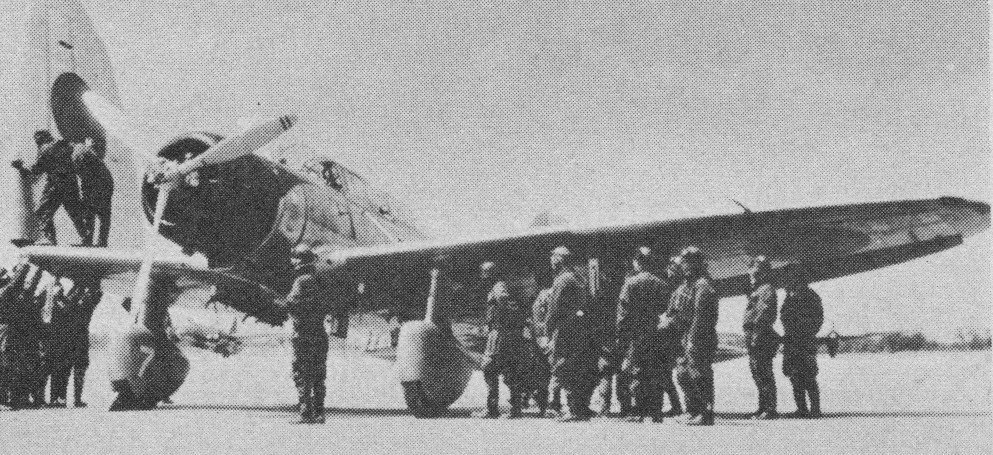
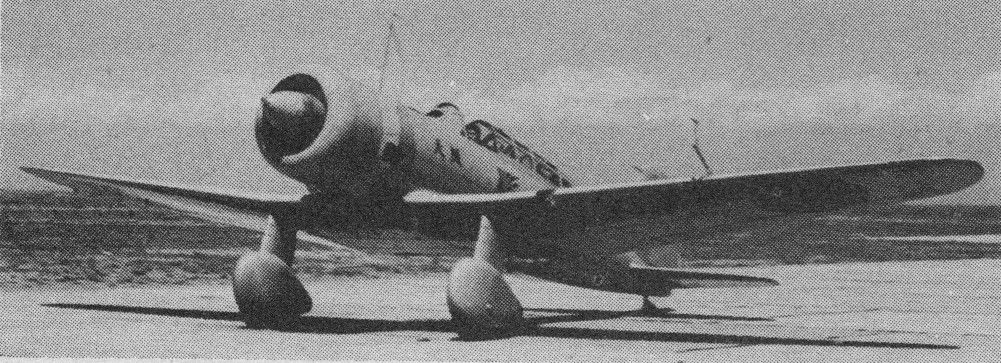
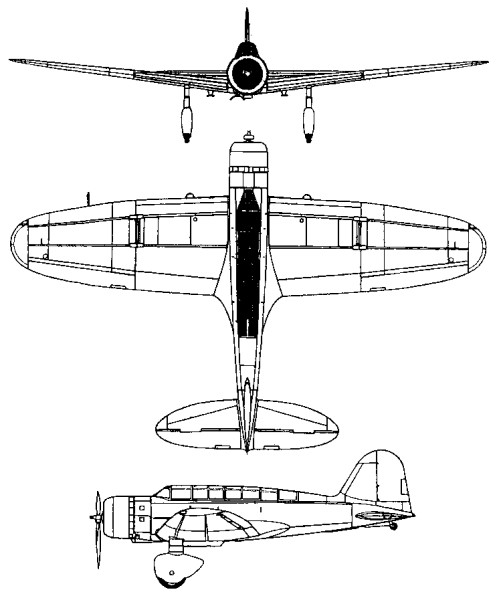
In response to a 1935 Japanese naval requirement for a landbased twin-engine reconnaissance aircraft, Mitsubishi flew the first Ka-15 prototype, an aircraft which possessed a design potential that allowed development as a long-range medium bomber. Following successful flight trials, the aircraft entered production in June 1936 as the Navy Type 96 Attack Bomber Model 11 (Mitsubishi G3M1).

Mitsubishi G3M Article

In its original prototype form the Ka 15, designed by Kiro Honjo, made its first flight in July 1935. Two 750 hp Hiro Type 91 12-cylinder V type engines were mounted on the mid set wings, which were essentially the same as those of the Ka 9.
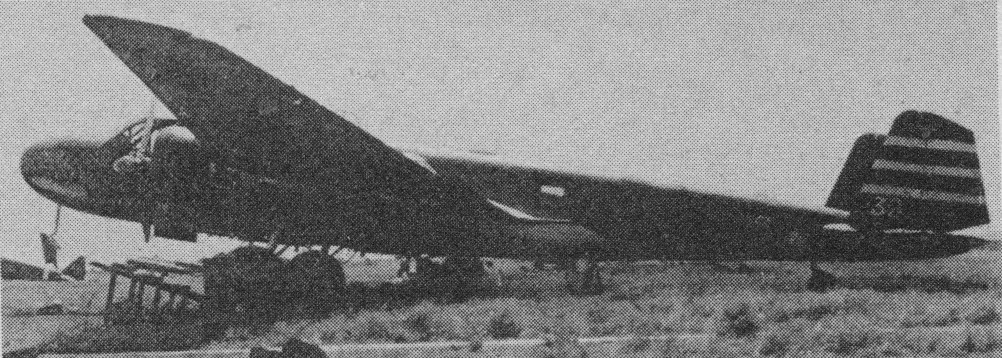
Twenty more prototype/preproduction Ka 15s were completed, of which three had Hiro engines; the remaining 17 were powered by 830 hp or 910-hp Mitsubishi Kinsei 2 or 3 14 cylinder two-row radial engines, giving enhanced performance. These aircraft had the designation G3M1, and unofficially they were subdivided into G3M1a (the four with Hiro engines and solid noses), G3M1b (two with Kinseis and solid noses), and G3M1c (the other 15 Kinsei powered aircraft, which had a transparent bombing station in the nose). Twelve were used for service trials, but before these had been completed a production batch of 34 Kinsei 3 powered G3M1s, with modified cockpit windows, was authorized by the IJN. These had a crew of five, and could carry an 800 kg (1763 1b) torpedo beneath the fuselage; defensive armament consisted of two retractable dorsal turrets each containing one 7.7 mm (0.303 in) Type 92 machine gun, with another of these guns in a retractable ventral turret.
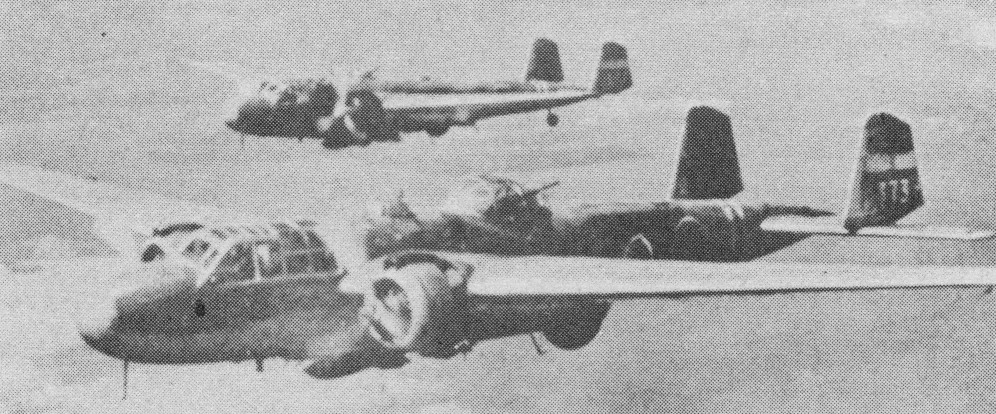
As the improved Kinsei 41 and 42 engine became available in 1937 a new version, the G3M2, started production and, with a total of 581 built by mid-1941, was the principal variant. With a top speed now increased to 374km/h, a bombload of up to 800kg carried externally and a defensive armament of three 7.7mm machine-guns, the G3M2 possessed a maximum range of 4380km.

It was built in two basic variants, the Model 21 and Model 22. The 21 had uprated Kinsei 41 or 42 engines of 1075 hp, increased fuel tankage and modified dorsal turrets; the 22 had 1075 hp Kinsei 45s (also fitted to some late¬production Model 21s), and a completely revised armament system that eliminated the retractable ventral and rear dorsal turrets, replacing the latter by a large turtleback enclosure housing a 20 mm (0.79 in) Type 99 cannon, and the former by a pair of blisters, one each side of the rear fuselage, each with single Type 92 gun. Between 1937 39, Mitsubishi built 343 Model 21s, following these in 1939 41 with 238 Model 22s.
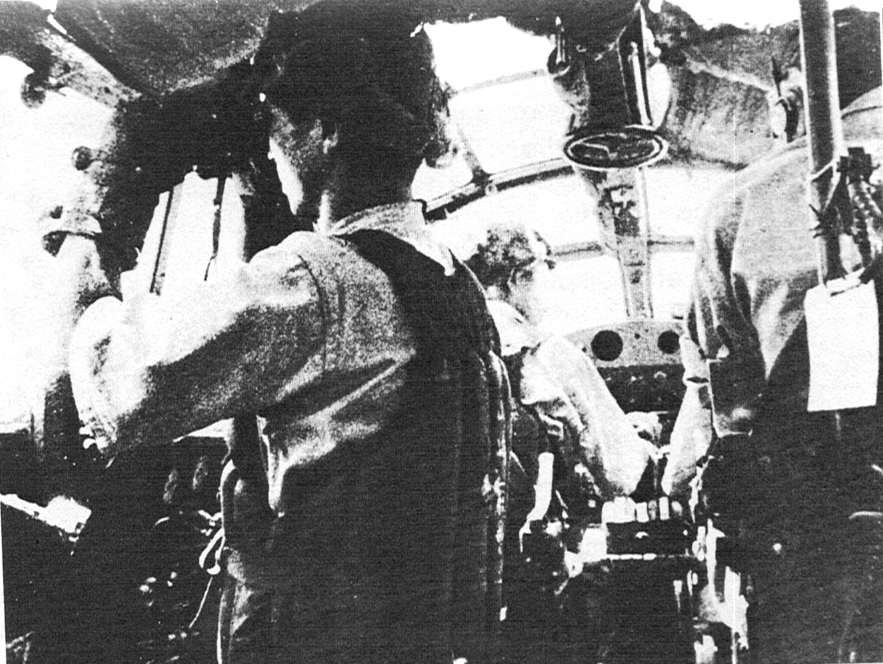
G3M2

Mitsubishi G3M2s were first flown in action by the Japanese navy’s Kanoya Kokutai in August 1937 in raids on Hangchow and Kwangteh in China. By 1940 four kokutais in China were equipped with a total of about 130 G3M2s, a number that grew to 204 by the date of Pearl Harbor with the deployment of forces against Wake Island, the Philippines and the Marianas. And it was a force of 60 G3M2s of the Genzan and Minoro Kokutais (with 26 Mitsubishi G4Mls of the Kanoya Kokutai) which, flying from bases in Indo-China, found and sank the British warships HMS Prince of Wales and HMS Repulse as they steamed without fighter protection off the Malayan coast on 10 December 1941. The type was known to the Allies as the ‘Nell’.
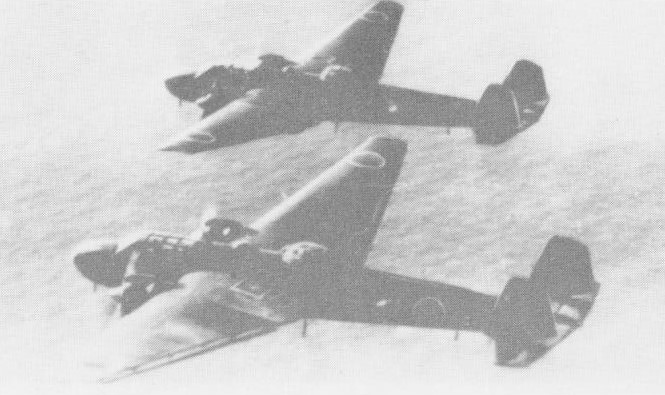
G3M2

When Mitsubishi production was then phased out in favour of the later G4M bomber, production of the G3M was carried on by the Koizumi factory of the Nakajima company, which built 412 G3M type bom-bers, of which a proportion were of a fourth model, the G3M3. These had Kinsei 51 radials of 1300 hp each, and a further increase in fuel tankage, extending the max¬imum range to 6230 km (3870 miles) com-pared with the 4380 km, (2720 miles) of the G3M2 Model 22.

At the time of Pearl Harbor, the backbone of Japan’s long range strike force consisted of just over 200 G3Ms (mostly G3M2s and G3M3s) and about 120 of the later G4M1s. The G3M (‘Nell’ under the Pacific system of codenarnes introduced by the Allies during the Second World War) had made its service debut in August 1937, with raids on Chinese mainland targets from bases on Kyushu (Omura) and Formosa (Taipei).

The G3M was used throughout the war, in most of the Pacific theatres, as was the G3M1 L, a prewar transport conversion with Kinsei 45 engines which took part in the invasion of Celebes. Wartime transport con¬versions were the L3Y1 Model 11 and L3Y2 Model 12 (both codenarned ‘Tina’), con¬verted from G3M1s and G3M2s respectively by the First Naval Air Arsenal at Kasurnigaura. These carried up to ten pas¬sengers, and had a single 7.7 mm (0.303 in) machine gun for defence.

Total production of the G3M series reached 1100, including the Kinsei 42 powered G3M2b, the transport G3M2d (L3Y2) and the G3M3 final bomber.

G3M 1
Engines: 2 x 678kW Kinsei 3
Maximum speed: 360km/h at 1975m

G3M2
Engines: 2 x Mitsubihi Kinsei 45, 1000 hp
Wingspan: 82 ft 0.25 in
Length: 53 ft 11.75 in
Height: 11 ft 11.75 in
Empty weight: 11,442 lb
Loaded weight: 17,637 lb
Max speed: 238 mph at 9,840 ft
Service ceiling: 29,890 ft
Amament: 1 x 20mm cannon, 2 x 7.7mm mg
Bombload: 2200 lb or 1 x 1760 lb torpedo
Crew: 7

G3M2 Model 22
Span: 25m (82ft 0.25in)
Length. 16.45 m (53 ft 11.75 in)
Gross weight: 8000 kg (176371b)
Maximum speed: 373 km/h (232 mph)

G3M3
Engines: 2 x Mitsubishi MK8 Kinsei-51, 975kW
Max take-off weight: 8000 kg / 17637 lb
Empty weight: 5250 kg / 11574 lb
Wingspan: 25.0 m / 82 ft 0 in
Length: 16.5 m / 54 ft 2 in
Height: 3.7 m / 12 ft 2 in
Wing area: 75.1 sq.m / 808.37 sq ft
Max. speed: 415 km/h / 258 mph at 6000m
Cruise speed: 295 km/h / 183 mph
Ceiling: 10300 m / 33800 ft
Range w/max.fuel: 6200 km / 3853 miles
Armament: 1 x 20mm cannon, 4 x 7.7mm machine-guns, 800kg of bombs
Crew: 5
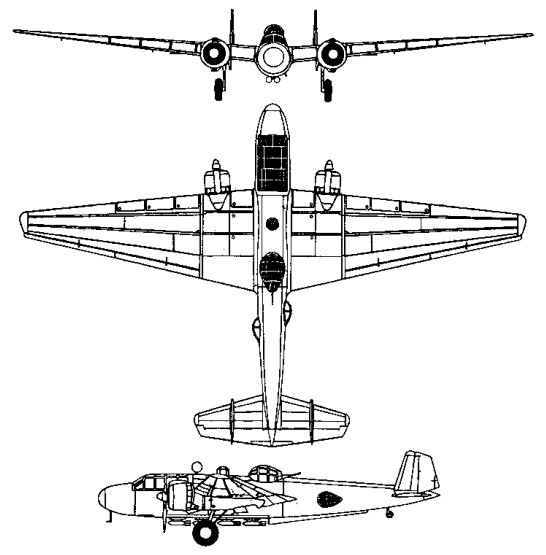
Mitsubishi G3M NELL

Mitsubishi Ka-16 / B5M / Type 97

With the company designation Mitsubishi Ka-16, this cantilever low-wing monoplane, carrier-based torpedo-bomber flew in prototype form as the Navy 10-Shi Experimental Attacker in 1936.

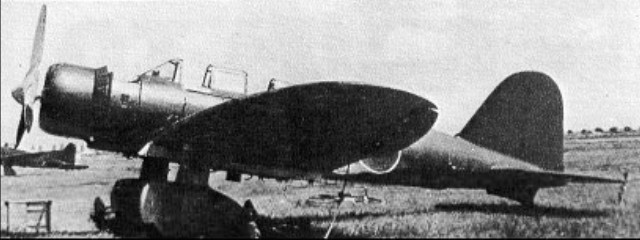
A three-seater, it had a long glazed crew canopy and was distinguished easily from its Nakajima B5N rival by having fixed cantilever landing gear with spat-type wheel fairings. The wings outboard of the landing gear could be folded upwards for carrier stowage.

Mitsubishi B5M1

As a precaution against problems with the B5N, this Mitsubishi B5M1 design was placed in production and went into service as the Navy Type 97 Carrier Attack Bomber Model 2, gaining initially the Allied codename ‘Mabel’, later changed to ‘Kate 61’.

At least 125 had been delivered when the obvious success of the B5N brought production to a halt. The B5M1 saw some action from land bases in the South Pacific before being relegated to training and liaison duties.

B5M1
Engine: 746kW Mitsubishi Kinsei 43
Wingspan: 15.3 m / 50 ft 2 in
Length: 10.23 m / 33 ft 7 in
Height: 3.12 m / 10 ft 3 in
Wing area: 37.95 sq.m / 408.49 sq ft
Max take-off weight: 4000 kg / 8819 lb
Max. speed: 379 km/h / 236 mph
Range: 2187 km / 1359 miles
Armament: one 7.7mm machine-gun, 800kg torpedo or 800 kg bombs
Crew: 3

Mitsubishi B5M MABEL

Mitsubishi Ka-14 / A5M / Type 96 / Ki-18 / Ki-33

Ka-14

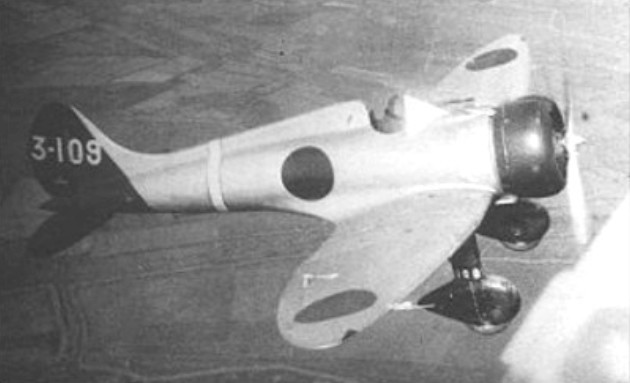
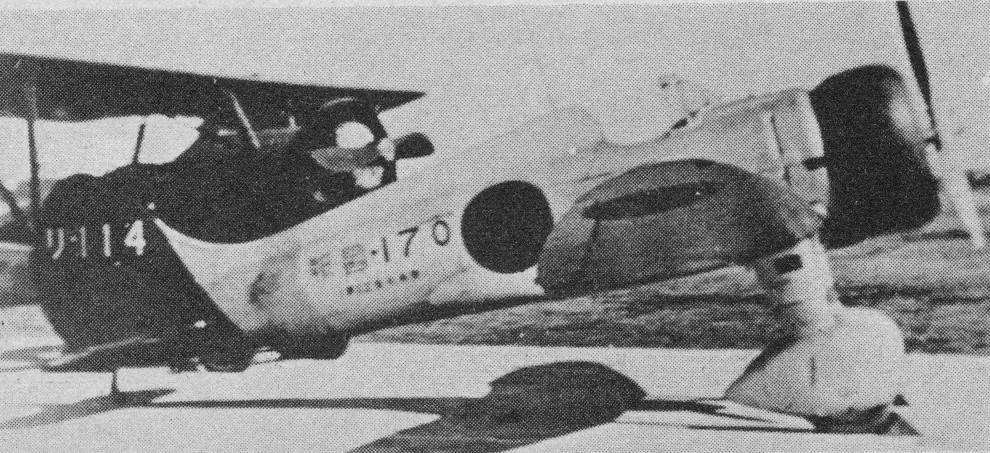
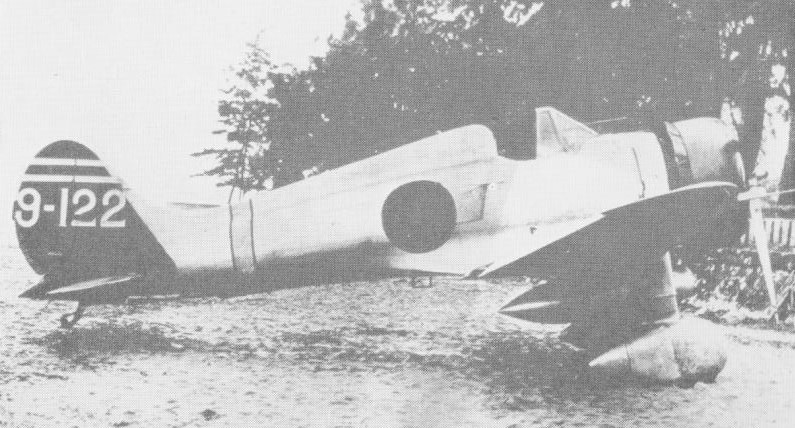
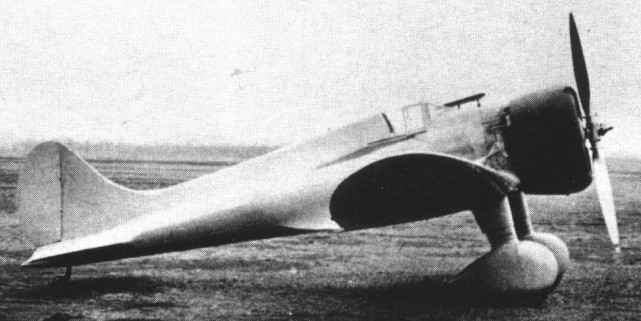
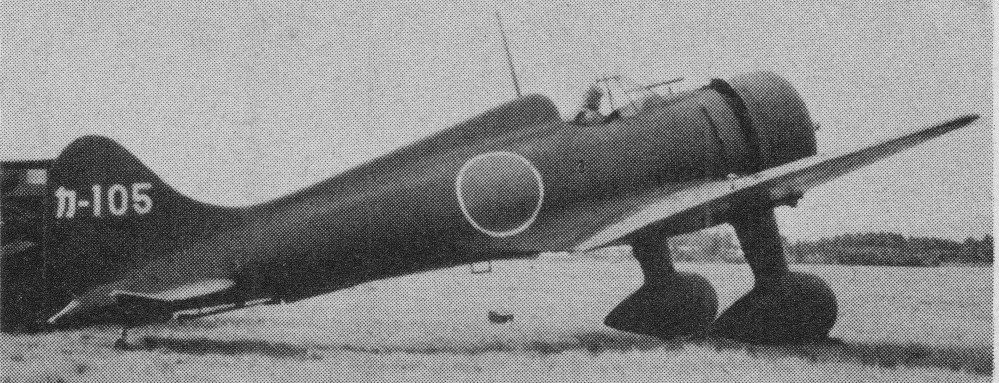
Among several 9-Shi requirements, in February 1934, the Imperial Navy issued an outline specification for a single-seat fighter. Carrier compatibility was not demanded, it being assumed that accommodating the dictates of deck use from the outset would inhibit the design team in achieving an advance in the state of the fighter design art although it was self-evident that the service would have no use for a fighter incapable of shipboard operation. In view of his experience with the earlier 7-Shi fighter, design responsibility was assigned to Jiro Horikoshi who created an all-metal semi-monocoque stressed-skin monoplane of inverted gull form designated Ka-14. Powered by a 550 hp Nakajima Kotobuki (Congratulation) 5 nine-cylinder radial and carrying two 7,7-mm guns, the first Ka-l4 was flown on 4 February 1935. Latent doubts concerning the wing gulling had, meanwhile, led to elimination of this feature from the wing of the second prototype Ka-14 which also embodied split flaps and switched to a 560 hp Kotobuki 3 engine. This prototype was to provide the basis for the series production A5M1 (Type 96) fighter, the first Ka-14 being fitted with a close-fitting, long-chord cowling as part of a drag reduction programme. An engine change saw the 585 hp Kotobuki 2 installed in the A5M1.

An Imperial Japanese Navy specification of 1934 for a single-seat fighter with a maximum speed of 350km/h then seemed an almost unattainable target. Mitsubishi’s Ka-14 prototype was designed to this requirement, and flown for the first time on 4 February 1935. It demonstrated a top speed of 450km/h in early trials but had some aerodynamic shortcomings. The inverted gull-wing of this aircraft was replaced by a conventional low-set monoplane wing in the second prototype which, with a 436kW Nakajima Kotobuki 2-KAI-1 radial engine, was ordered into production as the Navy Type 96 Carrier Fighter Model 1 (Mitsubishi A5M1).

The generally similar A5M2a which followed in 1937, powered by the 455kW Kotobuki 2-KAI-3 engine, and the 1937 A5M2b with the 477kW Kotobuki 3 engine, were regarded as the Japanese navy’s most important fighter aircraft during the Sino-Japanese War. The A5M2b experimenting with an enclosed cockpit position which, in service, did not find favour and was omitted from subsequent production models.

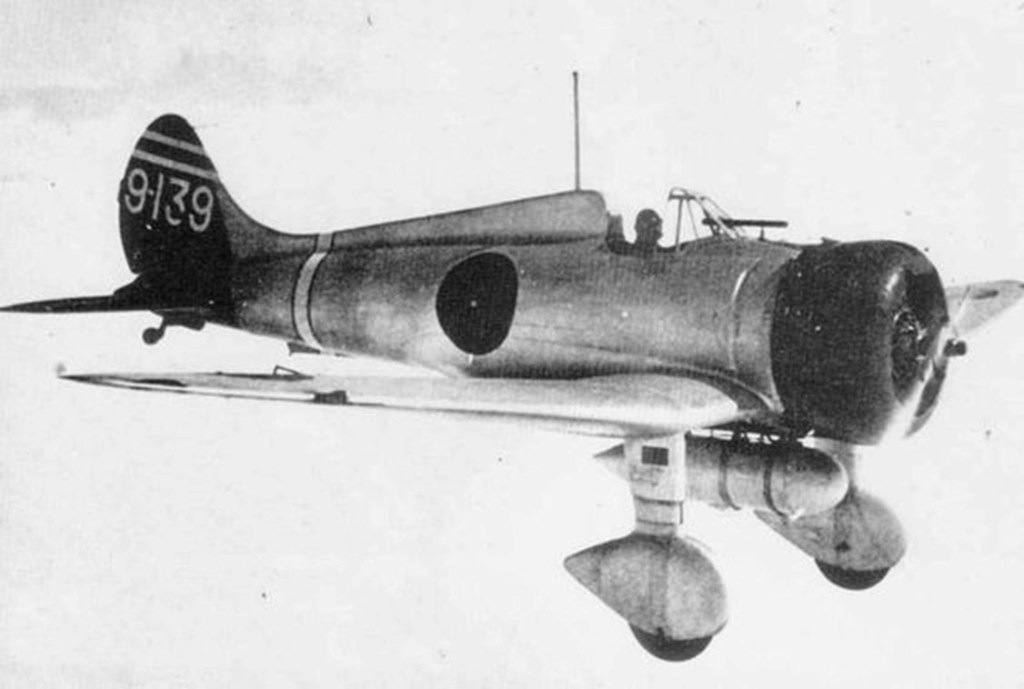
Two experimental A5M3 aircraft were flown with the 690 hp Hispano-Suiza 12Xcrs engine, but the final and major production version was the A5M4 which was the version standard at the time of Pearl Harbour, built also as the A5M4-K tandem two-seat trainer.

A5M4
Mitsubishi A5M4 Type 96 fighter

All versions of the A5M were allocated the Allied codename ‘Claude’. ‘Sandy’ was actually the code for a version of Claude with nothched wing roots, a design feature of the original 9-shi protype. When production ended a total of 788 had been built by Mitsubishi, including prototypes; a further 303 were built by Watanabe (39) and the Omura Naval Air Arsenal (264). The Japanese army had also shown interest in the A5M, resulting in the evaluation of a Ki-18 prototype generally similar to the Ka-14, but although fast this was considered to be lacking in manoeuvrability. Mitsubishi produced two re-engined and improved Ki-33 prototypes but they, too, were considered insufficiently manoeuvrable and no army production contract resulted. At the beginning of the Pacific war the A5M4 was in first-line use, but its performance was found inadequate to confront Allied fighters and by the summer of 1942 all had been transferred to second-line duties, many surviving A5M4 and A5M4-Ks being used in kamikaze attacks in the closing months of the war.

Ki-33

The acceptance of the Ka-14 9-Shi fighter by the Imperial Navy and evaluation of a modified prototype of this aircraft as the Ki-18 by the Imperial Army encouraged the formulation by the latter service during 1935 of a requirement for what was termed an “advanced fighter”. Kawasaki, Mitsubishi and Nakajima were each asked to produce prototypes of a fighter surpassing the performance of the Ki-18. Whereas both Kawasaki and Nakajima produced fighters of entirely new design to meet the requirement (as the Ki-28 and Ki-27 respectively), Mitsubishi, preoccupied with refining the Ka-14 for series production for the Navy, lacked sufficient design capacity to develop yet a further fighter. The Ki-18, with comparatively minor changes, was therefore resubmitted.

As the Ki-33, the modified fighter was powered by a Nakajima Ha-l-Ko engine rated at 745hp at 3700m and enclosed by a broader-chord cowling. An aft-sliding part-canopy was added, the aft fuselage decking was raised and the vertical tail surfaces were modified. Completed during the early summer of 1936, the Ki-33 was submitted to comparative trials with the Ki-27 and Ki-28 from November 1936 until the spring of 1937. It was found to offer marginally superior max speeds between 2500m and 3500m over the 167kg lighter Ki-27, but the Ki-33 revealed an inferior turn rate and climb to those of the Nakajima contender which was selected for series production.

Total production of the A5M series (Claude) was nearly 1000, of which 200 were completed by Sasebo and Watanabe.

Gallery

KA-14 (1st)
Engine: Nakajima Kotobuki (Congratulation) 5 nine-cylinder radial, 600 hp
Max speed, 276 mph (444 km/h) at 10,500 ft (3200 m)
Time to 16,405 ft (5 000 m), 5.9 min
Loaded weight, 3,087 lb (1373kg)
Span, 36ft l¼ in (11,00m)
Length: 25ft 2 in (7,67 m)
Height, l0 ft 8½ in (3,26 m)
Wing area, 172.23 sq ft (16,00 sq.m)
Armament: two 7,7-mm guns

KA-14 (2nd)
Engine: Kotobuki 3, 715 hp

A5M4
Engine: 1 x Nakajima Kotobuki-41, 530kW / 710 hp
Wingspan: 11 m / 36 ft 1 in
Length: 7.57 m / 24 ft 10 in
Height: 3.27 m / 10 ft 9 in
Wing area: 17.8 sq.m / 191.60 sq ft
Max take-off weight: 1671 kg / 3684 lb
Empty weight: 1216 kg / 2681 lb
Max speed: 430 km/h / 267 mph at 9840 ft
Service Ceiling: 9800 m / 32150 ft
Max Range: 1200 km / 746 miles
Crew: 1
Armament: 2 x 7.7mm machine-guns, 2 x 30-kg bombs

Ki-33
Engine: 1 x Nakajima Ha-l-Ko, 745hp at 3700m
Wingspan: 11.00 m / 36 ft 1 in
Length: 7.54 m / 24 ft 9 in
Height: 3.19 m / 10 ft 6 in
Wing area: 17.80 sq.m / 191.60 sq ft
Max take-off weight: 1462 kg / 3223 lb
Empty weight: 1132 kg / 2496 lb
Max. speed: 474 km/h / 295 mph

Mitsubishi Ka-14
Mitsubishi A5M
Mitsubishi Ki-33

Mitsubishi 2MR8 / Type 92

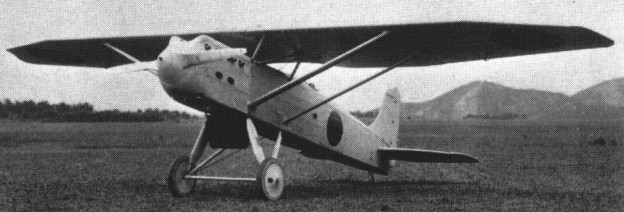
In 1927 Mitubishi enlisted the help of German designer Baumann to meet an Imperial Japanese Army requirement for a new reconnaissance aircraft. The results were the unsuccessful Mitsubishi 2MR1 Tobi, the 1MF2 Hayabusa and the 2MR7 short-range reconnaissance biplane of 1928.
In 1930, three 2MR8 parasol-wing reconnaissance monoplanes were built and tested successfully. Of mixed construction, they had fixed wide-track divided landing gear and were powered by a 354kW Mitsubishi Type 92 radial engine.

Accepted by the army, the 2MR8 went into service in 1932 as the Type 92 Reconnaissance Aircraft. Production terminated in 1933 with the 230th machine.

The Type 92 was normally armed with a fixed forward-firing 7.7mm machine-gun mounted above the wing centre-section, with single or twin guns of the same calibre on a ring mounting over the observer’s cockpit.

The Type 92 saw active service in Manchuria with the air battalions (later air wings) of the army’s Kanto Command Air Corps between 1933 and 1936. A civil version of the Type 92 was used as a survey aircraft by Japanese National Railways. Powered by a 298kW Mitsubishi A-5 engine, it was registered J-AARA and differed externally from the military aircraft in having a glazed canopy over the crew cockpits and spat-type main wheel fairings.

Engine: 354kW Mitsubishi Type 92 radial
Maximum speed: 220km/h
Wing span: 12.75m
Maximum take-off weight: 1770kg

Mitsubishi 2MR7

In 1927 Mitubishi enlisted the help of German designer Baumann to meet an Imperial Japanese Army requirement for a new reconnaissance aircraft. The results were the Mitsubishi 2MR1 Tobi, the 1MF2 Hayabusa, and the unsuccessful 2MR7 short-range reconnaissance biplane of 1928.

Mitsubishi 2MR / Type 10 / 2MRT / R-2.2 / R-4

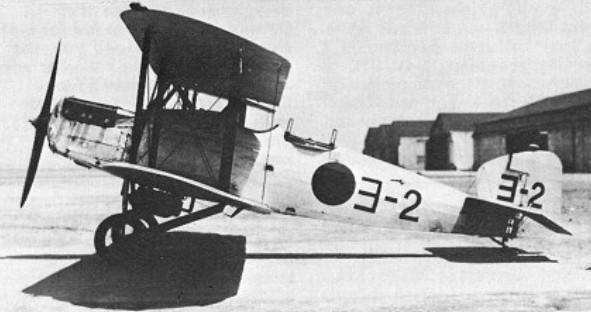
Designed by Herbert Smith, the first Mitsubishi 2MR two-seat carried-based reconnaissance biplane flew in January 1922. The type entered service as the Type 10 Carrier Reconnaissance Biplane and was built in a number of versions.

The 2MR1 had a 224kW Hispano-Suiza 8 engine with a frontal radiator, while the 2MR2 had twin underslung Lamblin radiators and redesigned tail surfaces. The 2MR4, which was the main production version, had some further revisions of the wing and tail unit, and other variants with minor changes were the 2MRT1, 2MRT2, 2MRT2A, 2MRT3 and 2MRT3A. Total production of all versions was 159, the last completed in 1930. After long carrier service, the 2MR was used as a trainer in the late 1930s.

The 2MR4 version spanned 12.04m, had a maximum take-off weight of 1320kg, and was armed with two fixed forward-firing 7.7mm machine-guns, with twin guns of the same calibre mounted over the observer’s cockpit, and could carry three 30kg bombs.

The R-2.2 and R-4 civil conversions had an enclosed cabin for two passengers replacing the rear cockpit, and a number of ex-army surplus 2MRs were sold on the civil market in the 1930s.

2MR4
Wingspan: 12.04 m / 39 ft 6 in
Max take-off weight: 1320 kg / 2910 lb

Mitsubishi 1MF10

1MF10

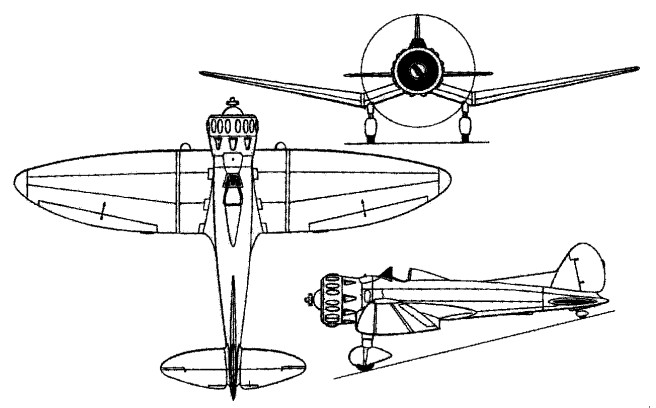
To meet a 7-Shi (1932) requirement for an advanced single-seat shipboard fighter to succeed the Nakajima A1N (Type 90), a Mitsubishi design team led by Jiro Horikoshi and assisted by Eitaro Sano, Konosuke Nakamura and Tomio Kubo initiated work on the first cantilever low-wing mono¬plane to be designed in Japan, the 1MF1O.

Featuring a duralumin monocoque fuselage and a fabric-skinned dur¬alumin wing, the 1MF10 was powered by a 710 hp Mitsubishi A-4 14-cylinder two-row radial and carried an armament of two 7,7-mm machine guns. The first of two prototypes was flown in March 1933, but was lost during the following July when the vertical tail surfaces disintegrated during a dive. The second prototype, which was completed shortly afterwards, differed essentially in having a new undercarriage, the three struts of each unit being replaced by single legs enclosed by trouser-type fairings. The 1MF10’s max speed proved to be 30 mph (48 km/h) less than that required by the Imperial Navy at 9,840 ft (3 000 m) and climbing performance was considered inadequate, and the fighter was rejected for series production, the second prototype being lost from a flat spin in June 1934.

Engine: Mitsubishi A-4 14-cylinder two-row radial, 710 hp
Max speed, 199 mph (320 kph) at 9,840 ft (3 000 m)
Time to 10,000 ft (3 050 m), 42 min
Endurance, 3.0 hrs
Empty weight, 2,700 lb (1225 kg)
Loaded weight, 3,479 lb (1578 kg)
Span, 32 ft 9 2/3 in (10,00 m)
Length, 22 ft 8 2/3 in (6,92 m)
Height, 10 ft 10 1/3 in (3,31 m)
Wing area, 190.53 sq ft (17,70 sq.m)
Armament: two 7,7-mm machine guns

Mitsubishi 1MF10

Mitsubishi 1MF2 Hayabusa

1MF2

In March 1927, the Imperial Army ordered Kawasaki, Nak¬ajima and Mitsubishi to investigate design of a fighter on a competitive basis to replace the ageing Ko-4 (Nieuport-Delage NiD 29). Designed by Shinshiro Nakata assisted by Jiro Horikoshi and Jiro Tanaka, the Mitsubishi contender in the contest, the 1MF2 Hayabusa (Falcon), was a parasol monoplane without wire bracing, emphasis being placed on ease of assembly and disassembly.

Powered by a 600 hp Mitsubishi Hispano-Suiza water-cooled V-12 engine, the first prototype Hayabusa was completed in May 1928. After manufacturer’s flight testing at Kaga¬migahara, both first and second prototypes were transferred to the Tokorozawa Army test centre where the Hayabusa recorded a maximum speed of 168 mph (270 km/h) at 9,840 ft (3 000 m), but during a diving test the Mitsubishi fighter broke up in the air after exceeding 248 mph (400 km/h). The Army suspended evaluation of the contending types, cancelling the programme and testing the prototypes to destruction. The Hayabusa was of mixed construction with wooden wing and metal fuselage, its armament being two 7.7mm guns.

Engine: Mitsubishi Hispano-Suiza water-cooled V-12, 600 hp
Max speed, 168 mph (270 km/h) at 9,840 ft (3 000 in)
Time to 16,405 ft (5 000 m), 11.3 min
Empty weight, 2,789 lb (1 265 kg)
Loaded weight, 3,968 lb (1 800 kg)
Span, 41 ft 4 7/8 in (12,62 m)
Length, 26 ft 10 7/8 in (8,20 m)
Height, 10 ft 11 7/8 in (3,35 m)
Wing area, 247.58 sq ft (23,00 sq.m)
Armament: two 7,7-mm machine guns

Mitsubishi 1MF2 Hayabusa