Mohawk Aircraft Corporation formed at Minneapolis in 1927, developing their Spurwing two-seat monoplane with a Warner Scarab engine and similar three-seater Redskin.
Inter-Wars
MNV MMV-1
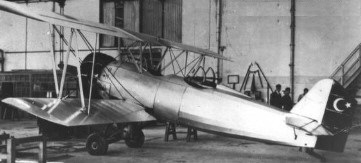
The aircraft designer Selahattin Resit Alan worked after studying in France at the Aircraft-Repair-Center, Eskisehir. Apart from his official activities at the center, he constructed, with the help of the carpenter master Mehmet and a small team, the two-seat training and reconnaissance aircraft MMV-1. The aircraft was ready for flight in October 1932. Except the fact that the aircraft was flown on 29 October 1935 for the ceremonies for the establishment of the Turkish Republic, there is no further indication it was ever flown again. Since the Ministry of Defence did not have any interest in the aircraft, Alan quit his position and began to work with Nuri Demirag in 1935.
Mitsubishi Kinsei / Mk8 / Ha-112 / Ha-33
The Mitsubishi Kinsei (金星, Venus) was a 14-cylinder, air-cooled, twin-row radial aircraft engine developed by Mitsubishi Heavy Industries in Japan in 1934 for the Imperial Japanese Navy. The Mitsubishi model designation for this engine was A8 while it was an experimental project, in service it was known as the MK8 “Kinsei” by the Navy. In the middle of the war the engine was adopted by Army so it got designation Ha-112. Unified designation code was Ha-33. Its basic design was based on the single-row, 9-cylinder air-cooled Pratt and Whitney R-1689 Hornet, but underwent numerous modifications and improvements.
First run in 1934, a total of 12,228 were built.
Variants
-3 – 910 hp
-41 – 1,075 hp
-42 – 1,075 hp
-43 – 1,000 hp, 1,080 hp
-44 – 1,000 hp, 1,075 hp
-45 – 1,075 hp
-46 – 1,070 hp
-48 – 1,080 hp
-51 – 1,300 hp
-53 – 1,300 hp
-54 – 1,200 hp, 1,300 hp
-62 – 1,560 hp
Applications:
Aichi D3A
Aichi E13A
Aichi E16A
Douglas L2D2-L2D5
Kawanishi H6K
Kawasaki Ki-96
Kawasaki Ki-100
Kawasaki Ki-102
Nakajima/Mahshu Ki-116
Mitsubishi A6M8
Mitsubishi B5M
Mitsubishi G3M
Mitsubishi Ki-46
Yokosuka D4Y3-D4Y4
Specifications:
Kinsei-44
Type: 14-cylinder air-cooled twin-row radial engine
Bore: 140 mm (5.5 in)
Stroke: 150 mm (5.9 in)
Displacement: 32.3 L (1,970 cu in)
Length: 1,646 mm (64.8 in)
Diameter: 1,218 mm (48.0 in)
Dry weight: 545 kg (1,202 lb)
Valvetrain: Overhead valve, one inlet and one exhaust valve per cylinder, pushrod operated.
Supercharger: Centrifugal, single speed.
Oil system: Triple section pump, one pressure pump, two scavenge pumps.
Cooling system: Air-cooled
Reduction gear: Planetary gear, 0.7:1 ratio.
Power output: 1,075 hp (802 kW) at 2,500 rpm at 2,000 m (6,560 ft) maximum.
Specific power: 0.56 hp/cu in (24.8 kW/L)
Compression ratio: 6.6:1
Power-to-weight ratio: 0.9 hp/lb (1.5 kW/kg)
Mitsubishi Zuisei / Ha-102 / Ha-26 / Ha-31
The Mitsubishi Zuisei (瑞星, Holy Star) was a 14-cylinder, supercharged, air-cooled, two-row radial engine. It was one of the smallest 14-cyl. engines in the world and the smallest diameter Japanese engine. The Mitsubishi model designation for this engine was A14 while it was an experimental project, in service it was known as the MK2, followed by the revision code letter, and known as the Ha-26 & Ha-102 by the Army and “Zuisei” by the Navy. Unified designation code was HA-31.
First run in 1931, the MK2A Zuisei engine had a 140 mm (5.5 in) bore and 130 mm (5.12 in) stroke for a displacement of 28L (1,710ci) and a nominal power rating of 805 kW (1080 hp) for takeoff and 787 kW (1055 hp) at 2800 meters (9185 feet).
Mitsubishi used the standard designation system to identify this engine while it was under development. The MK2 designation starts with the Manufacturer’s assigned identification letter, in this case, “M” for Mitsubishi, followed by a letter that identifies the engine arrangement, in this case “K” for air-cooled, and then the sequentially assigned design number, in this case “2” for the second design. Revisions to the engine are identified by the letter following the preceding designation, with letter “A” being the original, or first, version.
Mitsubishi also had a custom to name its engines with a short two syllable name that references objects found in the sky. The naming sequence started with this engine, the MK2 Zuisei “Holy star”, and was followed in order by the MK4 Kinsei “Venus” and the MK8 Kasei “Mars”.
A total of 11,903 were built.
Variants:
MK2A Zuisei 11
875 horsepower (652 kW), 2540 rpm at takeoff,
925 horsepower (690 kW), 2450 rpm at 1,800 metres (5,900 ft)
MK2B Zuisei 12
780 horsepower (580 kW), 2540 rpm at take-off,
875 horsepower (652 kW) 2540 rpm at 3,600 metres (11,800 ft)
MK2C Zuisei 13
1,080 horsepower (810 kW), 2700 rpm at take-off,
950 horsepower (710 kW) 2600 rpm at 6,000 metres (20,000 ft)
MK2C Zuisei 14 Ha-26-I
850 horsepower (630 kW), 2650 rpm at take-off,
900 horsepower (670 kW) 2650 rpm at 3,500 metres (11,500 ft)
MK2C Zuisei 15 Ha-26-II
940 horsepower (700 kW), 2650 rpm at take-off,
950 horsepower (710 kW) 2650 rpm at 6,000 metres (20,000 ft)
MK2D Zuisei 21 Ha-102
1,080 horsepower (810 kW), 2700 rpm at take-off,
1,050 horsepower (780 kW) 2700 rpm at 2,800 metres (9,200 ft),
950 horsepower (710 kW) 2700 rpm at 5,800 metres (19,000 ft)
Applications:
Mitsubishi A6M (prototype)
Kawanishi E7K
Mitsubishi F1M
Mitsubishi G5M1
Kawasaki Ki-45
Mitsubishi Ki-46
Mitsubishi Ki-57
Kokusai Ki-105
Specifications:
MK2A Zuisei 11
Type: 14-cylinder, air-cooled, supercharged, two-row radial piston engine
Bore: 140 mm (5.5 in)
Stroke: 130 mm (5.1 in)
Displacement: 28.0 L (1,710 cu.in)
Diameter: 1,118 mm (44.0 in)
Dry weight: 540 kg (1,190 lb)
Valvetrain: pushrod operated, Two overhead valves per cylinder
Supercharger: centrifugal single stage single speed
Fuel type: 87 octane rating gasoline
Cooling system: air-cooled
Compression ratio: 6.5
Mitsubishi Ka-18
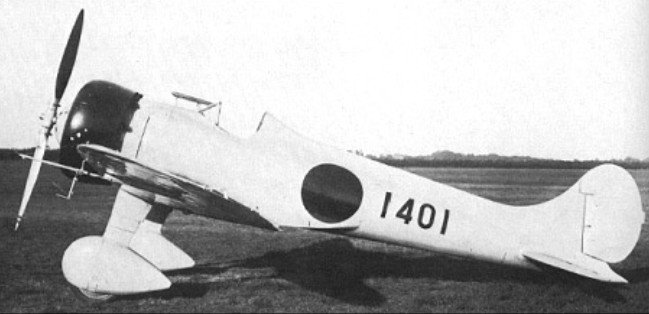
As soon as the Imperial Navy expressed its satisfaction with the performance of the Ka-14, the Imperial Army placed a contract with Mitsubishi for a modified example funda¬mentally similar to the second prototype for evaluation as the Ki-18. Powered by a similar Kotobuki 5 to that of the first Ka¬14, the Ki-l8 introduced a longer-chord engine cowling, an enlarged rudder and larger mainwheels and spats. Tested throughout the autumn and winter of 1935, the Ki-18 carried the standard twin 7,7-mm gun armament, but was considered insufficiently agile by conservative Army test pilots, failing to gain favour. Nevertheless, the Ki-18 promoted Army accep¬tance of the coming demise of the biplane as a fighter configuration, resulting in the framing of a requirement for what was termed an “advanced fighter”.
Engine: Kotobuki 5
Max speed, 276 mph (445 km/h) at 10,005 ft (3050 m)
Time to 16,405 ft (5000 m), 6.43 min
Empty weight, 2,447 lb (1110 kg)
Loaded weight, 3,1351b (1422kg)
Span, 36ft l¼ in (l1,00m)
Length, 25 ft 1 1/5 in (7,65 m)
Height, 10 ft 4 in (3,15 m)
Wing area, 191.6 sq ft (17,80 sq.m)
Armament: twin 7,7-mm gun.
Mitsubishi Ki-15 / C5M
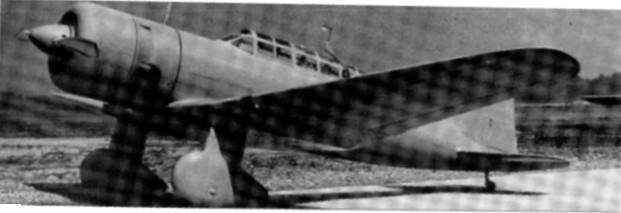
In July 1935 the Imperial Japanese Army drew up its specification for a new two-seat reconnaissance aircraft, and Mitsubishi responded with a can¬tilever low-wing monoplane, the Mit¬subishi Ki-15.
The Ki 15, or Army Type 97 Command Reconnaissance Aircraft, owed its inception to Lieutenant¬ Colonel Yuzo Fujita of the army air force, who collaborated closely in its design with the Mitsubishi engineers Kono, Kubo and Mizumo. It was among the first strategic reconnaissance aircraft to be adopted by any air force. Two prototypes, one military and one civil, were completed, the former making the type’s first flight in May 1936.
Shortly afterwards, the Asahi Shimbun newspaper group purchased the second prototype, which as the Karigane I (wild goose) made a historic flight from Tachikawa to Croydon, a distance of 15 356 km. (9542 miles) in April 1937 in a flying time of approximately 51¼ hours.
Service testing was completed without difficulty and the type was ordered into production under the official designation Army Type 97 Command Reconnaissance Plane Model 1. In May 1937, a year after the first flight, delivery of production aircraft to the army began.
The military Ki 15 was a clean, low wing monoplane, with a 640 hp Nakajima Ha 8 nine cylinder radial engine and a ‘trousered’ and spatted main undercarriage. The pilot and radio operator/observer (who also doubled up as the gunner) sat in tandem cockpits under a long greenhouse canopy. A single 7.7 mm (0.303 in) Type 89 machine gun formed the only defensive armament.
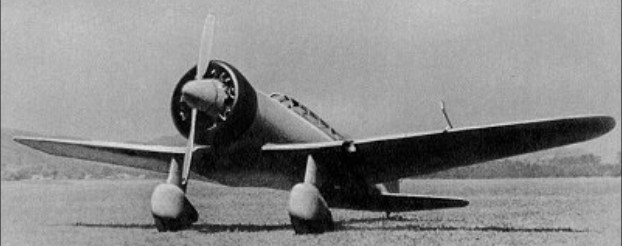
The army’s Ki-15-I had been received in time to make a significant impact at the beginning of the war with China. The Ki 15 I became operational during the second Sino Japanese war, and was joined in service in late 1939 and early 1940 by the Ki 15 II.
Plans had already been made to upgrade performance of the KI-15-I, this being achieved by installing the 671-kW (900-hp), smaller-diameter Mitsubishi Ha-26-I engine, its in¬corporation providing an opportunity to overcome what had been the major shortcoming of the type, a poor forward field of view past the large-diameter Nakajima engine. The improved version entered production for the army in September 1939 as the Ki¬-15-II, but before that the Japanese navy, impressed by the performance of this aircraft, ordered 20 examples of the Ki-15-II under the official designation Navy Type 98 Reconnaissance Plane Model 1, Mitsubishi designation C5M1 in 1938 (with 780 hp Mitsubishi Suisei 12 radials). The navy acquired two years later 30 C5M2 aircraft that were generally similar except for installation of the more powerful 708-kW (950-hp) Nakajima Sakae (Prosperity) 12 engine. These aircraft serving with two Sentais (air corps) of the naval air force.
The Ki 15 III, with the 1050 hp Ha 102 version, although capable of 530 km/h (329 mph), was itself surpassed by the more modern Mitsubishi Ki 46.
When production ended almost 500 of all versions had been built, the majority being in first-line service when the Pacific war started. Given the Allied codename ‘Babs’, the type was relegated to second-line roles in early 1943, but many survived to be used in kamikaze attacks at the war’s end.
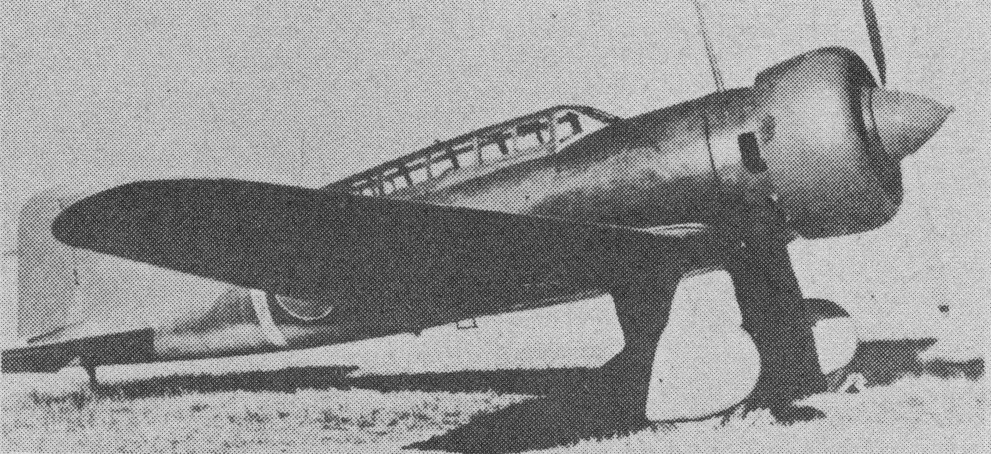
Mitsubishi built 439 in successive models between 1936 40.
Ki-15
Engine: Naka¬jima Ha 8, 640 hp.
Armament: one 7.7-mm (0.303-in) machine-gun
Crew: 2
Ki-l5-I
Powerplant: one 477-kW (640-hp) Nakajima Ha-S radial piston engine
Maximum speed 480 km/h (298 mph) at 4000 m (13,125 ft)
Cruising speed 320 km/h (199 mph) at 5000 m(16,405 ft)
Service ceiling 11400 m (37,400 ft)
Range 2400 km (1,491 miles)
Empty weight 1400 kg (3,086 lb)
Maximum take-off 2300 kg (5,071 lb)
Wingspan 12.00 m (39 ft 4.4 in)
Length 8.70 m (28 ft 6.5 in)
Height 3.35 m (11 ft 0in)
Wing area 20.36sq.m (219.16 sq ft)
Armament: one 7.7-mm (0.303-in) machine-gun
Crew: 2
Ki 15 II
Engine: Mitsubishi Ha 102, 850 hp.
Armament: one 7.7-mm (0.303-in) machine-gun
Crew: 2
Ki 15 III
Engine: Mitsubishi Ha 102, 1050 hp
Max speed: 530 km/h (329 mph)
Armament: one 7.7-mm (0.303-in) machine-gun
Crew: 2
C5M1
Engine: Mitsubishi Suisei 12, 780-hp
Armament: one 7.7-mm (0.303-in) machine-gun
Crew: 2
C5M2
Engine: Naka¬jima Sakae (Prosperity) 12, 708-kW (940-hp)
Span: 12m (39 ft 4 in)
Length: 8.70m (28 ft 7 in)
Gross weight: 2345 kg (5170 1b)
Maxi¬mum speed: 487 km/h (303 mph)
Armament: one 7.7-mm (0.303-in) machine-gun
Crew: 2
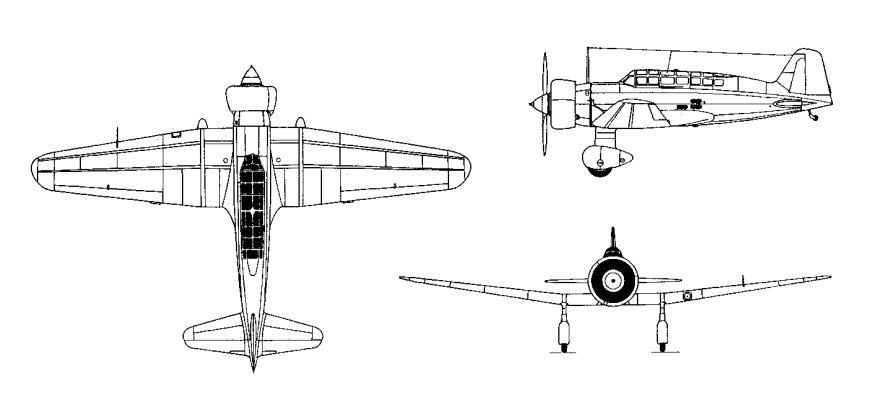
Mitsubishi Ka-8
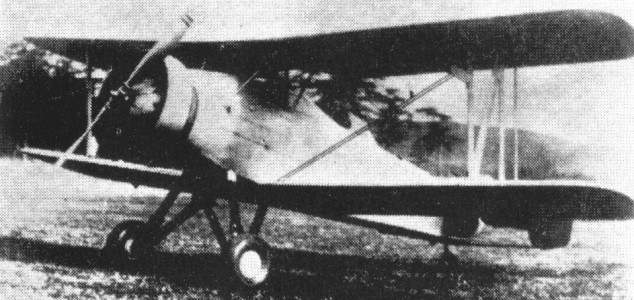
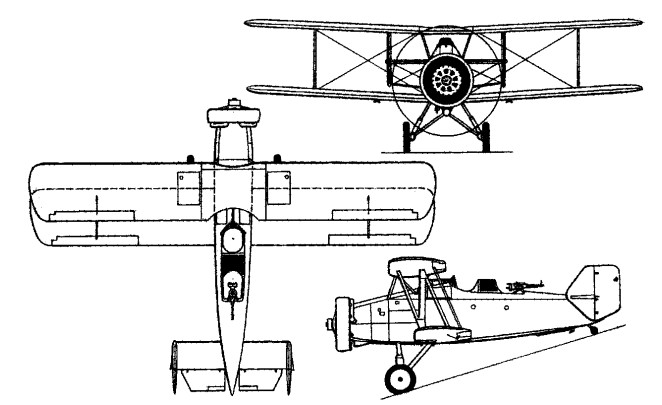
In 1933, the Imperial Navy, influenced by trends in Western Europe and the USA, issued both Mitsubishi and Nakajima with a request for proposals for a two-seat shipboard fighter. The Mitsubishi contender, the Ka-8 designed by Jojo Hattori who was assisted by Eitaro Sano and Konosuke Nakainura, was a single-bay equi-span staggered biplane of mixed con¬struction, the fabric-covered wings having duralumin spars and wooden ribs, and the similarly-covered fuselage being of steel tube. An unusual feature of the design was its use of twin endplate fins and rudders. Powered by a 580 hp Nakajima Jupiter II nine-cylinder radial, the Ka-8 carried an armament of two fixed forward-firing 7,7-mm guns and a similar weapon on a rotating mount in the rear cockpit. The first of two prototypes was completed in January 1934, both being delivered to the Navy during the early summer. However, the second prototype broke up in the air over Yokosuka airfield on 16 September, resulting in the suspension of the test programme and the subsequent abandonment of further development.
Engine: Nakajima Jupiter II nine-cylinder radial, 580 hp
Max speed, 178 mph (286 km/h) at 9,840 ft (3 000 m)
Empty weight, 2,542 lb (1153 kg)
Loaded weight, 3,748 lb (1700 kg)
Span, 32 ft 9 2/3 in (10,00 m)
Length, 24 ft 2 19/20 in (7,39 m)
Height, 11 ft 0 in (3,35 m)
Wing area, 279.87 sq ft (26,00 sq.m)
Armament: 3 x 7,7-mm mg
Mitsubishi Ki-2 / Type 93
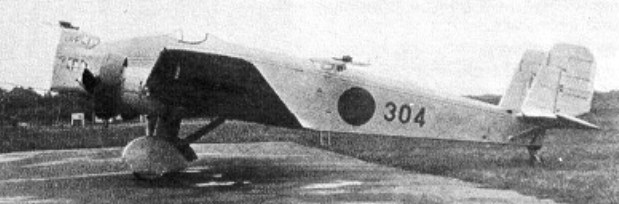
The Mitsubishi Ki-2 light bomber was developed from the Junkers K 37, an example of which had been imported from Germany in 1931 and donated by public subscription to the Japanese army.
A three-seat cantilever low-wing monoplane, powered by two 425kW Nakajima Kotobuki radials, the Ki-2 prototype flew for the first time in the spring of 1933. It was distinguished easily by its corrugated metal alloy decking and twin fins and rudders, and had fixed divided landing gear, with spat-type main wheel fairings often discarded on service aircraft.
Production of the initial version totalled 113, and the type went into operation against the Chinese with great success under the designation Ki-2-l or Army Type 93 Twin-engined Light Bomber.
The achievements of the Ki-2-l led to the development of the Ki-2-ll, or Army Type 93-2 Twin-engined Light Bomber, the Type 93 then being redesignated retrospectively as the Type 93-1. The Type 93-2 retained the same general configuration, but had a fully-enclosed manually-operated nose turret, an enclosed cockpit for the pilot, and main landing gear legs which semi-retracted forward into the engine nacelles.
The Ki-2-ll had two 559kW Ha-8 radials giving much improved overall performance with maximum speed increased to 283km/h. In total 61 Ki-2-l Is were built, and these joined the Ki-2-ls in operations against the Japanese. Both versions ended their flying careers in the training role.
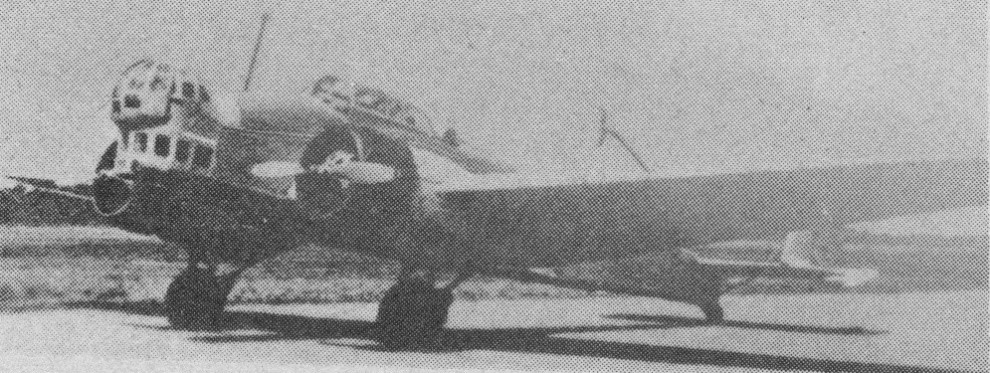
Col. MacCoy gave the Ki-2-ll Type 93 the code name ‘Loise’ after his wife although this was later changed to Louise’.
A civilianised version of the Ki-2-ll named Otori (Phoenix) was bought by the Asahi Shimbun newspaper and made a number of long-range record-breaking and ‘goodwill’ flights from 1936 to 1939. Registered J-BAAE, it covered the 4930km from Tachikawa military air base to Bangkok in 21 hours 36 minutes flying time in December 1936, and in early 1939 achieved a round-China flight of some 9300km.
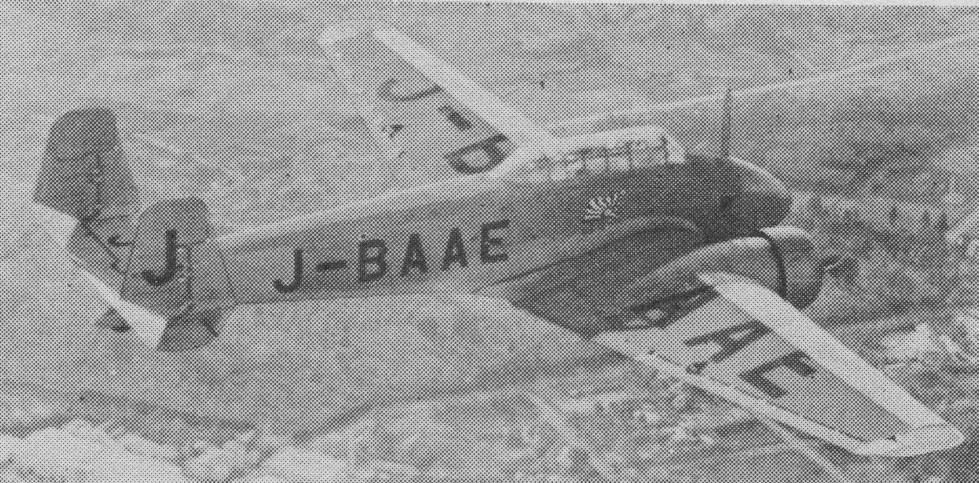
It was thought that the Ohtori was also in Nay service as a Type 96 bomber and coded ‘Eva’. The name was later simplified to ‘Eve’ to avoid phonetic difficulty. When the type was not met in combat, the name was ultimately dropped.
Ki-2-I / Army Type 93 / Type 93-1
Engine: 2 x Nakajima “Kotobuki”, 425kW
Span: 19.96 m (65 ft 6 in)
Length: 12.6 m (41 ft 4 in)
Max take-off weight: 4550 kg / 10031 lb
Max. speed: 225 km/h / 140 mph
Range: 900 km / 559 miles
Armament: 2 x 7.7mm machine-guns, 500kg of bombs
Crew: 3
Ki-2-ll / Army Type 93-2
Engine: 2 x 559kW Ha-8 radials
Span: 19.96 m (65 ft 6 in)
Length: 12.6 m (41 ft 4 in)
Gross weight: 4645 kg (10240 lb)
Maximum speed: 281 km/h (175 mph)
Mitsubishi Ki-1 / Type 93
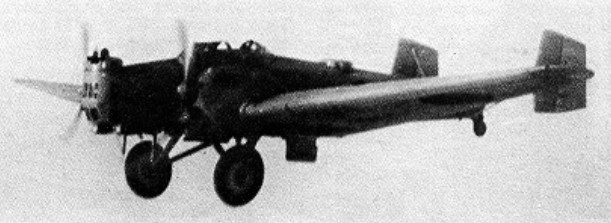
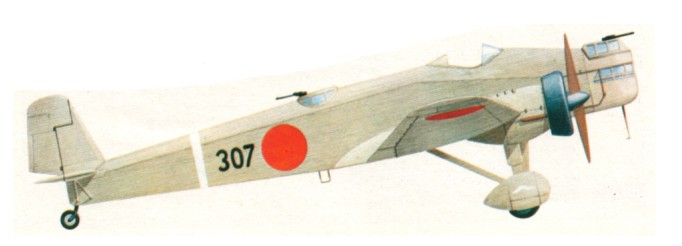
The Ki 1 was an angular cantilever low-wing monoplane with a crew of four, it had fixed landing gear, a tail unit incorporating twin fins and rudders.
The prototype was powered by two Rolls Royce Buzzard engines, but production aircraft had two 701kW / 940 hp Mitsubishi Ha 2 2 radial engines, giving a maximum speed of 220km/h, the Mitsubishi Ki-1-l heavy bomber flew for the first time in 1933. Pilot and co-pilot were seated in tandem under an enclosed canopy, while there were semi-enclosed nose and dorsal turrets and a retractable ventral ‘dustbin’, each armed with a single 7.7mm machine-gun. Offensive load was up to 1500kg of bombs.
The original ver¬sion went into service as the Type 93 Model 1 Heavy Bomber in support of the army fight¬ing in China during the mid 1930s.
The Ki-1-II development had 723kW Ha-2-3 engines and airframe improvements which increased maximum speed to 230km/h.
The two versions went into service as the Army Type 93-1 and Army Type 93-2 respectively, and saw limited use in the fighting against China. Total production of both versions was 118.
Ki-1-l
Engines: 2 x Ha-2-2, 701kW
Wing span: 26.50m / 86 ft 11 in
Length: 14.8 m (48 ft 7 in)
Maximum take-off weight: 8100kg / 17858 lb
Max. speed: 220 km/h / 137 mph
Armament: 3 x 7.7mm machine-guns
Bomb load: 1000 kg (2205 lb)
Ki-1-II
Engines: 2 x 723kW Ha-2-3
Span: 26.5 m (86 ft 11 in)
Length: 14.8 m (48 ft 7 in)
Gross weight: 8100 kg (17857 lb)
Maximum speed: 230 km/h (143 mph)
Mitsubishi 4MS1/ K3M Pine / Type 90 / Ki-7 / Watanabe K3M3
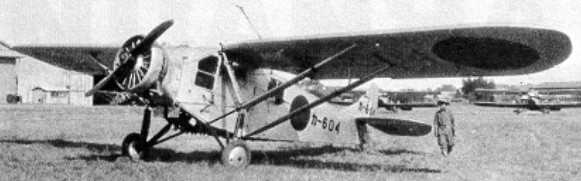
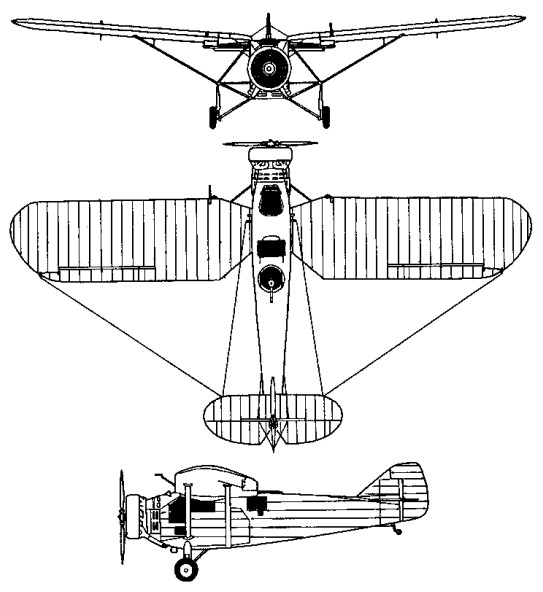
Designed by Herbert Smith, the Sopwith designer working in Japan, the Mitsubishi 4MS1 prototype crew trainer made its maiden flight in 1930. A strut-braced high-wing cabin monoplane with fixed wide-track landing gear, the 4MS1 was powered by a single engine. The Ki-7 was the Japanese army prototype of the Mitsubishi K3M naval trainer aircraft. First appearing as the K3M1 in 1931/32 with a 300 hp Hispano-Suiza engine, and was an adaptation of the Fokker Universal for training purposes. The first K3M2 production version entered naval service in 1932 as the Type 90 Crew Trainer, with the pilot and gunner in separate open cockpits, and instructor and two pupils in the enclosed cabin. Later liaison/passenger variants accommodated five passengers in the cabin.
The principal JNAF service version was the K3M2 with a 300 hp Amakaze 11 radial, of which 317 were built by Mitsubishi. Production continued until 1941, and examples pressed into service as liaison aircraft in the postwar period were to be found in a variety of national markings.
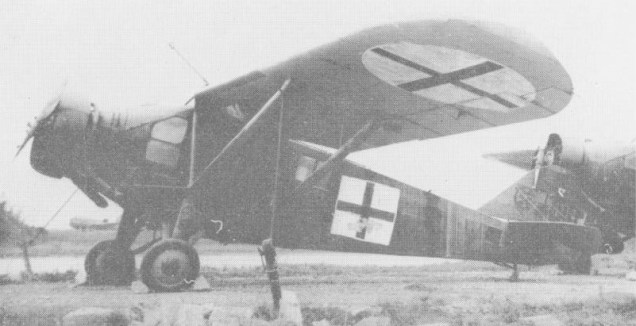
Watanabe built 301 K3M3, entering production in 1939. Several, as K3M3-L, were employed on transport duties.
The K3M3 was known as “Pine” during the war.
K3M3
Engine: Nakajima Kotobuki II-Kai-I, 580 hp / 435kW
Wingspan: 15.78 m / 51 ft 9.25 in
Wing area: 34.5 sq.m / 371.35 sq ft
Length: 9.54 m / 31 ft 4 in
Height: 3.82 m / 12 ft 6 in
Max take-off weight: 2200 kg / 4850 lb
Empty weight: 1360 kg / 2998 lb
Max. speed: 230 km/h / 143 mph
Ceiling: 6390 m / 20950 ft
Range: 790 km / 491 miles
Bombload: 2 x 132 lb / 4 x 30-kg bombs
Armament: 1 x 7.7 mm mg
Crew: 3-5
 All Aero