A first-effort, the 1928 Paschkle single place open cockpit high wing monoplane flew well for 15 hours, then was damaged beyond repair when it hit a vagrant pig during a landing.
Engine: Curtiss OX-5, 90hp
A first-effort, the 1928 Paschkle single place open cockpit high wing monoplane flew well for 15 hours, then was damaged beyond repair when it hit a vagrant pig during a landing.
Engine: Curtiss OX-5, 90hp
Paul & Ted Paschke
Hancock MN.
USA
Circa 1928 built a monoplane
Charles Dickenson successfully tendered for the Twin Cities-Chicago mail contract in 1926 with three Wright J-4 Lairds, an open cockpit biplane built by Henry C. Keller, and a cabin biplane built by Elmer Partridge. A few minutes after taking off on the Dickenson company’s inaugural flight on 7 June 1927, Elmer Partridge crashed and died in his home-made aircraft.
In 1933 Harry Parso built the Parso Solo Sport single-place, high wing monoplane. Registered N12729, it was originally powered by a 60hp Velie engine, this was later changed to a 65hp Lambert.
One other appears as the Cardoza-Parso PC-1 N10414 c/n 1, which might be Mr Cardoza’s home-made version.
Wingspan: 27’0″
Length: 17’11”
Max speed: 120 mph
Cruise: 100 mph
Stall: 50 mph
Seats: 1
San Jose CA.
USA
Built the Parso Solo Sport in 1933.
At the instigation of the Kaiser a committee was formed, the Moorluftschiff-Studien-Geselechaft, to investigate the work of promising experimental airship proposals. One of the designs selected by thic committee as being worthy of further encouragement was that of Major August von Parseval.
Between 1906 and 1923 the Parseval concern built 27 pressure airships, the last of which was of 1 million cu.ft in capacity.
At the time, the Parseval airships impressed the British Committee of Imperial Defence by their performance and potential and an example was purchased for the Royal Navy, with orders placed for three others.
A two-seat training monoplane.
Brasil
The works at Rio de Janeiro’s military air base built Waco biplanes for Brazilian Air Force mail services in late 1930s, plus Muniz two-seat training monoplane.
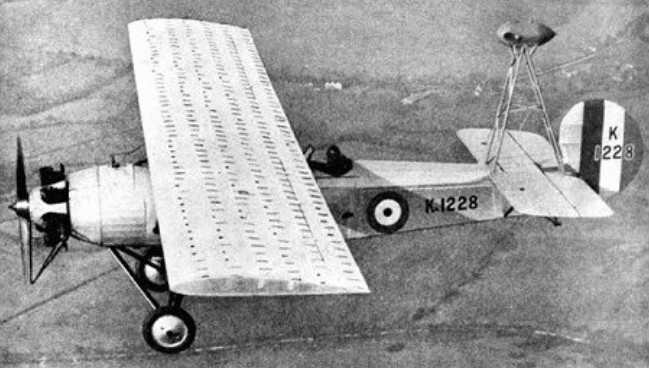
1929
Parasol
Engine: 1 x 226hp Armstrong Siddeley Lynx IV
Max take-off weight: 1302 kg / 2870 lb
Empty weight: 1008 kg / 2222 lb
Wingspan: 12.80 m / 42 ft 0 in
Length: 9.24 m / 30 ft 4 in
Height: 2.89 m / 10 ft 6 in
Wing area: 27.31 sq.m / 293.96 sq ft
Max. speed: 177 km/h / 110 mph
Ceiling: 8900 m / 29200 ft
Crew: 2
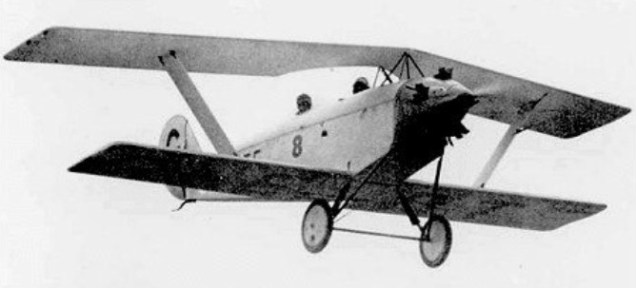
1927
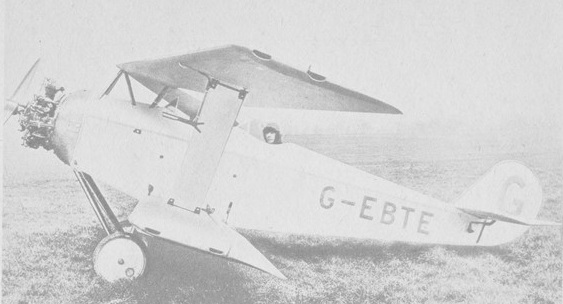
Imp
Engine: 1 x 80hp Armstrong-Siddeley Genet II
Max take-off weight: 599 kg / 1321 lb
Empty weight: 386 kg / 851 lb
Wingspan: 7.77 m / 26 ft 6 in
Length: 6.45 m / 21 ft 2 in
Height: 2.33 m / 8 ft 8 in
Wing area: 16.35 sq.m / 175.99 sq ft
Max. speed: 164 km/h / 102 mph
Cruise speed: 128 km/h / 80 mph
Crew: 2
 All Aero