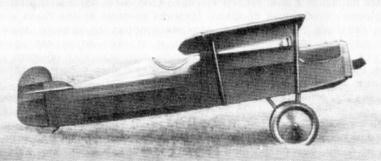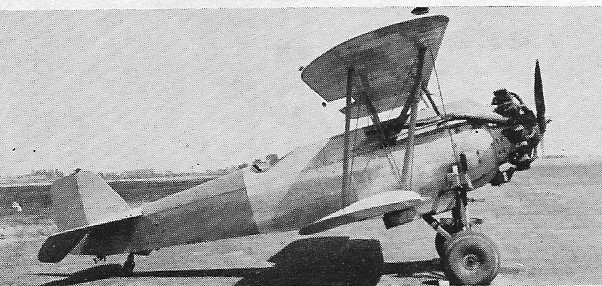
Pitcairn PA-7

PA-7S

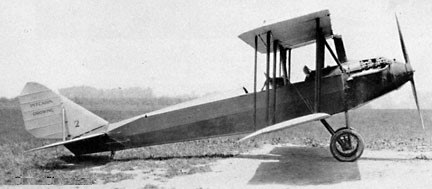
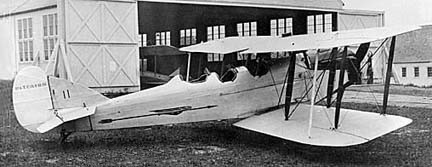
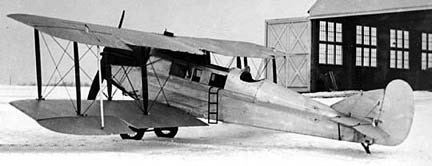
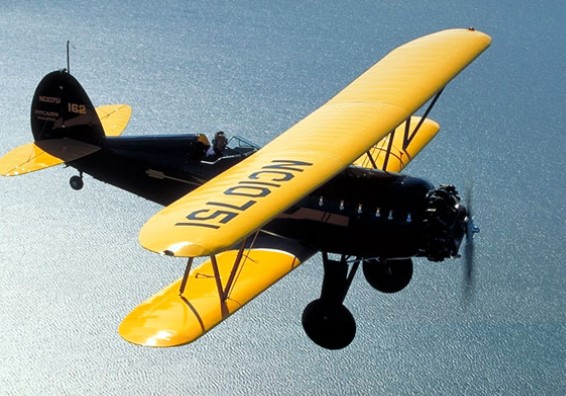
The Pitcairn PA-7S sport biplane was generally similar to the PA-7M Mailwing single-seat mailplane designed in 1927 and produced in some numbers in the 1930s.

The 1929 PA-7 Super Mailwing received ATC 196. Two were built: NR213M and NC684E.

The 1929 PA-7M Super Mailwing (ATC 196) was a single place PA-7 as a mailplane.
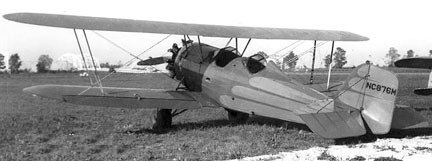
Ten PA-7M Super Mailwing were built; NC94W, NC351V, NC378V, NC545K, NC825N/826N, NC876M/877M, and NC7967.

The 1929 PA-7S Super Sport Mailwing (ATC 196) three-place sport version of the PA-7 sold for $8,500. Sixteen were built; NS53W, NC54W, NC68M/71M, NC95W/97W, NR213M prototype, NC824N, NC10375/10377, NC10379, and NC13158.
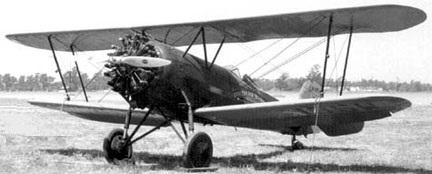
Pitcairn PA-7S N95W

The PA-7S crop-dusting version had a modified metal fuselage.
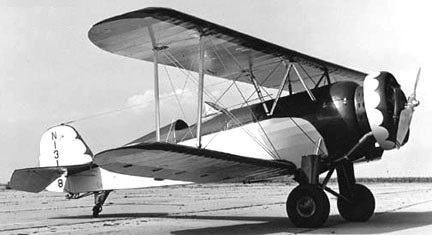
Pitcairn PA-7S NC13158

Gallery

PA-7 Super Mailwing
Engine: 225hp Wright J-6
Wingspan: 33’0″
Length: 23’9″
Useful load: 1129 lb
Max speed: 135 mph
Cruise: 155 mph
Stall: 57 mph
Range: 520 mi
Seats: 3

PA-7M Super Mailwing
Engine: 225hp Wright J-6
Wingspan: 33’0″
Length: 23’9″
Max speed: 135 mph
Cruise: 155 mph
Stall: 57 mph
Range: 520 mi
Seats: 1

PA-5S
Engine: 220 hp Wright Whirlwind J-6
Wingspan: 33 ft
Wing area: 243.5 sq.ft
Length: 23 ft 9 in
Height: 9 ft 6.5 in
Empty weight: 1820 lb
Loaded weight: 3050 lb
Max speed: 150 mph
Cruise: 128 mph
Service ceiling: 16,000 ft
Seats: 3
Pitcairn PA-6

The single-place PA-6 and 6B Super Mailwing of 1928 (ATC 92) were similar to the PA-5 but with a larger cargo hold. 51 were built; NC19/20, NC26, NC36E/38E, NC93W, NC127/129E, NC210H/214H, NC215E, NC298E, NC338E, NC353E/355E, NC377V, NC482E/483E, NC557E, NC585, NC643E/644E, NC680E/683E, NC800H/804H, NC875M, NC878M, C2896, NC7152, NC7557, NC7866/7868, NC7965/7966, NC10378, NC13912/13913, and NC15307.

The 1928 PA-6S Super Mailwing (ATC 2-22) was a three-place sport version of the PA-6 mail plane. ATC 2-22 was replaced by ATC 92.

PA-6 / 6B Super Mailwing
Engine: 220hp Wright J-5
Wingspan: 33’0″
Length: 23’4″
Useful load: 695 lb
Max speed: 128 mph
Cruise: 109 mph
Stall: 52 mph
Range: 600 mi
Ceiling: 16,000′
Seats: 1

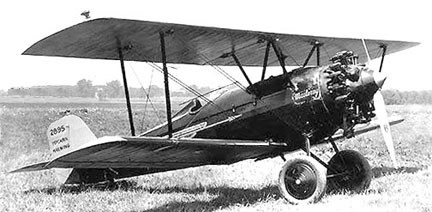
Pitcairn PA-5 Mailwing / PA-5 Sport Mailwing

Pitcairn PA-5 N2895

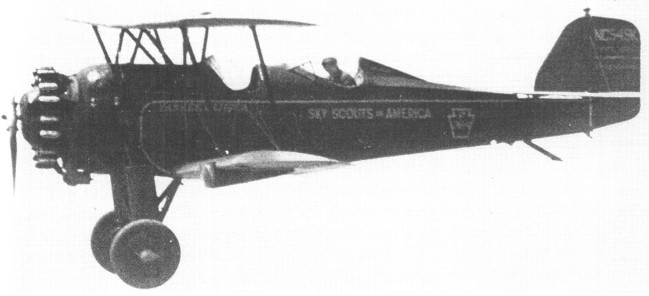
The 1927 PA-5 Mailwing single-place biplane received ATC 18. At least 21 were built, priced at $9,850-10,000, including; NC94, NC500, NC549K, C1515, C2895, C4321/4325, C5062, C5117, C5129, C5564, C5636, C5677, C5808, C5863, NC6617/6618, NC6708.

The Sport Mailwing, also under ATC 18, was a three-place “civilianized” version of the PA-5 mail plane.

PA-5 Mailwing
Engine: 220hp Wright J-5
Wingspan: 33’0″
Length: 21’11”
Useful load: 822 lb
Max speed: 131 mph
Cruise: 105 mph
Stall: 50
Range: 435
Ceiling: 18,000′
Seats: 1

Sport Mailwing
Engine: 220hp Wright J-5
Wingspan: 33’0″
Length: 21’11”
Useful load: 822 lb
Max speed: 131 mph
Cruise: 105 mph
Stall: 50
Range: 435
Ceiling: 18,000′
Seats: 3

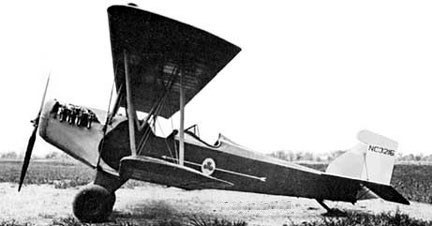
Pitcairn PA-4 Fleetwing 2 / Deluxe

Pitcairn PA-4 NC3216

The 1927 PA-4 Fleetwing 2, or Deluxe, received ATC 2-21. The prototype NC3216 later converted to PA-4W.

Eleven were built; C1514, X2359, C3216, C3228, C4920, NC7032, NC7443, NC7558, NC7756/7757.

The 1928-30 PA-4K and PA-4W Fleetwing 2 were approved for 100hp Kinner K-5 (ATC 2-230) and 110hp Warner Scarab (ATC 2-193). One each -4K [NC10130] and -4W [NC3216] for conversions as engine test-beds.

PA-4 Fleetwing 2 / Deluxe
Engine: 90hp Curtiss OX-5
Wingspan: 33’0″
Length: 22’2″
Useful load: 785 lb
Max speed: 102 mph
Cuise: 87 mph
Stall: 45 m
Range: 400 mi
Seats: 3

PA-4K Fleetwing 2
Engine: 100hp Kinner K-5

PA-4W Fleetwing 2
Engine: 110hp Warner Scarab

Pitcairn PA-3 Orowing

The 1927 Pitcairn PA-3 Orowing (ATC 2-20) three-seat open cockpit biplane used Used Curtiss Oriole wings.

About 40 were built, including; NC78, NC175/178, NC248, NC280, N283K, NC572V, NC977/978, NC983/984, NC991/995, C1177/1178, C1258, C1655, C1658, C1698, C1984, C2699, C2735, C2781/2783, C2855, C2916, C2936, C2993, C4291, C4300, C4355, C5032, NC6659

Engine: 90hp Curtiss OX-5 or 100hp OXX-6
Wingspan: 36’0″
Length: 26’2″
Useful load: 755 lb
Max speed: 90 mph
Cruise: 78 mph
Stall: 40 mph
Seats: 3

Pitcairn PA-2 Sesquiwing / Arrow

The 1926 PA-2 Sesquiwing (aka Arrow) was built for racing. Powered by a 160hp Curtiss C-6 engine, it was a quick-change convertible to a 90hp Curtiss OX-5 in 31 minutes.

Registered NC10222 for the 1926 Nationals, but it did not finish because of motor problems.

Engine: 160hp Curtiss C-6
Wingspan: 32’0″
Length: 22’6″
Useful load: 754 lb
Max speed: 145 mph
Cruise: 120 mph
Stall: 60 mph
Range 360 mi
Seats: 2

Engine: 90hp Curtiss OX-5
Wingspan: 32’0″
Length: 22’10”
Useful load: 746 lb
Max speed: 120 mph
Stall: 60 mph
Seats: 2

Pitcairn PA-1 Fleetwing

The 1925 Pitcairn PA-1 was designed by Agnew Larsen as a 4-5-place open cockpit biplane.

Those built include N173, N1172, N1173, and N1509.

Martinsyde produced a cabin conversion resulting in three cockpits.

Pitcairn PA-1 Martinsyde cabin conversion

PA-1 Fleetwing
Engine: 160hp Curtiss C-6
Wingspan: 38’0″
Length: 25’11”
Useful load: 1110 lb
Max speed: 110 mph
Cruise: 93 mph
Stall: 45 mph
Seats: 4-5

Pischoff Avionette

Pillot in seat

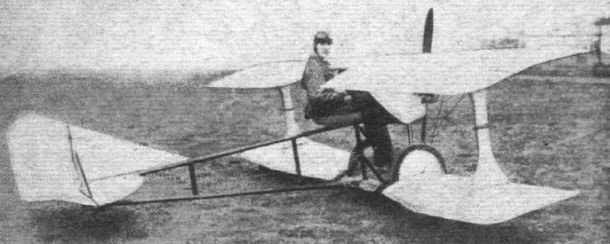
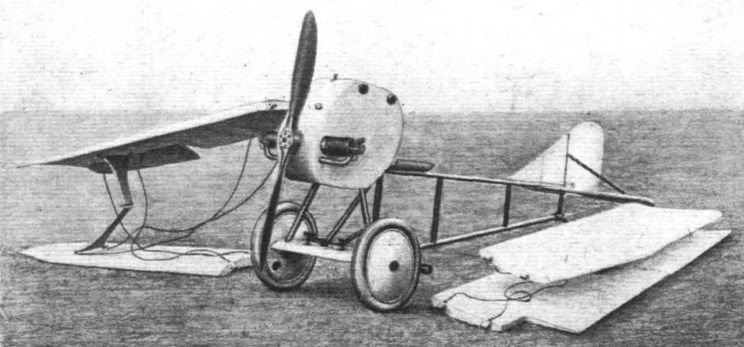
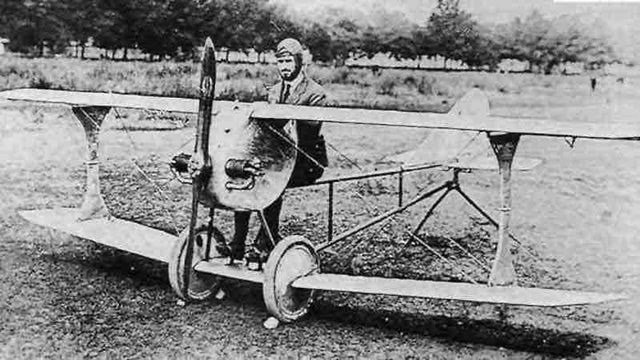
Austrian / French designer Alfred de Pischoff built a bare minimum ultralight in 1921-22.

The fuselage is two horizontal tubes fixed together by three other tubes. The pilot sits on a saddle and the engine, a Clerget-Blin two-cylinder rated at 16 hp, was also the bare minimum. The landing wheels were set into the lower wings.

A Mr. Pillot (in photo) and Alfred de Pischoff flew the machine. Pillot was mortally wounded when the machine crashed into the ground on 12 August 1922.

Only one copy was built.

Engine: Clerget-Blin, 16 hp
Wingspan: 17 ft / 5,20 m
Length: 11ft 6in
Height: 4 ft 3.25 in
Wheel track: 2 ft 7 0.5 in
Speed: 90 – 95 km/h
Endurance: 2 hrs

Pisarenko OPV-1

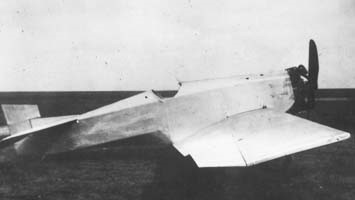
By 1923 Victor Pisarenko had become one of the best Soviet flight instructors, but in the fall of that year he also made his debut as an aircraft builder and became the first Soviet amateur builder.

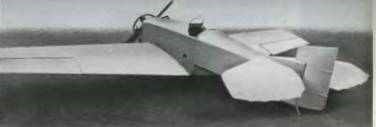
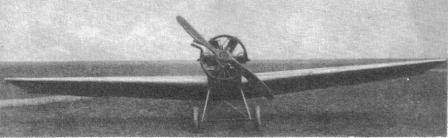
With the help of several students, Pisarenko built a single-seater light aircraft in the workshops of the Kacha Flight School, Sevastopol, which had the privilege of being the first Soviet aircraft with a low cantilever wing. This plane received the name VOP-1, an acronym for Victor Osipovich Pisarenko – 1 (Russian: Писаренко ВОП-1).

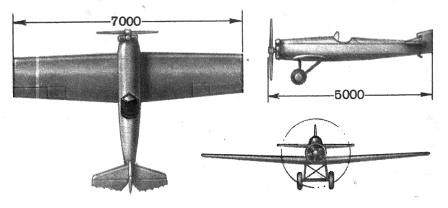
The VOP-1 was conceived as a cantilever low-wing monoplane built in wood. The one-piece wing with a trapezoidal shape on the plane used a profile selected by the author himself. With a surface area of 10 square metres, it had a double-beam structure and was completely covered by a thin layer of plywood.

The fuselage was built with a wooden structure and had a plywood covering with angular lines. In its central part, behind the engine, the open cockpit for the pilot was located.

The tail was of the monoplane type with the rudders covered in fabric.

The landing gear was conventional, fixed and had a tail skid.

A 35 hp Anzani engine obtained in the workshops themselves was used as the power plant.

The VOP-1 was built in the school’s workshops in Sevastopol and many of its parts were taken from old discontinued models. On November 27, 1923 Pisarenko flew for the first time. This flight was followed by several others.

During the test flights, carried out by Pisarenko himself, the plane was stable in flight and responded well to the controls. With its 35 hp engine, the plane reached a speed of 120 km/h.

Powerplant: One 35 hp Anzani
Wingspan: 7.50 m
Wing area: 10.00 m²
Length: 5.00m
Empty weight: 222 kg
Normal takeoff weight: 322 kg
Weight of fuel + lubricant: 20 kg
Wing loading: 32 kg/sq.m
Power load: 9.2 kg/hp
Total load capacity: 100 kg
Top speed: 120km/h
Cruising speed: 100 km/h
Practical ceiling: 1200 m
Accommodation. 1

Pisarenko T / VOP-T

After moving to the Serpukhov Higher School of Air Combat, Shooting and Bombing (Strelbom), Pisarenko, with the help of cadets, began construction of his second aircraft. This model was called VOP-T (Víctor Osípovich Pisarenko – Trenirovochni (coach)) (Russian: Писаренко-Т or ВОП-Т).

The Pisarenko-T was conceived as a parasol-braced wing single-seat monoplane. As a distinctive feature of this model we can point out its unconventional wing profile, with flat upper and lower surfaces, a curved leading edge and a flattened tail. In general, a strange wing with a sharp leading edge was obtained.

The wing, with a double spar structure, had parallel wooden supports that fixed it to the sides of the fuselage. The covering was plywood.

The Pisarenko-T was powered by a 150-hp Hispano-Suiza engine driving a two-blade wooden propeller.

The plane was built at the Serpukhov school and was ready in 1925.

Pisarenko prepared the plane for its first flight and when it was ready, he went to the head of the school for permission. The plane had been built with hardly any calculations and its pilot was only authorized to race down the runway. Pisarenko disobeying, took the flight back and headed for Moscow, landing at the Central Aerodrome in Jodinka. Once there, before the authorities could react and ban him, he made a second flight, executing several high school piloting tricks that included inverted flight and several rolls.

Once the second flight was completed, Pisarenko never flew his plane again, nor did he request permission to do so.

The success of his model led to Pisarenko soon receiving an application to build a training aircraft with funds from the VVS leadership. He began to work in this direction, but the appearance of the excellent trainer Polikarpov U-2 soon made him leave the company.

Powerplant: One 150 hp Hispano-Suiza engine
Accommodation. 1