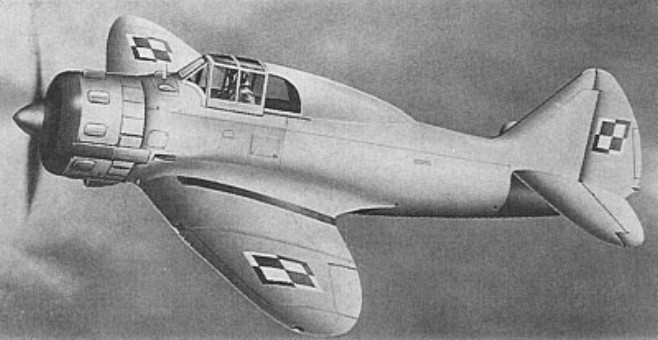
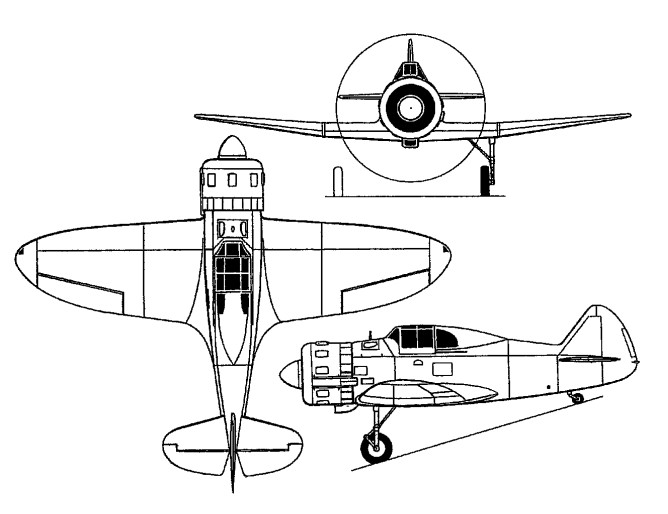
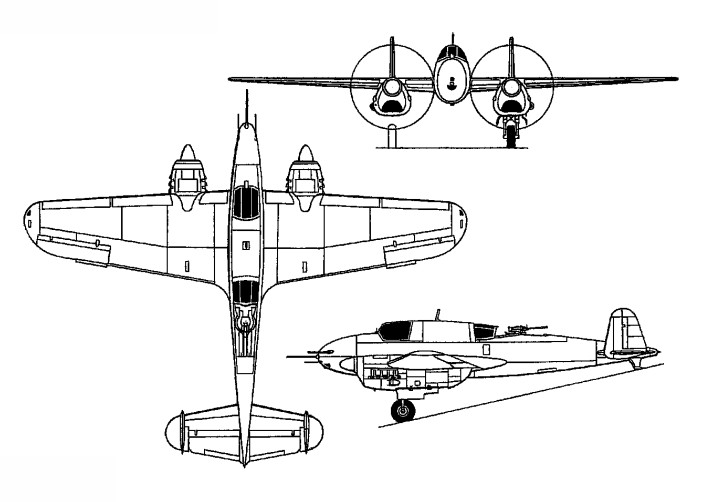
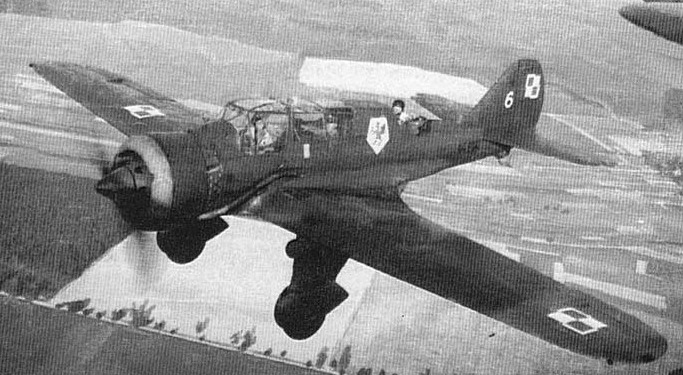
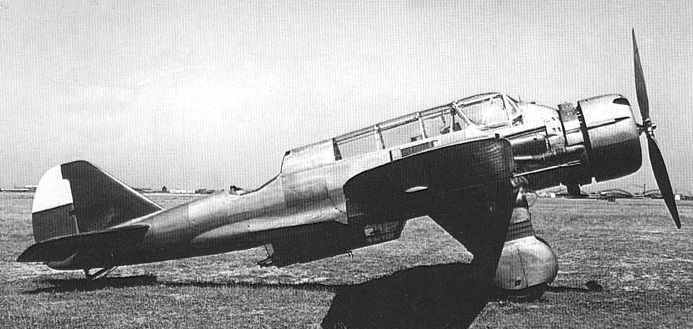
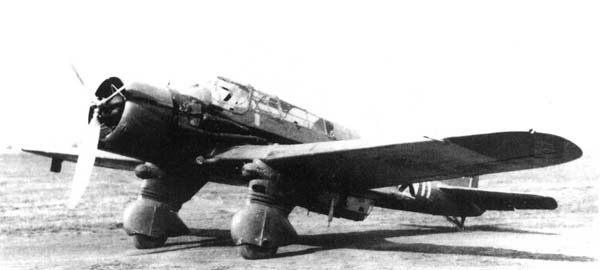
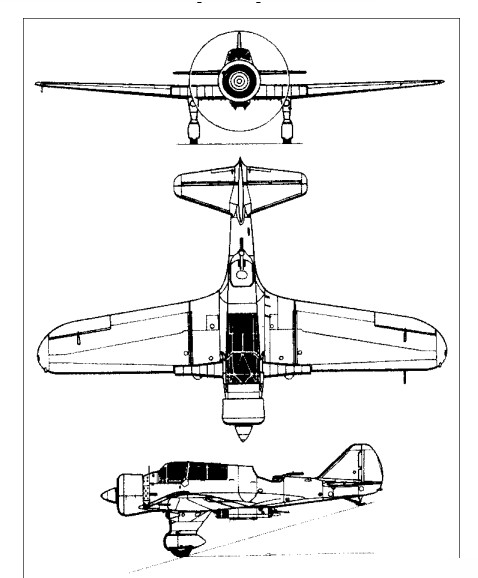
Intended as a successor in Lotnictwo Wojskowe service to the P.11, the P.50 Jastrzab (Hawk) was designed under the leadership of Wsiewolod Jakimiuk. The first of two prototypes, the P.50/I, was flown in February 1939 with an 840hp Bristol Mercury VIII nine-cylinder radial. Of all-metal stressed-skin monocoque construction, the P.50 was armed with four wing-mounted 7.92mm Wz 36 machine guns.
The Mercury-engined model was referred to as the Jastrzab A, an initial batch of 30 of this version being under construction at the time of the German invasion. The second prototype, the P. 50/II, was intended to serve as a development aircraft for the more advanced Jastrzab II. This featured a revised rear fuselage, armament augmented by two 20mm cannon and pilot armour, the engine being a 1375hp Bristol Hercules to be replaced in the series model by the 1200hp P.Z.L. Waran radial. The P.50/II was still awaiting its power plant at the time of the German assault. The first pre-series Jastrzab A was to be fitted with an 870hp Gnome-Rhone 14Kirs as a development aircraft for the Jastrzab B, and this was almost ready for flight test in September 1939.
Engine: Mercury VIII Max take-off weight: 2500 kg / 5512 lb Empty weight: 1700 kg / 3748 lb Wingspan: 9.70 m / 32 ft 10 in Length: 7.70 m / 25 ft 3 in Height: 2.70 m / 9 ft 10 in Wing area: 19.40 sq.m / 208.82 sq ft Max. speed: 500 km/h / 311 mph Range: 750 km / 466 miles
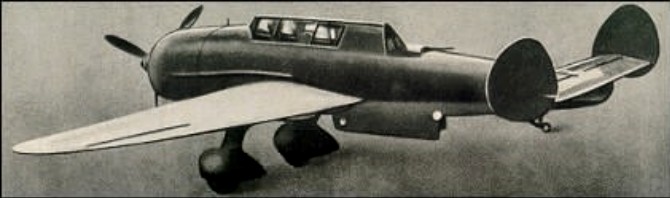
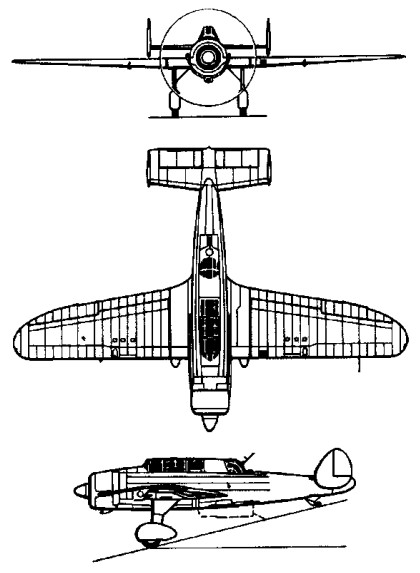
In 1936 Stanislav Prauss (later replaced by Tadeusz Soltyk) began work on a project reconnaissance bomber, which is, in essence, the development of “Carp”, which received later the name PZL P-46 Sum.
One P-23B Karas was modified to serve as a development aircraft for the improved P.46 Sum, with a twin fin/rudder tail unit and a retractable ventral gondola. However, the P.46 did not materialise beyond the prototype stage and the P.42 was subsequently converted back to Karas B standard. The first P.46 Sum light bomber prototype flew in October 1938. Two built.
PZL-46 Sum A Engine: 1 x Bristol “Pegasus XX”, 675kW Wingspan: 14.6 m / 48 ft 11 in Length: 10.5 m / 34 ft 5 in Height: 3.3 m / 11 ft 10 in Wing area: 31.5 sq.m / 339.06 sq ft Max take-off weight: 3550 kg / 7826 lb Empty weight: 1995 kg / 4398 lb Max. speed: 425 km/h / 264 mph Cruise speed: 350 km/h / 217 mph Ceiling: 7700 m / 25250 ft Range w/max.fuel: 1300 km / 808 miles Crew: 3 Armament: 6 x 7.7mm machine-guns Bombload: 600kg
PZL-46 Sum B Engine: 1 x Bristol “Pegasus XX”, 675kW Wingspan: 14.6 m / 48 ft 11 in Length: 10.5 m / 34 ft 5 in Height: 3.3 m / 11 ft 10 in Wing area: 31.5 sq.m / 339.06 sq ft Max take-off weight: 3550 kg / 7826 lb Empty weight: 1995 kg / 4398 lb Max. speed: 460 km/h Cruise speed: 350 km/h / 217 mph Ceiling: 8700 m Range w/max.fuel: 1150 km Crew: 3 Armament: 6 x 7.9mm machine-guns vz.36/37 Bombload: 1000kg
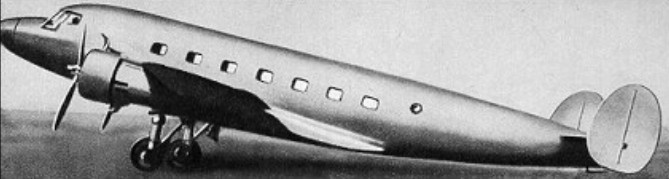
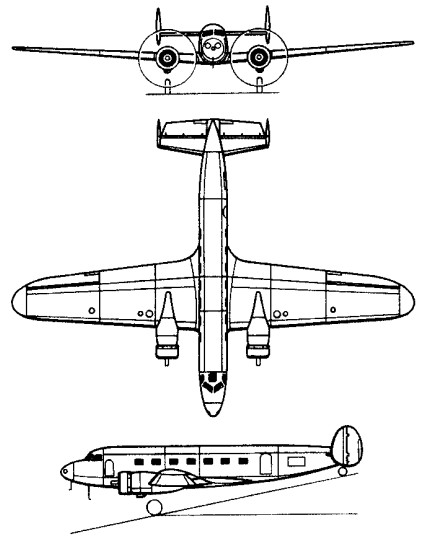
The PZL-44 Wicher (Tempest or Storm) was intended as a replacement for the DC-2 and Lockheed 12A and 14 Super Electra operated by LOT pre-WW2. LOT issued a specification calling for a fourteen-passenger airliner which resulted in the Wicher designed by W.Jakmuk and bult at the PZL-WP.NI works at Okecie, near Warsaw.
The first prototype flew on March 20, 1937 and subsequent flight evaluation was carried out at the I.B.T.L. establishment in Warsaw during the later half of 1938.
Of all-metal construction, the sole prototype, PZL-44, later registered SP-WNR, was powered by two 850 hp Skoda-Wright Cyclones, although for the production models the 1000 hp Wright GR-1820-G2 had been planned. Every modern flying and navigational aid and passenger-comfort device was installed, including de-icing, hydraulic dual controls, Sperry auto-pilot and ‘climatised’ cabin conditions.
When war broke out on 1 September 1939 the evaluation testing ceased after the prototype had logged around 200 hrs, latterly by Polish airline pilots.
P.44 Engines: 2 x Wright Cyclone GR-1820, 735kW Wingspan: 23.8 m / 78 ft 1 in Length: 18.5 m / 60 ft 7 in Height: 4.8 m / 15 ft 8 in Wing area: 75.0 sq.m / 807.29 sq ft Max take-off weight: 9500 kg / 20944 lb Empty weight: 5990 kg / 13206 lb Max. speed: 374 km/h / 232 mph Cruise speed: 316 km/h / 196 mph Ceiling: 6000 m / 19700 ft Range w/max.fuel: 2200 km / 1367 miles Range w/max.payload: 1840 km / 1143 miles Endurance: 5 hr Crew: 2 Passengers: 15
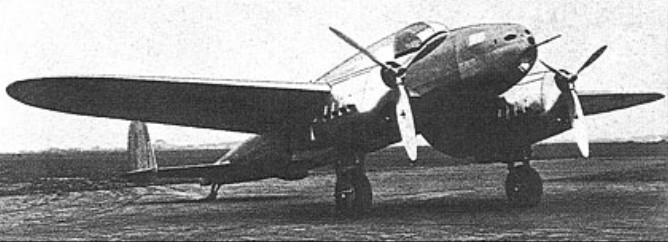
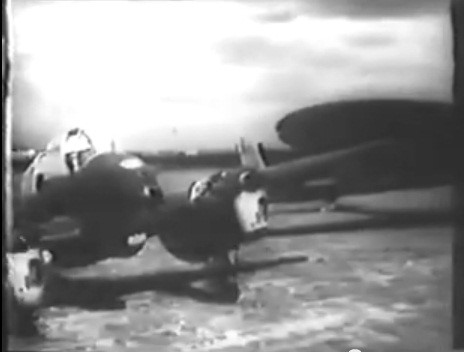
Conceived as a multirole aircraft: reconnaissance, light bomber, dive bomber (with a single 300 kg bomb under the fuselage), and interceptor, and designed by a team led by Franciszek Misztal, the Wilk (Wolf) was intended primarily as an attack fighter with secondary escort and intercept tasks.
Of all-metal construction, the Wilk was projected with the indigenous P.Z.L.Foka (Seal) eight-cylinder inverted-Vee air-cooled engine, the proposed armament consisting of one 20mm Wz 38 cannon and twin 7.92mm Wz 36 machine guns in the nose, and twin 7.92mm guns on a flexible mounting for the second crew member.
Difficulties in development of the Foka engine led to the first prototype, the P.38/I, being fitted with two 500hp Ranger SGV-770B 12-cylinder engines. Their actual power output was reportedly only 330 hp. This aircraft flew in April 1938, the second prototype, PZL-38/II, with 620hp Foka engines not flying until January 1939. The planned maximum power was 420-450 hp. The actual power output is not precisely known, but believed not to exceed some 360 hp. In the meantime, a more refined development of the basic design, the P.48 Lampart (Leopard) powered by 700hp Gnome-Rhone 14M Mars radials, had succeeded the Wilk in future planning, but prototypes had yet to be completed at the time of the German invasion of Poland.
Only two prototypes of this Polish fighter-bomber developed in 1937 were built.
P.38/I Engines: two 500hp Ranger SGV-770B Wingspan: 11.05 m / 36 ft 3 in Length: 8.35 m / 27 ft 5 in Height: 2.50 m / 8 ft 2 in Wing area: 20.4 sq.m
P.38/II Engines: two 620hp Foka Wingspan: 11.05 m / 36 ft 3 in Length: 8.35 m / 27 ft 5 in Height: 2.50 m / 8 ft 2 in Wing area: 20.4 sq.m Max take-off weight: 2800 kg Empty weight: 2156 kg Max speed: 400 km/h Range: 1250 km / 777 miles
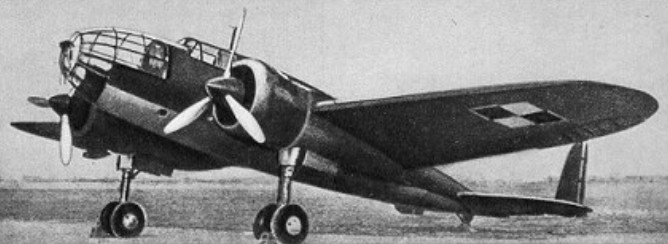
At the outbreak of World War II the P.Z.L. P.37 Los (Elk) was not only one of the most advanced bombers produced by the Polish aircraft industry to that date, but was also the only aircraft in service with the Polish air force that could be regarded as being of modern design. P.Z.L. had proposed the P.Z.L.3 advanced bomber to meet a Department of Aeronautics requirement for an aircraft in this class, but the financial stringencies of 1930 prevented the P.Z.L.3’s progress beyond the design stage. P.Z.L.’s next proposal was for a bomber version of the P.Z.L.30 civil transport which, having failed to attract a buyer, was converted as a bomber prototype by P.Z.L.; it was later developed and put into production by the L.W.S. company as the L.W.S.4 Zubr.
P.Z.L. then produced the design for a twin-engine bomber of monoplane configuration, gaining a contract for three prototypes in 1935; the first of them, the P.Z.L. P.31/I, was flown initially in late June 1936. Successful testing of this aircraft, which was powered by two 651kW Bristol Pegasus XII radial engines, led to a contract for 30 under the designation P.37A Los A.
Production was completed in 1938, the first 10 having a single fin and rudder, but the last 20 sporting the twin fins and rudders which had been introduced and tested on the P.37/II prototype. This latter prototype had also been used for development testing of engines in the 746kW class by manufacturers that included Fiat, Gnome-Rhone and Renault.
Demonstrated at an exhibition in Belgrade during 1938 and at the Paris Salon in the same year, the P.37A created enormous interest, resulting in export orders for a total of 35 P.37C bombers powered by 723kW Gnome-Rhone 14N.07 engines for Bulgaria (15) and Yugoslavia (20), and 40 P.37D bombers with 783kW Gnome-Rhone 14N.20/21 engines for Romania (30) and Turkey (10). In addition, Turkey ordered components for 15 more aircraft and signed a licence to manufacture. Planned delivery for these export aircraft was from June 1940 and, as a result, none of them was completed.
The delivery of Los A aircraft to the Polish air force began in early 1938, and all of these were equipped subsequently with dual controls for use as conversion trainers. Delivery of the ensuing P.37B Los B (which introduced a revised cockpit canopy, twin-wheel main landing gear units, and Pegasus XX engines) began in late 1938. A total of 150 had been ordered, but policy changes that favoured fighters rather than bombers reduced the number to 100, and only about 70 of these had been delivered by the outbreak of war. Even more disastrous for Poland was the fact that of the Los B aircraft in service only 36 were fully equipped for operational use, though these were supplemented quickly by nine more replacement aircraft. Some 26 of this number were lost in action, and on 17 September 1939 the survivors, plus about 20 other P.37s, were flown to Romania, where they were used subsequently by the Romanian air force.
A developed version of the P.37 had been planned under the designation P.49 Mis (teddy bear), intended to be powered by engines of up to 1193kW. A prototype was under construction, but with the German advance on Warsaw it was destroyed to prevent it from falling into enemy hands.
P-37B Los B Engines: 2 x Bristol Pegasus XX, 690kW Wingspan: 17.95 m / 59 ft 11 in Length: 12.92 m / 42 ft 5 in Height: 5.09 m / 17 ft 8 in Wing area: 53.5 sq.m / 575.87 sq ft Max take-off weight: 8900 kg / 19621 lb Empty weight: 4280 kg / 9436 lb Max. speed: 445 km/h / 277 mph Ceiling: 9145 m / 30000 ft Range w/max.payload: 1500 km / 932 miles Crew: 4 Armament: 3 x 7.7mm machine-guns, 2580kg of bombs
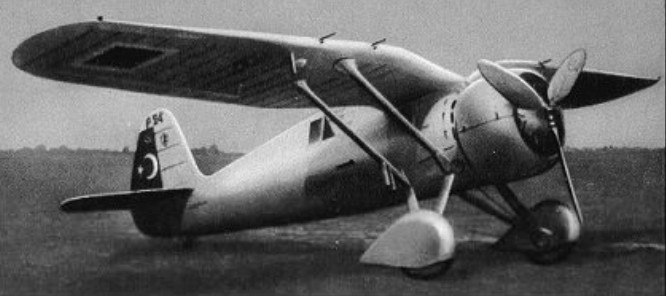
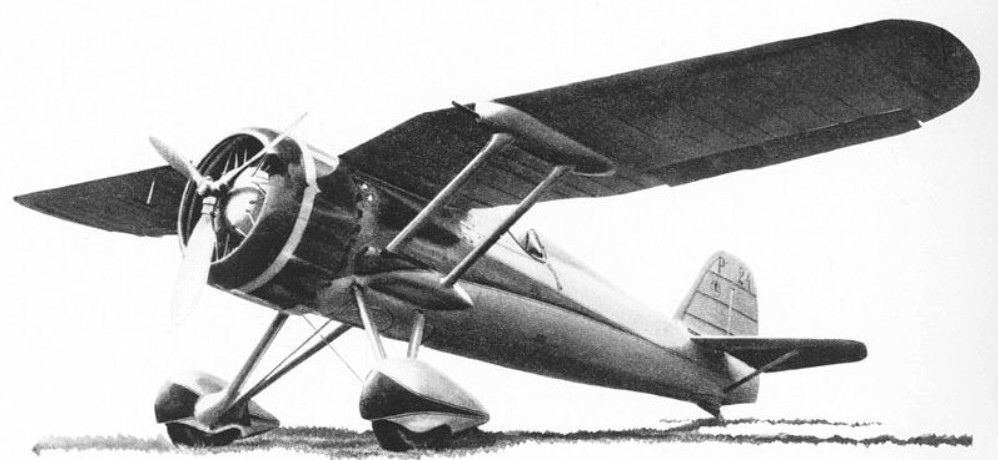
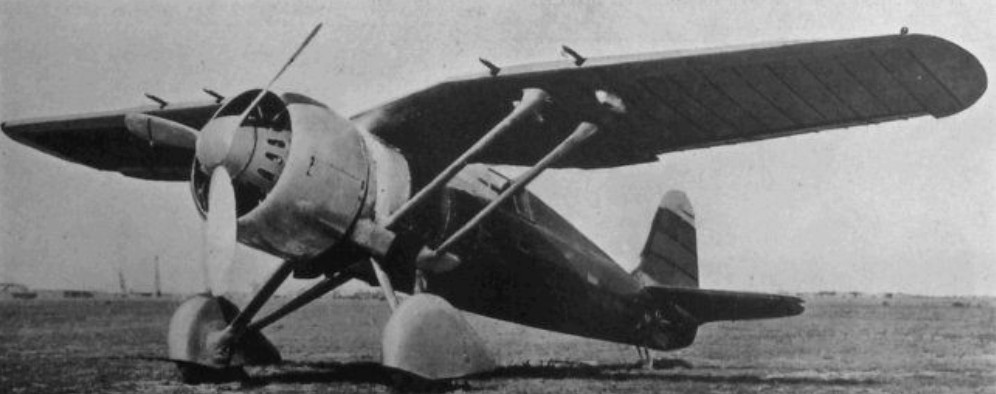
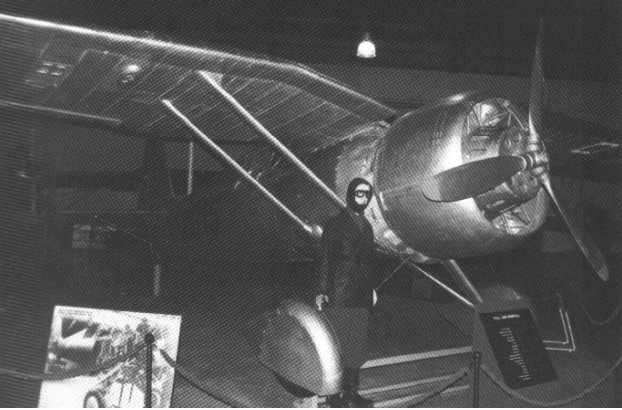
The PZL P.24 was developed as an export version of the PZL P.11, a gull-wing all-metal fighter designed by Zygmunt Puławski. The P.11 was powered with a license-built Bristol Mercury engine. The license did not permit export sales, so the French Gnome-Rhône company proposed using their engines in the P.11. The airframe of the P.Z.L. P.11 being redesigned to accept a new Gnome-Rhone engine designated 14Kds Mistral Major and rated at 760 hp / 567kW. The first P.24/I prototype, based on the P.11a, was flown in May 1933. The initial flight of the P.Z.L. P.24/I prototype ended in a forced landing when the propeller disintegrated. The P.24/I did not fly again until October 1933, showing a need for many modifications which were introduced in the P.24/II second prototype. The second P.24/II prototype, named the “Super P.24”, set a world speed record for radial engine-powered fighters (414 km/h) on 28 June 1934. The third P.24/III prototype was the “Super P.24bis” with a more powerful 694kW 14Kfs engine, flown in 1934 and armed with two 20mm cannon and two machine-guns. The armament was a combination of 20 mm Oerlikon FF cannon and 7.92 mm Colt-Browning machine guns in the wings. The type was shown at the Paris air show in 1934 attracting great interest from the participants.
The second prototype of the PZL P.24
The aircraft was conventional in layout, with high wings. It was all-metal and metal-covered. The wings had a gull-wing shape, with a thin profile close to the fuselage, to provide a good view for the pilot. This configuration was developed by Zygmunt Pulawski and called “the Polish wing”. The canopy was closed (apart from prototypes). An internal 360 liter fuel tank in the fuselage could be dropped in case of fire emergency. It had conventional fixed landing gear, with a rear skid.
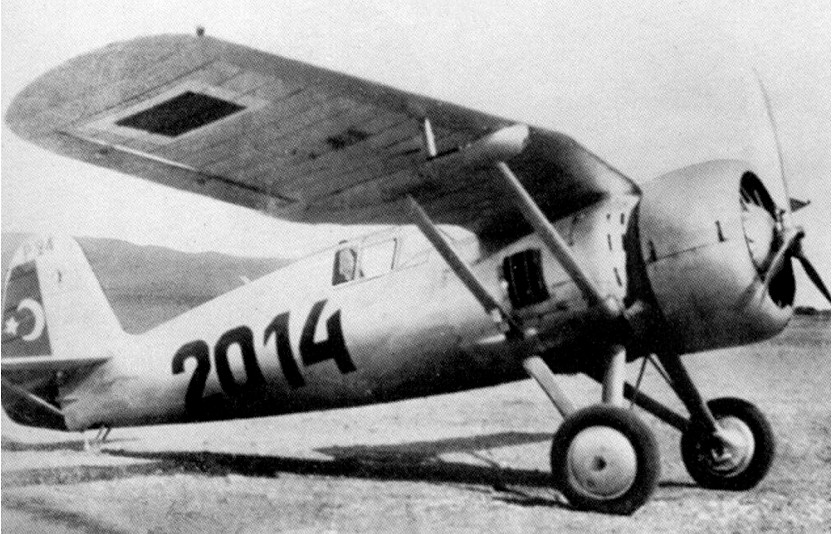
The first export order came from Turkey, which not only negotiated a licence for the manufacture of the P.24, but also ordered 14 P.24A fighters generally similar to that shown at Paris, 26 P.24C aircraft with four wing-mounted machine-guns, and components plus raw materials for the assembly of 20 more P.24As. The 20 P.24A/Cs were built under license in Turkey in Kayseri, followed by an additional 30 P.24G aircraft. Turkish P.24s were used for training until the late 1940s. Some were refitted with Pratt & Whitney Twin Wasp engines.
Next came an order from Bulgaria for 14 P.24B aircraft which were similar to the P.24C apart from installed equipment and were delivered from early 1938, followed by 24 P.24Cs and 26 examples of the P.24F, the final development of the type, which introduced a 723kW Gnome-Rhone 14N.07 engine of smaller diameter and had twin cannon and twin machine-gun armament. 22 were delivered from Poland in July 1939, just before the outbreak of World War II. The remaining four, lacking propellers, were bombed in the Okecie factory in September 1939 by the Germans.
The P.24E, developed to meet a Romanian requirement, was generally similar to the P.24C: six built by P.Z.L. had 671kW Romanian-built Gnome-Rhone 14Kllc32 engines, but later examples of the 40 or so P.24Es built by I.A.R. in Romania between 1937 and 1939 had the 701kW I.A.R.-built 14KMc36 engine.
In late 1939 I.A.R. developed a low-wing version of the P.24E under the designation I.A.R.80. Some components of the P.24E, mainly its tail section, were used in construction of the IAR 80. The four machine-gun equivalent of the P.24F had the designation P.24G.
The Greek Air Force first bought five P.24As in 1937, then 25 P.24Fs and six P.24Gs in 1938. The contract of the P.24 supply was signed in September, 1936, with final delivery date in May 1937 (due to the delayed delivery of the “Skoda” LK 32 machine guns from the Czechoslovakian construction factory). They had the standard equipment specifications with German radio and American oxygen supply system. They comprised almost the entire fighter strength of this last air force and were deployed with considerable success against both the Luftwaffe and Regia Aeronautica. The fighters were used to guard Bucharest and the Ploieşti oilfields from Soviet bombers at the start of Operation Barbarossa. Flying from Otopeni military airbase, the PZL P.24 fighters managed to shoot down 37 unescorted VVS bombers. 11 were destroyed on the ground. The P.24E was also used for ground attack missions until the end of 1941 and after 1942 it was relegated to training duties because of its obsolescence.
P-24F
Despite being a better fighter than the P.11, there were few acquired by the Polish Air Force, which preferred to wait for the PZL.50. When it became clear the PZL.50 would not be ready in time to counter the imminent German attack, the PAF resumed production of the P.11 and ordered the P.24. However, no PZL.24s were produced before the war started, and only two were used in the Polish Campaign. Polish Air Force had one PZL P.11g Kobuz which was used during Invasion of Poland. This aircraft, piloted by H. Szczęsny shot down two German aircraft on 14 and 15 of September. Usually this aircraft is identified as a P.24.
P.24 Enginne: Gnome-Rhône 14Kfs, 930 hp Armament: two 20 mm cannon and two machine guns.
P.24A It entered production as the P.24A.
P.24B The P.24B version was armed with four machine guns.
P.24C The P.24C was armed with four machine guns and two 50 kg bombs.
P.24D The P.24D was developed for sale to Hungary, but it was not completed, Hungary purchasing the Fiat CR.32 instead.
IAR P.24E The P.24E version was license-built in Romania by Industria Aeronautică Română as the IAR P.24E.
P.24F The P.24F was armed with two cannon and two machine guns and bombs and powered with the more powerful 970 hp (720 kW) Gnome-Rhône 14N-07 engine.
P.24G The last production version was the P.24G, produced from 1937 and powered with the more powerful 970 hp (720 kW) Gnome-Rhône 14N-07 engine. The P.24G was armed with four machine guns and bombs.
P.24H The P.24H was to be powered with a Gnome-Rhône 14N-21 engine (1,100 hp) and carry four cannon or two cannon and two machine guns, but it was not completed.
P.24J The P.24J version was to be armed with four cannon and was to be saled for export.
Specifications:
P.24A Engine: 1 × Gnome-Rhône 14Kfs, 900 hp / 930 hp (max) (671 kW / 693 kW (max)) Wingspan: 10.71 m (32,80 ft) Wing area: 17.90 sq.m (192.7 sq.ft) Length: 7.50 m (22.96 ft) Height: 2.69 m (8.82 ft) Empty weight: 1,327 kg (2,925 lb) Loaded weight: 1,870 kg (4,121 lb) Max. takeoff weight: 2,000 kg (4,400 lb) Power/mass: 0.376 kW/kg (0.230 hp/lb) Maximum speed: 410 km/h (254 mph) Range: 700 km (435 mi) Service ceiling: 9,000 m (29,527 ft) Rate of climb: 11 m/s (2,160 ft/min) Crew: 1 Armament: 2 MGs, 2 20mm cannon Bombload: 4 x 12.5 kg bombs
P.24B Engine: 1 × Gnome-Rhône 14Kfs, 900 hp / 930 hp (max) (671 kW / 693 kW (max)) Wingspan: 10.71 m (32,80 ft) Wing area: 17.90 sq.m (192.7 sq.ft) Length: 7.50 m (22.96 ft) Height: 2.69 m (8.82 ft) Empty weight: 1,327 kg (2,925 lb) Loaded weight: 1,870 kg (4,121 lb) Max. takeoff weight: 2,000 kg (4,400 lb) Power/mass: 0.376 kW/kg (0.230 hp/lb) Maximum speed: 410 km/h (254 mph) Range: 700 km (435 mi) Service ceiling: 9,000 m (29,527 ft) Rate of climb: 11 m/s (2,160 ft/min) Crew: 1 Armament: 4 MGs Bombload: 4 x 12,5 kg (27,5 lb)
P.24C Engine: 1 × Gnome-Rhône 14Kfs, 900 hp / 930 hp (max) (671 kW / 693 kW (max)) Wingspan: 10.71 m (32,80 ft) Wing area: 17.90 sq.m (192.7 sq.ft) Length: 7.50 m (22.96 ft) Height: 2.69 m (8.82 ft) Empty weight: 1,327 kg (2,925 lb) Loaded weight: 1,870 kg (4,121 lb) Max. takeoff weight: 2,000 kg (4,400 lb) Power/mass: 0.376 kW/kg (0.230 hp/lb) Maximum speed: 410 km/h (254 mph) Range: 700 km (435 mi) Service ceiling: 9,000 m (29,527 ft) Rate of climb: 11 m/s (2,160 ft/min) Crew: 1 Armament: 4 MGs Bombload: 2 x 50 kg
P.24E Engine: 1 × Gnome-Rhône 14KIIc32, 900 hp / 930 hp (max) (671 kW / 693 kW (max)) Wingspan: 10.71 m (32,80 ft) Wing area: 17.90 sq.m (192.7 sq.ft) Length: 7.50 m (22.96 ft) Height: 2.69 m (8.82 ft) Empty weight: 1,327 kg (2,925 lb) Loaded weight: 1,900 kg (4,188 lb) Max. takeoff weight: 2,000 kg (4,400 lb) Power/mass: 0.376 kW/kg (0.230 hp/lb) Maximum speed: 408 km/h (253 mph) Range: 700 km (435 mi) Service ceiling: 10,000 m (32,808 ft) Rate of climb: 11 m/s (2,160 ft/min) Crew: 1 Armament: 2 MGs, 2 20mm cannon Bombload: 2 x 50 kg (110 lb)
P.24F Engine: 1 × Gnome-Rhône 14N-07, 970 hp (700 kW) Wingspan: 10.68 m (32,80 ft) Wing area: 17.90 sq.m (192.7 sq.ft) Length: 7.81 m (22.96 ft) Height: 2.69 m (8.82 ft) Empty weight: 1,329 kg (2,930 lb) Loaded weight: 2,000 kg (4,409 lb) Max. takeoff weight: 2,000 kg (4,400 lb) Power/mass: 0.376 kW/kg (0.230 hp/lb) Maximum speed: 430 km/h (267 mph) Range: 700 km (435 mi) Service ceiling: 10,000 m (32,808 ft) Rate of climb: 11,1 m/s (2,165 ft/min) Crew: 1 Armament: 2 MGs, 2 20mm cannon Bombload: 2 x 50 kg (110 lb)
P.24G Engine: 1 × Gnome-Rhône 14N-07, 970 hp (700 kW) Wingspan: 10.68 m (32,80 ft) Wing area: 17.90 sq.m (192.7 sq.ft) Length: 7.81 m (22.96 ft) Height: 2.69 m (8.82 ft) Empty weight: 1,329 kg (2,930 lb) Loaded weight: 2,000 kg (4,409 lb) Max. takeoff weight: 2,000 kg (4,400 lb) Power/mass: 0.376 kW/kg (0.230 hp/lb) Maximum speed: 430 km/h (267 mph) Range: 700 km (435 mi) Service ceiling: 10,000 m (32,808 ft) Rate of climb: 11,1 m/s (2,165 ft/min) Crew: 1 Armament: 4 MGs Bombload: 2 x 50 kg
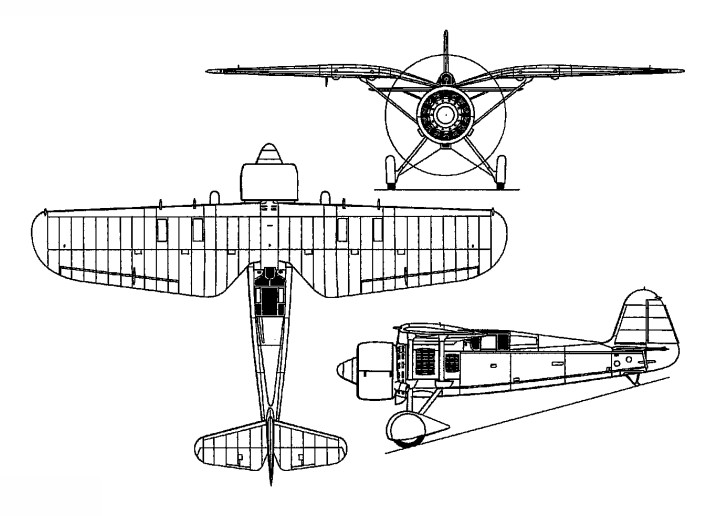
In response to the Polish Air Force’s need to replace its ageing biplane Potez 25 and Potez 27 light bomber/reconnaissance aircraft, a specification was presented to PZL in 1931 (Panstwowe Zaklady Lotnicze – the State Aviation Works) calling for an all-metal light bomber plane powered by a Bristol Pegasus air-cooled radial engine, which should carry a minimum 600 kg (1330 lb) bomb-load, and whose maximum speed should reach 300 km/h (186 mph). Another requirement was the ability to operate from improvised airfields.
During 1931 P.Z.L. had designed a six-passenger single-engine light transport, the P.Z.L. P.13, for service with LOT, but as it had no appeal to the airline its development was abandoned. It was decided subsequently to use this aircraft as the basis for an army co-operation aircraft accommodating a crew of three, and using as powerplant a licence-built version of the Bristol Pegasus radial engine.
Necessary changes to the project, apart from fuselage redesign, included the addition of wing flaps, and the provision for weapons mountings. The wing was designed by Franciszek Misztal, based on his original stressed-skin main spar concept, which had earlier been only tested on the PZL 19 high-performance touring airplane.
The first PZL P.23 prototype
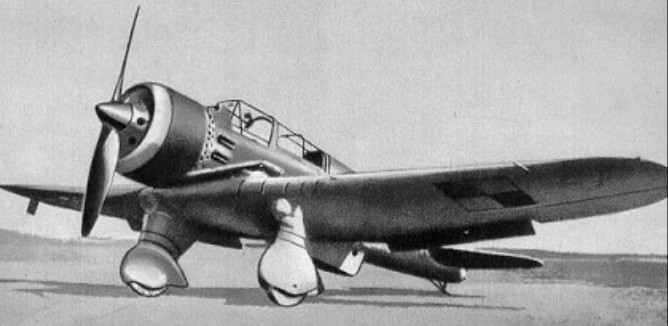
Following evaluation of the design by the Department of Aeronautics, P.Z.L. was instructed to build three prototypes and the first was powered by a 440kW Bristol Pegasus IIM2. Serious problems with the wing’s construction caused delays, and the first prototype, powered by the Bristol Pegasus II M2 engine made its maiden flight in August 1934. This aircraft had the designation P.23/I and name Karas (crucian carp), but testing soon revealed a number of shortcomings. The first prototype revealed many problems, which were overcome by the second and third prototypes. The fuselage was redesigned, with internal bomb bay removed to provide more space for the crew, and engine installation lowered for better visibility. The wing’s mechanization was redesigned with automatic slats added on the leading edge, and the wing root fairings significantly enlarged.
The P.23/II crashed during flight trials, but the P.23/III performed well and during development flying was modified progressively to what was to be production standard.
After additional changes to the engine fairing and the exhaust, the airplane was accepted by the Lotnictwo Wojskowe and given the designation PZL P.23A Karas. In 1935 production orders were placed for 40 examples of the P.23 Karas A with the 433kW P.Z.L.-built Pegasus II, and 210 of the P.23 Karas B with the 507kW P.Z.L.-built Pegasus VIII. The first P.23A Karas A flew in June 1936, but development problems with the Pegasus II engine resulted in these aircraft being relegated to the training role. The production started in the end of 1935 but its pace suffered because of frequent problems with the Pegasus II M2 engines, license-built by the Polish Skoda works (this engine variant was never produced by Bristol). In addition, the leading-edge slats proved unreliable, and were consequently removed. Only 40 P.23As were built and assigned to training duties, pending the availability of the P.23B variant fitted with the more powerful Bristol Pegasus VIII engine, whose production commenced in the summer of 1936. In February 1937 the production reached the pace of 20 aircraft per month, and the original order for 200 P.23s was fulfilled in September 1937. However, the P.23B Karas B began to enter service in mid-1937 and when production ended the type equipped 14 first-line squadrons. Additional 50 aircraft were ordered, and the production of the P.23B variant concluded in February 1938.
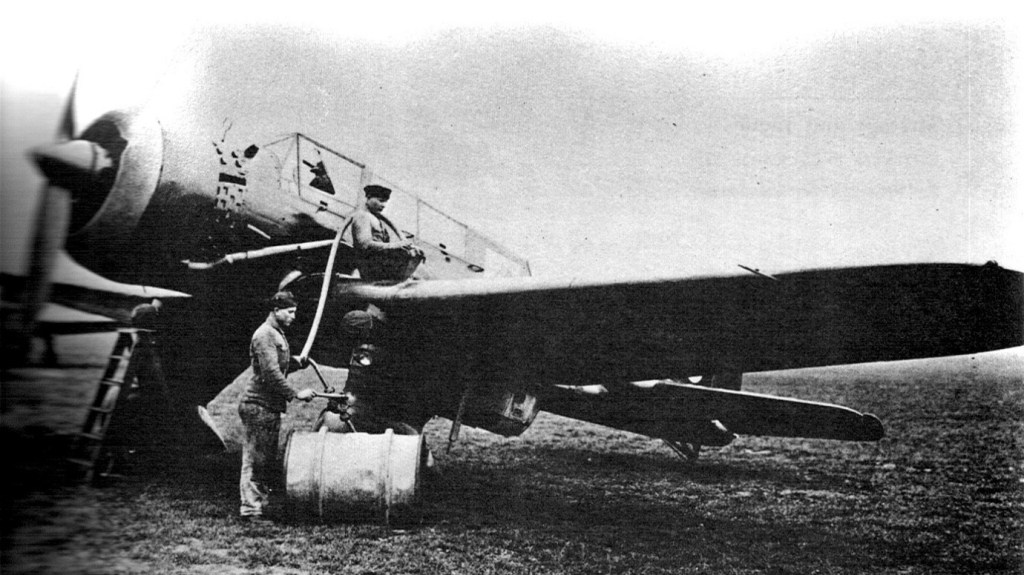
2 September 1939 – preparing for the first bombing raid onto German soil
One Karas B was modified under the designation P.42 to serve as a development aircraft for the improved P.46 Sum, with a twin fin/rudder tail unit and a retractable ventral gondola. However, the P.46 did not materialise beyond the prototype stage and the P.42 was subsequently converted back to Karas B standard.
P.42
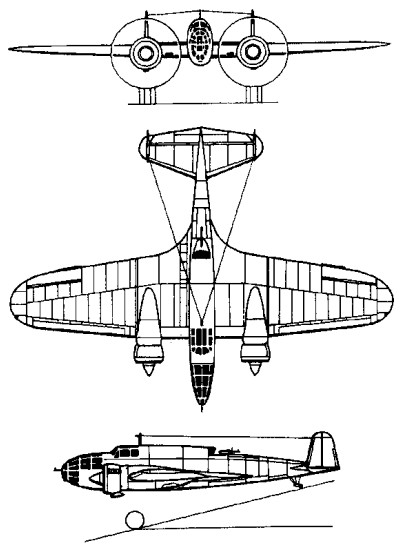
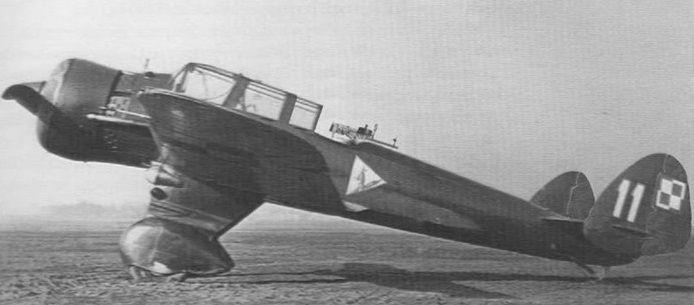
The standard Polish light bomber and reconnaissance aircraft, the PZL.23 Karaś could not be exported because of licence restrictions on the use of the Polish-built (PZL) Bristol Pegasus engine. Developed under the leadership of Henryk Malinowski, the PZL.43 was an improved export variant of the PZL.23, powered instead by a Gnome-Rhône 14K engine, first flying in February 1937.
Like its P.23, the PZL.43 was conventional in layout, a low-wing, all-metal, metal-covered cantilever monoplane. Its fuselage was semi-monocoque. It had a crew of three: pilot, bombardier and an observer/rear gunner. The pilot and observer’s cockpits were in tandem and glazed with the open rear gunner’s position behind. The bombardier occupied a ventral combat gondola which had a machine gun position at the rear. The fixed undercarriage was heavily spatted, though not suited for rough airfields. Tanks in the centre section of the wings held 740 litres of fuel. A three-bladed propeller was used.
PZL P.43 Karaś
The differences between the two types derived chiefly from use of the heavier and longer (two rows of seven cylinders) Gnome-Rhône engine. To maintain the centre of gravity the fuselage was lengthened by adding one central section which moved the bombardier’s gondola rearwards. The new engine improved performance considerably, for example increasing maximum speed from 319 km/h to 365 km/h. In addition, armament was increased with two forward firing Karabin maszynowy wz. 36 machine guns mounted in offset fairings to clear the radial engine. Up to 700 kg of bombs could be carried under the wings, like the PZL.23. A common option was 24 x 12.5 kg bombs (300 kg in total). A camera was fitted. A P-23B was used for testing metallic three-bladed Hamilton Standard propeller.
No prototype preceded the production series of 12 aircraft completed in 1937. These were designated PZL.43A and powered by Gnome-Rhône 14Kirs motors of 900 to 930 hp (671 to 694 kW). An order was placed in April 1936, with the additional requirement of a more powerful Gnome-Rhone 14N-01 engine and an additional forward-firing machine gun, and 12 were built for the Bulgarian air force, given the designation PZL 43A, and delivered in 1937, reforming their airforce after a period of post-World War I treaty constraints. The Bulgarian Airforce called it the Chaika (Чайка, gull). Because of delays in engine shipments from France, this first series was eventually fitted with Gnome-Rhone 14kfs engines.
P-43A
This model differed by having the 694kW Gnome-Rhone radial engine, improved crew accommodation, and armament increased by the addition of a second forward-firing machine-gun. The excellent performance of the P.43A Karas led to a repeat order in March 1938, totalling 42, for a further improved P.43B Karas with the 950 to 1,020 hp (708 to 761 kW) Gnome-Rhone 14N.1. Of this total 33 were despatched and delivered by August 1939; of the balance, eight had been packed for despatch and the ninth was in final assembly.
Three complete aircraft from the Bulgarian order were left at Okęcie and these were damaged during an air raid on 4 September and later captured by the Germans in a factory in Warszawa-Okęcie. Some damaged aircraft left at Okęcie airfield were captured by the Germans. Five were repaired and delivered to Bulgaria. Another was tested by the Germans in Rechlin in 1940 before joining the others in Bulgaria in October.
Along with 12 PZL.43s and two PZL.43As delivered by Germany in 1940, these gave Bulgaria a total of 50 aircraft. They initially served in three 12-aircraft squadrons of the 1st Line Group (linyen orlyak). From 1942 they were used in the 1st Reconnaissance Regiment and 2nd Line Regiment. Chaikas were used mostly for training and searching for partisans in Macedonia in 1943–44. Several of them crashed during service and there were difficulties in obtaining spare parts. In 1944 they were withdrawn from combat service and were eventually written off in 1946.
P-43B
At the time of the German invasion of Poland, nine PLZ.43As of the Bulgarian order were crated ready for delivery or were incomplete, two lacking propellors. Five survived the initial German bombing attacks on the P.Z.L. factory and were moved to the airfield at Bielany and taken over by the Polish Air Force for use by 41 Eskadra Rozpoznawcza (41st Reconnaissance Squadron) which was mostly equipped with PZL.23 Karaś. They undertook reconnaissance duties but by 10 September 1939, there were the only two aircraft remaining. One was shot down by a Messerschmitt Bf 110 at Michałówek near Sulejówek and the crew killed. The second, damaged by a pair of Messerschmitt Bf 109s, two days later, crash landed in Brześć.
During the September campaign 114 P.23s were flown by first-line units, and additional 11 (including the five PZL 43s) were received as replacements. Of these, only 17 reached Romania on September 17.
Sometimes the aircraft is called the “PZL P.43”, but despite an abbreviation P.43 painted on the tail fin, the letter “P” was generally reserved for fighters of Pulawski’s design (like the PZL P.11).
PZL.43A Second production series with more powerful Gnome-Rhône 14N-01 engine, 42 built.
PZL.43B Improved version, powered by a 980 hp (731 kW) Gnome-Rhône 14N-01 engine.
Operators:
Bulgarian Air Force operated 50 aircraft
jato/ Obrazcow Orliak (2. Squadron of the Exemplary Wing) operated 12 PZL.43
Lineen Orliak (Level-flight (bomber) Squadron) operated 36 PZL.43A, 12 in each jato (Squadron)
Razuznawatelen Polk (Reconnaissance Regiment) operated PZL.43A between March 1942 and August 1944
Lineen Polk (Level-flight (bomber) Regiment) operated PZL.43A between March 1942 and August 1944
jato za blisko razuznavanye (Close Distance Reconnaissance Squadron) operated 13 PZL.43A between August 1944 and early 1945
jato za blisko razuznavanye operated 11 PZL.43A between August 1944 and early 1945
Luftwaffe tested captured aircraft.
Polish Air Force 41 Eskadra Rozpoznawcza (Reconnaissance Squadron) operated five PZL.43A aircraft
PZL.43A Engine: 1 × Gnome-Rhône 14N-01, 1020 hp (750 kW) Wingspan: 13.95 m (45 ft 9 in) Wing area: 26.8 m² (288 ft²) Length: 9.95 m (32 ft 8 in) Height: 3.3 m (10 ft 10 in) Empty weight: 2,200 kg (4,850 lb) Loaded weight: 3,100 kg (6,830 lb) Useful load: 900-1,325 kg (1,980-2,920 lb) Max. takeoff weight: 3,525 kg (7,770 lb) Maximum speed: 365 km/h at 4,000 m (227 mph at 13,000 ft) Cruise speed: 300 km/h at ground level (186 mph at ground level) Stall speed: 115 km/h (72 mph) Range: 1,250 km (780 mi) Service ceiling: 8,500 m (28,000 ft) Rate of climb: 7.5 m/s (1,480 ft/min) Wing loading: 115 kg/m² (23.7 lb/ft2) Crew: 3 Armament: 2 x 7.92 mm PWU wz.36B fixed in nose; 1 x 7.92 mm PWU wz.36R in rear upper station; 1 x 7.92 mm PWU wz.36R in underbelly station; Bombload: 600-700 kg
P-43B Engine: Gnome-Rhone 14N-01, 980 hp Wingspan: 13.95 m Wing area: 26.80 sq.m Length: 9.95 m Height: 3.30 m Maximum take-off weight: 3525 kg Empty weight: 2200 kg Normal takeoff eight: 3100 kg Maximum speed S/L: 298 kph Maximum speed at altitude: 365 kph Cruising speed: 300 kph Practical range: 1250 km ROC: 450 m / min Service ceiling: 8500 m Crew: 3 Armament: one 7.9-mm front gun and two 7.7-mm Vickers machine gun in rear dorsal and ventral positions Bomb load external: 700 kg
During 1931 A P.Z.L. project led by Stanislaw Prauss had designed a six-passenger single-engine light transport, the P.Z.L. P.13, for service with LOT, but as it had no appeal to the airline its development was abandoned. It was decided subsequently to use this aircraft as the basis for an army co-operation aircraft, the P.23

 All Aero