RWD RWD-2 / Warsaw University of Technology RWD 2

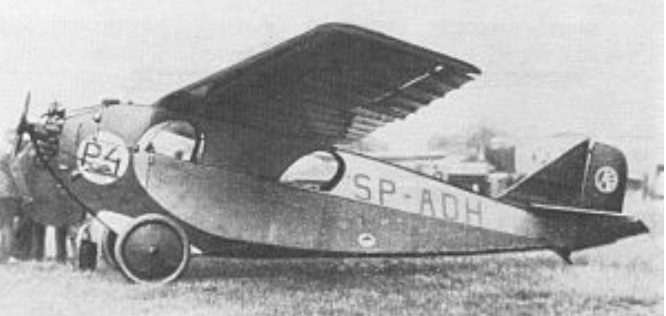
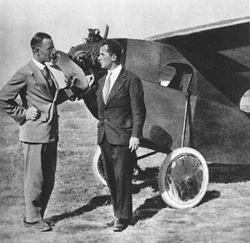
The RWD-2 was constructed by the RWD team of Stanisław Rogalski, Stanisław Wigura and Jerzy Drzewiecki in the Aviation Section of Mechanic Students’ Club of Warsaw University of Technology. It was a development of their first design RWD-1. Its feature was a unique, fish-shaped fuselage, with good aerodynamics, but without a direct view forward from the pilot’s seat. For this reason, they were later nicknamed: blind mice.

Wooden construction high-wing cantilever monoplane, conventional in layout. Fuselage rectangular in cross-section, plywood covered. Single-spar one-part wing of a trapezoid shape, covered with canvas and plywood in front. Cantilever empennage, covered with plywood (stabilizers) and canvas (rudder and elevators). Crew of two, sitting in tandem, with dual controls. The crew cabs were open on the sides in upper part, they had individual doors on the right side. Salmson 9Ad, 46 hp (40 hp nominal power), 9-cylinder air-cooled radial engine in front, driving two-blade metal propeller (wooden in the prototype). Conventional fixed landing gear, sprung by rubber rope, with a rear skid. Fuel tank 75 l in fuselage front (fuel consumption – 9.5 l/ flight hour).

The first prototype (registration SP-ACE) was completed and flown by the designer Jerzy Drzewiecki in July 1929. Since it appeared successful in sports flying, three more RWD-2s were built in 1930 (registration SP-ADJ, -ADG, -ADH).

In August-September 1929, Franciszek Żwirko and Stanisław Wigura flew the prototype across Europe, on the 5000 km Warsaw-Paris-Barcelona-Warsaw route (it was the first long foreign flight of the Polish-designed aircraft). On 16 October, 1929, Żwirko and Antoni Kocjan set an international FAI altitude record of 4,004 m (13,133 ft) in the light tourist plane class (below 280 kg / 616 lb empty weight).

Three serial aircraft took part in the Challenge 1930 international touring planes competition in July 1930. Stanisław Płonczyński took the 19th place, as the best Pole (for 35 qualified and 60 starting crews), and Edward Więckowski took the 21st place (the third Józef Muślewski was disqualified due to time exceeding, but he completed the rally off the contest). In the Challenge, RWD-2s won the trial of lowest fuel consumption (5.2 kg / 100 km). According to Flight, they “appear to possess particularly good air-sailing qualities”.

RWD-2s were also used in several Polish air competitions and other minor international ones, with some success. They were also used for training in the Polish Aero Club in Warsaw, Poznań and Vilnius. They were withdrawn in 1935 (one was bought by a private owner and flew for some time longer).

RWD-2
Engine: 1 × Salmson 9Ad, 46 hp (33.8 kW)
Length: 6.15 m (20 ft 2 in)
Wingspan: 9.8 m (32 ft 2 in)
Wing area: 13.6 sq.m (146.3 sq.ft)
Height: 1.9 m (6 ft 3 in)
Empty weight: 268 kg (590 lb)
Loaded weight: 450 kg (990 lb)
Useful load: 200-250 kg
Max. takeoff weight: 500 kg (1,100 lb)
Maximum speed: 155 km/h (96 mph)
Cruise speed: 130 km/h
Stall speed: 65 km/h
Range: 550 km (342 miles)
Service ceiling: 3,500 m (11,480 ft)
Rate of climb: 3 m/s, 180 m/min (590 ft/min)
Wing loading: 33 kg/sq.m (161.4 lb/sq.ft)
Take-off run: 120 m
Take-off run to 8.5 m: 260.5 m
Landing run from 8.5 m: 219 m
Crew: One, pilot
Capacity: One, trainee / second pilot
RWD RWD-1 / Warsaw University of Technology RWD 1

The RWD-1 was the first aircraft constructed by the RWD team of Stanisław Rogalski, Stanisław Wigura and Jerzy Drzewiecki in the Aviation Section of Mechanic Students’ Club of Warsaw University of Technology. It was designed in late 1927. The plane was built with a financial help of the LOPP organization. One prototype was built for static trials, and one flying prototype (registration SP-ACC), completed and flown by the designer Jerzy Drzewiecki in September 1928.

Wooden construction single-engine high-wing cantilever monoplane, conventional in layout. The fuselage rectangular in cross-section, narrowing in upper part, plywood covered. Single-spar one-part trapezoid wings, covered with canvas and plywood in front. Cantilever empennage, covered with plywood (stabilizers) and canvas (rudder and elevators). The crew of two sat in tandem. The crew cockpits were open on the sides in upper part, and had individual doors (first cockpit – on the right, second one – on the left). A 2-cylinder air-cooled 40 hp ABC Scorpion II boxer engine (34 hp nominal power) was in front, driving two-blade wooden propeller Szomański (1,5 m diameter). Conventional fixed landing gear, sprung with a rubber rope, with a rear skid. Fuel tank in fuselage front (fuel consumption 9 l/h).

Its unusual feature was a unique, fish-shaped fuselage, similar to early Messerschmitt’s designs (M17). Two crewmen sat in tandem inside the fuselage and had only side openings in its upper part. In front of the pilot’s head there was an upper part of the fuselage, supporting wings, limiting his view forward, though its profile was thin. This shape was repeated in following RWD designs. The aircraft was evaluated as a quite good design, with an original construction. It had high glide ratio of 12, and its payload was bigger than its empty weight. It was not built in any quantities, but gave a basis to further more successful RWD designs: RWD-2, RWD-3, RWD-4, RWD-7, and, partly RWD-5.

The prototype took part in the 2nd Polish Light Aircraft Contest in 1928, but did not complete it due to engine breakdown. In 1929 it undertook a raid around Poland. It was scrapped in winter of 1929/1930.
Description

RWD-1
Engine: 1 × ABC Scorpion II, 40 hp (53.6 kW)
Length: 6 m (19 ft 8 in)
Wingspan: 9.8 m (32 ft 2 in)
Wing area: 13.6 sq.m (146.3 sq.ft)
Height: 1.7 m (5 ft 7 in)
Empty weight: 206 kg (453 lb)
Loaded weight: 417 kg (918 lb)
Maximum speed: 135 km/h (84 mph/h)
Cruise speed: 115 km/h
Stall speed: 65 km/h
Range: 500 km (310 mi)
Service ceiling: 1,950 m (6,396 ft)
Rate of climb: 1.8 m/s, 108 m/min (354 ft/min)
Wing loading: 30.5 kg/sq.m (6.3 lb/sq.ft)
Take-off run: 100 m
Landing run: 130 m
Crew: One, pilot
Capacity: One, passenger / second pilot

RWD

RWD was a Polish aircraft construction bureau active between 1928 and 1939. It started as a team of three young designers, Stanisław Rogalski, Stanisław Wigura and Jerzy Drzewiecki, whose names formed the RWD acronym.

Jerzy Drzewiecki and Jerzy Wedrychowski by the RWD-7

They started work while studying at Warsaw University of Technology. In December 1925, with some other student constructors, they set up workshops at the Aviation Section of Mechanics Students’ Club (Sekcja Lotnicza Koła Mechaników Studentów), where they manufactured their first designs. From 1926 they designed several aircraft alone (Drzewiecki JD-2 and WR-1), in 1928 they joined forces as one team, starting with RWD-1 sportsplane. Apart from building planes, J. Drzewiecki was a test pilot of their designs, while S. Wigura flew as a mechanic in competitions. In 1930 the team was moved to new workshops at Okęcie district in Warsaw, near the Okęcie aerodrome, today’s Warsaw International Airport, founded by the LOPP paramilitary organization. On 11 September 1932, Stanisław Wigura died in an air crash in the RWD-6 during a storm, but the RWD name continued to be used for new designs (according to a popular story, the letter W now de facto stood for engineer Jerzy Wędrychowski, but he was not a designer). In 1933, Rogalski, Drzewiecki and Wędrychowski founded the company Doświadczalne Warsztaty Lotnicze (DWL, Experimental Aeronautical Works) in Warsaw, which became a manufacturer of further RWD aircraft. Apart from Rogalski and Drzewiecki, in a construction bureau worked designers Tadeusz Chyliński, Bronisław Żurakowski, Leszek Dulęba and Andrzej Anczutin and several engineers, including Henryk Millicer.

At first, the RWD team designed and built light sportsplanes. Early designs RWD-2 and RWD-4 were built in small series and used in Polish sports aviation, including their debut at the Challenge 1930 international contest. Their next designs performed particularly well in competitions – the RWD-6 won the Challenge 1932 and RWD-9s won the Challenge 1934 international contest. The sportsplane RWD-5 was the lightest plane to fly across the Atlantic in 1933. Three types saw mass production: the RWD-8, which became the Polish Air Force basic trainer, the RWD-13 touring plane and the RWD-14 Czapla reconnaissance plane (1938).

Other important designs were the RWD-10 aerobatic plane (1933), RWD-17 aerobatic-trainer plane (1937) and RWD-21 light sport plane (1939). World War II prevented further development and serial production of later RWD designs, and put an end to the RWD construction bureau and the DWL workshops.

Russian Empire airship B-10 / B-12 Patriot / B-12bis Victory

Victory

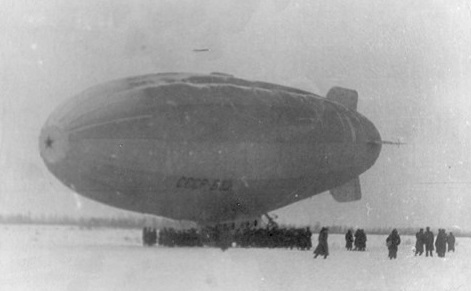
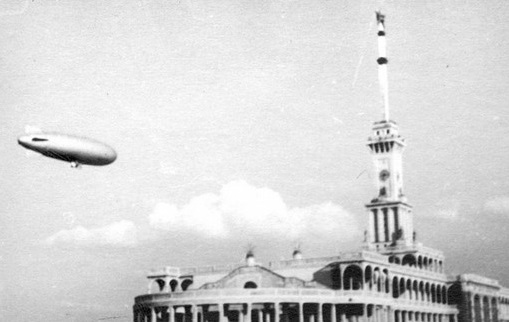
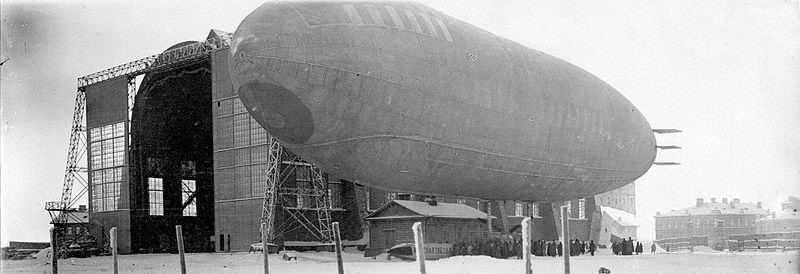
Four airships designed by Myagenkoy were built in the Soviet Union including B-10, B-12 Patriot, and B-12 bis Victory.

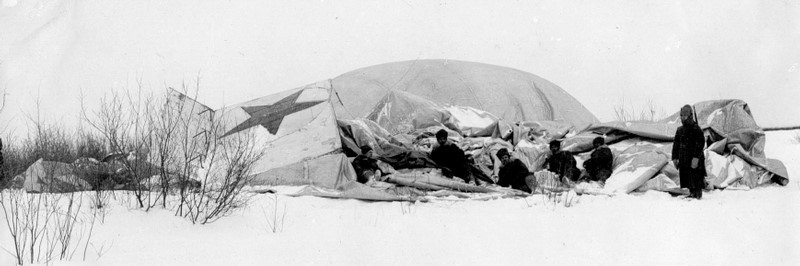
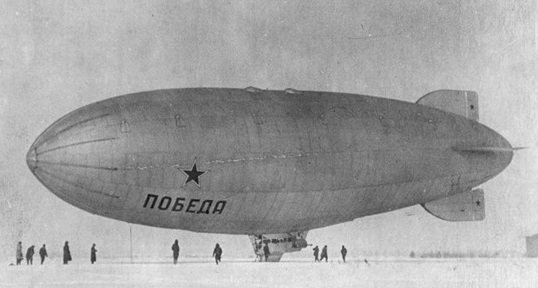
Airship Pobeda (Victory) was built in 1944 in 6 months. The volume was 5,000 cubic meters. The airship was designed to transport gas for barrage balloons and after the war it was used quite successfully to search for sunken ships. The Pobeda caught on a power line on 29 January 1947. They managed to tear off the wires by jettisoning its ballast. However, the airship was ascending so fast that the pressure inside the hull ruptured it, killing her crew of three airmen.

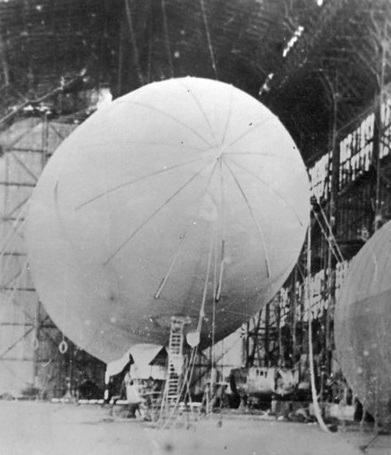
Assembling USSR-V10 airship, 1937

USSR-V10 first flight occurred in 1938.

USSR-V10 before its flight, 1938.

USSR-V10 crashed in August, 1938 killing 6 people. The cause of the crash was a mistake of its service crew who forgot to remove the caps from its exhaust valves which resulted in a rupture of the hull.

In 1946, the last passenger airship, the “Patriot”, entered service but by 1950 regular inland service had ended.

In 1943-44 the USSR V-12 airship made 969 flights. In 1945 USSR V-12 and Pobeda airships made 216 flights. 200 000 cubic meters of hydrogen and 320 tones of cargo had been delivered.

Gallery

Russian Empire airship B-7 Chelyuskinets

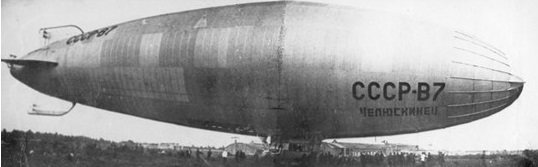
After the V-6 the Soviet Union built the Soviet B-7 airship, named “Chelyuskinets”.

The first flight was performed in 1934.

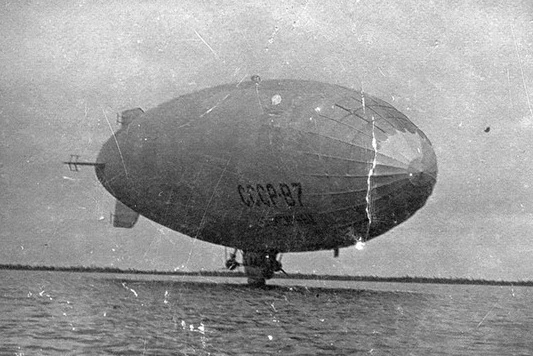
In 1935 was built a second, same airship, designated B-7 bis, after its predecessor USSR-V7 burnt in a fire.

USSR-V7bis Chelyuskinets water landing in the Leningrad Region

On the way from Petrozavodsk to Gatchina, it ran out of fuel when it was 100 m from the base so it had to waterland. However, the airship caught on powerlines and a fire broke out. Those who jumped out into the water stayed alive. The burning airship fell on a kennel killing over 100 shepherds. The commander of the airship was sentenced to two years in prison but was later released.

B-7
Envelope volume: 9,500 cu.m

Russian Empire airship USSR-4

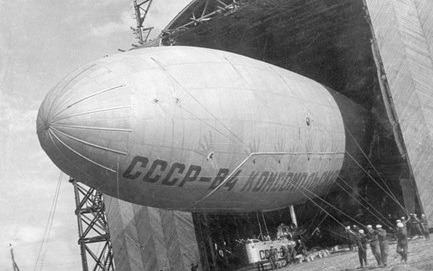
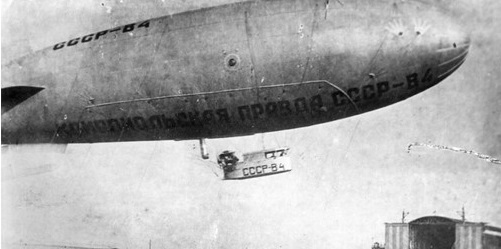
USSR-V4 Komsomolskaya Pravda, 1933

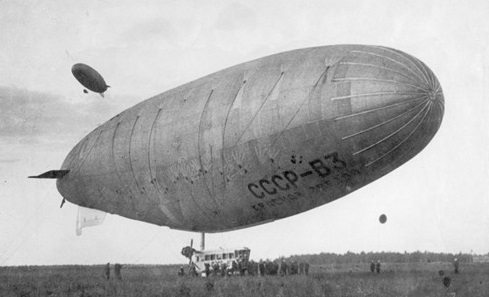
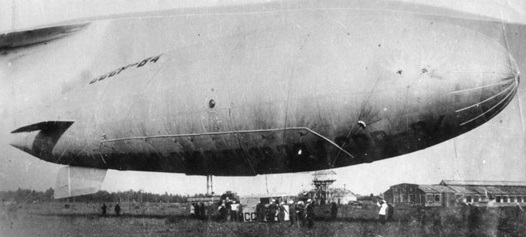
By May 1932, the Russian Empire had built three airship — the USSR B-1, B-2 USSR “Smolny” and the Soviet B-3 “Red Star”, which in the main have been set up to implement educational and propaganda operations. The B-1 envelope was 2200 cubic meters and B-2 5000 cubic meters. The airships had different engines. The envelope of all 3 airships was made of three-layer rubberized material and had an inner wall that divided the volume of the two equal parts. This partition to reduced transfusion of gas along the envelope for trim of the craft.

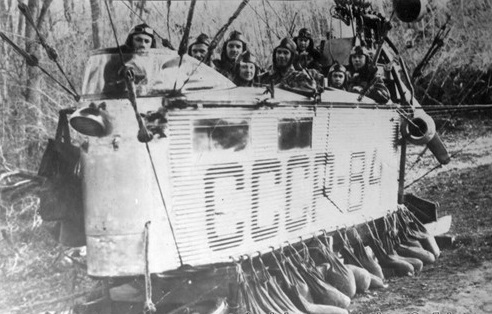
The Komsomolskaya Pravda gondola was enclosed.

These three airships performed a series of successful flights on the routes of Leningrad — Moscow — Leningrad, Moscow — Kharkov, etc. The three airship were joined by USSR-4.

In 1934, V4 Komsomolskaya Pravda burnt after the boathouse where it was kept was struck with a lightning. However, some say that the real cause of the fire was violations of fire safety measures.

USSR-V4 Komsomolskaya Pravda, 1933.

V-4
Envelope: 250,000 cu ft
Range: 750 miles

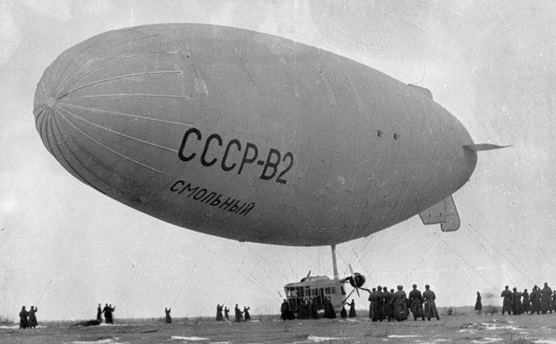
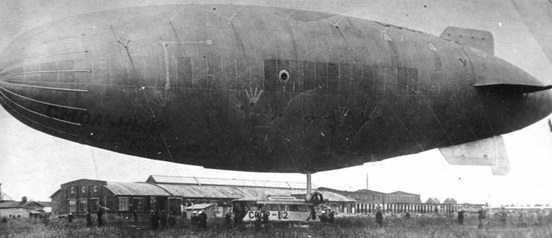
Russian Empire airship B-2 USSR Smolny

By May 1932, the Russian Empire had built three airship — the USSR B-1, B-2 USSR “Smolny” and the Soviet B-3 “Red Star”, which in the main have been set up to implement educational and propaganda operations. The B-1 envelope was 2200 cubic meters and B-2 5000 cubic meters. The airships had different engines. The V-2 had two 230 hp engines and could carry 8 passengers. The envelope of all 3 airships was made of three-layer rubberized material and had an inner wall that divided the volume of the two equal parts. This partition to reduced transfusion of gas along the envelope for trim of the craft.

These three airships performed a series of successful flights on the routes of Leningrad — Moscow — Leningrad, Moscow — Kharkov, etc. The three airship were joined by USSR-4.

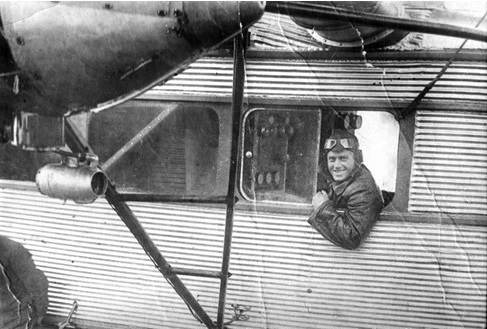
Senior flight mechanic in Smolny before another flight

On September 6, 1935 USSR-2 Smolny was at the Stalino (Donbass) airport, when wind pulled out of the ground all 60 anchors that held it. Have seized on one of the cables commander of dirigible NS Gudovantsev managed at an altitude of 120 meters to get to the gondola, in which at that time were 4 crew members and 11 tourists. At an altitude of 800 meters the engines were running. After that, having waited for the adverse weather conditions to decrease, the airship landed safely after 5 hours and 45 minutes. For this heroic act Gudovantsev was awarded the Order of the Red Star.

The airship crashed in the Novgorod Region in 1933 when its engines failed.

The airship was disassembled in 1939.

Russian Empire airship USSR B-1

By May 1932, the Russian Empire had built three airship — the USSR B-1, B-2 USSR “Smolny” and the Soviet B-3 “Red Star”, which in the main have been set up to implement educational and propaganda operations. The B-1 envelope was 2200 cubic meters / 78,000 cu ft and B-2 5000 cubic meters. The V-1 was designed to pick up passengers without landing. The airships had different engines. The envelope of all 3 airships was made of three-layer rubberized material and had an inner wall that divided the volume of the two equal parts. This partition to reduced transfusion of gas along the envelope for trim of the craft.

These three airships performed a series of successful flights on the routes of Leningrad — Moscow — Leningrad, Moscow — Kharkov, etc. The three airship were joined by USSR-4.

During The Second World war SSSR-V1 was used for carrying supplies for captive balloon units of Red Army, making more than 900 flights.

Engines: 2 x 75hp
Envelope: 2200 cu.m / 78,000 cu ft a
Top speed: 55 mph
Endurance 12 hr
Crew of 7