The 1930 West Coast Co WCK-2 Sportster was a two-place cabin, parasol wing monoplane powered by a 100hp Kinner K-5 engine.
The one built was registered NX10526 c/n 2 and crashed while being flown by aspiring test pilot Tony LeVier.
The 1930 West Coast Co WCK-2 Sportster was a two-place cabin, parasol wing monoplane powered by a 100hp Kinner K-5 engine.
The one built was registered NX10526 c/n 2 and crashed while being flown by aspiring test pilot Tony LeVier.

The Schmuck Bros Aircraft Co S-3 Sport two-place monoplane was powered by a 90hp Curtiss OX-5, and later with a 100hp Kinner.
Built circa 1928 at Monarch Aero Corp field, it was registered N510 c/n 2.
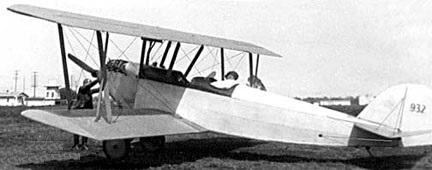
The 1927 Schmuck Bros Aircraft Co S-1 Commercial Sport, or Monarch, with its elephant-ear ailerons, was the only one built. Registered N932 c/n 1, it was first flown on 8 September 1927, it was dismantled in February 1930.
Engine: 90hp Curtiss OX-5
Wingspan: 32’0″
Length: 24’0″
Max speed: 100 mph
Stall: 35 mph
Seats: 3
(Edward W & Charles T) Schmuck Bros Aircraft Co
981 Amalia Ave/Eastside Monarch Aero Corp Airport
Los Angeles CA.
USA
1930:
West Coast Aircraft Corp,
Los Angeles
USA
Airplane builder
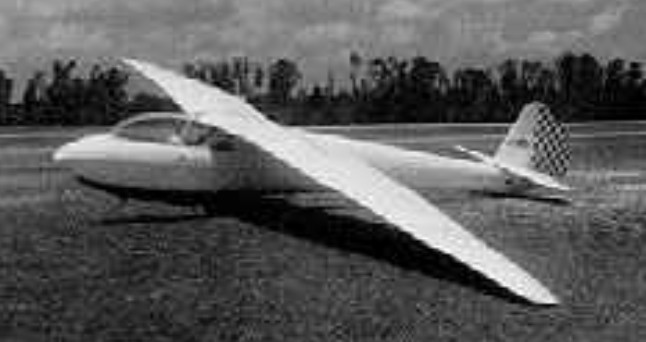
The Condor was designed by Heini Dittmar with the advice and help of Atexander Lippisch and Dipl-lng Fritz Kramer; the Condor owed something to an earlier sailplane, the 19m (62ft 3.5in) span Fafnir. Dittmar built the prototype Condor in a workshop at Wasserkuppe in his spare time and it made its debut in the 1932 Rhon gliding contest, which it won; its very clean lines aroused considerable interest, and it went into series production.
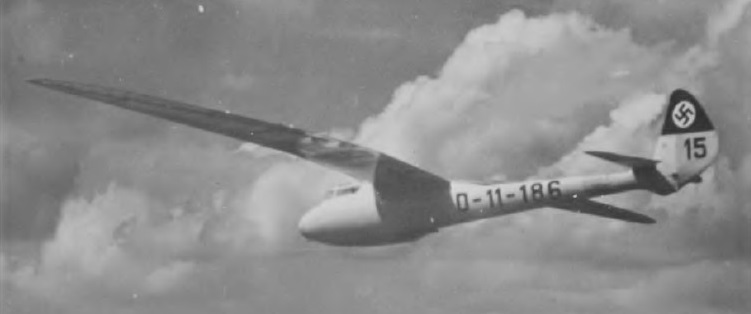
Introduced in its original form in 1932, the single-seat Condor 1, the high-set gull wings were braced with V-struts and had strengthened leading edges. The Condor series was built from wood, with the wooden-framed wing covered in doped aircraft fabric. The landing gear was originally a dolly for take-off, with the aircraft landing on a fixed skid, although at least one was modified to use a fixed monowheel. The wings have balanced DFS-style dive brakes for glidepath control. The horizontal stabilizer is of an all-flying tail design.
Designed by Heini Dittmar at the end of 1931 as a performance glider using the Fafnir hull drawings and was built by him for 2000 working hours using materials from the RRG aeronautics department. The flight was performed by his brother Edgar just before the Rhön competition in 1932, where Heini Dittmar and Condor won the junior class in the practice competition.
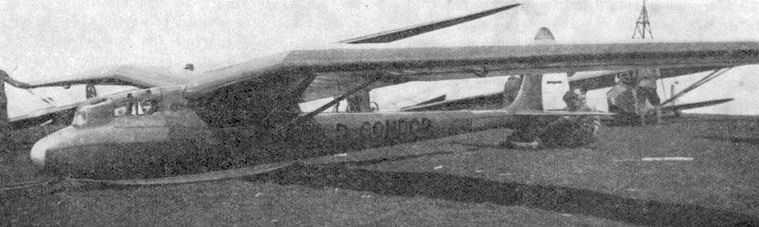
The Condor 2 and the IIA, developed in 1935, replaced strut bracing with a cantilever wing with a new wing section of reduced thickness/chord ratio on the outer parts of the wings, living an improved glide angle and lower rate of sink at higher speeds. This version set a new world distance record of 303 miles in 1935 and was a well-known type at prewar gliding contests. The Condor itself was of conventional wood and fabric construction, with very long span ailerons and a landing skid under the fuselage; no monowheel was fitted.
In February 1934 a Condor was taken to South America and, flown by Heini Dittmar, set a new world altitude record of 14,272ft for sailplanes, breaking the previous record by nearly 6,000ft. In 1935 one was flown to a new world distance record of 504 km (313 mi).
The Condor 3, which appeared in 1938 and was built by Schleicher, had a longer, slimmer fuselage and strengthened cantilever wings which now incorporated DFS air brakes.
After the war Heini Dittmar formed his own company, Mowe-Flugzeugbau Heini Dittmar, and there developed a tandem two-seater version, the Condor 4, which first flew in 1953 and was very similar to the Mk 3 apart from the second seat. The two-seat Condor IV was put into series production by Schleicher. The Condor IV has a 18.0 m (59.1 ft) span wing that employs a Goettingen 532 airfoil at the wing root, changing to a NACA 0012 section at the wing tip.
Condor IVs were flown in the 1952 World Gliding Championships held in Madrid, Spain. During that contest Ernst-Günther Haase set a new world record in the multi-place category for speed over a 100 km (62 mi) triangle of 80.9 km/h (50 mph).
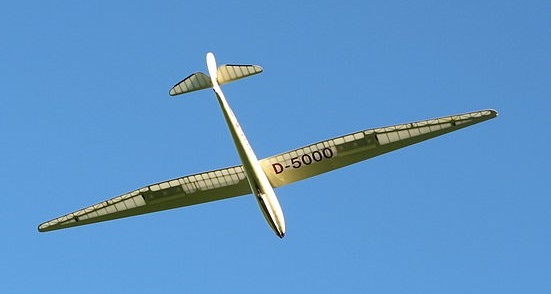
Hans Luenger imported one Condor IV-2 to the United States in 1952. After the wooden fuselage was damaged, he and Merritt Zimmerman built a new design replacement from welded steel tube and covered it with doped fabric. The new fuselage included a fixed wheel for landing gear. This aircraft was removed from the US Federal Aviation Administration registry in 2007.
The Condor, also referred to as the Dittmar Condor, single and two-seat gliders were produced in small quantities before the Second World War, produced again between 1952 and 1955 by Alexander Schleicher GmbH & Co and also by Ferdinand Schmetz.
Some sources state that there were a total of 18 Condors constructed, while one other says that the total number is unknown, but includes at least 18 Condor IVs built under licence in Argentina.
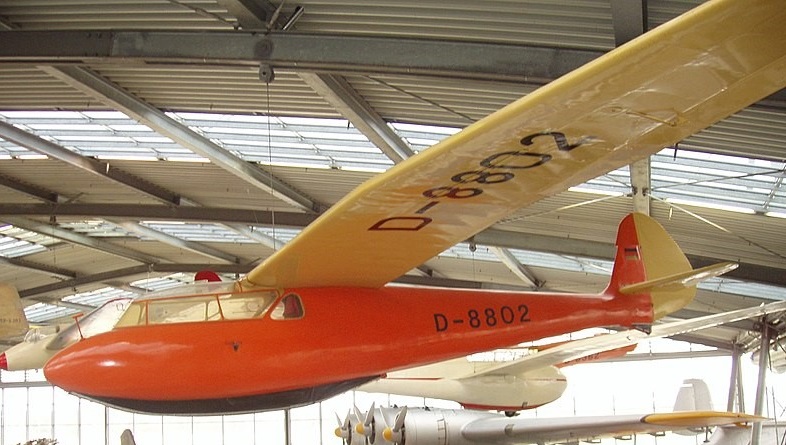
Peter Reidel’s Condor La Falda was modified to have a strut-mounted power-egg, containing a Kroeber M4 driving a pusher propeller, attached to the centre-section. The intention was for the power-egg to be carried to the glider by the retrieve crew, fitted to the glider and the pilot to fly the glider back to home base without the need to de-rig and transport by trailer. In practice it was found to be impractical due to the complexity of the mounting, as well as time and effort required to mount the power-egg.
A small series was created by licensees Ferdinand Schmetz in Herzogenrath (five Condor IV / 2 with DFS brake tabs) and Alexander Schleicher (seven Condor IV / 3 with Schempp – Hirth brake tabs that extend up and down). Schleicher successfully received type certification from the Test Center for Aviation Equipment (PfL). Replicas were made in Argentina as Condor IV / 4.
However, some copies of the Condor IV were also used as test vehicles for new development; For example, flaps were attached to an example and tested by Hanna Reitsch. This copy is owned by Luftsportverein Wipperfürth. A Condor IV is located at the airport in Osnabrück Aviation Association in Achmer. More Condor IVs are on display at Schleissheim’s Airport and the German Glider Museum at Wasserkuppe. A Condor IV also flies in Anklam, it comes from an Argentine production (license Schleicher).
Condor I
Initial strut-braced, single-seat version introduced in 1932.
Span: 17.26 m
Wing area: 16.20 m²
Wing extension: 18.4
Length: 7.65 m
Empty weight: 310 kg
Wing load: 19.12 kg / m
Glide ratio: 26
Crew: 1
Condor IA
Condor II
Germany, 1932
Wingspan: 56.562 ft / 17.24 m
Wing profile: Gö 532
Wing area: 16.20 m²
Wing extension: 18.4
Length: 25.525 ft / 7.78 m
Empty weight: 330 kg
Wing load: 19.75 kg / m²
Min descent: 0.65 m / s
Glide ratio: 26
Crew: 1
Condor IIB
Improved cantilever wing
Seats: 1
Condor 3
Span: 56 ft 6.25 in / 17.24 m
Length: 24 ft 11.25 in / 7.6 m
Wing area: 174.4 sq.ft / 16.2 sq.m
Aspect ratio: 15.0
Wing section: Gottingen 532
Wing extension: 15
Empty weight: 507 lb / 230 kg
Max weight: 717 lb / 325 kg
Water ballast: None
Max wing loading: 20.06 kg/sq.m / 4.11 lb/sq.ft
Max speed: 112 mph / 97 kt / 180 km/h
Stalling speed: 27 kt / 50 km/h
Min sinking speed: 2 ft/sec / 0.6 m/sec
Best glide ratio: 28:1
Crew: 1
Condor IV
Wing span: 18 m / 59.2 ft
Wing area: 21.2 sq.m / 230 sq.ft
Aspect ratio: 15.2
Airfoil: Go 532, NACA 0012
Empty Weight: 358 kg / 789 lb
Payload: 202 kg / 445 lb
Gross Weight: 560 kg / 1234 lb
Wing Load: 26.4 kg/sq.m / 5.37 lb/sq.ft
L/DMax: 31 80 kph / 43 kt / 50 mph
MinSink: 0.70 m/s / 2.3 fps / 1.36 kt
Seats: 2
Condor IV-2
Wingspan: 18.0 m (59 ft 1 in)
Wing area: 21.2 m2 (228 sq ft)
Aspect ratio: 15.2:1
Airfoil: Root: Goettingen 532, tip: NACA 0012
Empty weight: 440 kg (970 lb)
Gross weight: 590 kg (1,300 lb)
Maximum glide ratio: 30:1 at 80 km/h (50 mph)
Rate of sink: 0.70 m/s (138 ft/min) at 69 km/h (43 mph)
Wing loading: 28 kg/m2 (5.7 lb/sq ft)
Crew: one
Capacity: one passenger
Condor IV-3
Wingspan: 18.0 m
Wing profile: Gö 532 (inside) / NACA 0012 (outside)
Wing area: 21.2 m²
Wing extension: 15.3
Length: 8.44 m
Empty weight: 358 kg
MTOW: 520 kg
Wing load: 24.5 kg / m²
Maximum speed: 60 km / h
Min descent: 0.7 m / s
Glide ratio: 31 at 80 km / h
Crew: 2
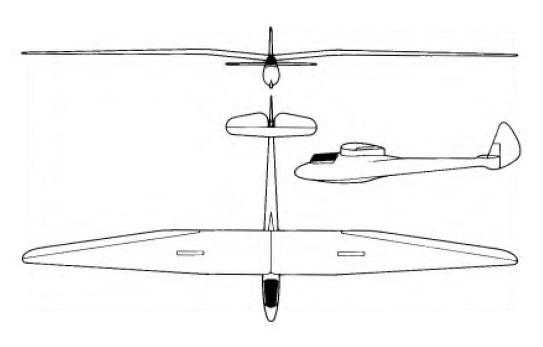
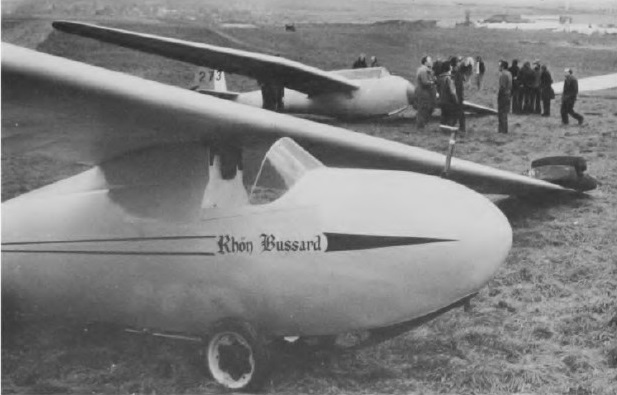
The Rhonbussard, designed by Hans Jacobs as a high performance type capable of cross-country flights of 200 or 300km (124 to 186 miles), first flew in 1933, coming in performance between the Grunau Baby and the high performance ships of the time.
Of conventional wood and fabric construction the Rhonbussard has cantilever two-piece high-set wings with a single spar and a leading edge torsion box and, as on the Rhonadler, the wings are secured to the fuselage by two conical bolts, so enabling rigging to be done quickly and easily. It lacks any spoilers, airbrakes or flaps for approach control. The long-span ailerons are operated by push-rods.
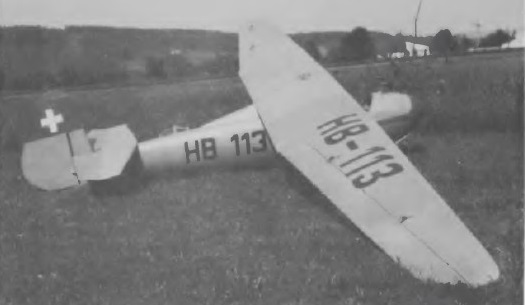
The pilot sits in an open cockpit under the wing leading edge, with a widescreen for protection, and the short oval section fuselage has a main skid for landing plus a tailskid, take-offs being made on a jettisonable double wheel. The tailplane is mounted on top of the fuselage forward of the rudder. One feature, which led to some notoriety, was the requirement for the wings to be joined together at the roots before being presented to the fuselage for attachment.
Span: 14.3 m / 46 ft 11 in
Length: 5.8 m / 19 ft 0.25 in
Wing area: 14.1 sq.m / 151.8 sqft
Aspect ratio: 14.5
Airfoil: Gottingen Go 535
Empty Weight: 150 kg / 331 lb
Gross Weight: 245 kg / 540 lb
Payload: 95 kg / 209 lb
Water ballast: None
Max speed: 81 mph / 70 kt / 130 km/h
Stalling speed: 27 kt / 50 km/h
Wing Load: 17.4 kg/sq.m / 3.56 lb/sq.ft
L/DMax: 20 at 67 kph / 36 kt / 42 mph
MinSink: 0.75 m/s / 2.46 fps /1.36 kt
Seats: 1
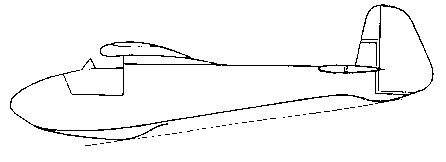

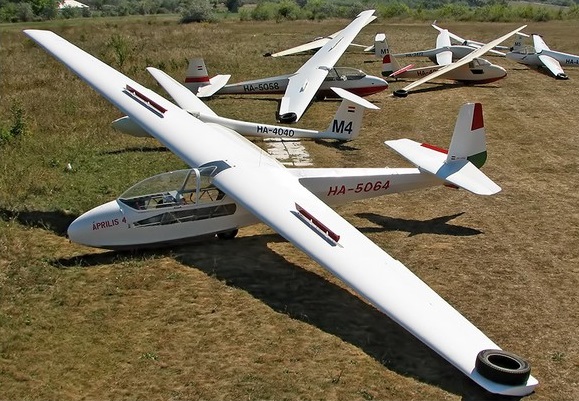
About 1931 the glider manufacturer Alexander Schleicher went to Hans Jacobs, then at the RRG (Rhön-Rossitten Gesellschaft) on the Wasserkuppe, for glider design that, like the RRG Fafnir designed by Alexander Lippisch, was capable making long cross country by travelling quickly between thermals but could be put into series production making it cheaper to build. Jacobs responded with the Rhönadler (in English, Rhön eagle), ready for the 1932 Rhön competition. The following year both Jacobs and Lippisch had to transfer to the state owned DFS (Deutsche Forschungsanstalt Für Segelflug) at Darmstadt, where Jacobs continued to refine the Rhönbussard, hence the DFS Rhönadler name.
The Rhönadler was a wood framed aircraft with plywood and fabric covering. In plan its high wing wings were straight tapered with a torsion resting D-box form by ply skin ahead of the single spar. Aft of the spar the wings were fabric covered. The Rhönadler wing root used a version of the thick Göttingen 652 section, modified by a reduction of its high camber; further outboard this turned into the progressively lower camber Göttingen 535 and Clark Y airfoils. Dihedral was constant, to avoid the constructional complication of the Fafnir’s gull wing. The ailerons were very long, occupying more than half the span. Though neither the prototype nor later production aircraft came with spoilers or airbrakes such devices, opening above the wing, were often retro-fitted.
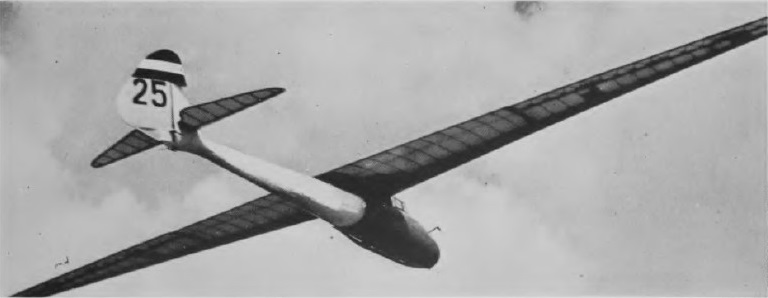
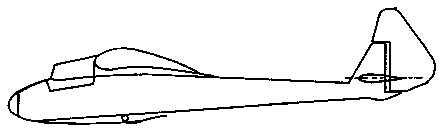
The Rhönadler’s fuselage was quite slender and entirely ply covered, including the fin, the balancing part of the rudder and a small tail bumper. On the original version, even the cockpit canopy was a ply structure, with small, unglazed apertures for vision. This was progressively modified with increasing glazing into the 1935 variant’s multi-framed conventional canopy. To avoid the wing root aerodynamic interference that the Fafnir’s gull wing was intended to avoid, the Rhönadler’s wing was mounted just above the fuselage on a low, narrow neck or pedestal which placed the leading edge level with the top of the canopy. The high aspect ratio, all-moving horizontal tail was of similar construction to the wing, with most of the taper on the trailing edge where there was a deep cut-out at the root. The tailplane was low set on the prototype but raised just above the dorsal fuselage line on production aircraft. The broad chord, balanced rudder was also fabric covered. Landings were made on a sprung skid under the forward fuselage.
The Rhonadler (or Rhon Eagle) first flew in 1932; at this time the techniques of long distance soaring flight were beginning to be explored in earnest by sailplane pilots, and distance covered rather than time spent airborne was what pilots were aiming to achieve. At the 1932 Rhön the Rhönadler, flown by Peter Riedel, did not win but impressed enough to go into series production as the Rhönadler 32, with the prototype’s wing span slightly shortened, its vertical tail leading edge smoothed by a shorter rudder balance and its tailplane raised. This sold well, though production numbers are uncertain. The 1935 version’s alterations included a fully enclosed transparent canopy. Schleicher built sixty-five of them, making it the top selling German high performance glider; several were exported. A measure of the popularity of the Rhönadler is the number at the 1935 Rhön competition, twenty-three out of sixty contestants.
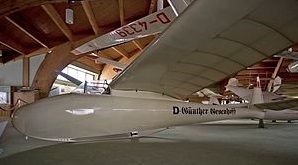
Production was undertaken by Schleicher at Poppenhausen. Sixty-five Rhönadler 35 were built. In the 1980s a new Rhönadler was built from original plans and flown. It is now in the Wasserkuppe museum.
Variants:
Rhönadler
Prototype. Competed in the 1932 Rhön event. 18 m (59 ft 1 in) span. Ply fairing over cockpit with small oval openings for vision.
Rhönadler 32
First production version, with raised tailplane and simplified fin and rudder. Span reduced by 542 mm (21.3 in). Transparencies at the front of the cockpit.
Rhönadler 35
Second production version with full cockpit transparencies.
Seeadler
Flying boat version with hull, markedly gulled wings and underwing stabilizing floats.
Specifications:
DFS Rhonadler
Length: 23.622 ft / 7.2 m
Wingspan: 57.087 ft / 17.4 m
Crew: 1
Schleicher Rhönadler
Span: 57 ft 1 in / 17.4 m
Length: 23 ft 7.5 in / 7.2 m
Wing area: 193.8 sq ft / 18.0 sq.m
Aspect ratio: 16.8
Wing section: Gottingen 652
Empty weight: 375 lb / 170 kg
Max weight: 551 lb / 250 kg
Water ballast: None
Max wing loading: 13.89 kg/sq.m / 2.84 lb/sq.ft
Max speed: 80.5 mph / 70 kt / 130 km/h
Stalling speed: 27 kt / 50 km/h
Min sinking speed: 2.5 ft/sec / 0.75 m/sec
Best glide ratio: 20:1
Rhönadler 35
Length: 7.20 m (23 ft 7 in)
Wingspan: 17.40 m (57 ft 1 in)
Wing area: 18.0 sqm (194 sq ft)
Aspect ratio: 16.8
Airfoil: Root: modified Göttingen 652; mid-span: Göttingen 535; tip: Clark Y
Empty weight: 170 kg (375 lb)
Gross weight: 250 kg (551 lb)
Maximum speed: 130 km/h (81 mph; 70 kn)
Stall speed: 50 km/h (31 mph; 27 kn)
Maximum glide ratio: 20:1
Rate of sink: 0.75 m/s (148 ft/min) minimum
Wing loading: 13.6 kg/sqm (2.8 lb/sq ft)
Crew: One
In 1938 the company moved to Kirchheim/Teck and employed more than 300 people during the war time.
The first serial gliders were the aerobatic single seat trainer GÖ-1 ‘Wolf’ from Wolf Hirth and the renown GÖ-3 ‘Minimoa’ as well as the two seat GÖ-4 from Wolfgang Hütter.
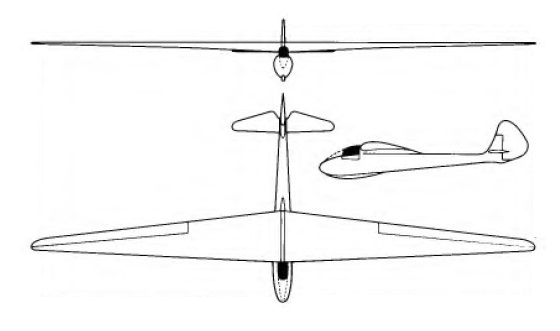
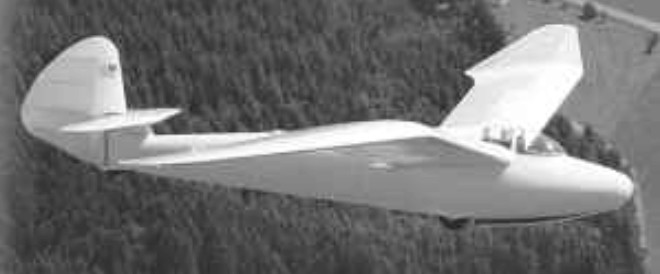
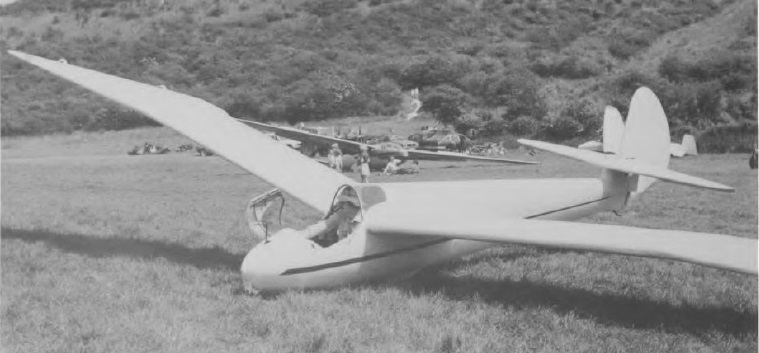
One of Germany’s leading high performance single seaters before the war, this gull-winged glider was designed by two of Germany’s leading sailplane pilots, Martin Schempp and Wolf Hirth. They designed and developed the Minimoa from the 20m span Moazagotl, and the name Minimoa is a contraction of miniature Moazagotl, although the design was also known as the Goppingen 3.
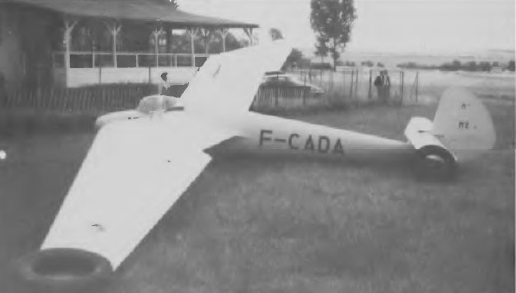
In its original form it had cantilever shoulder-mounted gull wings, and it was built by Wolf Hirth and Dipl-lng Wolfgang Mutter. Of conventional wood and fabric construction, the Minimoa is characterised by swept back wing outer panel leading edges and large ailerons with trailing edges projecting beyond those of the wing itself; air brakes of the same basic Schempp-Hirth type later to be featured on many other sailplanes are fitted. The tailplane is mounted ahead of the fin and is raised above the fuselage top line. The pilot sits under a one-piece hinged cockpit canopy that opens to starboard, and by prewar standards the cockpit was roomy. Landing gear consists of a non-retractable monowheel and a skid under the nose, plus a small tailskid. By 1938 the Minimoa 3B was introduced with the gull wings now in the mid position with a modified aerofoil section, and reduced weight. From July 1935 to 1939 a total of 110 Minimoas were built, of which 13 were sold abroad to Britain, France, the USA, Argentina, South Africa and Japan; a few survived the war and are still flying.
First flown in 1935, the Minimoa made its mark in contest flying, taking third place at the 1937 International Competition at the Wasserkuppe in Germany flown by Wolfgang Spate. Richard du Pont and Chet Decker flew Minimoas to win the U.S. Championships in 1937 and 1939. The Minimoa established a number of records, including the world altitude record in 1938 (using lift in cumulo nimbus cloud) of 6,687 m/ 21,939 ft. The name was an abbreviation of its original nickname, Mini- Moazagotl, as it was a smaller successor of Hirth’s earlier 20 m. Moazagotl.
Distinctive in many respects, the Minimoa was stable, but with poor roll control by later standards. It was the first sailplane to carry water ballast, in a tank behind the cockpit. Structure: wood/ fabric wings and tail, wood fuselage
Göppingen Gö 3 Minimoa
Wing span: 17m /55.7ft
Wing area: 19.05sq.m / 205sq.ft
Length: 23.261 ft / 7.09 m
Empty Weight: 200kg
Payload: 105kg / 230lb
Gross Weight: 275kg
Wing Load: 14.5kg/sq.m
Length: 6,9 m
Wing chord: 1,3 m
Aspect ratio: 16
Airfoil: Go 681, 693
L/DMax: 28 @ 72 kph / 39 kt / 45 mph
MinSink: 0.61 m/s / 2.0 fps / 1.18 kt
Seats: 1
Schempp-Hirth Minimoa
Span: 17.0 m / 55 ft 9.25 in
Length: 7.0 m / 22 ft 11.5 in
Wing area: 19.0 sq.m / 204.5 sq ft
Wing section: Gottingen 681
Aspect ratio: 15.2
Empty weight: 216 kg / 476 lb
Max weight: 350 kg / 772 lb
Water ballast: None
Max wing loading: 18.42 kg/sq.m / 3.77 lb/sq ft
Max speed: 136 mph / 119 kt / 220 km/h
Stalling speed: 32.5 kt / 60 km/h
Min sinking speed: 0.65 m/sec / 2.1 ft/sec at 39.5 mph / 34 kt / 63 km/h
Best glide ratio: 26:1 at 53 mph / 46 kt / 85 km/h
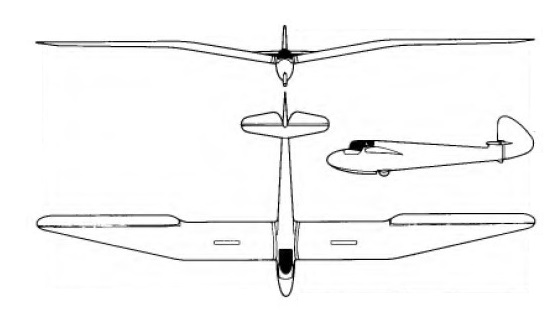
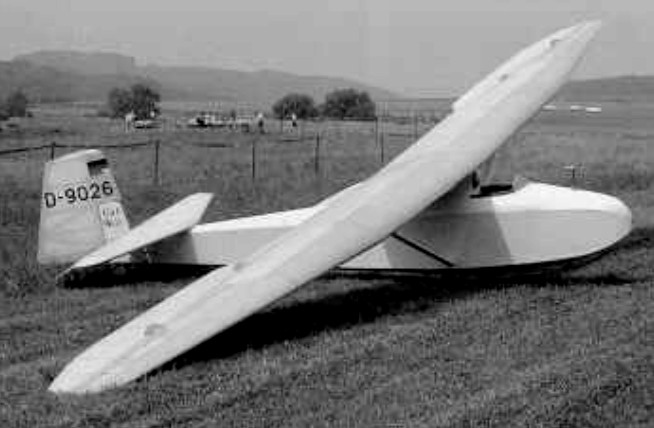
The Wolf was named after Wolf Hirth, partner with Martin Schempp in the then new firm of Sportflugzeugbau Goppingen (now Schempp-Hirth). It was produced in 1935 as a rival to the Schneider Grunau Baby as a utility (rather than a high performance) sailplane. It lacks any approach control devices but has a built-in wheel, an unusual feature for the time. It was used widely for aerobatic displays, for which it could be fitted with an extra strut (making a V- strut) to permit inverted maneuvers.
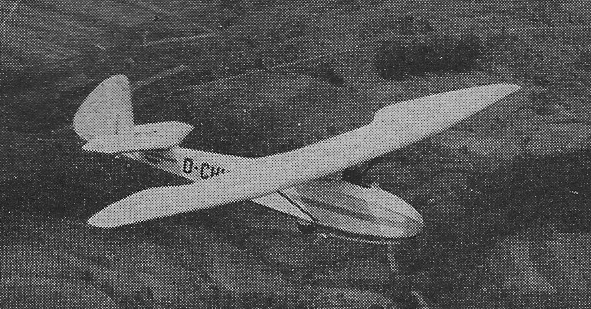
It had poor spinning characteristics, and in 1938 all those flying in Germany were grounded until modifications were incorporated in the wingtip and ailerons.
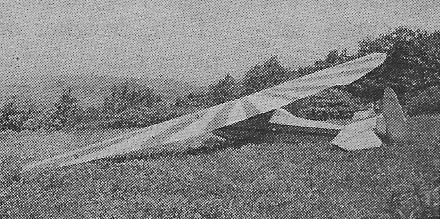
Structure: I-strut-braced wood/ fabric wings and tail, wood fuselage.
Göppingen Gö 1 Wolf
Wing span: 14m / 45ft
Wing area: 14.5sq.m
Length: 20.669 ft / 6.3 m
Empty Weight: 145kg / 330lb
Max Payload:100kg
Gross Weight: 220kg
Wing Load: 14.6kg/sq.m
Aspect ratio:13.1
Airfoil: Gottingen 535
Seats: 1
L/DMax: 17 @72 kph / 39 kt / 45 mph
MinSink: 0.91 m/s /3.0 fps / 1.78 kt
Crew: 1
Sportflugzeugbau Göppingen (Sport Aircraft Göppingen)
Sportflugzeugbau Schempp-Hirth
Schempp-Hirth Flugzeugbau Gmbh
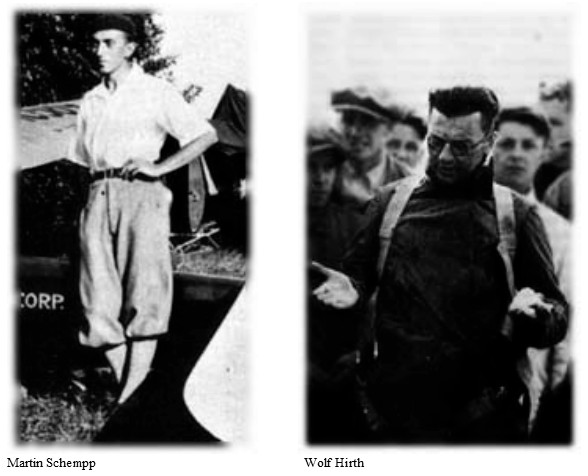
Martin Schempp and Wolf Hirth first met in 1928 and beginning in 1935, the team developed the Minimoa, the first high performance glider to sell more than 100 models. The production of Schempp-Hirth gliders began in the municipal building yard in Göppingen, near Stuttgart, where Martin Schempp founded the Sportflugzeugbau Göppingen (Sport Aircraft Göppingen) company in 1935.
In 1938 the company moved to Kirchheim/Teck and employed more than 300 people during the war time.
The first serial gliders were the aerobatic single seat trainer GÖ-1 ‘Wolf’ from Wolf Hirth and the renown GÖ-3 ‘Minimoa’ as well as the two seat GÖ-4 from Wolfgang Hütter. Occasionally there are single examples which are preserved and maintained as oldtimers which can still be found at airshows.
During the war, the production was forcefully expanded to build parts for, amongst other things, the ME-109, the “Giant” and for the Bachem “Natter”. Alongside the GÖ-4 there were also complete aircraft which were built, like the GÖ-8 and the 13,6m-“Habicht”.
The period after the war till 1955 was bridged with the production of plywood suitcases, leg prosthesis, furniture, weaving looms etc, yet also with fighter jet dummies (F-86) and sound studios for television stations.
The connection to the aviation industry was implemented early on with the production of the Matteson M-1 glider, the production of the powered aircraft GS-6a “Milan” and with works on engine pod and tail section of the “Trumpf” airship D-LEDA.
Licenced production such as “Emeraude” and “Smaragd”, subcontracting for “Kl-107” “, “Do-27”, “Do-28” and subsequently the production of the Standard Austria glider in several versions, ensured the employment of the about 50 employees till 1965.
In 1960s company renamed and built the Milan 656 light tourer, also French Piel Emeraude under licence. During early 1960s production of powered aircraft ceased, licence rights for Emeraude being transferred to Binder Aviatik KG.
Regaining a foothold in the world market was achieved with an own design, the SHK, by Rolf Kunz which was flown into third place in its first attempt at the 1965 World Championships in South Cerny/England.
After that the technology revolution from wood to fiberglass was completed in quick steps – at Schempp-Hirth under the directorship of Klaus Holighaus, who, with the maiden flight of his Cirrus in January 1967, was able to celebrate a successful debut.
Two years later, again in January, he already flew his first “Super Orchid”, the Nimbus-1. With this glider George Moffat won the 1970 World Championships in Marfa/Texas, USA.
With more than 700 produced examples, (of which 200 were produced by Grob), the Standard Cirrus was Schempp-Hirth’s second most successful aircraft in produced units. Further successes followed in 1972 and 1974 when Göran Ax in Yugoslavia and George Moffat in Australia became World Champions in the Open Class flying the Nimbus-2 (the production version of the Nimbus-1).
1974 also marked the maiden flight of the Janus, being the worlds first two seat glider in fiberglass construction. Constantly refined (e.g. 20 m CFK wings) it was only retired from production in 1996 after over 20 years. The last variants were the janus-Ce and janus-CT.
Also in 1974, there was the maiden flight of the single seat motorglider Nimbus-2M. Not only were the first experiences with retractable engines achieved, but also numerous world records were set, from the limited series production.
For the FAI introduced “15 m Racing Class”, Schempp-Hirth delivered the Mini-Nimbus, which came on to the market in many versions and was superseded in 1980 by the Ventus.
A new material had found its way, however, into the Kirchheimer production halls: the carbon fiber. What was included into the Nimbus-2C in a rather inconspicuous manner, proved itself to be the start of, at that time not appreciative of how large, an effective future in the production of high performance gliders. The thin wing profiles of the succeeding developments would not have been possible without the higher strength and stiffness of the carbon fiber.
The lengthening of the lifespan for fiberglass constructed gliders from 3000 to 6000 hours was for example, proven with a Nimbus-2 inner wing.
Serial introduction of carbon fiber was first included on the Nimbus-2C, Mini-Nimbus-C, Janus-C and Janus-CM. the optimal qualities of this new material were only utilized fully later on in the Ventus and Nimbus-3, in the production of the long and thin wings of these models.
Just a few months after its maiden flight, the Nimbus-3 won the 1981 World Championships in Paderborn.
Then the Ventus and Nimbus-3 won the 1983 World Championships in Hobbs/USA and subsequently the Nimbus-3 was also at the front in Rieti in 1985. Together with this, a string of national championships titles for both models and a number of world records for the Nimbus-3 were achieved.
Whilst the production of the single seat Nimbus-3 had to be discontinued after a fire in one of the production halls, this enabled the production of the Racing Class glider Ventus to be increased, allowing the increase in demand for its motorized variant Ventus-bT to be satisfied.
Constant refinement was also the key for the success of the Racing Class glider Ventus which debuted in spring 1986 as the model Ventus-c (on request with wing tip extensions for 17,6 m wingspan). Production of this model was ceased in 1994 after over 600 examples were produced (including self launchers and turbos).
January 1998 saw the delivery of the 4000th built Schempp-Hirth aircraft since the start of the company (including aircraft built under licence).
Today thousands of their gliders are flying around the world. Schempp-Hirth sailplanes include the Ventus A, an advanced 15-meter-class plane with carbon-fiber technology, thin wings, and a low-profile fuselage. The Ventus B is a 15-meter-class craft with a larger cockpit for tall pilots. The Nimbus 2C (open class) has a 20.3- meter wingspan with either carbon or carbon/fiberglass construction. The Janus B has an 18.2-meter wingspan for high-performance tandem two-place flying. The Janus C has a 20-meter span with carbon wings, seating for two, and competition-type performance. The Janus CM, with a 20-meter span, is a two-place motorglider with carbon wings and fully retractable engine. Schempp-Hirth’s newest sailplanes include the Discus, Duo Discus, Ventus and Nimbus, available in a variety of variations, including pure gliders and powered sailplanes.
January 1998 saw the delivery of the 4000th built Schempp-Hirth aircraft since the start of the company (including aircraft built under licence).

2014: Schempp-Hirth Flugzeugbau GmbH
Type Certificate: EASA.A.532
 All Aero