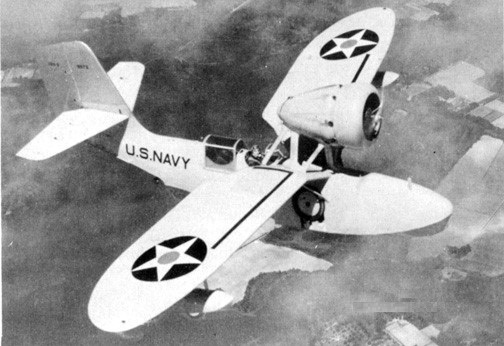
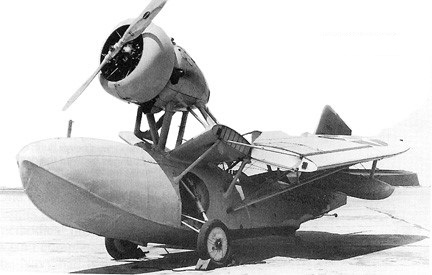
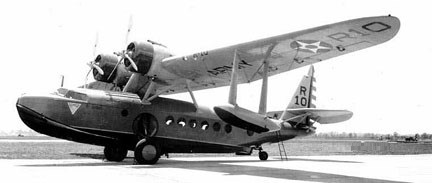
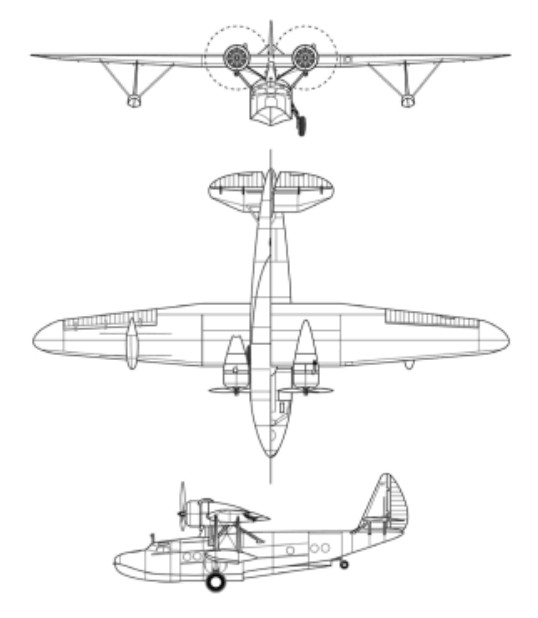
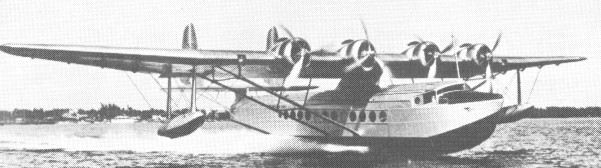
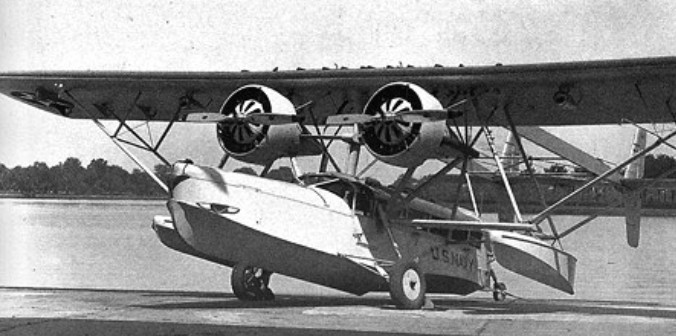
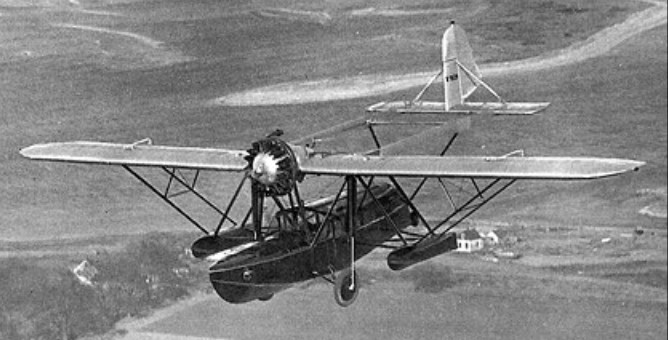
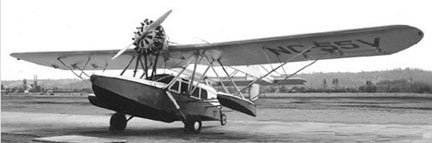
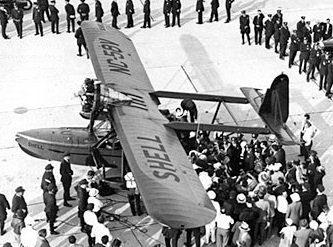
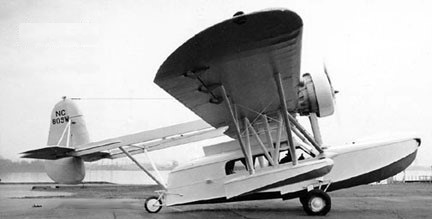
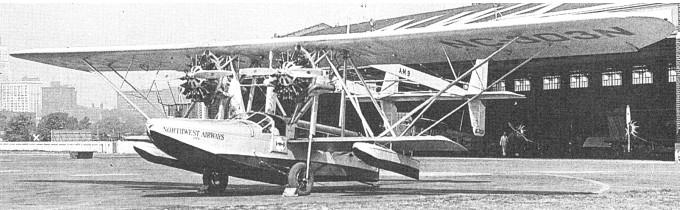
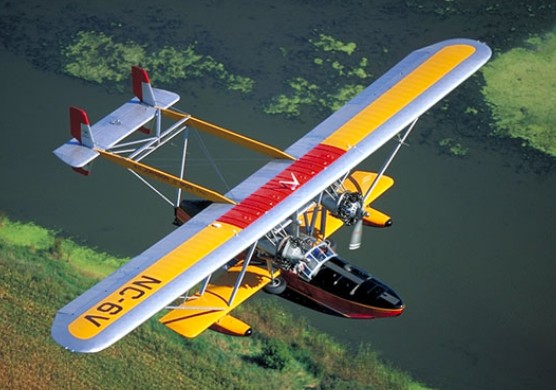
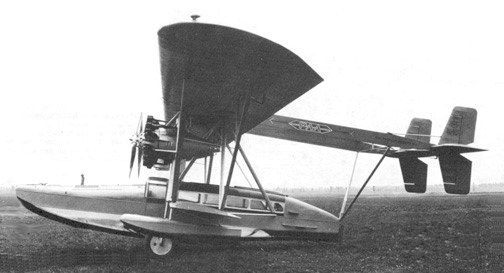
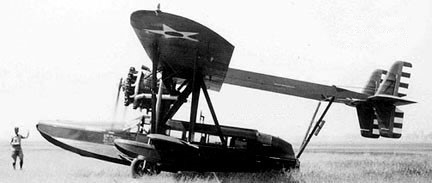
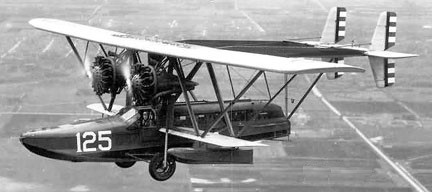
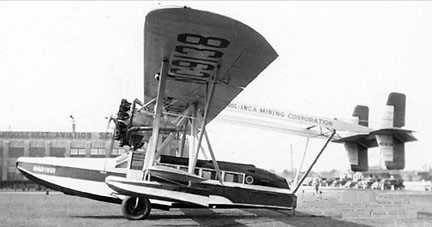
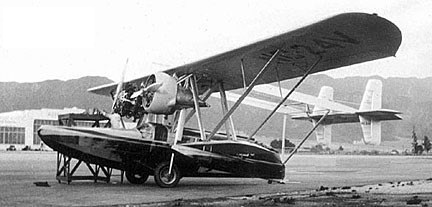
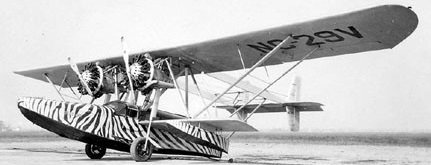
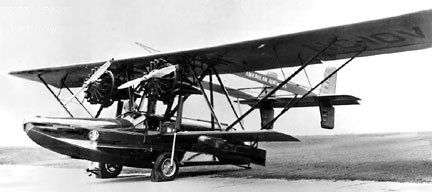
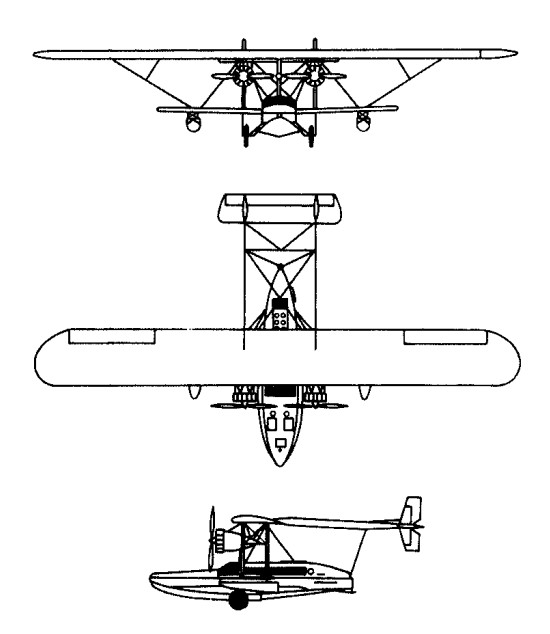
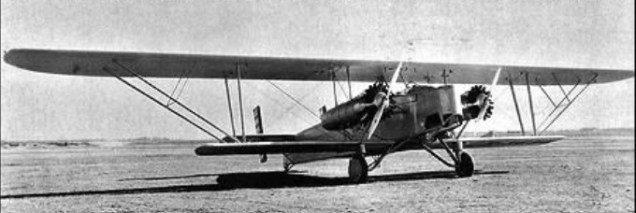
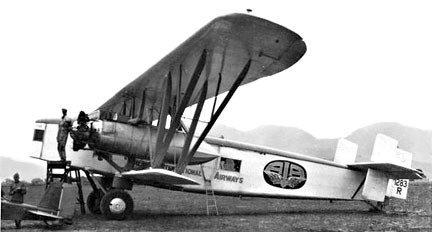
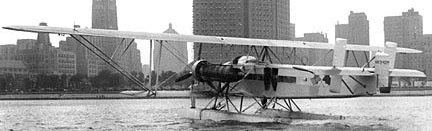
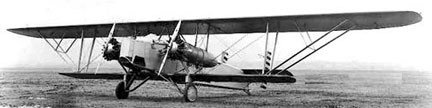
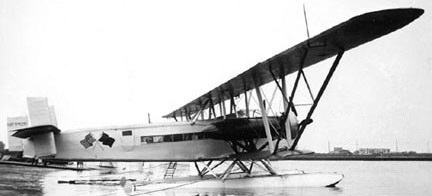
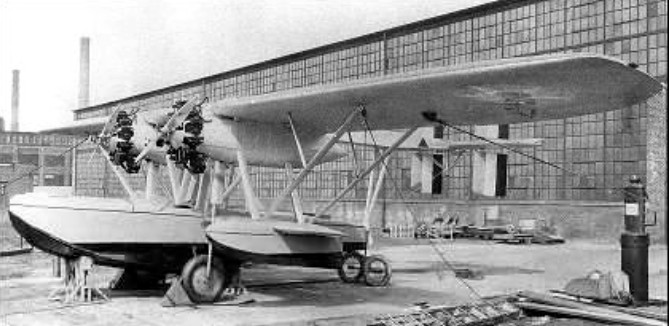
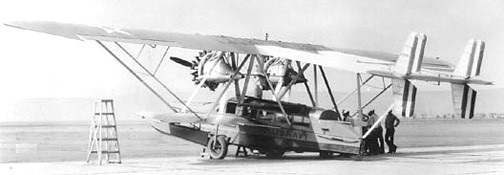
The only Sikorsky XP2S-1 built, A8642 in 1932, was powered by tandem pusher/tractor engines in an interwing nacelle. The engines were two 400hp P&W R-985A or 550hp R-1340s.
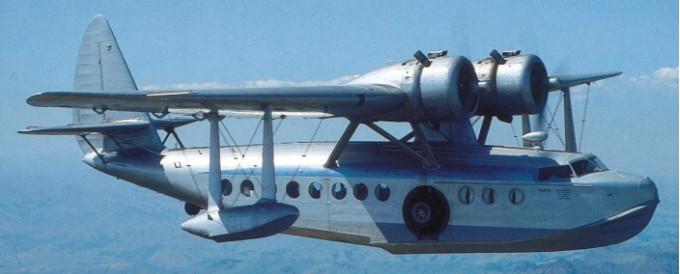
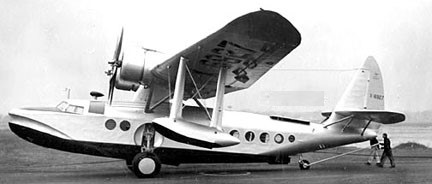
The S-43 was originally designed for a Pan American requirement for a twin-engined amphibian for secondary Latin American routes.
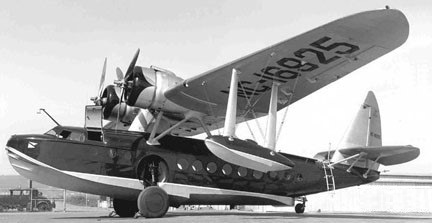
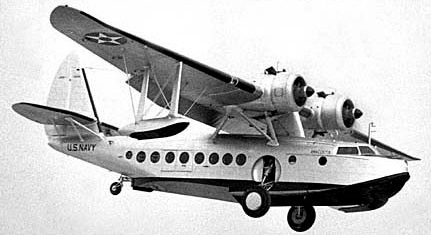
Essentially a scaled-down version of the S-42, the S-43 employed a single-step hull and a single tail group. The wing rested on a central pylon, supported on either side by N-struts. Wing flaps covering 48% of the span reduced the stall speed to 65 mph.
The S-42 had twin vertical tails. Many of the S-43s had the same arrangement, but some had a single tail. Biggest difference other than size and the S-43’s amphibious capabilities (although some S-43s were built as flying boats) were the powerplants, only two 750hp Pratt & Whitney Hornets on the S-43. The smaller airplane had a gross weight of 19,5001b (8,845kg) and could seat 16 to 24, depending on the legroom. Both transports were certificated in 1935.
After the first flight on 5 June 1935 (piloted by Boris Sergievsky), the first of fourteen S-43s delivered to Pan American (ATC 593) entered Latin American service in April 1936, though most were subsequently turned over to Panair do Brasil and other subsidiary operations.
Sikorsky Aircraft built 53 S-43 twin engined amphibians in the mid 1930s.
In 1938 Pan American used one of its S-43s on survey flights for planned route extensions to Alaska.
Additionally, four were sold Inter-Islan Airways Airways (later renamed Hawaiian, Airlines) in the Hawaiian Islands, four to Aeromaritime – an Air France affiliate, in West Africa, KLM’s Netherlands East Indies associate, and one to DNL-Norwegian Airlines.
Twenty-two amphibians were delivered as S-43s (NC15061-15068, NC16925, NC16928, NC16934, and NC20698), plus one S-43-A and three S-43-Bs (NC16926-16927, and NC16931-16933) with minor detail changes.
Sikorsky S-43-B NX16927
Three delivered in 1937-8 for inter-island operations in the Phillipines were registered as S-43-W’s (ATC 623) with a one-foot fuselage extension and Cyclone engines, plus one as the S-43-WB witthout amphibious landing gear (NC16929-16930, and PK-AFT, PK-AFU). Two S-43s were custom built in 1937 as personal transports, one to Howard Hughes and another to Harold Vanderbuilt.
Sikorsky S-43 Harold Vanderbilt 1938 flying yacht NC16925
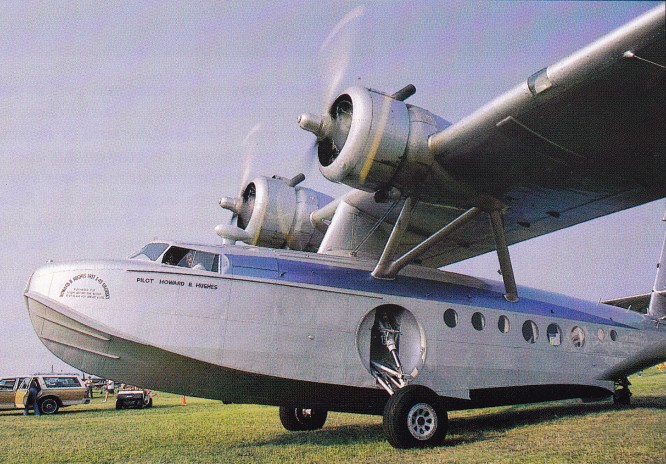
One ‘Baby Clipper’ was ordered in 1937 by Howard Hughes especially equipped for a proposed 1938 around the world flight. Registered NR440, it was fitted with larger 900hp Wright GR-1820 Cyclone radials and additional fuel tanks in the cabin. However, it proved too slow and Hughes made his flight in a Lockheed 14.
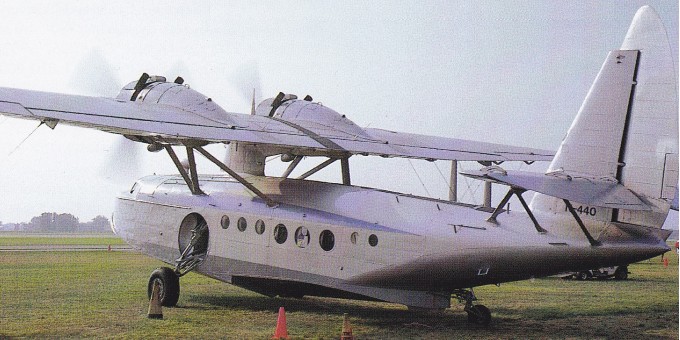
Hughes had a mishap with his S-43H, modified with twin tails in 1941, flying NC440 into Lake Mead, Nevada, in May 1943 while practicing alightings in preparation for flying the HK4 Hercules flying boat. Raised by a US Navy diving team, the airplane was rebuilt as a S-43W with a single tail, fitted out as a ten-seat executive transport. Manufacturer’s serial number 4327 served only briefly in this capacity and spent most of its time in storage at Hughes Tool Co in Houston TX until 1977.
Ronald Van Kregten, an acquaintance of both Hughes and lgor Sikorsky, purchased the S-43 from the Hughes estate in 1977 and restored it essentially to its executive configuration, obtaining certification. The airplane was based at Houston. Van Kregten planned to flying it occasionally to air shows.
Between 1937 and 1939 the Navy acquired seventeen S-43s that entered service under the designation JSR-1 (0504-0506, 1054-1063, and 1191-1194), two being assigned to the Marine Corp.
Sikorsky JRS-1 0505
During the same time, five were delivered to the US Army Air Corp as the Y10A-8, 37-370 to -374, and in 1942, a commercial S-43, after being re-equipped with 875 hp R-1690-S2C engines, was impressed into the USAAF as OA-11 serial 42-01 VIP transport.
Sikorsky Y1OA-8
Military craft remained in service throught World War II. One S-43 was sold to the Soviet Union and several ex-Pan American examples were used in Brazil along the rubber river routes. Reeve Aleution Airways acquired an S-43 which it operated in Alaska and Catalina Island until the early 1960s.
One (a JRS) was in storage at the National Air & Space Museum’s facility at Silver Hill, Maryland.
S-43 Engine: 2 x 750hp Pratt-Whitney R-1680-52 Hornet Props: 3 blade variable pitch, metal Wingspan: 26.21 m / 86 ft 0 in Length: 15.60 m / 51 ft 2 in Height: 5.38 m / 18 ft 8 in Wing area: 781 sq.ft Empty weight: 12,750 lb Max take-off weight: 8662 kg / 19097 lb Max. speed: 306 km/h / 190 mph Cruise speed: 167 mph Ceiling: 6310 m / 20700 ft Range: 1247 km / 775 miles Crew: 3-4 Passengers: 15
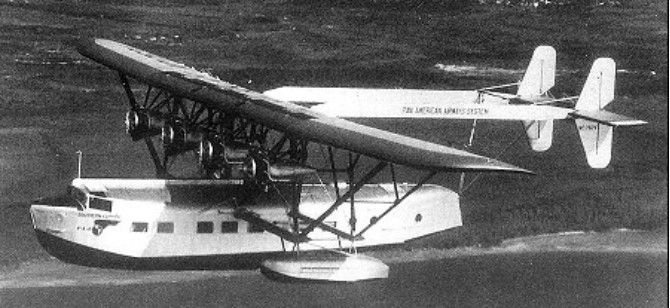
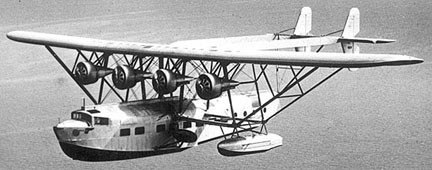
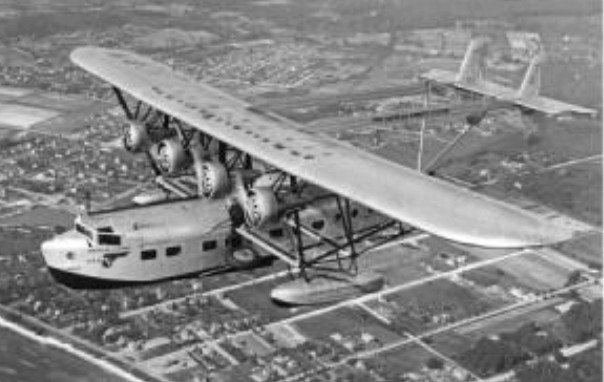
First flown on 29 March 1934, the S-42 was a large 36-passenger commercial flying-boat powered by four 559kW Pratt & Whitney Hornet engines. It differed from earlier Sikorsky flying-boats in having a two-step hull with a long stern which supported the tail unit directly. Full use was made of a hydraulically controlled wing flap which extended across the straight portion of the wing. Within a brief period of time the S-42 had established ten altitude-with-load world records.
Ten S-42s were delivered to Pan American Airways at a price of $197,892, the last three as S-42Bs with increased wing span (from 34.8m) and loaded weight and incorporating refinements in fairing and hull design.
The clipper-type flying boat established a new world load-carrying altitude record in lifting a 16,608 lb load to over 16,000 ft on 26 April 1934 (the mark to beat was 6,561′) piloted by Boris Sergievsky and Raymond Quick, then increasing this record to 20,407′ less than a month later.
Three 1934 S-42 Clipper (ATC 544) with four passenger compartments were delivered to PAA as Clippers, NC822M to 824M.
The last S-42-B, the Pan American ‘Clipper III’, was delivered in mid-1937.
Four S-42-A, NC15373 to 15376, and three S-42-B, NC16734 to 16736, all went to PAA as Clippers in 1935 (ATC 592).
Sikorsky S-42-B NC16734
Pan American Airways appreciated the financial poten¬tial of a service across the vast expanse of the Pacific Ocean and ordered two different flying boats; the Martin M.130 and Sikorsky S 42. It was an aircraft of this latter type which carried out the first survey flight from America to New Zealand, while to the Martin M. 130 China Clipper went the honour of the first mail flight across the central Pacific. The original S-42 was used in survey flights across the Pacific in 1935 by Pan American Airways.
The Sikorsky S42B “Pan American Clipper II” surveyed the route from San Francisco to New Zealand, via Honolulu and arrived in Auckland in March 1937. Just under a year later another S42B inaugu¬rated a passenger service, only to explode in midair near Samoa on the homeward journey. PAA suspended their San Fran¬cisco Auckland service.
In 1937 a S-42B was used on the inaugural and scheduled mail and passenger service between New York and Bermuda, the latter shared with Imperial Airways and begun on 16 June 1937. At about the same time the final S-42B delivered to PAA (named Clipper III) made three survey flights across the Atlantic by way of Newfoundland and Foynes.
By the summer of 1937 Pan American began transpacific and transatlantic service with the first “Clipper III” the last of the Sikorsky series.
The four surviving examples continued in airline service until early 1946 and were scrapped soon afterwards.
S-42 Engines: 4 x Pratt & Whitney S-5-D 1G Hornet, 700hp / 515kW Wing span: 114 ft 2 in (34.8 m) Length: 67 ft 8 in (20.93 m) Height: 17 ft 4 in (5.28 m) Wing area: 123.5 sq.m / 1329.34 sq ft Empty weight: 3965 kg / 8741 lb Max TO wt: 38,000 lb (17,250 kg) Max level speed: 182 mph (291 kph) Cruise speed: 255 km/h / 158 mph Ceiling: 4877 m / 16000 ft Range w/max.fuel: 1930 km / 1199 miles Crew: 4 Passengers: 32-37
S-42-A Engines: four 750hp P&W Hornet Wingspan: 118’2″ Length: 68’0″ Useful load: 16,800 lb Max speed: 188 mph Cruise: 165 mph Stall: 65 mph Range: 1930 mi Ceiling: 16,000 ft Passengers: 37
S-42- B Engines: four 750hp P&W Hornet Wingspan: 118’2″ Length: 68’0″ Useful load: 16,800 lb Max speed: 188 mph Cruise: 165 mph Stall: 65 mph Range: 1930 mi Ceiling: 16,000 ft Passengers: 37
The Sikorsky S-41 was a fifteen-passenger development of the S-38 powered by two 428kW Pratt & Whitney Hornet engines.
Six 1931 S-41-A were built (ATC 418) priced at $62,500.
Two were converted to S-41-Bs (NC41V and NC60V) with modifications as 13 passengers under ATC2-286.
One, NC784Y, was converted to the S-41-C.
Also used in small numbers by the US Navy as RS-1. Three were purchased by USN in 1930 for evaluation as A8842 to 8844. Two 1930 XPS-2 (A8089 and 8090) were redesignated XRS-2.
Two S-41 were impressed from Pan American as RS-5 (37852 and 37853)
S-41-A, -B, -C Engines: 2 x 575hp P&W Hornet B Wingspan: 78’9″ Length: 45’2″ Useful load: 5700 lb Max speed: 133 mph Cruise: 115 mph Stall: 66 mph Range: 575-900 mi Ceiling: 13,500′
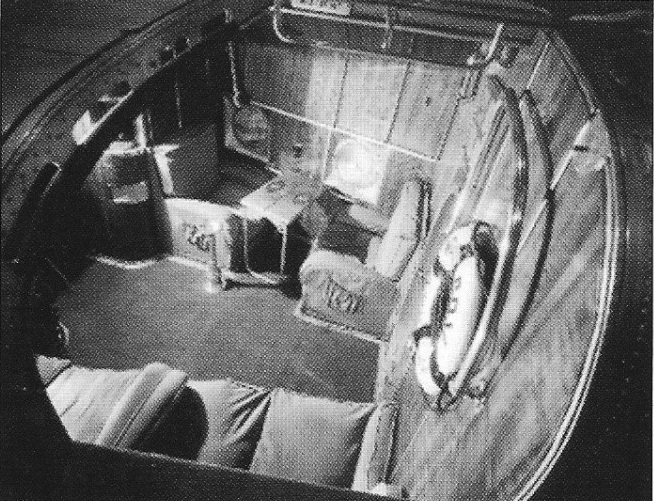
On December 20, 1929, Pan American awarded a contract to build three aircraft as the S-40, with deliveries starting mid-1931. The S-40 featured four engines and a two-step all metal hull, divided into seven watertight compartments, twin-boom, twin-tail and parasol wing. Almost sixty feet in length, accommodation was provided for up to thirty-two passengers and the added luxury of a smoking room with three chairs. Sikorsky selected a monoplane wing with stabalising floats mounted on outrigger booms. When built the Sikorsky S-40 was the largest amphibian in the world.
Sikorsky S-40 under construction
First flying on 31 August 1931, piloted by Boris Sergievsky and S Gluhareff, flight testing of the S-40 began in early 1931, and it was delivered to Pan American the following October, as soon as the ATC certificate was granted (ATC 454).
The seaplane version had an 11,000 lb load and slightly higher speed.
Selling for $139,000, named “American Clipper” and piloted by Charles A. Lindbergh, the first S-40 inaugurated the Miami-Canal Zone route on 19 November 1931. “American Clipper” pioneered Pan American World Airways mail and passenger routes around the Caribbean and to South America. It was joined by the second, ‘Caribbean Clipper’, later the same year, then by the the third, ‘Southern Clipper’, in early 1932.
The three S-40s (NC80V, NC81V, and NC752V c/ns 2000 to 2002) established regular airline service between the US east coast and South American destinations such as Rio de Janerio and Buenos Aires, operated without their amphibious gear to improve range as needed. The S-40 carried 40 passengers over distances of 500 mi. at speeds up to 115 mph.
PAA S-40 lounge cabin
During 1935, after all three had their engines upgraded to super-charged 660hp P&W Hornets, their designation was changed to S-40-A (ATC 562). By the end of 1939 the S-40As had been withdrawn from Pan American service. Caribbean Clipper later served with the Navy as a navigational trainer and is said to have amassed a total of 13,000 flying hours before being scrapped in 1944.
S-40 Engines: 4 x Pratt & Whitney R-1690 Hornet B, 575hp / 425kW Wingspan: 34.8 m / 114 ft 2 in Wing area: 174.0 sq.m / 1872.92 sq ft Length: 23.4 m / 77 ft 9 in Height: 7.3 m / 24 ft 11 in Hull length: 48’0″ Max take-off weight: 15400 kg / 33951 lb Useful load: 9252 lb Max. speed: 210 km/h / 130 mph Cruise speed: 185 km/h / 115 mph Stall: 65 mph Ceiling: 5550 m / 18200 ft Range w/max.fuel: 925 km / 575 miles Crew: 4 Passengers: 40
S-40-A Engines: 4 x Pratt & Whitney R-1690-44 Hornet, 600 hp Prop: 2 blade, ground adjustable, metal Wingspan: 154 ft 0 in Wing area: 1740 sq.ft Length: 76 ft 8 in Max speed: 140 mph Cruise: 120 mph Stall: 65 mph Ceiling: 13,000 ft Range: 900 miles Empty weight: 21,000 lb MTOW: 34,000 lb Useful load: 10,813 lb
Sikorsky downsized the basic S-38 design to create the S-39. The original prototype, NX813M / NX963M, was experimentally converted to two tractor-mounted 115hp Cirrus Hermes Mk I engines, was test flown in mid-1929 but crashed later that year after an engine failure.
Sikorsky followed with the S-39-A, flown in early 1930, with a single R-985 Wasp Junior engine mounted directly to the wing. The S-39-A was the first US aircraft to be certified with the R-985.
Sikorsky S-39-A NC804W
Twelve S-39-As (NC42V, NC802Y, NC803W/809W, NC887W), marketed at an average price of US$17,500 with ATC 340, were sold to civil owners by the end of 1930.
The S-39-B (ATC 375), introduced in 1931 with a larger fin and rudder, sold eight examples (NC50V and 51V, NC53V to 55V, NC58V, NC888W, and NC896W) to private owners at $20,000, plus one to the US Army Air Corps as the YIC-28 32-411, plus 9 conversions from S-39-A.
Sikorsky S-39-B NC55V
Sikorsky S-39-B NC58V
Two S-39-B, refitted with 400 hp R-1340 Wasp engines, were re-certified as S-39-C.
Sikorsky S-39-C NC809W
The final example, an S-39-CS Special named “Spirit of Africa”, was built in 1932 to an order from explorers and photographers Martin and Osa Johnson. In a giraffe paint scheme, the Spirit of Africa covered more than 60,000 miles across Africa and East Indies.
Several civilian S-39s were operated by the Civil Air Patrol during World War II on search and rescue missions.
A total of 21 were built.
S-39-A
S-39 / S-39-A Engine: Pratt & Whitney R-985 Wasp Junior, 300 hp Prop: 2 blade, ground adjustable, metal Wingspan: 52 ft 0 in Length: 38 ft 11 in Wing area: 320 sq.ft Empty weight: 2678 lb MTOW: 4000 lb Max speed: 115 mph Cruise: 97 mph Ceiling: 18,000 ft Range: 375 miles Seats: 4
S-39B Engine: Pratt & Whitney R-985 Wasp Junior, 300 hp Prop: 2 blade, ground adjustable, metal Wingspan: 52 ft 0 in Length: 38 ft 11 in Wing area: 320 sq.ft Seats: 5
The S-38 was a nine-seat commercial amphibian powered by two 313kW Pratt & Whitney Wasp radial engines. A sesquiplane wing arrangement was employed and the tail unit was carried on two outriggers running aft from the main wing and braced to the heel of the hull by two struts. It was a successful design and many were built for airline use (including Pan American Airways, entering service in October 1938), private use and for the US Navy/USAAC. The type also set several world records for speed and altitude with specific loads. Over 100 were built from 1928 on.
By 1929 the company, having become a division of United Aircraft Corporation, occupied a large modern plant at Bridgeport, Connecticut, and was producing S-38 twin-engined amphibians. A ten-place prototype was built, NC5933, and eleven S-38A were built; NC8000, NC8005, NC8019 to NC8022, and NC8043 to NC8044, with ATC60.
Sikorsky S-38-A NC5933
One special luxury model was built as a personal transport for John H Whitney; NC8005.
The S-38-AH of 1928 (ATC 2-36) was powered by 525hp P&W Hornet A.
A single 12-place S-38A was procured by the USAAC in 1929 for evaluation as XC-6 29-406, also as Wright Field s/n XP-588. Eventually the aircraft, which had a length of 41’0″, was used as a VIP aircraft.
Sikorsky C-6
The XC-6 was followed by 10 C-6A production aircraft (30-397 – 30-406), used mainly for transport duties and target towing.
Sikorsky C-6A 30-400
Two S-38A were impressed from Pan American (37854 and 37855) as RS-4.
Two went to the USN as XPS-2.
First flying on 13 March 1928, the 2-10 place S-38-B (ATC 126, 2-74) was priced from $50,000+. Seventy-sic were built; NC1V to NC3V, NC5V, NC7V, NC11V, NC15V, NC18V to NC21V, NC23V, NC25V, NC40V, NC73K to NC75K, NC113M, NC141M to NC146M, NC158H to NC160H, NC196H to NC199H, NC300N to NC304N, NC306N to NC309N, NC943M to NC946M, NC9105 to NC9107, NC9137 to NC9140, NC9143 to NC9144, NC9151, NC9753, NC9775 to NC9776, of which NC9140 was another -38-B Special with two 450hp P&W Wasp C under (2-74), but crashed before its delivery to Colombia.
Sikorsky S-38-B NC9138
1929 S-38-B Special NC9143 and NC9144 (ATC 2-68, 2-69) were S-38-A approved for eleven-place with 450hp P&W Wasp C engines and four-place with Wasp SC, NC9137.
Two S-38-B, NC25V and NC40V (DoC records show as NC16V c/n 314-20 and NC17V c/n 414-8), were converted to S-38-BH in 1929 with ATC2-190 (superseded by ATC356). They sold for $53,000.
The 1932 S-38-BL NC24V c/n 414-15 was a modified S-38-B.
Sikorsky S-38-BL NC24V
The 1932 S-38-BS NC29V c/n 414-20 (ATC2-434) was a seven-place with two 450hp Wasp SC engines. It was built for a 1933 African wildlife survey, flown by pilot Osa and photographer Martin Johnson, with a “Zebra” paint job.
Sikorsky S-38-BS NC29V
The 1933 S-38-BT NC22V c/n 414-23 (ATC 2-446) was an 8-10 place with two 525hp P&W supercharged Wasp T engines.
Selling for around $50,000, ten 1929 S-38-C (ATC 158) were built; NC4V, NC6V, NC10V, NC26V, NC28V, NC111M and NC112M, NC160H, NC199H, and NC305N. By now, 111 S-38 had been built.
Sikorsky S-38-C NC10V
Two S-39-B (NC809W and NC1933/NC14326) were refitted with 400hp P&W Wasp S1 engines in 1931 as S-39-C in 1931. They received ATC 2-391 and 2-436,
The 1932 S-39-CS Special (ATC 2-436) was a four-place with 375hp P&W Wasp S2 engines. The one built, NC52V c/n 914, was for Osa and Martin Johnson.
S-38-A, -B, -C (ATC 60) Engines: 2 x Pratt & Whitney Wasp, 313kW / 400hp Wingspan upper: 21.8 m / 72 ft 6 in Wingspan lower: 11.0 m / 36 ft 1 in Length: 12.3 m / 40 ft 4 in Height: 4.4 m / 14 ft 5 in Wing area: 66.9 sq.m / 720.10 sq ft Max take-off weight: 4753 kg / 10479 lb Empty weight: 2970 kg / 6548 lb Max. speed: 200 km/h / 124 mph Cruise speed: 175 km/h / 109 mph Stall: 57 mph Ceiling: 5480 m / 18000 ft ROC: 1000 fpm Range w/max.fuel: 965 km / 600 miles Crew: 2 Passengers: 10
Despite the S-35 tragedy, Capt. Rene Fonck decided to try again, in a new Sikorsky aircraft, the S-37 NX1283 Ville de Paris. Powered by two 500hp Jupiters, it cruised at 190km/h and had a designed range of over 6400km, which would have taken it to Paris with fuel to spare.
Tests at progressively increased loads included the overload weight needed for the transatlantic flight, but the planned attempt was abandoned after the Orteig prize had been won by Charles Lindbergh.
The S-37 was sold by Fonck’s sponsors to American International Airways of Argentina as the Southern Star airliner for twenty passengers. During its delivery flight, begun on 30 June 1929, it became the first commercial transport to cross the 5700m Andes mountains, carrying eight people and a total useful load of 2300kg. Further flights over the Andes, between Buenos Aires and Santiago, became routine for several years.
Sikorsky S-37-1 AIA in Lima Perú R1283
First selling for $15,955, R1283 was modified as a sixteen passenger with 525hp P&W Hornet engines (the Jupiters went to S-37-B) for service in South America. It was scrapped by PAA in 1930.
The 1927 S-37-2 NX3698 (ATC 2-170) was built under a contract from Consolidated Co as their Model 12, for Army evaluation as five-place XP-496 bomber with two 525hp P&W R-1690 engines.
Sikorsky amended the suffix to “-B,” but while in the service it never did get an official Army designation.
Sikorsky S-37-2 NR942M
It did not meet Consolidated’s requirements, either, and was rebuilt in 1929 by Sikorsky from eight passenger to 21 passenger transport with two 675hp P&W Hornets, which were replaced by the Jupiters from the S-37-1.
Sikorsky S-37-B
Rebuilt again and re-registered in 1934 as NR942M, it crashed at sea in 1934.
Sikorsky developed the S-36, a larger version of the S-34, and six S-36 amphibians were built, usually with two 200hp Wright J-4 Whirlwind engines. Certified ATC 2-275, the 1927 S-36 had various seating arrangements and various wingspans, from 56’0″ to 72’0″. The latter span for the long-range version. Length was 34’0″.
Five built were NX1282, N3001 (temporary, cancelled), NX3699, and N4567, plus XPS-1 A8005 in 1928.
The US Navy used the PS-1, PS-2, PS-3, based on S-36 and -38, on patrol, transport and utility duties as the XPS-1. One was built as XPS-1 A8005 in 1928.
Sikorsky XPS-1 A-8005
Also in 1928, two PS-2 were built; A8089 and A8090.
Sikorsky PS-2
Four PS-3 were built in 1929 (A8284 to 8287), later being designated RS-3. One was produced for the USN (A9055) and two for the USMC (A8922 and 8923).
Other S-36s, carrying two crew and up to six passengers on two facing bench seats with a table between, were delivered to Andean National Corporation and, on 7 December 1927, to the newly formed Pan American Airways for survey flights in the Caribbean.
An S-36, named Dawn, was bought by Mrs Frances Grayson, a niece of President Wilson, who wanted to be the first woman to fly the Atlantic. After take-off on 23 December 1927, with Mrs Grayson and two pilots on board, it vanished over the ocean.