Simmonds Spartan Cruiser

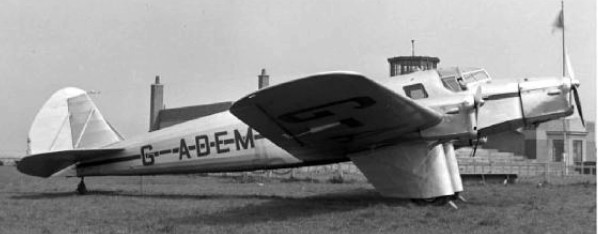
Cruiser III G-ADEM – 8 March 1936

Spartan Cruiser was development of Saro-Percival (later Spartan) Mailplane G-ABLI of 1931. After
Percival sold his interest to Saunders-Roe Ltd, which eventuaally tied up with Spartan, the concept under the Spartan name into the Spartan Cruiser I, powered by three 120 hp de Havilland engines and carrying six passengers and two crew in a metal fuselage.
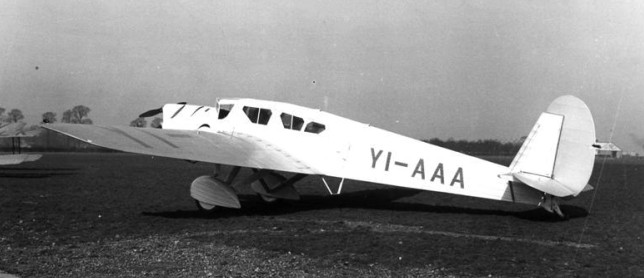
Spartan Cruiser c/n 2 YI-AAA

Early production Spartan Cruiser c/n 2 was operated by Airwork (Iraq) Ltd in 1933 on an air route between Baghdad and Mosul as YI-AAA. It returned to the UK in 1934 for British Airways Ltd and reverted to its original registration of G-ACBM. It was scrapped in 1937.
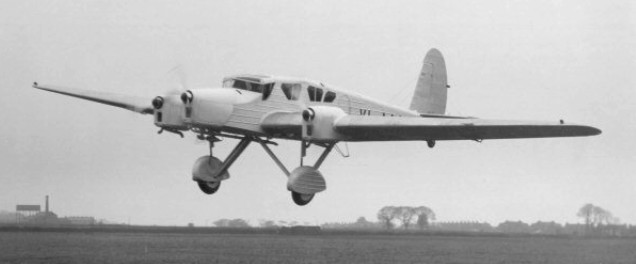
Spartan Cruiser c/n 2 YI-AAA

Twelve Spartan Cruiser II were built.

Three Cruiser III were built. The last was G-ADEM in May 1935.

Specifications:

Cruiser I
Engines: 3 x de Havilland, 120 hp

Cruiser II

Cruiser II
Engines: 3 x de Havilland Gipsy Major, 130 hp
Simmonds Spartan Arrow

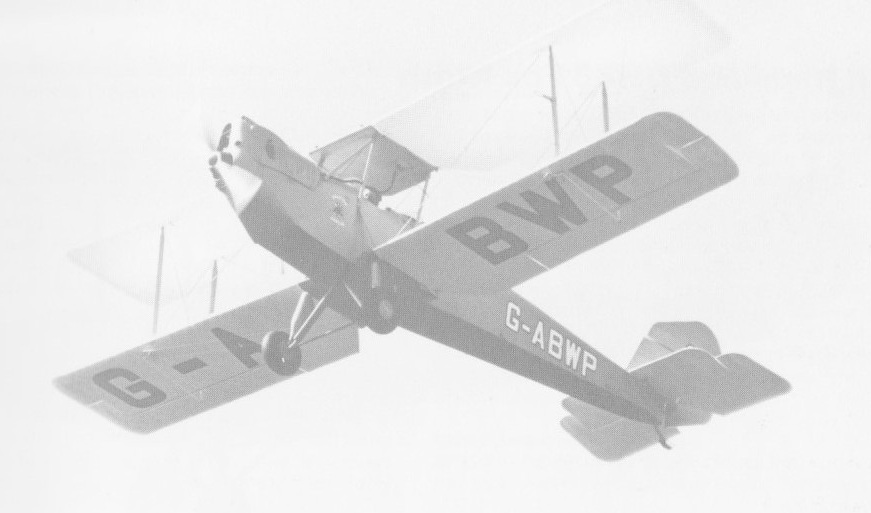
Early in 1930 Spartan Aircraft Ltd. Simmonds altered a version of the Simmonds Spartan into the Spartan Arrow. First flown in May 1930, the prototypes G-AAWY and G-AAWZ were powered by 100 hp Gipsy I engines but the production aircraft that followed had 120 hp Gipsy IIs or 105 hp Hermes II with the exception of Arrow G-ABST which was experimentally fitted with a 160 hp Napier Javelin III.

Simmonds Spartan Arrow Article

Engine: 105 hp Cirrus Hermes II
Wingspan: 30 ft 7 in
Length: 25 ft
AUW: 1850 lb
Max speed: 105 mph

Simmonds Spartan

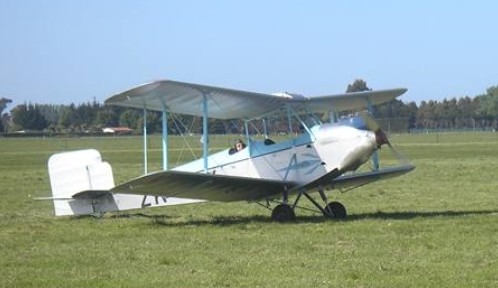
In 1928 O. E. (later Sir Oliver) Simmonds designed and built the Spartan two-seat biplane. Outwardly conventional, but planned for “Spartan” economy (e.g. interchangeable wings and ailerons, and rudder interchangeable with elevator). At Southampton, Hampshire, produced 49 examples, mostly for export, but some for National Flying Services Ltd. One made many Arctic flights.

Simmonds Spartan Article

The first (of seven) Spartan II was completed in September 1932.

Gallery

Spartan
Engine: ADC Cirrus III, 95 hp
Seats: 2

Spartan Srs II
Engine: Cirrus Hermes IV

Simmonds Aircraft Ltd / Spartan Aircraft Ltd

Simmonds Aircraft Ltd was formed September 1928, in which year O. E. (later Sir Oliver) Simmonds designed and built the Spartan two-seat biplane. Outwardly conventional, but planned for “Spartan” economy (e.g. interchangeable wings and ailerons, and rudder interchangeable with elevator). At Southampton, Hampshire, produced 49 examples, mostly for export, but some for National Flying Services Ltd. One made many Arctic flights.

Early in 1930 Simmonds Aircraft Ltd., which had made the Spartan biplane, was reconstituted under the name Spartan Aircraft Ltd. Made altered version of Simmonds Spartan called Spartan Arrow. Spartan Three-Seater built at East Cowes, Isle of Wight, where company moved early 1931. Spartan Cruiser was development of Saro-Percival (later Spartan) Mailplane of 1931, and the refined Cruiser III ended production in May 1935.

Silver Wing Aircraft Co 1928 monoplane

In 1928 the Silver Wing Aircraft Co built a two-place, open cockpit, high-wing monoplane, designed by H C King. It utilized a Curtiss JN-4 fuselage and gear. Spin-proof, the company claimed, with a heavy, laminated spar that would withstand dives up to 175mph. Only one was built, registered N5268 c/n SWM-100.

First flown on 15 April 1928, piloted by Edward Euler, it was powered by a 90hp Curtiss OX-5, later changed to a 50hp Wright-Hisso engine.

Press releases told of two cabin versions under construction, but were apparently unfinished.

90hp Curtiss OX-5
Wingspan: 41’3″
Length: 26’9″
Useful load: 682 lb
Max speed: 110 mph
Cruise: 90 mph
Stall: 32 mph
Seats: 2

150hp Wright-Hisso
Wingspan: 41’3″
Useful load: 968 lb
Seats: 2

Sikorsky S-44 / PBS

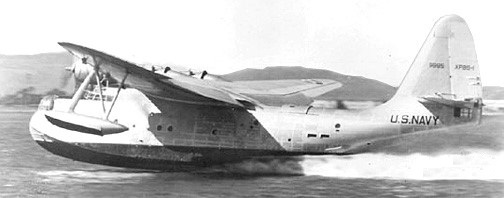
After a two-year construction period the Sikorsky XPBS-1 (Model S-44) 9995 first flew on 23 August 1937. Initial testing with 1050 hp engines revealed a top speed of 227 mph. Stability problems traced to turbulence generated by the wings resulted in the addition of dihedral to the horizontal stabilisers. After being delivered to the Navy in October 1937, the XPBS-1 began competitive trials with the Consolidated XPBY2-1 in mid-1938. Consolidated won a construction order and the XPBS-1 was assigned to Patrol Wing 5 at NAS Norfolk, Virginia, to evaluate long-range patrol-bomber operations until shortly after the US entered World War II. In the spring of 1942 the aircraft was reassigned to VR-2 out of California for transport duties between the West Coast and Hawaiian Islands. On 30 June 1942, while returning from Pearl Harbor, the XPBS-1 struck a log in San Francisco Bay and sank. All on board escaped safely, the passengers including Admiral Chester W. Nimitz, Commander of the Pacific Fleet.

Major elements of the design went into the VS-44A.

Engines: four 1200hp P&W Wasp
Wingspan: 124’0″
Length 76’2″
Max speed: 227 mph
Stall: 64 mph
Range: 4030 mi
Ceiling: 20,800′