1929:
States Aircraft Co,
1633 Wentworth Ave,
Chicago Heights IL.
USA
1933:
Center TX.
1937: Ended operations.
1929:
States Aircraft Co,
1633 Wentworth Ave,
Chicago Heights IL.
USA
1933:
Center TX.
1937: Ended operations.
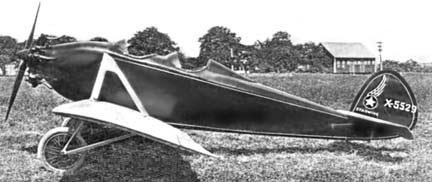
The 1928 Starwing G-4 was designed by Phil Goembel and sold for $2,885. A two-place monoplane, NX5529 and possibly one other were built.
Engine: 60hp LeBlond 5D
Wingspan: 29’0″
Length: 23’0″
Useful load: 306 lb
Max speed: 105 mph
Cruise: 95 mph
Stall: 35 mph
Seats: 2
Massillon OH.
USA
Built the 1929 Starwing G-4.
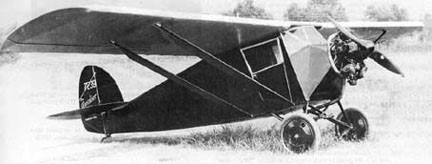
The Star Aircraft division of Phillips Petroleum was formed at Bartlesville, Oklahoma in 1928. Designers E A “Gus” Riggs and William “Billy” Parker prepared plans for a two-passenger high-wing light private owner aircraft intended for the lower cost end of the market. The advertised cost was $3,450 with a 90hp Lambert R-266 engine. They were also advertised with a 60hp LeBlond or 75hp Velie engine for $2,985. Three Cavalier A planes were delivered in 1928.
The Cavalier B (ATC 138) followed in 1929 fitted with a lower powered 55 hp Velie M-5 engine and 15 examples were sold at $2,895 to owners of more modest means. Some were fitted with 80hp Genet and 90hp Lambert R-266 engines. The fifteen included NC24B, NC263K, NC331H, NC350M and 351M, NC451, NC453, NC450, NC941E, NC960H, NC990H, NC7239 and N7249.
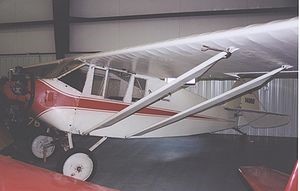
A single example of the Cavalier C (ATC 255) followed. The Cavalier C NC993H was powered by a 60hp LeBlond 5D engine for $2,985.
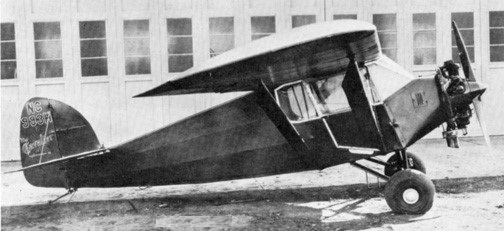
Two examples of the 1929 Cavalier D (ATC 2-191) were built, powered by 80hp Genet engines.
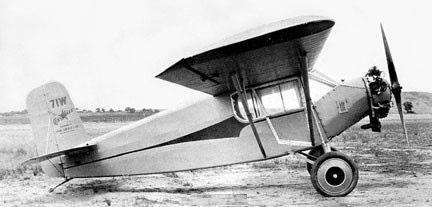
The next to secure modest success was the Cavalier E (ATC 321) of 1930 which had a 90 h.p. Lambert R-266 and was fitted with a taller, more angular, tail fin. Priced at $3,450 thirteen were sold (NC9E, NC13E, NC71W, NC350V, NC397V, NC636W, NC678W, NC980N, NC10359, NC10535, NC10583, NC10585, and NC11007).
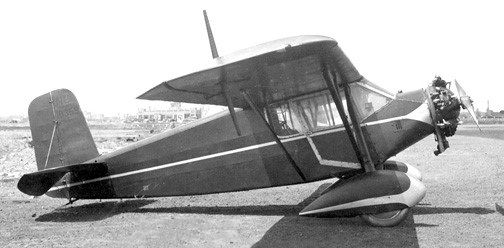
The last of the Cavalier series was the single 1930 F model N69W with a Warner Jr engine.
The several Cavalier models served private owners in the touring role until the curtailment of civil flying in the USA in late 1941. Five Cavaliers remain on the U.S. civil aircraft register in mid-2009. Cavalier B N14860 of 1930 was on public display, in airworthy condition, at the Historic Aircraft Restoration Museum at Dauster Field, Creve Coeur, Missouri near St Louis.
Cavalier A
Engine: 90 h.p. Lambert R-266
Wingspan: 31’6″
Length: 19’8″
Useful load: 578 lb
Max speed: 120 mph
Cruise: 100 mph
Stall: 35 mph
Seats: 2
Cavalier A
Engine: 60hp LeBlond
Wingspan: 31’6″
Length: 19’8″
Max speed: 105 mph
Cruise: 87 mph
Stall: 38 mph
Seats: 2
Cavalier A
Engine: 75hp Velie
Wingspan: 31’6″
Length: 19’8″
Max speed: 105 mph
Cruise: 87 mph
Stall: 38 mph
Seats: 2
Cavalier B
Engine: 1 × Velie M-5, 55 hp (41 kW)
Wingspan: 31 ft 6 in (9.60 m)
Wing profile: Clark Y
Length: 19 ft 11 in (6.07 m)
Useful lift: 538 lb ( kg)
Maximum speed: 100 mph (161 km/h)
Cruise speed: 85 mph (137 km/h)
Stall speed: 40 mph (64 km/h)
Range: 500 miles (800 km)
Crew: 1
Capacity: 1 passenger
Cavalier B
Engine: 80 h.p. Armstrong Siddeley Genet
Seats: 2
Cavalier B
Engine: 90 h.p. Lambert R-266
Seats: 2
Cavalier C
Engine: 60 h.p. LeBlond 5D
Seats: 2
Cavalier D
Engine: 60 h.p LeBlond.
Seats: 2
Cavalier D
Engine: 80hp Genet
Seats: 2
Cavalier E
Engine: 90 h.p. Lambert R-266
Length: 19’8″
Useful load: 550 lb
Max speed: 105 mph
Cruise: 87 mph
Stall: 38 mph
Range: 360 mi
Seats: 2
Cavalier F
Engine: Warner Junior
Seats: 2
USA
The Star Aircraft division of Phillips Petroleum was formed at Bartlesville, Oklahoma in 1928, the directors having connections with Phillips Petroleum Company. Designers E.A.Riggs and W.Parker prepared plans for a two-passenger high-wing Star Cavalier light private owner aircraft intended for the lower cost end of the market.
In 1936 E Graydon Stapp built the Stapp B-1 single-place, open cockpit biplane. Registered N13989 c/n ND-1, it was powered by a 40hp Ford engine.
Alanread TX.
USA
In 1936 E Graydon Stapp built the Stapp B-1 biplane.
Kansas City MO.
USA
According to an article in The Kansas Citizen of 18 December 1928, Standard Steel Works were contractors to build 50 cabin biplanes from plans and a pattern aircraft from United Aircraft Co of Wichita.
The company also announced they were in the process of designing and building their own eight-passenger, all-metal, cantilever-wing monoplane.

The Standard GD-24 (Gates-Day) of 1928 (ATC 2-38) was designed by Charles H Day and first flew on 24 August 1928, piloted by Clyde Pangborn.
A 3-4 seat (in three cockpits) biplane, three were built; NC193E c/n 102, NC442 c/n 103, and NX7286 c/n 101, and possibly also included NC2220. The first two become New Standard D-24.
An optional engine was the 220hp Hispano E.
Engine: 180hp Hispano E
Wingspan: 45’0″
Length: 26’0″
Useful load: 1305 lb
Max speed: 105 mph
Cruise: 90 mph
Stall: 35 mph
Seats: 3-5

Standard-Caproni
Standard-DH
Standard-Handley-Page
Gates-Day Standard
Anticipating eventual entry of U.S.A. into First World War, was formed in 1916 as Standard Aero Corp, with factories in New Jersey. Made to own designs SJ trainers; E-1 single-seat fighters, used for advanced training; H-3 landplane reconnaissance biplanes and H-4-H floatplanes. Also built 80 Curtiss HS single-engined flying-boats and began quantity production of Handley Page and Caproni large bombers. Also built about 140 DH-4s; total wartime output was over 1,000 aircraft.
1917: Standard Aircraft Corp.
1920: Ended operations, inventory sold to Nebraska Aircraft Co.
1928: Reorganized as (Ivan R) Gates-(Charles H) Day Aircraft Co, Paterson NJ.
1929: Reorganized as Standard Aircraft Corp to build New Standard line, aka Gates-Day Standard.

