Ing. Sergio Stefanutti had gained some experience in the mid 1930s with a little two seat tail first tourer.
Inter-Wars
Stearman-Hammond Aircraft Corp
USA
Formed 1936, after Dean B. Hammond and Lloyd Stearman had spent two years developing the Hammond Model Y two-seat twin boom pusher monoplane and the type had been granted an Approved Type Certificate. Aircraft had been redesigned for production as Y-1S and a few built before work was abandoned in 1938.
Stearman XOSS-1
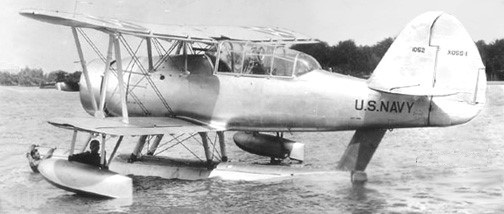
The Stearman X85 / XOSS-1 of 1938 was a USN scout-observation aircraft, with a single-float or wheels.

Only one was built.
XOSS-1 (X85)
Engine: 600hp P&W R-1340
Wing span: 36’0″
Length: 29’10”
Speed: 150 mph
Range: 832 mi
Seats: 2
Undercarriage: wheels
XOSS-1 (X85)
Engine: 600hp P&W R-1340
Wing span: 36’0″
Length: 34’6″
Speed: 148 mph
Range: 986 mi
Seats: 2
Undercarriage: floats
Stearman XA-21 / X-100
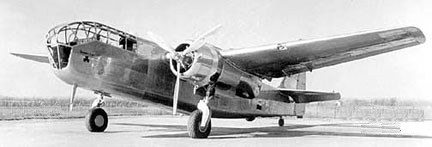
The 1939 Stearman XA-21 40-191 was designed as a USAAF attack-bomber. Fitted with a cantilever wing with flaps and crew of four, the one built was used as a flying laboratory at Wright Field.
Engines: 2 x 1150hp P&W R-2180-7
Wingspan: 65’0″
Length: 53’9″
Gross wt: 18,230 lb
Useful load: 5470 lb
Max speed: 257 mph
Cruise: 232 mph
Range: 1200 mi
Crew: 4
Stearman Beta 3D
Engine: Pratt & Whitney Wasp Jnr, 300 hp
Length: 21 ft 8 in
Height: 6 ft 1 in
Wing span: 32 ft
Wing area: 137 sq.ft
Empty wt: 1135 lb
Max weight: 1770 lb
Max speed: 200 mph
Price 1934: US$5000
Stearman 80 Sportster / 81 / 82

Variations in the basic Stearman 80 design, with Wasp engine and Hamilton controllable pitch propeller, are the Stearman 81 and 82.
The 1933 Stearman 80 (ATC 504) was a primary trainer developed from the Model 4 series. A rear cockpit canopy was added. One was built, registered NC11720.
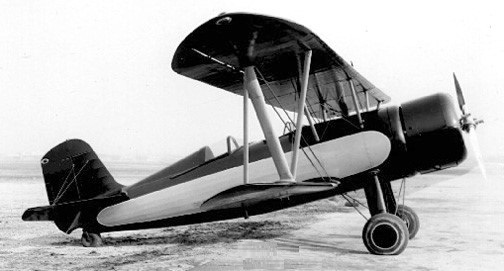
The 1933 81 Sportster (ATC 504) was a cabin version of the Model 80. The one built, NC570Y, priced at $8,500, featured canopied cockpits, front pilot seat, and larger fuel tanks. It was subsequently refitted with a 430hp Wright engine, and mounted on floats for a South American demonstration tour.
The model 81 Sportster was sold to the Mexican government.
80
Engine: Pratt & Whitney Wasp Jr. T3A, 420 hp
Length: 25 ft 1 in
Height: 9 ft 8 in
Wing span upper: 35 ft
Wingspan lower: 27 ft
Chord Upper: 62 in
Chord lower: 48 in
Wing area: 275 sq.ft
Airfoil: NACA 4412
Empty wt: 2436 lb
Max weight: 3500 lb
Useful load: 1064 lb
Payload: 210 lb
Fuel capacity: 104 USG
Oil cap: 8 USG
Ceiling: 19,600 ft
Range: 650 sm
Max speed: 175 mph
81
Engine:
Pratt & Whitney Wasp Jr. SB, 400 hp
Pratt & Whitney Wasp Jr. T3A, 420 hp
Length: 25 ft 1 in
Height: 9 ft 4 in
Wing span upper: 35 ft
Wingspan lower: 27 ft
Chord Upper: 62 in
Chord lower: 48 in
Wing area: 275 sq.ft
Airfoil: NACA 4412
Empty wt: 2385 lb
Max weight: 4000 lb
Useful load: 1615 lb
Payload: 230 lb
Fuel capacity: 155 USG
Oil cap: 10 USG
Ceiling: 17,000 ft
Range: 900 sm
Max speed: 170 mph
Price: $12,500, reduced to $8500 in 1935
Stearman 73 Sportster
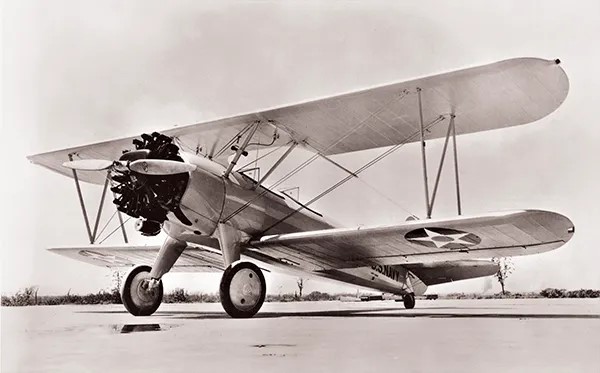
The Model 70 first flew in December 1933 and was put forward as a contender for a USAAC contract for a primary trainer. Testing by the US Army and Navy took place shortly after this, and although pleased with the aircraft as a whole, they found the stall far too gentle for a military trainer. In order to remedy this, small spoilers (or stall strips) were added to the leading edges of the upper wings to make the stall more abrupt. Further testing followed before an initial order of 61 aircraft was placed by the US Navy in 1923. These went into production as the Model 73.
Model 73 Sportster civil production version of Model 70 flew first on November 26, 1934.
These were fitted with a 220hp Wright R-790-8 at the Navy’s request, with the US Navy designation NS-1.
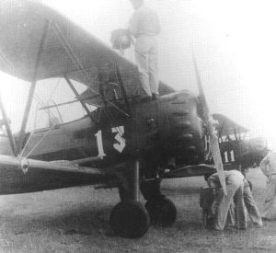
Seven 1936 Model 73L3 went to the Philippines.
Seven of the 1939 A73B1 export version went to Cuba. They were delivered 1939–1940.
The Model 75 was powered by a 215 hp Lycoming and was designated by the military as the PT-13.
The Model 75 was soon replaced by the 220hp Lycoming R-680-7 powered Model A75, which became the PT-13A, B and C with the army, then in order to avoid a shortage of Lycoming engines the army requested the 220hp Continental R-670-5 be fitted in 1940. The repowered aircraft on to become the PT-17.
Three of the 1938 new production of L73L3 were built.
73 Sportster
Engine: 210hp Continental R-670
Wingspan: 32’2″
Length: 24’3″
Useful load: 915 lb
Max speed: 135 mph
Cruise: 115 mph
Stall: 45 mph
Range: 505 mi
Ceiling: 11,200′
73L3
Engine: 225hp Lycoming R-680-4 or R-680C1
A73B1
Engine: Wright R-790-8 Whirlwind, 235hp (175 kW)
Length: 25 ft 1 in
Height: 9 ft 7 in
Wing span upper: 32.2 ft
Wingspan lower: 31.2 ft
Max weight: 2699 lb
Ceiling: 12,200 ft
Max speed: 118 mph
A73L3
Engine: 235hp (175 kW) Wright R-790 Whirlwind
Stearman 70 / X-70 / XPT-943
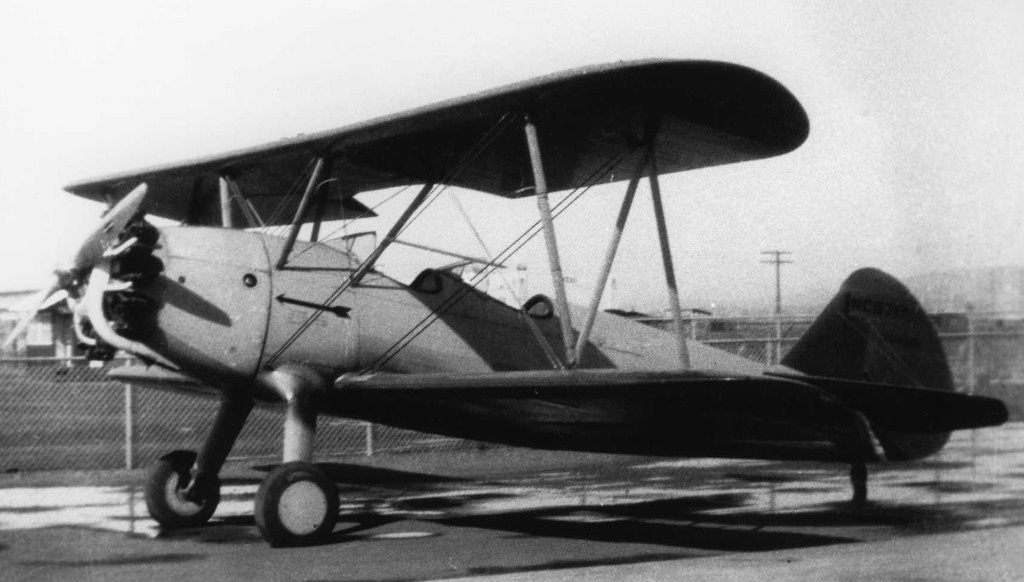
Designed by Mac Short and Jack Clark, one prototype of the 1933 Stearman 70 aka X-70 (Model XPT-943) was built, registered NX571Y with ATC 2-516.
The design was essentially based on the Model 6-A, retaining the same basic proportions and had a similar fabric-covered welded-steel fuselage and fabric covered wooden wings. Differences included a rounder fuselage, with the addition of aluminium-frame stringers, as well as more rounded wingtips and tail.
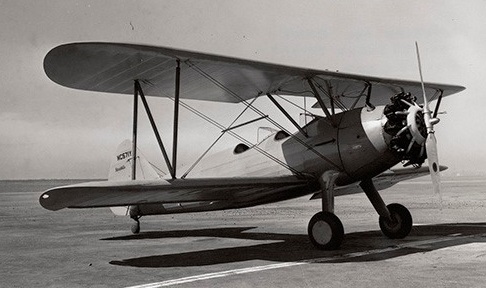
New features incorporated included pilot-controlled trim tabs on the elevators and single-strut landing gear.
Designed and built in 60 days, the Model 70 first flew in December 1933 and was put forward as a contender for a USAAC contract for a primary trainer.
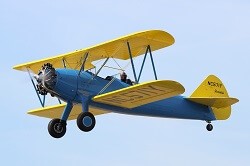
Testing by the US Army and Navy took place shortly after this, and although pleased with the aircraft as a whole, they found the stall far too gentle for a military trainer. In order to remedy this, small spoilers (or stall strips) were added to the leading edges of the upper wings to make the stall more abrupt. Further testing followed before an initial order of 61 aircraft was placed by the US Navy in 1923. These went into production as the Model 73.
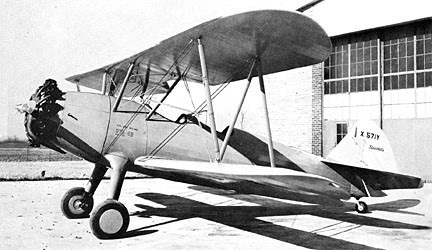
The Model 70 evolved into Model 73, 75, USN NS-1, and USAAC PT-13.
Engine: Lycoming R-680, 215hp
Wingspan: 32’2″
Length: 24’10”
Useful load: 692 lb
Max speed: 115 mph
Cruise: 90 mph
Stall: 45 mph
Range: 330 mi
Seats: 2
Stearman 6 / YPT-9 Cloudboy / BT-5
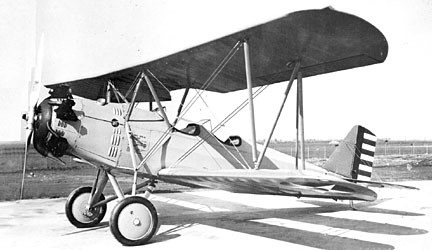
In 1931 the model 6A (ATC 365) sold for $8500, increasing to $10,250 in 1931. Seven were built in total. Four evaluation models for Army military trials as YPT-9, and three civil; NX786H later modified as 6-D, -F and -L, NC787H later as 6-P, and NC795H later as 6-L.
Stearman YPT-9 Cloudboy Article
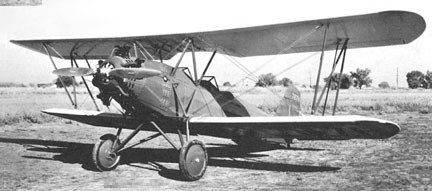
The 1933 6-C Cloudboy (ATC 2-457) was a modification of N2143 c/n 6010 with a canopied cockpit and repowered with a 330hp Wright J-6.
The 1931 model 6D Cloudboy (ATC 402) sold for $10,500, increasing to $12,750. One was built from 6-A as NC786H, later repowered with a 210hp Kinner (as 6-H) and then 215hp Lycoming (as 6-L), and finally converted into Army YBT-5.
Seven of the 6-F Cloudboy (ATC 371) were built. Four went to the USAAC as YPT-9 and YBT-5, and three converted to 6-H and 6-L (NC786H-788H]). YPT-9 31-462 was repowered with a 300hp P&W R-985-1 as YBT-5 and two other YPT-9s, 31-459 and 31-460, were converted.
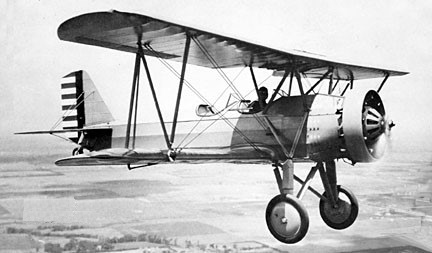
In 1930 the model 6F sold for $7945, increasing to $9460 in 1931.
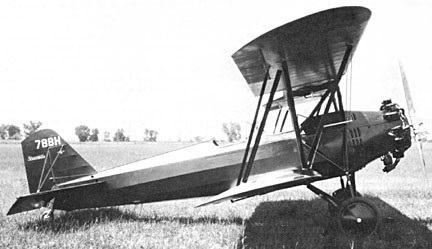
There were two conversions to the 1932 6-H Cloudboy (ATC 458) from older models (NC564Y and NC786H).

In 1932 four conversions from 6-A (NC795H) and -F (NC786H-788H) were made as 6-L Cloudboy (ATC 459), powered by a 215hp Lycoming R-680 engine. They were Army version YPT-9B.
One model 6-F, NC797H, was converted to the 1931 model 6-P (ATC 2-520) powered with a 220hp Wright J-5 engine.
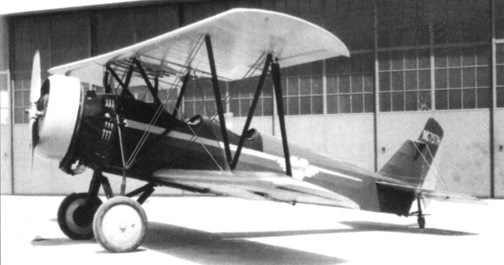
The 1932 PT-9 primary trainer was adapted from civil Model 6 Cloudboy series with a 210hp Kinner engine. Four YPT-9 were built – 31-459 to 31-462 – testing various engines.
31-459 became YPT-9A, then -9B. 31-461 became YBT-3 and YPT-9C. 31-459 and 31-460 ultimately became BT-5.
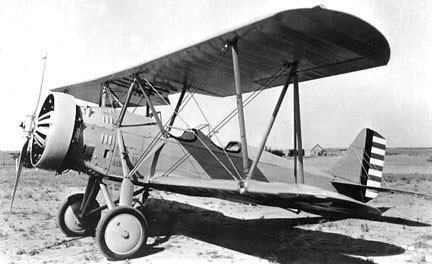
The 1932 YPT-9C 31-461, first designated YBT-3, then YPT-9C, was powered with a 170hp Kinner R-720 and had the same specifications as the model 6-H.
6A Cloudboy
Engine: Wright J6-5, 165hp
Length: 24 ft 8 in
Height: 9 ft 6 in
Wing span upper: 32 ft
Wingspan lower: 28 ft
Chord: 60 in
Wing area: 272 sq.ft
Airfoil: N-22
Empty wt: 1733 lb
Max weight: 2400 lb
Useful load: 667 lb
Fuel capacity: 37 USG
Oil cap: 2.5 USG
Ceiling: 12,300 ft
Range: 350 sm
Max speed: 110 mph
Cruise: 90 mph
Stall: 45 mph
Seats: 2
6-C Cloudboy
Engine: 330hp Wright J-6
Seats: 2
6D
Engine: Pratt & Whitney Wasp Jnr, 300hp
Length: 24 ft 8 in
Height: 9 ft 7 in
Wing span upper: 32 ft
Wingspan lower: 28 ft
Wing area: 248 sq.ft.
Airfoil: N-22
Empty wt: 1952 lb
Max weight: 2814 lb
Useful load: 862 lb
Payload: 257 lb
Fuel capacity: 65 USG
Oil cap: 6 USG
Max speed: 137 mph
Cruise: 117 mph
Stall: 55 mph
Ceiling: 18,100 ft
Range: 450 sm
Seats: 2
6F
Engine: Continental A-70, 165hp
Length: 24 ft 8 in
Height: 9 ft 6 in
Wing span upper: 32 ft
Wingspan lower: 28 ft
Chord: 60 in
Wing area: 272 sq.ft
Airfoil: N-22
Empty wt: 1727 lb
Max weight: 2400 lb
Useful load: 673 lb
Fuel capacity: 37 USG
Oil cap: 2.5 USG
Ceiling: 12,300 ft
Range: 350 sm
Max speed: 110 mph
Seats: 2
6H
Engine: Kinner C5, 210hp
Length: 23 ft 11 in
Height: 9 ft 7 in
Wing span upper: 32 ft
Wingspan lower: 28 ft
Chord: 60 in
Wing area: 272.2 sq.ft
Airfoil: N-22
Empty wt: 1810 lb
Max weight: 2476 lb
Useful load: 666 lb
Payload: 230 lb
Fuel capacity: 66 USG
Oil cap: 5 USG
Ceiling: 15,200 ft
Range: 300-500 sm
Max speed: 119 mph
Cruise: 100 mph
Stall: 47 mph
Seats: 2
6L
Engine: Lycoming R-680, 215hp
Length: 23 ft 8 in
Height: 9 ft 7 in
Wing span upper: 32 ft
Wingspan lower: 28 ft
Chord: 60 in
Wing area: 272 sq.ft
Airfoil: N-22
Empty wt: 1880 lb
Max weight: 2551 lb
Useful load: 671 lb
Payload: 235 lb
Fuel capacity: 38 USG / 63 USG opt.
Oil cap: 5 USG
Ceiling: 15,000 ft
Range: 300-500 sm
Max speed: 120 mph
Cruise: 100 mph
Stall: 47 mph
Seats: 2
6P
Engine: Wright J5, 220hp
Length: 23 ft 8 in
Height: 9 ft 7 in
Wing span upper: 32 ft
Wingspan lower: 28 ft
Chord: 60 in
Wing area: 272 sq.ft
Airfoil: N-22
Max weight: 2500 lb
Fuel capacity: 37 USG
Stearman CAB-1 Stearman Coach
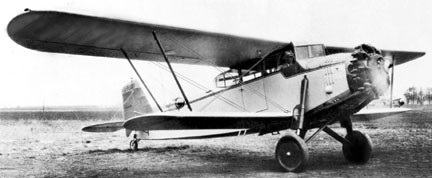
The 1929 Stearman CAB-1 five-place was never marketed. Only the one was built.
Engine: Wright J6-9 Whirlwind, 300hp
Length: 29 ft 9 in
Wing span upper: 42 ft
Wingspan lower: 30 ft
Wing area: 338 sq.ft
Airfoil: Stearman
Empty wt: 2565 lb
Max weight: 4270 lb
Payload: 780 lb
Fuel capacity: 110 USG
Oil cap: 10 USG
Ceiling: 16,000 ft
Range: 480 sm
Max speed: 135 mph

