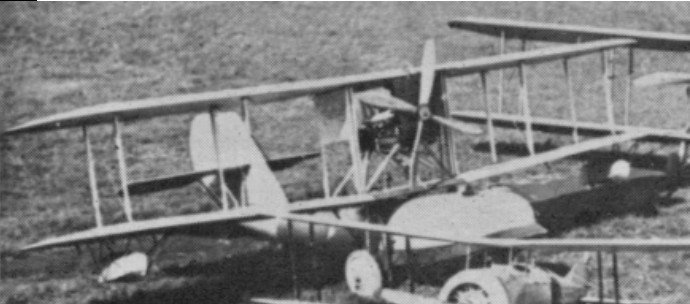
Well-known maritime aircraft included the Seal/Seagull/Scarab/Sheldrake series developed during 1920s and 1930s.
Well-known maritime aircraft included the Seal/Seagull/Scarab/Sheldrake series developed during 1920s and 1930s.
Noel Pemberton-Billing, a wealthy yacht-broker, gun-runner and aircraft manufacturer (he established the Supermarine company, described as ‘tall, slick, monocled and iron-jawed’ by contemporary society columnists, learned to fly in 24 hours to win a £500 wager with Frederick Handley Page and subsequently served with the Royal Naval Air Service, from which his ‘tem¬pestuous temperament’ earned him an early retirement, though not before he had helped to organize the first aerial attack on the Zeppelin sheds on Lake Constance.
Noel Pemberton Billing began aeronautical experiments in 1908 with a primitive monoplane. Acquiring a factory at Woolston, Southampton, in 1913, he began to design and build marine aircraft, his P.B.1 biplane flying-boat being exhibited at the 1914 Olympia Show, but not flown.
Pemberton-Billing Ltd registered June 1914.
At outbreak of First World War in 1914 designed, built and flew P.B.9 single-seat scout biplane in nine days. The P.B.29E night patrol quadruplane of 1915, built in seven weeks from beginning of design, paved the way for the improved version, the 1915 P.B.31E Nighthawk anti-airship fighter with many ingenious features, including searchlight and recoilless gun. By the time this had flown the company had been renamed Supermarine Aviation Works.
Other designs were a twin-float seaplane and Baby single-seat fighter flying-boat, the latter flying in February 1918. Company’s postwar Schneider Trophy Sea Lion racing flying-boats were developed from Baby, but advanced S.4 racer of 1925 was a twin-float seaplane, though still of wooden construction. The S.5 and S.6 seaplanes, which followed, were renowned for racewinning and record-breaking, but especially as forerunners of Second World War Spitfire, designed by Reginald Mitchell (1895-1937), who had joined company in 1916. Well-known maritime aircraft included the Admiralty (AD) type built by Supermarine (and Pemberton-Billing) in First World War, and Seal/Seagull/Scarab/Sheldrake series developed during 1920s and 1930s.
When the company was absorbed by Vickers in 1928 it was already famous for large multi-engined flying-boats, particularly Southampton, distinguished in RAF service from 1925, especially for long cruises.
Supermarine became Vicker-Supermarine in 1929.
Successors were much-refined Scapa of 1932 and Stranraer of 1935, and the Walrus and Sea Otter earned their place in FAA history during Second World War. The Supermarine Spitfire first flew March5, 1936. Well over 20,000 were built by various makers. Basic change came when the Rolls-Royce was replaced by the Griffon engine. Seafire was naval development (over 2,500 built). Spiteful and Seafang were late piston-engined types with new wing, from which the jet-propelled Attacker was developed to enter service in 1951. Swept-wing Swift was unsuccessful as fighter, and twin-jet Scimitar of 1958 concluded fighter line.
Super-Marine Systems Inc of Graybar Bldg NY (sales office), USA, built in 1930 high-wing flying boat N11035. Two two Super-Marine Special motors were buried in the wing and it was equipped with “sponsons.”
(pres: Leo C Mohme),
2525 Pennway,
Kansas City MO.
USA
Information from Kansas City as a list of racing aircraft and race pilots from that area shows no Superior.
An article in the 5/28/29 Kansas Citizen tells of personnel from Kansas City’s National Aircraft Welding School setting up National Aircraft Co and acquiring the services of Mohme, their intention being to build two planes. Possibly they changed name to Superior as there was a National Aircraft in NJ at the time.
In 1926 Superior Aircraft Co of Dearborn MI., USA, built a three-place, open cockpit biplane, registered N1636 c/n 1. It first flew on 15 August 1926.
It was sold in 1927 to Henry J Limbright (Dearborn), but the registration was cancelled on 16 October 1928 when he failed to reply to CAA inquiry for information.
Engine: 120hp Super LeRhône
Wingspan: 31’6″
Length: 23’6″
Seats: 3

The 1937 Sundorph Aeronautical Corp A-1 Special was a four-place racer with metal fuselage and fabric-covered wood-frame wing, registered NR2599 c/n 2.
Powered by a 225hp Jacobs L-4 engine, it developed wing flutter in the 1937 Bendix race and was never flown again.

In 1932 Sundorph Aeronautical Corp of Cleveland OH. Built a two-place open cockpit monoplane. Registered NX12886 c/n 1, it was powered by a 100hp ACE (Cirrus) engine.
(Eiler C) Sundorph Aeronautical Corp,
Cleveland OH.
USA
Built civil aircraft circa 1932-37.
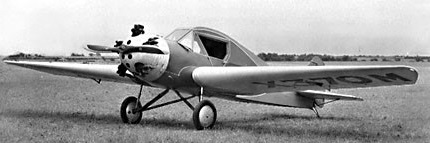
In 1930 Sullivan Aircraft Manufacturing Co built a low-wing cabin monoplane which was developed as the K-3 Crested Harpy. Laird Co’s Jake Moellendick reportedly was involved to some extent.
A three-place cabin monoplane, it is known that two were built, NR127V and X370M, and perhaps more.

Engine: 100hp Kinner K-5
Wing span: 36’0″
Length: 24’0″
Useful load: 766 lb
Max speed: 126 mph
Cruise: 105 mph
Stall: 44 mph
Seats: 3
1929:
(William P) Sullivan Aircraft Mfg Co,
630 E Gilbert St,
Wichita KS.
USA
In 1930 built a low-wing cabin monoplane which was developed as the K-3.
Sullivan also built about a dozen SG-1 gliders in 1930 for use at Braley School of Aviation.

