Maxi BI
Paraglider circa 1998.
Wing area: 42.3 sq.m
Pilot weight: 130-210 kg
No. of cells: 49
Wing span: 14 m
Aspect ratio: 4.6
Min sink: 1.3 m/s
Max speed: 50 kph
1980->
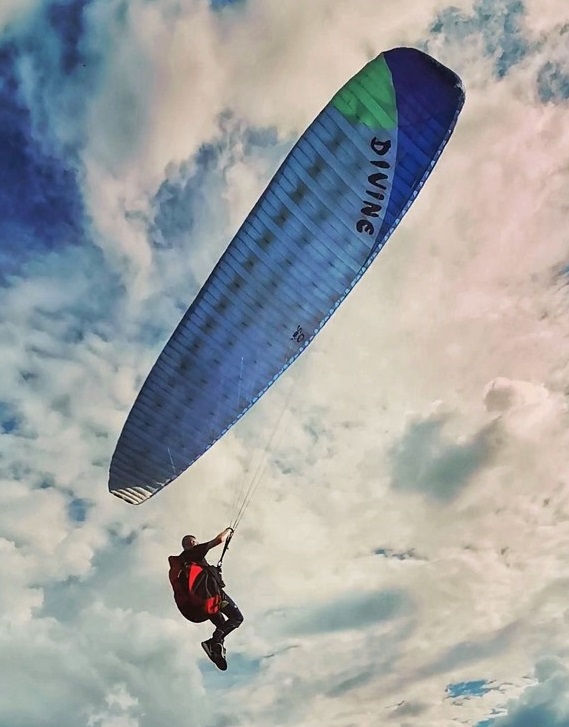
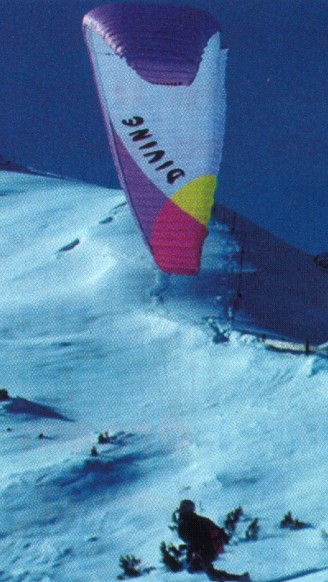
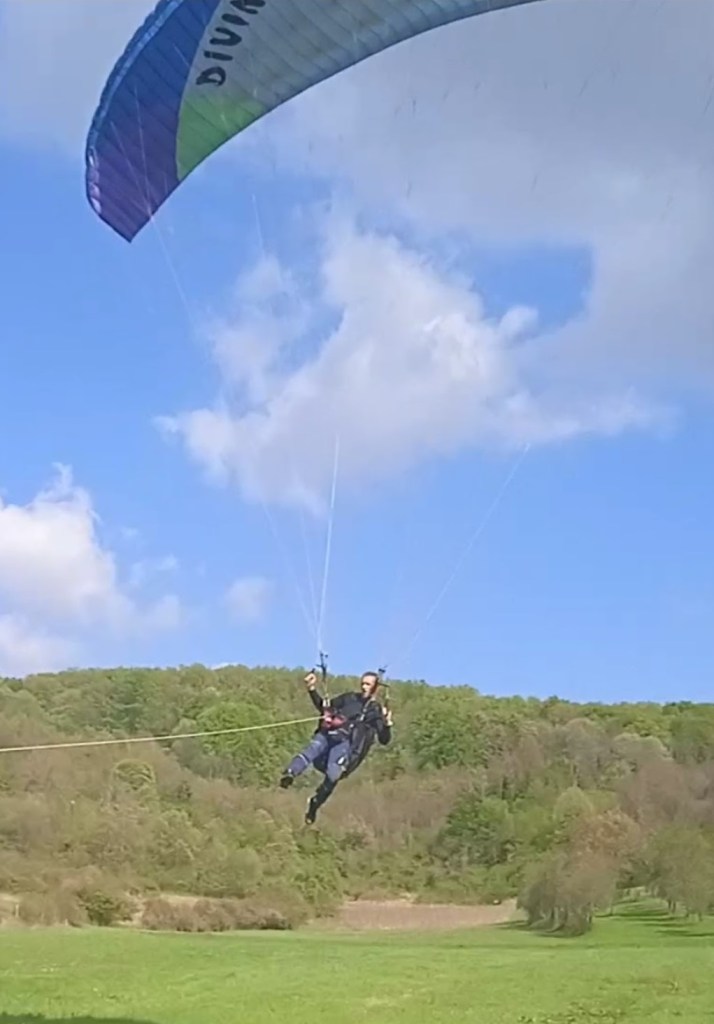
Sky Paragliders Divine
Divine 26R
Paraglider circa 1998.
Wing area: 26.47 sq.m
Pilot weight: 75-95 kg
No. of cells: 75
Wing span: 12.74 m
Aspect ratio: 6.13
Min sink: 0.9 m/s
Max speed: 63 kph
Divine 27
Paraglider circa 1998.
Wing area: 27.47 sq.m
Pilot weight: 75-90 kg
No. of cells: 63
Wing span: 12.13 m
Aspect ratio: 5.3
Min sink: 1 m/s
Max speed: 50 kph
Divine 29
Paraglider circa 1998.
Wing area: 29.2 sq.m
Pilot weight: 90-105 kg
No. of cells: 66
Wing span: 12.73 m
Aspect ratio: 5.55
Min sink: 1 m/s
Max speed: 50 kph
Divine 31
Paraglider circa 1998.
Wing area: 30.93 sq.m
Pilot weight: 105-120 kg
No. of cells: 69
Wing span: 13.33 m
Aspect ratio: 5.74
Min sink: 1 m/s
Max speed: 50 kph
Sky Paragliders Fancy
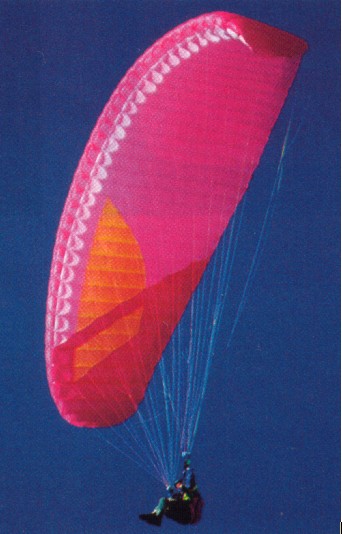
Fancy 28
Paraglider circa 1998.
Wing area: 28 sq.m
Pilot weight: 65-85 kg
No. of cells: 44
Wing span: 11.15 m
Aspect ratio: 4.45
Min sink: 1.2 m/s
Max speed: 40 kph
Fancy 30
Paraglider circa 1998.
Wing area: 29.6 sq.m
Pilot weight: 80-100 kg
No. of cells: 40
Wing span: 11.68 m
Aspect ratio: 4.61
Min sink: 1.2 m/s
Max speed: 40 kph
Sky Paragliders Fides

Fides 2 is a school glider certified in the DHV 1 category. The Fides 2 is excellent for first XC flights and was the lightest glider – in the category – produced with the standard materials in the market. Price 2009: US$3,000.00
Fides 2XS
Layout surface: 22,36 sq.m
Projected surface: 19,65 sq.m
Layout span: 10,25 m
Projected span: 8,24 m
Layout aspect ratio: 4,70
Projected aspect ratio: 3,46
Take-off weight: 56-74 kg
Weight of the glider: 4,2 kg
Min. speed: 22 km/h
Trim speed: 36 km/h
Max. speed: 45 km/h
Sinkrate: <1,2 m/s Gliding ratio: >7,5
Certification: AFNOR Standard
Fides 2 S
Layout surface: 24,19 sq.m
Projected surface: 21,26 sq.m
Layout span: 10,66 m
Projected span: 8,57 m
Layout aspect ratio: 4,70
Projected aspect ratio: 3,46
Take-off weight: 69-90 kg
Weight of the glider: 4,5 kg
Min. speed: 22 km/h
Trim speed: 36 km/h
Max. speed: 45 km/h
Sinkrate: <1,2 m/s Gliding ratio: >7,5
Certification: DHV 1
Fides 2XSSML
Layout surface: 22,36 sq.m
Projected surface: 19,65 sq.m
Layout span: 10,25 m
Projected span: 8,24 m
Layout aspect ratio: 4,70
Projected aspect ratio: 3,46
Take-off weight: 56-74 kg
Weight of the glider: 4,2 kg
Min. speed: 22 km/h
Trim speed: 36 km/h
Max. speed: 45 km/h
Sinkrate: <1,2 Gliding ratio: >7,5
Certification: AFNOR Standard
Fides 2XSSML
Layout surface: 24,19 sq.m
Projected surface: 21,26 sq.m
Layout span: 10,66 m
Projected span: 8,57 m
Layout aspect ratio: 4,70
Projected aspect ratio: 3,46
Take-off weight: 69-90 kg
Weight of the glider: 4,5 kg
Min. speed: 22 km/h
Trim speed: 36 km/h
Max. speed: 45 km/h
Sinkrate: <1,2 Gliding ratio: >7,5
Certification: DHV 1
Fides 2XSSML
Layout surface: 26,17 sq.m
Projected surface: 23,00 sq.m
Layout span: 11,09 m
Projected span: 8,92 m
Layout aspect ratio: 4,70
Projected aspect ratio: 3,46
Take-off weight: 82-105 kg
Weight of the glider: 4,8 kg
Min. speed: 22 km/h
Trim speed: 36 km/h
Max. speed: 45 km/h
Sinkrate: <1,2 Gliding ratio: >7,5
Certification: DHV 1
Fides 2XSSML
Layout surface: 28,30 sq.m
Projected surface: 24,87 sq.m
Layout span: 11,54 m
Projected span: 9,28 m
Layout aspect ratio: 4,70
Projected aspect ratio: 3,46
Take-off weight: 100-130 kg
Weight of the glider: 5,1 kg
Min. speed: 22 km/h
Trim speed: 36 km/h
Max. speed: 45 km/h
Sinkrate: <1,2 Gliding ratio: >7,5
Certification: DHV 1
Fides 2M
Layout surface: 26,17 sq.m
Projected surface: 23,00 sq.m
Layout span: 11,09 m
Projected span: 8,92 m
Layout aspect ratio: 4,70
Projected aspect ratio: 3,46
Take-off weight: 82-105 kg
Weight of the glider: 4,8 kg
Min. speed: 22 km/h
Trim speed: 36 km/h
Max. speed: 45 km/h
Sinkrate: <1,2 m/s Gliding ratio: >7,5
Certification: DHV 1
Fides 2L
Layout surface: 28,30 sq.m
Projected surface: 24,87 sq.m
Layout span: 11,54 m
Projected span: 9,28 m
Layout aspect ratio: 4,70
Projected aspect ratio: 3,46
Take-off weight: 100-130 kg
Weight of the glider: 5,1 kg
Min. speed: 22 km/h
Trim speed: 36 km/h
Max. speed: 45 km/h
Sinkrate: <1,2 m/s Gliding ratio: >7,5
Certification: DHV 1
Sky Paragliders
1998: Kamenec 388, CZ-73911 Frydlant, Czech Republic
After the excellent Divine, a good compromise between performance and safety, the tide then turned for the company with the death of the designer at the PWC in Spain.
Originally designed in Slovenia, the make was the exported to the Czech Republic for the better production facilities there.
Skyline Viper
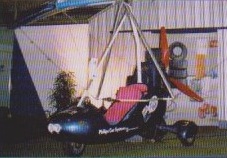
Based on the ASO’s Viper trike, this machine is fully road legal in Germany. After removing the wings an auxiliary engine drives through a fourth wheel at the rear.
Viper 582 Street
Empty weight: 165 kg
Wing span: 10.38 m
Wing area: 10 sq.m
Fuel capacity: 50 lt
Engine: Rotax 582, 64 hp
MAUW: 400 kg
Seats: 2
Max speed: 140 kph
Cruise speed: 110 kph
Minimum speed: 65 kph
Climb rate: 4 m/s
Fuel consumption: 12 lt/hr
Price (1998): 79 000 DM
Skyline GmbH
1998:
Falltorstrasse 20
D-35398 Glessen Lüzelinden
Germany
Trike builder
Sky King International
1984: 419 Wellesley Street E., Toronto, Ontario, Canada M4X 1H5.
LSA builder
Skyhook Sailwings Gipsy
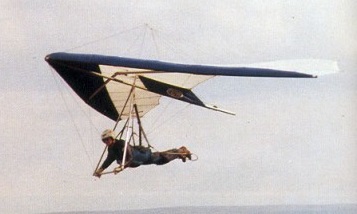
The Gipsy was a 1983 single surface hang glider, described as so easy to rig and fly. The only thing hard was lifting her off the ground to put the nose pin in as it was rather heavy. This glider is easy to self launch without a wire man even in strong winds.
The 1986 Gipsy and Gypsy SS were produced in three sizes to cover most pilot weights. The machine was a fourth generation floating crosstube lightweight intermediate and was an ideal first glider for the new pilot. All sizes gained C of A in 1987.
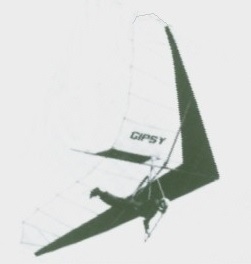
The 1987 Gipsy CFX is a light weight double surface intermediate glider. The handling is quick, light and beautifully co-ordinated with no hidden vices. The machine was supplied in two sizes.
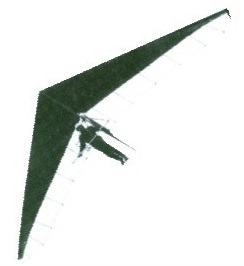
The 1987 Gipsy CFX was described as as sweat as ever to fly. Control is great soaring and at low level sand dunes. They are well put together.
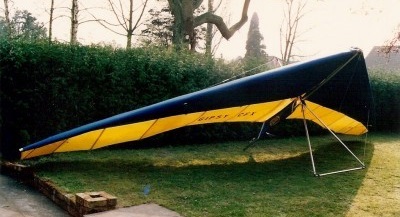
The Gipsy CFX beautiful handling glider but don’t be tempted to tighten sail to much using the outer attachment points as handling degrades dramatically and PIO becomes an issue. Keep the tune soft and the Gipsy is a gem of a glide.
Gipsy CFX
Sail area: 180 sq ft and 160 sq ft.
Skyhook Sailwings Orion
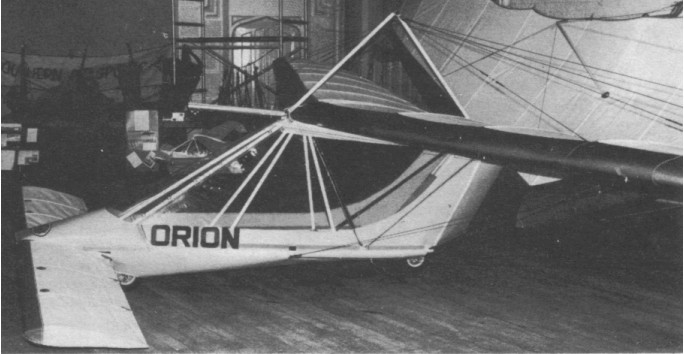
Single seat single engined high wing mono¬plane with two axis control. Wing has swept back leading and trailing edges, and tapering chord; no tail, canard wing. Pitch control by fully flying canard; yaw/roll control by angled ¬pivot tip rudders; control inputs through stick for pitch and yaw/roll. Wing braced from above by kingpost and cables, from below by cables; wing profile Clark Y derived; 100% double surface. Undercarriage has three wheels in tricycle formation; no suspension on nosewheel and suspension (type to be decided) on main wheels. Push right go right nose¬wheel steering independent from yaw control. Brakes on main wheels.
Aluminium tube and fabric fuselage, totally enclosed. Engine mounted below wing driving pusher propeller. Windscreen made from rigid plastic sheet, side windows from Mylar film. Bainbridge Dacron used for flying surfaces.
Designer Len Gabriels has aimed to create a machine which will appeal to hang gliding and sailplane enthusiasts as well as microlighters, and in its initial form the machine is unpowered.
As first shown at the British Hang Gliding Association’s annual general meeting in March 1983, the Orion is a fully enclosed hang glider/sailplane with pitch control by weight shift moving a fully flying canard. Combined roll and yaw control is provided by tip rudders mounted under the ends of the wing and with their pivots angled at 45O to the vertical, so that they provide roll at the same time as yaw. Both may be deployed simul¬taneously, to provide air braking.
This unpowered version of the Orion uses two wheels in tandem without suspension or brakes and is basically intended as a foot¬-launched aircraft. Powered versions, howev¬er, will have a tricycle layout with the weight shift pitch control being replaced by a stick. Pedals will steer the nosewheel but will not be connected to the yaw/roll control. Retention of the weight shift pitch control will be an option.
The wing is based on a Clark Y section, though as it is to some degree a flex wing, it will probably not behave entirely as a Clark Y in the air.
As a hang glider, in April 1983, test flights in unpowered form were about to begin.
Length overall 12.0 ft, 3.66 m
Wing span 42.0 ft, 12.80 m
Chord at root 5.0ft, 1.52m
Chord at tip 3.0ft, 0.91m
Canard span 12.0 ft, 3.66 m
Canard chord 2.0 ft, 0.61 m
Total wing area 176 sq.ft, 16.4 sq.m
Main wing area 152 sq.ft, 14.1 sq.m
Canard area 24sq.ft, 2.2sq.m
Wing aspect ratio 9.5/1
Empty weight 154 lb, 70 kg

