Known under the name of A Kart 30, this first machine did not go on sale. It was instead developed into two other prototypes, one tandem two seater and the other a single seater, both of which made their first flights at the beginning of summer 1982.
1980->
AIDC F-CK / Ching Kuo
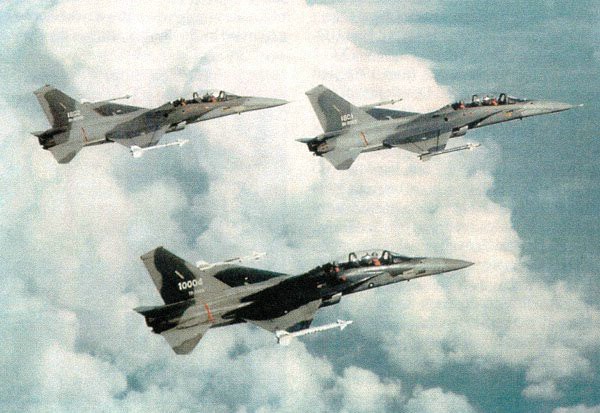
In the 1980s the United States of America tried to improve its relations with China, and part of this policy prevented the US government from delivering of the Northrop F-20 Tigershark or General Dynamics F-16 Falcon to Taiwan in 1982.
Taiwan decided to develop a fighter itself to supplement and replace its fleet of F-5E Tiger IIs and F-104s and develop a BVR capability.
The program, Indigenous Defensive Fighter (IDF), was based on extensive cooperation between the Taiwanese aerospace industry and several US companies, including General Dynamics, Westinghouse, Honeywell and Lear. The Taiching based Aerospace Industrial Development Corporation (AIDC) was the main contractor. Formed for the development of the engine was the International Turbine Engine Corporation (ITEC), a joint venture between AIDC and Allied Signal.
Commencing development in 1982 at the Aero Industry Development Center (AIDC) at Taichung, the Chiang Ching-Kuo indigenous air defence fighter was named F-CK-1 “Ching-Kuo” after a former president of Taiwan.
The aircraft’s primary mission is that of air defense carrying the indigenous Tien Chien (Sky Sword) I Sidewinder-equivalent and the Beyond Visual Range (BVR) Tien Chien II. The multi-role aircraft can also be used in the ground attack role or the martitime attack role using its multi-mode Golden Dragon GD-53 radar, which is a license built version of the Westinghouse AN/APG-67(V). For the martime attack role the aircraft can be equipped with up to three indigenous Hsing Feng II AShM. Internally the Ching-Kuo carries the M61A1 Vulcan 20mm cannon.
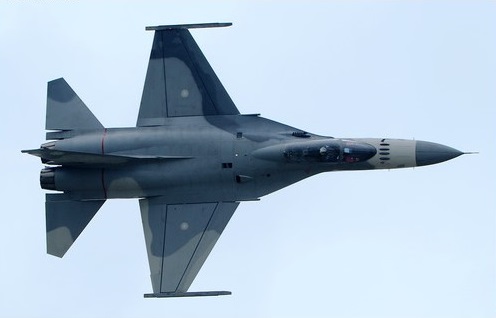
Three single-seat F-CK-1A and one two-seat F-CK-1B prototypes were ordered and on 10 December 1988 the first IDF prototype was rolled out. On 28 May 1989 the first, a single-seater, made its first flight. In total four prototypes were built, three single-seat and one two-seat variant. The first (A-1) incurring damage on a very public landing attempt. The second A-2 prototype was lost altogether in a Mach 1 speed trials test. After having completed another 10 pre-production aircraft, full production began and deliveries started early 1994. In December 1994 the first squadron of IDF or Ching-Kuo fighters was formed, achieving initial operational capability in 1995.
The Ching-Kuo fighter was powered by two Garrett TFE 1042-70 turbofans, produced in Taiwan by the International Turbo Engine Company and developed in afterburning form under the Yun Han (Cloud Man) programme, each providing 3783kg with maximum afterburning.
The airframe was developed in collaboration with General Dynamics under the Ying Yang (Soaring Eagle) programme; the avionics were acquired and integrated under the leadership of Lear Siegler under the Tien Lei (Sky Thunder) programme, and the primary missile armament was evolved under the Tien Chien (Sky Sword) programme. The cockpit is equipped with a wide angle HUD, two MFD, a side stick, HOTAS and has a 30 degree declined Martin Baker Mk.12 ejection seat.
Armament consisted of one 20mm M61A Vulcan rotary cannon and, for the intercept role, four Sky Sword I short-range and two Sky Sword II medium-range AAMs, the maximum external stores load being 4082kg. The first of 10 pre-production Ching-Kuos (a two-seater) flew in 1992, when production of up to a further 130 was being planned.
In 1998, in service F-CK-1s were rotated to AIDC for a limited post-production upgrade, including GEC-Marconi Combined Interrogator/Transponder (CIT), Litton Improved Radar Warning Receivers (IRWRs), and Rockwell Collins Instrument Landing System (ILS).
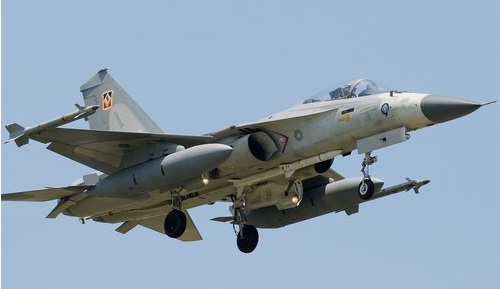
Production ended late 1999 at 130. Reportedly 102 single-seaters and 28 two-seaters had been produced. Taiwan had decided to purchase the F-16 when the Bush administration authorized the sale of more military technology to Taiwan. Having already acquired Mirage 2000 fighter from French to fill the gap, no more IDF aircraft were needed. Subsequently plans for more powerful engines were scrapped.
The 130th aircraft was delivered on 14 January 2000 and entered service in July. Taiwan operated two wings of Ching-Kuo fighters based at Ching Chuan Kang AB (Taicheng) and Tainan AB.
In 2001, AIDC started development of the upgraded F-CK-1C/D. On October 9, 2006, flight testing of the upgraded F-CK-1 IDF began when first single-seat F-CK-1C prototype (10005/958136) undertook its maiden flight from AIDC’s facility at Taichung. On March 27, 2007, the first two-seat F-CK-1D prototype (10006/96-8137) was also unveilled at a ceremony, attended by president Chen Shui-bian, who formally named the new variant Hsung Ying (Goshawk), instead of the earlier announced name of Shiang-Seng.
The F-CK-1C/D upgrade features a new BAE 32-bit flight control computer, improved mission computer and head-up display, advanced fire control radar system and improved weapons capability. Structural enhancements enable it to carry four instead of two Tianchien II (Skysword II) medium-range air-to-air missiles and strengthen the undercarriage. The upgrade also includes two additional fuel tanks in the form of conformal tanks mounted dorsally on the fuselage, first seen on the F-CK-1D prototype.
Variants: F-CK-1A, F-CK-1B, F-CK-1C, F-CK-1D
F-CK-1A Ching-Kuo
Engines: 2 x ITEC (Garrett/AIDC) TFE1042-70 (F125) afterburning turbofans, 42.08 kN /9,460 lb st
Length: 15.98m / 46 ft 7.75in
Height: 4.72m /15 ft 6 in
Wing span: 9.42m / 30 ft 10.25in
Wing area: 24.20 sq.m / 260 sq.ft
Empty weight: 6486 kg / 14,300 lb
Max Take-Off: 9.526 kg / 21,000 lb
Maximum Speed: 805mph (1,295kmh; 699kts)
Rate-of-Climb: 50,000ft/min (15,240m/min)
Service Ceiling: 50,000ft (15,240m)
Armament: one M61A1 Vulcan 20mm multi-barrel cannon
Pylons: 4 x underwing, 2 x wingtip, 1 or 2 fuselage stations
Accommodation: 1
AIDC AT-TC-3 Tse Tchan / AT-3
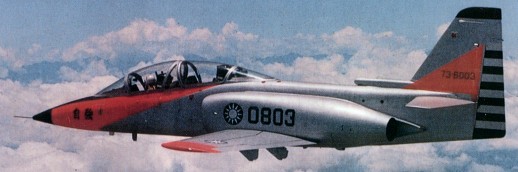
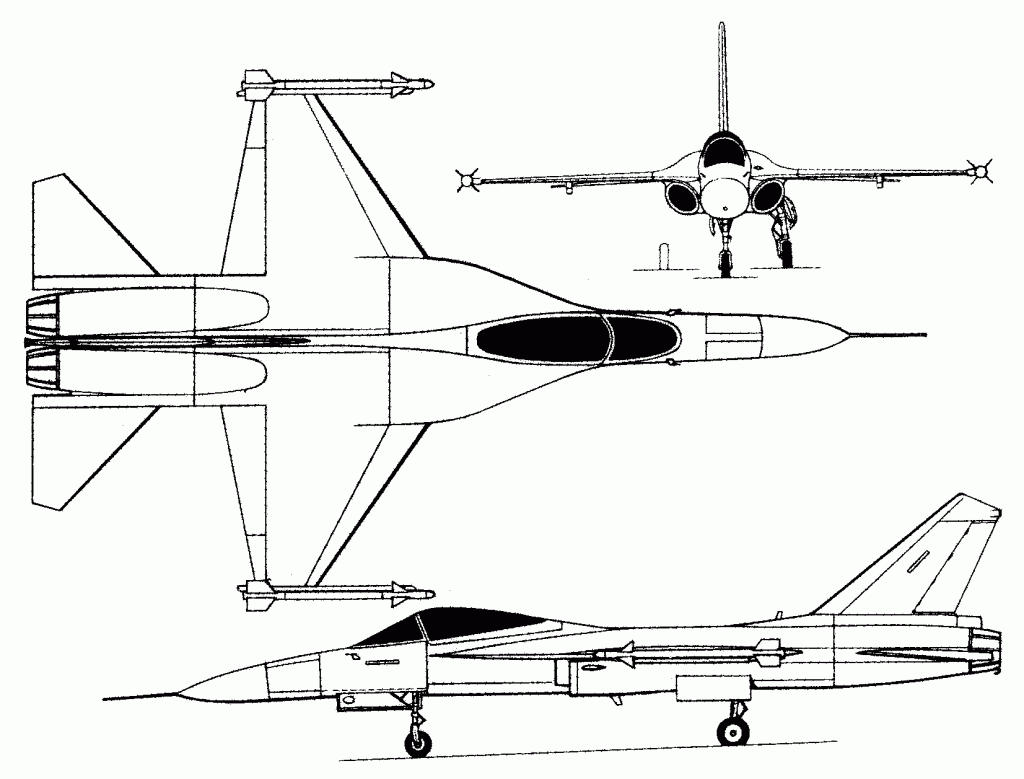
With development and design by AIDC begun in 1975, with assistance from Northrop, the first XAT-3 prototype flew on September 16, 1980. The aircraft is a twin-turbofan tandem-seat trainer with an unswept wing of supercritical section. Power is from two Garrett TFE731 engines, each giving 15.57kN thrust. For weapons training and light attack duties a semi-recessed gun pack with twin 0.5in machine-guns can be installed in a weapons bay beneath the rear cockpit, and external stores can be carried on four under-wing and one under fuselage hardpoints. Wingtip launch rails for AIM-9J Sidewinders are provided. Total external weapons avaiable load is 2,720kg (6,000lb). An A/A37U-15TTS aerial target system can be carried on the centreline pylon.
AIDC AT-TC-3 Tse Tchan / AT-3 Article
Deliveries of the AT-TC-3 to the Republic of China Air Force began in March 1984, and more than 50 were on order for use as basic and advanced trainers, replacing the Lockheed T-33 trainers. Production aircraft totaling 60 were delivered from 1984 through 1990.
AIDC AT-3A Tzu-Chiang
Engine: 2 x Garrett (Honeywell) TFE731-1-2L turbofan, 3,500lbs
Length: 42.32ft (12.9m)
Wingspan: 34.32ft (10.46m)
Height: 14.30ft (4.36m)
Wing area: 235.732 sq.ft / 21.9 sq.m
Empty Weight: 17,505lbs (7,940kg)
Maximum Speed: 562mph (904kmh; 488kts)
Cruising speed: 476 kt / 882 km/h
Landing speed: 90 kt / 167 km/h
Maximum Range: 1,417miles (2,280km)
Rate-of-Climb: 10,100ft/min (3,078m/min)
Service Ceiling: 48,064ft (14,650m)
Armament:
2 x 12.7mm semi-recessed gun packs in internal weapons bay (optional), 1900kg ext
Hardpoints: 6
Accommodation: 2
AT¬-TC-3
Engine: 2 x Garrett TFE731
Installed thrust: 31.1 kN
Span: 10.5 m
Length: 12.5 m
Wing area: 21.9 sq.m
Empty wt: 3855 kg
MTOW: 7485 kg
Warload: 2270 kg
Max speed: 900 kph
Initial ROC: 2440 m/min.
Ceiling: 14,600 m
T/O run: 458 m
Ldg run: 671 m
Fuel internal: 1630 lt
Range: 2297 km
Endurance: 3.2 hr
Hardpoints: 5+2 wingtip
Armament: 1 x .5 in, 2 x AAM.
Aero Gare Sea Hawker / Composite Technologies Sea Hawker / Quikkit Corp Glass Goose / Seahawk Glass Goose
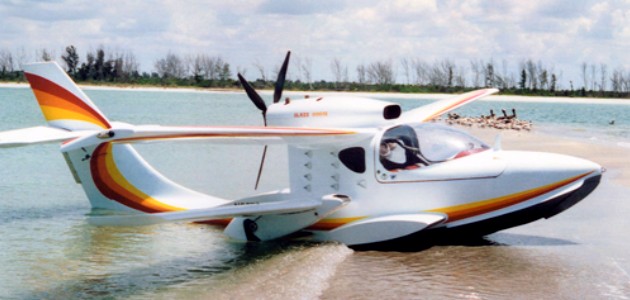
Garry Le Gare’s “Sea Hawk” amphibian progressed to the “Sea Hawker”, marketed by Aero Composite Technologies Inc. A two-seat, staggered biplane.
The Quikkit Corp Glass Goose is a composites-constructed two-seat amphibious biplane (introduced in kit form in 1992) from the former Aero Composites Sea Hawker first flown in July 1982 (N82SO).
The two place Quikkit Corp Glass Goose first flew in 1986, and has an empty weight of 950 lbs and gross weight of 1,800 lbs. The aircraft has a cruise speed of 140 mph and a range of 1000 miles. Powerplant options include 160 hp Lycoming 0-320 and 185 hp Subaru engines. Estimated build time is 1000 hours. Assembly instructions are clear and concise and there is no welding and machine shop work. Up to the final wing attachment, you can build the Glass Goose with common hand tools in a two car garage.
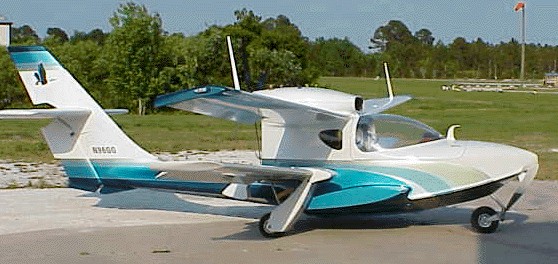
Construction is of composite-fiberglass, kevlar, and carbon fiber control surfaces. There are four flaperons (pre molded carbon fiber flapperons available) and the landing gear is retractable – electric/hydraulic – with rough terrain dual main wheels. The sponsons are solid core short wings attached to lower fuselage at waterline.
32 known flying by Mar 1988.
Kit Contents
Premolded Parts, Stainless Steel Weldments, Additional required foam and composite materials, Landing gear, control system, AN hardware, wheels, tires, brakes and full assembly instructions. Also a starter amount of glass and epoxy.
Building Time
The factory staff builds a Goose in less than 1000 Hours, with no special jigging or equipment. Homebuilder times will vary depending on builder experience. The many pre-molded parts, and composite construction, make the Goose a ‘fast build’ kit. To further cut time there are several Quick Build Options.
Engine options include Lycoming O-320, 160 – 180 hp; Jabiru 5100, 180 hp, and several builders were experimenting with auto conversions.
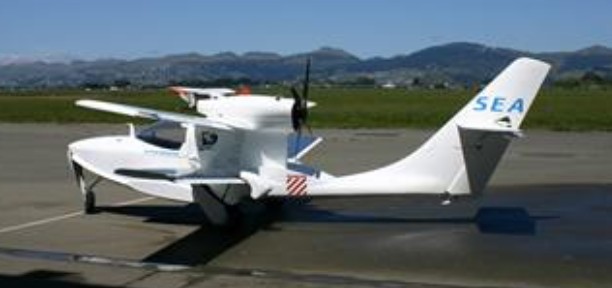
A two seat amphibious aircraft. All composite featuring kevlar hull, carbon main spars and fibreglass airframe.
Hyraulic retractable gear.
Aero Composite Sea Hawker
Engine: 150hp Lycoming O-320
Wingspan: 24’0″
Length: 21’6″
Useful load: 750 lb
Max speed: 148 mph
Cruise: 138 mph
Stall: 42 mph
Range: 1200 mi
Seats: 2
Quikkit Corp Glass Goose
Engine: Subaru-Lycoming
Wing span: 8.23 m
Wing area: 12 sq.m
MAUW: 816 kg
Empty weight: 408 kg
Fuel capacity: 265 lt
Max speed: 257 kph
Cruise speed: 225 kph
Minimum speed: 68 kph
Climb rate: 6 m/s
Seats: 2
Fuel consumption: 35 lt/hr
Plan price (1998): $300
Kit price (1998): $25,000
Quikkit Corp Glass Goose
Engine: Lycoming, 160 hp
HP range: 150-185
Height: 7.5 ft
Length: 19.5 ft
Wing span: 27 ft
Wing area: 151 sq.ft
Weight empty: 900 lb
Gross: 1800 lb
Fuel cap: 70 USG
Speed max: 160 mph
Cruise: 145 mph
Range: 1100 sm
Stall: 50 mph
ROC: 1500 fpm
Take-off dist: 700 ft (700 ft water)
Landing dist: 900 ft (800 ft water)
Service ceiling: 13,000 ft
Seats: 2 side by side
Landing gear: retractable nose wheel
Cockpit width: 42 in
Quikkit Corp Glass Goose
Length: 19.5 ft
Height: 7.5 ft
Wing Span: 27 ft
Propeller: Aluminum Hub, 4 Blade Carbon Fiber Ground Adjustable
Cruise: 140 mph
Vmax,Vne: 160 mph
Takeoff Roll: 800 ft
Landing: 900 ft
Climb rate: 1200 fpm
Stall Clean: 50 mph
Stall Full Flaps 45 mph
Empty Weight: 900 lb
Gross Weight: 1800 lb
Useful Load: 900 lb
Fuel Capacity: 70 Gal Standard (Wet Wings); Four Tanks
Range: 1100 Stat Miles +
Service Ceiling: 12000 ft
Seahawk Glass Goose
Engine: Lycoming 0-320-D3G, 150hp
Cruise: 95-105kt at 2350rpm
Fuel burn: 32lt/hr
Aero Gare Sea Hawk
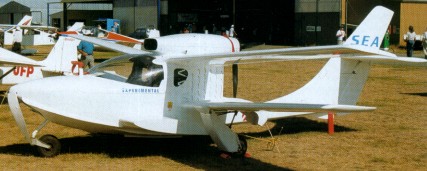
Three years of design work and almost eighteen months construction by Aero Gare of California saw two prototypes constructed, and resulted in flight testing in 1985. A Sea Hawk wing kit, assembled and static load tested, failed in excess of 9.5G loading. Analysis revealed deficiencies in construction technique with changes resulting in a wing capable of withstanding loads in excess of 10G’s without weight penalty.
The Sea Hawk was designed from the beginning to utilize composite construction. The Sea Hawk’s unusual biplane appearance has not detracted from its popularity with 150 kits sold in three months from release date.
The design has the ability to use many different engines in the 100 to 160hp range.
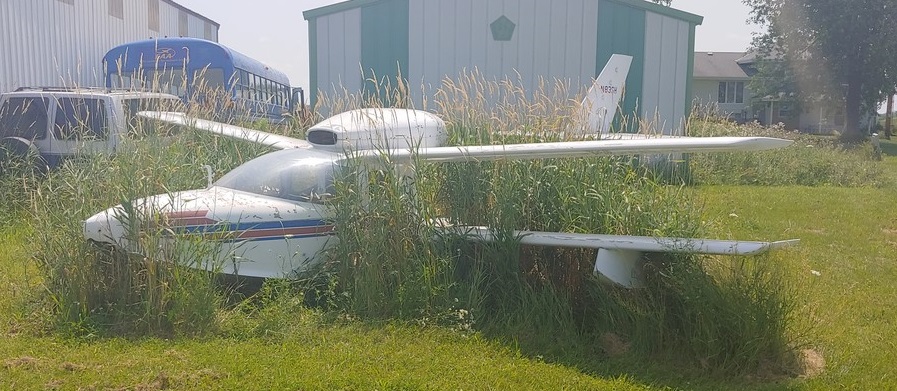
Tim Good was at AirVenture 2019 and spotted the original prototype Sea Hawk by Garry LeGare hidden behind a garage just off Ripple Ave near Camp Scholler.
Engine: 100-160 hp
Gross weight: 1600 lb
Empty weight: 850 lb
Fuel capacity: 70 USG
Wingspan: 24 ft
Length: 21 ft
Height: 76 in
Cruise: 120 kt
Stall: 42 mph
Climb rate: 1200 fpm
Ceiling: 18,000 ft
Takeoff distance: 500 ft
Landing distance: 600 ft
Range: 1320 sm
Aero Engine Services Ltd / AESL
Aero Engine Services Ltd. was established at Hamilton, New Zealand, in 1954 by TEAL engineer, Alf Coleman, and until 1966 did engine repair and overhaul. The Cable Price Corporation, which introduced the FU24 to New Zealand, originally had a 57 per cent holding in AESL, but the company later became solely owned by James Aviation and Alf Coleman. Early 1967 acquired rights for Victa Airtourer (produced as AESL Airtourer) and later the Aircruiser, which was developed into the CT4 military trainer. Amalgamated 1 April 1973 with Air Parts (NZ) Ltd. to form New Zealand Aerospace Industries Ltd.
Aero & Engineering Services / AES Sky Ranger
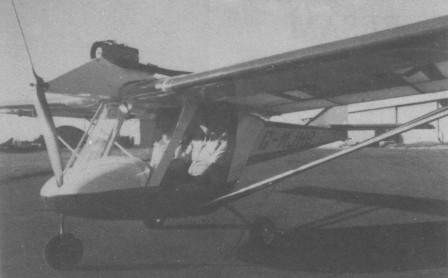
A side by side two seater single engined high wing mono¬plane with conventional three axis control. Wing has swept back leading edge, swept forward trailing edge and tapering chord; conventional tail. Pitch control by elevator on tail; yaw control by fin mounted rudder; roll control by half span ailerons; control inputs through stick for pitch/roll and pedals for yaw. Wing braced from below by struts; wing profile NACA 4415 (root), 4412 (tip), 100% double surface. Undercarriage has three wheels in tricycle formation; glass fibre sus¬pension on all wheels. Push right go right nosewheel steering connected to yaw control. Optional brakes on main wheels. Glass fibre fuselage, partially enclosed. Engine mounted above wing driving tractor propeller. Fuselage uses bonded internal framing made from uni directional glass fibre impregnated with aircraft quality resin. Ribs and I section spar from laminated glass fibre and foam; spruce spar caps. Leading edge is pre formed foam and glass fibre; trailing edge is spruce; rest of wing covered with zero porosity Dacron.
Just as the Aero & En¬gineering Services’ Lone Ranger is derived from its Striplin namesake, so the British Sky Ranger is taken from the Striplin Sky Ranger.
The aircraft has been considerably mod¬ified for European conditions, in a manner very similar to that applied to the Sky Ranger. Standard engine is the Cuyuna 430 with reduction drive. One aircraft was been produced with a Hunting HS525A engine.
Unlike the Lone Ranger, the standard cabin has no fixed side panel, both sides being left open unless the optional doors are ordered.
Engine: Cuyuna 430, 30 hp at 6300 rpm
Propeller dia x pitch: 60 x 36 in / 1.52 x 0.91 m
Total fuel capacity: 9.6 USG / 8.0 Imp gal / 36.3 litre
Micro V belt ratio: 2.2/1
Power per unit area: 0.19 hp/sq.ft / 2.0hp/sq.m
Length overall: 17.0 ft / 5.18 m
Height overall: 8.0 ft / 2.44m
Wing span: 36.0 ft / 10.97m
Chord at root: 5.0 ft / 1.52m
Chord at tip: 4.0 ft / 1.22m
Dihedral: 5 degrees
Sweepback: 1.5 degrees
Tailplane span: 8.4 ft / 2.56 m
Fin height: 3.5 ft / 1.07 m
Total wing area: 162 sq.ft / 15.1 sq.m
Total aileron area: 16.6 sq.ft / 1.54 sq.m
Fin area: 6.2 sq.ft / 0.58sq.m
Rudder area: 4.4 sq.ft / 0.41 sq.m
Tail¬plane area: 10.0 sq.ft / 0.93 sq.m
Total elevator area: 9.1 sq.ft / 0.85 sq.m
Wing aspect ratio: 8.0/1
Wheel track: 5.0ft / 1.52m
Wheelbase: 4.8ft / 1.46 m
Nosewheel dia overall: 11 in / 28 cm
Main wheels dia overall: 14 in / 36 cm
Empty weight: 330 lb / 150kg
Max take off weight: 760 lb / 345kg
Payload: 370 lb / 168kg
Load factors design: +4.0 / 2.0
Load factors ulti¬mate: +6.0, 3.0
Max wing loading: 4.69 lb/sq.ft / 22.8 kg/sq.m
Max power loading: 25.3 lb/hp / 11.5kg/hp
Max level speed: 80 mph / 129 kph
Never exceed speed: 90 mph / 145 kph
Max cruising speed: 75 mph / 121 kph
Economic cruise: 65 mph / 105 kph
Stalling speed: 28 mph / 45 kph
Max climb rate at SL: 450 ft/min / 2.3 m/s
Take off distance: 220 ft / 65 m
Land¬ing distance: 350 ft / 105 m
Service ceiling: 8000 ft / 2440 m
Min sink rate: 260 ft/min at 35 mph / 1.3 m/s at 56 kph
Best glide ratio pwr off: 15/1 at 39mph / 63 kph
Range at ave cruise: 250 sm / 402 km
Aero & Engineering Services / AES Lone Ranger
A single seat single engined high wing monoplane with conventional three axis control. Wing has swept back leading edge, swept forward trailing edge and tapering chord; conventional tail. Pitch control by elevator on tail; yaw control by fin mounted rudder; roll control by half span ailerons; control inputs through stick for pitch/roll and pedals for yaw. Wing braced from below by struts; wing profile NACA 4415 (root), 4412 (tip), 100% double surface. Undercarriage has three wheels in tricycle formation; glass fibre sus¬pension on all wheels. Push right go right nosewheel steering connected to yaw control. Optional brakes on main wheels. Glass fibre fuselage, partially enclosed. Engine mounted above wing driving tractor propeller. Fuselage uses bonded internal framing made from uni directional glass fibre impregnated with aircraft quality resin. Ribs and I section spar from laminated glass fibre and foam; spruce spar caps. Leading edge is pre formed foam and glass fibre; trailing edge is spruce; rest of wing covered with zero porosity Dacron.
The Aero & Engineering Services Lone Ranger started life as a British ¬built Striplin Lone Ranger, David Wilson’s company having the sole European agency for the Striplin machines. However, it has since been substantially modified to suit British tastes and British weather conditions, and must now be regarded as an aircraft in its own right.
The principal change is to the wing design and mounting. The wing section has been increased at the root to a 15% thick NACA4415, tapering to 12% at the tips, while the wing is mounted much more squarely, with virtually no sweepback at the leading edge and a small sweep forward at the trailing edge. The sweepback change is designed to give the effect of increased dihedral, making the aircraft easier to handle in less than perfect conditions. Each wing contains a fuel tank.
Another alteration is the use of convention¬al wood and fabric elevator, ailerons and rudder, rather than foam cored; all the control surfaces are of larger area than on the American machine. Push pull rods are used for the elevator and aileron controls, with a cable for the rudder.
Some early aircraft were fitted with Chrys¬ler engines, which were later rejected in favour of the Zenoah 250. The standard cabin has a windscreen and one side panel; the other side is left open, but a door can be supplied as an extra, making the aircraft totally enclosed.
Engine: Zenoah, 22 hp @ 6300 rpm
Prop: 50×27 in / 1.27x 0.69m
Power per unit area: 0.14hp/sq.ft / 1.5 hp/sq.m
Total fuel capacity: 9.6 USG, 8.0 Imp gal, 36.3 litre.
V belt reduction, ratio: 2.3/1
Length overall: 15.8 ft / 4.82 m
Height overall: 7.2ft / 2.19m
Wing span: 34.0 ft / 10.36m
Chord at root: 5.0ft / 1.52m
Chord at tip: 4.0 ft / 1.22m
Dihedral: 5 degrees
Sweepback: 1.5 degrees
Tailplane span: 8.0 ft / 2.44 m
Fin height: 3.0 ft / 0.91 m
Total wing area: 153 sq.ft / 14.2 sq.m
Total aileron area: 16.6 sq.ft / 1.54 sq.m
Fin area: 4.5 sq.ft / 0.42 sq.m
Rudder area: 4.0 sq.ft / 0.37 sq.m
Tail¬plane area: 8.0 sq.ft / 0.74 sq.m
Total elevator area: 8.0 sq.ft / 0.74 sq.m
Wing aspect ratio: 7.5/1
Wheel track: 3.0 ft / 0.91 m
Wheelbase: 4.5 ft / 1.37 m
Nosewheel dia overall: 11 in / 28 cm
Main wheels dia overall: 11 in / 28 cm
Empty weight: 210 lb / 95kg
Max take off weight: 476 lb / 216 kg
Payload: 210 lb / 95 kg
Max wing loading: 3.11 lb/sq.ft / 15.2kg/sq.m
Max power loading: 21.6 lb/hp / 9.8kg/hp
Load factors: +4.0, 2.0
Design load: +6.0, 3.0 ulti¬mate
Max level speed: 75 mph / 121 kph
Never exceed speed: 80 mph / 129 kph
Max cruising speed: 55 mph / 88 kph
Stalling speed: 21 mph / 34 kph
Max climb rate at SL: 450 ft/min / 2.3 m/s
Min sink rate: 210 ft/min at 33 mph, 1.1 m/s at 53 kph
Best glide ratio pwr off: 17/1 @ 38mph / 61kph
Take off distance: 180 ft / 55 m
Landing distance: 250 ft / 75 m
Service ceiling: 10,000 ft / 3050 m
Range at ave cruise: 250 mile / 402km
Aero & Engineering Services / AES
1983: Aero & Engineering Services Ltd, 15 Donkin Road, Armstrong, District 2, Washington, Tyne & Wear, Great Britain.
Aerodyne Systems Engineering Ltd
Bought assets of Texas Helicopter Corporation in 1985 and continued development of Wasp as single-seat agricultural and utility helicopter based on Bell Model 47 and known as ML74 Wasp, plus M79 Hornet (certification 1985) as tandem two-seat and turbine-engined armed helicopter based on former Texas Helicopter Jet Wasp II.

