1982-4: Aircraft Development Company, 1326 N. Westlink Blvd., Wichita, KS 67212, USA.
UL builder
1982-4: Aircraft Development Company, 1326 N. Westlink Blvd., Wichita, KS 67212, USA.
UL builder
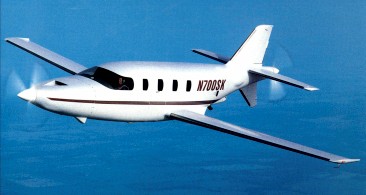
One of the largest aircraft designed by Martin Hollmann at Aircraft Designs was the 7,000 pound gross weight Star*Kraft which was powered by two 350hp Teledyne Continental 550A, water cooled, pusher/tractor Voyager engines. The aft propeller was connected to the engine through a drive shaft.
First flying in January 1995, the one built, N700SK, was also tried with 500hp Orenda 600 engine.
The 1997 projected 700-SE was a single-engine version of the 700.
700
Engine: two 350hp Teledyne Continental 550A
Max speed: 403 mph
Cruise: 345 mph
Range: 1520 mi
Seats: 8
Undercarriage: retractable

The Nova was a two seat, three surface aircraft with a water cooled Rotax 563 engine with a pusher propeller. The engine turned out to be problematic and after successful flight tests the project was scraped. Dave Morss was the test pilot.


Aircraft Spruce is a prime supplier of materials & components used in the Stallion kits utilising the same landing gear and basic wing as the Lancair IV.
The Stallion will carry 6 people and or/cargo (1,600 lb useful load) over a long distance, with a cruise speed of 200+ knots at 9,000 feet, the Stallion burns 13.8 gph of fuel for 16.7 miles/gallon, with 180 gallons. For loading, a large 74 inch by 36 inch removable panel is located on the right side. Normal access is achieved from the left side, clamshell door. The pilots seat is moved forward to allow easy access to the back seats and it is moved back to allow access to the pilot and copilot seat. The top of the left door hinges up to allow taxing with the left door open and the bottom door hinges down and provides a step for both the back and front seats.
All seats are attached with quick release pins and can be removed in seconds for carrying cargo. Some of the other features of the high wing include reduced aerodynamic drag compared to low and mid wing aircraft and gravity fuel feed.
Stallion
Engine: Continental IO-550-G, 230 hp
HP range: 180-350
Speed max: 260 mph
Cruise: 237 mph
Range: 2600 sm
Stall: 67 mph
ROC: 1600 fpm
Take-off dist: 1200 ft
Landing dist: 700 ft
Service ceiling: 28,000 ft
Fuel cap: 180 USG
Weight empty: 2200 lb
Gross: 3800 lb
Height: 9 ft
Length: 25 ft
Wing span: 35 ft
Wing area: 190 sq.ft
Seats: 6
Landing gear: nose wheel
Stallion
Engine: IO-550-G, 300 hp @ 2700 rpm.
Propeller: McCauley or Hartzell, 3 bladed, constant speed.
HP range: 180-350.
Wing area: 140 sq.ft
Seats: 6
Cockpit width: 49 inch
Landing gear: nose / retractable
Gross landing weight: 3,800 lb
Empty weight: 2,200 lb
Payload: 1,100 lb
Fuel Capacity: 180 USG
Span: 35.00 ft
Flaps: Full Slotted
Length: 25.0 ft
Height: 9.50 ft
Cabin width: 49.00 inch
Stall speed, with flaps: 62 kts/71 mph
High speed cruise @ 2500 rpm: 200 kts/235 mph
Maximum speed @ 2700 rpm: 220 kts/253 mph
Rate of climb: 1,600+ fpm
Take off roll (with 10 deg. flaps): 1,800 ft
Range: 2,200 nautical miles
1996-7: 5 Harris Ct., Bldg. S Monterey, CA 93940, USA.
Aircraft design and builder
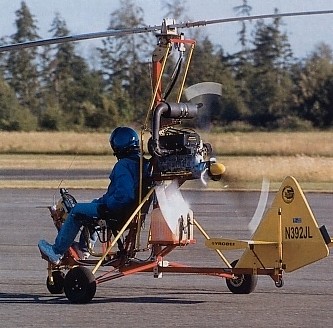
It was decided to build and aircraft that was very much like the Bumblebee, but constructed using as much in the way of standard ultralight parts and over-the-counter gyroplane components as possible. The result was the Gyrobee, which first took to the air in June of 1990 and debuted in the pages of Rotorcraft magazine in the October-November 1990 issue.
The Gyrobee had a low-rotor disc loading as its core concept, which allows it more decent performance on 40 hp, and the designer planned for a 215-pound pilot. A single seat open frame autogyro with the frame bolted together, the engine used is the 40 hp Rotax 447, Prop: 60” x 38” 2 blade laminated maple (LEAF), and Rotordyne 25’ x 7 3/8” bonded aluminium rotor blades.
The Gyrobee is a non-commercial model whose plans were available for free download on the Internet at http://taggart.glg.msu.edu/gyro/gbplans.php, consisting of 126 pages of text and drawings.
Aerotec, Inc. is a separate company that sets airframe kits and engines based on the Gyrobee plans.
Engine: Rotax 447, 40 hp
Prop: 60” x 38” 2 blade laminated maple (LEAF)
Rotor blades: Rotordyne 25’ x 7 3/8” bonded aluminium
Width: 7’8”
Height: 8’
Length: 12’
Empty wt: 246 lb
Useful load: 250 lb
Gross wt: 496 lb
Take-off Run: 600-800 ft
Minimum Level Flying Speed: 8-9 mph
Best Climb Airspeed: 35 mph
Cruise Airspeed: 45-50 mph
Maximum Level Flight Airspeed: 60 mph
Maximum Rate-of-climb: 750 fpm
Endurance: 60 min (10 min. reserve)
Flight Range: 45-50 miles (no wind, 10 min. reserve)
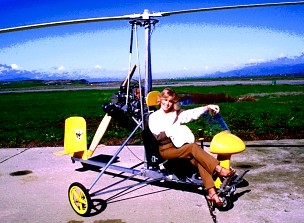
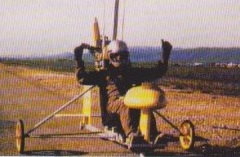
In 1984 the world’s first ultralight gyroplane made its debut in the pages of Ultralight Aircraft magazine. This was Martin Hollmann’s Bumblebee. Hollman had originally planned to market Bumblebee kits, but only a small run had been produced.
A single seat open frame autogyro with an airframe of bolted 2×2 aluminium tubing and a simplified rotor head. Big enough for a large pilot, the plans sold for US$200 in 2001 and US$250 in 2009.
Able to take either a 40-hp Rotax 447 or a 38.5-hp Kawasaki engine, the take-off distance is 230 ft on a calm day and useful load is 270 pounds.
Engine: Rotax 447, 40 hp
Prop: 66” x 68” wood
Rotor blades: 23’ x 7” aluminium/composite
Disk area: 415 sq.ft
Width 7’4″
Height 7’8″
Length 12′
Empty Weight 230 lbs
Useful Load 300 lbs
Gross Weight 500 lbs
Fuel cap: 5 USG
Min Speed 10 mph
Cruise 40 mph
Top Speed 70 mph
Range: 65 sm
Service ceiling: 16,000 ft
Seats: 1
Landing gear: nose wheel
Engine: Rotax 503, 52 hp
Rotor span: 7 m
MAUW: 230 kg
Empty weight: 115 kg
Fuel capacity: 20 lt
Max speed: 150 kph
Cruise speed: 90 kph
Minimum speed: 25 kph
Climb rate: 5 m/s
Seats: 1
Fuel consumption: 15 lt/hr
1998: 3 Harris Ct., Bldg. S., Monterey, CA 93940, USA.
Gyrocopter builder
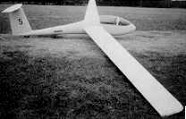
A runner up in the OSTIV world class sailplane design contest in Oerlinghausen in 1993, the AC-4 went into production following modifications that had been recommended by the Organisation Scientifique du Vol a Voile (OSTIV). The Russia comes in the taildragger AC-4A model, and the AC-4B with main wheel set behind the center of gravity and a nose wheel. The latter has a slightly more spacious cockpit able to accept taller pilots. The AC-4 is offered with a ballistic emergency recovery parachute. It can be fitted with a 12 bhp / 9 kW McCulloch MC-101B 2 cycle sustainer engine.
Designed by Vladimir Federov.
Wing Span: 12.6 m / 41.3 ft
Wing Area: 7.7 sq.m / 82.9 sq.ft
Empty Weight: 130 kg /286 lb.
Payload: 120 kg /265 lb.
Gross Weight: 250 kg / 551 lb.
Wing Load: 32.46 kg/sq.m / 6.66 lb/sq.ft
Aspect ratio: 20.5
L/D Max: 31 @ 83 kph / 45 kt / 52 mph
MinSink: 0.66 m/s / 2.16 fps / 1.28 kt
Airfoil: Wortmann FX-60-157
Structure: GFRP/ epoxy
Seats: 1
AC-4A – Single seat, Mid wing, Composite, Tailwheel, Sailplane
AC-4B – Single seat, Mid wing, Composite, Nosewheel, Sailplane
AC-4C – Single seat, Mid wing, Composite, Retractable tailwheel, Sailplane
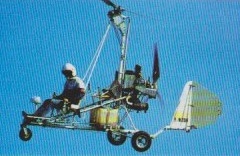
Air-Copter designed the blade from extruded dural, with a biconvex NACA 23112 profile.
Engine: Hirth F30 , 80 hp
Rotor span: 7 m
Blade area: 0.215 sq.m
MAUW: 350 kg
Empty weight: 145 kg
Fuel capacity: 35 lt
Max speed: 170 kph
Cruise speed: 120 kph
Minimum speed: 15 kph
Climb rate: 10 m/s
Seats: 2
Fuel consumption: 17 lt/hr
Plan price (1998): 500 Fttc

