Angel Aircraft Corporation / AAC / King’s Engineering Fellowship

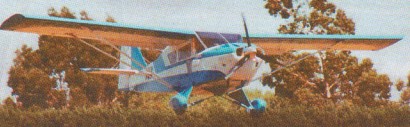
Evangel, for use in South America. He realized that there was a need for STOL aircraft and that there was a limited number from which to choose. This prompted Carl to endeavor to design an aircraft that could not only get into short rough airstrips, but that could also carry a good load and have the speed and safety of a high performance twin. Originally The King’s Engineering Fellowship Model 44 Angel, developed by donations for missionary duties and designed by Carl Mortenson.

Carl was joined by his son Ed, who with 29 years of aviation experience, serves as Chief Engineer. The two of them, and son Evan, have done most of the design work and testing of the Angel.

AAC certificated in 1992 its eight-seat Model 44 Angel STOL missionary, executive and utility aircraft. The first Angel has flown over 3,000 hours and has been as far East as Turkey, South to Chile, and North of the Arctic Circle.

There are two aspects to the business behind The Angel: First, The Kings Engineering Fellowship (TKEF) was formed to design and develop the aircraft. It was created as a non-profit organization and, through donations, was able to raise funds for the research and development of the aircraft. Since certification of the Angel in 1992, TKEF has continued to make design improvements to the aircraft, and continues to rely on tax-deductible, donated support.

The second business aspect is the Angel Aircraft Corporation (AAC), a for-profit company created to manufacture and sell the Angel. AAC based in Orange City, Iowa in the USA, working out of a 14,000 sq. ft. facility but is looking to relocate to a larger facility. The planned new facility would be able to produce 20 to 30 aircraft per year in the beginning stages, with an expansion plan that would allow up to 50 aircraft per year.

The King’s Engineering Fellowship (TKEF) designed the Angel specially to be suitable for missionary use from short, rough airstrips. Angel Aircraft Corporation (ACC) is licensed to manufacture and market Angels to anyone, however, and pays TKEF a fair market engineering royalty fee on each Angel it sells.
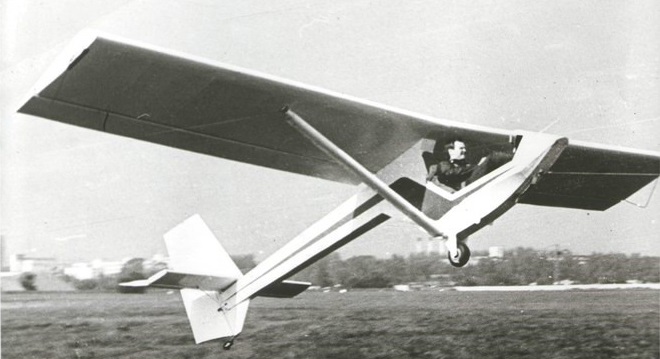
ANB ANB-M / ANB-I

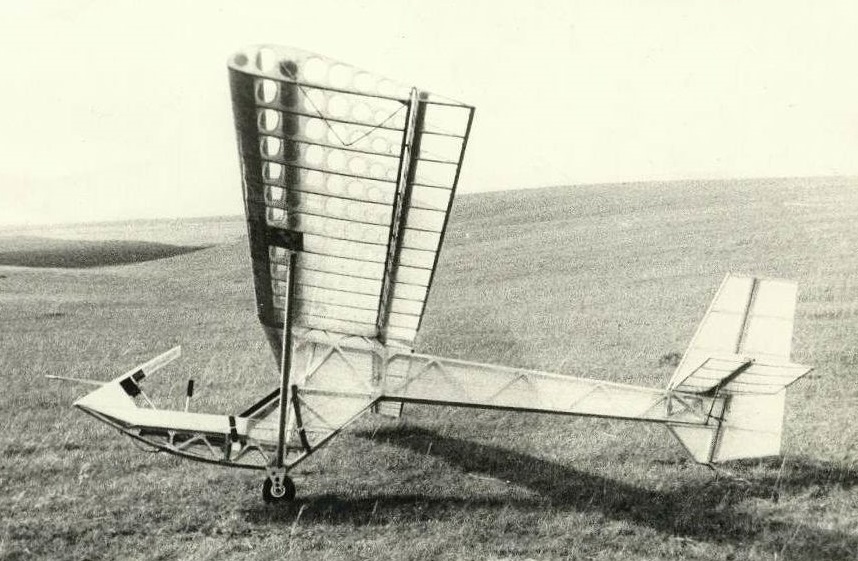
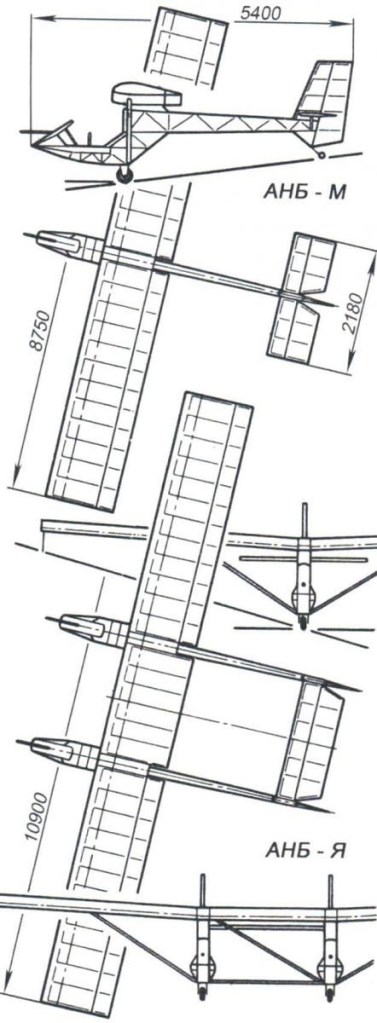
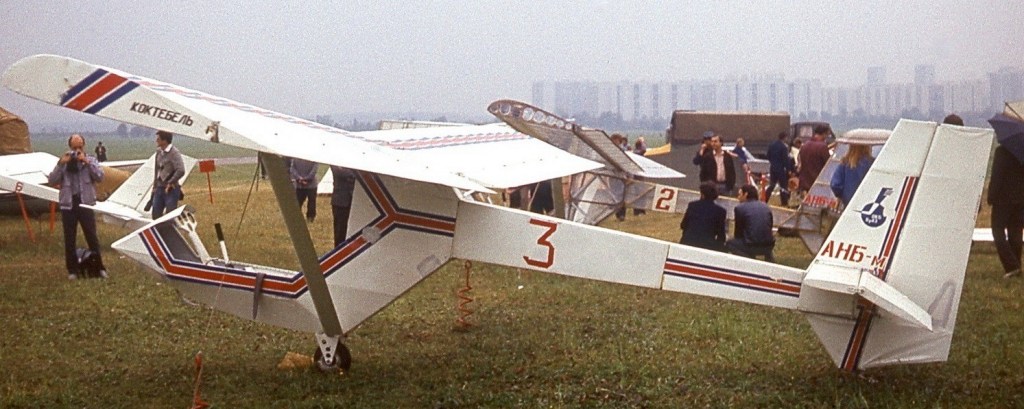
The ANB-M Part103 Sailplane is a full metal primary glider with plans for homebuild.

On May 1, 1983 the glider was ready and tested. The ANB-M “Transparent” in Crimea at the All-Union Review Competition of SLA-84 was awarded the 1st prize.

The ANB-I – a modular multi-purpose double glider – was created on the basis of two ANB-M as a result of a simple refinement – two fuselages are fixed parallel at a distance of 2.2 m from each other (the idea was submitted by the designer of gliders V. Janusov).

It turned out a rather exotic design, jokingly called “Snake Gorynych.” The wing span thus became 11 m, and weight – 135 kg.

Gallery

ANB-M
Wing area: 10.5 sq.m
Empty weight: 70 kg
Take-off weight: 145 kg
Seats: 1

ANB-I
Wing span: 11 m
Weight: 135 kg

AMF S-14 Miranda          

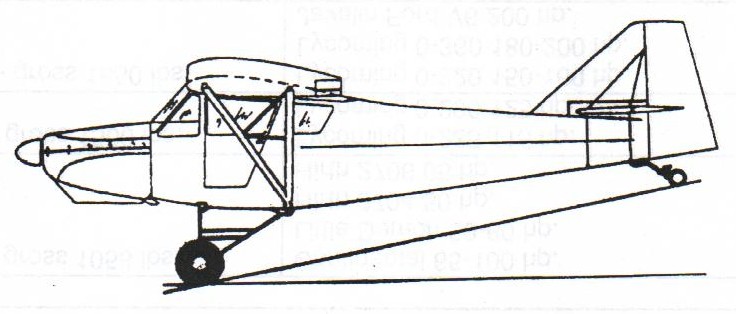
The AMF S-14 is a two-place taildragger modeled after the Adam RA-14. The S-14 was first flown in 1961. It is powered by 85- to 150 hp engines. Its fuselage is a conventional wooden box-girder structure, covered with plastic-coated fabric. The S-14’s wings are a braced high-wing design of all wood and fabric with STOL characteristics. Folding wings and Hoerner wingtips.
Lycoming and similar engines 100 to 200 hp are suitable.
The AMF-14H has a lighter structure for engines 50 to 115 hp to meet the Sport Aircraft category (LSA).
Options include flaps, floats, tricycle gear, extra wide cockpit, rodent proof tail, long range auxiliary tanks, extended wings, variety of engines including diesel.

On June 30, 2019, Falconar Avia Inc closed for business and assets dissolved. The Master Sets (Original Drawings, Plans, Info Kits, Documentation) were available for sale and full transfer of rights included the AMF – S14 “Maranda” S14 D and S14 H for $10,000 USD.

S-14
Engine: Lycoming O-320, 150 hp
HP range: 85-200
Wing span: 31.8 ft
Wing area: 158 sq.ft
Length: 22 ft
Height: 7.1 ft
Weight empty: 1100 lb
Gross: 1850 lb
Fuel cap: 18 USG
Speed max: 130 mph
Cruise: 115 mph
Range: 400 sm
Stall: 35 mph
ROC: 1300 fpm
Take-off dist: 100 ft
Landing dist: 150 ft
Service ceiling: 17,000 ft
Seats: 2-3
Landing gear: nose or tail wheel
Plans (2010): US$200

Super 14D
Engine: Lycoming O-320, 150 hp
HP range: 85-200
Wing span: 31.8 ft
Wing area: 158 sq.ft
Length: 22 ft
Height: 7.1 ft
Empty weight: 1100 lb
Gross weight: 1850 lb
Fuel capacity: 18 USG
Top speed: 150 mph
Cruise: 120 mph
Stall: 41 mph
Range: 480 sm
Rate of climb: 1000 fpm
Takeoff dist: 200 ft
Landing dist: 180 ft
Service ceiling: 17,000 ft
Seats: 2-3
Landing gear: nose or tail

AMF Super 14D Maranda
Cruise: 120 mph
Stall: 39 mph
Range: 340 sm
Rate of climb: 1000 fpm
Takeoff dist: 200 ft
Landing dist: 200 ft
Engine: Lycoming O-320, 150 hp
HP range: 85-200
Fuel capacity: 22 USG
Empty weight: 1100 lb
Gross weight: 1850 lb
Length: 22 ft
Wing span: 31.8 ft
Wing area: 158sq.ft
Cockpit width: 40-46 in
Landing gear: nose or tail

AMF-S14 DI Maranda
Vne: 150 mph
Cruise speed: 120 mph
Range: 480+ miles
Stall: 41 mph
Takeoff distance: 200 feet
Landing distance: 180 feet
Gross weight: 1850 lbs
Wing span: 31.8 feet
Wing area: 158 sq. feet
Plans (2010): US$170

Falconar Avia AMF-14H
Engine: Rotax 912S, 100 hp
HP range: 65-100
Wing span: 32 ft
Wing area: 158 sq.ft
Length: 22 ft
Gross weight: 1320 lb
Empty weight: 650 lb
Fuel capacity: 26 USG
Vne: 150 mph
Cruise: 92 mph
Stall: 36 mph
Range: 350 sm
Rate of climb: 700 fpm
Takeoff dist: 200 ft
Landing dist: 180 ft
Cockpit width: 46 in
Landing gear: nose or tail
Seats: 2
Plans 2010: US$200

American Sport Copter UltraSport 331 / Light’s American Sportcopter Ultrasport 331

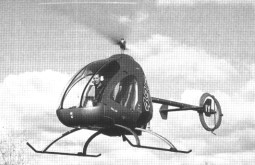
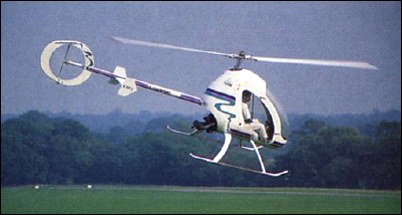
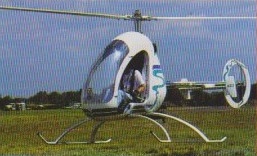
The Ultrasport 331 is a larger version of the 254 falling within the American Experimental category (FAR Part 21.191g), with increased range and higher gross weight. Features include 10 gallon tank, doors, bigger instrument panel, electric starter. The performance as the 254, and the floor mounted cyclic is standard. Optional floats are available. Meeting the 51% rule, a quick build kit requires 80 hours assembly.
The two-blade composites construction main rotor has tip weights for momentum conservation and an 8 deg linear twist and infinite life. Equipped with a shielded two-blade tail rotor, and tailplane with tins at tip, the tail rotor drive is carried in narrow streamlined tailboom. A centrifugal sprag clutch for starting engages the rotors at 2,000 engine rpm and automatically disengages in the event of engine failure.
The flying controls are conventional collective, cyclic and yaw pedals. A floor-mounted cyclic option has been available since 1998; early models had a top-mounted stick.
The prototype 331 (N331UV) first flew December 1993.
The single seat 331 is powered by one 48.5kW Hirth 2706 dual-carburettor two-stroke engine with electric starter or Hirth H32 of same power in 331H; 12:1 planetary transmission. Fuel capacity 38 litres.
In late 2002, it was announced that Huzbou Taixing Aviation Technology of Huzhou, China was producing helicopters from kits, including examples of Ultrasports.
A single-seat ultralight helicopter, the Ultrasport 331H uses the 48.5kW Hirth H32 added to range in 2003.
The Ultrasport 331 was available for US$37,900 in 2003.

Engine: Hirth 2706, 65 hp
Rotor span: 6.40 m
Blade area: 0.170 sq.m
MAUW: 295 kg
Empty weight: 150 kg
Fuel capacity: 38 lt
Max speed: 167 kph
Cruise speed: 105 kph
Minimum speed: 0 kph
Climb rate: 4 m/s
Seats: 1
Fuel consumption: 14 lt/hr

Engine: Hirth 2703, 55 hp.
Disk span: 21 ft.
Length: 16.67 ft.
Height: 7.5 ft.
Weight empty: 330 lbs.
Gross: 680 lbs.
Fuel cap: 10 USG.
Speed max: 104 mph.
Cruise: 63 mph.
Range: 150 sm.
ROC: 1000 fpm.
Service ceiling: 12,000 ft.
Endurance: 2.5 hr.
Seats: 1.
Landing gear: skids.

Engine: 65hp Hirth 2706 Dual carb, Dual CDI.
Transmission 12:1 Planetary
Rotor Blades: Composite 21′ diameter, 7″ chord,
Tail rotor: composite 30′ diameter.
Empty Weight: 330 lbs
Useful Load 320 lbs
Gross Weight: 650 lbs
Fuel capacity: 10 USG
Width 6 ft 6 in
Height 8 ft 2 in
Length 19 ft 2 in (w/blades off)
Cruise: 65mph
Top Speed: 104 mph
Range: 150 sm
ROC: 1000 fpm
Service ceiling: 12,000 ft
Kit price: US$34,850 (2008)

Ultrasport 331
Main rotor diameter: 6.4m
Tail rotor diameter: 0.76m
Length with rotor blades folded: 5.84m
Height: 2.39m
Take-off weight: 294kg
Empty weight: 150kg
Max level speed: 167km/h
Cruising speed: 101km/h
Max rate of climb: 305m/min
Hovering ceiling, IGE: 3290m
Hovering ceiling, OGE: 2135m
Range with normal fuel at 100km/h: 241km

Ultrasport 331H
Engine: 48.5kW Hirth H32