1998:
Aerodrome de Gap-Tallard
F-05130 Tallard
France
Back Bone power packs wee marketed in the UK circa 1998 by Revolution.
1998:
Aerodrome de Gap-Tallard
F-05130 Tallard
France
Back Bone power packs wee marketed in the UK circa 1998 by Revolution.
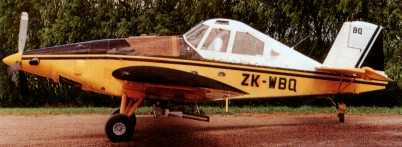
The S2R Series is a fixed undercarriage low-wing single-engine tailwheel configuration agricultural aircraft of all-metal construction with welded steel-tube fuselage. The hopper is located forward of the cockpit, and the aircraft is available in single or dual (tandem) cockpit configurations. The S-2R model was developed by Rockwell from the S-2D by widening the fuselage from 38” to 46” to accept a larger 400 US gallon hopper, to be able to carry a greater volume of low density materials used by Rice growers, and adding flaps.
Type Acceptance Certificate FAA Type Certificates A3SW and A4SW.
In 1977, the Ayres Corporation, of Albany, Georgia, purchased the Thrush Commander line and continued to build the S2R, with the same constructors serial sequence, finally ending at 2582R. Previously the type certificate had been held by Snow Aeronautical Company (up to February 18, 1970), North American Rockwell Corporation (up to April 3, 1973), and Rockwell International (up to November 28, 1977) .
A new sequence was started by Ayres with the 750 hp P & W PT6A-34AG with constructors numbers beginning with 6001, and incorporating one major change, the fitting of a 500 US gallon hopper. The 5000 sequence was used for the 100 or so 800 hp Wrights built by Rockwell.
The Turbo Thrush S2R-T34 was then developed for Ayres by installation of a PT6A engine under STC, the first such turbine application for an agricultural aircraft. This was type certificated under A3SW in the Normal Category, but the manufacturer advises virtually none have been delivered in that category. All subsequent S2R derivatives (basically different turbine engine options) were only certificated in the Restricted Category under A4SW, including several using the TPE331 family (these were popular because overhauled engines were much less expensive than a new PT6A). Some engine and propeller options for the S2R-T34, and the Dual Cockpit trainer option originally approved by STC, are only approved in the Restricted Category.
Once Ayres had taken over, one of the new versions was named the Bull Thrush, powered with a 1200 hp Wright R-1820-97 and fitted with a 500 US gallon hopper. One of the new features was a Dual Cockpit variant, being denoted by a DC at the end of the constructor’s number. From this time Ayres were to start a whole new series of constructors num¬bers, prefixed by S2R, followed by engine model fitted and then a number, in most cases, starting at -001. As example, S2R-1340-… (600 hp), S2R-1820-… (1200 hp), S2R-RS3-… (PZL R83, 595 hp) and S2R-T34-… (750 hp).
The new turbine models incorporated a wing extension from a span of 44 feet, 5 inches to 47 feet, 6 inches with a wing area of 350 square feet. The wing extensions can also be fitted to the smaller round engined versions, as well as adding an all metal tailplane. The Ayres tail version being the same outline as the tube and fabric original, and another is being offered by Weatherley.
A further development by Ayres was the Model S2R-T65, which was fitted with a larger 500 US gallon hopper and 1300 shp PT6A-65 engine. This had an increased span wing but was initially approved at the original 6000 lb. gross weight. Later an improved wing with steel spar webs was tested and the S2RHG-T65 (High Gross) version was certificated with a MCTOW of 10,500 lb. Thrush also certificated a similar high gross S2RHG-T34 version with a 550 US gallon hopper and a MCTOW of 9500 lb. However Report ER-568 stated that performance was marginal and only a few were produced. Report ER-538 states that all aircraft manufactured by Thrush since 2003 have been produced to a common fuselage and wing configuration.
Since 1991, some of the T34 aircraft have had a PT6A-41AG of 850 hp fitted and, likewise, the T15 line has had one PT6A-27 of 680hp installed. Another version available is the T45, with its own c/n sequence fitted with a PT6A-45 of 1173hp
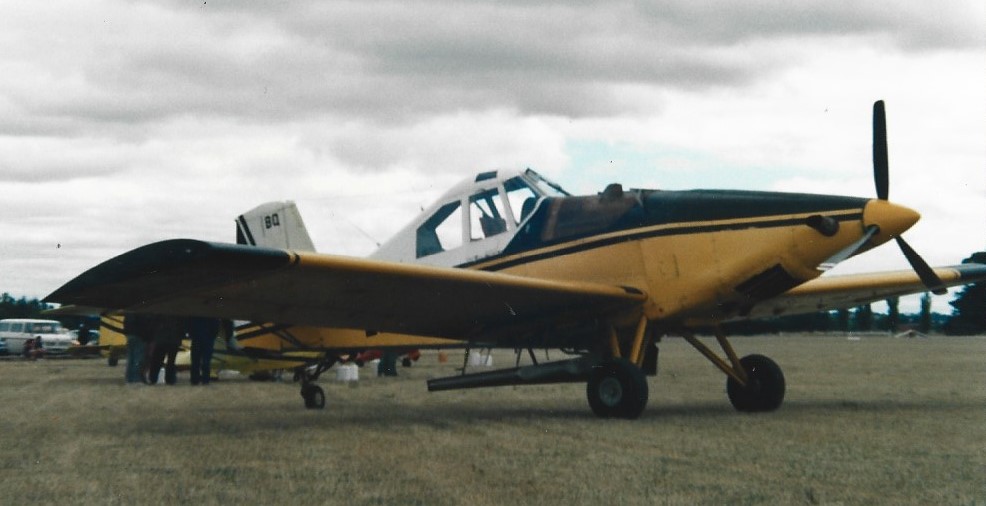
The Type Certificate went to Ayres Corporation up to November 26, 2001, then Quality Aerospace (up to July 9, 2003), and the Thrush Aircraft Inc.
In the eighties, the US Government required a long range sprayer for anti-narcotics work. Ayres developed the T34 model and fitted it with the PT6A-65A of 1376 hp, self-sealing fuel tanks, and armour plate around the pilots seat. Up until December 1990, eight had been built with the unusual T65-1X sequence. From October 1987, Dual Cockpit versions entered the production line, beginning with T65-001DC and all going to the US Government. The first to a civil operator was 011DC, going to Gwydir Air as VH-NFH in 1990. This was re-powered by a PT6A-65AG of 1230 hp turning a five blade prop. Not only is it quieter, the length has been increased to 34 feet and the hopper has been increased to hold 625 US gallons. In 1994, the T65s were back in production, with several being delivered to South Africa.
In 1991 Ayres installed a Garrett TPE 331-6 (starting with c/ n G6-101) and up until 1994, twenty of these 750 hp versions have been delivered. Two more variants are offered, the G5 and G10, first appearing in 1993. Like the T15/34 range, they can be fitted with 400 or 500 gallon hoppers. The real advantage is the much cheaper Garrett engine.
On 14 March 2000 Ayres received the type certificate for the all new Ayres 660 Turbo Thrush. The first three aircraft are fitted with the Pratt & Whitney PT6A-60AG turbine of 1050 hp, the fourth with the 1230 hp PT6A-65AG engine, which will be available as an option.
With a work force of 62 in 2004, Thrush Aircraft principals Payne Hughes and Larry Bays have already built six new Thrush aircraft three model 660s and three model 550s, all sold to individual owners since acquiring the company in mid 2003.
The new owners have made a substantial investment, not only in purchasing the Thrush line, but also in building renovations and new machine equipment.
Thrush Aircraft has exclusively teamed with General Electric to produce the Thrush 510G powered by the GE H80 turbine engine. The H80 provides increased temperature margins to enhance hot-day takeoff performance and high-altitude cruise speeds. GE chose Thrush to launch this new engine.
The top of the range model is the Thrush 660. This aircraft was developed by the Ayres Corporation as the S2R T660 at the end of last century and went into production in 2000. Only eight aircraft were built before Ayres closed it doors at its Albany, Georgia, plant. The aircraft was designed around a 660 US gallon hop¬per and this was the first time that the airframe had been completely reworked since the inception of the Rockwell S2R 600 in 1968. The standard main undercarriage was replaced with steel spring legs, the wings were modified and an unusual dorsal fin added to the tailplane with the idea of keeping the overall in¬flight height the same as other Thrush ag planes.
With the new aircraft, the name Thrush 660 remains the same, but with a new hopper design and a new gate box for spraying, 680 US Gallons is now standard capacity. In firebombing mode, this can be increased to 750 US gallons. The vacuum bag technology in the fibreglass construction allows for a more even wall thickness, saving about 100 Ibs of weight while creating a larger interior with the same external dimensions. The new hopper has also allowed changes in the hopper gates.
The new 660 will have a longer, straight cowling, similar to the TPE331 G series, with a new, more streamlined nose bowl. The squat tailplane has been replaced with a completely new fin, which is six inches higher and thus has more surface area.
Thrush Aircraft has addressed its wing spar problems head on. The 660 centre wing beam and spar configuration has been redesigned to make the outer wing panels lighter and incorporates stronger heat treated 4340 steel spar caps, as well as a 4340 cen¬tre beam. The extra strength of the heat treated 4340 steel spar caps allow for a reduction in the number of steel doublers and inboard steel webbing, which saves weight. The 660 wing has been static tested to 14,150 lbs.
The Thrush 660 will be fitted with the PT6A 65 or the PT6A¬67. More performance enhancing features include the closing in of the rear portion of the fuselage, thus reducing air turbulence around the tail section.
The medium size version is the Thrush 550. Once marketed as the Ayres 510, the 550 has inherited the new vacuum bag technology fibreglass hopper as with the 660. The aircraft’s capacity has been increased by 49 US gallons and the top of the hopper is wider and has been redesigned to give a straight line between the propeller and the cockpit windscreen. Along with the redesign of the hopper, better fairings have been installed on the lower fuselage.
The Thrush 550 now incorporates a new 29,000 hour lower spar caps (made from 4340 heat treated steel and giving the same weight advantages as the 660), which can be retrofitted to exist¬ing Thrush aircraft eliminating all requisite ADs on existing S2Rs.
For operators requiring extra fuel, new tanks can be provided outboard of the present fuel cells. The PT6A 34AG engine will be the main provider of power but the G 10 engine can also be fitted. However, the most notable change to the Thrush 550 is the fitting of steel spring undercarriage legs.
Thrush Aircraft has exclusively teamed with General Electric to produce the Thrush 510G powered by the GE H80 turbine engine. The H80 provides increased temperature margins to enhance hot-day takeoff performance and high-altitude cruise speeds. GE chose Thrush to launch this new engine.
The Thrush 550P has wide-stance spring landing gear capable of absorbing 8800 pounds on short, rough strips and optional spring steel landing gear can be added to increase weight for take off and landings. And it brings you a 29,000 hour Wing Spar Life and a 550 gallon clear-view hopper.
The Thrush 550P has wide-stance spring landing gear capable of absorbing 8800 pounds on short, rough strips and optional spring steel landing gear can be added to increase weight for take off and landings. It has a 29,000 hour Wing Spar Life and a 550 gallon clear-view hopper.
Ayres S 2 R-T Turbo Thrush
Engine : PT 6 A 34AG, 552 shp
Length: 32.808 ft / 10.0 m
Height : 9.186 ft / 2.8 m
Wingspan : 44.291 ft / 13.5 m
Wing area : 326.149 sq.ft / 30.3 sq.m
Max take off weight : 5999.8 lb / 2721.0 kg
Weight empty : 3600.8 lb / 1633.0 kg
Max. weight carried : 2399.0 lb / 1088.0 kg
Max. speed : 138 kt / 256 km/h
Landing speed : 57 kt / 106 km/h
Cruising speed : 130 kt / 241 km/h
Initial climb rate : 1732.28 ft/min / 8.8 m/s
Wing load : 18.45 lb/sq.ft / 90.0 kg/sq.m
Range : 664 nm / 1230 km
Crew : 1
S2R-T15 Turbo Thrush
Engine: PT6A-27, 680 shp.
S2R-T34
Engine: Pratt & Whitney Canada PT6A-34, -34AG, -36, -41AG, -41, -42
Propeller: Hartzell HC-B3TN-3C or -3D / T-10282 or T-10282(N)+4
MCTOW: 6000 lb / 2721 kg
Max. No. of Seats: 1 [2 with Dual Cockpit]
S2R-T34 Turbo Thrush
Engine: 1 x P&W PT6-34AG, 750 shp.
Prop: Hartzell 2 blade, constant speed 102 in.
Seats: 1.
Length: 33 ft.
Height: 9.2 ft.
Wingspan: 44.4 ft.
Wing area: 326.6 sq.ft.
Wing aspect ratio: 6.
Max ramp wt: 6000 lbs.
Max take off wt: 6000 lbs.
Standard empty wt: 3700 lbs.
Max useful load: 2300 lbs.
Max landing wt: 6000 lbs.
Wing loading: 18.3 lbs/sq.ft.
Power loading: 8 lbs/hp.
Max useable fuel: 624 lbs.
Hopper capacity: 500 USG.
Climb rate: 1440 fpm.
Climb @ 8000 ft: 890 fpm.
Service ceiling; 25,000 ft.
Max speed: 135 kts.
Working speed: 110 kts.
Fuel flow @ working speed: 246 pph.
Endurance @ working speed: 2.3 hr.
Stalling speed clean: 60 kts.
Stall speed flaps down: 56 kts.
Turbulent air penetration speed: 109 kts.
Fixed tail-wheel undercarriage.
S2R-G10
Engine: Garrett TPE331-1, 665 hp.
S2R-T660
Engine: P&W PT6A-60AG, 1050 shp. MAUW: 12,500 lbs. Empty wt: 5150 lbs. Hopper Cap: 660 USG.
Thrush Aircraft Thrush 510P
Engine: Pratt & Whitney PT6A-34AG, 750 shp
Length: 32 feet 4 inches / 9.854 meters
Height : 9 feet 4 inches / 2.843 meters
Wing Span: 47 feet 6 inches / 14.478 meters
Wing Area: 365 square feet / 33.9 square meters
Width of Main Landing Gear: 9 feet / 2.74 meters
Fuel Capacity: 228 USG / 863 liters
Empty Weight: 4,900 lb / 2,223 kilograms
Typical Operating Weight: 10,500 lb / 4,763 kilograms
Hopper Capacity (Dry): 66 cubic feet / 1.87 cu. meters
Hopper Capacity (Liquid spray system): 510 USG / 1930 liters
Working Speeds: 90-150 mph / 145-241 kph
Stall Speed as Usually Landed: 57 mph / 92 kph
Never Exceed Speed: 159 mph / 256 kph
Sea Level Rate of Climb at 6,000 lb: 1,075 fpm / 327.7 mpm
Sea Level Rate of Climb at 10,500 lb: 666 fpm / 203 mpm
Take-Off Distance at 10,500 lb: 1,530 feet / 466 meters
Landing Distance as Usually Landed: 600 feet / 182.8 meters
Landing Distance as Usually Landed w/Reverse: 400 feet / 121.9 meters
Fuel Consumption: 45-50 USgph / 170-189 lt/hr
Cruising speed 55% power: 150 mph / 241 kph
Ferry Range at 45% power, 135 mph at 7,500 ft: 770 miles / 1,238 kilometers
Wing spar life: 29,000-hour
Thrush Aircraft Thrush 510G
Engine: General Electric H80
Length: 32 feet 4 inches / 9.854 meters
Height: 9 feet 4 inches / 2.843 meters
Wing Span: 47 feet 6 inches / 14.478 meters
Wing Area: 365 square feet / 33.9 square meters
Width of Main Landing Gear: 9 feet / 2.74 meters
Fuel Capacity: 228 USG / 863 liters
Empty Weight: 4,700 pounds / 2,132 kilograms
Typical Operating Weight: 10,500 pounds / 4,763 kilograms
Hopper Capacity (Dry): 66 cubic feet / 1.93 cubic meters
Hopper Capacity (Liquid spray system): 510 USG / 1930 liters
Working Speeds: 90-150 mph / 145-241 kph
Stall Speed as Usually Landed: 55 mph / 89 kph
Never Exceed Speed: 188 mph / 303 kph
Sea Level Rate of Climb at 6,000 lbs: 1,400 fpm / 426.7 mpm
Sea Level Rate of Climb at 10,500 lbs: 680 fpm / 207.3 mpm
Take-Off Distance at 10,500 lbs: 1,339 feet / 408 meters
Landing Distance as Usually Landed: 550 feet / 167.6 meters
Landing Distance as Usually Landed w/Reverse: 350 feet / 106.7 meters
Fuel Consumption: 45-50 USGph / 170-189 lt/hr
Cruising Speed at 55% Power: 159 mph / 256 kph
Ferry Range at 45% power 135 mph at 7,500 feet: 800 miles / 1,287 kilometers
Thrush Aircraft Thrush 550P
Engine: Pratt & Whitney PT6A-60AG
Length: 32 feet 4 inches / 9.854 meters
Height: 10 feet / 3.05 meters
Wing Span: 47 feet 6 inches / 14.478 meters
Width of Main Landing Gear: 10 feet / 3.05 meters
Fuel Capacity: 228 USG / 863 liters
Empty Weight: 5,400 pounds / 2,450 kilograms
Typical Operating Weight: 10,500 pounds / 4,763 kilograms
Hopper Capacity (Dry): 74 cubic feet / 2.10 cubic meters
Hopper Capacity (Liquid): 550 USG / 2,082 liters
Working Speeds: 90-150 mph / 45-241 kph
Stall Speed Flaps/No Flaps: 84/88 mph / 135/142 kph
VNE: 220 mph / 355 kph
Sea Level Rate of Climb at 10,500 lbs: 750 fpm / 229 mpm
Take-Off Distance at 10,500 lbs: 1,077 feet / 328 meters
Landing Distance as Usually Landed: 600 feet / 182.8 meters
Landing Distance as Usually Landed w/Reverse: 400 feet / 121.9 meters
Fuel Consumption: 65-70 gph / 246-265 lph
Cruising Speed at 55% Power: 150 mph / 241 kph
Ferry Range at 55% power 150 mph at 7,500 feet: 648 miles / 1,043 kilometers
Ferry range at 45% power: 770 sm (1,238 km)
Thrush Aircraft Thrush 710P
Engine: Pratt & Whitney PT6A-65AG
Length: 35 feet 5 inches / 10.787 meters
Height: 10 feet 4 inches / 3.14 meters
Wing Span: 54 feet / 16.46 meters
Tread Width: 10 feet 4 inches / 3.14 meters
Fuel Capacity: 228 USG / 863 liters
Empty Weight: 6,600 pounds / 2,994 kilograms
Typical Operating Weight: 14,150 pounds / 6,148 kilograms
Hopper Capacity (Dry): 95 cubic feet / 2.69 cubic meters
Hopper Capacity (Liquid}: 710 gallons / 2,687 liters
Working Speeds: 90-150 mph / 145-241 kph
Stall Speed Flaps/No Flaps: 90/94 mph / 145/151 kph
VNE: 220 mph / 355 kph
Sea Level Rate of Climb at 14,150 lbs: 850 fpm / 259 mpm
Take-Off Distance at 14,150 lbs: 1,598 feet / 487 meters
Landing Distance as Usually Landed: 600 feet / 182.8 meters
Landing Distance as Usually w/Reverse: 400 feet / 121.9 meters
Fuel Consumption: 80-85 gph / 303-322 lph
Cruising Speed at 55% Power: 150 mph / 241 kph
Ferry Range at 55% power 150 mph at 7,500 feet: 515 miles / 828 kilometers
In 1965 Rockwell-Standard acquired Snow Aeronautical, continuing to produce agricultural aircraft at Olney as Snow Commanders (as division of Aero Commander), and acquired Intermountain Manufacturing Company (IMCO) 1966. Thrush Commander was very notable specially-designed agricultural aircraft.
Working with Rockwell, Ayres commenced converting Thrush Commander 600 and 800 airframes to PT6 power before purchasing the entire production rights from Rockwell.
The entire Thrush Commander range was sold to Ayres Corp of Albany, Georgia, in November 1977 and then became known by the Ayres name.
Production continued in 1999 of various developed models as Turbo Thrush agricultural aircraft with piston and turboprop engines. The new owners will continue to manufacture the Models 600 and 800 Thrush Commanders. Fred Ayres, who developed the Turbo Thrush PT6 retrofit, was able to produce new aircraft rather than conversions. Has also developed the Loadmaster, a uniquely configured multipurpose transport with two turboprop engines driving a single propeller, intended mainly for carrying bulk and containerised freight but with passenger/troop and reconnaissance variants planned.
On 27 November 2000, the Ayres Corp filed for Chapter 11 bankruptcy protection, necessitated by the larger than expected development costs of the new Loadmaster aircraft.
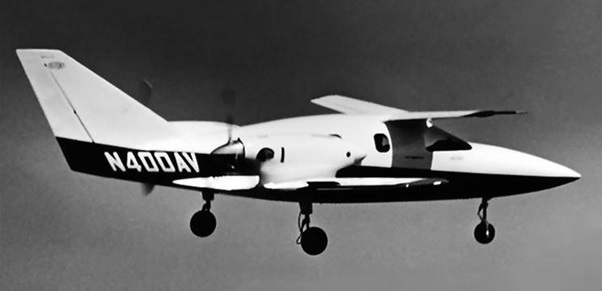
The Avtek 400 was the proof of concept aircraft of a six/nine-seat pusher turboprop-powered business aircraft, with a crew of one or two pilots. Designed by Leo J Windecker, it was the first US aircraft constructed throughout from DuPont ‘Kevlar’ advanced composite material, hence the ‘DUPONT’ logo on upper sides of the tailfin.
It featured over the wing pusher propellers, high mounted forward canard, bizarre wing shapes, all-Kevlar construction and lack of elevators.
First flown in the USA on 17 September 1984, the type never went into production, and the company went bankrupt in 1998.
The aircraft appeared in the ‘Airwolf’ TV series as the X-400, the plane used by the villain Lou Stappleford in the episode ‘Eagles’.”
400A
Engines: 2 x 680hp P&W Canada PT6A-3L/R
Wingspan: 35’0″
Length: 39’4″
Useful load: 2781 lb
Max speed: 294 mph
Stall: 96 mph
Range: 2600 mi
Ceiling: 41,000
Seats: 6-10
Established in 1982, flew proof-of-concept prototype for the intended Avtek 400A pressurised, composites-built, six/nine-seat business jetfan in September 1984. Avtek has rear-mounted main wings, canards, and twin turboprops with pusher propellers. Avtek 400A was expected to be certificated in 2000.
The company went bankrupt in 1998.
When the Daily Mail organised a model-flying contest at Alexander Palace, London, in March 1907, young A.V. Roe won first prize. His 8 ft tail first model flew more than 100 feet.
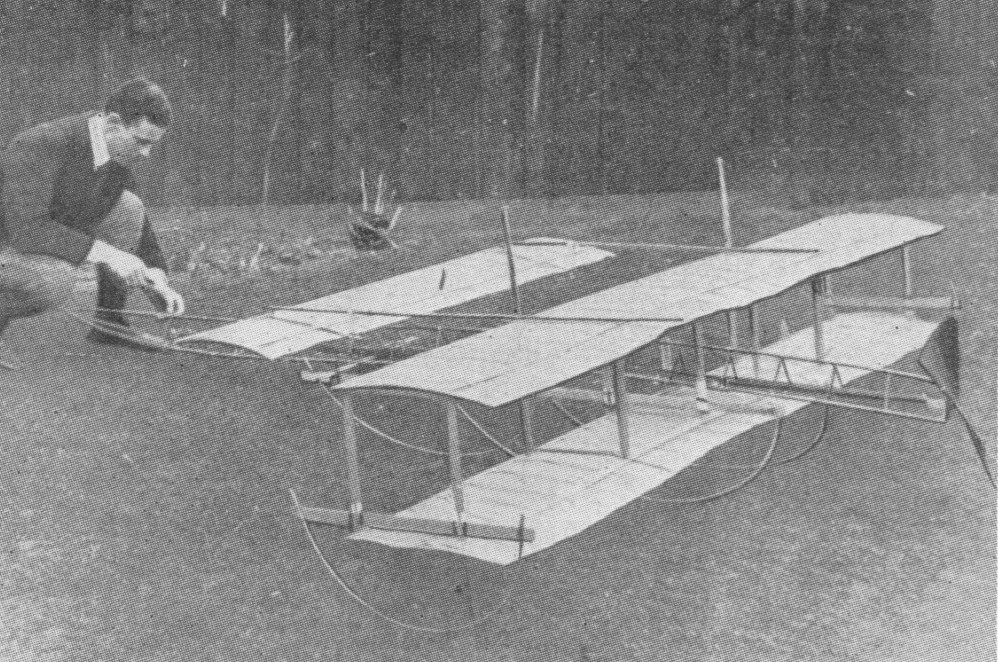
Alliott Verdon Roe, after a varied career in surveying, tree-planting, fishing, post-office management and marine engineering began aircraft design in 1906. Spurred by winning £75 in a model aircraft contest held in London in 1907. Roe built a full-size biplane, which made some tentative hops from the motor racing circuit at Brooklands in 1908.
Moving to an abandoned railway arch on Lea Marshes in Essex, he built the Roe I Triplane which weighed less than 91 kg (200 lb) and was covered in brown wrapping paper. He called it the Bull’s-Eye Avroplane after the brand-name of men’s trouser braces whose manufacturer had supported him. In July 1909 the Roe I Triplane made the first official powered flights in Britain by an all-British aircraft.
Alliott Roe subsequently developed three other triplane designs, one of which he flew (and crashed three times) at the great Boston-Harvard Aviation Meeting of 1910.
A.V. Roe and Company was established at Brownsfield Mill, Great Ancoats Street, Manchester, by Alliott Verdon Roe and his brother Humphrey Verdon Roe on 1 January 1910. Humphrey’s contribution was chiefly financial and organizational; funding it from the earnings of the family webbing business and acting as Managing Director until he joined the RFC in 1917.
In the summer of 1910 A. V. Roe and Company declared its willingness to build aeroplanes to other people’s designs and the first such aircraft was a Farman-type biplane for a Bolton business man. The Farman-type evidently did not meet with much success as 18 months later, at the end of 1912, the engine and airframe were advertised for sale in new condition for £45 and £60 respectively. Bolts, fittings and bracing wires were also supplied to Miss Lilian Bland who built and flew the Mayfly biplane of her own design at Carnamony, Belfast. Each of these aircraft was fitted with one of the few examples of the 20 h.p. two cylinder, horizontally opposed, air cooled Avro engines. These were never given an Avro designation.
A.V.Roe carried out numerous experiments with all kinds of plane sections with varying cambers, etc. These were sold off in November 1911 at peppercorn prices for gliders.
The first Avro aircraft to be produced in any quantity was the Avro E or Avro 500, first flown in March 1912, of which 18 were manufactured, most for the newly-formed RFC. The company also built the world’s first aircraft with enclosed crew accommodation in 1912, the monoplane Type F and the biplane Avro Type G in 1912, neither progressing beyond the prototype stage. The Type 500 was developed into the Avro 504, first flown in September 1913. A small number were bought by the War Office before the outbreak of the First World War and the type saw some front line service in the early months of the war, but is best known as a training aircraft, serving in this role until 1933. Production lasted 20 years and totalled 8,340 at several factories: Hamble, Failsworth, Miles Platting and Newton Heath.
By 1913 the company had become registered as A.V.Roe & Co. Ltd.
After the boom in orders during the First World War, the lack of new work in peacetime caused severe financial problems and in August 1920, 68.5% of the company’s shares were acquired by nearby Crossley Motors who had an urgent need for more factory space for automotive vehicle body building.
In 1924, the Company left Alexandra Park Aerodrome in south Manchester where test flying had taken place during the period since 1918 and the site was taken over by a mixture of recreation and housing development. A rural site to the south of the growing city was found at New Hall Farm, Woodford in Cheshire, which continued to serve aviation builders BAE Systems until March 2011.
Cierva Autogiro production started in Britain at A. V. Roe’s Hamble factory in 1926.
In 1928 Crossley Motors sold AVRO to Armstrong Siddeley Holdings Ltd. In 1928, A.V.Roe resigned from the company he had founded and formed the Saunders-Roe company that after World War II developed several radical designs for combat jets, and, eventually, a range of powerful hovercraft.
In 1928 Avro acquired a license to build the Fokker F.VIIB/3M as the Avro 618 Ten: it carried eight passengers and two crew, and orders included five for Australian National Airways. Rivaling the success of the 504 was the twin-engined Anson trainer and coastal patrol monoplane, flown as the Avro 652 civil transport for Imperial Airways in 1935.
In 1935, Avro became a subsidiary of Hawker Siddeley.
More than 10,000 Ansons were built in Britain and Canada between 1935 and 1952. The twin-engined Manchester bomber of 1939, with the unproven Rolls-Royce Vulture engines, was not a success, but led to the superb four-engined Lancaster, of which 7,374 were built during Second World War. The York transport derivative mated the same wings and tail, plus a central fin, with an entirely new fuselage seating 12 passengers. The Lincoln bomber was built as a replacement for the Lancaster, entering RAF service soon after VJ-day.
Over 7,000 Lancasters were built and of the total, nearly half were built at Avro’s Woodford and Chadderton (Manchester) sites, with some 700 Lancasters built at the Avro “shadow” factory next to Leeds Bradford Airport (formerly Yeadon Aerodrome), northwest Leeds. This factory employed 17,500 workers at a time when the population of Yeadon was just 10,000. The old taxiway from the factory to the runway is still evident.
Although only ⅓ of Lancasters hit their target, the Lancasters were at the time Britain’s best bombers.
The civilian Lancastrian and maritime reconnaissance Shackleton were derived from the Lancaster design. Avro’s postwar Tudor transport was not a success. With the same wings and engines as the Lincoln, it achieved only a short (34 completed) production run following a first flight in June 1945 and the cancellation of an order from BOAC.
The company’s last piston-engined aircraft was the Shackleton four-engined maritime reconnaissance aircraft. Following production of four Avro 707 delta research aircraft, the company produced the four-jet delta-wing Vulcan bomber, which began to enter RAF service in 1956. The Vulcan saw service as a conventional bomber during the British campaign to recapture the Falkland Islands in 1982. Vulcan XH558 flew again after several years of refurbishment, and several are prized as museum exhibits. Avro’s last design before being restyled the Avro Whitworth Division of Hawker Siddeley Aviation, in 1963, was the Avro 748 twin-turboprop transport (first flown in 1960). The Royal Flight bought a few and a variant with a rear-loading ramp and a “kneeling” main undercarriage was sold to the RAF and several members of the Commonwealth as the Andover.
When the company was absorbed into Hawker Siddeley Aviation with Folland, Gloster, Armstrong Whitworth, and de Havilland in July 1963, the Avro name ceased to be used. The brand still had a strong heritage appeal, and the marketing name “Avro RJ” (regional jet) was used by British Aerospace for production of the RJ-85 and RJ-100 models of the BAe 146 from 1994 to 2001. This aircraft type is sometimes also loosely called the “Avro 146”.
The BAe ATP (Advanced Turbo Prop) design evolved from the Avro 748. At 39 years, the Shackleton held the distinction of being the aircraft with the longest period of active RAF service, until overtaken by the English Electric Canberra in 1998.
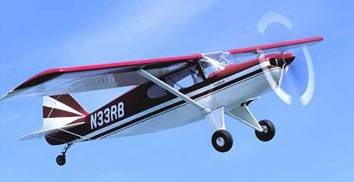
Designed by Robert Barrows of Fincastle, Virginia, the Bearhawk is a 2 or 4-place design. The design parameter were for a heavy hauling BIG airplane with a good cruise speed and economical operation. Short field performance is excellent with the large flaps. The Bearhawk prototype Bearhawk N6890R is powered by a Lycoming 0-360 (170 hp) set up to burn auto fuel.
The Bearhawk was designed as a personal project by Barrows to carry aircraft engines for delivery as freight for his engine rebuilding business in 1995. It features a strut-braced high-wing with an enclosed cabin accessed by doors, fixed conventional landing gear and a single engine in tractor configuration.
The aircraft fuselage is made from welded steel tubing covered in doped aircraft fabric, while the wings are made from aluminum sheet. Its 33 ft (10.1 m) span wing employs a NACA 4412 mod airfoil, has an area of 180 sq ft (17 m2) and mounts flaps. The aircraft’s recommended engine power range is 150 to 260 hp (112 to 194 kW) and standard engines used include the 180 hp (134 kW) Lycoming O-360 and 250 hp (186 kW) Lycoming O-540 four-stroke powerplants. Construction time from the supplied kit is 1200 hours.
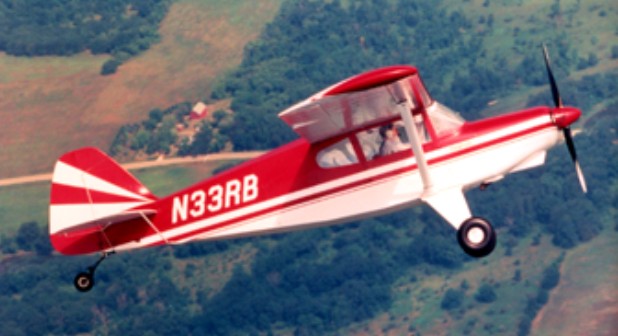
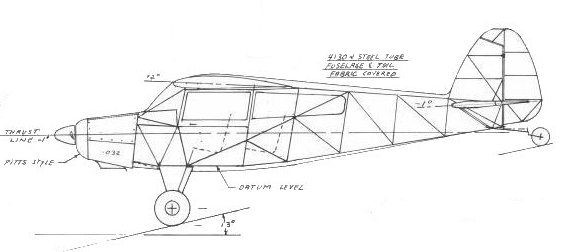
With a 52 inch cargo door, the Bearhawk has a 12 inch C of G envelope. The painted 4130 tube fuselage is ready for covering, giving an actual builders’ time of 850-1200 hours. The all metal wings are 90% factory riveted, with solid rivets. Useful load ranges from 1,000-1,300 pounds and can carry four adults and full fuel. The back seat can be removed resulting in a huge cargo area with unobstructed access. Not only does the back seat have its own door, but also the door combines with the cargo door to allow a six-foot loading area.
The Bearhawk has an all metal wing with a fabric covered steel tube fuselage and tail feathers. The modified 4412 airfoil combined with big flaps and a long, all metal wing offer the best combination for short field take off and landings. A Cessna windshield, modified lift struts, and the fiberglass nose bowl are some airframe components that need not be built by the homebuilder. The builder time is estimated at 1500-2000 hrs. The Bearhawk kit plane is available in a “quick build” kit. Some Bearhawk owners have put the big tundra tires on their airplanes, and operate on the remote landing spots used by bush pilots in Alaska.
The Bearhawk useful load (depending on engine and builder finish out) ranges from 1100-1500 lbs. The 50 USgallon main fuel tanks can be filled and four full sized adults carried with room left over for 250 lbs of baggage or cargo.
The back seat can be removed resulting in a huge cargo area with unobstructed access. Not only does the back seat have its own door, but the back door combines with the cargo door to allow a six foot loading area. In addition, the back seat can be flipped around and mounted with the seat facing aft. This moves the CG of the rear seat passengers 8 or 9 inches forward.
The two prototype Bearhawks (180 hp & 260 hp) have accumulated well over 1000 hours of flight time. There are at least two Bearhawks built by builders with over 700 hours on them.
Introduced in 1995, plans were offered for sale and over 1400 sets of plans have been sold. By November 2012 66 examples had been registered in the United States with the Federal Aviation Administration and seven with Transport Canada. There are over 100 Bearhawks flying in the USA and around the world. The kit only price in 2011 was US$35,295.
The plans are now included at no additional cost with the purchase of a full Quick Build kit for the Bearhawk or Patrol.
If less than a full QB kit is purchased, then the plans must be bought from R & B Aircraft (Bob Barrows).
The Bearhawk can be built from plans alone, built from a Quick Build kit made by Bearhawk Aircraft, or some combination of the above. According to Bob Barrows, the QB kit can save up to 70% or more of the time required to build.
The price in 2014 was $295 US for the four place Bearhawk plans. Get a description of the plans or purchase plans online at http://mybearhawk.com/bearhawkplans.html
If less than a full Quick Build kit is purchased, then the plans must be bought from R & B Aircraft (Bob Barrows). The plans are now included at no additional cost with the purchase of a full Quick Build kit for the Bearhawk or Patrol.
The Patrol version can be built from plans alone, built from a Quick Build kit made by Bearhawk Aircraft, or some combination of the above. According to Bob Barrows, the QB kit can save up to 70% or more of the time required to build.
The price is $280 US for the Patrol plans, and can be paid with a money order, US personal check, Canadian Postal Money Order (US $), or international money order (US $).
Get a description of the Patrol version plans or purchase plans online at http://mybearhawk.com/patrolplans.html
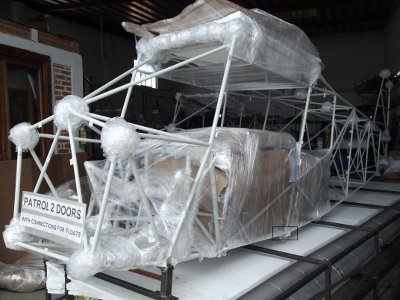
Float plane flying customers suggested putting doors on both sides of the Patrol instead of just the right hand side door to allow more flexibility while docking in windy conditions,. In addition, they requested the fuselages come from the factory with the rear float attach fittings already welded in place. With these suggestions became the Patrol SP (Sea Plane). This model incorporates those two approved design changes; along with some structural strengthening by using thicker wall tubing above the rear float attach fittings. The price of this full Patrol SP Quick Build kit was US$39,700 in 2014.
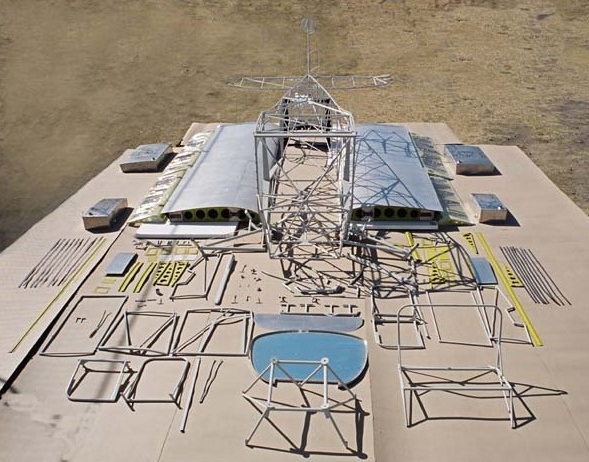
Prices and contents of the Full Bearhawk kits and components (2014):
Full Bearhawk Quick Build fuselage – $23,025
Includes everything that comes with the Bearhawk Quick Build Kit
BASIC FUSELAGE $11,600
The basic fuselage structure complete, but with only the most important attach fittings finish welded on. These are:
Wing attach fittings
Wing Strut Fittings
landing gear attach fittings
wing strut attach fittings
and the tail surfaces attach fittings.
A straight, true fuselage finish welded. Unpainted because there are many parts that still need to be welded on.
Bearhawk Quick Build Wings – $18,475
Includes everything that comes with the Bearhawk Quick Build Kit
WING COMPONENT KIT $7,250
Ribs formed (includes all wing, flap, aileron ribs)
All spars primed, assembled and finished
Patrol kit pricing (2014)
Basic QB Kit – $30,825
(Some welding required)
Includes: Quick-build Wing Kit – Basic Fuselage Kit
Deluxe QB Kit – $39,105
(No welding required)
Includes: Quick-build Wing Kit – Deluxe Fuselage Kit
Quick-Build Wing Kit – $17,305 These wings are sold in an advanced level of completion. The top skin is completely finish riveted. The forward edge of the bottom skin is finish riveted to the bottom flange of the main spar, and aft of the main spar the bottom skin is drilled and dimpled as are the ribs the bottom skin is riveted to. The bottom skin is pop riveted (with a few pops) for shipment. Spars and all spar parts are alumi-prepped, alodined, and primered with MIL-P-23377E strontium chromate epoxy primer. Wing skin interiors and all ribs are primered with Zinc Chromate. Steel parts in the wings are primered with epoxy primer and top coated with MIL-C-22750D epoxy paint. Quick Build wings come with ailerons and flaps 90% finished, but still requiring fabric covering. Fuel tanks are included,but must be installed.
Basic Fuselage – $15,500 Welding required. Includes finish welded fuselage frame (unpainted) and motor mount, all major fittings are welded in place, tabs, sheet metal and minor fitting to be done by builder, landing gear, control stick assembly, rudder pedals and flap controls are finished. Horizontal stabilizer, elevator and rudder are finish welded.
Deluxe Fuselage – $21,800 No welding required by builder. The fuselage and all fittings are completed, sand-blasted and epoxy primed. All steel parts are coated with the epoxy primer and top coated with MIL-C-22750D epoxy paint. Sheet metal is included; cut and ready to be assembled, but may require some trimming. Door and frames, seat frames and the fiberglass nose bowl are included.
Builders of the Bearhawk can purchase the plans and can purchase some sub-kits or components.
The two-place side-by-side Bearhawk Companion aircraft is derived from the tandem Bearhawk Patrol wings and four-place Bearhawk 5 fuselage. The aircraft features flush rivet aluminium wings, a steel tube fuselage, and an Airfoil shaped empennage. The fuselage is slightly shorter than the Model 5.
The first flight of the Bearhawk Companion was announced in early 2021.The first flight was performed by the aircraft builder, Dave Lenart of Vermont, USA. It was built from a manufactured kit.
The Companion handles and performs much like the narrower Patrol.
Variants:
Bearhawk
Four seat model with a cabin 42.5 in (108 cm) wide and a gross weight of 2,700 lb (1,225 kg), with 75 reportedly completed and flown by December 2011.
Patrol
Two-seats in tandem model with a cabin 32 in (81 cm) wide and a gross weight of 2,000 lb (907 kg), with three reportedly completed and flown by December 2011.
Specifications:
Engine HP range 150-260 hp
Wing span 33 ft.
Wing Area 180 sq. ft.
Length 23 ft 6 in
Empty Weight 1150-1350 pounds
Gross weight 2500 pounds (2700 pounds on floats)
Useful Load 1350-1150 pounds
Fuel Capacity 50 USG (standard) 68 USG (optional, w/aux tanks)
Vne 175 mph IAS
Cruise Speed (62% 260 hp) 150 mph TAS
Cruise Speed (180 hp) 135-140 mph TAS
Landing Speed 40 mph IAS
Takeoff Roll 200-500 ft
Rate of Climb @ gross 1,500-1,700 fpm
Range @ 65% est. 650 mi.
Range @ 50% est. 900 mi.
Cabin Width 42 in.
Cabin Length 9 ft 8 in. (firewall to back of back of baggage area)
Engine: Lycoming O-360, 170 hp
HP range: 150-260
Wing Span: 33 ft.
Wing Area: 180 ft.
Length: 23 ft. 6 in.
Height: 7 ft
Empty Weight: 1190 lbs.
Gross Weight: 2500 lbs.
Fuel cap: 55 USG
Top Speed (VNE): 175 mph
Cruise Speed: 120-150 mph
Landing Speed: 40 mph
Take Off Roll: 250-600 ft.
Range (55 gal @ 60%): 800 miles
Stall: 40 mph
ROC: 1500 fpm
Range: 800 sm
Service ceiling: 15,000 ft
Cabin Width: 42 in.
Cabin Length (Firewall to the end of baggage area): 9 ft. 8 in
Cockpit width: 30 in
Landing gear: tail wheel
Seats: 4
Engine: 180 hp.
Hp range: 150-260
Useful load: 1300 lb
Cruise 60% pwr: 134 mph
Cruise 75% pwr: 145 mph
Stall: 40 mph
Bearhawk
180hp
Wing span: 33 ft
Wing Area: 180 sq. ft
Length: 23 ft. 6 in
Empty Weight: 1150-1550 lb
Gross weight: 2500 lb
Gross weight w/floats: 2700 lb
Useful load: 1100 lb
Vne: 175 mph, IAS
Cruise 60% pwr: 135 mph
Cruise 75% pwr: 145 mph
Touchdown speed: 40 mph
Range std tanks: 650-800 mile
Range aux tanks: 850-1000 mile
Range @ 65% est: 650 mi.
Range @ 50% est: 900 mi.
Fuel std: 50 US gals
Length: 9 ft 8 in
Takeoff Roll: 200-500 ft
Rate of Climb @ gross: 1,500-1,700 fpm
Cabin Width: 42 in
Cabin Length: 9 ft 8 in
Cargo door: 52 in
CG envelope: 12″
Seats: 4
Engine: Lycoming O-540, 250 hp.
Hp range: 150-260
Length: 23.5 ft
Wingspan: 33 ft.
Wing area: 180 sq.ft.
Empty wt: 1400 lbs
Mtow: 2500 lbs.
Useful load: 1100 lb
Seats: 4
Fuel cap: 50 USG
Cockpit width: 42.5 in
Landing gear: tailwheel
Cruise 62% pwr: 150 mph
Cruise 75% pwr: 160 mph
Stall: 40 mph
Std Range: 650-800 sm
Opt Range: 850-1000 sm
ROC: 1700 fpm
TO dist: 400 ft.
Ldg dist: 350 ft
Bearhawk
Engine: 1 × Lycoming O-540, 250 hp (190 kW)
Propeller: 2-bladed constant speed
Length: 23.5 ft (7.2 m)
Wingspan: 33 ft (10 m)
Wing area: 180 sq ft (17 m2)
Airfoil: NACA 4412 mod
Empty weight: 1,400 lb (635 kg)
Gross weight: 2,700 lb (1,225 kg)
Fuel capacity: 50 U.S. gallons (190 L; 42 imp gal)
Cruise speed: 155 mph (135 kn; 249 km/h)
Stall speed: 40 mph (35 kn; 64 km/h)
Range: 625 mi (543 nmi; 1,006 km)
Rate of climb: 1,700 ft/min (8.6 m/s)
Wing loading: 15 lb/sq ft (73 kg/m2)
Crew: one
Capacity: three passengers
Bearhawk
250 hp
Wing span: 33 ft
Wing Area: 180 sq. ft
Length: 23 ft. 6 in
Empty Weight: 1150-1550 lb
Gross weight: 2500 lb
Gross weight w/floats: 2700 lb
Useful load: 1300 lb
Vne: 175 mph, IAS
Cruise 62% pwr: 150 mph
Cruise 75% pwr: 160 mph
Touchdown speed: 40 mph
Takeoff dist: 400 ft at 2,500 lb
Range std tanks: 650-800 mile
Range aux tanks: 850-1000 mile
Fuel std: 50 US gals
Fuel aux: 72 USgals
cargo door: 52 in
CG envelope: 12″
Takeoff Roll: 200-500 ft
Rate of Climb @ gross: 1,500-1,700 fpm
Range @ 65% est: 650 mi.
Range @ 50% est: 900 mi.
Cabin Width: 42 in
Cabin Length: 9 ft 8 in
Seats: 4
Bearhawk Patrol
Engine: 115 hp to 210 hp
Top speed: 165 MPH
Cruise Speed: 140 MPH
Landing Speed: 35 MPH
Take-Off Roll (Gross Wt.): 250 ft
Range (55 gal. @ 35%): 900 miles
Empty Weight: 950+ lb
Gross Weight (Utility Stds.): 2,000 lb
Wing Span: 33 ft
Wing Area: 180 sq. ft
Length: 22 ft 8 in
Height (3 pt.): 6 ft 4 in
Cabin Width: 32 in
Cabin Length: 9 ft 5 in
Bearhawk Companion
Engine: Lycoming O-360, 180 hp
Payload: 1070 lb
Cruise: 145 mph
Fuel capacity: 50 USG
Airfoil: Riblett
Stall clean: 42 kt IAS
Stall w/flap: 38 kt IAS
Bearhawk Heavy Hauler / 4 place
Engine: up to 260 hp
150+ mph
Useful load: 1350 lb
Cabin width: 42 in
Landing speed: 40 mph
1995: R&B Aircraft, 7590 Breckridge, Fincastle, VA 24090, USA.
The Barrows Bearhawk American amateur-built aircraft, was designed by Bob Barrows and produced by R&B Aircraft of Fincastle, Virginia, AviPro Aircraft and then Bearhawk Aircraft of Austin, Texas.
Russia
Aviatsionnyi Voyenno Promyshlennyi Komplex Sukhoi. Founded December 1996 to oversee activities of Sukhoi and Beriev, plus production centers at Irkutsk, Komsomolsk- on-Amur and Novosibirsk. Incorporates Sukhoi Shturmovics Consortium, founded March 1992 and encompassing 47 companies, Sukhoi Advanced Technologies JSC and Sukhoi Design Bureau.

The ATR72, a stretched development of the ATR42 (the fuselage had grown by 4.5 metres to provide space for up to 74 seats), was launched in January 1986 and first flew on 27 October 1988. Significant changes from the ATR-42 (apart from the fuselage stretch) include Pratt and Whitney Canada PW 124-B turbo props with roughly 20 percent more power than the PW 120 of the ATR-42, wingspan extended by 2.48 metres (although the whole of the wing outboard of the nacelles has been simplified and improved), and greater use of composites.
French certification was achieved in September 1989, by which time five aircraft were flying. The first customer delivery, to KarAir in Finland, was made exactly a year after the first flight.
By May 1995,152 ATR-72’s had been firmly ordered or delivered. Construction of the ATR-42 and ATR-72 is on a common assembly line at Toulouse. The ATR72 fuselage and tail is manufactured in Italy, the wings, undercarriage and engine cowlings in France, the engines in Canada, and propellors in the USA.
The ATR72-212A designation being a marketing ploy and rating commonality of Mount Cook Airline for the ATR72-500. The 212A model being certified on 14 January 1997.

ATR72
Engines: 2 x Pratt & Whitney Canada PW 124/2 turboprops , 2,400 shp (1 790 kW).
Wing span: 88 ft 9 in (27,05m).
ATR72 200
Engine: 2 x PWC PW123/PW126
ATR72-210
Engines: 2 x Pratt & Whitney Canada PW127, 2475 shp.
Seats: 66.
ATR72-212
ATR72-212A
Engines: 2 x Pratt & Whitney Canada PW127F, 2750 shp.
Props: 6 blade Hamilton Standard/Ratier-Figeac 568F composite.
Length: 27.166 m.
Wing span: 88 ft 9 in (27,05m).
Height: 7.65 m.
MTOW: 22,500 kg (49,603 lbs).
MLW: 22,350 kg (49,273 lbs).
Max zero fuel wt: 20,300 kg (44,753 lbs).
Max payload: 7450 kg (16,424 lbs).
Seats: 66. Range: 942 nm.
TO field length: 1290m (4232 ft).
Ldg field length: 1067 m (3500 ft).
Max cruise: 278 kts.
Operating ceiling: 25,000 ft.
ATR72-500

