In 1988 (Gary) Baldwin Aircraft Intl first displayed the prototype composites-built and two-seat ASP-XJ armed surveillance and patrol experimental jet. A tailless delta with retractable undercarriage.
Engine: GE CJ610-8A, 2950 lb Wingspan: 13’9″ Seats: 2
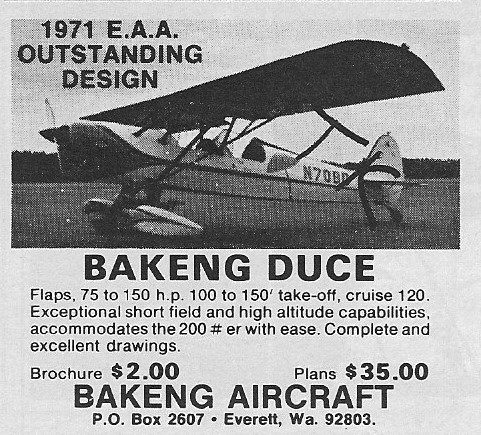
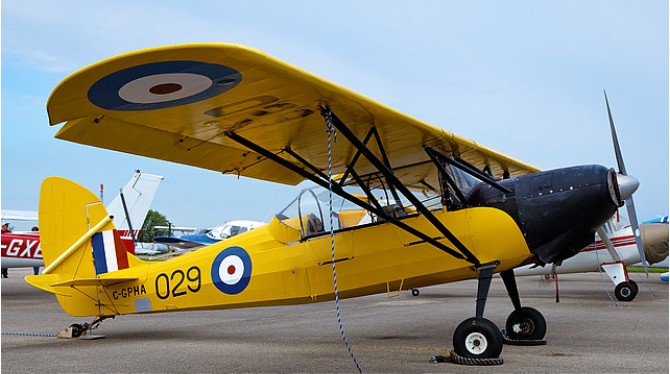
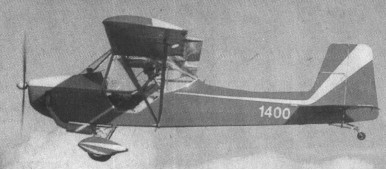
The Bakeng Deuce is a two-place parasol design utilizing a steel tube fuselage. The structure is faired with plywood and aluminum formers which support spruce stingers. Wings are of basic wooden construction with solid spruce spars.
First flown on 2 April 1970, this homebuilt received the ‘Outstanding New Design” and “Design improvement’ awards from the EAA in 1971. The V-strut braced wing utilizes both metal and spruce construction and is covered with fabric. The fuselage is also fabric-covered but is built from steel tubes. The landing gear is the conventional tailwheel type, and the two seats are arranged in tandem fashion. Bakeng has also designed a biplane version of the Duce, called the Double Duce. Both horizontally opposed and radial engines can be used, from 85-150 hp. Baking Deuce Airplane Factory purchased the rights to the Bakeng Duce in March of 1999. The name was changed to “Deuce” to separate those aircraft built before and after. The new Deuce incorporates the design of the old Duce with improvements based on analyzing the aircraft and listening to builders who have built and flown them for the past thirty years.
Dec 1973
Design Improvements are changes only to enhance integrity, reliability, ease of construction or function. These changes include: Beef up fuselage behind the landing gear legs. Complete redesign and relocation of the rudder pedals, cables and toe brakes. Complete redesign of the elevator control (pushrods instead of pulleys). Completely new lift strut attachments (individual, like old Pipers). Different tail mount structure New attachments for turtle deck Entirely new rudder design and mount (now removable). New method of attaching cross wire bracing in front of front cockpit. Removal of all elevator pulleys and cables. Larger fuel tanks Comfortable, factory-built bucket seats CAD drawings of the original plans have been completed.
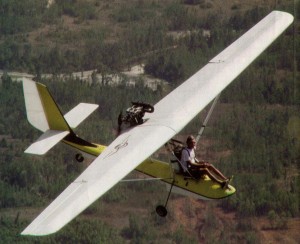
Built by Bob Bailey, circa 1991, the Connie utilises a single Cosmos trike float and qualifies as a Pt.103 ultralight. The float is the primary structural unit. Baily fitted a modified version of his Tempest ultralight sailplane wing and a Rotax 447. The main undercarriage retracts with a simple lever. On the prototype, the tailwheel retracts but this may change in a production version. The Connie may be produced with Baliey’s partner, Bill Moyes.
Prototype Engine: Rotax 447, 40 hp Wingspan: 35.1 ft. Length: 18 ft. Wing area: 118 sq.ft. Empty wt: 328 lbs. Gross wt: 570 lbs. Vne: 90 mph. Cruise: 65 mph. Stall: 35 mph. Fuel cap: 5 USG. ROC: 900 fpm. TO dist: 200 ft. Ldg dist: 300 ft.
Bob Bailey had worked for Advanced Aviation and the development of the Buccaneer flying boat ultralight. He later developed the Moyes Dragonfly and Tempest ultralight sailplane.
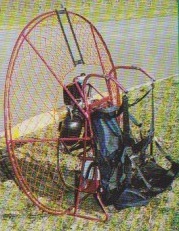
The Raptor is a rigid wing hang glider kit manufactured by Bailet’s Composites. The Raptor is a swept flying wing with tip rudders and was designed by Matt Kollman of Columbus, Ohio. Matt and Roy Bailets worked together on the Genesis sailplane where they met Jim Marske. Jim supplied the airfoil and ideas for the structure which Matt turned into the Raptor design. Roy Bailets was developing the tooling for kit production in Mojave, CA. The Raptor production prototype should have been flying the summer of 1997. Matt Bailets had been flying the prototype for about 3 years and had more than 70 hours flight time.
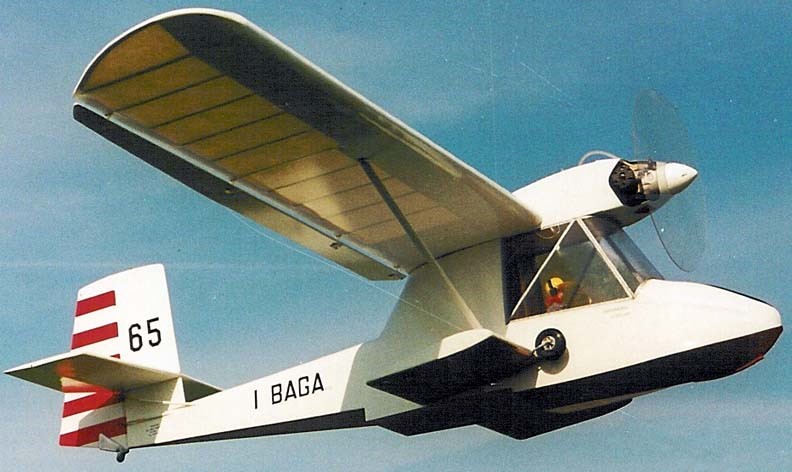
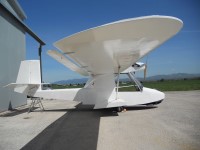
The Bagalini Baganfibio (from “Bagalini” and “Amphibian”) is an Italian homebuilt flying boat that was designed by Marino Bagalini. The two-seat tandem amphibious aircraft was supplied in the form of plans for amateur construction.
The Baganfibio features a strut-braced high-wing, a two-seats-in-tandem enclosed cockpit, retractable conventional landing gear and a single engine in tractor configuration mounted above the wing.
The aircraft is of all-wooden construction, with its wings covered in doped aircraft fabric. Its 10.7 m (35.1 ft) span wing employs an RSG 36 airfoil and has Junkers ailerons. The aircraft does not use tip floats, but instead relies on sponsons for balance in the water. The acceptable power range is 40 to 50 hp (30 to 37 kW).
Full fuel is 26 litres (5.7 imp gal; 6.9 US gal) and the payload is 151 kg (333 lb).
The manufacturer estimates the construction time from the supplied kit as 700 hours.
Plans were available in 1998.
Engine: Rotax 503, 50 hp / 37 kW Wingspan: 35 ft 0 in / 10.67 m Wing area: 167 sq. ft / 15.5 sq.m Airfoil: RSG 36 Length: 22 ft 0 in / 6.71 m Empty weight: 385 lb / 175 kg MTOW: 759 lb / 344 kg Fuel capacity: 26 litres (5.7 imp gal; 6.9 US gal) Wing loading: 22 kg/sq.m / 4.5 lb/sq ft ROC 600 fpm / 3.0 m/s Cruise: 43 mph / 69 km/h / 37 kn Max speed: 62 mph / 100 km/h / 54 kn Range: 130 mi / 210 km / 110 nmi Stall: 28 mi / 45 km/h / 24 kn Seats: 2
Keith Bennett of Devonport, Tasmania, Australia, asked Owen Badcock about designing him a plane. Owen Badcock proceeded to draw up some plans and then built a one-quarter scale radio¬controlled model complete with folding wings. This performed completely as planned with no need for modifications. Keith started building in June 1992. All stress-bearing metal parts are chrome molydenum steel tube which after welding (T.I.G.) has been sand blasted, oil filled, primed and then painted with two-pack white. The wing ribs are Epi glued Canadian Spruce with 6m l2ply noses and tails. All moving parts are nylon bushed. An early problem with tail-wheel shimmy was solved by Keith who turned up a wheel from solid aluminium to fit a standard ball-bearing. A solid rubber tyre was vertical stabilizer and the leading edges of the wings snug up to rubber blocks on the roof and sides of the trailer as the plane settles ‘home’ upon loading. Starting of the 503 DCDI engine is facilitated by use of a G.A. type fuel primer. The wheel brakes are operated by twin levers conveniently situated forward of the throttle lever on the left side of the cockpit. This makes for very easy taxing. For parking a spring loaded lever can be rotated to hold both levers on. This unlocks automatically when the brake levers are activated. Wing folding is affected by first half withdrawing a pin on the leading-edge spar at the root of each wing. This unlocks a safety-pin which is moved ‘on’ by the last part of the pins travel when it presses down on a nylon wedge on the forward end of a rod. The aft end of the rod carries the safety pin which prevents the spring loaded flaperon disengaging mechanism separating in flight in the event of spring failure. The flaperon as are then disengaged for wing folding and held up by a small piece of shock-cord which retracts into the wing when not in use. The leading edge spar pin can then be lifted right out and the wings swing back and locked on to the tail. The whole operation takes two minutes.