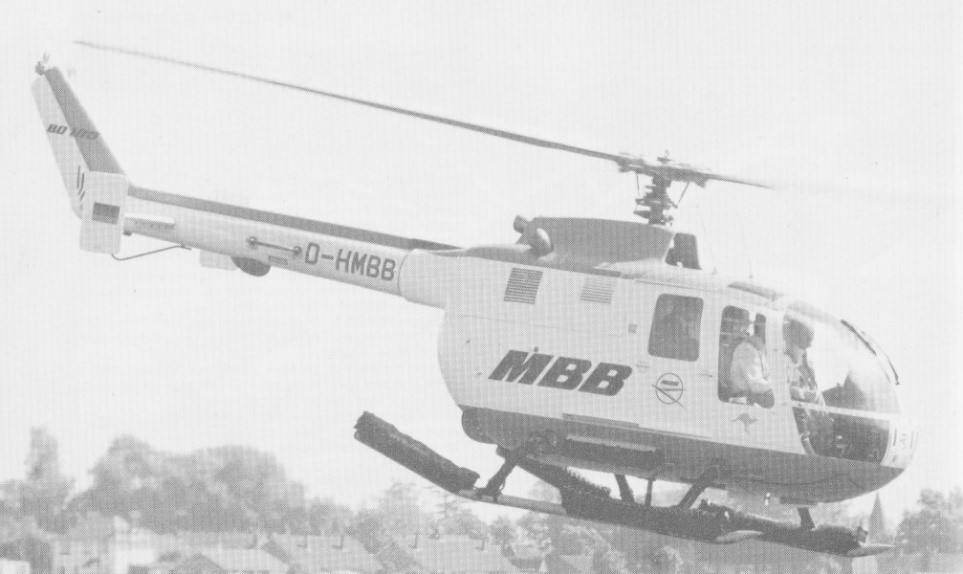
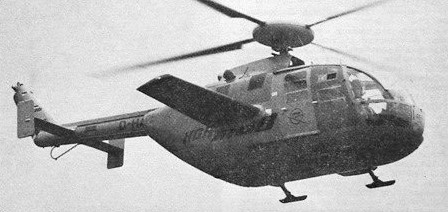
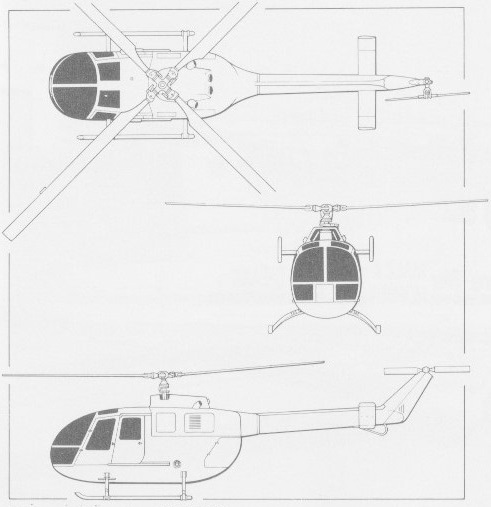
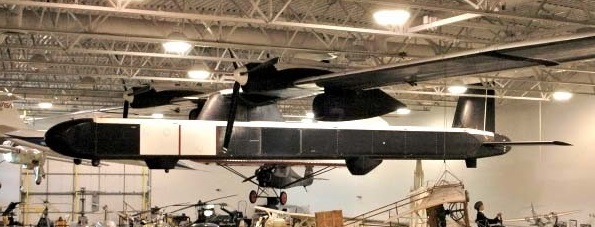
The Bo.108 is a flight test vehicle for advanced systems This also includes subsystems integrated into a new airframe. The first of two prototypes (D-HBOX) first flew on 15 October 1988 powered by two Allison 250-C20R turboshafts. The helicopter initially undertook a flight test programme to assist in the advance of helicopter technology particularly in rotor technology, and the development of dynamic systems, anti-resonance isolation systems, composite structures, electrical and avionic systems, cockpit installations and engine integration.
Fitted with higher-powered Turbomeca TM-319 Arrius IBs engines and equipped with a single-pilot EFIS-based IFR system, the second prototype, nominally stretched by 15cm, flew in June 1991.
The Bo.108 was equipped with two Allison 250 C20-R engines but the engine compartment had been designed to allow other power units such as the Turbomeca TM319 or the Pratt & Whitney PW205B/1.
Bo-108 Engine: 2 x Allison 250-C20R-3 turboshaft, 335kW Main rotor diameter: 10m Length rotors turning: 10.6m Height: 3m Take-off weight: 2500kg Empty weight: 1225kg Cruising speed: 270km/h Ceiling: 5000m Range max fuel: 800km
Design of the Bo.105 lightweight, general purpose helicopter was begun in July 1962 utilising basic experience gained by the company in the preceding few years in building the Bo.102 and Bo.103. The former was a non-flying, ultra-light helicopter trainer, and the Bo.103, flown for the first time on 9 September 1961, was essentially the same aircraft minus its fixed base. An enlarged version of the Bo.103 was proposed as the Bo.104, but this project was supplanted by the more promising Bo.105.
Under German government contract, ground rig testing of its radical rigid rotor and construction of the first prototypes began in 1964. The first prototype airframe (V-1) was ready for ground testing September 1969, powered by two Allison 250-C18 turboshaft engines and using the hinged-rotor from a Westland Scout, was destroyed on the ground at an early date by resonance problems. The second prototype, first flown on 16 February 1967 at Ottobrunn (Munich), was the first to take to the air with hingeless titanium rotor hub and composite rotor blades. Powered by twin Allison 250-C18 turboshaft engines, the non-articulated rotor, whose fold-able blades are reinforced with glassfibre, has been developed over several years by Bolkow in association with Sud-Aviation and has been adopted by the French company for its own SA.341 light helicopter.
Further changes and modifications led to the third prototype — the V-3 fitted with two German-built MAN-Turbo 6022 turbines (first flown on 20 December 1967), and to two pre-production models, the Bo.105 V-4 and V-5, the first of which made its maiden flight on 1 May 1969. Two Allison 250-C20 turbines were later installed on the V-4, which thus became the prototype of the definitive Bo.105C. Meanwhile, from spring 1970, new “droop snoot” design blades, which had a marked downward curvature on the leading edge, were introduced. These were made by MBB, the Messerschmitt-Bolkow-Blohm und Voss group — of which Bolkow and its affiliates had become part.
In 1972, the Bo.105 went into full-scale production at the company’s Donauwörth facility in Germany, and was offered with either Allison 250-C18 turbine engines or the more powerful C20. The helicopter was approved by the German Federal Authority LBA with the first power-plant in October 1970, after successfully completing autorotation trials in the autumn of 1969. Approval by the US Federal Aviation Administration followed in March 1971 and was extended to the C20 engines in August 1972, while the Canadian authorities certified the Bo.105 in April 1973. The German helicopter also received a British Certificate of Airworthiness in July 1973 and was recognized by the Italian Aeronautical Register in March 1974.
The German government ordered 20 for its “Katastrophenschutz” programme, to ensure rapid assistance in the event of a disaster. The military version differs little from the civil one. The antitank version can carry six HOT missiles, three on either side of the cabin, with a stabilized sight on the port side.
Bo 105 80+13, June 1986
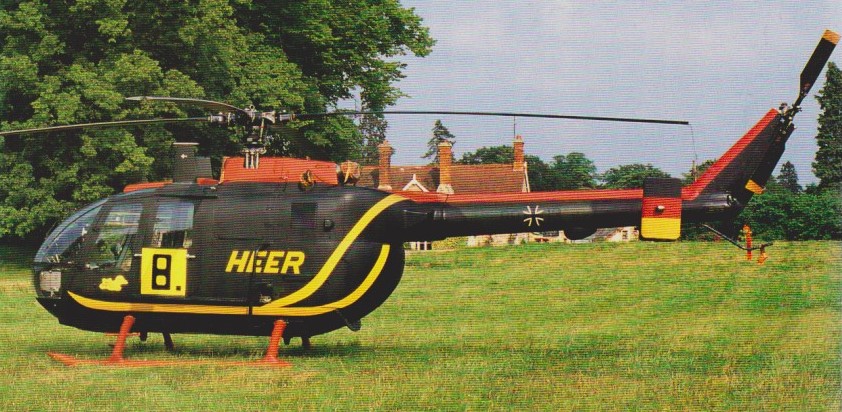
The Federal German government authorised production of a total of 439 BO 105s for service with the German army. These comprised 227 of the BO 105 M(VBH), a liaison and light observation version of which deliveries began in 1980; and 212 of the BO 105 P(PAH-1) anti-tank version, each able to carry six Euromissile HOT missiles. Initial deliveries of this latter version, to Heeresfliegerregiment 16, began in December 1980. MBB has also developed an anti-tank version able to deploy eight Hughes TOW missiles.
Other military operators include the Mexican navy with six radar-equipped versions used for maritime patrol, and the Spanish army with 60 BO 105Ps, 57 of them assembled by CASA. The Spanish company is also assembling 80 105s for other customers, and there are active licence-assembly programmes underway in Indonesia as the Nurtanio NBO 105, and Chile. BO 105 LS helicopters produced at Eurocopter’s Fort Erie facility in Ontario, Canada.
MBB Bo.105C
Others are in use in Brunei, Canada, Ciskei, Colombia, Holland, Iraq, Nigeria, Peru, Sierra Leone and Sweden. Sweden operates an unarmed SAR version known as the HR 9B. By 1991 more than 1,300 BO 105s had been delivered to 37 countries.
The civil version has also been a major export success and was initially marketed through Boeing in the United States before MBB set up its own US facilities. The BO 105C was superseded in 1975 by the BO 105 CB which became the standard production version.
By the end of 1981, total production of the Bo.105 exceeded 1100. More than 100 Bo.105s were in operation in the United States and these were joined in 1982 by the Bo.105CBS Twin Jet II variant, with 420shp Allison 250-C20B turbines, which, apart from having better flying capabilities, has 20 per cent more cabin room. The BO.105CB-3 variant of the standard production CB and CBS versions has a longer fuselage.
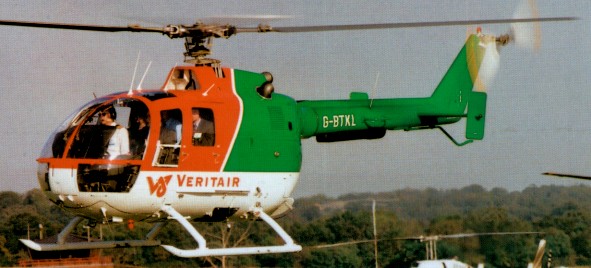
The Messerschmitt-Bolkow-Blohm GmbH Bölkow Bo.105 DBS-4 version has the 10-inch fuselage stretch at the rear of the cabin and the extra small rear side windows.
Further development of the Bo.105CBS led to the introduction in 1981 of the Bo.105LS (Lift Stretch) which combines the enlarged cabin with the uprated transmission of the military version and more powerful 550shp Allison 250-C28C engines to provide a much improved hot/high performance and external lift capability. Bo.105 LSA3 is a stretched cabin version. Featuring two Allison C28B engines, each with a separate drive to the main transmission, separate fuel and lubrication systems and dual hydraulic boost system. Providing the lift and directional control is a hingeless four-bladed main rotor and a semi-rigid two-blade tail rotor, all of fibre reinforced composite material.
The rear-loading clamshell cargo compartment is rigged to al-low accommodation of bulky cargos or stretchers by removing the rear bulkhead behind the passenger compartment.
Sales total more than 1300 to 37 countries by 1990. Navalised BO.105s are fitted with Sperry Primus 500 search radars and other maritime equipment, and have folding main rotor blades for shipboard stowage.
Messerschmitt-Bolkow-Blohm Bo.105HGH
An BO 105 fitted with a rear fuselage fairing, rotor head fairing and four small individual landing gear skids, was developed under a high-speed research programme. Known as the BO 105HGH, this aircraft attained a speed of 372km/h in a shallow dive at max AUW in September 1973. Flight testing was continued in 1974 after the addition of 6.00m fixed wings with an NACA 230 section varying from 15% thickness/chord ratio at the roots to 12% at the tips. Airbrakes are mounted above and below the leading-edge of each wing, and a shorter-legged landing gear is fitted.
The HGH programme (Hochgeschwindigkeits Hubschrauber / High Speed Helicopter) ended on 4 March 1975 with a flight in which the aircraft attained a max speed of 404km/h; max blade tip speed was Mach 0.97. The BO 105HGH, which was converted from a pre-production BO 105 airframe, was to continue in use as a rotor blade testbed.
BO 105 CBS-4 description except where indicated:
DESIGN FEATURES: Four-blade main rotor, comprising rigid titanium head and GFRP blades, with titanium anti-erosion strip and pendulous vibration damper on each blade. NACA 23012 lifting aerofoil with drooped leading-edge and reflexed trailing-edge. Two-blade semi-rigid tail rotor. Tail rotor gearbox on fin. Main rotor 424 rpm. Tail rotor 2,220 rpm. Main transmission utilises two bevel gear input stages with freewheeling clutches and a spur collector gear stage. Planetary reduction gear; three auxiliary drives for accessories. Main transmission rated for twin-engine input of 257kW per engine, or a single-engine input of 283kW. Uprated transmission and Allison 250-C28 engines in BO 105 LS for exceptional hot-and-high performance. EC Super Five has new main rotor blades and performance improvements, including 150kg more rotor lift; better stability; and airframe vibration reduced to less than 0.1g.
FLYING CONTROLS: Main rotor has roller bearings for pitch change. Main rotor brake standard. Dual controls standard on EC Super Five.
STRUCTURE: Folding of two main rotor blades optional. Tail rotor blades of GFRP, with stainless steel anti-erosion strip. The fuselage is a conventional light-alloy semi-monocoque structure of pod and boom type. Glass fibre reinforced cowling over power plant. Titanium sheet engine deck. Horizontal stabiliser of conventional light-alloy construction with small endplate fins.
LANDING GEAR: Skid type, with cross-tubes designed for energy absorption by plastic deformation in the event of a heavy landing. Inflatable emergency floats can be attached to skids.
POWER PLANT: BO 105 CBS: Two 313kW Allison 250-C20B turboshafts, each with a maximum continuous rating of 298kW. Bladder fuel tanks under cabin floor, capacity 580 litres, of which 570 litres are usable. Fuelling point on port side of cabin. Auxiliary tanks in freight compartment available optionally. Oil capacity: engine 12 litres, gearbox 11.6 litres. EC Super Five additionally has scavenge oil filter and one-handed engine starting arrangement. BO 105 LS A-3: Two Allison 250-C2BC turboshafts, each rated at 410kW for 2.5 minutes, and with 5 minute T-O and maximum continuous power ratings of 373kW and 368kW respectively. Main transmission, type ZF-FS 112, rated for independent restricted input of 310kW per engine at T-O power or 294kW per engine for maximum continuous operation; or single-engine restricted input of 368kW at maximum continuous power, or 410kW for 2.5 minutes at T-O power. Fuel capacity as for CB/CBS. Oil capacity 4.5 litres per engine.
ACCOMMODATION: Pilot and co-pilot or passenger on individual longitudinally adjustable front seats with safety belts and automatic locking shoulder harnesses. Optional dual controls. Bench seat at rear for three or four persons, removable for cargo and stretcher carrying. A full EMS version is available. Both cabin and cargo compartment have panelling, sound insulation and floor covering. Entire rear fuselage aft of seats and under power plant available as freight and baggage space, with access through two clamshell doors at rear. Two standard stretchers can be accommodated side by side in ambulance role. One forward-opening hinged and jettisonable door and one sliding door on each side of cabin. Ram air and electrical ventilation system. Heating system optional.
SYSTEMS: Tandem fully redundant hydraulic system, pressure 103.5 bars, for powered main rotor controls. System flow rate 6.2 litres/min. Bootstrap/oil reservoir, pressurised at 1.7 bars. Electrical system powered by two 150A 28V DC starter/generators and a 24V 25Ah Ni/Cd battery; external power socket; stability augmentation system standard on BO 105 LS A-3, with hoist, firefighting kit, weapons fittings, mast-mounted sight and floats optional; EC Super Five has improved hydraulic system.
Variants:
BO 105C: Initial production version offered with either 236kW Allison 250-C18 or 298kW 250-C20 turboshaft engines.
BO 105 CB: Standard production version from 1975, with two Allison 250-C20B engines, operable in air temperatures ranging from -45 to +54°C. LBA certification received in November 1976.
BO 105 CBS-5: Military army/naval version for armed and non-armed missions; can be equipped with anti-tank missiles, rocket launchers. Gun pod or turret. First 12 ordered by the Republic of Korea Army; most assembled from kits by Daewoo. Include Boeing IR/optical sights and defensive aids suite.
BO 105 CBS: version with slightly lengthened fuselage to provide increased seating or cargo capacity
BO 105 CBS-4 / Twin Jet II: Version with increased rear seat leg room in a cabin extended by a 0.25m plug. Available in five-seat executive or six-seat high-density configurations. Identified by small additional window aft of rear door on each side. Marketed in the USA by MBB Helicopter Corporation under the name Twin Jet II. First CBS version certified in early 1983 by FAA for IFR operation in accordance with SFAR Pt 29-4, requiring two pilots, radar, Loran C and a separate battery, but not a stability augmentation system, although SAS was an option.
BO 105D: UK CAA-certified offshore version with modified equipment, supplied to customers in the UK and Nigeria
BO 105 LS: Canadian-built version of BO 105 CBS with increased power for ‘hot-and-high’ operation. Combining the larger cabin of the BO 105 CBS with two Allison 250-C28C turboshafts each with a maximum take-off rating of 373kW. First flight 23 October 1981, German LBA certification July 1984, followed by FAA and Canadian DOT type approval. In Spain, CASA assembled 57 of an initial 60 for the Spanish Army.
BO 105 LSA-3: Hot-and-high version, certified 7 July 1986 and first delivered February 1987. Uprated transmission and Allison 250-C28 turboshaft engines, rated at 410kW for 30 seconds. Built solely by Eurocopter Canada at its Fort Erie, Ontario plant.
BO 105 LSA-3 Super Lifter: Optimised for external load and heavylift missions; max T-O weight 2,850kg; upgraded tail rotor derived from BK 117C-1. Type certification granted October 1995. Built solely by Eurocopter Canada.
BO 105 LS B-1: One-off testbed C-FMCL, powered by two 307kW Pratt & Whitney Canada PW 205B turboshafts, made first flight 13 October 1988.
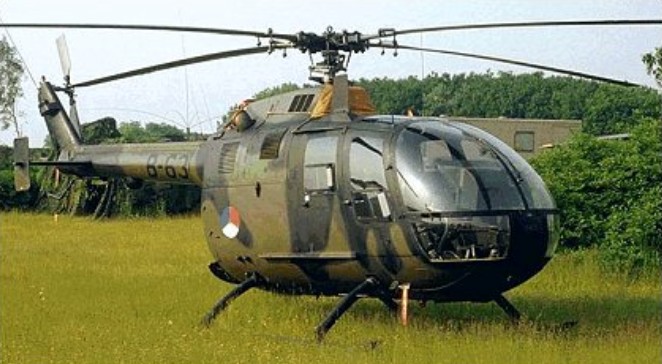
BO 105 M (VBH): Liaison and light observation helicopter for the Federal German Army, with strengthened transmission gearing, reinforced rotor components, a tail rotor with improved thrust and performance, a rupture-proof fuel system and a landing gear able to absorb higher energy levels. Production of 100 approved by the Federal government, to replace Alouette II. Deliveries completed in 1984.
BO 105 P (PAH-1): Anti-tank version of the BO 105 M, with same airframe improvements as BO 105 M, outriggers to carry six Euromissile HOT missiles, a stabilised sight above the co-pilot and a Singer AN/ASN-128 Doppler navigation system. The Federal German government gave its approval for the procurement of 212 PAH-1s for the Federal German Army. Deliveries began on 4 December 1980 and were completed in mid-1984.
EC Super Five: High-performance version of BO 105 CBS-4, derived from German Army PAH-1 upgrade programme; certified late 1993. New main rotor blades, improved performance and reduced vibration; dual flying controls as standard.
KWS-1 upgrade programme implemented in late 1980s, including installation of a digital weapon system, reduction in launcher weight, improved cooling unit, newly developed main rotor blades, and an increase in MTOW to 2,500kg.
BO 105C Engine: Allison 250 C20, 400 shp maximum, 385 shp continuous. TBO: 1,500 hrs. Rotor: four blade, semi rigid, glass fiber and reinforced plastic. Length: 38 ft. 11 in. Height: 9 ft. 7 in. Main rotor diameter: 32 ft. Disc loading: 6.22 lbs./sq.ft. Seats: 5. Empty weight: 2,698 lbs. Useful load: 2,372 lbs. Payload with full fuel: 1,339 lbs. Gross weight: 5,070 lbs. Power loading: 7.9 lb/hp. Fuel capacity (std.): 153 USG/1,033 lbs. Fuel capacity (opt,): 258 USG/1,742 lbs. Baggage capacity: 660 lbs. Baggage area: 57.5 cu. ft. Maximum sling load: 1,984 lbs. Rate of climb: 1,250 fpm. Service ceiling: 17,000 ft. Single engine service ceiling: 4,200 ft. Maximum speed: 167 mph/145 knots. Cruise: 140 mph/122 knots. Econ cruise: 124 mph/108 knots. Range @ max cruise (45 min res., std. tanks): 385sm/335nm. Range @ econ cruise (45 min res., std. tanks): 350sm/304nm. Duration @ max cruise (no res., std. tanks): 3.5 hrs. HIGE: 7,900 ft. HOGE: 5,850 ft. Single engine HIGE: 2,200 ft.
BO.105CB Engine: 2 x Allison 250-C20B turboshaft, 313kW Installed pwr: 600 kW. Rotor dia: 9.8 m. Fuselage length: 8.6 m. Length rotors turning: 11.86m No. Blades: 4. Height: 3m Empty wt: 1276 kg. MTOW: 2500 kg. Payload: 1000 kg. Max speed: 270 kph. Cruising speed: 270km/h ROC: 420 m/min. Ceiling: 5180 m. HIGE: 2560 m. HOGE: 1615 m. Fuel cap (+aux): 580 lt (400 lt ). Range with max payload: 658km Crew: 1. Pax: 4.
BO.105 CBS Engine: 2 x Allison 250-C20B, 420 shp. TBO: 3500 hrs. Main rotor: 32.2 ft. Seats: 5/6. Length: 38.9 ft. Height: 9.8 ft. Max ramp weight: 5291 lbs. Max takeoff weight: 5291 lbs. Standard empty weight: 2780 lbs. Max useful load: 2511 lbs. Max landing weight: 5291 lbs. Max sling load: 1984 lbs. Disc loading: 6.5 lbs/sq.ft. Power loading: 7.6 lbs/hp. Max usable fuel: 1008 lbs. Max rate of climb: 1476 fpm. Service ceiling: 17,000 ft. Hover in ground effect: 8,400 ft. Hover out of ground effect: 5300 ft. Max speed: 145 kts. Normal cruise @ 3000 ft: 126 kts. Fuel flow @ normal cruise: 355 pph. Endurance @ normal cruise: 2.6 hr.
BO.105EC Super Five Engine: 2 x Allison 250-C20. Instant pwr: 313 kW. Rotor dia: 9.8 m. MTOW: 2500 kg. Payload: 1180 kg. Max speed: 250 kts. Max cruise: 130 kts. Max range: 564 km. Crew: 1. Pax: 4/5.
BO.105 LS Engines: 2 x Allison 250-C28C, 500 shp. Main rotor dia: 32.4 ft. Height: 12.5 ft. Skid width: 8.5 ft. Length: 38.9 ft. MTOW: 5732 lbs. Std empty wt: 3153 lbs. Max useful load: 2579 lbs. Max ldg wt: 5732 lbs. Disc loading: 7 lbs/sq.ft. Pwr loading: 5.7 lbs/shp. Std usable fuel: 150 USG/1005 lbs. Optional usable fuel: 106 USG/706 lbs. Max ROC: 1810 fpm. Service ceiling: 20,000 ft. Hover IGE: 11,500 ft. Hover OGE: 8370 ft. Vne: 130 kts. Cruise: 129 kts. Fuel flow at cruise: 335 pph. Endurance at cruise: 3 hr. Seats: 5/6.
BO.105P1 Engines: 2 x 420 hp / 313 kW 250-C20B Gross weight: 5291 lb / 2400 kg Max speed: 187 mph / 270 kph
This company was founded on May 1,1956 by Ludwig Bolkow, becoming established at Ottobrunn bei Munchen in 1958. Until January 1,1965 was known as Bolkow Entwicklungen KG. Boeing acquired a one-third interest in the business. Bolkow held a 25% interest in Entwicklungsring Sud EWR). Aircraft produced include the Bo 207 four-seat light aircraft, BO 208 C Junior (a license-built version of the Malmo MFI-9) and the BO 105 five-seat light helicopter, which featured a rigid main rotor of glassfiber-reinforced plastics. This helicopter continued in production under the designation MBB BO 105, signifying that it was then built by Messerschmitt-Bolkow-Blohm, and most recently it became a Eurocopter product.
Messerschmitt joined with Bolkow in 1970 to form Messerschmitt-Bolkow. The Bolkow company was absorbed into Messerschmitt-Bolkow-Blohm which by 1990 was part of Deutsche Aerospace.
Brian Boland of Post Mills Airport in Vermont, USA, has been building balloons of all sizes for many years and is well known among the international balloon fraternity for his escapades and in 2003 held three world records for ballooning.
A low wing microlight of mixed construction, the Bohem 3 has wings of sheet dural partially fabric covered, while the fuselage and tailplane are welded steel spaceframe construction.
Empty weight: 270 kg Wing span: 9 m Wing area: 11.5 sq.m Fuel capacity: 45 lt Certification: CS Engine: Verner, 70 hp MAUW: 450 kg Seats: 2 Max speed: 230 kph Cruise speed: 180 kph Minimum speed: 60 kph Climb rate: 6 m/s Fuel consumption: 10 lt/hr Price (1998): 70.000 DM
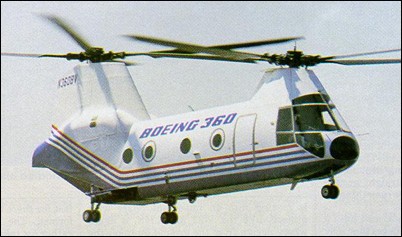
First flown on 10 June 1987, the Model 360 is a privately developed advanced technology rotorcraft, designed to research the company’s other rotorcraft programs. The helicopter features advanced aerodynamics and extensive use of composite materials including the fuselage, rotor shafts, blades and hubs. Powered by twin Avco-Lycoming AL5512 engines (4200shp) the Model 360 has a 370km/h cruise speed. The aircraft’s advanced cockpit features cathode ray tube displays, multi-function callouts, digital automatic flight control system and other improvements to reduce pilot workload. Only one model 360 was built (N360BV).
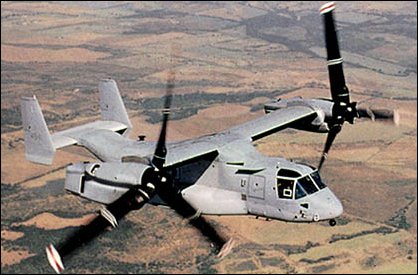
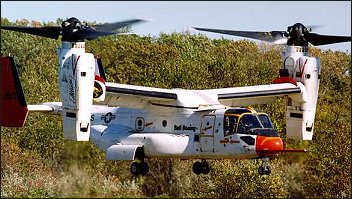
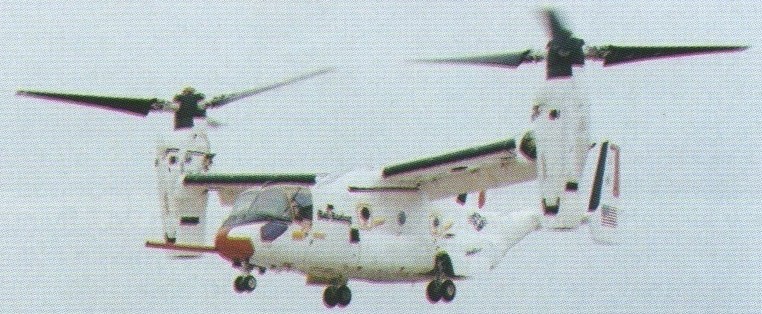
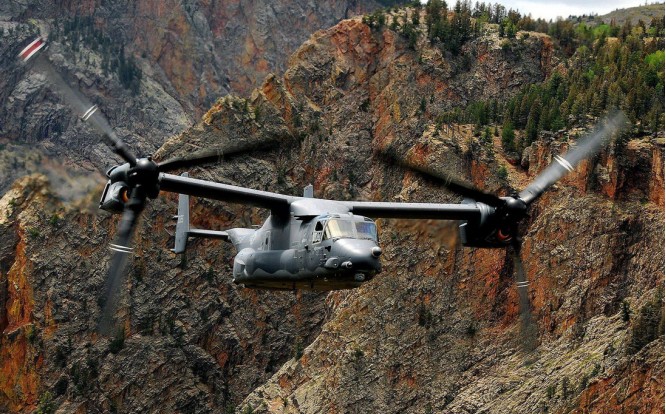
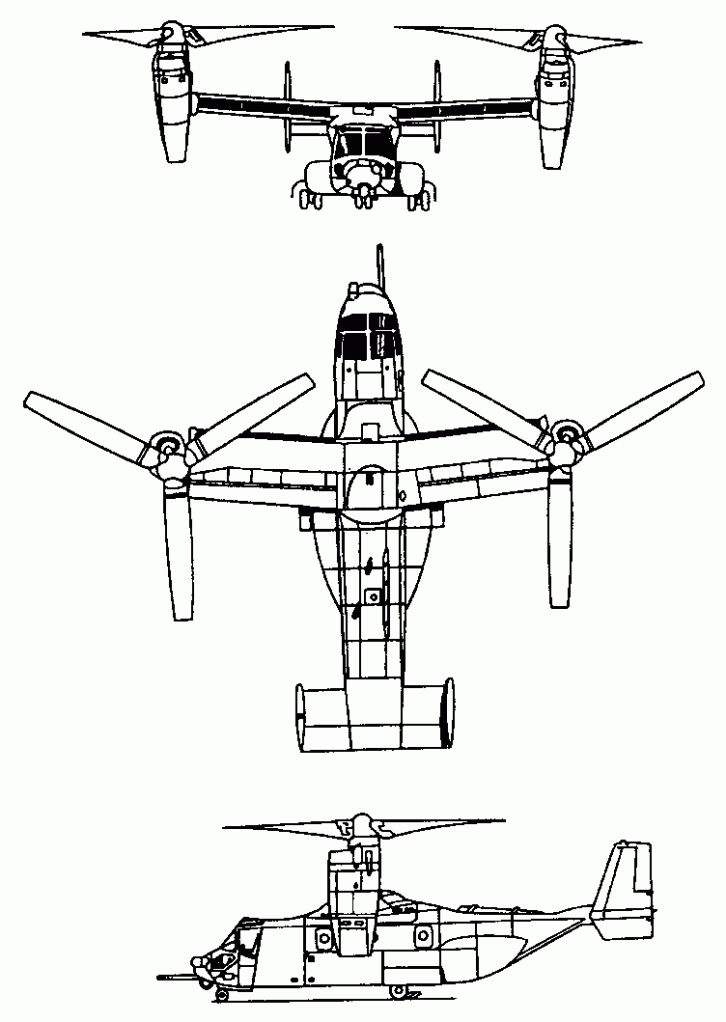
The Bell company brought a history of vertical-lift Tilt-Engine system development to this program when it combined with Boeing in the early 1980s. The company had demonstrated such a system with the XV-3, proving that it was possible to turn wingtip rotors from a vertical position to horizontal, thus providing the thrust to lift the vehicle off the ground and then transition to horizontal flight. The XV-3 was followed by the XV-15, which would closely resemble the V-22, with the XV-15 initially serving as the test vehicle for the V-22. During the early 1980s, the Bell-Boeing competed for the Joint Services Advanced Vertical Lift Aircraft (JVX). Then, on April 26, 1983, the joint team was awarded the contract to begin the preliminary design stage. Initially called the Bell/Boeing-Vertol JVX, the plane would later be given the V-22 Osprey designation, and later, special mission variations carrying the designations of MV-22, HV-22, and CV-22. The 1983 plan called for 1086 of the tri-service VTOLs to be produced with a total procurement cost of $25 billion, with the funding to be shared by the three services. The Navy was to assume the bulk of the obligation with 50 percent contribution. The initial requirement called for the craft to be capable of carrying 24 troops. Power for the Osprey comes from a pair of General Electric T64-GE-717 turboshaft engines, each rated at 6150hp, and the V-22 weighs about 24800kg at maximum take-off weight in a STOL configuration, and about 19840kg in a pure VTOL mode. Its empty weight is just over 14880kg. The rotor diameter is 11.6m, with an overall fuselage length of about 17.4m. With the rotors in the take-off position, the height of the vehicle is just over 6m. The width of the vehicle, with the rotors turning, is almost 26m. Those rotors are capable of rotating through 97 degrees and are constructed of graphite/glassfibre. 33 percent of the weight of the Osprey is fabricated of graphite/glassfibre. The rotors also possess separate cyclic control swashplates for sideways flight and fore-and-aft control during hover. Lateral attitude is maintained by differential rotor thrust. Once the V-22 achieves horizontal flight, the engines have assumed a position parallel to the fuselage.
The V-22 can fly backwards by tilting the rotors back past the 90-degree vertical position. Initial performance requirements for the Osprey were a cruising speed of 480km/h with a range with a full payload of over 1450km. Even though the V-22 carries a cargo designation, it does carry a nose-mounted 12.7mm multi-barrel machine gun. There are redundant systems, along with armor, in critical areas. The composite materials also provide protection, and one engine can power both rotors if required with a cross-coupling capability.
The full-scale development program began in May 1986 with the order for six prototypes. Numbers 1, 3, and 6 were constructed by Bell at Arlington, Texas, and numbers 2, 4, and 5 by Boeing at Wilmington, Delaware.
The first V-22 first flew on 19 March 1989.
The V-22 completed its first transition from propeller to wingborne flight on 14 September 1989.
The world’s first operational tilt-rotor transport, the Bell/Boeing’s V 22 Osprey tilt rotor made a successful first flight on 19 March 1989 with “near perfect performance” reported during a series of vertical take offs and landings at Arlington, Texas. The full-scale development program began in May 1986 with the order for six prototypes. Numbers 1, 3, and 6 were constructed by Bell at Arlington, Texas, and numbers 2, 4, and 5 by Boeing at Wilmington, Delaware. The world’s first operational tilt-rotor transport, the Bell/Boeing’s V 22 Osprey tilt rotor made a successful first flight on 19 March 1989 with “near perfect performance” reported during a series of vertical take offs and landings at Arlington, Texas. Wearing grey/green US Marine Corps camouflage, the fourth Bell Boeing V-22 Osprey flew for the first time from Boeing Helicopters flight test centre on 21 December 1989. The flight marked the beginning of V-22 flight test activities at Boeing’s facility in the Delaware Valley. The first flights for the last test vehicle occured in 1991. In 1995, the production of test vehicles resumed with numbers 7 through 10 for vibration, propulsion, USMC, and mating evaluations. Final assembly of the first production V-22 was completed in late 1998. In early 1998, the V-22 accomplished its first night test flight. During the test, the V-22 flew with a neutral density filter which covered the cockpit displays. This allowed the pilots, which were using night vision goggles, to operate the displays in the day mode. Also included in the flight test program was to investigate its capabilities for carry external loads. In one test, the number eight prototype carried a five-ton sling load through the transition phase with a top speed of 425km/h. The test pilot indicated that even though he could feel the load oscillating beneath him, it didn’t affect the craft’s performance. The testing showed that certain loads caused dramatic shifts in the center of gravity of the V-22, which in turn required a change in the attitude of the aircraft. It was determined that that requirement could be accomplished by changing the angle of the engine nacelles. Other tests planned at the time included a sling weight of 6765kg and a Humvee jeep. Early crashes of two prototypes, both in 2000 and resulting in fatalities, nearly did the system in. With pressure mounting to produce, and the general kinks reportedly ironed out, the system was passed for full scale service in 2006. In 1997 low-rate initial production was undertaken for 23 V-22s (called MV-22s) for the USMC. The first MV 22B Osprey tilt-rotor was delivered to the Marines in May 1999. The US Navy has ordered the HV-22 version for SAR duties and fleet logistic support, but cancelled its interest in the Osprey program (HV-22 Combat SAR) in 2001. The projected cost of these first operational V-22s had a unit cost of $32.2 million each, a figure that was down considerably than the $41.8 million projected during the full-scale development program. The plane has attracted international interest, with both Israel and Australia both showing interest in the unique VTOL. Bell is building the wing section, empennage, and powerplant nacelles, while Boeing has the responsibility for the fuselage and landing gear. Bell is also responsible for the final assembly and initial flight tests.
The Boeing Condor was a high-tech test bed reconnaissance aircraft built in the late 1980s. With a wing span of over 200 feet, the Condor is larger than either the Boeing 747 or the Boeing B-52 bomber. The Condor had an un-refuelled flight duration of 80 hours. It was powered by two 175 hp, six-cylinder opposed, twin supercharged, liquid cooled, Continental TSOL-300-2 engines. The aircraft is totally robotic with no pilot. On board computers communicate with computers on the ground via satellite to control all facets of the Condor’s mission.
The Condor set an altitude record for a piston powered aircraft of 67,000 feet, over twelve and a half miles high. The Condor logged over 300 hours of secret missions before its retirement. All of its test flying took place at Moses Lake, Washington.
Very light for its size, the Condor was built of state-of -the-art carbon fiber composite materials, giving the Condor stealth qualities. With a very low radar and heat signature footprint, the Condor was nearly electronically invisible.