1995-8: 1333 Garrard Creek Rd., Oakville, WA 98568, USA.
UL builder
1995-8: 1333 Garrard Creek Rd., Oakville, WA 98568, USA.
UL builder
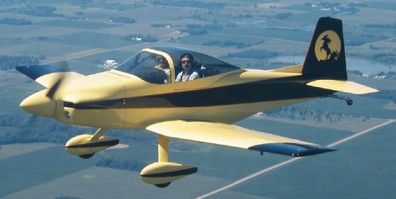
In 1963 Robert Bushby began work on a two place design based on the Midget Mustang. In 1965 the first ever Mustang II (N1117M) was brought to the EAA convention at Rockford (by trailer). In July 1966 the prototype was flown to the convention and was well received.
The Mustang II is a high performance side by side seating aircraft, featuring a tapered wing with a laminar flow airfoil to give the Mustang a cruising speed of 215mph on 180hp.
Due to aerodynamic as well as geometric washout in the wing, the Mustang has very good stall characteristics. At gross weight the wing loading is 16.5 lb/ft^2, high enough for a good ride but still allowing for a stall speed of 58mph in the landing configuration. The Mustang II has an excellent stall/spin safety record and compares quite favorably to other homebuilt as well as factory built designs. Most new Mustang flyers have less than 300 hours total time. Transitioning into a Mustang II can be compared to stepping up to a Cessna 182 Skylane. With fixed landing gear it has very good short field capabilities operating off of sod strips as short as 1600 feet with a large safety margin.
Construction is all metal with stressed skins There are no complicated fittings or parts that require special skills or tools. The wings are made in three parts, namely a constant chord centre section and tapered outer panels. The wing is a two spar flush riveted stress skin aluminium structure having aluminium ailerons and plain trailing edge flaps. The fuselage is a flush riveted stressed skin aluminium monocoque structure. The empennage is acantilever all metal structure with a controllable trim tab on the starboard elevator. A 10 Imp.gal. fuel tank is fitted behind the firewall. The Mustang II can now be equipped with the 150-hp Lycoming and Rayjay RJ0325 turbocharger.
Price in 1982: $4,500. All metal components included. Other parts available separately. Units delivered to June 1982: 1100.
The cockpit is about 39 inches wide, with a sliding bubble canopy. It can be custom fit for the tallest of pilots. The baggage compartment located behind the seats will hold up to 80lbs. There is space in the tailcone for additional storage if careful attention is given to the center of gravity.
At 1350 pounds gross the design is fully aerobatic to +6/-4.5 G’s. Ultimate strength is 9 G’s and it has a roll rate of over 180 degrees per second. It’s controls are light and responsive making it a good “sport” aerobatic airplane with proper training.
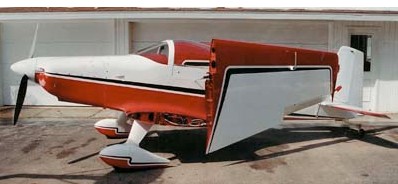
The prototype has been upgraded from an O-290 to an O-320 160hp Lycoming. It has had a tri-gear conversion, various wood props, a constant speed prop, and a folding wing design added to it. Since 1965, N1117M has flown to every yearly national EAA convention (Rockford, Milwaukee, or Oshkosh) except one (1997).
After 30+ years of developing and supporting the Mustang II and Midget, Robert Bushby sold the design rights to Mustang Aeronautics headed by Chris Tieman in 1992. Both designs were originally plans built only. Today, the kits have been refined to modern advanced assembly kits that greatly simplify construction. This has resulted in a strong resurgence in the popularity of the Mustang II as build times of less than 3 years part time work (10-15 hrs/week) are typical.
Engine: Lycoming O-320, 160 hp
Cockpit width: 40 in
Wing span: 24 ft 4 in
Length: 19 ft 6 in
Height: 5 ft 5 in
Wing area: 97.1 sq.ft
Aileron area: 4.80 sq.ft
Flap area: 8.0 sq.ft
Stabilizer area: 9.5 sq.ft
Elevator area: 6.4 sq.ft
Fin area: 4.2 sq.ft
Rudder area: 3.7 sq.ft
Wheel tread: 6 ft 10 in
Overall folded width: 8 ft 5 in
Width wings removed: >8 ft
Empty weight: 930 to 1100 lb
Recommended gross weight: 1600 lbs. (utility cat.)
Wing loading: 16.5 lb/sq.ft
Fuel: 25 to 61 USgal
Baggage: 80 lbs.
Top speed (sea level): 210 mph
Cruise speed (TAS, 75% power @ 8000 ft.): 195 mph
Range @ 75% POWER (37 USgal. version): 780 miles
Range @ 75% pwr (48 USgal w/ wet wing): 1000 miles
Rate of climb: 1500 fpm
Service ceiling: 17,000 ft
Stall speed (clean): 62 mph
Stall speed (full flap): 58 mph
Take off distance: 570 ft
Landing distance: 680 ft
Roll rate: 1900/sec
Power loading: 10.0 lb/hp
Engine: Lycoming IO-360, 200 hp
Cockpit width: 40 in
Wing span: 24 ft 4 in
Length: 19 ft 6 in
Height: 5 ft 5 in
Wing area: 97.1 sq.ft
Aileron area: 4.80 sq.ft
Flap area: 8.0 sq.ft
Stabilizer area: 9.5 sq.ft
Elevator area: 6.4 sq.ft
Fin area: 4.2 sq.ft
Rudder area: 3.7 sq.ft
Wheel tread: 6 ft 10 in
Overall folded width: 8 ft 5 in
Width wings removed: >8 ft
Empty weight: 930 to 1100 lb
Recommended gross weight: 1600 lbs. (utility cat.)
Wing loading: 16.5 lb/sq.ft
Fuel: 25 to 61 USgal
Baggage: 80 lbs.
Top speed (sea level): 230 mph
Cruise speed (TAS, 75% power @ 8000 ft.): 220 mph
Range @ 75% POWER (37 USgal. version): 770 miles
Range @ 75% pwr (48 USgal w/ wet wing): 990 miles
Rate of climb: 1900 fpm
Service ceiling: 20,000 ft
Stall speed (clean): 62 mph
Stall speed (full flap): 58 mph
Take off distance: 470 ft
Landing distance: 680 ft
Roll rate: 1900/sec
Power loading: 8.0 lb/hp

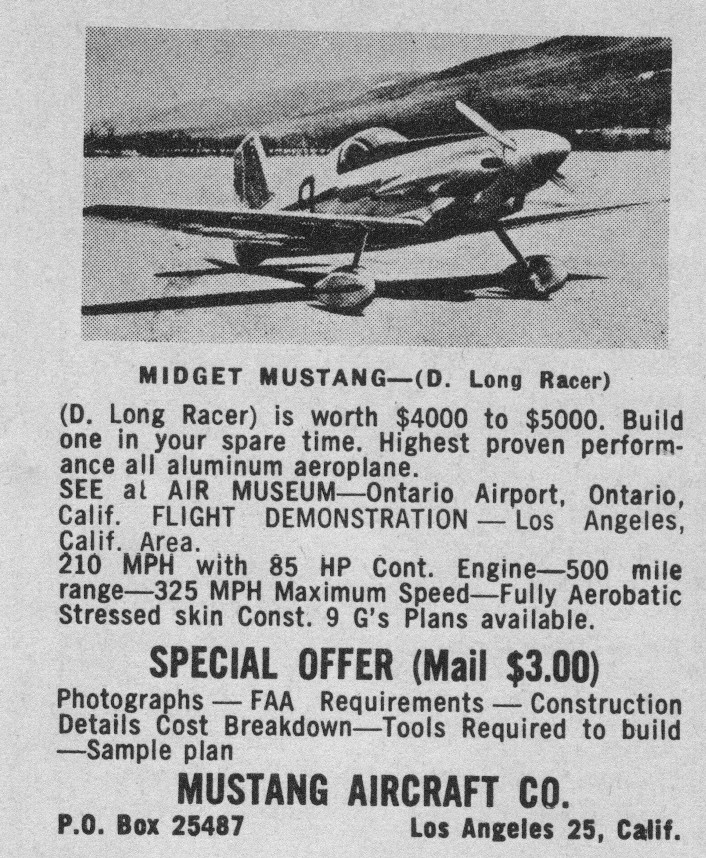
In 1948 Dave Long, chief engineer with Piper Aircraft at the time, designed and built an all metal racer which he called the Midget Mustang, known as the Long Midget. The public debut of the aircraft was at the 1948 Cleveland National Air Races. The closed course midget racers had a minimum weight of 500 lbs., minimum wing area of 66 sq. ft., fixed gear, at least a 6G structure, and the powerplants were limited to stock 190 cubic inch engines.
Bushby M-1 Midget Mustang Article
The Midget Mustang’s 9-G ultimate structural strength and low power loading give a true high performance fully aerobatic sport plane that can also be used for cross country flying. With a 100hp Continental it will have a top speed close to 200mph and can cruise over 175mph burning only 6gal/hr. The cabin size will accommodate persons over 6ft tall. The new M-IA bubble canopy creates room for pilots as tall as 6 ft 4 in. A baggage compartment behind the seat will hold up to 30lbs.
The wing is a two piece cantilever structure consisting of flanged aluminium ribs, two folded metal spars with re-inforcing booms and aluminium covered. Both flaps ailerons are all metal. The fuselage is a stressed skin semi-monocoque structure of eliptical cross-section. The tail unit is also all metal construction and incorporates a bungee elevator trim. The fixed undercarriage consists of two spring steel main legs and a steerable tailwheel. A 12 Imp. gallon fuel tank is located immediately behind the firewall. The Midget Mustang cowling and forward fuselage have been modified to fit a horizontally opposed four cylinder engine compared with the V12 Merlin of the original Mustang, but with the wing and tail design identical, the handling characteristics are very similar.
It has a high wing loading, but the power to weight ratio is good, making it very fast, but it’s forward visibility at take-off and landing is poor. It has a very abrupt stall – it drops a wing every time. Maximum engine size is 160hp.
The prototype Midget Mustang #67 was close in the competition, taking 2nd in the elimination heat. Engine problems caused Dave Long to drop out of the finals however. He went on to build a prototype production aircraft and had made an arrangement with Schweizer Aircraft to produce the design before his death in 1950. The Midget Mustang is well known for its air racing legacy during the late ’40s and early ’50s.
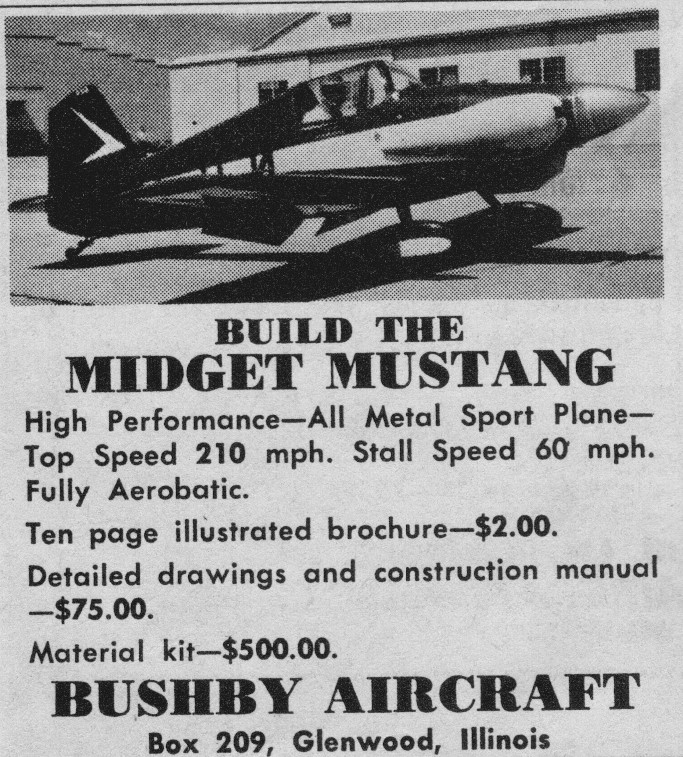
In 1959 Robert Bushby purchased the rights to the design along with the tooling, formblocks, etc. Some of these formblocks are still being used for the M-I bulkheads today. Bob began to sell prints for the M-I and as the demand for the aircraft increased material kits were offered for sale as well. Over the years the kits have expanded and improved so that today a complete kit can be finished in less than 1000 hours. Price in 1982: $2,900.
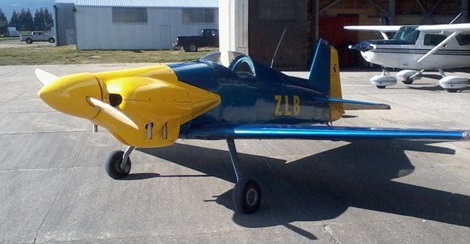
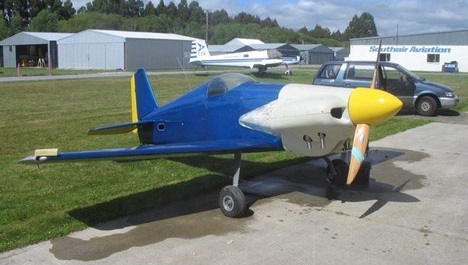
Very few major changes have been made to the Midget Mustang and it still retains it’s original racing appearance. One option that has been added is the bubble canopy design. By lowering the turtledeck and installing a full sliding bubble canopy the little airplane has more of a military style appearance. Other modifications by builders include larger engines, full IFR panels, and additional fuel capacity. Changes are to the control system to use pushrods for the ailerons and elevator. The Mustang II aileron is now used as well with a piano hinge attached to the top skin.
There have been 4 Midget Mustang Oshkosh EAA Grand Champions.
After 30+ years of developing and supporting the Mustang II and Midget, Robert Bushby sold the design rights to Mustang Aeronautics headed by Chris Tieman in 1992. Both designs were originally plans built only. Today, the kits have been refined to modern advanced assembly kits that greatly simplify construction. This has resulted in a strong resurgence in the popularity of the Mustang II as build times of less than 3 years part time work (10-15 hrs/week) are typical.
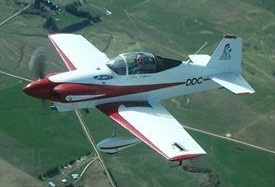
Variation:
Kensinger KF
Engine: Continental O-200, 100 hp
Wing span: 18 ft 6 in
Length: 16 ft 5 in
Height: 4 ft 6 in
Wing area: 68 sq.ft
Aileron area: 4.8 sq.ft
Flap area: 7.7 sq.ft
Stabilizer area: 8.8 sq.ft
Elevator area: 5.1 sq.ft
Fin area: 3.6 sq.ft
Rudder area: 3.3 sq.ft
Wheel tread: 5 ft 1 in
Cockpit width: 21 in
Empty weight: 610 lb
Recommended gross weight: 950 lb
Wing loading: 14.0 lb/sq.ft
Power loading: 9.5 lb/hp
Fuel: 15 to 35 USgal
Baggage: 30 lb
Top speed (sea level): 202 mph
Cruise speed (TAS, 75% power @ 8000 ft.): 175 mph
Never exceed speed (IAS): 230 mph
Range @ 75% pwr (std 15 USgal.): 435 miles
Rate of climb: 1500 fpm
Service ceiling: 17,000 ft
Stall speed (clean): 60 mph
Stall speed (full flap): 57 mph
Take off distance: 570 ft
Landing distance: 680 ft
Roll rate: 3000/sec
Aerobatic load: +6 –3
Engine: Lycoming O-320, 160 hp
Wing span: 18 ft 6 in
Length: 16 ft 5 in
Height: 4 ft 6 in
Wing area: 68 sq.ft
Aileron area: 4.8 sq.ft
Flap area: 7.7 sq.ft
Stabilizer area: 8.8 sq.ft
Elevator area: 5.1 sq.ft
Fin area: 3.6 sq.ft
Rudder area: 3.3 sq.ft
Wheel tread: 5 ft 1 in
Cockpit width: 21 in
Empty weight: 680 lb
Recommended gross weight: 1000 lb
Wing loading: 14.7 lb/sq.ft
Power loading: 6.2 lb/hp
Fuel: 15 to 35 USgal
Baggage: 30 lb
Top speed (sea level): 210 mph
Cruise speed (TAS, 75% power @ 8000 ft.): 195 mph
Never exceed speed (IAS): 230 mph
Range @ 75% pwr (std 15 USgal.): 400 miles
Rate of climb: 2500 fpm
Service ceiling: 20,000 ft
Stall speed(clean): 62 mph
Stall speed(full flap): 57 mph
Take off distance: 470 ft
Landing distance: 680 ft
Roll rate: 3000/sec
Aerobatic load: +6 –3
Engine: Continental, 85 h.p.
Span: 18 ft 6 in
Length: 16 ft 5 in
Wing Area: 68 sq. ft.
Empty Weight: 575 lb.
Loaded Weight: 900 lb (max.).
Wing Loading: 12.9 lb/sq. ft.
Max. Speed: 170 mph.
Cruise Speed: 140 mph.
Stall Speed: 60 mph.
Initial Climb: 1160 fpm.
Range: 400 miles.
Engine: 125 hp
Cruise: 160 mph.
ROC: 2000 fpm.
Range: 450 sm.
Span: 18.5 ft.
Length: 16 ft 5 in.
Empty weight: 560 lbs.
Max weight: 950 lbs.
Engine: Lycoming O-290D, 130 hp
Wing span: 18 ft 6 in.
Cruise: 150 kts.
ROC: 2000 fpm.

1980: Bushby Aircraft Inc., Route 1, PO Box 13B, Minooka, IL 60447, USA.

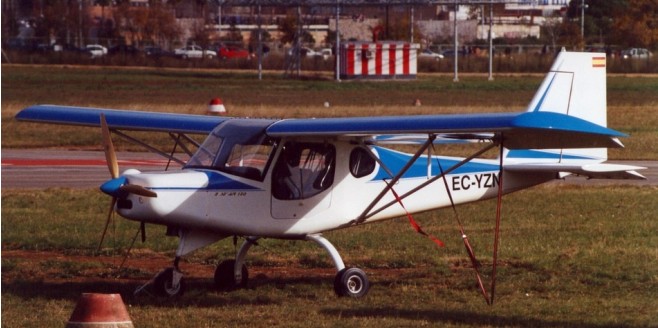
Built from laminates, the Buse’Air meets the microlight definition. In 1997 the tailplane was improved for stability.
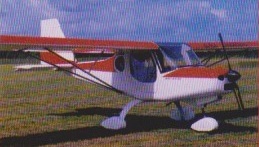
Empty weight: 240 kg
Wing span: 10.4 m
Wing area: 16 sq.m
Fuel capacity: 70 lt
Engine: Rotax 912, 80 hp
MAUW: 450 kg
Seats: 2
Max speed: 195 kph
Cruise speed: 150 kph
Minimum speed: 60 kph
Climb rate: 6 m/s
Fuel consumption: 10 lt/hr
Price (1998): 245 000 Fttc
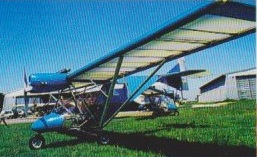
A tube and fabrc microlight.
When Mudry was bought out the Baroudeur became available through Bul Aero.
Empty weight: 168 kg
Wing span: 10.7 m
Wing area: 16.5 sq.m
Fuel capacity: 50 lt
Engine: Rotax 582, 64 hp
MAUW: 420 kg
Seats: 2
Max speed: 125 kph
Cruise speed: 90 kph
Minimum speed: 55 kph
Climb rate: 4 m/s
Fuel consumption: 16 lt/hr
Price (1998): 110.000 Fttc
Mudry had been bought out by the group which owns Robin Aircraft and as a result the Bardouder became available through Bul Aéro (1998).
1998:
Aerodrome de Dijons-Darois
F-21121 Darois
France
LSA builder
1995-6: PO Box 486, Cathedral City, CA 92234, USA.
Built the Barracuda aircraft

Manufactured in the US, the Dream Machine first flew in 1991. Options included the Rotax 503, instruments and instrument pod. The parachute is 1.1 oz ripstop nylon. The 1998 kit included the engine and propeller for US$11,424.
Engine: Rotax 582, 66 hp.
Speed max: 26 mph.
Cruise: 26 mph.
ROC: 1100 fpm.
Take-off dist: 100 ft.
Landing dist: 100 ft.
Service ceiling: 10,500 ft.
Fuel cap: 5 USG.
Weight empty: 245 lbs.
Gross: 595 lbs.
Height: 6.5 ft.
Length: 8.92 ft.
Wing span: 36.08 ft.
Wing area: 450 sq.ft.
Seats: 1.
Landing gear: nose wheel.

Manufactured in the US, the Dream Machine first flew in 1991. Options included the Rotax 503, instruments and instrument pod. The parachute is 1.1 oz ripstop nylon. The 1998 kit included the engine and propeller for US$8741.50.
Eagle 447
Engine: Rotax 447, 40 hp.
Speed max: 26 mph.
Cruise: 26 mph.
Range: 50 sm.
ROC: 500 fpm.
Take-off dist: 150 ft.
Landing dist: 100 ft.
Service ceiling: 9500 ft.
Fuel cap: 5 USG.
Weight empty: 220 lbs.
Gross: 500 lbs.
Height: 6 ft.
Length: 8.75 ft.
Wing span: 35.5 ft.
Wing area: 450 sq.ft.
Seats: 1.
Landing gear: nose wheel.
Eagle 503
Speed max: 26 mph.
Cruise: 26 mph.
Range: 50 sm.
ROC: 650 fpm.
Take-off dist: 150 ft.
Landing dist: 100 ft.
Service ceiling: 10,500 ft.
Engine: Rotax 503, 46 hp.
Fuel cap: 5 USG.
Weight empty: 230 lbs.
Gross: 540 lbs.
Height: 6 ft.
Length: 8.35 ft.
Wing span: 35.5 ft.
Wing area: 450 sq.ft.
Seats: 1.
Landing gear: nose wheel.

