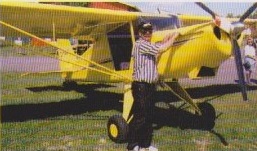
CLASS Cadi / BushCaddy

Club Aeronautique Delisle Cadi

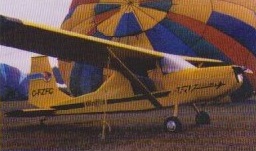
The prototype Cadi was designed by Jean Potbin of Lac St. Jean, Quebec, as a trainer and bushplane. It was intended to be powered by a Rotax 912 of 80 hp.
Potbin began selling kits in 1994 and delivered more than 50 before the program was taken over by Sean Gilmore. Gilmore had built a Cadi and had flown it for a year but was not satisfied with its construction and handling, so he tore it apart and started over. After the third version he turned to an engineer at Canadair to improve the design.
The Cadi was re-engineered to include a stiffened cabin and higher-stressed wings, as well as being convertible from wheels to floats or skies within 2 hours. The new design features a kickout windshield and was renamed BushCaddy.
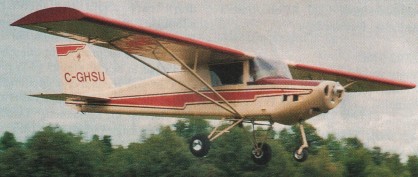
BushCaddy

The Bush Caddy was developed as a bush plane and performs equally well on wheels, skis or floats. The 44 to 47 inch cabin, doors that swing upwards under the wing and side by side deluxe adjustable seating afford even a 6 foot plus pilot easy access and a comfortable ride.
The full span windshield, door wide windows and low instrument panel provide excellent visibility. Pilot controlled heating and ventilation allow for all weather comfort anytime of year.
The Bush Caddy satisfies all the needs of the dedicated bush pilot. Low landing speeds combined with superior control and stability makes access to places that bush pilots dream of a reality. With more than a 4 hour fuel range the Bush Caddy is an excellent cross country aircraft. This is truly an aircraft capable of flying anywhere, anytime of year.
Flexibility is the principal characteristic of the versatile Bush Caddy kit. Models can be customized to suit all needs. The R80 ultra-light version can be entirely factory assembled, painted and custom equipped. The Voyageur model transforms from a taildragger to a trike in hours.
Designed as a rugged Canadian bush plane, the BUSH CADDY features:
Modern aerodynamics and superb engineering result in super STOL performance.
Solid rivet cabin construction pre-jigged and pre-punched.
All-metal airframe – easy to assemble, economical, tough and durable
Major components, pre-jigged and pre-drilled.
Wide comfortable cabin – from 44 “on the R-80 to 47” on the L-164
Many options to choose from – cargo doors, sky lights, interior finishes and more
Big payload – the BushCaddy will lift its own empty weight in payload
Wheels, skis and floats available
Engine options from 80 hp on the R-80 to 250 hp on the L-164
20 to 60 plus gallon fuel capacity
Super STOL performance – take off run as short as 75 feet.
Exceptional rate of climb to get you out of tight spots.
Customization for special needs available
Builder assistance available.

The wing is fitted with two spars, both with bent-up C sections made from 6061-T6 sheet aluminium. The forward spad is 5.9 inches high and located 5.5 inches aft of the leading edge; the rear spar is 37.5 inches farther aft, with a 4.7 inch height. Each wing half has 11 stamped 6061-T6 ribs. Ailerons each span 6 feet and have a 17 inch chord with a C-shape leading edge spar. They are aluminium skinned and are cable and pushrod activated.
Optional flaps are of similar construction. The wings are braced by 3 inch wide extruded aluminium struts. Twelve US gallon fuel tanks, with aluminium tops, are installed in each wing root.
The fuselage is made in three sections – nose, main, and tail – and is of box construction, with a four-corner, 4 inch radius structure. It has seven 0.016 gauge 6061-T6 stamped bulkheads with U-shape stringers on the sides, top and bottom. Two three-sided box frames, built of 0.050 gauge, 0.125 inch angles, are placed in the aft fuselage to support the tail. The cabin area employs a 6061-T6 L extrusion internal structure, with a 0.040 gauge belly pan and 0.032 gauge lower side skins.
Internal cabin width and height are both 44 inch. The side-by-side seats are adjustable and easily removed. Swing-up doors provide access to the cabin. The standard baggage area, aft of the seats, holds 15 cu.ft/75 lb.
Tailspan is 8 ft 7 in, and all surfaces contain tapered C-shape frames and ribs, also made from 6061 sheet metal. The stabiliser’s forward spar is positioned 7 inches aft of the leading edge. The rear spar is at the trailing edge. The rudder is 4 ft 2 in high, has a 15 in chord, and contains six ribs.
The rudder is controlled by cable and the elevator by pushrod. Skins are primarily 0.016 gauge. Solid rivets are used in the internal structure and to attach the skins in the cabin area, and Avex blind rivets are used elsewhere in the fuselage, the wings and the empennage. The main landing gear is a Cub type, with bungee-cord shocks. Cleveland wheels and brakes are fitted with Matco master cylinders. Tires are 6.00×6 McCreary.
The tailwheel is a castering/steerable design incorporating an O-ring sealed dust cap and a 4.5 in wheel. Maingear tread is 7 fee, and the wheelbase is 14 ft 7 in.

The R-80 model can be built as an experimental (amateur built) aircraft, or as a Canadian Advanced Ultralight Aeroplane, (AULA) built to the LAMAC Design Standards 10141. Powered by a Rotax or Jabiru engines, with a roomy cabin, CNC pre-jigged and constructed with aluminum angle and solid rivets. Side by side seating on fully adjustable removable seats are standard. A large baggage compartment, low stall speed and easy handling makes this model the perfect training aircraft.
The R-80 is either factory built (AULA Canada only) or in kit form. And to make it flexible, you can order the kit in sub-kits, starting with the fuselage first, then the cabin and lastly the wings.
The BushCaddy R80 kit has been evaluated and determined to meet the 51% rule.
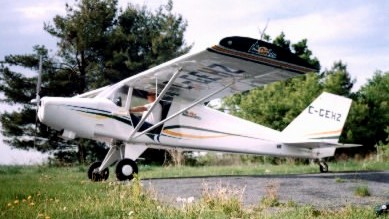
BushCaddy R80

The R-80 AULA Deluxe model taildragger with a Rotax engine sold for $89,500CAD in 2008.
The BushCaddy Sport AULA Taildragger/Trike convertible model with the Rotax 912S, 100 hp or Jabiru 3300, 120 hp sold for $92,900 CAD in 2008 completed. The R80 kit, less engine, engine mount, instruments, wheels, brake, and interior finish, but including cowling, fibreglass nose bowl and float mounts, sold for US$12,621 in 2001.
Rotax Model 100 hp or Jabiru 120 hp engine.

The L120 is the 1500 lbs. version of the R80, but beefed up to allow for a larger range of engine choices including the Continental 0-200 or Lycoming 0-235. It is a two place side by side with standard center stick. Available on wheels (trike or taildragger) skis and floats. It is shown here on Full Lotus 1650 floats, amphibious metal floats and wheels. The same rugged solid construction that is standard on all the BushCaddy models is designed into the R120. This is an excellent all-season, all-terrain hard working little bush plane. It side slips so well, and is off the ground in such a short distance that flaps are not necessary. They are however available as options if you wish them . NOTE: The R120 has now been approved by engineering for a gross weight of 1700 lbs.
The L120 choice of engines includes:
Rotax 912 – 912S – 914
Continental 65 – 85 – 90 – 100 hp
PZL Franklin 120 hp
Subaru conversion (weight max. 220 lb.)
Jabiru 120 hp
The L120 kit, less engine, engine mount, instruments, wheels, brake, and interior finish, but including cowling, fibreglass nose bowl and float mounts, sold for US$13,027 in 2001.
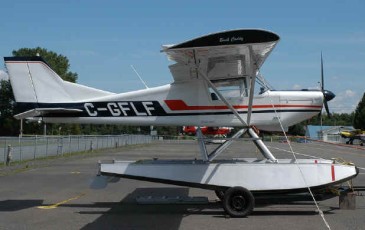
BushCaddy L120

The L160 is a two seater with room for a child’s seat in the back. This model evolved from the R120 and was designed for pilots requiring a float plane with optimum fuel economy and payload. At 2200 gross you have a generous 1100 lbs of payload. Center stick, great visibility and a large roomy cabin are additional features. The two front seats are adjustable and removable. This is the perfect mid-size bush plane for hunting and fishing trips.
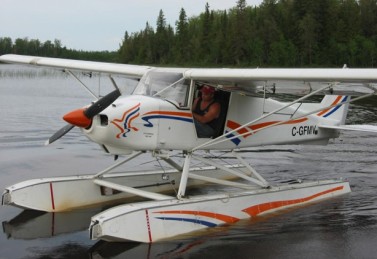
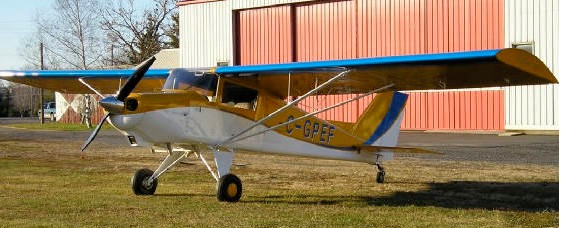
BushCaddy L160
BushCaddy L160

The L160 kit, less engine, engine mount, instruments, wheels, brake, and interior finish, but including cowling, fibreglass nose bowl and float mounts, sold for US$15,526 in 2001.

BushCaddy L164

The four place L164 is powered by a Lycoming IO-350 of 180 hp. All BushCaddy kits and components, including fuel tanks, are made of aircraft grade aluminium.
The BushCady L164 four seater, at 2500 gross, this model will accommodate 1200 lbs plus of payload. Featuring two large main doors with optional hinged windows, four fully adjustable and removable seats with hinged backs to allow for easy entry into the back, and featuring our unique “caddy storage” compartments under the cushions. A generous cabin and cargo bay with standard cargo door. Your kit comes complete with wheels, brakes, engine cowling, nose bowl – all you add is paint, engine and instruments. Flight testing the L164 has resulted in better than expected STOL and climb performance. A cargo version “C” model of this aircraft is also available for those who want a total utility aircraft.

The fast build kit includes Cabin, doors and seats pre-jigged, pre-drilled and pre- assembled; fuselage fully built and riveted closed; vertical, horizontal stabilizers, rudder and elevators all pre-built, skins pre-punched and ready to rivet; wings fully built, and jigged for washout, pre-punched with top of wing riveted closed, bottom of wings tacked riveted for inspection.
The convertible-gear Voyager, with its taildragger-to-trike option, was available in two models and allows owners to switch gear in a few hours. Float fittings are also included in the Voyager option.

Club Aeronautique Delisle Cadi
Engine: Rotax 912, 80 hp
Wing span: 9.75 m
Wing area: 16 sq.m
MAUW: 544 kg
Empty weight: 274 kg
Fuel capacity: 90 lt
Max speed: 160 kph
Cruise speed: 142 kph
Minimum speed: 50 kph
Climb rate: 4.5 m/s
Seats: 2
Fuel consumption: 12 lt/hr
Price (1998): Can$50,000
Kit price (1998): Can$15,000

R80
Engine: Rotax 912 – 80 h.p.
Undercarriage: wheels
Length: 22 ft. 1in.
Height: 6 ft
Wing span: 32 feet
Wing area: 168 sq. ft.
Ceiling: 10,000 ft.
Max weight: 1232 lbs
Empty weight: 680 lbs.
Useful load: 552 lbs.
Cruise 75%: 95 mph
Vne: 130 mph
Va: 68 mph
Stall power off: 32 mph
Take off: 266 ft. asphalt, 282 ft grass, 305 ft. softfield
Rate of climb: 850 f.p.m.

R80
Engine: Rotax 912 – 80 h.p.
Undercarriage: floats
Length: 22 ft. 1in.
Height: 6 ft 10 in
Wing span: 32 feet
Wing area: 168 sq. ft.
Ceiling: 10,000 ft.
Max weight: 1232 lbs
Empty weight: 835 lbs
Useful load: 397 lbs
Cruise 75%: 87 mph
Vne: 130 mph
Va: 76 mph
Stall power off: 38 mph
Take off: 15 secs
Rate of climb: 600 f.p.m.

R80
Engine: Rotax 912S 100 h.p.
Undercarriage: wheels
Length: 22 ft. 1in.
Height: 6 ft
Wing span: 32 feet
Wing area: 168 sq. ft.
Ceiling: 12,000 ft.
Max weight: 1232 lbs
Empty weight: 680 lbs
Useful load: 552 lbs
Cruise 75%: 100 mph
Vne: 130 mph
Va: 68 mph
Stall power off: 32 mph
Take off: 200 ft asph.
Rate of climb: 930 f.p.m

R80
Engine: Rotax 912S 100 h.p.
Undercarriage: floats
Length: 22 ft. 1in.
Height: 6 ft. 10 in
Wing span: 32 feet
Wing area: 168 sq. ft.
Ceiling: 12,000 ft.
Max weight: 1232 lbs
Empty weight: 835 lbs
Useful load: 397 lbs
Cruise 75%: 91 mph
Vne: 130 mph
Va: 76 mph
Stall power off: 38 mph
Take off: 15 secs
Rate of climb: 750 f.p.m.

R80
Engine: Rotax 914, 115 h.p.
Undercarriage: wheels
Length: 22ft.1in.
Height: 6 ft
Wing span: 32 feet
Wing area: 168. sq. ft
Ceiling: 12,000 ft.
Max weight: 1232 lbs`
Empty weight: 680 lbs.
Useful load: 552 lbs.
Cruise 75%: 105 mph
Vne: 130 mph
Va: 68 mph
Stall power off: 34 mph
Take off: 200 ft. asph.
Rate of climb: 1000 fpm

R80
Engine: Rotax 914, 115 h.p.
Undercarrige: floats
Length: 22ft.1in.
Height: 6 ft. 10 in.
Wing span: 32 feet
Wing area: 168. sq. ft
Ceiling: 12,000 ft.
Max weight: 1232 lbs`
Empty weight: 835 lbs
Useful load: 397 lbs
Cruise 75%: 100 mph
Vne: 130 mph
Va: 80 mph
Stall power off: 40 mph
Take off: 15 secs
Rate of climb: 800 f.p.m.

R80
Engine: Jabiru 3300
Undercarriage: wheels
Length: 22 ft. 1in.
Height: 6 ft
Wing span: 32 feet
Wing area: 168 sq. ft.
Ceiling: 10,000 ft.
Max weight: 1232 lbs
Empty weight: 694 lbs
Useful load: 538 lbs
Cruise 75%: 115 mph
Vne: 130 mph
Va: 68 mph
Stall power off: 34 mph
Take off: 200 ft asph.
Rate of climb: 1000 f.p.m.

R80
Engine: Jabiru 3300
Undercarriage: floats
Length: 22 ft. 1in.
Height: 6 ft 10 in.
Wing span: 32 feet
Wing area: 168 sq. ft.
Ceiling: 10,000 ft.
Max weight: 1232 lbs
Empty weight: 848 lbs
Useful load: 384 lbs
Cruise 75%: 100 mph
Vne: 130 mph
Va: 84 mph
Stall power off: 34 mph
Take off: 15 secs.
Rate of climb: 850 f.p.m.

L120
Engine: Rotax 912S, 100 hp
Hp range: 65-130
Wing span: 34 feet
Wing chord: 63 inches
Wing area: 168 sq. ft
Wing loading: 8.9 lb. per sq. ft
Length: 22 ft. 1 in.
Cabin width: 44 in.
Cabin height: 46 in.
Fuel capacity: 20 or 34 imp. gallons
Empty weight: 823 lb.
Maximum gross take off weight: 1500 lb. – (1700 lbs on approval from CLASS)
Useful load: 677 lb.
Fuel consumption: 4 imp. gal per hour
G loading: +5.7 / -3.8
Maximum speed (v.n.e.): 130 m.p.h.
Cruising speed at 75% power: 110 m.p.h.
Cruising speed 60% power: 90 m.p.h.
Power off stall: 34 m.p.h.
Flap extended stall speed: 32 m.p.h.
Rate of climb 1500 lbs: 800 f.p.m.
Service ceiling: 16,000 feet
Take off 1500 lbs: 200 feet
Take off (floats): 15 to 30 sec. (1500 lb.)

L160
Engine: Lycoming 0-320, 160 hp
Wing span: 36 feet
Wing chord: 63 inches
Wing loading: 11.6 lb. per sq. ft
Length: 23 ft. 10 in.
Cabin width: 44 in.
Cabin height: 46 in.
Fuel capacity: 38 imp. Gallons
Empty weight: 1098 lb.
Maximum gross take off weight: 2200 lb.
Useful load: 1102 lb.
Fuel consumption: 7 imp. gal per hour
‘G’ loading: +5.3 / -3.2
Maximum speed (vne): 150 m.p.h.
Cruising speed at 75% power: 115 m.p.h.
Cruising speed 60% power: 105 m.p.h.
Power off stall: 42 m.p.h.
Flap extended stall speed: 37 m.p.h.
Rate of climb (full load): 850 f.p.m.
Rate of climb (1200lb): 1300 f.p.m.
Service ceiling: 13,000 feet
Take off (2200 lb): 360 feet
Take off (1600 lb): 250 feet
Take off (floats): 15 to 30 sec. (1500 lb)

L164
Engine: Lycoming I0-360 L2A, 180 hp
Propeller: Sensenich 76EM8
Hp range: 160 to 250
Length: 25.5 feet
Wing Span: 36 feet
Cabin Width: 47 inches
Cabin Height: 52.5 inches
Wing Chord: 63 inch
Gross weight: 2500 lbs.
Empty weight: 1350 to 1450 lbs
Useful load: 1050 to 1150 lbs
Fuel Capacity: 60 US gallons
Rate of climb: 1200 fpm
Take off run: 200 ft. at gross
Stall: 38 mph
Max.Cont Airspeed Vh: 135 mph IAS/128.5 mph CAS
Cruise Speed: 115 mph IAS
G Loading: +5.3 / -3.2 limit, +3.8 / -1.9 normal category
Seats: 4

L164
Engine: Franklin 220 hp
Undercarriage: floats
Propeller: Constant speed
Average Take off run: 15 to 20 seconds

Voyager
Canadian Light Aircraft Sales & Services Inc / CLASS / Club Aeronautique Delisle Incorporated / CADI / Bushcaddy International Inc

The company started as a flight training operation called Club Aeronautique Delisle Incorporated (CADI), based in Lac Saint-Jean, Quebec. It was founded by Jean Eude Potvin who designed the CADI R-80 and put it into production as a kit aircraft in 1994. He went on to design and build the R-120 and L-160.

Club Aeronautique Delisle Incorporated / CADI
1998:
3690, avenue Grande-Decharge
G0W 1LO Delisle
Qebec
Canada

Sean Gilmore and Marlene Gill started a flight training venture at Montréal/Saint-Lazare Aerodrome, operating a CADI R-80 aircraft. Impressed with the design they became distributors for Potvin, handling marketing outside of Quebec. In 1998 Potvin expressed a desire to retire and Gilmour and Gill bought CADI, including the rights to the R-80, R-120 and L-160 aircraft designs. They renamed the company Canadian Light Aircraft Sales and Service, commonly called CLASS. Between 1998 and 2001 Potvin still produced parts, as CLASS assumed production. Potvin retired in 2001.

To preserve the CADI name the aircraft line was called BushCaddy, a play on the abbreviation and the meaning of one who carries. To expand production the company moved to larger accommodation at nearby Les Cedres, Quebec. By 2005 they had five employees with Gilmore doing the design and engineering work and Gill handling the marketing and financial aspects. Gilmore designed the Bushcaddy L-162 Max and L-164.

2009 Company owners Sean Gilmore and Marlene Gill

2009: 177-179 Joseph Carrier, Vaudreuil-Dorion, Qc., J7V 5V5, Canada

In about 2010 Gilmore and Gill retired and sold the company to Tony Watkin, an Australian who relocated it to Lachute, Quebec and renamed it after the aircraft line itself, Bushcaddy International Inc.

In November 2012 the company moved production to the Cornwall Regional Airport at Summerstown, Ontario and also accepted a contract with the airport to operate the UNICOM radio service.

Canadian Home Rotors Baby Belle Safari    

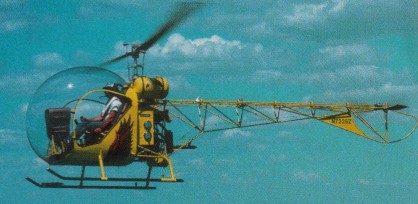
Canadian Home Rotors Inc. (CHR) are the manufacturers of the Safari helicopter. A scaled Bell 47G look alike, that has consist¬ently placed at the top of the custom built helicopter pile. Originally called the Baby Belle, but after objection from Bell Helicopters the name was changed to Safari.
A two seat side by side enclosed helicopter, the 4130 steel tube frame cabin monocoque and boom can be made up in the home workshop while awaiting delivery of the factory built main rotor and tail rotor gearboxes along with the main rotor head and blades. Main rotor is gear driven, tail rotor is shaft driven. Tail boom is steel tube. The main rotor blades are skinned all-aluminium with extruded aluminium leading and trailing edges. Blades are shaped by one solid rib each 6 inches from the root to three feet outboard, then one rib per 12 inches to the tip. Each blade contains 16 ribs. The main rotor flies at 500 rpm, and tail-rotor at a 5.4:1 rpm ratio.
The four foot diameter, 4 inch chord tail rotor blades are stainless steel, with a solid steed spar running out 6 inches from each blade root and wrapped with stainless sheeting to form the airfoil.
The main rotor gearbox includes clutches and engine fan. The cabin bubble is sourced from Nordam Plastics, manufacturers of the original Bell 47 item. The bubble is an actual Bell 47 series enclosure.
A Delta teetering system provides the control. Aluminium castings are used in the swashplate-controlled main rotor system.
The instrument panel carries operational instruments and a main transmission temp indicator and chip detectors for the main and tail rotor gearboxes. Engine, seats and cockpit fittings were generally the items sourced from written off Robinson R22.
Fuel capacity of 28 US gallons is carried in two 14 USG aluminium tanks aft of the cabin.
Skid landing gear is built with 2 inch diameter tubing, the bottom horizontals black anodised.
In 1996 the kit price was US$38,000.

CHR are constantly improving the Safari with experience, including increased service intervals on the main rotor gearbox. Build weight is always slightly different between machines but generally just under 1,000 lbs., which allows a useful load of better than 500 lb. The 12 foot span blades feature an eight inch chord and weigh 40 lb. each.
The Safari is powered by a Lycoming 160 hp aircraft engine, maintaining the highly trustworthy flying abilities of this classic design. Cruising speed is 80 mph with climb rate of 1,000 fpm & an operating ceiling of 10,000ft. Max. speed is 100mph.
A US corporation, CHR International Inc acquired Safari Helicopter. The owners of CHR International Inc., Bobby and Delane Baker, have been involved with Safari for several years. Murray Sweet, one of the original developers of the Safari, was to remain involved with the new company as a technical consultant, as will other long time members of the Safari team.
Much of the production was to remain in Canada, with assembly and flight training continuing in Marianna, Florida. They reduced the dealership requirements in most parts of the world, with positive results.

Gallery

Engine: Lycoming O-320, 150 hp.
HP range: 150-180.
Disk span: 25 ft 11 in
Rotor Blades chord: 8 in
Disk area: 490.6 sq.ft.
Width 6 ft
Height 8 ft
Length 29 ft 8 in
Weight empty: 920-945 lbs.
Gross: 1450 lbs.
Speed max: 100 mph.
Cruise: 80 mph.
Range: 200 sm.
ROC: 1000 fpm at 45 mph.
Service ceiling: 10,000 ft.
HIGE: 7000 ft
HOGE: 2000 ft
Fuel cap: 28 USG.
Seats: 2.
Landing gear: skids.

Engine: Lycoming O-320, 150 hp
Rotor span: 7.30 m
MAUW: 750 kg
Empty weight: 372 kg
Fuel capacity: 108 lt
Max speed: 160 kph
Cruise speed: 145 kph
Minimum speed: 0 kph
Climb rate: 5 m/s
Seats: 2
Price (1998): $88,500
Plan price (1998): $150
Kit price (1998): $38,430

Canadian Airmotive CAM 100 / Firewall Forward CAM 100

The Firewall Forward CAM 100 is a 100 hp (75 kW) four-cylinder, four-stroke liquid-cooled piston aircraft engine built by Firewall Forward Aero Engines. Originally designed and built by Canadian Airmotive as the CAM 100 and later marketed by The Cam-Fire Engine Group, it is based on a Honda Civic automotive piston engine. Unit cost was US$8,450 in 2005.

Applications:
Blue Yonder Merlin
Denney Kitfox V
Murphy Rebel
Zenith Zodiac CH 601

CAM 100
Type: Four-cylinder, four-stroke piston engine
Bore: 74 mm (3.07 in)
Stroke: 86.5 mm (3.41 in)
Displacement: 1488 cm3 (90.7 cu in)
Length: 32 inches (810 mm)
Width: 19.5 inches (500 mm)
Height: 25 inches (640 mm)
Dry weight: 226.2 pounds (102.6 kg)
Valvetrain: overhead camshaft
Fuel type: 90 Octane petrol or 100LL aviation petrol
Cooling system: Uses a water-glycol mixture with a camshaft belt driven water pump.
Reduction gear: 2.4:1 reduction ratio (6,000 rpm engine, 2,500 rpm propeller).
Starting system Electric gear reduction starter.
Power output: 100hp (74.6 kW) at propeller flange.
Specific power: 130 kW/L (1.10 hp/cu in)
Compression ratio: 9.6:1
Specific fuel consumption: 0.43 lb/bhp/hr at 80% power

Firewall Forward CAM 100
Cycle: 4 stroke
No cylinders: 4 inline
Bore: 74 mm
Stroke: 86.5 mm
Compression: 9.6
Displacement: 1488 cc
Cooling: liquid
Ignition: Electronic
Reduction: Crantee Belt 2.4/1
Dimension: 570 x 641 x 813 mm
Weight: 101.9 kg
Max pwr: 105 hp
Price 1998: $7950

Canada Air RV ARV Griffin          

Engine mounts were available for Subaru, Continental, and CAM-100.

By 1998 twenty kits had been delivered.

Engine: Divers
Wing span: 10.8 m
Wing area: 10.7 sq.m
MAUW: 681 kg
Empty weight: 340 kg
Fuel capacity: 140 lt
Max speed: 238 kph
Cruise speed: 215 kph
Minimum speed: 73 kph
Climb rate: 8.5 m/s
Seats: 2
Fuel consumption: 25 lt/hr
Kit price (1998): $21,450

Engine: Continental O-200, 100 hp.
HP range: 65-100.
Speed max: 135 mph.
Cruise: 121 mph.
Stall: 45 mph.
Range: 828sm.
ROC: 850 fpm.
Take-off dist: 250 ft.
Landing dist: 450 ft.
Service ceiling: 18,000 ft.
Fuel cap: 37 USG.
Weight empty: 640 lbs.
Gross: 1500 lbs.
Height: 8 ft.
Length: 21 ft.
Wing span: 35.5 ft.
Wing area: 115 sq.ft.
Seats: 2.
Landing gear: nose or tail wheel.

Canadair CRJ 700 / CRJ 900

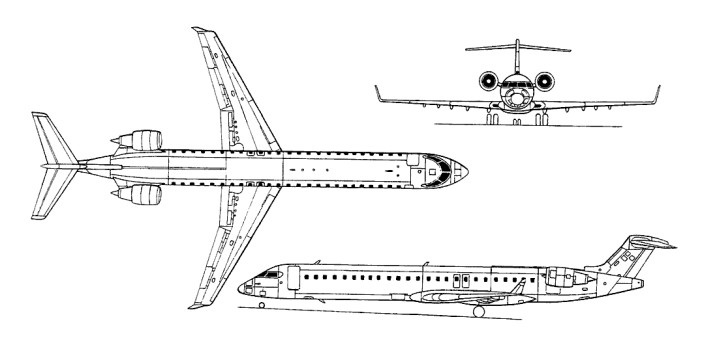
The CRJ 700 (originally known as the CRJ X) was a stretched 70 ¬seater, launched with a firm order for four aircraft from the French company Brit Air.
Compared to the CRJ100/200 re¬gional jets from which it’s descended and with which it shares Collins ProLine 4 avionics, the CRJ700 features a fuselage stretch of 186 inches, new General Electric CF34 8C1 engines, a larger horizontal tail, leading edge slats and an APU in the tail cone instead of the equipment bay. Other changes in¬clude raising the passenger windows by 4.5 inches, lowering the floor an inch, and expanding the interior cabin by an inch to a total width of eight feet, five inches. The airplane’s commonality with the CRJ100s and 200s allow operators with both types an advantage in spares as well as pilot training. The GE engines are capable of 13,790 pounds of thrust with Automatic Power Reserve
On May 27, 1999, the evening before its official rollout, Bombardier’s CRJ700, new 70 passenger Canadair Regional Jet airliner, made its first flight. The CRJ700 took off from Montreal, Canada’s Dorval Airport at 6:18 in the evening with test pilots, Craig Tylski and Chuck Ellis, on a test flight that lasted two hours and eight minutes.
The public debut was at Farnborough International Air Show on 23 July 2000, and Transport Canada certification achieved 22 December 2000.
The first customer delivery, to Brit Air of France, was in February 2001, followed by deliveries to Horizon Air and Lufthansa CityLine in May 2001.

The CRJ900 was originally CRJ700 Msn 10001, and the airframe was converted with two plugs of 90in (2.28m) and 62in (1.57m).
The prototype retained the CRJ-700 wings, landing gear and engines, and was first flown on 21 February 2001, from Montreal-Mirabel, piloted by Chuck Ellis, Craig Tylski and Jeff Hyde.
The public debut was at the Paris Air Show on 14 June 2001, and first production aircraft first flown on 20 October 2001. Transport Canada certification was achieved on 9 September 2002, followed by FAA approval 25 October 2002 and JAA certification 23 December 2002.
The first customer delivery, to Mesa Air, was on 3 February 2003.

CRJ900

VERSIONS

CRJ-700
68-seat version in standard and extended range (ER) weight options.
Engine: 2 x General Electric CF 34 8C1, 61313 N
Length: 106.66 ft / 32.51 m
Height: 24.836 ft / 7.57 m
Wingspan: 76.247 ft / 23.24 m
Wing area: 738.733 sq.ft. / 68.63 sq.m
Max take off weight: 51255.2 lb / 23245.0 kg
Weight empty: 30109.3 lb / 13655.0 kg
Max. speed: 464 kt / 860 km/h
Cruising speed: 442 kt / 818 km/h
Service ceiling: 41011 ft / 12500 m
Wing load: 69.5 lb/sq.ft / 339.0 kg/sq.m
Range: 1701 nm / 3150 km
Crew: 2
Payload: max. 8527kg

CRJ-701
70-seat version in standard and extended range (ER) weight options.

CRJ-900
Standard version.
Length : 106.60 ft / 32.51 m
Height: 24.836 ft / 7.57 m
Wingspan: 76.247 ft / 23.24 m
Wing area: 738.733 sq.ft. / 68.63 sq.m
Max take off weight: 51255.2 lb / 23245.0 kg
Weight empty: 30109.3 lb / 13655.0 kg
Max. speed: 464 kt / 860 km/h
Cruising speed: 442 kt / 818 km/h
Service ceiling: 41011 ft / 12500 m
Wing load: 69.5 lb/sq.ft / 339.0 kg/sq.m
Range: 1701 nm / 3150 km
Engines: 2 x General Electric CF 34 8C1, 61313 N
Crew: 2
Payload: 70 pax (max. 8527kg)

900ER
Extended-range version.

900ER European
As 900ER but with maximum T-O weight limited to 36,995kg to minimise weight-related charges when operating in European airspace.

900LR
Long-range version.

900LR European
As 900LR hut with maximum T-O weight limited to 37,995kg.

Bombardier CRJ-700
Bombardier CRJ-900

Canadair CRJ / RJ 100 / RJ 200

The CRJ concept evolved from a stretched design of the Challenger business jet. Stretched versions of this aircraft go back to 1981 with the 24-seat CL-600. Bombardier then looked at a stretch of the CL-601 Challenger in 1987, which lead to the formation of the Regional Jet programme on 31 March 1989; the world’s first 50-seat jet airliner.

Canadair CRJ / RJ 100 / RJ 200 Article

The fuselage cross-section of the Challenger formed the basis and advanced design commenced in November 1987, the basic configuration frozen in June 1988, and the RJ (Regional Jet) Programme launched in March 1989.
The new airliner is based on the CL-601 3A version of the Challenger (first introduced in September 1986). The wing has been re configured to reduce drag at the Mach 0.8 max cruising speed, increased by span by 1.8 metres, but retains the CL601 winglets. The fuselage is stretched 6.1 metres by plugs both forward and aft of the wing, and additional emergency exits have been introduced. The 50 seat layout features 4 abreast seating, two each side of the aisle. The cockpit wind¬screen area is strengthened and the baggage compartment door enlarged. The undercarriage is beefed up and larger tyres are fitted. Simplified avionics and navigation systems have been introduced, reflecting the lesser requirements of short haul service. Power plants remain the same two General Electric CF34 3A turbo fans delivering 9220 lb thrust, although thrust reversers have been fitted to reduce stopping distance. While the original idea was to have maximum commonality with the Challenger, this has not quite worked out in practice. Because of the tougher environment the RJ will have to work in, most items in the structure have strengthened. Assembly takes place in Montreal alongside the Challenger.
An extended-range CRJ100ER announced September 1990. Three development CRJ Series 100 aircraft were built, plus a static test airframe and forward fuselage test article. The first aircraft rolled out on 6 May 1991 and first flew on 10 May 1991.
Transport Canada type approval (CRJ100 and CRJ100ER) was granted on 31 July 1992, and the Japanese Civil Aviation Bureau certification on 23 May 2000.
As at February 1993, the company had firm orders for 36 aircraft, condi¬tional orders for another two, and 34 options. In addition, Memorandums of Understanding for a further 74 aircraft were held. Production rate was two per month, and deliveries had been made of six aircraft (five to launch customer Lufthansa City Line and one to Xerox as a corporate shuttle). The first delivery aircraft flew on 4 July 1992, and was delivered to Lufthansa Cityline of Germany on 29 October 1992. Lufthansa operations commenced in November 1992.
European JAA and US FAA certification were received on 14 and 21 January 1993 respectively, with the long-range CRJ100LR certified on 29 April 1994.
The CRJ200 with CF34-TB1 engines was announced in 1995, replacing the CRJ 100 in production after 226 CRJ100had been delivered. The CRJ’s wing is an advanced airfoil that is manufactured as a single unit. Each wing has one fuel tank and, together with the centre tank, hold a total of 8230 lt. Atlantic Southeast Airlines ordered 30 in April 1997 (with options for 60 more), joining other Delta Connection operators Comair, SkyWest and Mesa.
The CRJ 200ER is an extended range derivative, customers for which include Atlantic Coast Airlines, which has ordered 12 aircraft and held options on 36 more.

Up to May 1999, Bombardier had delivered 306 of the 50-passenger CRJ-200 jets, having received 549 firm orders, as well as options for 254 of the aircraft.

CRJ-200ER

200th aircraft delivered (to Lufthansa) 24 October 1997; 300th to Atlantic Coast Airlines in April 1999. 400th to Delta Connection/Sky West in July 2000. 500th to Atlantic Coast Airliners 26 April 2001, and 600th to Atlantic Southeast Airlines 29 January 2002, and 700th to Air Nostrum 30 October 2002. Production of CRJ200 running at 9.5 per month in 2000, rising to 12.5 per month by late 2001, and 14.5 per month by 2003.

Bombardier sought to sell the CRJ program to further reduce their debts and focus on their profitable side of aviation business – Business aircraft. In 2019 Mitsubishi Heavy Industries purchased Bombardier’s CRJ program for $550 million and was liable to pay Bombardier’s CRJ program debts, which stood at an approximate amount of $200 million. At the same time, Bombardier’s Learjet, Challenger and Global brands will be united under Bombardier Aviation.

VERSIONS

CRJ –100
Original standard aircraft.
Engineering designation CL-600-2B19.
Engines: 2 x General Electric CF34-3A1.
Seats: 50.
Cruising speed 424kts (786km/h).
Range with 50 passengers 1,815km (980nm).
Weight empty 13,236kg (29,180 lb).
Maximum take off weight 21,523kg (47,450 lb).
Span 21.21m (69ft 7in).
Length 26.77m (87ft 10in).
Wing area 54.0 sq.m (581.1 sq.ft).

CRJ-100ER
Replaced by CRJ200ER.

CRJ-100LR
Announced March 1994
Launch customer, Lauda Air of Austria
Replaced by CRJ200LR.

CRJ-200
Standard aircraft; designed to carry 50 passengers over 1,824km range; CF34-3B1 engines with 2.8 per cent lower specific fuel consumption than CF34-3A1 of CRJ100, increasing initial cruise altitude by 213m, cruising speed by 4.5km/h, and range typically by 1.5 per cent; Class C baggage compartment as standard.
First delivery to Tyrolean Airways, 15 January 1996.

CRJ-200B
With optional hot-and-high CF34-3B1 engines.

CRJ-200ER
Extended-range capability with optional increase in maximum TO weight to 23,133kg and optional additional fuel capacity, for range of 3,046km.
Engines: 2 x General Electric CF34-3B1 Turbofans, 9220 lb thrust.
Seats: 50.
Max cruise: 0.81M.
Range: 1645nm @ 0.74M.
Ceiling: 41,000 ft.
Length: 26.77m.
Height: 5.84m.
Width: 21.24m.
Max ramp wt: 23.24 tonne.
MTOW: 23.13 tonne.

CRJ-200B ER
With optional hot-and-high CF34-3B1 engines.

CRJ-200LR
Longer-range version of CRJ200ER (more than 3,713km; maximum T-O weght increased by 907kg to 24,040kg.
Engines: 2 x General Electric CF34-3A1.
Seats: 50.

CRJ-200B LR
With optional hot-and-high CF34-3B1 engines.

CRJ-440
Engineering designation CL-600-2B19.
Version seating 44 passengers in standard configuration.
Launch customer Northwest Airlines has ordered 75.

CRJ-700

Corporate Jetliner
Company shuttle version with more spacious cabin accommodation for 18 to 30 passengers. One delivered June 1993 to Xerox Corporation. Five ordered by the People’s Republic of China in January 1997. Supplanted from September 2002 by corporate version of Challenger 800.

Challenger 800
Corporate version developed in consultation with launch customer TAG Aeronautics Ltd to meet requirement for non-stop flights, London to Jeddah or equivalent, with three crew and five passengers; or between Middle East city pairs with 15 passengers.
First flown 26 May 1995 and formally announced at Paris Air Show in the following month; initially designated Canadair Special Edition; first delivery to TAG during Dubai International Aerospace Show in November 1995.
Accommodation for up to 19 passengers in customised cabin; additional 1,814kg of fuel carried in two auxiliary tanks behind main cabin, extending range to more than 5,556km and maximum T-O weight 24,040kg
First aircraft powered by standard CF34-3A1 turbofans, but subsequent examples are equipped with CF34-3B1s increasing range to 5,778km. Manufactured to special order only. Customers include Poly Technologies lnc, which ordered two on 16 August 2001 for operation by China Ocean Aviation Group.