The TRX was originally designed by Michael Blanc of Flying Planet. Paraglider circa 1998.
TRX 29 Wing area: 29 sq.m Certification: Afnor Pilot weight: 75-95 kg No. of cells: 41 Wing span: 11.4 m Aspect ratio: 4.5 Min sink: 1.1 m/s Max speed: 45 kph Price (1998) 17,500 Fr
TRX 31 Wing area: 31 sq.m Certification: Afnor Pilot weight: 85-105 kg No. of cells: 41 Wing span: 11.9 m Aspect ratio: 4.5 Min sink: 1.1 m/s Max speed: 45 kph Price (1998) 17,500 Fr
TRX 33 Wing area: 33 sq.m Certification: Afnor Pilot weight: 95-135 kg Wing span: 12.2 m Aspect ratio: 4.5 Price (1998) 17,500 Fr
GRX 29 Wing area: 29 sq.m Certification: Afnor Pilot weight: 65-85 kg No. of cells: 39 Wing span: 10.6 m Aspect ratio: 3.9 Min sink: 1.2 m/s Max speed: 40 kph Price (1998) 15,500 Fr
GRX 31 Wing area: 31 sq.m Certification: Afnor Pilot weight: 80-100 kg No. of cells: 41 Wing span: 11.2 m Aspect ratio: 4 Min sink: 1.2 m/s Max speed: 40 kph Price (1998) 15,500 Fr
GRX 33 Wing area: 33 sq.m Certification: Afnor Pilot weight: 90-110 kg Wing span: 11.87 m Aspect ratio: 4.2 Price (1998) 15,500 Fr
GRX Bi Wing area: 39 sq.m Certification: Afnor Pilot weight: 120-200 kg Wing span: 13.2 m Aspect ratio: 4.6 Min sink: 1.2 m/s Max speed: 45 kph Price (1998) 18,500 Fr
Paraglider circa 1998. The CRX and SRX were revised under Trekking’s ownership.
CRX 24 Wing area: 24 sq.m Certification: Afnor Pilot weight: 55-75 kg No. of cells: 23 Wing span: 9.5 m Aspect ratio: 3.9 Min sink: 1.2 m/s Max speed: 43 kph Price (1998) 13,500 Fr
CRX 27 Wing area: 27 sq.m Certification: Afnor Pilot weight: 70-90 kg No. of cells: 25 Wing span: 10.3 m Aspect ratio: 4.2 Min sink: 1.2 m/s Max speed: 43 kph Price (1998) 13,500 Fr
CRX 30 Wing area: 30 sq.m Certification: Afnor Pilot weight: 80-100 kg No. of cells: 27 Wing span: 11.2 m Aspect ratio: 4.3 Min sink: 1.2 m/s Max speed: 43 kph Price (1998) 13,500 Fr
Custom Sail was bought out by Trekking in 1996, though Trekking has a policy of reviving old names to retain the loyalty of its clients. 1998: Multivol Ch des Iles, F-05300 Laragne, France
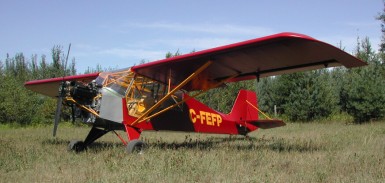
The LSA LITE STAR is the essentials and returns to the simplicity of stick and rudder. Low & slow in a gentle, agile airplane, makes flying fun again. This engine burns 5 USGPH and maintenance can be a DIY bonus. Parts & service on the engine & propeller are reasonable and inspections are minimal. A professionally welded, 4130 fuselage, and wings built with proven, extruded aluminum “I beam” spars, from a shop with 27 years experience building high performance aircraft. Gas tanks are in the wings, not the fuselage, for added safety. A high wing, tail dragger, side by side seating, fabric covered 4130 welded tube fuselage, fabric covered aluminum structure wings. Wheels, skis, or floats.
Gross weight: 1235-1350 Lbs. Empty weight: 650 Lbs. With Corvair or Continental O-200 HP rating: 80-100 HP (can also use Rotax, or Continental O200) Propeller: ground adjustable fixed pitch Gear: Tail wheel configuration / shock cord suspension
Cruise Speed: 100 MPH Stall speed: 35 MPH Rate of Climb: 600-700 Ft/min. Fuel capacity: up to 2×10 US gal. Endurance: 4 hrs 2009 PRICE LIST; 1) $22,000 US for Airframe kit, all structural components welded and painted. Includes, fuselage, tail, landing gear legs, control sticks, rudder pedals, engine mount, fire wall, doors, windshield & windows, wing kit with gas tanks. 2) $60,000 US for complete LITE STAR aircraft ready to fly. Basic instrument package includes air speed, altimeter, compass and slip ball , 12-volt system with master solenoid & battery. Basic engine instruments include RPM, CHT, oil temperature, oil pressure light. Any additional instruments or radio equipment is at extra charge.
Cruise: 100 mph Stall: 45 mph Range: 400 sm Rate of climb: 1000 fpm Takeoff dist: 200 ft Landing dist: 200 ft Engine: Corvair , 110 hp HP range: 65-110 hp Fuel capacity: 20 USG Empty weight: 650 lb Gross weight: 1320 lb Length: 21 ft Wing span: 30.5 ft Wing area: 160 sq.ft Seats: 2 Cockpit width: 39.75 in Landing gear: tailwheel
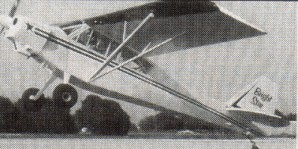
Designed by Morgan Williams Jr. Custom Flight Ltd., of Midland Ontario, has introduced a new kit aircraft called the Bright Star. In response to requests for a lower priced version of the North Star, the Bright Star was developed. It retains the high quality standards and size of the North Star, but with some of the “extras” left off. The Bright Star has a single, larger door, no flaps, spring steel gear, a square tail, and smaller gas tanks. The gross weight is 1800 pounds and it can use aircraft or auto engines from 100 to 180 hp. It will be licensed in the experimental/amateur built category. As of June, 2000, the prototype Bright Star has not flown yet. The North Star fuselage strength was retained in the Bright Star to allow use of a great range of engines, from 100 hp to 180 hp. Many of the wing reinforcements in the North Star were to accommodate the very powerful flaps. By eliminating the flaps from the Bright Star we were able to lighten the wing structure, lower the price, and produce a wing with the same strength as the Super Cub wing and the improved lift of the North Star. The North Star wing can be put on the Bright Star Fuselage for a little more money, this however defeats the concept of keeping the cost as low as possible. The larger North Star gas tanks can be used in the Bright Star wings. The Bright Star has a squared off tail, and a trim tab instead of the jack screw, the same as Champs and Citabrias. This tail works fine and is more economical to produce. There is only one door on the Bright Star and it is not split like the Cub door. It is one piece and similar in size to the Champ door making cockpit access easier. The door is hinged on the top so that it opens up against the wing and provides unobstructed access from in front of or aft of the wing struts. A leaf spring landing gear similar to that used on the Citabrias and Cessnas is substituted for the more complicated Cub style gear. Another way we reduced the purchase price was by eliminating the “bird cage” framework on top of the fuselage, and the belly framework under the fuselage. Instead tabs were welded on to allow the attachment of simple wood or aluminum framework made by the builder. Inexpensive wood stringers can also be supplied by the builder to keep the cost down or aluminum stringers can be purchased from CF Ltd.
Construction details WINGS: -Compression struts in line with aileron hinges, forces travel in a straight line instead of zig-zaging through the spars. -raked wing tip gives long trailing edge, maximizing aspect ratio and increasing effective wing span, does not block visibility.
leading edge metal (.020-2024 T3) extends about 4″ aft of front spar on top, giving a truer airfoil shape. -aileron moved outboard, requires less deflection for same response, less chance of inducing a stall at low speeds, much lighter stick forces, I would estimate double the roll response of a Citabria. -stainless steel drag wires included. -stainless steel drag wires extend through spars and use simple nut and block attachment system. -same airfoil as a Cub. -aluminum, preformed and drilled ribs. -predrilled, extruded aluminum spars. -hinges are prefabricated, ready to bolt in position. -leading and trailing edge aluminum is preformed. -stainless steel gas tank support straps. -wing mount hardware ready to bolt on. -more room between root and fuselage to work in. -gas tanks in wings TIG welded .040-5052 aluminum and hold a total of 23 U.S. gal/20 Imp. est. -gas tank shape is accurate and forms the airfoil shape in that area, plumbing installation and routing ensures good fuel flow in steep climbs and dives without needing header tanks. -aileron pulleys and cable concealed in wing. -cable does not come through top of wing.
FUSELAGE: -2 1/2″ wider in cockpit area. -one larger door, 35″ tall x 46″ wide hinges up to bottom of wing. -door handles on outside and inside of door. -baggage floor lowered to bottom longerons. -high ceiling in baggage area. -90 lb. baggage capacity. -deep “V” belly provides good drainage away from longerons and room to route cables under floor. -belly opening at tail end, can put a garden hose in the front and flush dust and dirt out of the aft end, tail post left exposed so will not trap corrosion causing dirt and moisture. -flat back on fuselage follows wing contour, creating lift. -toe brakes, with parking brakes. -instrument panel easily hinges down for access to instrument backs, is shock mounted, top edge is padded and dash edge fits under top panel flange so it cannot cut pilot in a crash. -boot cowl (around pilot’s feet) easily removable for access by removing 2 piano hinge pins. -dynafocal or straight engine mount. -no sheet metal screws – nut plates welded and riveted in mean no screws to come loose or holes in tubing to introduce moisture. -fuselage sandblasted with extremely fine sand, epoxy primed. -tail wheel spring front bolt in a welded bushing to keep water out. -all control stops adjustable, tail stops mate with discs not bellhorn edges to reduce wear. -fin offset for trim. -stainless steel tail brace wires. -extra cable fairleads so cables cannot chip paint on tubes. -one large handle on the right side of rear of fuselage. -strength increased in high load areas, closer trusswork in aft fuselage. -leaf spring landing gear is taller for long prop clearance, also gives increased angle of attack, producing lower takeoff and landing speeds, has wider wheel base, so greater stability. -steps on landing gear give access to top of wing and easier entry to cockpit. -front and rear seats fixed in place. -dual controls.
Bright Star Engine: Lycoming O-360, 180 hp Hp range: 100 to 180 hp. Fuel capacity: 23 U.S. gal./ 20 Imp. gal. Wing span: 36 ft 4 in Wing area: 190 sq. ft. Length: 23.5 ft Height: 7.5 ft Gross weight; 1800 lb Empty weight/: 1000 lb ROC: 1000 fpm Top speed; 140 mph Cruise; 100 mph Stall; 35 mph Take off distance; 225 ft Landing distance: 275 ft Seats: 2
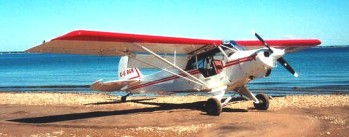
Designer Morgan Williams Jr. started with a Super Cub design to build a better aircraft. The design of the North Star had four parameters. It had to be stronger, more durable, fly better, and be easier to work on. There were weak spots in the Cub that were known but really show up when raising the gross weight. The SC is a J3 with a higher gross and a bigger engine. With an added extra set of diagonals to the fuselage, shortening the spans in a structurally sound way. The wings are similarly strengthened with the spar reinforcements copied and improved from the Pawnee crop duster. Many more durability and other enhancements are listed in the construction specs. The landing gear legs are 3″ taller to give higher angle of attack for better takeoff. The sheet metal on the top of the leading edge is extended to about 4″ aft of the front spar. This gives a truer airfoil shape without the concave fabric between ribs in this critical section of the wing. The back of the fuselage is not the typical “peaked roof” as seen on most Cubs. Piper flattened the back on the agricultural models to facilitate a hopper door. By chance, since the back more closely followed the wing shape, they found the “A” models had a slightly lower stall speed. The trailing edge of the wing is extended. This wing has 3 feet more effective span on each side. The longer trailing edge also puts the aileron outboard 2 feet. The aileron, like the flaps, also has greater cord and better airflow through the slot. All the North Stars are rigged flat, no washout. The flaps are larger, 2′ longer and 4″ wider cord than cub flaps. The superior hinge geometry, and the redesigned radiuses on the aft bottom portion of the wing ribs of the North Star, produce the improved, energised, air flow through the large slot that adheres to the top surface of the flap, making the slow speed performance exceptional. With no flaps the North Star lifts off at 35 mph. With 20 degrees of flap it jumps into the air on takeoff at 25 mph, and climbs! This low speed means less ground wasted accelerating. Full flaps, no power on approach gives 800 FPM descent. Just touch the throttle to 1200 RPM and the path flattens out giving excellent descent control. Sideslips also work and when performed with full flaps can give 1,000-1,500 FPM rate of descent. After you become familiar with the airplane a normal approach will be full flap, 40mph, no power, over the trees, sideslip, straighten, flair, flaps off, brakes on. The shocks are a hydraulic shock/coil spring combination. The long stroke and hydraulic shock damping give much superior protection from those extra rough landings. Along with the kit, supplied is instructions on videotape, and a dozen 24″ x 36″ blue prints with full size details of the wing are included. For the fuselage: full size patterns for the floor boards and interior panels are supplied with a video to show how to make and install the interior. A binder is provided with 2 separate parts lists: hardware order lists with recommended suppliers and hardware location lists that tell where each bolt, pulley, etc. goes in the airplane. The binder also contains CAD detail drawings, indexed for the various areas and systems of the plane. It is set up so that new drawings can be added as they are created.
Fuel tanks in wings are welded .040-5052 aluminum and hold a total of 52 U.S. gal/44 Imp. gal./197 L. -2 doors. -baggage door. -baggage floor lowered to bottom longerons. -baggage floor extends 52″ aft. -90 lb. baggage capacity. -stainless steel belly framework, corrosion proof even if moisture does collect in belly. -6″ travel in adjustable front seat with tilting back. -rear seat tilts and lifts out for more cargo. -fish pole/ski tube behind baggage (option).
North Star Engine: Lycoming 0320 (150 hp). HP range: 150-180. Wing span: 36 ft 4 in Height: 6.8 ft. Length: 22.5 ft. Wing area: 190.7 sq.ft. Empty weight: 1170-1250 lbs. Gross weight: 2000-2200 lbs. (2300 on floats) Fuel capacity: 52 U.S. gal./44 Imp. gal./197 L. Speed max: 140 mph. Stall speeds at 2200 lb: 40 mph, No Power, No Flaps. 35 mph, No Power, or Full Flaps. 35 mph, Full Power, No Flaps. 30 mph, Full Power, Flaps. 25 mph, Full Power, Full Flaps. Cruise 82-41 prop and 600-6 wheels: 98 mph. Cruise on 2000 floats: 85 mph. Lifts off: 45 mph in 500 ft Climb: 600 fpm through 4,000 ft. Baggage: 90 lbs. Take off roll 180 ft Lift off and land-on floats: 35-40 mph, 9 seconds Range: 600 sm. Service ceiling: 16,000 ft. Seats: 2. Landing gear: tail wheel. Cockpit width: 29 in
A side by side, two seat, single engined, high-wing monoplane with conventional three axis control. Wing shape; tapering chord; yaw control by fully flying tail, circa 1982.