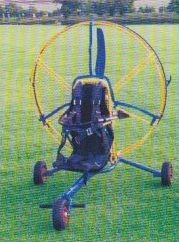
Paraglider circa 1998. For 1998 the Finesse had the number of lines considerably reduced and the trailing edge altered to create the Finesse Plus.
Finesse Plus Wing area: 30.2 sq.m Certification: DHV 2-3GH Pilot weight: 85/120 kg No. of cells: 62 Wing span: 13.04 m Aspect ratio: 5.6 Min sink: 1.1 m/s Max speed: 45 kph Price (1998) 6,100 DM
1998: Forchenweg 37, D-71134 Aidlingen, Germany In 1998, Stefan Schuller, ex test pilot of Flight Design, was the inspiration behind Hans Madreiter’s wings.
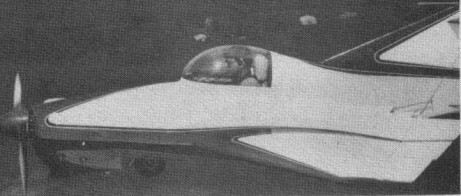
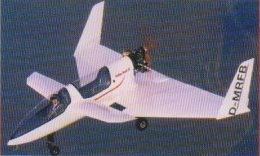
Lowell Borchers won a special Designer’s Trophy at the 1980 EAA Oshkosh Fly-In for his Delta Stingray after 6000 hours of work. The Stingray is about 70 percent plywood, 20 percent Douglas fir and 10 percent steel and fiberglass. It has a hand-carved 60/64 wooden pro¬peller and retractable landing gear. The Stingray is a take-off of John Dyke’s four-place Dyke Delta.
Gross Wt. 1075 lb. Empty Wt. 740 lb. Wingspan 15 ft Length 14 ft l0 in Engine 100-hp Continental 0-200. Top 204 mph. Cruise 180 mph. Climb rate 1400 fpm.
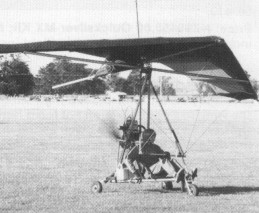
Designed and built by Terry Delore of Christchurch, NZ, and based on the English Hiway Skytrike. Most types of hang glider wing may be fitted. About 25 built.
To celebrate the 45-years jubilee of the Student Aeronautical Study Association ‘Leonardi da Vinci’ of the Technical University of Delft, the members decided it would be a nice project to build an ‘exact’ replica of the Lambach HL-2. However, it never was the intention to make a 100% exact replica since this was almost impossible for practical and for flight-safety reasons.
To realize the construction the SSVOBB, or Stichting Studenten Vliegtuigontwikkeling, -Bouw en Beheer (Foundation Aircraft development, construction and Maintenance) was founded in 1990.
Driving person behind this project was Mr. Hans Blaauw. The project was started around 1989 with the formation of a construction team of dedicated volunteers. The team found out that the chief constructor of the Lambach HL-2, Ir. Wim de Koo was still alive and fully prepared to assist with the project. As a great help a set of original works drawings was discovered at the Aviodome museum at Schiphol airport. In fact, the finding of these drawings was the main reasons this quite unknown aircraft was chosen as a project!
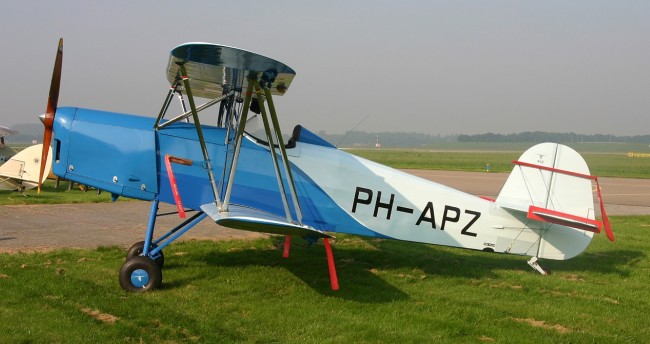
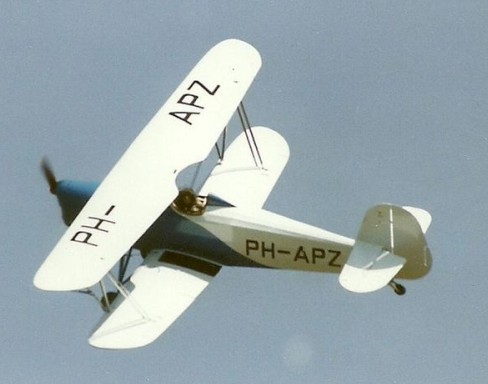
Over more than five years so much work was done to complete the construction that it was more than enough to fill a book. In fact a book on this project WAS written by Bas Nijenhuis, Ferdinant Spek and Piet Moeleker and published in 1996. The original HL-2 had a typical construction of that period with a welded steel tube fuselage covered with fabric, light-alloy engine cover plates and a wooden wing with fabric covered control surfaces. The team had to ‘rediscover’ many construction techniques as originally used in the Thirties and of course modern materials were used where appropriate. As a novelty, the new GLARE-composite material was used, amongst others for the engine firewall. This was the first time this new material was used in an aircraft. After five years the HL-2 replica was ready to make its first flight. This took place on Monday 18 September 1995 at Gilze-Rijen airbase. Pilot on this occasion was Charels Bertels. Over the next few months more test flights were made until the testing programme was completed on 28 December 1995 with the 25th flight. The replica carried the original registration of the original, PH-APZ.
It was the intention to use the plane for airshow displays but unfortunately its Certificate of Airworthiness was withdrawn when fatigue cracks were found in the wing strut supports. The plane was located at various places over the years. Over 1995-1999 is was located at Gilze Rijen Airbase. Over 1999-2000 it was placed in the display hall of the old Aviodrome museum at Schiphol airport. From 2000 to 2005 it was stored at Midden-Zeeland airfield and over the period 2005-2008 it was located at Hoogeveen airfield. In September 2008 it was removed to Lelystad Airport in the exhibit hall of the Aviodrome Theme Park Museum. SSVOBB is still active with the Lambach HL-2 replica and they hope to solve the technical/structural problems to make the plane airworthy again. Last activities took place on 6 July 2010 when a group of SSVOBB volunteers, headed by Halbe Mulder, started the engine again to do some vibration measurements. Basically the engine was regularly started over the years, but since its last move to the Aviodrome there were some problems with one of the magnetos and the original planning of SSVOBB to do the vibration test was quite hampered by these problems.
Lambach HL.II Replica C/N 20002 Registration: PH-APZ Engine: De Havilland Gipsy Major Mk. 1 Serial number: 95121 A 444646 Fuel: AVGAS 100 LL Propellor: Poncelet Two-bladed, wooden fixed pitch Wing Span: 8.00 m Length: 6.70 m Height: 2.40 m Empty Weight: 468 kg Max. Take-off Weight: 620 kg Stall Speed: 43 KIAS Cruise Speed (VA): 110 KIAS Max. Speed (VNE): 145 KIAS Max. G-load: -2.9 / +5.8 Operating Ceiling: 6000 ft MSL Min. take-off distance: 200 m Min landing distance: 300 m Seats: 1