Dornier Do-328 / Do.328Jet

Do.328-100

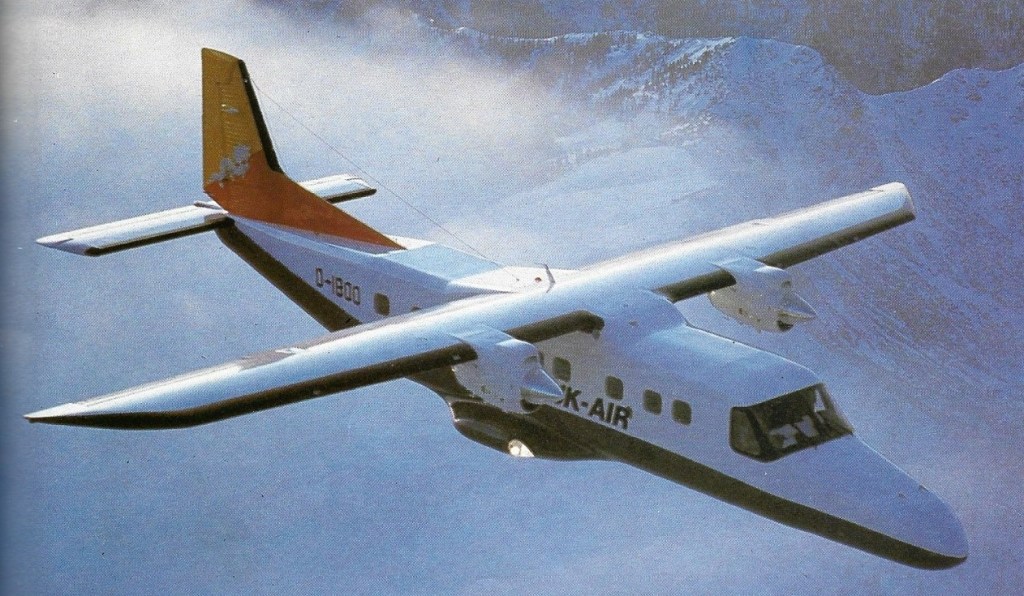
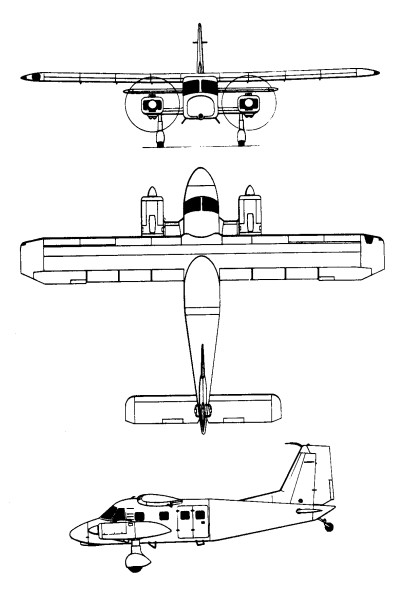
The Fairchild-Dornier 328 is 30-34 seat turboprop powered commuter airliner designed and engineered by Dornier in Oberpfaffenhofen, Germany. Development of the 328 started in 1985, after Dornier decided to redesign the fuselage of the Dornier 228. After Dornier’s market research had indicated a substantial market for regional airliners in the 30-seat class it was decided to develop the Dornier 328. Work began in December 1988, culminating in the first development aircraft’s rollout on 13 October 1991 and the first flight on 6 December 1991. The 328 was awarded EJAA certification on 15 October 1993.

Dornier Do-328 / Do.328Jet Article

First customer deliveries occurred on 21 October 1993, when the Dornier 328-110 s/n 3005 HB-AEE was handed over to the Swiss scheduled carrier Air Engiadina. The initial 328-100 was followed by the production standard 328-110 with redesigned aerodynamics and increased performance. Other models are the 328-120 with improved short field performance and the 328-130 with progressive rudder authority reduction with increasing airspeed.
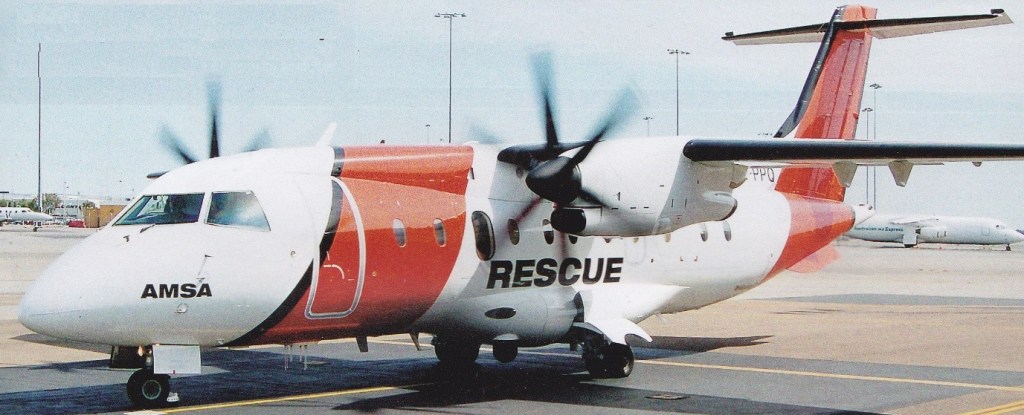
Dornier 328 VH-PPQ

Mid 1996 Fairchild Aerospace acquired 80% of Dornier to form Fairchild-Dornier. In 2002 Fairchild Dornier filed bankruptcy and the court appointed administrator determined that the company had to be sold in pieces. The US company AvCraft Aviation acquired the Fairchild-Dornier’s 328 program, including the 328 production line at Oberpfaffenhofen, Germany. Early 2005 AvCraft Aerospace GmbH, the German subsidiary of AvCraft Aviation was declared insolvent at a German court at Weilsheim. In December 2005, UK’s Corporate Jet Services Ltd purchased the former AvCraft Aerospace GmbH. On 2 January 2006, Corporate Jet Services Ltd created the German subsidiary ‘328 Support Services GmbH’, headquartered at Oberpfaffenhofen near Munich. It holds the type certificate of the Dornier 328 Jet and Turboprop aircraft plus the Dornier 428, and is carrying on the worldwide support of the aircraft. Part of the company’s strategy is to work towards returning to service the Dornier 328 aircraft which are currently parked in Europa and US.
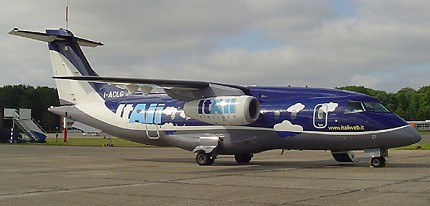
Do.328Jet

The Fairchild-Dornier 328JET is 32 seat commuter jet airliner. After Fairchild Aerospace had acquired the majority of Dornier in 1996, the new formed company Fairchild-Dornier started in 1997 with the development of the 328JET. The Fairchild-Dornier 328Jet was derived from the Dornier 328 turboprop featuring two Pratt & Whitney Canada PW306B turbofans instead of the turboprops. Next to the engines, only slight modifications to the landing gear and wings were required to convert the Dornier 328 into the 328JET model. FADEC Pratt & Whitneys were hung under the wings, the landing gear was strengthened and new Honeywell Primus 2000 EFIS panels were installed in the cockpit.
The 328JET prototype D-BJET was converted from the second 328 turboprop airframe and was flown first on 20 January 1998. Deliveries of the 328JET started in 1999. The combined USA and German engineering team developed the new 428 model based on the 328JET, but the project was turned down in 2001 when Fairchild-Dornier ran into financial problems. In 2002 Fairchild Dornier filed bankruptcy and the court appointed administrator determined that the company had to be sold in pieces. The US company AvCraft Aviation acquired the Fairchild-Dornier’s 328 program, including the 328JET production line at Oberpfaffenhofen, Germany. Next to 18 ready-to-deliver aircraft, and five in the final assembly stage, the purchase included also the 428 intellectual properties. AvCraft/Fairchild-Dornier restarted in 2004 the production of the Fairchild Dornier 328JET. Early 2005 AvCraft Aerospace GmbH, the German subsidiary of AvCraft Aviation responsible for the 328JET program was declared insolvent at a German court at Weilsheim. In December 2005, UK’s Corporate Jet Services Ltd purchased the former AvCraft Aerospace GmbH. On 2 January 2006, Corporate Jet Services Ltd created the German subsidiary 328 Support Services GmbH, headquartered at Oberpfaffenhofen. It holds the type certificate of the Dornier 328 Jet and Turboprop aircraft plus the Dornier 428, and is carrying on the worldwide support of the aircraft. Part of the company’s strategy is to work towards returning to service the Dornier 328 aircraft which are currently parked in Europa and US.

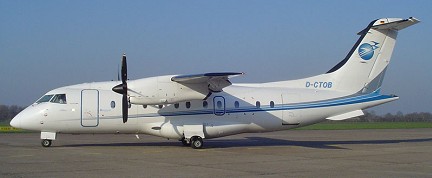
Dornier 328 Jet UR-DAV

Two 328Jets were handed over to Skyways Airlines ofMilwaukee at San Antonio, Texas, on 9 August 1999. The first customer for the type. By then, orders and options had reached 162.
Fairchild was developing the Envoy, a private jet variant of the 328JET, and the 528JET, a 55- to 63-seat stretch. A larger 728Jet was planned until the company declared bankruptcy in 2002.

Gallery

328JET
Engines: 2 x PW306B turbofan.
Max cruise: 335 kts.
Capacity: 30-33 pax.
Range: 1000nm.
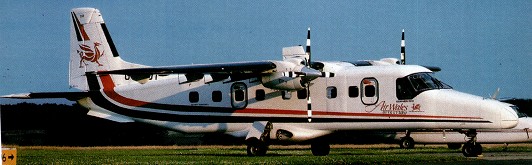
Dornier Do-228

Do-228-200

In June 1979 Dornier flight tested a new high-technology wing intended for the proposed Do 228 series of commuter airliners. Using a modified Skyservant fuselage fitted with the so-called TNT wing and powered by 533kW Garrett turboprop engines, the aircraft completed a 2 1/2-year test programme during which seven different types of propeller were evaluated. The first definitive Do 228-100, fitted with a new fuselage and tail plus the TNT wing, flew for the first time on 28 March 1981. German certification followed on 18 December the same year and the first production aircraft was delivered to the Norwegian commuter airline Norving early in 1982. The Do 228-100 prototype was lost in a fatal accident near Augsburg while undergoing tests for British certification in March 1982. About 35 Series 100s were built and customers included the German Alfred Wegener Institute which used three ‘Polar’ aircraft on research duties in Antarctica.

Dornier Do-228 Article

Development of a ‘stretched’ version followed, designated the Do 228-200. The Dornier 228-200 seats 19 passengers in single seats on either side of a central aisle in a rectangular fuselage of interior dimensions 1.35m x 1.55m and is intended for the wide range of capabilities but its forte is commuter operations into smaller and often semi-prepared airfields.
The aerofoil, of Do A-5 supercritical section with maximum thickness at 50 per cent of chord, is tapered on the outer panels, with the triangular wingtips acting as winglets, but straight out to reduce drag. The glassfibre/Kevlar leading and trailing edges being attached to the primary structure by myriad screws.
The smooth-surfaced wing structure is a box made up of four panels, with integral internal bracing for strength. Each is made from a 70mm thick block of aluminium, of which 95 per cent is milled away to a tolerance of 0.01mm, giving rise to a basic structure which is guaranteed for 50,000 flight hours and 62,500 landings. The two Garrett/ AiResearch TPE 331-5 engines, flat rated to 715 shp, will give full performance for take-off at either sea level at 33’C, or 8,000 feet field elevation at ISA.
The Dornier 228-200 (the -100 model is 1.5m shorter and carries 15 passengers but is otherwise identical) has small single mainwheels with negative camber retracting into the underside of a sponson below the fuselage which, combined with the wing’s position right on top of the fuselage and the straight bottom surface of the long nose, gives it a hunch-back, droop-snooted look. Able to carry 19 passengers, the prototype made its first flight on 9 May 1981.

Do 228-200 prototype

Two versions of the Dornier 228 twin-turboprop regional transport have been developed to serve in the maritime surveillance role, with differing equipment fits. The Version A has a MEL Marec 2 radar as primary surveillance sensor, and wing hardpoints for supply or sensor packs. For inshore patrol and fishery protection, Version B has Ericsson/SSC side-looking airborne radar as main sensor and an optional forward-looking Bendix radar and other aids.
Hindustan Aeronautics’ Kanpur Division was manufacturing some 150 twin-turboprop Dornier 228s, of which a substantial number are for the Indian armed forces. The first Indian-built aircraft flew in January 1986, and was delivered to the internal airline Vayadoot the following March. The Coast Guard service received its first aircraft in 1986 for maritime surveillance duties. These are fitted with an MEL Marec 2 search radar and other maritime equipment. Deliveries to the Air Force and Navy were suspended in May 1987, following a series of engine difficulties experienced by Indian civil operators.
The Dornier 228 was in commercial service in both 15-seat -100 and 19-seat -200 form with more than 183 ordered by customers in some 27 countries by 1990. More than 50 airlines ordered the Series 200, including Air Caledonie, Air Moorea, Air Tahiti, Air Guadeloupe, Air Maldives and Aerotuy of Venezuela. Other customers include the governments of Germany, Nigeria, Saudi Arabia, India, Niger, Malawi, Bolivia and Japan.

Do228-100
Engine: 2 x Garrett TPE331-5-252D turbo-props.
Installed pwr: 1060 kW.
Span: 17 m.
Length: 15 m.
Wing area: 32 sq.m.
Empty wt: 2980 kg.
MTOW: 5700 kg.
Payload: 2130 kg.
Cruise speed: 430 kph.
Initial ROC: 618 m / min.
Ceiling: 9020 m.
T/O run (to 15m): 565 m.
Ldg run (from 15m): 600 m.
Fuel internal: 2390 lt.
Range/payload: 1343 km with max pax.
Capacity: 15 pax.

Do228-200
Engine: 2 x Garrett TPE331-5-252D turbo-props, 715 shp / 578kW
Wingspan: 16.97 m / 55 ft 8 in
Length: 16.56 m / 54 ft 4 in
Height: 4.86 m / 15 ft 11 in
Wing area: 32 sq.m / 344.44 sq ft
Max take-off weight: 5700 kg / 12566 lb
Empty weight: 3086 kg / 6804 lb
Max. speed: 428 km/h / 266 mph
Cruise speed: 205 kts/365km/h true airspeed @65% / 10000ft
Ceiling: 9020 m / 29600 ft
Range w/max.payload: 1130 km / 702 miles
Crew: 2
Pax cap: 19

Dornier Do-28 Skyservant / Do-128

Do-28

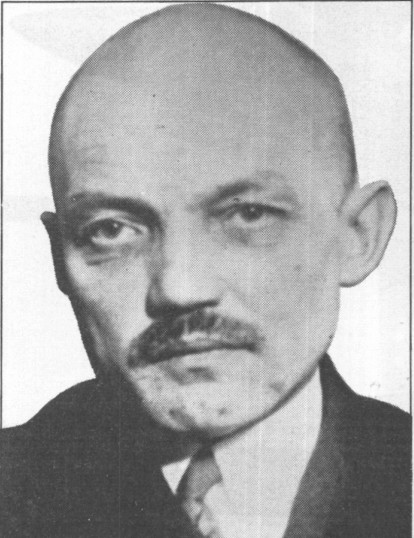
Professor Claude Dornier started his first aircraft company in 1922 as the successor to the “Do” division of the Zeppelin Werke, GmbH. When aircraft manufacturing became forbidden in Germany after World War II, Dornier continued his design work in Spain. There he developed the Do 25, a general-purpose airplane that later evolved into the Do 27.

Dornier Do-28 Article

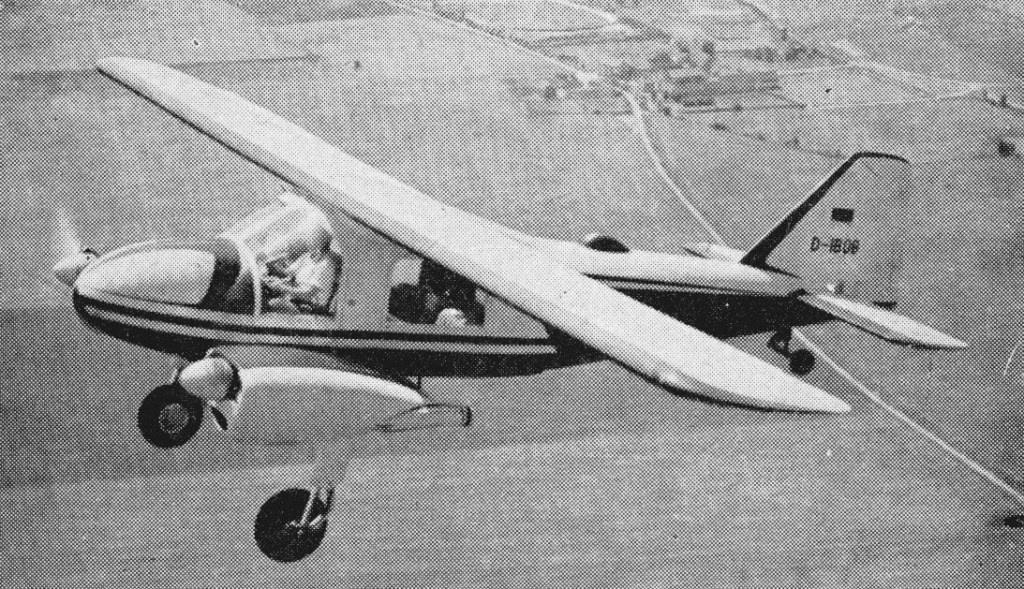
The Do 28 began as a simple twin-engined derivative of the Do 27, the basic structure being retained virtually unchanged. The prototype flew for the first time on 29 April 1959, with two 180 hp Lycoming O-360-A1A engines, and the second machine introduced 250 hp Lycoming O-540-A1D engines and an increase in wingspan and area. This version entered production as The Do 28A1 in 1960, eighty produced by mid-1963.

1960

The Do 28 was produced until 1971. The Skyservant’s twin Lycomings and landing gear are mounted on stub wings that protrude from the lower fuselage directly underneath the main wings.

The Do 28B, introduced in 1963, featured 25 modifications, including the redesign of the nose, an enlarged tailplane, and auxiliary tanks in the wingtips. Two versions were available; the Do 28B1 and Do 28B2. The B2 having turbocharged engines.

While the original Do 28 series had an advantage over the Do 27 by providing twin-engine safety and enhanced performance, it did not have any more internal space, the cabin dimensions being identical to those of its predecessor. Financial assistance provided by the German Ministry of Economics helped Dornier to develop the layout into a bulkier, higher-powered STOL transport which could carry up to 13 passengers and this redesigned version was designated Dornier Do 28D, later being named Skyservant. The redesign was so drastic that, apart from the layout and designation, the Do 28D bore little resemblance to the Do 28B. The prototype flew on 23 February 1966, receiving type approval a year later.

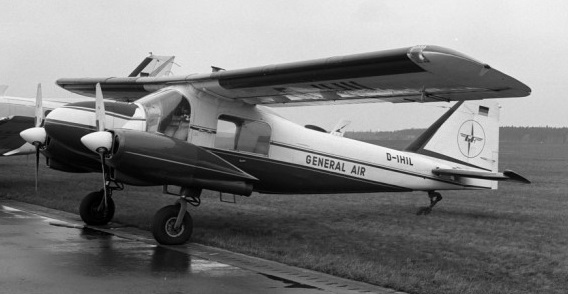
Dornier Do-28A-1 Skyservant D-IHIL (3002)

Developed as the Do 28D-1, the type won FAA certification on 19 April 1968 and military type approval in January 1970. Orders for 125 were placed for the German Luftwaffe and Bundesmarine, and other military deliveries have been made to Ethiopia, Morocco, Nigeria, Turkey and Zambia. More than 220 Skyservants are in operation world-wide.
A Do 28D-1 set several class records for piston-engined business aircraft in 1972, including an altitude of 8624m with a 1000kg payload, as well as several time-to-height records. It was followed by the Do 28D-2, which introduced a number of refinements. In 1980, a Luftwaffe Do 28D-2 was re-engined with Avco Lycoming TIGO-540 turbocharged engines under a contract from the German Federal Ministry of Defence prior to upgrading that country’s military Skyservants; the new designation was Do 28D-2T.

Further development of the basic Do 28D design continued under a new designation: Do 128 Skyservant. Two basic designs were offered, the Do 128-2 and Do 128-6. Both 10-passenger models, the main difference was in powerplant, the Do 128-2 having two Avco Lycoming IGSO-540 piston engines and the Do 128-6 two 298kW Pratt & Whitney PT6A-110 turboprops. The latter had first been seen in prototype form as the Do 28D-5X, known then as the TurboSky and powered by two 447kW Avco Lycoming LTP 101-600-1A turboprops flat-rated to 298kW. The Do 128-6 had, in addition, a new fuel tank, reinforcements to the underwing engine supports and other modifications. Orders and options for 30 Do 128-6s from African customers were announced, the first going to Lesotho Airways. A variant of the Do 128-6 was also delivered to Cameroun for maritime patrol work, equipped with a 360 deg MEL Marec surveillance radar. Production ceased in the mid-1980s.

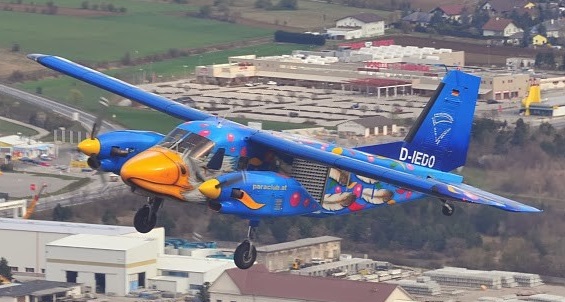
A Slovakian Do-28 G92 derivative of the Skyservant is fitted with two Walter M601-D2 turbine engines. It will haul 15 skydivers to altitude 4 times in one hour.

Dornier Do-28 G92

Gallery

Dornier DO 28 D Skyservant
Length : 37.402 ft / 11.4 m
Height : 12.795 ft / 3.9 m
Wingspan : 50.853 ft / 15.5 m
Max take off weight : 8048.3 lb / 3650.0 kg
Max. speed : 173 kt / 320 km/h
Service ceiling : 24278 ft / 7400 m
Range : 992 nm / 1837 km
Engine : 2 x Lycoming IGSO-540-A1E, 375 hp
Crew : 2+12

Do-28D-1
Engines two 380 hp Lycoming O-540.
Gross wt. 8,470 lb
Empty wt. 5,066 lb
Top speed 202 mph.
Cruise 170 mph.
Stall 65 mph.
Vmca: 42 kts.
Initial climb rate 1,180 fpm.
Range 1,255 minle.
Ceiling 25,200 ft
Takeoff distance (50′) 1,020 ft
Landing distance (50′) 1,000 ft
Seats 12-13.

Do 128-2
Engine: 2 x Avco Lycoming IGSO-540-A1E, 283kW
Max take-off weight: 3842 kg / 8470 lb
Empty weight: 2346 kg / 5172 lb
Wingspan: 15.55 m / 51 ft 0 in
Length: 11.41 m / 37 ft 5 in
Height: 3.9 m / 12 ft 10 in
Wing area: 29 sq.m / 312.15 sq ft
Max. speed: 325 km/h / 202 mph
Cruise speed: 211 km/h / 131 mph
Ceiling: 7680 m / 25200 ft
Range: 642 km / 399 miles

Do-128-6
Engine: 2 x P&WAC PT6A.
Installed pwr: 600 kW.
Span: 15.9 m.
Length: 11.4 m.
Wing area: 29 sq.m.
Empty wt: 2540 kg.
MTOW: 4350 kg.
Payload: 1275 kg.
Cruise speed: 340 kph.
Initial ROC: 385 m / min.
Ceiling: 8580 m.
T/O run (to 15m): 555 m.
Ldg run (from 15m): 435 m.
Fuel internal: 895 (+475) lt.
Range/payload: 1460 km with 805 kg.
Capacity: 12 pax.

Dornier Do 128

Dornier Metallbauten GmbH / Aktien Gesellschaft für Dornier Fluzeuge / Dornier-Werke GmbH

Dr Claude Dornier

Dr Claude Dornier was employed by Count Zeppelin in 1910, and in 1914 was in charge of the design and construction of large all-metal marine aircraft at Zeppelin-Werke Lindau. Here he produced the Rs.I in 1915, then the largest aircraft in the world, with a span of 43.5m. By 1918 three more giant flying-boats had been built, Rs.II, III, and IV, as well as prototypes of single-seat and two-seat fighters.

Dornier Seaplanes Article

All employed Dornier’s techniques of advanced metal construction. After the war the works were transferred to Manzel, near Friedrichshafen, where some two-seaters for the Swiss Air Force were completed. At Manzel, between 1920 and 1925, appeared the Libelle, Delphin, Komet and Merkur, small civil aircraft, and the Falke, an unsuccessful fighter. In 1922 the company became Dornier Metallbauten GmbH and in 1926, as the Manzel works were too small, it transferred to Altenrhein in Switzerland (Aktien Gesellschaft für Dornier Fluzeuge). Here, for the next three years, Aktien Gesellschaft fur Dornier Flugzeug was occupied in building three Do X flying-boats, the largest aircraft of their time, powered by 12 engines. Two were sold to Italy. Bomber designs followed, the Do N, P, and Y being built 1929-1931. These led to the Do F which, like the Do 11, began in 1933 to reequip the German Air Force.
However, in 1932 production was resumed in Germany. The Swiss factory subsequently became the Eidgenossisches Flugzeugwerk.
1932 production in Germany, this time as Dornier-Werke GmbH, began with the military Wal (later the Do 18) and Do 11 bomber, supplanted later by the Do 23. In 1934 appeared its first modern warplane, the Do 17, evolved from a fast, six-passenger mailplane designed for Deutsche Luft Hansa. The Do 17 and its successor, the Do 217, which served as a nightfighter, were the only Dornier designs to see largescale production during 1935-1943. Towards the end of the war the company produced the Do 335 push-pull twin-engined heavy fighter with a top speed of 763km/h, probably the fastest piston-engined Second World War fighter.

After the war Dornier became established in Spain. The first postwar aircraft developed completely in Germany was the twin-engined STOL Do 28. An experimental STOL jet transport followed, the Do 31, and the Do 29 research aircraft. From 1966 the company developed the Skyservant and was involved in international programs. Collaboration with Avions Marcel Dassault-Breguet Aviation on Alpha Jet development and production included research into supercritical wing.
Merkle joined Dornier in 1969.
Became Dornier GmbH in 1972. A majority shareholding was acquired by Daimler-Benz AG in 1985. In 1989 Deutsche Aerospace AG was formed as a corporate unit of Daimler-Benz Group and intended to unite the work of Dornier, MBB, MTU and more, and was renamed Daimler- Benz Aerospace AG. in 1995, with the Regional Aircraft division administered by Dornier Luftfahrt GmbH. In June 1996 Fairchild Aerospace purchased 80% of Dornier Luftfahrt from Daimler-Benz Aerospace, forming Fairchild Dornier Germany Dornier Luftfahrt GmbH. Within Daimler Chrysler Aerospace AG, Dornier Flugzeugwerft GmbH represents part of the Military Aircraft business unit.

Dorna Free Bird

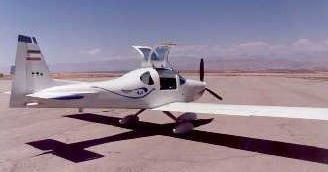
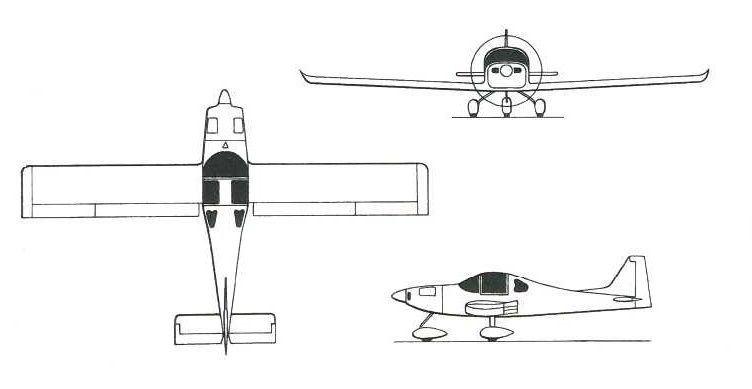
The Dorna Free Bird is an Iranian light-sport aircraft, designed and produced by Hava Faza Dorna Co. of Hasanabad. Designed to comply with the US light-sport aircraft rules, it features a cantilever low-wing, an enclosed cabin with two-seats-in-side-by-side configuration accessed by doors, fixed tricycle landing gear, with wheel pants and a single engine in tractor configuration.

The aircraft structure is made entirely from composite material, with the fuselage a monocoque design. Its 9.45 m (31.0 ft) wing has an area of 11.06 m2 (119.0 sq ft), is built with dual spars and features winglets. It has a low-mounted horizontal stabilizer with a single spar. Both the seats and the rudder pedals are adjustable for pilot height. The cabin is 107 cm (42 in) in width. The standard engine used is the Austrian 100 hp (75 kW) Rotax 912ULS, four-stroke powerplant, driving a Czech-built Woodcomp three-bladed, ground adjustable propeller.

As of February 2017, the design does not appear on the Federal Aviation Administration’s list of approved special light-sport aircraft.

The aircraft was supplied complete and ready-to-fly in 2015 at €85,000 and was still in production in 2017.

Free Bird
Engine: 1 × Rotax 912ULS, 75 kW (101 hp)
Propeller: 3-bladed Woodcomp ground adjustable
Wingspan: 9.45 m (31 ft 0 in)
Wing area: 11.06 m2 (119.0 sq ft)
Empty weight: 380 kg (838 lb)
Gross weight: 600 kg (1,323 lb)
Fuel capacity: 70 litres (15 imp gal; 18 US gal)
Wing loading: 54.2 kg/m2 (11.1 lb/sq ft)
Maximum speed: 220 km/h (137 mph; 119 kn)
Stall speed: 64 km/h (40 mph; 35 kn)
Rate of climb: 5 m/s (980 ft/min)
Crew: one
Capacity: one passenger

Dorna D-139 Parandeh Abi / Blue Bird

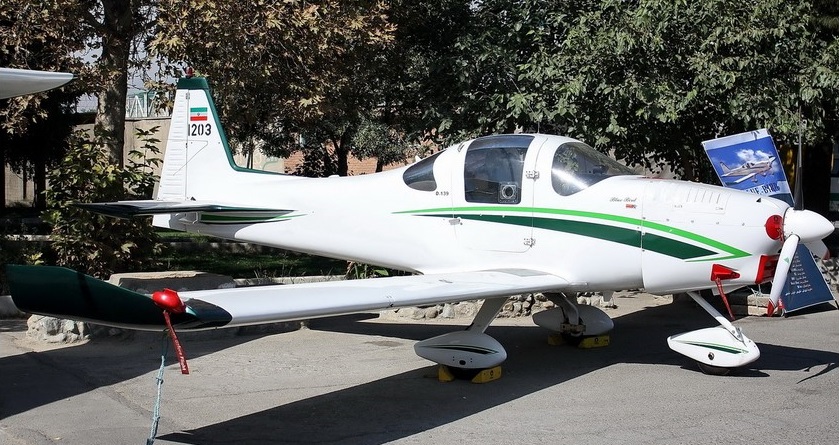
The design of the Parandeh Abi, Blue Bird in English, recreational and training aircraft was begun in 1994 and the first flight was on 27 July 1998. The designer was Mohammad Hassan Karami.

It is a conventionally laid out low wing single-engine monoplane, built entirely from composite materials and seating two side-by-side. Its two spar wings and single spar horizontal tail are rectangular in plan. The wing carries 2.5° of dihedral and the tips are slightly upturned. Plain flaps fill the trailing edges inboard of the ailerons. The elevators are horn balanced, as is the rudder. Together, the fin and rudder are straight tapered, with a small dorsal fillet.

The Parandeh Abi is powered by a Rotax 914 F3 horizontally opposed four-cylinder engine driving a thee-bladed propeller. Its fixed, self-sprung steel cantilever tricycle undercarriage is attached to the fuselage. All wheels have speed fairings. In early production aircraft, access to the cabin was via the top hinged, upward opening canopy, but later examples have forward hinged doors reaching down almost to the wing. The doors contain a framed window, though the total cabin transparency is noticeably reduced. All models have a pair of small, fixed windows in the tapering fuselage behind the seats, where there is a baggage compartment. The aircraft can be equipped with either a stick or yoke for primary control. Other differences between early and later production models include improved engine cooling with the addition of chin and cheek air intakes, enlarged rudder horn balances, tailplane root fillets and fluted skinning on the ailerons and rudder.

The design was type certified to JAR-VLA standards.

Production of the Parandeh Abi began in 2001 with orders for 5 from Iranian flying clubs. By March 2006 Dorna had orders for 14 and options on another 30 and by November 2008 28 had been built at a unit cost of €120,000. As well as supplying clubs and training centres, Parandeh Albis also went to the Iranian Police and to the Civil Aviation Organisation.

By the end of 2012 the company’s website was gone and the domain was for sale. The company may no longer be in business.

Parandeh Abi
Engine: 1 × Rotax 914 F3
Propeller: 3-bladed MT-Propeller MTV-6-A/172-8, 1.72 m (5 ft 8 in) diameter
Wingspan: 9.45 m (31 ft 0 in).
Wing area: 11.06 m2 (119.0 sq ft) gross
Airfoil: NACA 63-215
Length: 6.17 m (20 ft 3 in)
Height: 2.70 m (8 ft 10 in)
Empty weight: 490 kg (1,080 lb)
Max takeoff weight: 750 kg (1,653 lb)
Fuel capacity: 120 L (26.4 Imp gal, 31.7 US gal)
Maximum speed: 282 km/h (175 mph; 152 kn) at 4,267 m (14,000 ft)
Cruise speed: 161 km/h (100 mph; 87 kn) economical, at 3,658 m (12,000 ft)
Stall speed: 83 km/h (52 mph; 45 kn) sea level, flaps down
Never exceed speed: 321 km/h (199 mph; 173 kn)
Range: 1,094 km (680 mi; 591 nmi) with maximum fuel
Service ceiling: 4,265 m (13,993 ft)
Rate of climb: 3.8 m/s (750 ft/min) at sea level
Crew: one
Capacity: one passenger

Dorna Co

Iran
Established 1989 and has produced the Blue Bird two-seat composites-constructed touring lightplane (said to have first flown 1997).

By the end of 2012 the company’s website was gone and the domain was for sale. The company may no longer be in business.

Donohoe Shuttle

Dave Donohoe, a colleague of Tom Cadet, developed the Boorabee’s airfoil. This wing was mated to a new fuselage mould to use a 4 x 3 inch rectangular boom and Dave called the result the Shuttle. Similar in overall appearance, the Shuttle has a single wing strut and a different tail and undercarriage and control system. After the undercarriage of the Shuttle proved weak, some Shuttles adopted that of the Boorabee.

The Shuttle design was abandoned after Dave’s second aircraft, powered by a 1600cc Jabiru, developed aileron flutter. The wings were damaged extensively, but Dave was able to land the aircraft. Vibration from the Jabiru, coupled with a control system that was too slack, caused the flutter.

Dongan WJ-5 / WZ-5

Dongan WJ-5 turboprop powered Xian Y-7-100

The Dongan WJ-5 is a Chinese single-shaft turboprop aero engine built by the Dongan Engine Manufacturing Company for the Xian Y-7 twin-engined transport.

Variants:
WJ-5A
Main production variant of 2162 ekW (2900 ehp)

WJ-5E
Improved variant for the Xian Y-7-200 sometimes referred to as the WJ-5A-1G. Developed with the help of General Electric.

WZ-5
A turboshaft version of the WJ-5, which failed to progress beyond the prototype stage.

Application:
Harbin SH-5
Xian Y-7

Dmitriev, Victor

Victor Dmitriev was a teacher, truck driver, and aviation enthusiast in the Soviet Union. He pored over every bit of available information on American sport planes and taught himself how to design aircraft when the Soviet state considered such knowledge secret. Over the course of 24 years he built 30 aircraft, scrounging materials from the trash, now and then buying real aircraft parts through an illegal under-ground network. He modified a Czechoslovakian motorcycle engine for an airplane power plant. His de-sign studio, assembly plant, and hangar were all located in the four room apartment his family shared with two others in Beslickek (formerly Frunze) in Kirghizia, a republic between Kazakhstan and China.
Dmitriev built a whole series of tiny X planes over the years. “I built very many wings,” he said. “Without flaps. With one flap. With two flaps. With three flaps.”
Victor’s first attempt to build an airplane, in 1968, used a version of the Rogallo wing, a triangular kite-like device popular with early hang gliders. It didn’t work, but he was undeterred. In 1970, he got an aircraft off the ground; in 1979, he flew his first circle.
Dmitriev made contact with other closet airmen who helped one another. He said they sometimes sold aircraft parts under the table, and when he couldn’t find parts, he made them. He carved his own propellers with hand tools. He covered the wing and tail surfaces with parachute fabric, then shellacked and painted it for a smooth, drum tight surface. He made lightweight wing struts by shaping pieces of wood, cutting them in half, hollowing them out, and gluing them back together, and then epoxying on a layer of fiberglass cloth.
His work surfaced in the West in 1990 when the magazine Aviation Week & Space Technology published a photo of his machine. In 1991, he sent photographs of the X 14d in flight to the Experimental Aircraft Association (EAA) in Oshkosh, Wis., which published them in the magazine it sends to its members.