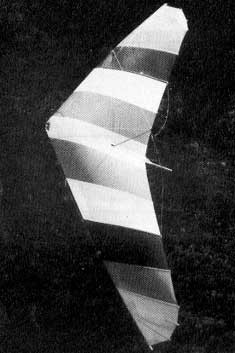
The 1980 Electra Flyer Vulcan was an attempt at a bowsprit glider to compete with similar designs from other manufacturers. It lacked pitch stability and had too much spiral instability for comfortable thermalling. Its sink rate was also unacceptably high, according to the test pilots. It was not a successful design, and never saw production.
Introduced in 1980, the Spirit was the successor to the Floater, with a simplified sail cut but retaining the Floater’s general planform and hinged cross-spar. The sink rate suffered somewhat from the modifications, but it was fairly manoeuvrable and easier to launch and land than its predecessor.
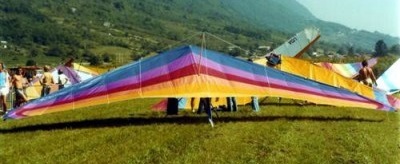
Designed primarily by Tom Price (with some input from Tom Peghiny and Larry Newman) and released in 1979, the Floater was Electra Flyer’s first attempt at a glider to compete with the Moyes gliders and La Mouette’s Atlas, both of which employed light wing loading to achieve a low sink rate while still offering some glide at speed. While it achieved both goals, it turned out not to be competitive with its rivals. It remained in production for a year, being replaced with a somewhat smaller version called the Spirit which, while it did not have the Floater’s sink rate, was more maneuverable and easier to fly.
The largest size Floater was a popular tandem glider in the early 1980s.
Floater 165 Wing area: 15.3 m² Hang glider weight: 24 kg Minimum pilot weight: 45 kg Maximum pilot weight: 70 kg Minimum speed: 29 km/h Max glide ratio (L/H): 7.5 Minimum sink rate: 1.15 m/s Number of battens: 24
Floater 185 Wing area: 17.2 m² Hang glider weight: 25 kg Minimum pilot weight: 60 kg Maximum pilot weight: 80 kg Minimum speed: 29 km/h Max glide ratio (L/H): 7.5 Minimum sink rate: 1.15 m/s
Floater 205 Wing area: 19 m² Hang glider weight: 26 kg Minimum pilot weight: 70 kg Maximum pilot weight: 90 kg Minimum speed: 29 km/h Max glide ratio (L/H): 7.5 Minimum sink rate: 1.15 m/s
Floater 235 Wing area: 21.8 m² Hang glider weight: 30 kg Minimum pilot weight: 80 kg Maximum pilot weight: 100 kg Minimum speed: 29 km/h Max glide ratio (L/H): 7.5 Minimum sink rate: 1.15 m/s
The 1980 Dove was intended as a successor to the Cirrus 5, without deflexors but with a sail cut to compensate for the leading edge’s bend under load. For its time, it was a decent “floater” but didn’t have the speed range of the Cirrus models. Since it was lighter than most gliders of the time, it found some use as a trainer for novice pilots.
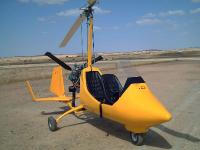
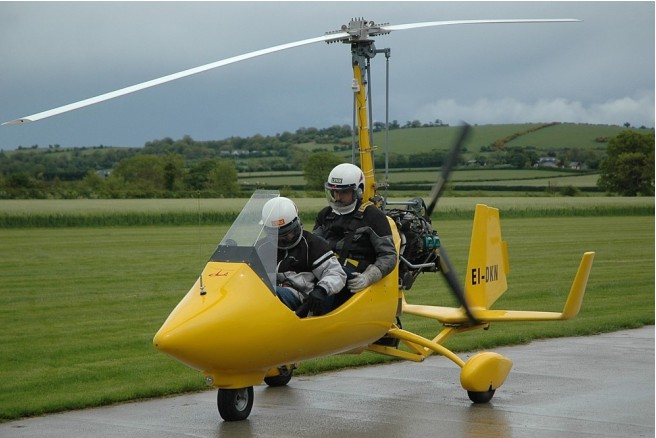
The main frame is made with stainless steel tubes and sheets cut with CNC laser machinery and welded by aeronautic welding in a TIG atmosphere. The main frame is designed and tested to support 5 Gs loads with maximum weight at takeoff. The rotor control system is duplicated to be able to pilot from both seats. Like the frame, it is made of stainless steel. All of the gyro points are mounted on stainless steel ball bearings with ZZ protection. The two joysticks consist of a “top gun” type stick with rotor trim controls and radio button (ptt) controls. The rotor head consists of parts tooled with a CNC machine. The parts are made of stainless steel, high strength steel and 7075 T6 hard aluminium. The bolts used are ISO certified. The autogyro’s cabin is manufactured in carbon fibre and epoxy resin composite materials. The 08 model’s cabin is equipped with two windscreens. The tail unit is manufactured in carbon fibre and epoxy resin. The tail unit’s frame design has been tested to the limit by Spain’s Civil Aviation Department and has shown its strength at speeds of up to 210 Km/hr. The ELA rotor is manufactured in a combination of aluminium and fibreglass with epoxy resin. The blade can support traction loads of up to 26,000 Kg, whereas the top flight load does not exceed 6,500 Kg. Standard Equipment for ELA 08 includes altímeter, airspeed, vertical speed, compass, engine and rotor rpm, cht, oil temperature, oil pressure, fuel pressure, trim position indicator, hour counter, “top gun” stick in front and back positions, mechanical prerotator, pneumatic rotor brake with parking system, pneumatic trim, back compartment glove box, wheel spats, landing light, 72 litre fuel tank, carbon fibre propeller, aluminium and carbon fibre rotor blades, carbon fibre cockpit, wheel spats and tail plane, front wheel cover, and stone guard. Optional extras include egt, strobe light, manifold pressure, propeller spinner painted, rear instrumental panel with airspeed indicator, engine rpm, rotor rpm, altimeter, and fuel pressure.
R-100 Engine; ROTAX 912 UL Empty weight; 237 kg Maximum Take-off Weight; 550 kg Total Payload; 306 kg Range; 500 km Min Speed at Level Flight; 30 km/h Cruise Speed; 140 km/h Take Off Distance – 1 person; 30 m Take Off Distance – 2 persons; 80 m Rate of Climb – 1 person; 7 m/s Rate of Climb – 2 persons; 5 m/s
R-115 Engine; ROTAX 914 UL Empty weight; 244 kg Maximum Take-off Weight; 550 kg Total Payload; 306 kg Range; 500 km Min Speed at Level Flight; 30 km/h Cruise Speed; 150 km/h Take Off Distance – 1 person; 20 m Take Off Distance – 2 persons; 50 m Rate of Climb – 1 person; >10 m/s Rate of Climb – 2 persons; 8 m/s
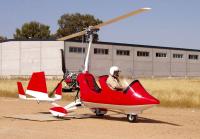
The main frame is made with stainless steel tubes and sheets cut with CNC laser machinery and welded by aeronautic welding in a TIG atmosphere. The main frame is designed and tested to support 5 Gs loads with maximum weight at takeoff. The rotor control system is dual to be able to pilot from both seats. Like the frame, it is made of stainless steel. All of the gyro points are mounted on stainless steel ball bearings with ZZ protection. The two joysticks consist of a “top gun” type stick with rotor trim controls and radio button (ptt) controls. The rotor head consists of parts tooled with a CNC machine. The parts are made of stainless steel, high strength steel and 7075 T6 hard aluminium. The bolts used are ISO certified, which guarantees their reliability and standardization. The rotor head houses the advanced pre-rotator and trim systems that are characteristic features of our autogyro. The autogyro’s cabin is manufactured in carbon fibre and epoxy resin using state-of-the-art techniques for composite materials. Our plant has the right facilities for using advanced techniques, including air-conditioned cabins, curing furnaces and humidity control systems. The 07 model’s cabin is equipped with a windscreen to protect the front seat. The tail unit is manufactured in carbon fibre and epoxy resin. The tail unit’s frame design has been tested to the limit by Spain’s Civil Aviation Department and has shown its strength at speeds of up to 210 Km/hr. The ELA rotor is manufactured in a combination of aluminium and fibreglass with epoxy resin. The rotor blades are manufactured yjr ELA plant and which has been certified by the Spanish Civil Aviation Department. The certification tests have proved that the blade can support traction loads of up to 26,000 Kg, whereas the top flight load does not exceed 6,500 Kg. Standard equipment for the ELA 07 includes altímeter, airspeed, vertical speed, compass, engine and rotor rpm, cht, oil temperature, oil pressure, fuel pressure, trim position indicator, fuel level, hour counter, mechanical prerotator, pneumatic rotor brake with parking system, pneumatic trim, landing light, 72 liters fuel tank, carbon fibre propeller, carbon fibre cockpit and tail planes, aluminium and carbon fibre rotor blades, front wheel cover stone guard . Optional extras include EGT, wheel spats, strobe light, manifold pressure, and dual controls.
Engine; ROTAX 912 ULS Empty weight; 237 kg Max Take-off Weight; 550 kg Total Payload; 313 kg Range; 500 km Min Speed at Level Flight; 30 km/h Cruise Speed; 140 km/h Rate of Climb; 5-7 m/s Take Off Distance; 30-80 m
ELA Aviacion, Spain, has been dedicated to aircraft manufacturing and maintenance since 1996. ELA Aviacion is the only Spanish company to make autogyros. Both models are made according to their own designs and awarded certificates by the Spanish Civil Aviation Board. Developing this machine represented six years of research and experimentation in the mechanical and aerodynamic design required for the project.
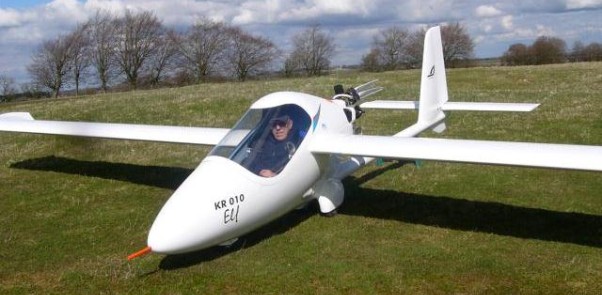
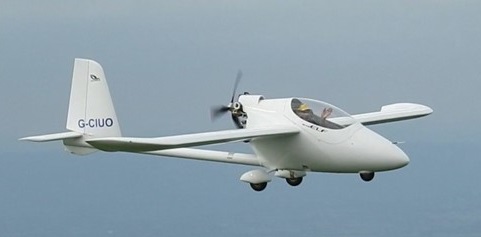
Jerzy Krawczyk, in addition to Ekolot’s Junior and Topaz, has several light aircraft, crop sprayer, and sailplane designs to his credit. In creating the self launching Elf sailplane, he employed composite sandwich and carbon structures to achieve the exceptional strength and durability required to pass UK BCAR Section ‘S’ airworthiness certification. The Elf prototype used the JPX 330 engine which, unfortunately, was withdrawn from production in 2006 after over 20 years in the market. Fortunately, Compact Radial Engines in Canada has produced a very similar unit. This is 20% more powerful than the JPX and also employs a clutch which eliminates folding prop ‘chatter’ on start-up and allows the prop to fold whilst the engine is on idle. This engine has displayed instant re-start capability. The Elf employs full span flapperons, and airbrakes, and has excellent rudder/stick co-ordination. The NN17-18 aerofoil possesses mild stall characteristics and overall, the handling conveys a strong sense of stability and security to the pilot.
KR-010 “Elf” G-CIUO over Scotland
Production aircraft will have the more powerful Compact Radial engine and a 126cms prop with a projected climb rate of 500 ft/min. Engine off, the Elf with it’s 120 ft/min sink rate is capable of slowing down to exploit the slightest lift and core the smallest thermal. This is where the fun and skill challenge begins and where, if the pilot falls out of lift into sink, he can be confident of a quick engine restart and climb back to the area of lift.
Prototype Engine: JPX 330, 24 hp Prop dia: 116cms , folding Weight: 145 kg (with BRS) Gross Weight: 260 kg Area: 10.8 sq/m Span: 11.2 m Length: 5.7m Aerofoil: NN18-17 Fuel Capacity: 15 litres (3 hours + reserve) Proof Load: +6 / -3 Max Pilot Height: 1.9m (6’3”) Max Pilot Weight: 100kg (220lbs) Cruise: 50 mph at 5,100rpm Max Climb: 400ft/min at 30mph Stall: 27mph Best L/D: 26.4:1, 150ft/min at 45mph Min Sink: 120ft/min at 39 mph Airbrake: 300ft/min at 45mph (13:1) Fuel burn: 4.5 litres/hour
19960 Elliott Road P.O. Box 1510 Lockeford, CA 95237-1510 Eklund Engineering, Inc. is an aero-mechanical consulting firm which holds the rights to the Thorp T-18 and John Thorp’s engineering legacy. The Thorp T-18 was designed by John Willard Thorp as the first good all metal homebuilt design. The two place side by side design was first envisioned as an open cockpit, uncowled, simple to build sport plane to use the converted Lycoming O-290G ground power engine. It soon grew into a high performance design which incorporated pressure cowl, canopy and slotted flaps. The T-18 can use any of the Lycoming O-290, 320, 340, 360 engines.
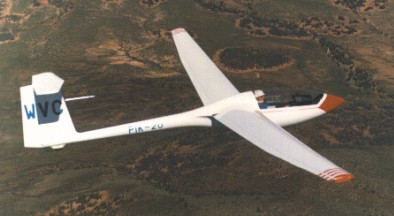
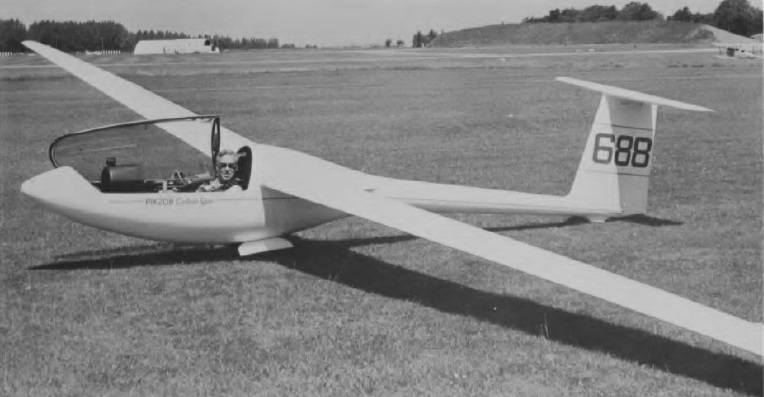
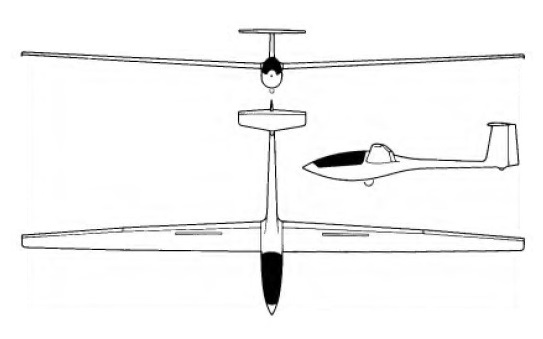
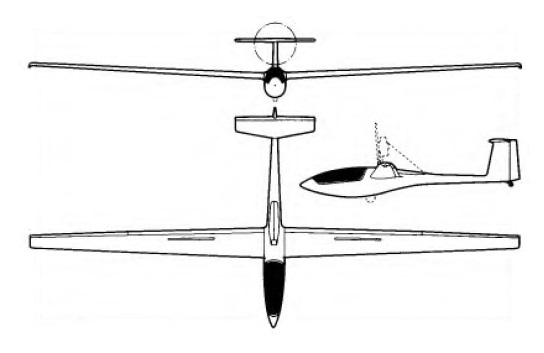
The single-seat high performance Unrestricted Class PIK-20, design work on which, by a team headed by Pekka Tammi, started on 1 May 1971, the first of two prototypes making its first flight on 10 October 1973. Three prototypes were built, followed by 24 of the first series.
The Pik-20 is a 15 m. racing class, all-fiberglass sailplane with water ballast, retractable gear and 90 degrees trailing edge flaps for landing. Finnish certification of the PIK-20 was granted on 20 June 1974, followed by FAA certification exactly a year later.
There is a retractable Tost monowheel with a drum brake as well as a tailwheel. The T-tail is of similar construction to the wings, and the fixed-incidence tailplane has a one-piece elevator.
After over 425 were built, the PIK-20 was soon followed by the PIK-20B in 1975, the main production version, which had an increased gross weight, greater water ballast capacity of 309lb, interconnected flaps and ailerons for improved performance, which could be retrofitted to earlier models, and a pneumatically sealed sideways opening cockpit canopy. From aircraft No 20100 carbon-fibre spars became available as an option, but later became standard, reducing the empty weight to 496 lb. The PIK-20A designation was an unofficial designation used to distinguish the PIK-20 from the PIK-20B.
Ingo Renner won the 15 m. class at the 1976 World Championships at Rayskala, Finland in a B-model, and others finished 2nd, 3rd and 5th.
PIK-20B
The PIK-20C designation was not used, but reserved for the JT-6 proof-of-concept prototype for PIK-20E.
The PIK-20C designation was not used, but reserved for the JT-6 proof-of-concept prototype for PIK-20E.
The PIK-20D, first flown on 19 April 1976, superseded the B, and this has carbon-fibre spars as standard, and is fitted with Schempp-Hirth air brakes and improved flaps, or ‘flaperons’, which act as both flaps and ailerons for enhanced performance. The flaperons, operate differentially for roll control and deflect from -12 degrees to +16 degrees for cruise or approach control. The cockpit is enlarged and its layout improved, and carbon-fibre is also used to reinforce the fuselage. The wings and tail surfaces are glass-fiber reinforced plastic (GRP) sandwich with PVC core. The fuselage is a GRP monocoque structure reinforced with ribs of carbon fiber.
The -20D features carbon fiber spar caps and carbon reinforcement strips at critical locations in the fiberglass monocoque fuselage. The PIK-20D-78 production models the nose profile was sharpened, the tail moved 5 inches forward and fuselage fairings recontoured to reduce drag.
PIK-20 production was undertaken by Eiriavion O/Y, and by January 1979 a total of 149 PIK-20Bs and 150 PIK-20Ds had been delivered. The type soon made its mark in competitions, winning the first three places in the Standard class at the 1976 World Gliding Championships in Finland, and also winning several national championships.
PIK-20E
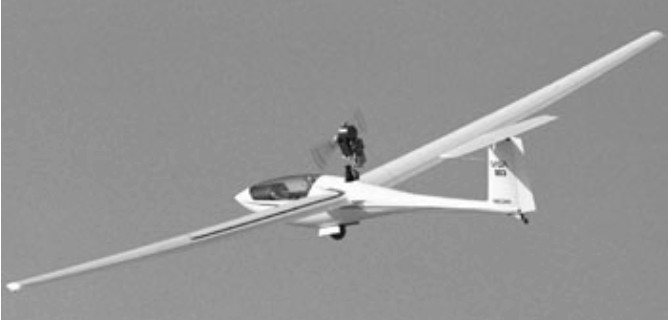
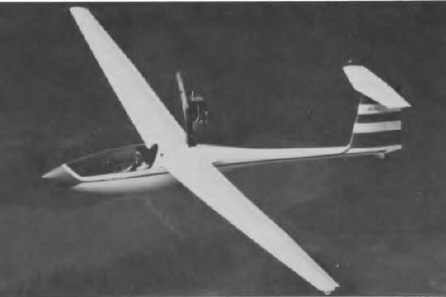
The PIK-20E is a -D sailplane with a retractable Rotax two-cylinder two-cycle engine, developed by Jukka Tervamaki, the chief designer of Finland’s Eiriavion O/Y, to meet the OSTIV airworthiness regulations for powered sailplanes. A manual crank handle requires about 15 turns to deploy or retract the engine and propeller.
Initial PIK-20E were powered by the Rotax 501 but the PIK-20E II featured a Rotax 505 (two spark plugs per cylinder). The Rotax 503 500cc two-stroke two-cylinder engine produces 43 hp at 6,200 RPM. With double carburetors and resonance exhaust system, the whole snowmobile engine has been redesigned and built to aircraft requirements. The Hoffmann two-blade wooden propeller is belt driven giving a 1:2 reduction. When not in use, the power plant is retracted into the fuselage by a manual crank and lever in the cockpit wall. The glider features fiberglass monocoque construction. Half of the fuselage/wing fairing has been taken to the wing so that the main rib and wing spar are 20 nm higher in order to save weight. The wings, flaps, and complete tail are of sandwich construction with fiberglass skin and PVCfoam core. Wing spars are made of carbon fiber. The PIK boasts a maximum L/D ratio of 40 to 1. With power on, takeoff can be accomplished in less than 1,000 feet if a 50′ obstacle has to be cleared and rate of climb is 787 fpm. Cruising speed is 84 mph at 75 percent power, burning 4.4 gph from the 8.7-gallon fuel tank.
The prototype PIK-20E was powered by a 30hp Kohler 440cc engine and first flew on 2 October 1976, making a four hour flight of which two hours were spent soaring with the engine retracted. The production prototype made its first (aero-tow) flight on 16 March 1978, and its first powered flight two days later, and series production began shortly after.
There is an electric starter for the engine, and the fuel tank behind the pilot’s seat holds 7.3 Imp gallons. Apart from the engine, the PIK-20E is very similar, structurally and otherwise, to the PIK-20D, with a longer nose, 25% more tailplane area, small fixed wheels at the wing tips and a rubber-sprung tailwheel now mounted on a steel sprung skid moved behind the fin spar to the base of the rudder so as to make it steerable; the water ballast capacity (an optional feature) is smaller than the D’s.
Eiri PIK-20E
The PIK-20F was available as a 15m Class variant (with 308lb of water ballast) or a Club Class variant, the latter having a fixed monowheel. The PIK-20F has carbon-fibre spars, a modified wing profile, a lower drag fuselage, a forward-opening carbon-reinforced cockpit canopy, a carbon-reinforced cockpit area, and a new wing/fuselage epoxy finish.
Production rights for the PIK-20E were sold in 1981 to the French firm Siren SA. Altogether 102 PIK-20Es had been built in Finland when production ceased there in the spring of 1981. By the spring of 1981 a total of 409 PIK-20s of all versions (including the motorised PIK-20E) had been built, of which 85% were for export.
PIK-20D Span: 49 ft 2.5 in/ 15.0 m Length: 21 ft 2 in / 6.45 m Height: 4 ft 6.75 in / 1.45 m Wing area: 107.6 sqft / 10.0 sq.m Aspect ratio: 22.5 Wing section: Wortmann FX-67-K-170/150 Empty weight: 480 lb / 220 kg Max weight: 992 lb / 450 kg Water ballast: 309 lb / 140 kg Max wing loading: 45kg/sq.m / 9.21 lb/sq.ft Max speed: 181 mph 158 kt / 292 km/h (in smooth air) Stalling speed: 32 kt / 60 km/h Max aero-tow speed: 118 mph / 130 kt / 240 km/h Min sinking speed: 2.17 ft/sec at 53.5 mph Min sinking speed: 0.56 m/sec / 1.84 ft/sec at 39 kt / 73 km/h Best glide ratio: 42:1 at 73 mph / 63 kt / 117 km/h
PIK-20E Engine: Rotax 503, 32 kW / 43 bhp Wing span: 15m / 49 ft 2.5 in Wing area: 10.0 sq.m / 107.6 sq.ft Airfoil: Wortmann FX 67-K-170/150 Aspect ratio: 22.5 Length: 6.53 m / 21 ft 5 in Height: 4 ft 8.75 in Empty Weight: 310kg / 684 lb Payload: 160kg / 352 lb Gross Weight: 470kg / 1036 lb Wing Load: 47kg/sq.m / 9.6 lb/sq.ft Water Ballast: 80kg / 176 lb L/DMax: 40 @ 110 kph / 63 kt / 73 mph MinSink: 0.66 m/s / 2.16 fps / 1.28 kt at 55 mph / 42 kt / 77 km/h (power off) Max speed: 177 mph 154 kt / 285 km/h (power off) Max cruising speed: 84 mph (power on) Stalling speed: 36 kt / 66 km/h Rate of climb: 4.0 m/sec / 13 ft/sec Take-off run: 1,640ft to 50ft Seats: 1