Hollman HA-2M Sportster

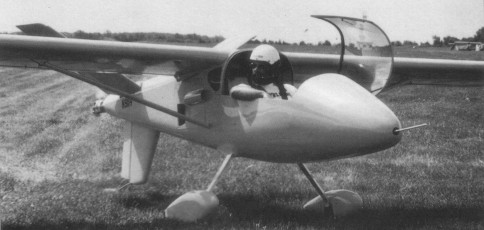
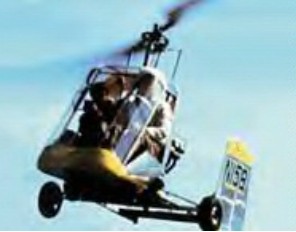
As part of his Aeronautical Engineering thesis research Martin Hollman designed a set of aluminum rotor blades for a two-place gyroplane. Having designed a practical rotor system for a two-place gyro, he moved on to the design of a gyroplane to go with the new blades. The result was the Hollmann Sportster, a two-place home-built gyroplane. Plans for the Sportster were made available, powered by a certified Lycoming engine.
The Sportster is designed for the homebuilder who has limited access to power tools. Ninety percent of the structure is bolted or riveted together, 2x2in aluminum tubing, and a minimum of machined parts are used. For convenience, the Sportster is designed to be towed behind a car.
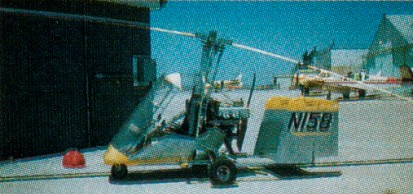
Two average people, 350 pounds combined, can fly comfortably inside its nearly enclosed cockpit for up to 90 miles on a cross-country trip. A 130-hp Franklin, 135-hp Lycoming, or 150-hp Lycoming engine can be used. With the engine cut, the Sportster has a 1,000-fpm sink rate. The Sportster is now marketed by Aircraft Designs, Inc.
The Sportster has been in the air since 1974. Its side-by-side dual controls are ideal for flight training. It’s partially enclosed and uses a 160-hp Lycoming engine to reach top speeds of up to 100 mph. Well-detailed plans for the Sportster 2001: $535

HA-2M
Engine: 160 hp Lycoming O-320.
Prop; 67”x 38” wood.
Rotor blades: Hollmann 28’x9”.
Min speed: 15 mph.
Cruise: 85 mph.
Top speed: 120 mph.
Empty wt: 700 lbs.
Useful load: 500 lbs.
Gross wt: 1200 lbs.
Width: 7’8”.
Length: 14’.

Engine 150-hp Lycoming
Rotor diameter 30ft
Gross Wt. 1100 lb
Empty Wt. 600 lb.
Fuel capacity 17 USG.
Length 13 ft
Top speed 90 mph.
Cruise 75 mph.
Minimum speed 28 mph.
Climb rate 500 fpm.
Ceiling 7,000 ft
Takeoff run 350 ft.
Landing roll 0 ft.
Range 120 sm.

Engine: Lycoming O-320, 150 hp.
Disk span: 28 ft.
Disk area: 616 sq.ft.
Speed max: 90 mph.
Cruise: 75 mph.
Range: 150 sm.
ROC: 1000 fpm.
Take off dist: 700 ft.
Service ceiling: 12,000 ft.
HP range: 130-150.
Fuel cap: 17 USG.
Weight empty: 650 lbs.
Gross: 1100 lbs.
Height: 8 ft.
Length: 12 ft.
Seats: 2.
Landing gear: nose wheel.

Engine: 160 hp Lycoming, O-320.
Propeller: 67″ X 38″ wood
Rotor Blades: Hollmann 28′ X 9′
Min Speed 15 mph
Cruise 85 mph
Top Speed 120 mph
Empty Weight 700 lbs
Useful Load 500 lbs
Gross Weight 1,200 lbs
Width 7 ft 8 in
Length 14 ft
Hollman Aircraft

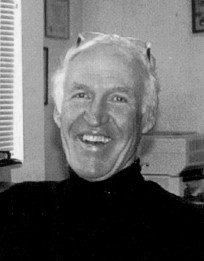
Martin Hollman

As part of his Aeronautical Engineering thesis research he designed a set of aluminum rotor blades for a two-place gyroplane. Having designed a practical rotor system for a two-place gyro, he moved on to the design of a gyroplane to go with the new blades. The result was the Hollmann Sportster.

1980: 11082 Bel Aire Ct. Cupertino, CA 95014, USA.

1995-7: 3 Harris Ct., Bldg. S., Monterey, CA 93940, USA.
2009: 5 Harris Court, Bldg. S, Monterey, CA 93940, USA.

Holcomb Perigee

Due to other events, notably the Bullet 2100 project and Molt’s declining health, the Micro-IMP was not developed further. Jerry Holcomb went on however to develop, build and fly a refinement of the Micro-IMP design which he named the “Perigee”.
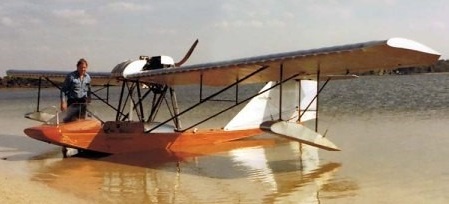
The Perigee, which was designed by Jerry Holcomb of Perigee Associates and initially called the Ultra Imp, first flew in April 1987 and is based on the TPG form of construction pioneered on the Aerocar Micro-Imp. This is a version of the same company’s Mini-Imp, which clearly provided the conceptual starting point for the Perigee.
The TPG (Taylor Paper Glass) form of construction was developed by Moulton B. Taylor, president and general manager of Aerocar, which was created in 1948 to develop Mr Taylor’s extraordinary flying car concept. TPG is a paper core (with metal inlays to accommodate compression loads) covered in glassfibre in a matrix of polyester resin and covered with ripstop Dacron fabric. The Mini-Imp and Micro-Imp both have retractable tricycle landing gear, but the Perigee uses fixed tailwheel landing gear with cantilever main legs ending in elegant speed fairing round the wheels. The need to accommodate a tailwheel led to an alteration of the Y-shape tail unit by comparison with the Aerocar types: in the Perigee it is turned through 1800 so that the vertical surface is at the bottom with the tailwheel attached to its lower edge.
The streamlined fuselaqe is of composite construction with spruce longerons, TPG bulkheads, cockpit floor, tailcone and side skins, a glassfibre nose and some aluminium alloy components. The braced high-set wing has an aluminium alloy/TPG main spar, a spruce/TPG rear spar, wood main ribs, TPG nose ribs, a glassfibre leading edge and fabric covering aft of the main spar. The full-span flaperons are of aluminium alloy sheet over polystyrene foam. The three tail surfaces are similar to the wing in basic construction, but have no wood in them. Propulsion is the task of a twin-blade pusher propeller behind the tail unit, and this is driven by an extension shaft running aft from the engine located behind the cockpit.
Fixed-gear, strut-based monoplane with Y tail, pusher engine. Wings fold for towing on highway. Optional retractable gear, cantilever wing. Powerplant: Cuyuna 430 drives controllable pusher prop. Landing gear: Fixed taildragger.
Information packages were sold but plans and kits never materialized.

Type: sport lightplane
Seats: one.
Powerplant: one 35-hp (26-kW) Cuyuna 430
Maximum speed 120 mph (193 km/h)
Initial climb rate 700 ft (213 m) per minute
Service ceiling 12,500 ft (3810 m)
Range 200 miles (322 km)
Empty weight 380 lb (172 kg)
Maximum take-off 720 lb (326 kg)
Wingspan 28 ft (8.53 m)
Length 15 ft 8 in (4.78 m)
Height 5 ft 2 in (1.57 m)
Wing area 81 sq.ft (7.53 sq.m).
Aspect Ratio 10:1.
Stall speed 40 mph.
Vmax 140 mph.
Takeoff run 300 ft. Landing roll 300 ft.
Fuel capacity 8+ USG.

Höhenflug HFL

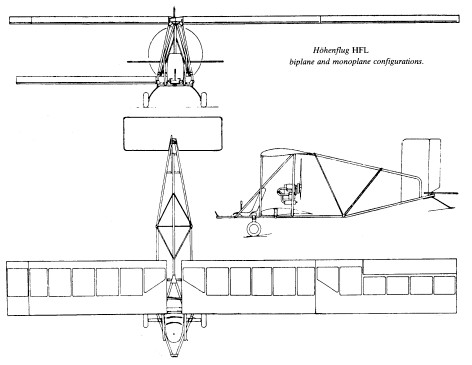
Single seat single engined high wing monoplane or biplane with conventional three axis control. Wing has unswept leading and trailing edges, and constant chord; conventional tail. Pitch control by fully flying tail; yaw control by fin mounted rudder; roll control by ailerons; control inputs through stick for pitch/roll and pedals for yaw. Cantilever wing; wing profile Worthmann FX63 137; double-surface. Undercarriage has two wheels side-by side with tailskid; suspension on both wheels. No ground steering. No brakes. Aluminium tube framework, without pod. Engine driving pusher propeller. Wings made from carbon fibre and unidirectional glass fibre.
This single seater is unusual in that it can be used either as a monoplane or a biplane. Its wing is in effect made up of four half wings, of which two form a high wing attached to the top of the tubular framework. The remaining two wings can either be joined to those of the top wing in a monoplane configuration or fitted to the bottom of the framework to make a biplane. These two ‘wandering’ wings are fitted with ailerons. As the four wing elements are of equal span, chord and area and the framework is wider at the bottom than the top, the biplane thus produced has a lower wing of greater span than the top. To avoid such aerodynamic nonsense, Hohenflug adds two wing tip sections to the upper wing to give it a slightly greater span than the bottom. In either configuration the wings are of cantilever construction with neither rigging wires nor interplane struts.
This Hohenflug bird was announced as due to make its first flights during summer 1983 and no information on its marketing strategy has so far been received. It is also not yet known which motor will be used, but the calculations have been based on a power range of 20 28 hp. The engine is fitted behind the pilot above the lower wing and drives a three blade pusher propeller.

Monoplane
Length overall 16.4 ft, 5.00 m.
Height overall 5.9ft, 1.80m.
Wing span 38.7 ft, 11.80m.
Chord at root 3.6 ft, 1.10m.
Sweepback 0 deg.
Total wing area 140sq.ft, 13sq.m.
Wing aspect ratio 10.74.
Wheel track 3.9 ft, 1.20 m.
Engine: 28hp.
Propeller diameter 45 inch, 1.13 m (three blade).
Power per unit area 0.20 hp/sq.ft
Fuel capacity 5.3 US gal, 4.4 Imp gal, 20.0 litre.
Empty weight 199 lb, 90kg.
Max take off weight 442 lb, 200kg.
Payload 243 lb, 110 kg.
Max wing loading 3.15 lb/sq.ft, 15.4 kg/sq.m.
Max power loading 15.8 lb/hp, 7.1 kg/hp.
Load factors; +4.9, 2.5 ultimate.
Never exceed speed 81 mph, 130 kph.
Max cruising speed 50 mph, 80kph.
Stalling speed 27mph, 43kph.
Max climb rate at sea level 400ft/min, 2.0m/s.
Range at average cruising speed 124 mile, 200 km.

Biplane
Length overall 16.4 ft, 5.00 m.
Height overall 5.9ft, 1.80m.
Wing span 22.6 ft, 6.90m.
Chord at root 3.6ft, 1.10m.
Sweepback 0 degs.
Total wing area 151 sq.ft, 14 sq.m.
Wing aspect ratio 6.311 top wing.
Wheel track 3.9 ft, 1.20 m.
Engine: 28hp.
Propeller diameter 45 inch, 1. 13 m (three blade).
Power per unit area 0.19 hp/sq.ft,
Fuel capacity 5.3 US gal, 4.4 Imp gal, 20.0 litre.
Empty weight 203 lb, 92kg.
Max take off weight 442lb, 200kg.
Payload 239 lb, 108 kg.
Max wing loading 2.92 lb/sq.ft, 14.3 kg/sq.m.
Max power loading 15.8 lb/hp, 7.1 kg/hp.
Load factors; +4.9, 2.5 ultimate.
Never exceed speed 81 mph, 130 kph.
Max cruising speed 50 mph, 80kph.
Stalling speed 27mph, 43kph.
Max climb rate at sea level 400ft/min, 2.0m/s.
Range at average cruising speed 124 mile, 200 km.

Hoffmann H.39 Diana

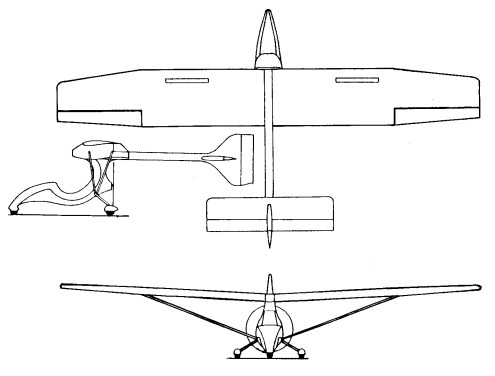
Single seat single engined high wing mono¬plane with conventional three axis control. Cruciform tail. Pitch control by elevator on tail; yaw control by fin mounted rudder; roll control by half span ailerons; control inputs through stick for pitch/roll and pedals for yaw. Wing braced from below by struts; wing profile Worth¬mann FX63 137; double surface. Undercar¬riage has three wheels in tricycle formation; suspension on nosewheel and glass fibre suspension on main wheels. Push right go-¬right nosewheel steering connected to yaw control. Brake on nosewheel. Glass fibre/ carbon fibre fuselage, partially enclosed. Engine mounted below wing driving pusher propeller.
Having already built a conventional motor glider with two seats side by side, the H36 Dimona of 1980 which has been on sale since summer 1981, aeronautical engineer Wolf Hoffrnarm has expanded his range with a single seater microlight, the H39 Diana. He used the experience gained in building the motor glider to help his design for a microlight, which uses similar manufacturing techniques and the same wing profile, the Worthmann FX63 137.
The high wing of the H 39 is carried by two airfoil section struts forming a V under each wing. As with the horizontal empennage, these are mounted by two bolts which allows rapid rigging and derigging, the Diana being trans¬portable on a trailer. The wing has air brakes on the upper surface and is of constant chord for the centre section with tapering outboard sections. A wide track tricycle undercarriage gives this ultralight motor glider great stability on the ground and encourages its use on all terrain.
The prototype was shown for the first time in public at the Aero 83 salon at Friedrich¬shafen on static display. The motor used is the Konig SD570 four cylinder radial, limited to 3500rpm (26hp) instead of the normal 4000rpm (28hp), since the Diana uses it in direct drive form.

Length overall 18.4 ft, 5. 60 m.
Height overall 5.7ft, 1.75m.
Wing span 32.8ft, 10.00m.
Chord at root 4.4ft, 1.33m.
Chord at tip 3.1ft, 0.93m.
Dihedral 4 deg.
Sweepback 0 deg.
Tailplane span 9.8 ft, 3. 00 m.
Fin height 3.9 ft, 1.20 m.
Total wing area 135 sq.ft, 12.5 sq.m.
Total aileron area 12.1 sq.ft, 1.12 sq.m.
Fin area 6.2 sq.ft, 0.58 sq.m.
Rudder area 4.1 sq.ft, 0.38 sq.m.
Tail¬plane area 18.1 sq.ft, 1.68 sq.m.
Total elevator area 7.8 sq.ft, 0.72sq.m.
Wing aspect ratio 8/1.
Wheel track 4.9ft, 1.50m.
Wheelbase 7.0ft, 2.13m.
Nosewheel diameter overall 10 inch, 26 cm.
Main wheels diameter overall 13 inch, 32 cm.
Engine: Konig SD570, hp at 3500 rpm.
Propeller diameter 42 inch, 1.07 m.
No reduction.
Max static thrust 132 lb, 60 kg.
Power per unit area 0.19 hp/sq.ft, 2.1 hp/sq.m.
Fuel capacity 5.3 US gal, 4.4 Imp gal, 20.0 litre.
Empty weight 2101b, 95kg.
Max take off weight 4751b, 215kg.
Payload 2651b, 120kg.
Max wing loading 3.52 lb/sq.ft, 17.2 kg/sq.m
Max power loading 18.31b/hp, 8.3kg/hp.
Load factors; +6.0, 3.0 ultimate.
Max level speed 62 mph, 100 kph.
Never exceed speed 84 mph, 135 kph.
Max cruising speed 62 mph, 100 kph.
Economic cruising speed 44 mph, 70 kph.
Stalling speed 24 mph, 38 kph.
Max climb rate at sea level 590ft/min, 3.0m/s.
Min sink rate 240 ft/min at 28 mph, 1.20 m/s at 45 kph.
Best glide ratio with power off 15/1 at 40 mph, 65 kph.
Take off distance 130 ft, 40 m.
Land¬ing distance 115 ft, 35 m.
Service ceiling 14,400 ft, 4400 m.
Range at average cruising speed 93 mile, 150 km.

Hiway Hang Gliders Eclipse / Pacific Windcraft Eclipse

The Hiway Hang Gliders Eclipse (5th Gen.) is a glider which has taken its engineering from original Pacific Windcraft Eclipse. The first Eclipse had the original Pacific windcraft sail, with Hiway airframe including sliding top A frame to allow flat rigging. Subsequent gliders had Hiway sails and Airframe. Total number made by Hiway rumoured around 7. Handling concerns effected UK sales.

In 1987, the American Eclipse was replaced in the Pacific Windcraft product line by their Vision Mark IV (a version of which Airwave UK marketed, with Magic hardware, as the “Calypso”). That same year, Pacific Windcraft was absorbed into Pacific Airwave, which in turn was absorbed into its parent company, Airwave Gliders in 1994.

The 170 sq ft had 15 top surface battens, 4 lower, no keel pocket just strap and rear wire, no tip anti dive rods.only 4 reflex lines, nylon balls at floatng wing tips with tuning achieved by lengthening the leading edges at tips.