Icaro 2000 XS / XS Brazil

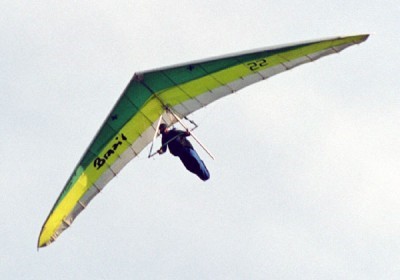
XS Brazil

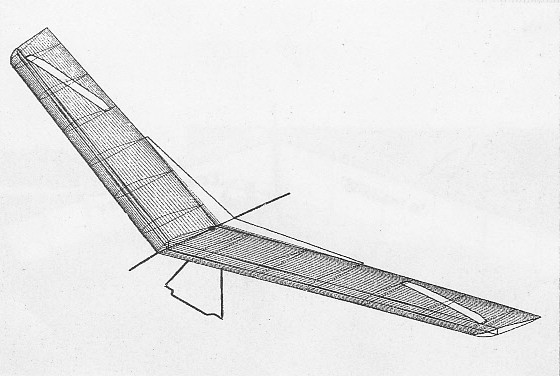
The Icaro 2000 XS is for advanced pilots. Icaro began in the hang glider market making Moyes hang glider structures for the European market. So even if there are Moyes XS and Icaro XS, they are the same…except a lighter structure for Icaro hang glider.

The XS Brazil for advanced pilots appeared in 1992. Double surface 85%.

XS 142 race
Wing area: 13.4 m²
Wing span: 9.8 m
Hang glider weight: 27 kg
Minimum pilot weight: 60 kg
Maximum pilot weight: 90 kg
Number of battens: 26
Nose angle: 127°

XS 15 B
Wing area: 15.2 m²
Wing span: 10.4 m
Hang glider weight: 29 kg
Minimum pilot weight: 70 kg
Maximum pilot weight: 100 kg
Packed length: 5.2 m
Packed length short: 3.9 m
Number of battens: 23
Nose angle: 127°

XS Brazil 13
Wing area: 13.50 m²
Aspect ratio: 7
Hang glider weight: 30 kg
Minimum pilot weight: 55 kg
Maximum pilot weight: 85 kg
Number of battens: 24
Nose angle: 127°

XS Brazil 155
Wing area: 15.5 m²
Aspect ratio: 8
Hang glider weight: 30 kg
Minimum pilot weight: 60 kg
Maximum pilot weight: 100 kg
Packed length: 5 m
Packed length short: 4 m
Nose angle: 127°

XS Brazil 169
Wing area: 17 m²
Aspect ratio: 8
Hang glider weight: 34 kg
Minimum pilot weight: 85 kg
Maximum pilot weight: 110 kg
Packed length: 5 m
Packed length short: 4 m
Number of battens: 33
Nose angle: 127°

Icaro 2000

ICARO 2000, the first hang-glider factory in Europe, was founded in 1973 by Alfio Caronti & Peter Skaarup.

Alfio received his first glider from Bill Moyes, during a water-ski competition in 1969. He was the first Hang glider pilot in Europe, who took off from a mountain on the 4th November 1971. The glider used by Alfio Caronti was a kingpostless glider with square tubes.

Peter Skaarup was the technician of the factory and together they manufactured hang-gliders under the license of the Australian firm Moyes.

In 1981 Franco Garzia & Gianni Hotz, became the new owners of ICARO 2000 and continued to make Moyes hang-gliders. Their first glider was the Meteor 170.

Since 1983 ICARO has been using only tubes in Perunal (aluminium alloy 7075 for aeronautics) from the Swiss manufacturer Alumenziken.

Until 1991 ICARO sold, in Europe, more then 3,000 gliders (Moyes models like Mega II, Missile, Mars, GT, GTR and XS).

In 1992 Manfred Ruhmer becomes part of the staff and ICARO started to develop original designs with its own sailmakers and workshop with 20 employees and a 1,200+ sq m building. The development of new models was carried out by Manfred Ruhmer, one of the world’s best pilots and Franco Garzia, a former Italian champion. Since this time all ICARO hang glider models are certified by the DHV (Germany).

In 1992 the first ICARO’s original design appeared: the Brazil, followed in 1994 by the Laminar. With this wing ICARO started to reach competition results 1994 European Championship in Laragne (France): Manfred Ruhmer is 2nd 1995 World Championship in Ager (Spain): Manfred Ruhmer is 2nd. In 1995 the first prototype of kingpostless gliders appears.

In 1996 ICARO presented its first prototype of topless glider and with this wing, Manfred reached 2nd place in the European Championship in Hungary.

Since 1998 ICARO has its own landing area (more then 50.000sq m) with Club House, Camping facilities and Store of accessories for Sport Aviation: these facilities are located at Lago Maggiore (northern Italy), facing a mountain ideal for flying.

1998: Via Verdi, I-21038 Sangiano (VA), Italy.

In 1998 ICARO forms an agreement with Felix -A.I.R., by which ICARO will make keels and sails for the Atos (ICARO has made 550 so far) and obtains the option to sell the Atos in certain markets.

ICARO introduces on the paragliders’ scenery the Cyber, a new basic-intermediate wing, with the latest technology and construction methods and highest safety DHV 1. Also in 2000, on October 25th, ICARO reviewed its agreement with Felix; ICARO takes over the worldwide production and distribution of the Atos from the home base in Sangiano. Felix works exclusively on the development of the design.

After having sold more than 400 Atos in two years, a period in which ICARO took an active part in the manufacturing of sails, A-frames and keels, it was decided that henceforth A.I.R. would devote 100% to the development and technical support, whereas ICARO would become in charge of the production and distribution of the Atos.

In September 2001 Christian Ciech starts working for Icaro 2000 in the development team, and after six months comes into the scenery the new Icaro 2000’s rigid wing: the Stratos.
ICA BRASOV IS-30 / CNIAR IS-30

Built in Romania, a 17m sailplane with flaps, semi-retractable undercarriage and all metal construction. First year built 1975. No. of aircraft built to 6/30/81 450. 1982 Standard price $24,900.

Seats: 2.
Max useful load: 506 lb.
Length: 26.5 ft.
Height: 5.9 ft.
Wing loading: 6.5 lbs/sq.ft.
Wing span: 26.8 ft.
Minimum sink: 136 fpm at 43 kts.
Wing area: 196.3 sq.ft.
Max speed: 143 kts.
Wing aspect ratio: 15.8
Stalling speed: 38 kts.
Max wt: 1,300 lb.
Glide ratio (L/D): 36:1 at 54 kts.
Standard empty wt: 794 lb.
Rough-air airspeed: 124 kts.

Ibis Aircraft Magic GS-700

Option 1; kit completely assembled; Option. 2 ready to fly. 2009 Price: US$25900

Engine: Rotax 912 ULS
Propeller: Bolly 3 Blade ground adjustable
Empty Weight: 320 kg / 705 lbs
MTOW Weight: 569 kg / 1254 lbs
Fuel cap: 140 lt
Stall: 42 kt / 48 mph / 77 kmh
Cruise: 100 kt / 115 mph / 185 kmh
VNE: 113 kt / 130 mph / 209 kmh
Fuel burn: 16 lt/hr
Climb Ratio: 1000 ft/min / 5 m/s
Take-off distance (50ft obstacle): 262 ft / 80 m
Landing distance (50ft obstacle): 328 ft / 100 m

Ibis Aircraft GS240

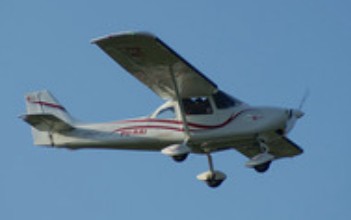
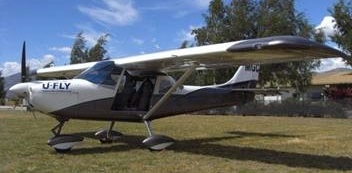
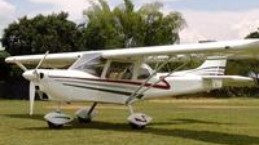
The IBIS GS240 is an all-metal, high-wing aircraft manufactured by the IBIS Aircraft company in Colombia. The GS240 has specifications and performance that are within the limitations of the new Light Sport Aircraft category. The GS240 is available for the U.S. market as a “quick-build kit” that will still meet the requirements of the FAA “51% rule” and allow the GS 240 to be put into the Experimental (Amateur-Built) Category. The GS240 kit is intended to provide as short a building time as reasonably possible for the builder, with all difficult aspects of fabrication and assembly having been done at the factory to minimize complications and delay for the first-time builder.
The IBIS GS-240 has specifications and performance that allow it to fit within the new “Light Sport Aircraft” rules. With the GS240 in this category, it can be flown by existing Private and Recreational pilots (without them having to maintain an FAA Medical Certificate), but also by people holding the new “Sport Pilot” license.

Stall: 35 kt / 40 mph / 64 kmh
Cruise: 104 kt / 120 mph / 193 kmh
VNE: 122 kt / 140 mph / 225 kmh
Empty Weight: 341 kg / 752 lbs
MTOW Weight: 599 kg / 1320 lbs
Climb Ratio: 700 ft/min / 4 m/s
Glide Ratio: 14:1
Take-off distance (50ft obstacle): 300 ft / 91 m

lAv CRAIOVA / S.C. Avioane Sa Craiova

Romania
Intreprinderea de Avioane Craiova founded February 1972 to develop the IAR-93/J-22 Orao attack aircraft with SOKO of Yugoslavia (first flown October 1974).
S.C. Avioane Sa Craiova was the new name from 1991 for IAv Craiova. Work on IAR- 93 stopped. IAR 99 Soim (first flown 1985) and improved IAR109 Swift jet trainers, lead-in fighter trainers and light attack aircraft superseded by new IAR 99 Soim that first flew in May 1997.