Jurkštas, Ramunas

Ramūnas Jurkštas

After graduating from high school in Klaipeda Baltic went to study in the aviation school in Kaluga in Russia, flew L-29, MiG-15, MiG-17. While still a student in 1977 R.Jurkštas began to glide at Klaipeda Aeroclub.
The first teachers were the club fliers A. Dust, E. Ramon V. Tamošiūnas, J.Aleknavičius.

Ramunas Jurkštas became Silute Aero Club instructor pilot.

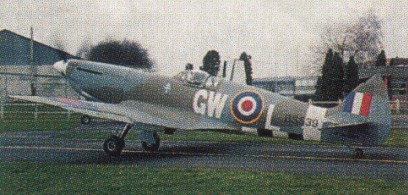
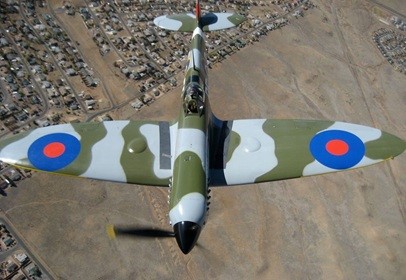
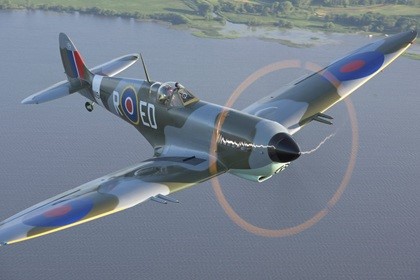
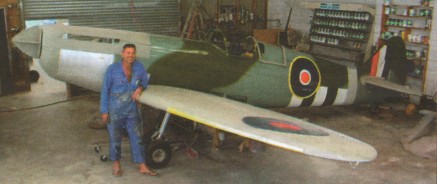
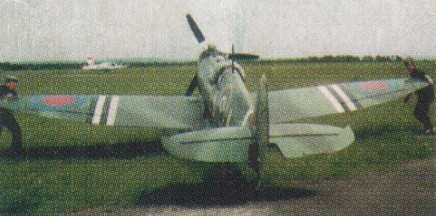
Jurca MJ-100 Baby Spitfire

Jurca Plans will provide a full size MJ-100 Spitfire replica set of plans and power plant required is some V 12 of 1700 hp.
The MJ-100R version has 4130 tube fuselage covered with aluminium or composite skins.

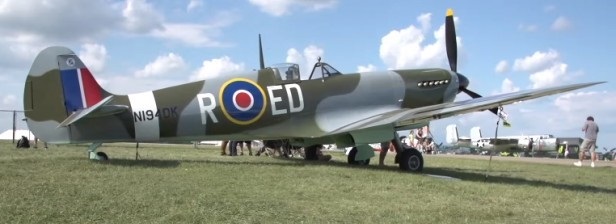
Bob Deford, EAA 314241, of Prescott, Arizona, built a full-scale replica Spitfire Mk IX of wooden construction, powered by an Allison V-1710 engine turning a DC-3 propeller. He and a friend went to work on the plane in 1996 and spent eight years to finish it. N1940K was completed in 2003.

N1940K

French engineering studies yielded a welded steel tube fuselage structure that could support an Allison V-1710 engine capable of generating 1,400 hp on takeoff. The steel tube internal fuselage structure is covered with a non-load-bearing aluminum skin riveted in place. The wing spar is made of laminated Douglas fir planks hosting wooden ribs. The whole skeletal structure of the wing is sheathed in 3/16-inch aircraft plywood.
The unattached skins are soaked from both sides, and then placed flat in the sun just long enough to dry the surfaces while keeping the interior moist. The inside surface of the sheet next received a rolled-on coat of epoxy before being aligned on the wing and hit with a staple gun. The plywood drys, conforming to the airfoil shape of the wing. Fiberglass topped with epoxy finishs the job, giving the wing protection and smoothness.

The main landing gear uses T-6 Texan hydraulics and T-28 wheels and brakes support tires normally found on a business twin. The main gear struts are newly made. Instead of using oleos for shock absorption, Deford worked with a spring vendor to come up with heavy springs that cushion the load of landing without the complexity of oil shocks, giving the gear no maintenance. He said the result is a ground ride that “hops like a real Spitfire,” based on his review of Spitfire ground handling films.

The Allison engine is from a P-39 Airacobra and Hamilton Standard propeller from a DC-3.

The Allison uses a downdraft carburetor with a duct running from the traditional Spitfire chin scoop back to the firewall and up to the top of the cowled Allison.

His has an original-type stick that pivots at mid-stick for roll, and says it could not work otherwise because the Jurca cockpit is a bit more narrow than the original due to straight tubing in the cockpit area. The original cockpit bows outward a bit from the canopy opening so, if the entire stick pivoted for roll at the floor, he would have very little roll control throw available.

Gallery

MJ-100 (100%)
Speed max: 355 mph.
Cruise: 300 mph.
Range: 500 sm.
Stall: 62 mph.
ROC: 3500 fpm.
Take-off dist: 1000 ft.
Landing dist: 2000 ft.
Service ceiling: 25,000 ft.
Engine: Allison V-12, 1100 hp.
HP range: 400-1200.
Fuel cap: 150 USG.
Weight empty: 3900 lbs.
Gross: 5060 lbs.
Length: 29.92 ft.
Wing span: 36 ft.
Wing area: 242 sq.ft.
Seats: 1.
Landing gear: retractable tail wheel.

Engine: Allison V-12, 1100 hp
Wing span: 10.97 m
Wing area: 22.26 sq.m
MAUW: 2295 kg
Empty weight: 1770 kg
Fuel capacity: 568 lt
Max speed: 571 kph
Cruise speed: 483 kph
Minimum speed: 100 kph
Climb rate: 17 m/s
Seats: 1
Plan price (1998): US$3750

Deford N1940K
Engine: Allison V-1710
Prop: 3-blade, ex-DC-3
Wingspan: 36 ft 10 in
Top speed: 300 mph
Fuel capacity: 100 USG
ROC: 3500 – 4000 fpm
Load factor: +9 g / -6 g
Endurance: 1 hr 30 min

Jurca MJ-90 ME-109

A 100 percent scale replica of the Messerschmitt Me 109 fighter developed for the Luftwaffe.

MJ-90 (100%)
Engine: V-12, 1200 hp.
HP range: 400-1200.
Height: 8.17 ft.
Length: 28.83 ft.
Wing span: 32.75 ft.
Wing area: 176 sq.ft.
Weight empty: 3800 lbs.
Gross: 5060 lbs.
Fuel cap: 100 USG.
Speed max: 398 mph.
Cruise: 300 mph.
Range: 350 sm.
Stall: 70 mph.
ROC: 3500 fpm.
Take-off dist: 1000 ft.
Landing dist: 2000 ft.
Service ceiling: 25,000 ft.
Seats: 1.
Landing gear: retractable tail wheel.

Jurca MJ-80 Baby Focke-Wulf

A 100 percent scale replica of the Focke-Wulf Fw 190 fighter developed for the Luftwaffe.

MJ-80
Engine: P&W, 1200 hp.
HP range: 400-1200.
Height: 12.92 ft.
Length: 29.33 ft.
Wing span: 34 ft.
Wing area: 196 sq.ft.
Weight empty: 3800 lbs.
Gross: 5060 lbs.
Fuel cap: 150 USG.
Speed max: 355 mph.
Cruise: 300 mph.
Range: 500 sm.
Stall: 67 mph.
ROC: 3400 fpm.
Take-off dist: 1000 ft.
Landing dist: 2000 ft.
Service ceiling: 25,000 ft.
Seats: 1.
Landing gear: retractable tail wheel.

Jurca MJ.77 Gnatsum

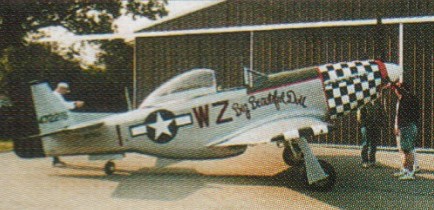
A 75 percent scale wooden replica of P-51 Mustang fighter.
The “R” (reinforced) version permits gross weight of 3300 lbs.

MJ-77 (75%)
Speed max: 289 mph.
Cruise: 230 mph.
Range: 500 sm.
Stall: 65 mph.
ROC: 1500 fpm.
Take-off dist: 2500 ft.
Landing dist: 1500 ft.
Engine: Geschwender 351.
HP range: 200-360.
Weight empty: 2200 lbs.
Gross: 2860 lbs.
Length: 21.5 ft.
Wing span: 27.8 ft.
Wing area: 145 sq.ft.
Seats: 2.
Landing gear: retractable tail wheel.

MJ-77
Engine: Potez GD.34c, 260 hp
MTOW: 2970 lb
Max speed: 247 mph

Jurca MJ-54 Silas

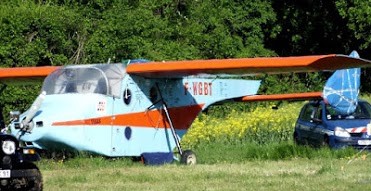
The Jurca MJ-54 Silas is a two-seat light touring cargo aircraft designed by Marcel Jurca to enable a small car to be transported along with the pilot and passenger.

The aircraft came from an idea by Arthur-Joseph Torossian in 1992, who wanted a touring aircraft which could carry a very small vehicle, such as the Aixam Microcar, for use at remote airfields, and which could also be used as sleeping accommodation with the car removed. The car could also act as an aircraft tug at airports. He envisioned it as a combination of a Max Holste Broussard and a Transall C.160. He saw many other uses for the aircraft, including as an air ambulance, carrier for four parachutists, disabled persons carrier, or freighter. Torossian envisaged a market for 1000 aircraft, and during the development of the prototype was looking for a company to mass-produce it.

The designer of wooden homebuilt aircraft, Marcel Jurca was enlisted to design the prototype. Construction was started at Cerny Aerodrome, La Ferté-Alais by Torossian and a group of friends, who together formed a group known as the Association Tegas, a reversal of the surname of Dassault test pilot Jean-Marie Saget. This led to the aircraft sometimes mistakenly being called “The Tegas”.

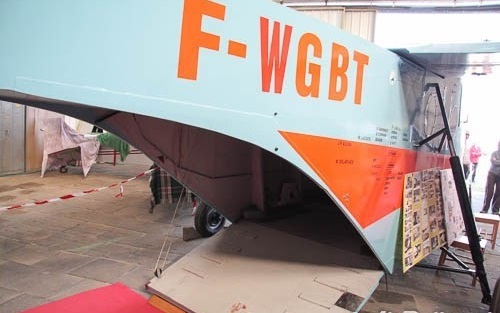
The MJ-54 is a high-wing monoplane of wooden construction, with two seats accessed by two gull-wing doors. The cockpit was designed with touring comfort in mind. The fuselage is a box structure with a rear loading ramp up which a small car can be driven, or other freight loaded. The centre of gravity changes little, whether loaded or unloaded. It has a cantilever wing. The horizontal tailplane is attached to the underside of a rear boom, with twin fins and rudders on the tips. It has a fixed tricycle undercarriage.

The aircraft, registered F-WGBT and nicknamed “Cargolito”, first flew on 30 April 1997, but this may have just consisted of a few hops along the runway. Development was slow, and a public presentation wasn’t held until 16 January 2002 at La Ferté-Alais.

Apparently, obtaining a permit to fly was difficult because of the fuel in the car’s tank. Joseph Torossian had great problems getting finance for production. A planned promotional tour of French flying clubs seems not to have taken place, and little has happened to it since. It remains stored on the airfield.

MJ-54
Engine: 1 × Lycoming, 190 kW (250 hp)
Propeller: 2-blade
Wingspan: 12 m (39 ft 4 in)
Length: 9 m (29 ft 6 in)
Empty weight: 1,410 kg (3,109 lb)
Gross weight: 1,750 kg (3,858 lb)
Cruise speed: 190 km/h (120 mph, 100 kn)
Range: 750 km (470 mi, 400 nmi)
Crew: one pilot
Capacity: one passenger

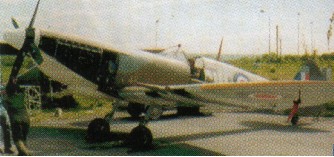
Jurca MJ-12 P-40

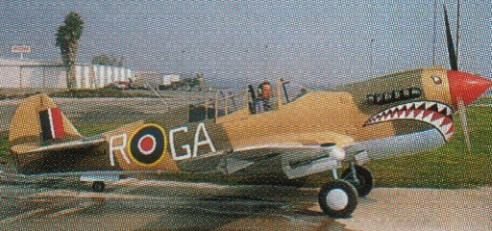
A 75 percent scale replica of the P-40 fighter

MJ-12 (75%)
Speed max: 275 mph.
Cruise: 225 mph.
Range: 500 sm.
Stall: 65 mph.
ROC: 2000 fpm.
Take-off dist: 1500 ft.
Landing dist: 2000 ft.
Service ceiling: 20,000 ft.
Engine: Geschwender 351, 200 hp.
HP range: 200-400.
Fuel cap: 45 USG.
Weight empty: 2200 lbs.
Gross: 2860 lbs.
Length: 25 ft.
Wing span: 27.95 ft.
Wing area: 140 sq.ft.
Seats: 1.
Landing gear: tail wheel.

Jurca MJ-10 Baby Spitfire

Jurca Plans will provide a 75 per cent Spitfire Mk9 set of plans. The replica will be Powered by a Buick V 6 developed to produce 280 hp from the 3.8 lt capacity. The airframe, which has been professionally stress analysed be ESTACA, will allow engines of up to 700 lb. A 150 litre tank is located in the scuttle. There are no wing tanks. The cockpit fit is snug. The complex wing is true to Mitchell’s original form. Retraction is by electro hydraulic means. Flaps are fitted and have two positions. As an option, Jurca Plans will provide you fibreglass fairings.

MJ-10

Engines for the Spitfire range from 220 to 350 hp.

Gallery

MJ-10
Engine: Geschwender.
HP range: 200-360.
Length: 23.4 ft.
Wing span: 27.7 ft.
Wing area: 135 sq.ft.
Weight empty: 1450 lbs.
Gross: 2860 lbs.
Fuel cap: 40 USG.
Speed max: 225 mph.
Cruise: 180 mph.
Stall: 65 mph.
ROC: 1650 fpm.
Take-off dist: 750 ft.
Landing dist: 1500 ft.
Seats: 1.
Landing gear: retractable tail wheel.

Jurca MJ-9 ME-109

A 75 percent scale replica of the Messerschmitt Me 109 fighter developed for the Luftwaffe.

MJ-9
Engine: Lycoming, 180 hp.
HP range: 180-300.
Length: 23.35 ft.
Wing span: 24.4 ft.
Wing area: 107 sq.ft.
Speed max: 190 mph.
Cruise: 175 mph.
Stall: 67 mph.
ROC: 900 fpm.
Take-off dist: 800 ft.
Landing dist: 750 ft.
Weight empty: 1700 lbs.
Gross: 2200 lbs.
Seats: 1.
Landing gear: retractable tail wheel.