Leach Calypso

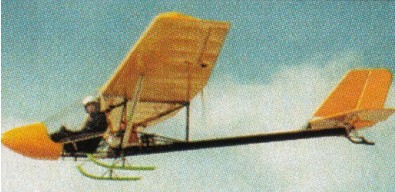
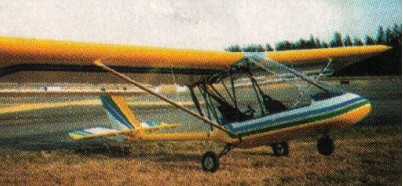
Centre mounted joy stick, rudder pedals, nosewheel steerable through rudder pedals.
Construction: Aluminium, Dacron.

Engine: Cuyuna ULII-02 (429cc) 35hp.
Static thrust: 225 lbs.
Empty wt: 278 lbs.
Wing span: 33ft.
Wing area: 160 sq.ft.
Height: 6 ft 7 in.
Length: 19ft.
Fuel cap; 5 USG.
Max wt: 500 lbs.
Stall speed: 27 mph.
Max speed: 63 mph.
Vne: 88 mph.
Climb rate: 800 fpm @ 32 mph.
Design limit: +6, -4g.
Glide ratio: 9-1.
Wing loading: 3.13 lbs/sq.ft.
Power loading: 14.19 lbs/hp.

Lea Kestrel Kermit

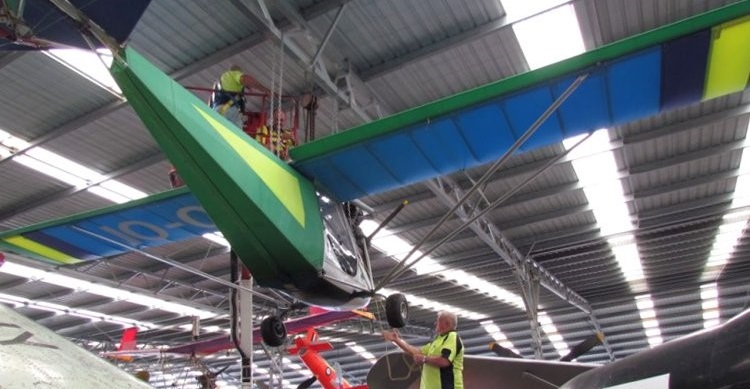
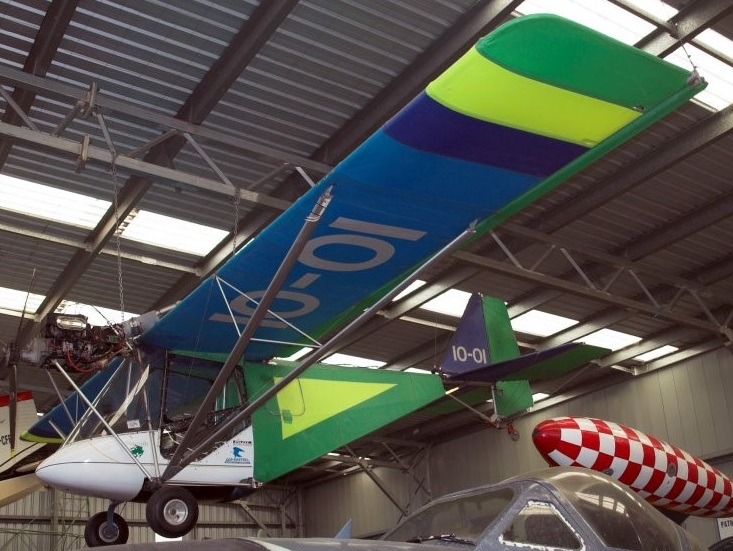
Lea Kestrel Kermit 10-001 C/N 1

The design and production of the ultralight Kestrel was the product of the efforts of Cec Lea, one of the pioneers of ultralight aircraft design and construction in Australia. A single seat, high wing, tractor engine aircraft it first appeared about 1990 and a number of examples were registered in the 95.10 registration series as late as mid-2000.

Lea Kestrel Kermit 10-001 C/N 1

Lea sold both completed aircraft and kits for owner construction. All were powered by the Austrian Rotax 503 engine and many, if not all, were fitted with a Brolga three blade carbon/glass composite propeller. Some 16 Kestrels were built.

Lea Kestrel Kermit 10-001 C/N 1

Lea Kestrel Kermit
Engine: Rotax 503, 37kW (50hp)
Cruising Speed: 100km/hr / 67mph
Range: 280km / 175mile

Laviasa

In 1998 Laviasa acquired from the New Piper Aircraft Company of the USA the Type Certificates (CCTT’S) No. 2 A 8 and 2 A 10 issued by the Federal Aviation Administration of the USA (FAA) in 1998 and the Certificates of Type No. AV-0004, AV-9901 and Production Certificate No. A-0801 issued by the National Civil Aviation Administration of Argentina (ANAC).

These documents give Laviasa the universal and exclusive rights for the manufacture of aircraft for agricultural use and other uses PA-25-235 / 260 (formerly called “Pawnee” and renamed “Puelche”) and its parts. These rights reach their possibility of exploitation of manufacturing use rights of said aircraft, to third parties in condition “Under License”.

Laviasa has:
All the relevant development documentation received from Piper: Certification Reports, Manuals, Specifications, Calculation Reports, tests and construction processes, etc. and more than 2400 manufacturing and production plans.
More than 900 pieces of molds, molds and templates
The responsibility, according to Annex 8 of ICAO for the assurance of the continuity of the airworthiness of all aircraft previously manufactured by Piper Aircraft and Chincul S.A. (from Argentina) “under license”, protected by the aforementioned CCTT’s and logically of all their own production aircraft.

Las Brisas Mohawk

The Las Brisas Mohawk is an American homebuilt aircraft that was designed and produced by Las Brisas Sales of Ozark, Missouri. When it was available the aircraft was supplied in the form of plans for amateur construction.

Based upon the Avid Flyer, which it greatly resembles, the Mohawk features a strut-braced high wing, a two-seats-in-side-by-side configuration enclosed cockpit accessed via doors, fixed conventional landing gear and a single engine in tractor configuration.

The aircraft is made from metal tubing, with its flying surfaces and fuselage covered doped aircraft fabric. Its 30.00 ft (9.1 m) span wing features Junkers flaperons, has a wing area of 124.5 sq ft (11.57 m2) and is supported by “V” struts with jury struts. The plans specify standard hydraulic brakes, a steerable tailwheel and wings that fold for ground transport or storage. The standard engine used is the 50 hp (37 kW) Rotax 503 two-stroke powerplant, which gives a standard day, sea level takeoff distance of 100 ft (30 m) and a landing roll of 150 ft (46 m).

The Mohawk has a typical empty weight of 450 lb (200 kg) and a gross weight of 1,000 lb (450 kg), giving a useful load of 550 lb (250 kg). With full fuel of 12 U.S. gallons (45 L; 10.0 imp gal) the payload for pilot, passenger and baggage is 478 lb (217 kg).

The manufacturer estimated the construction time from the supplied plans as 900 hours. In 1998 the designer indicated that the aircraft could be completed for US$6,500 excluding labor. In 1998, plans were sold for US$229.00 but by 2014 were no longer available.

Mohawk
Engine: 1 × Rotax 503, 50 hp (37 kW)
Propeller: 2-bladed wooden
Wingspan: 30 ft 0 in (9.14 m)
Wing area: 124.5 sq ft (11.57 m2)
Length: 18 ft 0 in (5.49 m)
Empty weight: 450 lb (204 kg)
Gross weight: 1,000 lb (454 kg)
Fuel capacity: 12 U.S. gallons (45 L; 10.0 imp gal)
Maximum speed: 130 mph (209 km/h; 113 kn)
Cruise speed: 85 mph (137 km/h; 74 kn)
Stall speed: 30 mph (48 km/h; 26 kn) flaperons down
Range: 320 mi (278 nmi; 515 km)
Service ceiling: 12,000 ft (3,700 m)
Rate of climb: 1,200 ft/min (6.1 m/s)
Wing loading: 8.0 lb/sq ft (39 kg/m2)
Crew: one
Capacity: one passenger
Laron ½ Tun

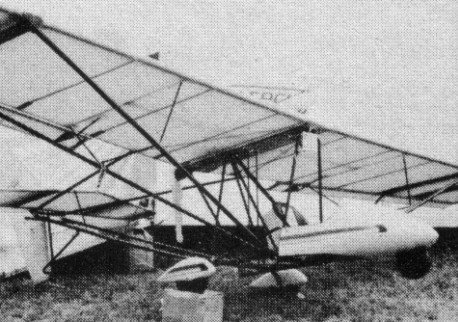
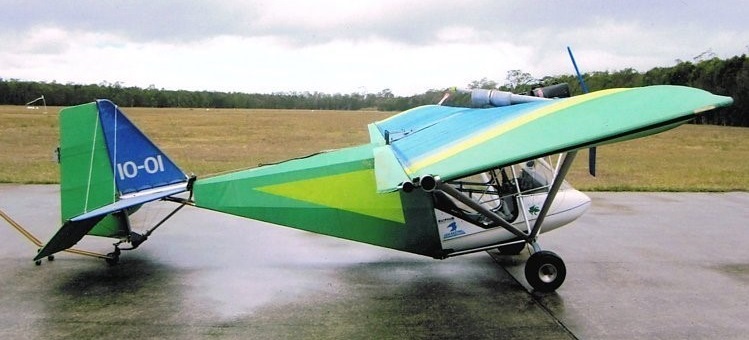
A Part 103 legal ultralight first flown in 1995, the wings are sheet dural.

Top speed: 65 mph
Cruise: 55 mph
Stall: 26 mph
Rate of climb: 1000 fpm
Takeoff dist: 150 ft
Landing dist: 100 ft
Service ceiling: 10,000 ft
Engine: Rotac 447, 30 hp
HP range: 30-40
Fuel capacity: 5 USG
Empty weight: 250 lb
Gross weight: 550 lb
Height: 4.5 ft
Length: 21 ft
Wing span: 26 ft
Wing area: 117 sq.ft
Seats: 1
Landing gear: tailwheel

Engine: Rotax 447, 40 hp
Wing span: 7.92 m
Wing area: 10.90 sq.m
MAUW: 249 kg
Empty weight: 113 kg
Fuel capacity: 19 lt
Max speed: 128 kph
Cruise speed: 80 kph
Minimum speed: 40 kph
Climb rate: 5 m/s
Fuel consumption: 7.5 lt/hr
Seats: 1
Kit price (1998): $4900

Laron Tundra

First flown in 1992.

Top speed: 100 mph
Cruise: 85 mph
Stall: 53 mph
Range: 140 sm
Rate of climb: 800 fpm
Takeoff dist: 200 ft
Landing dist: 200 ft
Service ceiling: 15,000 ft
Engine: Rotax 582, 65 hp
HP range: 48-80
Fuel capacity: 11 USG
Empty weight: 400 lb
Gross weight: 900 lb
Height: 6.5 ft
Length: 21 ft
Wing span: 32 ft
Wing area: 170 sq.ft
Seats: 2 tandem
Landing gear: nosewheel