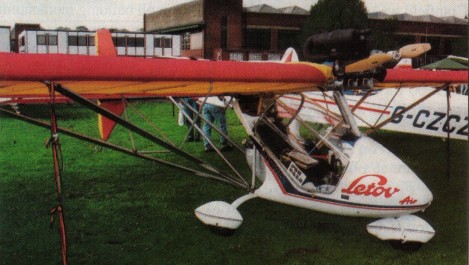
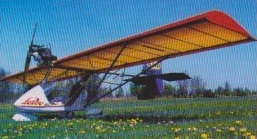
First flew in May 1997 the L-11 side-by-side two-seat basic trainer and glider-towing lightplane, but in 1998 was in financial difficulties and required investor to complete development.
First flew in May 1997 the L-11 side-by-side two-seat basic trainer and glider-towing lightplane, but in 1998 was in financial difficulties and required investor to complete development. Then also offering LK-2 Sluka single-seat microlight (first flown 1991), LK-3 Nova two-seat microlight/ homebuilt (first flown 1993), and ST-4 Aztek two-seat microlight (1996 type), all three in assembled or kit forms.
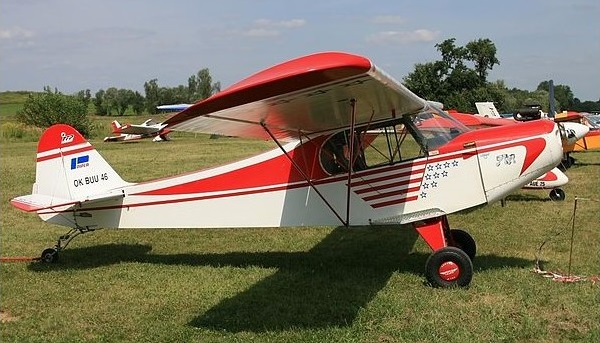
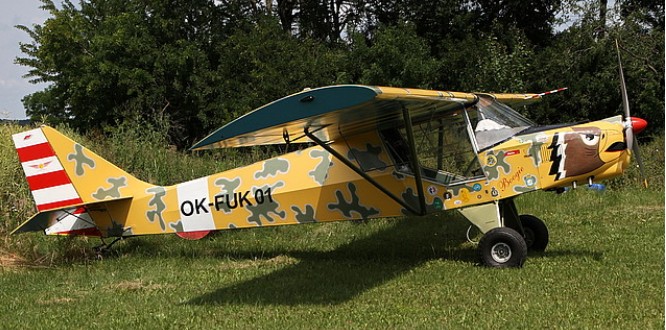
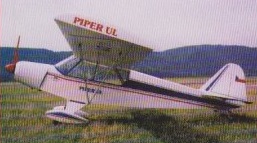
The UL Tulak (Rambler) is a side-by-side, factory-built or kit. There is no kit version for the Piper UL.
The Tulak was certified in 1996 and Piper in 1998. The Tulak was marketed by HB Flugtechnik as Dandy and the UL Piper as the Cubby. German name for the Piper UL being Tandem Tulak.
TUL-09 Tulak
The Piper UL and TUL-09 Tulak feature a high constant-chord wing braced by V struts, with optional tapered or downturned wingtips. The wings fold back for storage and transportation. A Clark Y wing section, thickness/chord ratio 12.5 per cent, is used. Flying controls are conventional and manual wth a flight-adjustable trim tab in each elevator. Plain flaps are fitted.
The fuselage is fabric-covered metal tube and two-spar wooden wing. The engine cowling is metal, and some composites are used.
The landing gear is tailwheel type, fixed, with a steerable tailwheel; 420×150 mainwheels with bungee suspension and cable-operated brakes. Mainwheel spats optional.
Engine options include 58.8 kW (78.9 hp) or 73.5 kW (98.6 hp) BMW; 58.8 kW (78.9 hp) Verner; 62.5 kW (83.8 hp) Tatra; and 51.5 kW (69.0 hp) Limbach..
In total 55 kits and complete aircraft were built by the end of 2002. The ninth factory-built machine was registered in Poland in 2002. Known sales were in Czech Republic, France, Germany and Poland.
HB Flugtechnik marketed the Piper UL and TUL-09 Tulak as the Dandy and Tulak.
Piper UL / TUL-09 Tulak Engine: Rotax 503 UL-2V, 37.0 kW (49.6 hp) Propeller: SportProp three-blade, ground-adjustable pitch, glass fibre Span: 9.82 m (32 ft 2½ in) Length: 5.96 m (19 ft 6½ in) Fuel capacity: 50 litres (13.2 US gallons; 11.0 Imp gallons). Max cruising speed: 70 kt (130 km/h; 81 mph)
Piper UL Engine: Rotax 912, 80 hp Wing span: 9.6 m Wing area: 13 sq.m MAUW: 450 kg Empty weight: 250 kg Fuel capacity: 50 lt Max speed: 180 kph Cruise speed: 160 kph Minimum speed: 55 kph Climb rate: 5 m/s Fuel consumption: 8 lt/hr Certification: C2 Seats: 2 Price (1998): 58 780 DM
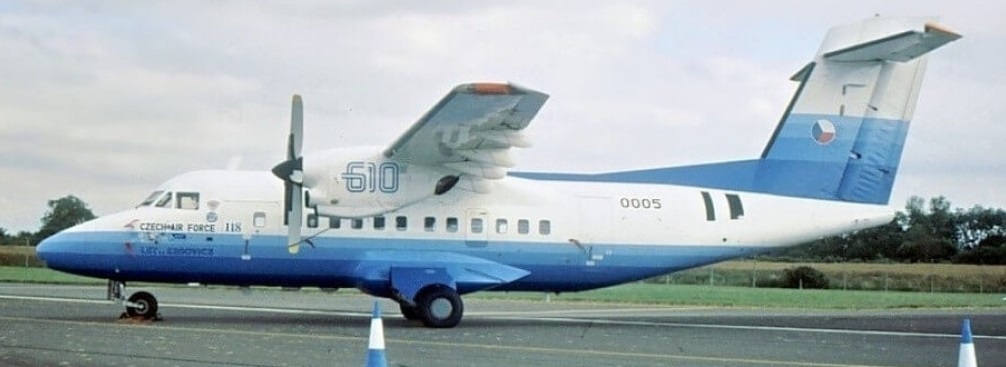
The development of the 40-seater L-610 started in 1985 at Let Kunovice Aircraft Industries in former Czechoslovakia. The Czech plane maker wanted to develop a bigger successor to its popular L-410.
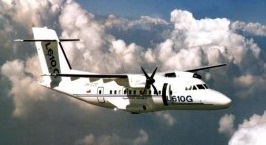
After the collapse of the Soviet Union, Let tried to adapt its new airplane to the global market by westernizing its avionics. Eight prototypes were made and the forty-passenger L 610 regional airliner first flew December 1988 and L 610G version followed in December 1992.
But due to a lack of funding, the program was eventually abandoned in 2006 and Let went on to focus on the L-410 and on gliders.
In 2008, 51% of Let’s shares were acquired by the Ural Mining and Metallurgical Company (UGMK), with the prospect of developing the market of Russian regional aircraft. In 2018, Deputy Minister of Industry and Trade of the Russian Federation Oleg Bocharov announced the decision of acquiring the documentation for the L-610 in order to continue its development.
While the development of the new L-610 is carried out on the basis of the existing scientific and technical work, it should differ from the original prototype. “The maximum take-off mass, cargo capacity, flight range and speed of the aircraft will increase, moreover, even the fuselage of the aircraft will be presented in a more modern design,” claimed the director-general of UZGA Vadim Badeha. The type certificate is expected for 2023, with mass production commencing the same year.
Thirteen years after it was abandoned, Polar Airlines and the Ural Civil Aviation Plant (UZGA) brought back the L-610 to life with an order for 10 of the regional aircraft, to be delivered between 2023 and 2025.
L-610G
With 10 aircraft ordered at the MAKS 2019 air show, the L-610 should replace the An-24 and An-26 within Russian Polar Airlines’ fleet. The partially state-owned regional carrier, subsidiary of Yakutia Airlines, already operates three L-410s.
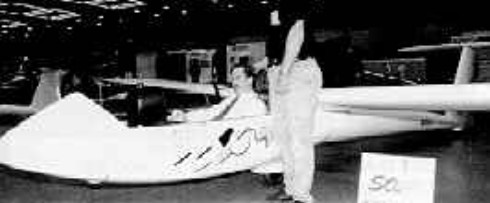
Designed by Marian Meciar and Vaclav Zajic, the Solo, which first flew in 1992, is a flapless sailplane designed to the OSTIC World Class sailplane specifications for the early solo/club pilot. Construction follows Blanik practice with all metal surfaces except fabric covered rudder, and flush rivets. It has top surface only Schempp-Hirth airbrakes. The fixed main wheel has an oleo-pneumatic shock absorber. Airfoil: Wortmann FX-60-17A11-182, root; FX-60-126, tip
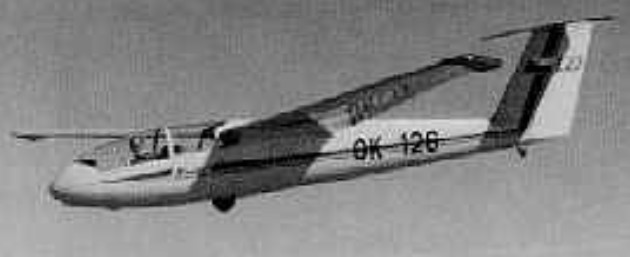
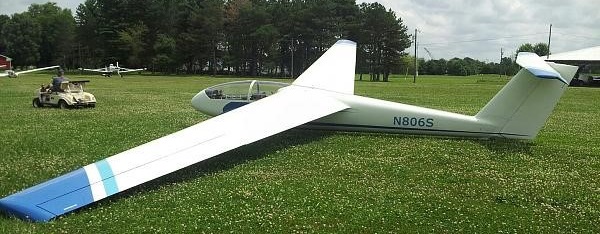
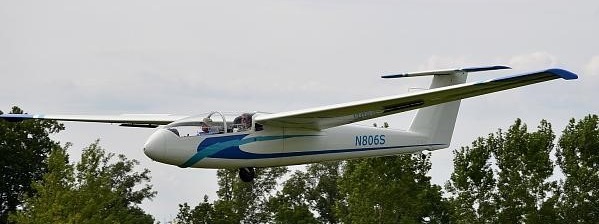
The Super Blanik, which first flew in 1988, is a development of the L 13 Blanik, but without flaps.
1993 Let L-23 Super Blanik C/N 928006
It has a T-tail, DFS type airbrakes and a swiveling tail wheel. It retains the semi-retractable shock absorbed main wheel of the L 13. The cockpit canopy opens in two pieces, the front cockpit cover opening sideways and the rear moving up and back over the center fuselage. Wingtip extensions are optional, increasing the span to 18.2 m/ 59.7 ft, but aerobatics are only permitted when the extensions are not fitted.
Founded 1980 by Learavia and British Government to produce Lear Fan 2100 twin-turboprop business aircraft (first flown 1981). Ownership passed 1982 to Fan Holdings Inc. of U.S.A., but with production in Northern Ireland. Production moved to U.S.A. 1983 but program halted 1985.