National Aerospace Laboratories NM5 / C-NM5 / Mahindra Aerospace NM5 / C-NM5

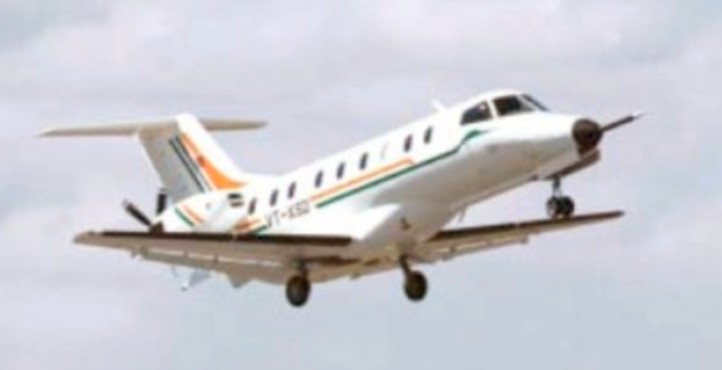
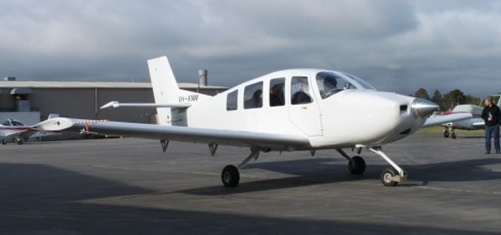
The NM5 or C-NM5 is a multi-role, multi-mission aircraft being jointly developed by National Aerospace Laboratories (NAL) and Mahindra Aerospace. It is a 5-seater civil aircraft and an extension of the Hansa project. The NM5 has been entirely designed and developed by NAL and Mahindra Aerospace on a 50:50 partnership basis. The NM5 can be used as a trainer, for transporting cargo, medical evacuation, tourism, VIP travel and for training pilots.

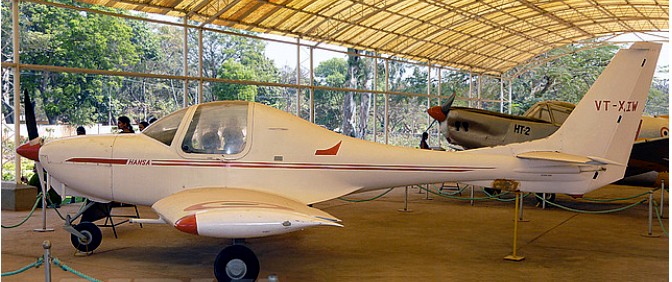
This new 4/5 passenger General Aviation aircraft programme was launched as a part of the 10th FYP network programme. Following the successful certification of HANSA-3, NAL proposed the development of a 5-seater general aviation aircraft to be carried out during the 10th plan. However the proposal was approved only in May 2005 and thus spilled over into the 11th plan also. Work on preliminary design of the aircraft commenced in October 2006.

NAL signed an MoU with M/s Mahindra Plexion Pvt Ltd (MP) to jointly develop the 5 seater general aviation aircraft, NM5 and to undertake its production and marketing. This represents the one of the recent public-private partnership programmes in aircraft design for NAL and in the civil aviation sector in India.

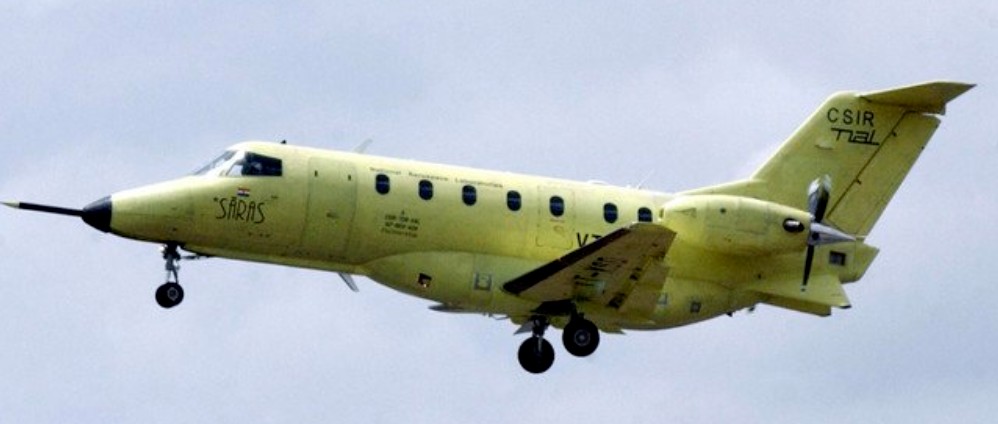
At the Indian Civil Aviation Airshow (2008) held at Begumpet Airport, Hyderabad between 15–18 October 2008, the 5 seat NM5 aircraft (general aviation aircraft) attracted a lot of interest in business visitors and the general public. The NM5 was exhibited during Aero India for people to see. The NM5 and the Saras models were the biggest attractions in seventh edition in the 160 square metre Indian stall at the Aero India was held from February 11–15, 2009.

The engine, propeller and certified seats of the aircraft have been imported as the raw material like aluminium alloy sheets and hardware such as, nuts, bolts, washers and rivets. Prototypes of NM-5 are ready and the certification will take a year. The Directorate General of Civil Aviation is expected to certify the aircraft by December next year. The first prototype of the 5-seater civil aircraft made its maiden flight on 1st sept 2011 at GippsAero’s flight testing facilities near Melbourne, Australia.

An NM-5 was expected to be priced around $400,000; between Rs 1.2 crore and Rs 1.4 crore.

NM5-100
Engine: Lycoming IO-540, 300 hp at 2700 rpm
Prop: 3 blade CS
Wingspan: 10.9 m / 35 ft 8 in
Wing area: 16.0 sq,m / 172 sq.ft
Length: 8.8 m / 28 ft 9 in
Height: 3.1 m / 10 ft 2 in
MTOW: 1525 kg / 3362 lb
Empty weight: 945 kg / 2083 lb
Useful load: 580 kh / 1280 lb
TO dist: 500 m / 1640 ft
Landing dist: 450 m / 1476 ft
Max level speed: 296 kph / 160 kt
Max ROC: 335 m/min / 1100 fpm
Stall flaps up: 110 kph / 60 kt
Stall flaps down: 96 kph / 52 kt
Range w/320 kg load: 1295 km / 700 nm
Cruise alt: 3050 m / 10,000 ft
Electrics: 24 v
Generator: 26 v / 70 A

National Aerospace Laboratories Saras / Hindustan Aeronautics Saras

In mid 1980s, Research Council recommended that National Aerospace Laboratories should study the civil aviation requirements of India and recommended ways and means of establishing a viable civil aviation industry. It further recommended that NAL should carryout a formal techno economical feasibility study of a multi role Light Transport Aircraft (LTA – renamed SARAS in October 1993). The feasibility study (November 1989) showed that there was a significant demand for a 9–14 seat multi-role LTA in the country and estimated a market potential of about 250–350 aircraft in the next 10 years. NAL submitted the feasibility study report to RC in November 1990 and started its search for an industrial partner.

The project began in 1991 as a collaboration with Russia (Myasishchev had a similar project called the Duet), but financial trouble led the Russians to drop out early in the project, in 1997. The project almost came to a halt when it was hit by US-imposed sanctions in 1998, after India’s nuclear tests in Pokhran. It was recommenced in September 1999 upon receiving development approval from the Cabinet Committee on Economic Affairs in June 1999.

The project of ‘Saras’ was sanctioned on 24 September 1999 with initial schedule of its maiden flight by March 2001.

The original design target parameters included a maximum take-off weight of 6,100 kg and a maximum payload of 1,232 kg, a high cruise speed of over 600 km/h, an endurance of six hours, a maximum flight altitude of 12 km (cruise altitude 10.5 km), short take-off and landing distances of about 600 m, a maximum rate of climb of 12 m/s, a low cabin noise of 78 dB, a range of 600 km with 19 passengers, 1,200 km with 14 passengers and 2,000 km with eight passengers, a high ‘specific range’ of 2.5 km/kg and a low cost of operation of Rs. 5/km.

The Saras was designed to fly both day and night from semi-prepared airfields and grass runways. It was designed adhering to the FAR-25/23 standard regulations and can offer air taxi and commuter services.

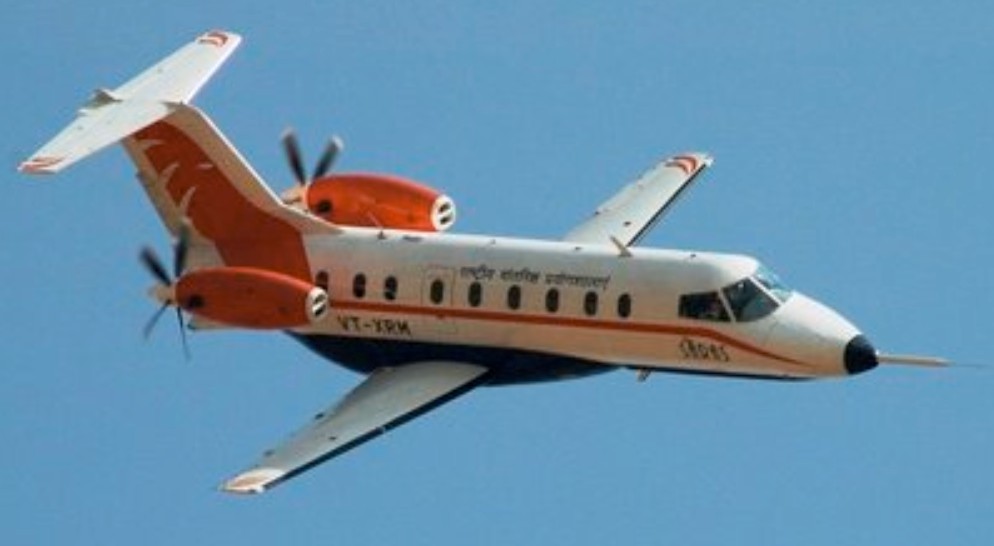
The first Saras (PT1) completed its maiden flight at the HAL airport in Bangalore on 29 May 2004 powered by two 850hp Pratt & Whitney PT6A-66 turboprop.

While the designed empty weight of the aircraft is around 4,125 kg, the first prototype weighed in around 5,118 kg. This was to be addressed by including composite wings and tail by the third prototype. It is being upgraded with 1,200hp Pratt & Whitney PT6A-67A engines to accommodate the overweight, new propellers and modern flight control and electrical systems.

The airframe of Saras-PT2 was built with lighter composites to reduce its overall weight by about 400 kg from its first prototype, which was overweight by about 900 kg. The PT2 was powered by Pratt & Whitney PT6A-67A engine and completed maiden flight on 18 April 2007. A 2.65m diameter Hartzell five-bladed propeller will be fitted to each engine. The propellers can make 1,700rpm in pusher configuration.

The IAF has signed up with National Aerospace Laboratories, Bangalore for the purchase of 15 Saras aircraft.“NAL signed a memorand­um of understanding with IAF to sell 15 Saras aircraft. The Kanpur unit of Hindustan Aeronautics Ltd will manufacture these planes,” The 14-seater twin-engine ai­rcraft would be used for coastal surveillance as well as tr­aining young cadets on transport flying.

On 6 March 2009, 2 Indian Air Force test pilots, Wing Commander Praveen Kotekoppa and Wing Commander Dipesh Shah along with a Flight Test Engineer Squadron Leader Ilayaraja, were killed when the second prototype Saras aircraft crashed and caught fire in an open field near Bidadi, about 30 km from Bangalore. A court of inquiry found that wrong engine relight drills given to the pilots caused the crash.

Saras
Engines: 2 × Pratt & Whitney Canada PT6A turboprop, 2150 shp (1634 kW)
Wingspan: 14.70 m (48.23 ft)
Length: 15.02 m (49.28 ft)
Height: 5.20 m (17.06 ft)
Useful load: 1,232 kg (2,710 lb)
Max. takeoff weight: 7,100 kg (15,653 lb)
Maximum speed: 550 km/h
Cruise speed: 450km/h
Range: 920 km
Ferry range: 1,935km
Service ceiling: 7,500 m (24,600 ft)
Rate of climb: 10.5m/s
Endurance: 4 hours 45 minutes
Crew: 3 (Pilot, Co-Pilot, Flight Engineer)
Capacity: 14 passengers

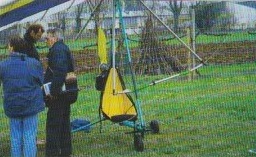
Nando Trial

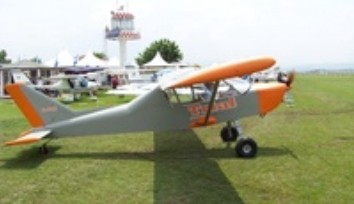
Foldable wings, all metal frame construction with central chrome molybdenum. Large door on right side that allows easy access to front and rear seat. Tundra wheels equipped to operate on rough terrain.
The Jabiru engine ensures efficient and low noise while maintaining excellent performance.

Stall: 32 kt / 37 mph / 60 kmh
Cruise: 86 kt / 99 mph / 160 kmh
VNE: 119 kt / 137 mph / 220 kmh
Empty Weight: 285 kg / 628 lbs
MTOW Weight: 450 kg / 992 lbs
Take-off distance (50ft obstacle): 390 ft / 120 m
Landing distance (50ft obstacle): 330 ft / 100 m

Engine: Rotax 503, 52 hp
Wing span: 9.9 m
Wing area: 16.7 sq.m
MAUW: 450 kg
Empty weight: 180 kg
Fuel capacity: 30 lt
Max speed: 120 kph
Cruise speed: 80 kph
Minimum speed: 45 kph
Climb rate: 4 m/s
Seats: 2
Fuel consumption: 15 lt/hr

Nanchang N5A

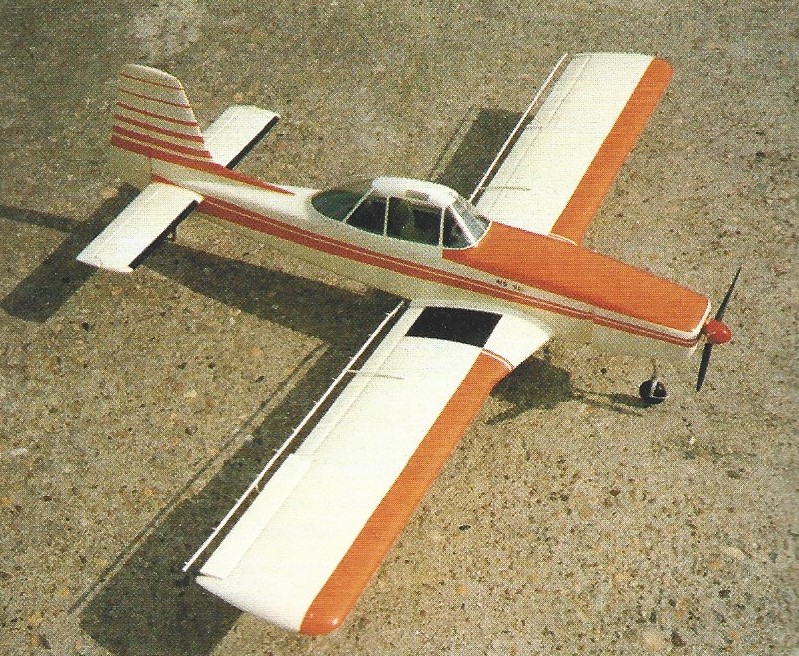
In 1988 Textron was contracted to supply three 400hp IO-720-D1B engines for the N-5. The contract provided for three specially equipped engines to be supplied for the N-5 prototypes, with an option on production engines from late-1990.

Nanchang developed the N-5A agricultural aircraft, first flown on 26 December 1989.
The N5A received its CAAC production certificate in the 1990s. By 1995, eight had been built.

Engine: Lycoming IO-720-D1B