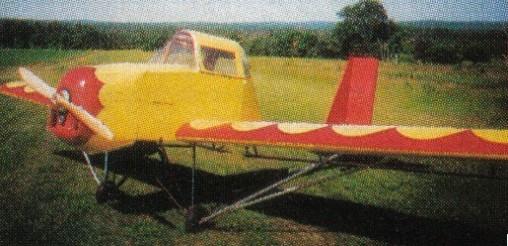
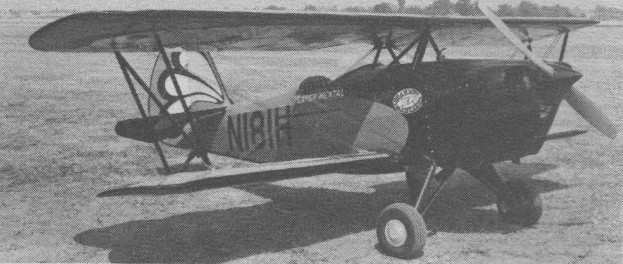
Oldfield Baby Great Lakes / Barney Oldfield Special / Baby Lakes

Designed and first built in 1960.

Harvey R. Swack had encountered a fellow named Barney Oldfield no relation to the auto racer who had designed a small, single seat sport biplane for homebuilders. Swack went into business with Oldfield, selling plans of the 2T 1 under the name “Baby Great Lakes” which he was entitled to do, as owner of the name, although the little homebuilt bore only a distant, imitative relationship to the original. When Champ¬lin bought Great Lakes Aircraft Company from Swack, Swack changed the name of the homebuilt design to “Barney Oldfield Special,” though it is still informally known as the “Baby Lakes.”

Dec 1973
Feb 1974

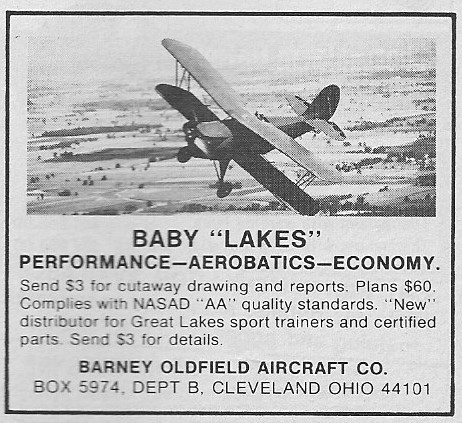
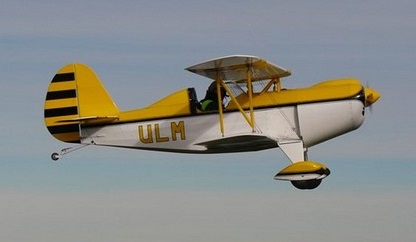
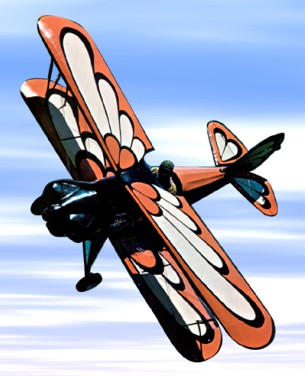
Barney Oldfield’s Baby Great Lakes flys much like its big brother, the Great Lakes Sport Trainer. The Baby “Lakes” was designed to get the same sort of flying ease and performance at lower cost. It uses a steel-tube fuselage, wood wings and fabric cover, and offers unusually lively aerobatic performance when powered by an 85-hp Continental engine. The Baby Lakes can also be fitted with 50- to 100-hp Continentals or the 108- and 125-hp Lycomings. (When fitted with the 108- and 125-hp engines, the airplane is called the Super Baby Lakes.) Its makers say it will out fly aircraft of twice the horsepower, and it is the least expensive, high-performance biplane available to the homebuilder.

Baby Lakes

The Baby Great Lakes (one place) and Buddy Great Lakes (two place) aircraft are well proven designs which are easy to construct and fly, provide classic good looks, and are aerobatic. Construction is of wood and steel tubing and plans are well presented for the first time builder. Aircraft Spruce & Specialty Company acquired all rights to these designs in May 1996 and offers packs, plans, raw materials kits, and pre-fabricated kits for these fine aircraft.
The Baby Great Lakes Main Tank Standard holds 10 gallons. The Baby Great Lakes Tank Stretch is 3″ longer and holds 11 gallons.

Gallery

Oldfield Baby “Lakes”
Gross Wt. 850 lbs
Empty Wt. 475lbs
Fuel capaci¬ty 12 USG
Wingspan 16’8”
Length 13’9”
Height: 4.5 ft
Wing area; 86 sq.ft
Engine 85-h.p Continen¬tal
HP range: 65-100
Seats: 1
Top speed: 135 mph
Cruise: 118 mph
Stall: 50 mph
Climb rate 2000 fpm
Takeoff run: 300 ft
Landing roll: 400 ft
Ceiling: 17,000 ft
Range: 250 sm
Seats: 1
Undercarriage: tailwheel

Offpiste Discovery

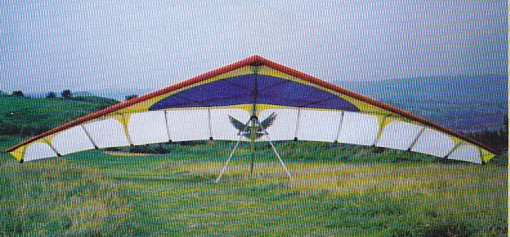
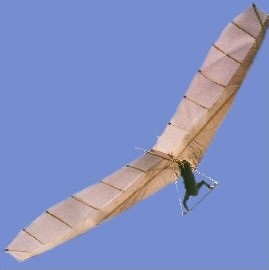
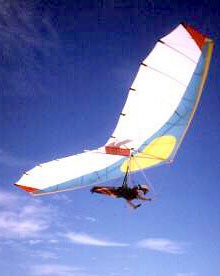
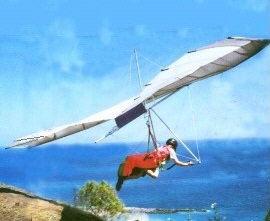
The 1996 Discovery was designed as a Skyfloater. It was aimed at those pilots wishing to fly for fun having found that the latest superships are demanding of skills especially in light wind conditions.

The 1996 Discovery was available in two sizes: 160 and 195. A feature of the Discovery is that it can be flown prone or seated.

Discovery 2

The 1997 Discovery 2 catered for all weights of pilot by four sizes: 160, 195, 195S and 210. The price was £1750, rising to £1800 for the 195 S version. A retro-fit kit was available for around £100 to upgrade the Mk 1 to Mk 2 spec.

The 1997 Discovery 2 was described as glorious in light conditions due to low wing loading and featherlight handling, however once you pull the bar in more than a few inches glide and sink rate are terrible.

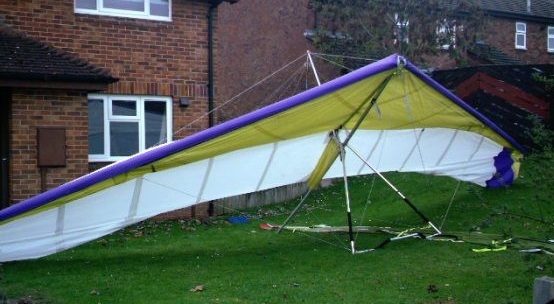
2006 Offpiste Discovery 195

Discovery 160

Discovery 195

Discovery 2 160
Wing area: 14.8 sq.m / 160 sq ft
Wing span: 9.14 m / 30 ft
Certification: BHPA
Pilot weight: 55-89 kg
Nose Angle: 125 deg
Aspect ratio: 5.6
Hang glider weight: 23 kg / 49 lb
Maximum speed: 128 km/h
Packed length: 5.3 m
Packed length short: 2.9 m
Number of battens: 12
Price (1998) £ 1948

Discovery 2 195
Wing area: 18.1 sq.m
Certification: BHPA
Pilot weight: 66-102 kg
Wing span: 10.36 m
Nose Angle: 125 deg
Aspect ratio: 5.6
Hang glider weight: 25 kg
Maximum speed: 128 km/h
Packed length: 5.8 m
Packed length short: 3.1 m
Number of battens: 12
Price (1998) £ 1948

Discovery 2 195 S
Wing area: 18.1 sq.m
Certification: BHPA
Pilot weight: 85-135 kg
Wing span: 10.36 m
Nose Angle: 125 deg
Aspect ratio: 5.6
Hang glider weight: 27 kg
Maximum speed: 128 km/h
Packed length: 5.8 m
Packed length short: 3.1 m
Number of battens: 12
Price (1998) £ 1998

Discovery 2 bi 210
Wing area: 19.6 sq.m
Certification: BHPA
Pilot weight: 114-178 kg
Wing span: 10.7 m
Nose Angle: 126 deg
Aspect ratio: 5.8
Hang glider weight: 30 kg
Maximum speed: 128 km/h
Packed length short: 3.35 m
Number of battens: 12
Price (1998) £ 2702

Oberursel

Motorenfabrik Oberursel

Motorenfabrik Oberursel A.G. was a German manufacturer of automobile, locomotive and aircraft engines situated in Oberursel (Taunus), near Frankfurt (Main), Germany. The company had its origins in 1891, when Willy Seck invented a new gasoline fuel injection system and produced a small one-cylinder stationary engine of about 4 hp, which he called the Gnom. The following year he founded Willy Seck & Co. to sell the design, which became famous around the world. The engine was improved to achieve more power, but in 1897 the shareholders refused to allow Seck to develop a Gnom-powered car and he left the company. The company was reorganized as Motorenfabrik Oberursel the next year, and by 1900 had built 2,000 engines.

The same year the company granted a license to the Seguin brothers in Lyon to produce the Gnom in France. Sold under the French name Gnome, the engine became so successful that they renamed their company to the same name. In 1908 they developed a rotary version of the basic Gnome system as the Gnome Omega aircraft engine, and from there a series of larger versions of the same basic design. The new Gnome engines were wildly successful, powering many of the early record breaking aircraft.

In 1913 Motorenfabrik Oberursel took out a license on the French Gnome engine design and the similar Le Rhône 9C. They produced both, the Gnomes as the U-series, and the Le Rhônes as the UR-series. During World War I it supplied a major 100 hp-class rotary engine that was used in a number of early-war fighter aircraft designs.

The Gnome Lambda seven-cylinder 80 hp rotary engine was also produced by the Oberursel firm as the Oberursel U.0 Umlaufmotor (the generic German term for a rotary engine) as their first-ever powerplant for German military aircraft, and was used on the initial versions of the Fokker Eindecker fighter, the Fokker E.I.

When World War I started the following year the Oberursel U.I of 100 hp, a clone of the Gnome Delta 100 hp rotary, had the best power-to-weight ratio of any German engine. It went on to power most of the early German fighters, such as the Fokker and Pfalz E-series monoplanes
.
Oberursel also built a copy of Gnome’s 14-cylinder Double Lambda two-row rotary. This 160 hp (120 kW) engine, designated U.III in Germany, was difficult to build and quickly wore out in service. It was used on the Fokker E.IV and D.III designs.

The 110 hp Oberursel UR.II, the clone of the Le Rhône 9J of the same power output, was the next major success. Fokker bought the company in 1916 in order to guarantee supplies of the UR.II. This acquisition proved advantageous because Fokker was partial to rotary powered designs, and because supplies of the Mercedes D.III engine were limited. The UR.II was used in the Fokker Dr.I and Fokker D.VI.

By 1917, the UR.II had been rendered obsolete by its relatively low power and poor performance at altitude. An 11-cylinder development, the UR.III, was not used operationally. Indeed, by 1918, rotary engines had largely fallen from favor with the Idflieg and with pilots. The lack of castor oil and the poor quality of the mineral oil substitute “Voltol” severely reduced engine life and reliability.

Nevertheless, in the summer of 1918, the UR.II was installed in the Fokker D.VIII. The light weight and aerodynamic cleanliness of the D.VIII allowed it to achieve excellent performance even with the outdated UR.II.

After the war the company was purchased in 1921 by Gasmotorenfabrik Deutz, another gasoline engine manufacturer, who moved their two-stroke diesel manufacturing to the Oberursel factories. In 1930 they merged with Humboldt-Deutz, but with only one product line. The factory was eventually closed in 1932 during the Great Depression, reopening in 1934 for small-scale production.

In 1938 the company merged Klöcknerwerke AG. From this point on they were known as the Klöckner-Humboldt-Deutz Oberursel factory, known primarily for their locomotive engines.

In 1940 during World War II all diesel research was relocated to Oberursel, where Dr. Ing. Adolf Schnürle led the development of much larger and more advanced engines for aircraft use. This led to the Klöckner-Humboldt-Deutz DZ 700 8-cylinder radial engine, the DZ 710 16-cylinder boxer engine, and the DZ 720 32-cylinder H-block made from twinned 710’s. None of these designs reached operational use by the end of the war, when the factory was occupied by US troops.

For a short period in 1946 the factories were used as a tanks and trucks repair depot by the US army.
In 1956 the factories were returned to Klöckner-Humboldt-Deutz, and from then on have been used primarily for gas turbine development and production. For the next twenty years they produced a variety of designs, typically under license from other companies. In 1980 they were renamed KHD Luftfahrttechnik GmbH.

In 1990 the company was sold to what was then BMW Rolls-Royce. The new owners decided to use the Oberursel plants to produce an entirely modern engine for the “small end” of the aviation market, and started development of the Rolls-Royce BR700 family in 1991. The engines have since gone on to power a number of aircraft including Bombardier, Gulfstream V and the Boeing 717.

The factory in Oberursel is claimed to be the oldest surviving aircraft engine factory in the world.

Engines:
Gnome designs:
Oberursel U.0
licensed Gnome 7 Lambda, 68 hp (51 kW) seven cylinder rotary.

Oberursel U.I
100 hp (75 kW), nine cylinder.

Oberursel U.II
110 hp (82 kW)

Oberursel U.III
Gnome Lambda-Lambda 14-cylinder, two-row rotary engine copy. 160 hp (120 kW).

Le Rhône designs:
Oberursel Ur.II
Le Rhone 9J 110 hp (82 kW) nine cylinder rotary.

Oberursel Ur.III
11-cylinder development of the Ur.II. 145 hp (108 kW).
NZ Aerospace Industries

In the late 1950s several FU-24 operators; James Aviation, Thames Aerial Topdressing and Robertson’s Air Services, formed Air Parts (NZ) Ltd at Hamilton Airport to provide aftermarket sales and service to FU-24 operators. Also in the mid 1950s Aero Engine Services Ltd (AESL) was formed to provide Engine and component overhaul facilities in support of the FU-24 program.

These businesses continued on until the 1960s when things began to change for the both of them. In 1965 Air Parts (NZ) Ltd secured the manufacturing rights to the Fletcher FU-24 and began producing detail parts and FU-24 aircraft locally. In 1967 AESL secured the manufacturing rights to the Victa Airtourer and also began detail and aircraft production locally. Both companies then enjoyed some years of expansion and development.

AESL provided the catalyst for the next change. In the early 1970s it had developed the CT-4 Airtrainer out of the prototype Victa Aircruiser and successfully secured contracts to supply the Airtrainer to the RAAF and RTAF. As a result of this, there were moves to get the New Zealand Government involved and merge Air Parts (NZ) Ltd and AESL into a new strong entity.

New Zealand Aerospace Industries Ltd (NZASIL) was born in 1973 with a 50% Government shareholding, (25% Air New Zealand and 25% National Airways Corporation), with the other 50% shareholding remaining with the previous companies shareholders such as James Aviation.

NZASIL started off well and successfully marketed both lines of Aircraft all around the world. Peak production was reached in 1975 with the delivery of 36 CT-4 Airtrainers and 14 FU-24s a total of 50 aircraft for the year.

Things quietened down several years later when CT-4 production slowed and all that remained was short run FU-24 production.

Pacific Aerospace Corporation, (PAC) was established in July 1982, following the purchase of the assets of New Zealand Aerospace Industries. James Aviation took a 50% interest in Aero Engine Services Ltd in 1955. James Aviation also had a shareholding in Air Parts when it was formed in 1957 to market the FU-24.

NWT Spruce Coupe

Fits Rotax or Kawasaki engines, and two wing lengths were available.

Top speed: 75 mph
Cruise: 60 mph
Stall: 35mph
Range: 80 sm
Rate of climb: 1200 fpm
Takeoff dist: 75 ft
Landing dist: 100 ft
Engine: Zenoah, 42 hp
HP range: 22-50
Fuel capacity: 6 USG
Empty weight: 300 lb
Gross weight: 600 lb
Height: 6 ft 3 in
Length: 16.9 ft
Wing span: 22 ft
Wing area: 88 sq.ft
Seats: 1
Landing gear: tailwheel