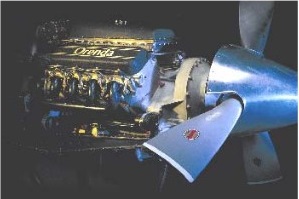
A liquid cooled V-8 piston engine in the 500-750 hp range. The OE600A model was first certified by FAA and Transport Canada in March 1998 at 600 hp.
Certificated in 1998 after a protracted and expensive development programme, the engine was in low-rate initial production in Debert, Nova Scotia when the effort was suspended in 2003. Engines had previously been delivered to Moravan in the Czech Republic for the Z-400 Rhino utility aircraft, to China for the Hongdu N-5 and to Tusas Aerospace Industries in Turkey for the Zui. Explorer Aircraft had selected the OE-600 for its 500R and several re-engining programmes were under way, including the Orenda-powered de Havilland Canada Otter and Beaver.
OE600 Cycle: 4 stroke No cylinders: V-8 Bore: 112.6 mm Stroke: 101 mm Compression: 8 Displacement: 8111 cc Cooling: Liquid Ignition: DCDI Reduction: Mechanical 2.14/1 Dimension: 812 x 1511 x 901 mm Weight: 340 kg Max pwr: 600 hp at 4400 rpm
Orca Aircraft Ltd purchased SAH-1 trainer from Trago Mills but went into administration 1989. The SAH-1 became Sprint when purchased by Lovaux / FLS Aerospace.
UK Optica Industries Ltd took over the Optica observation aircraft from Edgley following purchase from receiver by A. Haikney of Aero- Docks in 1985 and formation of this company to restart production in 1986. Fire of January 1987 destroyed seven finished Opticas and hangar.
The company was renamed Brooklands Aircraft Company Ltd from April 1987 and aircraft renamed Optica Scout. Company ceased trading 1990.
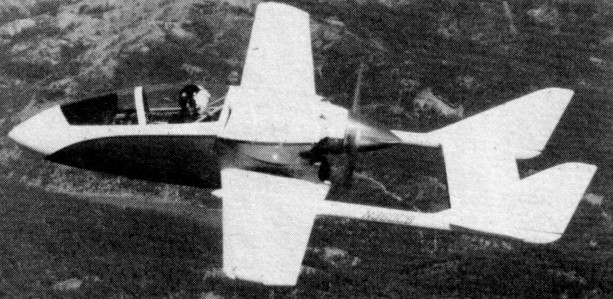
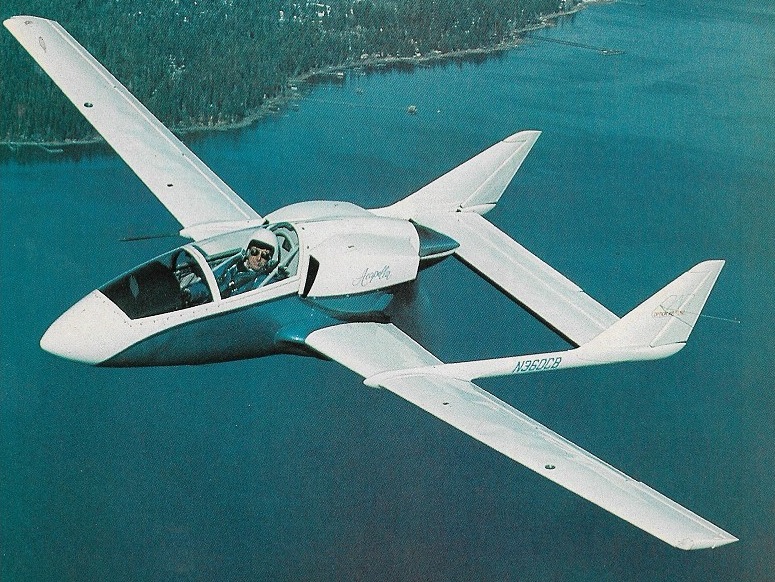
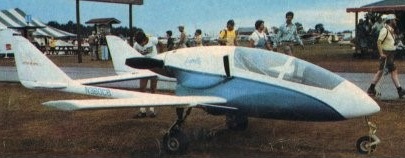
The Acapella is the creation of Carl O. Barlow, president of Option Air Reno, and sprung from his idea in 1977 to “re-do” the no longer available BD-5 design utilizing about 65 percent of the BD-5 hard¬ware including the fuselage from the firewall forward, the nosewheel, canopy and the short wings.
Design of the Acapella began in January 1978 and prototype construction started in June the same year. Registered N360CB, it achieved its first flight on June 6, 1980. After flying the prototype Acapella with both the short and long Bede wings, Barlow recommends using the long wings on the Acapella.
Production of kits began in June 1981, they include an engine mount, glass fiber cowling, new 8 ft (2.44 m) wing center section, tail booms, tail plane, elevator, main landing gear, many smaller components, and all necessary plans for the conversion. The prototype Acapella was powered originally by a 200 hp Avco Lycoming IO-360-A1B engine driving a Hartzell Q-Tip constant-speed pusher propeller, and in this form was known as Model 200-S.
It was re-engined subsequently with an 118 hp Avco Lycoming O-235 and fitted with longer-span wings to become the Model 100-L, with increased fuel capacity. The 200 series aircraft were not being made available to amateur constructors to build from plans or kits. This is because the majority of builders expressed interest in the smaller-engined Acapella 100-L, for which plans, kits and glass fiber components were available.
Work on a second prototype to carry a 118-hp Lycoming and a fixed-pitch propeller with a gross of about 1000 pounds was to be completed.
The Option Air Acapella N360CB crashed on July 28, 1982.
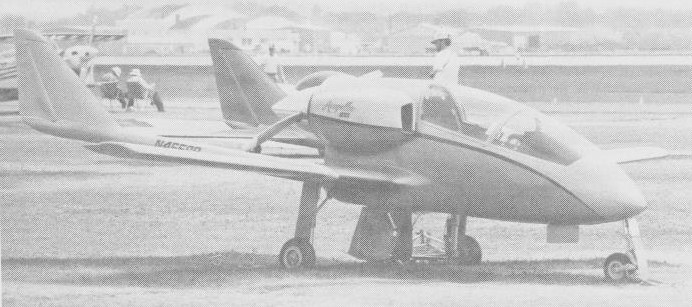
Option Air Acapella 100L N360CB
Only two aircraft were finished, the second one was registered N455CB on February 24, 1989, and it was this aircraft which was eventually donated to the EAA AirVenture Museum.
Gross Wt. 1350 lb Engine 200-hp Lycoming IO-360 Top speed 245 mph Cruise 214 mph Stall 81 mph Climb rate 1800 fpm Takeoff run 1000 ft Ceiling 26,500 ft
Single seat single engined high wing monoplane: no tall, canard wing. Pitch control by fully flying canard; yaw control by tip rudders. Wing braced from above by kingpost and cables, from below by cables. Undercarriage has three wheels in tricycle formation; bungee suspension on nosewheel and glass-fibre suspension on main wheels. Nosewheel steering. Optional brakes. Aluminium tube framework, without pod. Engine mounted below wing driving pusher propeller.
This machine was shown in prototype form in 1982 but since that time very little has been heard of its maker’s activities.
Engine: Cuyuna 430, 30 hp Propeller diameter and pitch 52 x 27 inch, 1.32 x 0.69 m Belt reduction, ratio 2.0/1 Nosewheel diameter overall 20 inch, 51 cm Main wheels diameter overall 20 inch, 51 cm
Designed by Robert Counts an initially developed by Omni-Weld Co around the 37 hp Global Tool GMT four-stroke engine that was also under development at the time, the Questor was aimed at the market for light homebuilt aircraft and a prototype first flew in 1983 with a 30 hp Cuyuna T330 two-stroke engine. It later received the GMT engine.
Development was taken over by Questor Aircraft and finally by Nostalgair.
Only the prototype was completed. It was first registered in 1983 as N701W c/n 0Q-1.
The Questor weighed 270 lb, cruised at 120 mph on 37 hp, burning less than 2 USG/hr.
Ownership was to Francis V Leszczynski of Miami, FL, US.
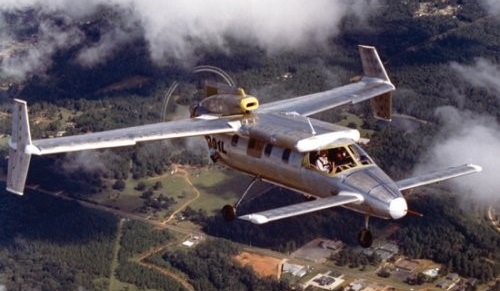
OMAC Inc. was founded in 1977 in Reno, Nevada, by Carl Parise and Larry Heuberger. The name stood for “Old Man’s Aircraft Company”.
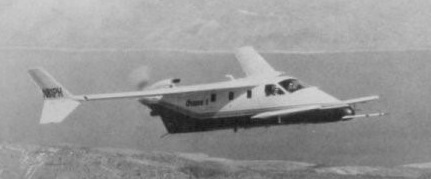
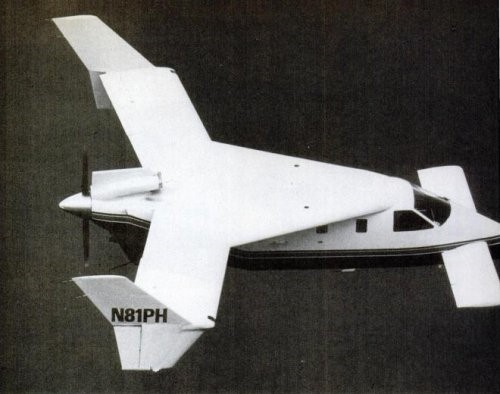
The OMAC-1 was a 6-8 seat canard pusher business aircraft introduced in 1981. Two prototypes were built: the first one (apparently unregistered) was powered by a 700 hp Avco Lycoming LTP 101-700A-1 pusher engine and first flew on Dec. 11, 1981.
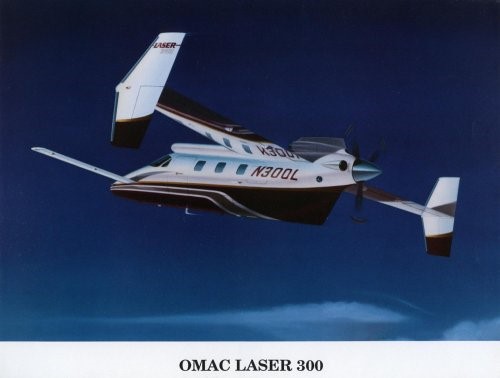
The second prototype N81PH served as testbed for improved Laser 300 version. used a 700 hp Garrett TPE331-9 and flew on February 19, 1983. It was 30 ft. long and had a wingspan of 35 ft.
OMAC-1
The OMAC company moved in 1985 to Albany in Georgia and worked an improved production version, the Laser 300 [N301L] which first flew on July 29, 1988 (pictures showing an aircraft registered “N300L” are only promotional artist’s views).
The aircraft apparently failed to attract any orders and was no longer heard of. Further development halted soon after owing to funding difficulties.
The Baby Great Lakes (one place) and Buddy Great Lakes (two place) aircraft are well proven designs which are easy to construct and fly, provide classic good looks, and are aerobatic. Construction is of wood and steel tubing and plans are well presented for the first time builder.
Aircraft Spruce & Specialty Company acquired all rights to these designs in May 1996 and now offers packs, plans, raw materials kits, and pre-fabricated kits for these aircraft.
My Dad was great friends with Walt Redfern. We owned one of the Great Lakes that he built (red and white). I even got sick in it while doing loops over Henley. Tim Heale
Engine: Lycoming O-235, 108 hp HP range: 85-125 Height: 6.25 ft Length: 14.67 ft Wing span: 18 ft Wing area: 98 sq.ft Weight empty: 550 lbs Gross: 1000 lbs Fuel cap: 14 USG Speed max: 135 mph Cruise: 135 mph Range: 250 sm Stall: 55 mph ROC: 1600 fpm Take-off dist: 400 ft Landing dist: 400 ft Service ceiling: 14,000 ft Seats: 2 Landing gear: tail wheel