Peak Aerospace / Bek Treppenbau

1998:
Bek Treppenbau
Fȁrberweg 73
D-88444 Riedlingen
Germany

The Peak Aerospace GmbH builds airplanes, delivery parts and special developments in GRP components materials in Mecklenburg-Western Pomerania. In particular they build the Messerschmitt BF 109 as single-seat ultralight aircraft. They manufacture all components in house.

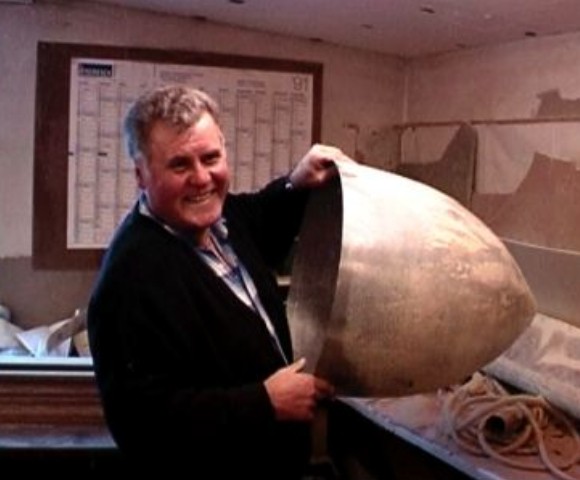
Mr. Bek had much to do with his stair building firm and the 109 had always remained a hobby. In co-operation with Mr. Bek the co-workers were trained and the first static model, factory serial number developed during 2000 to 2004.

Tassilo Bek

PDQ Aircraft Products PDQ-2

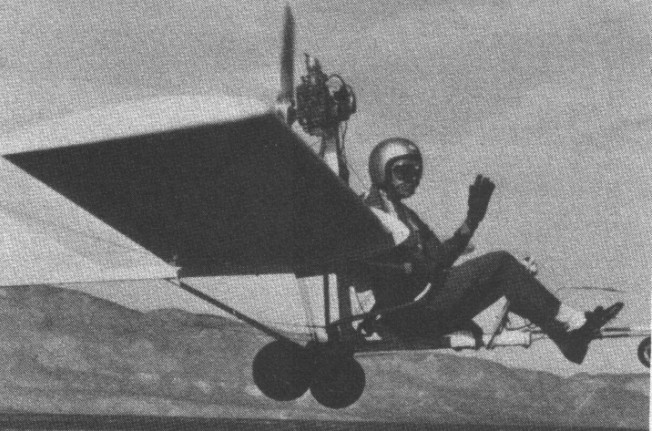
Back in the early 1970’s Wayne Ison designed the P.D.Q. The PDQ-2 is a sort of strap-on monoplane with shoulder-high wings, a tiny tricycle gear and a pylon-mounted JLO snowmobile engine that swings a two-bladed pusher prop. The pilot sits up front biting bugs at a Vmax of 80 mph. On a cold day vertical velocity is 400 fpm. The I-tail is hung at the end of a boom borrowed from the Bensen gyrocopter. The wings are made from Styrofoam bonded over plywood ribs at root and tip of each panel, with seven foam ribs in between. The foam is then covered with Dynel, bonded at the edges and heat¬shrunk, with resin squeegeed into the cloth and sanded light¬ly. Finally, the direct-driven prop develops 45 hp at 5500 rpm or 35 hp at 5000 rpm.

Engine: 1385cc VW, 40hp
Wingspan: 22 ft
Length: 14 ft 6 in
Max wt: 600lbs
Empty wt: 340 lb
Max speed: 80mph
Cruise: 70mph
Climb rate: 500 fpm

PC Flight PG

The PG is a side by side two seater with a spaceframe fuselage. The wings are made of riveted sheet dural and can be folded for transport.

Engine: Rotax 912 UL, 80 hp
Wing span: 10 m
Wing area: 11.66 sq.m
MAUW: 450 kg
Empty weight: 280 kg
Fuel capacity: 100 lt
Max speed: 210 kph
Cruise speed: 195 kph
Minimum speed: 63 kph
Climb rate: 5.5 m/s
Certification: vVz
Seats: 2
Fuel consumption: 17 lt/hr
Price (1998): 85 000 DM

PBS TJ 100

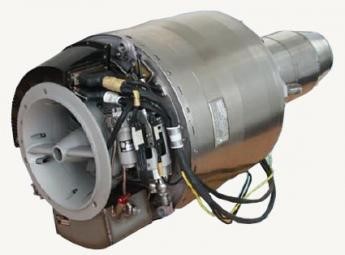
Development of the TJ 100 turbo-jet engine began in 2002, as a drive unit for MAE UAV and piloted flying vehicles.

The TJ 100 is single-shaft engine with single-stage radial compressor, annular combustion chamber, single-stage axial turbine, and stationary exhaust jet.

In the compressor intake there is a brushless starter generator, which enables the starting from the board network and power generating in course of the engine operation.

The intake air is compressed in the radial compressor wheel, proceeds through radial and axial diffuser into the combustion chamber, where it is mixed with fuel sprayed by several fuel nozzles. Combustion gases arising in fuel burning in the combustion chamber expand through the single-stage axial turbine and exhaust jet into the atmosphere.

The rotor of the engine is mounted on 2 ball bearings lubricated with pressure oil.

Several versions were produced, varying by length of output nozzle, mounting, and by power.

PBS produce TJ 100, TJ 100C, TJ100E, and TJ 100I of 100 daN (225 lbf) power. The TJ 100A and TJ 100S are produced with 110 daN (247 lbf) power.

Static Thrust: 100 daN / 225 lbf
Spf. Fuel Consumption: 1.2 kg/daN.hr / 1.2 lb/lbf.hr
Oil Consumption: 180 ml/hr / 0.16 qt/hr
Electric Power Output: 28 V/800W
Weight – Engine: 16 kg / 35 lb
Weight – Wth/Access: 19 kg / 41 lb
Outside Diameter: 272 mm / 10.7 in
Length: 485 mm / 19 in
Fuel Consumption: < 128 kg/hr / < 281 lbs/hr
Max Running Altitude: 8 000 m / 26 246 ft

PBS TJ-100 E3S
Max Thrust (max 5 min.): 258.53 lbf [1150 N]
Electric Power Output: 650 W
Specific Fuel Consumption (max thrust): < 1.1376 lb/lbf/hr
Fuel Consumption at Idle: 11 gal/hr
Outside Diameter: 10.7″
Engine Length: 24.6″
Engine Weight: 43 lbs
Max Operating Altitude: 32,808 ft. msl
Max Starting Altitude: 19,685 ft. msl
Flight Speed Range: 0 to 0.8 mach
Speed Range for Startup: 0 to 0.6 mach
Fuel Requirements: JET-A, JET-A1, JP4, JP8, TS-1, T2, RT
Lubrication: according to MIL-L-23699 (Mobil Jet Oil II, Aeroshell 560)
Price 2020: $65,000
PBS / První Brnenská Strojírna

První Brnenská Strojírna Velká Bíteš, a.s./ PBS is a manufacturer of:
Small aircraft turbojet engines and auxiliary power units,
Environmental control systems for aircraft and helicopters,
Ground power units,
Precise castings for automotive, aerospace and glass industries and healthcare,
Complex and completely machined parts of electromotors, alternators, mammographs and wind power plants,
Decanting centrifuges for sewage plants, i.e. programs closely related to ecology and environmental protection.

Pazmany PL-9 Stork

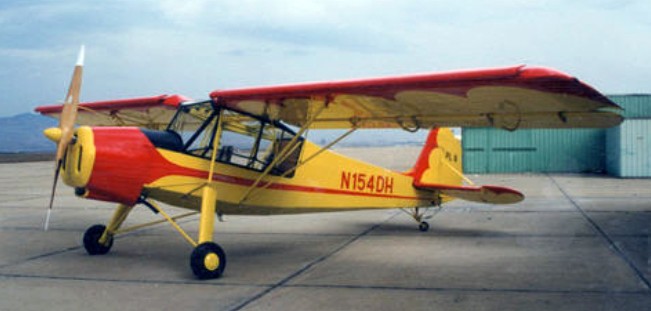
The Pazmany PL-9 Stork is an 3/4 replica of the Fieseler Storch. It authenticity is backed up by more than 9000 hours of aeronautical engineering design in order to obtain the same flying and handling characteristics of the original German Aircraft. The fuselage is welded chrome alloy steel tube, with aluminum sheet metal/fabric covered wing and empenage.

Designed to take off and land in extremely short distances, the Storch had a take off ground roll of 131 feet and a landing roll of 36 feet with 13 miles per hour head wind.

It has a well-proven aircraft configuration designed for a number of functions such as fish spotting, forest fire detection, farm work, missionary work, etc. The PL-9 Stork has a cruise speed of 104 mph with a standard Lyc. O-320/150 hp engine. Optional Subaru 2.2 lt engine.

Using the new Pazmany 3/4 scale plans, amateur builder Ruben Hardy embarked on his own construction of the PL-9. With great enthusiasm, financial commitment, and building ingenuity, bringing the first new Stork to life.
In March l999 at Oshkosh, Wisconsin his plane was displayed at the EAA convention to great public interest, in the presence of the design engineer Ladislao Pazmany.

PL-9
Engine LYC 0-320
Power Range 150-160 hp
Height 7 ft
Length 24.3 ft
Wing Span 36 ft
Wing Area 166 sq. ft
Empty Weight 1,132 lb
Gross Weight 1,739 lb
Fuel Capacity 30 USG
Top Speed 116 mph
Cruise 104 mph
Stall 33 mph
Range 332 mi
Rate of Climb 1400 fpm
Take-Off Distance 250 ft
Landing Distance 90 ft
Service Ceiling 15,000 ft
Number of Seats 2
Landing Gear Tailwheel
Information Package PDF 2009 $9
Information Package printed 2009 $12
Plans 2009 $550

Pazmany PL-4A

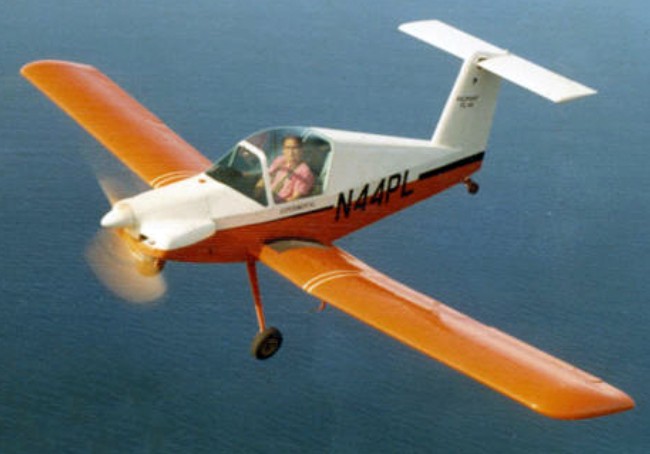
When designer Ladislao Pazmany was encouraged to come up with an easy-to-build, simple, safe, inexpensive, metal plane that could carry a Volkswagen 1600-cc or Continental A-65 engine in the early l970’s, he came up with the PL-4A. The fuselage is made up from formed sheet metal channels and standard extruded aluminium angles for the longerons with sheet metal skins. The wing consists of a centre section and two outer panels which can be folded back along the fuselage. Each panel incorporates a metal spar, a Zed section rear spar, pressed metal ribs and metal skins. Pop rivets are used extensively. Plain ailerons, but no flaps or trim tabs are fitted to the wing. The empennage is of “T” tail configuration with an all moving tailplane at the top of the fin with a large anti-servo tab. The tailwheel undercarriage consists of spring steel main legs with 3.50 x 6” tyres and brakes and a steerable tailwheel. A 9.5 Imperial gallon moulded fibreglass fuel tank is fitted behind the firewall. Engines from 50 to 75 hp may be installed.

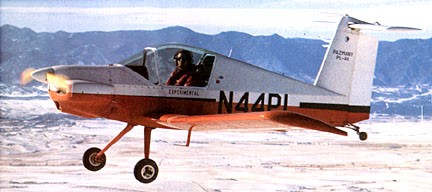
Pazmany PL-4A N44PL

The prototype was flown on July 9, 1972 and plans were made available. The plane is roadable (folding wings), and Pazmany did supply the fiberglass pieces, plexiglass windscreen and canopy, landing gear, welded engine mount, and control stick.

The PL-4A has been built by air cadets in Argentina and Canada.

Gallery

PL-4A
Engine Used: VW 1600 c.c.
Power Range: 50-90 hp
Top Speed: 120 mph
Cruise: 97 mph
Stall: 46 mph
Range: 280 mi
Rate of Climb: 650 fpm
Take-Off Distance: 560 ft
Landing Distance: 440 ft
Service ceiling: 13,000 ft
Fuel Capacity: 12 USgal
Empty Weight: 578 lb
Gross Weight: 850 lb
Height: 5.7 ft
Length: 16.5 ft
Wing Span: 26.7 ft
Wing Area: 89 sq. ft
Seats: 1
Landing Gear: Tailwheel
Information Package (PDF) 2009: $9
Information Package (printed) 2009: $12
Plans 2009: $375