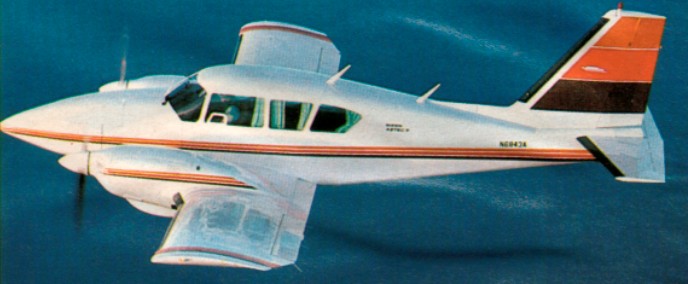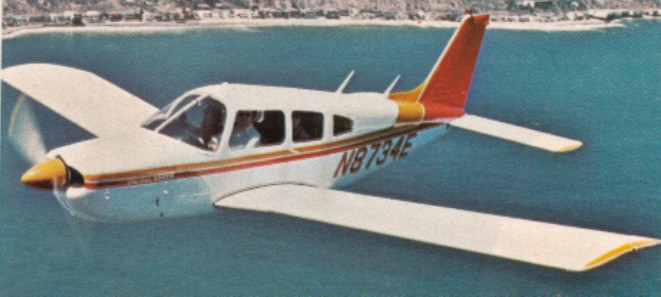
While the Arrow might look like a Cherokee and the design is almost identical, it does differ in being a retractable undercarriage four-seater powered by a 180 or 200 hp engine. First flown on 1 February 1967, sales began slowly in 1967, gaining impetus when the 200 hp version was introduced two years later. In 1969 Piper made available an optional PA-28-200R Cherokee Arrow with a 149kW IO-360-C1C engine.
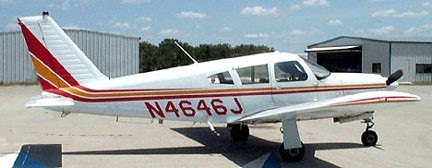
The 1976 Arrow II evolved from the original 180 hp model built and introduced in 1967 with a useful load of 1120 lbs. 20 more hp were added in 1969, upping the useful load to 1119 lbs. and the service ceiling by 1700 ft. to a maximum of 17,000. Improvements came year by year with significant changes in 1980 (longer fuselage and wider door), 1977 the new wing with tapered outer sections (as the Arrow II) and in 1979 a T-Tail. 2,850 were built.
Although Piper retained the Lycoming IO 360 for the normally aspirated Arrow III (491 built), they redesigned the cowling of the Turbo Arrow III (793 built) to accommodate the Continental TSIO-360 F, a slightly modified version of the Seneca II’s six cylinder engine. The turbocharged Continental brings considerable added performance to the Arrow. In addition to producing full power to 12,000 feet and 75 percent to the aircraft’s maximum approved operating altitude of 20,000 feet, the engine is rated at 200 hp with its exhaust system in place. This additional power allowed Piper to up the Turbo Arrow III’s gross to 2,900 pounds compared with 2,750 pounds for the normally aspirated Arrow III and 2,650 pounds for the Arrow II.
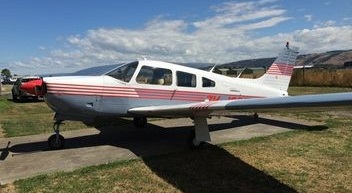
The turbocharged Continental gives the Turbo Arrow III a 10 to 25 knot true airspeed advantage over the normally aspirated Arrow III when both aircraft are operating at their best altitudes at roughly equivalent power settings. Producing approximately 75 percent power at 10,000 feet, the Turbo Arrow will cruise at 154 knots; 143 knots is the best the straight Arrow III can do at 75 percent. Top speed for the turbocharged Piper is 178 knots at 14,000 feet, while for the Arrow III, it’s 152 knots at sea level.
The Turbo Arrow III’s semi tapered wing improves the aircraft’s takeoff, climb and altitude performance. Although the new wing has the same surface area as the wing on older Arrows (170 square feet), the area of the Arrow III’s new mainplane and the lift it generates are distributed over a longer span. Also, more lift is produced along the main portion of the wing, where the adverse effect of the wingtip vortices is not felt. The geometric difference between the old and new Arrow wings is expressed in their aspect ratios: 6.02 for the old Arrow and 7.21 for the Arrow III. The positive effect of the Turbo Arrow III’s longer span and better lift distribution is about 20 percent less induced drag.
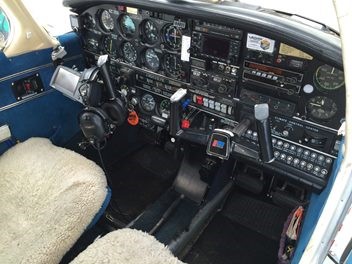
The new wing also enhances the Turbo Arrow III’s roll control. The ailerons are long¬er, and the tapered wing responds well to their influence, even though these ailerons are not the nicely balanced Frise type used on the original Warrior wing. In the interest of manufacturing simplicity, and since there was very little deterioration in roll performance, Piper returned to the old simple hinged aileron that they used on the original Cherokee models.
Each of these major developments received a distinctive title such as Arrow IV for the T-tailed version.
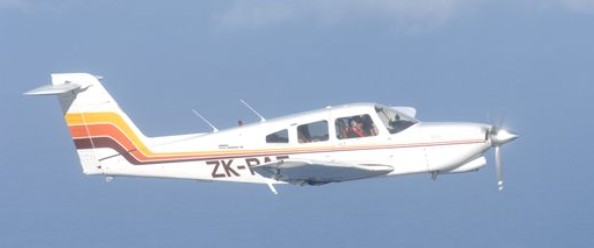
Production continued after nearly 7000 Arrows had been delivered by 1988.
The Piper Arrow project was licensed in the 1970s to be manufactured in Brazil by Brazilian manufacturer Embraer and later years later by its subsidiary Neiva and the project was renamed Corisco by Embraer in Brazil. At that time there was a strong interest of the Brazilian Government to stimulate the Brazilian aeronautical industry and executive air transport in Brazil and other Piper projects were also licensed for manufacturing in Brazil.
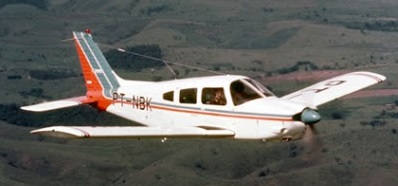
The Embraer Corisco, in all its versions, managed to establish itself for about two decades in the Brazilian market, with almost 480 units sold.
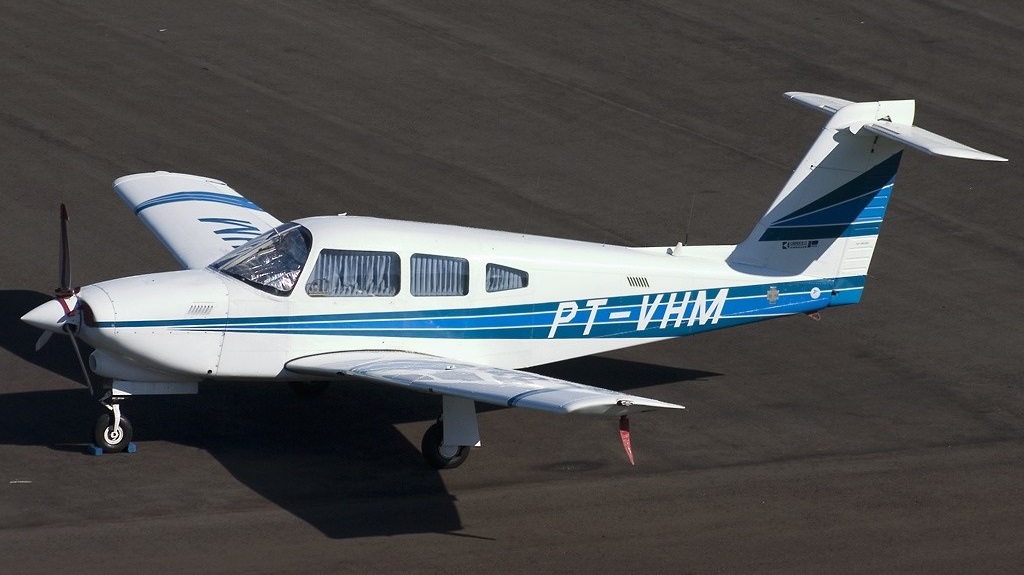
An improved version of the Embraer Corisco, manufactured from the 1980s by Embraer and Neiva as EMBRAER EMB-711 ST Corisco Turbo was manufactured in Brazil. The Embraer Corisco Turbo is a modernized version of the modest Embraer Corisco, with a few touches of sophistication and refinement, including turbocharger, variable pitch propeller, retractable landing gear, improved sound insulation, leather seats, among other items.
Chincul SACAIFI manufactured aircraft under license from Piper Aircraft Corporation. The company was a wholly owned subsidiary of “La Macarena S.A.”, Piper’s Argentine agent. Production included 960 PA-28 Cherokee.

Chincul-built PA-28 Arrow
PA28-180S Arrow
Engine: 180hp Lycoming O-360-A3A
Length: 23’6
Speed: 152 mph
Range: 845 mi
PA28-180 Cherokee Arrow I
Engine: 180hp Lycoming IO-360-B1E
Useful load: 1120 lb
Max speed: 170 mph
Cruise: 162 mph
Range: 995 mi
Ceiling: 15,000′
PA-28R-200 Arrow
Engine: Lycoming IO-360-C1C6, 200 hp
TBO: 2000 hr
Fuel type: 100/100LL
Propeller: McCauley CS
Landing gear type: Tri/Retr.
Gross weight: 2750 lb
Landing weight: 2750 lb
Empty weight, std: 1790 lb
Useful load, std: 960 lb
Payload, full std. fuel: 572 lb
Usable fuel: 72 USgal
Oil capacity: 8 qt
Wingspan: 35 ft. 5 in
Overall length: 24 ft. 8 in
Height: 7 ft. 10 in
Wing area: 170 sq. ft
Wing loading: 16.18 lbs./sq. ft
Power loading: 13.75 lbs./hp
Wheel base: 7 ft. 10 in
Wheel track: 10 ft. 6 in
Wheel size: 6.00 x 6
Seating capacity: 4
Cabin doors: 1
Cabin width: 41 in
Cabin height: 45 in
Baggage capacity: 200 lb
Cruise speed 75% power @ 6,000 ft.: 137 kt
Max range (w/ res) 55% power @ 9,000 ft: 880 nm
Fuel consumption (.42 lbs./hp/hr. @ sfc) 75% power: 10.5 USgph
Stall speed (flaps up): 60 kt
Stall speed (flaps down): 55 kt
Best rate of climb (SL): 831 fpm
Service ceiling: 16,200 ft
Takeoff over 50-ft. obstacle: 1600 ft
Landing over 50-ft. obstacle: 1520 ft
PA28R-200 Arrow II
Engine: Lycoming IO-360-C1C, 200 hp
Wingspan: 32 ft 0 in / 9.75 m
Length: 24 ft 7.25 in / 7.50 m
Empty weight: 1517 lb / 688 kg
MTOW: 2650 lb / 1202 kg
Useful load: 1133 lb
Equipped payload (750 miles fuel, 75 % power): 730 lb
Cruise (75% pwr): 165 mph / 143 kt / 266 kph
Stall speed (Vso): 64 mph
ROC: 900 fpm / 274 m/min
Service ceiling: 15,000 ft / 4575 m
Range (max fuel, 75% pwr): 740 sm / 642 nm / 1191 km
Seats: 4
Baggage capacity: 200 lb / 90.7 kg
Cabin width (elbow to elbow): 42.0in
PA28R-201 Arrow III
Engine: Lycoming IO 360 C1C6, 200 hp
TBO: 1,600 hr
Prop: constant speed, two blade, 74 in dia
Length: 27 ft
Height: 8 ft 3 in
Wingspan: 35 ft 5 in
Wing area: 170 sq.ft
Max ramp wt: 2,750 lb
Max takeoff wt: 2,750 lb
Std empty wt: 1,627 lb
Max useful load: 1,123 lb
Max landing wt: 2,750 lb
Wing loading: 16.2 lb/sq.ft
Power loading: 13.7 lb/hp
Max usable fuel: 72 USG/432 lb
Max ROC @ SL: 831 fpm
Max ROC @ 8,000 ft: 480 fpm
Max operating alt: 17,000 ft
Max speed: 152 kt
Max cruise, 75 % power (2,400 rpm) at 6,500 ft: 143 kt
Cruise, 65 % pwr at 8,000 ft: 131 kt
Fuel flow 65 % pwr: 9.2 USG/hr
Endurance at 65 % pwr, no res: 7.5 hr
Econ cruise, 55% power at 13,000 ft: 122 kt
Duration at max cruise: 6.7 hr
Duration at econ cruise: 8.5 hr
Stalling speed, clean: 60 kt
Stalling speed, flaps dn: 55 kt
Turbulent air penetration speed: 121 kt.
PA28R-201 Turbo Arrow III
Engine: Continental TSIO 360 E, 200 hp
TBO: 1,400 hr
Propeller: Hartzell Constant speed, 76 in. diameter
Length: 25 ft
Height: 7 ft. 10 in
Wingspan: 35 ft. 5 in
Airfoil: NACA 652415
Aspect ratio: 7.21
Wing area: 170 sq.ft
Wing loading: 17.1 lb/sq.ft
Power loading: 14.5 lb/hp
Seats: 4
Gross weight: 2,900 lbs
Empty weight: 1,910 lb
Useful load: 990 lb
Payload with full fuel: 528 lb
Fuel capacity: 77 USG/462 lbs
Baggage area: 24 cu.ft
Baggage capacity: 200 lb
Minimum runway requirement: 1,620 ft
Rate of climb: 940 fpm
Service ceiling: 20,000 ft
Maximum level speed: 178 knots
Maximum cruise (75 % @ 18,800 ft.): 172 knots
Economy cruise (55 % @ 20,000 ft.): 154 knots
Range @. maximum cruise (45 min res): 675 nm
Range @ economy cruise (45 min res): 860 nm
Duration @ maximum cruise (no res): 6.5 hr
Duration @.economy cruise (no res): 8.3 hr
Maneuvering speed: 121 knots
Stall speed (clean): 63 knots
Stall speed (gear, flaps down): 58 knots
Engine: Continental TSIO 360 F, 200 hp
TBO: 1,400 hr
Prop: two blade, constant speed, 76 inch diameter
Length: 24 ft. 8in
Height: 7 ft. 10 in
Wingspan: 35 ft. 5 in
Wing area: 170 sq.ft
Wing loading: 17 lb/sq.ft
Power loading: 14.5 lb/hp
Seats: 4
Empty weight: 1,815 lb
Useful load: 1,085 lb
Payload with full fuel: 653 lb
Gross weight: 2,900 lb
Usable fuel capacity: 72 USG/432 lb
Maximum rate of climb: 940 fpm
Service ceiling: 20,000 ft
Maximum speed: 178 kt
Max cruise, 75% power (2,575 rpm) at 19,000 ft: 172 kt
Econ cruise, 55 % power at 20,000 ft: 154 kt
Duration at max cruise: 6.2 hr
Duration at econ cruise: 8.1 hr
Stalling speed, clean: 63 kt
Stalling speed, full flaps: 57 kt
Piper PA-28RT-201T Turbo Arrow
Engine: 1 x Teledyne Continental TSIO-360-FB, 149kW
TBO: 1800 hours / 6 Years
Propeller: HARTZELL PHC-C3YF-1RF
Max take-off weight: 1315 kg / 2899 lb
Empty weight: 767 kg / 1691 lb
Wingspan: 10.8 m / 35 ft 5 in
Length: 8.33 m / 27 ft 4 in
Height: 2.52 m / 8 ft 3 in
Wing area: 15.79 sq.m / 169.96 sq ft
Max. speed: 330 km/h / 205 mph
Ceiling: 6095 m / 20000 ft
Range: 1665 km / 1035 miles
Piper 1978 PA-28R-201T Turbo Arrow III
Engine: Continental TSIO-360F, 200 hp
TBO: 1400 hr
Propeller: Const. spd.
Landing: Tri/Retr.
Gross weight: 2900 lb
Empty weight, std.: 1663 lb
Useful load, std: 1237 lb
Fuel: 72 Usgal
Wingspan: 35 ft
Overall length: 25 ft
Height: 8 ft
Wing area: 170 sq. ft
Seating capacity: 4
Cabin width: 41.5 in
Cabin height: 49 in
Baggage capacity: 200 lb
Cruise speed 75% power: 172kt
Cruise speed 65% power: 167 kt
Max range (w/ res) 75% power: 760 nm
Max range (w/ res) 65% power: 830 nm
Fuel consumption 75% power: 12 USgph
Fuel consumption 65% power: 10.8 USgph
Stall speed (gear, flaps down): 57.5 kt
Best rate of climb: 940 fpm
Service ceiling: 20,000 ft
Takeoff ground roll: 1110 ft
Landing ground roll: 645 ft
PA28R-201 Arrow IV
Engine: 1 x Lycoming IO-360-C1C6, 200 hp
TBO: 1600 hr
Prop: Hartzell 2 blade, constant speed 76 in
Seats: 4
Length: 27 ft
Height: 8.3 ft
Wingspan: 35.4 ft
Wing area: 170 sq.ft
Wing aspect ratio: 7.2
Max ramp wt: 2750 lb
Max take off wt: 2750 lb
Standard empty wt: 1637 lb
Max useful load: 1113 lb
Max landing wt: 2750 lb
Wing loading: 16.2 lbs/sq.ft
Power loading: 13.8 lbs/hp
Max useable fuel: 432 lb
Climb rate: 831 fpm @ 87 kt
Climb gradient: 573 ft/nm
Rate of climb @ 8000 ft: 440 fpm
Service ceiling; 17,000 ft
Max speed: 149 kts
Cruise @ 65% power @ 8,000ft: 131 kt
Fuel flow @ 65% power @ 8,000ft: 58 pph
Endurance @ 65% power @ 8,000ft: 7.2 hr
Stalling speed clean: 58 kt
Stall speed flaps/gear down: 53 kt
Turbulent air penetration speed: 121 kt
Retractable undercarriage
2005 New Piper Arrow IV
Base price: $292,400
Engine: Lycoming IO-360-C1C6, 200 hp
TBO: 2000 hr
Fuel type: 100/100LL
Propeller type: McCauley CS
Landing gear: Tri./Retr
Max ramp weight: 2758 lb
Gross weight: 2750 lb
Landing weight: 2750 lb
Empty weight, std: 1787 lb
Useful load, std: 971 lb
Usable fuel, std: 72 USG
Payload, full std. fuel: 539 lb
Oil capacity: 8 qt
Wingspan: 35 ft. 5 in
Overall length: 24 ft. 8 in
Height: 7 ft. 10 in
Wing area: 170 sq. ft
Wing loading: 16.2 lbs./sq.ft
Power loading: 13.8 lbs./hp
Wheel size: 6.00 x 6
Seating capacity: 4
Cabin doors: 1
Cabin width: 41 in
Cabin height: 45 in
Cruise speed, 75%: 137 kt
Fuel consumption, 75%: 10.6 USgph
Vso: 53 kt
Max range, 55%: 880 nm
Best rate of climb, SL: 831 fpm
Service ceiling: 16,200 ft
Takeoff over 50-ft obstacle: 1600 ft
Landing over 50-ft. obstacle: 1520 ft
PA28RT-201T Turbo Arrow IV
First built: 1978
Engine: 1 x Continental TSIO-360-FB, 200 hp
TBO: 1800 hrs
Fuel; 100 Octane.
Prop: Hartzell 2 blade, constant speed 76 in
Seats: 4
Length: 27.3 ft
Height: 8.3 ft
Wingspan: 35.4 ft
Wing area: 170 sq.ft
Wing aspect ratio: 7.2
Max ramp wt: 2912 lb
Max take off wt: 2900 lb
Standard empty wt: 1896 lb
Max useful load: 1004 lb
Payload (Full std Fuel); 497 lb
Baggage Capacity; 200 lbs / 24 cu.ft.
Max landing wt: 2900 lb
Wing loading: 17 lbs/sq.ft
Power loading: 14.5 lbs/hp
Fuel Capacity (std); 77 US gal
Usable Fuel; 72 US gals. / 432 lb
Climb rate: 940 fpm @ 97 kt
Climb gradient: 581 ft/nm
Rate of climb @ 8000 ft: 850 fpm
Certificated ceiling; 20,000 ft
Max speed: 178 kt
Cruise @ 65% power @ 8,000ft: 140 kts
Cruise @ 65% power @ 18,000ft: 161 kts
Cruise Best Economy Power 75% 19,000 ft: 168 kts
Cruise Best Economy Power 65% 20,000 ft: 164 kts
Cruise Best Economy Power 55% 20,000 ft: 152 kts
Max Range 55% pwr (with res, best economy); 780 nm
Max Range 65% pwr (with res, best economy); 830 nm
Max Range 55% pwr (with res, best economy); 860 nm
Fuel Consumption 75%: 14.0 US Gal/hr
Fuel Consumption 65%: 12.7 US Gal/hr
Fuel Consumption 55%: 11.0 US Gal/hr
Fuel flow @ 65% power @ 18,000ft: 76 pph
Endurance @ 65% power @ 18,000ft: 5.5 hr
Stalling speed clean: 66 kts
Stall speed flaps/gear down: 61 kt
Turbulent air penetration speed: 121 kt
Retractable undercarriage
Wheel base; 7 ft 10 in
Wheel Track; 10 ft 6 in
Wheel Size; 6.00 x 6 in
Cabin Doors; 1
Cabin Width; 42 in
Cabin Height; 46 in
Take-off Ground Roll; 1110 ft
Take-off Over 50ft; 1620 ft
Landing Ground Roll; 645 ft
Landing over 50 ft; 1555 ft