1945: Curtis Pitts, Jacksonville FL. 1945: Pitts Aero Service, Gainesville FL. 1955: Homestead FL. 1967: Pitts Aviation, Homestead. 1969: Pitts Aviation Enterprises, Afton WY. Pitts Aviation Enterprises founded at Florida to market plans for the Curtis Pitts biplane.
New company formed as Pitts Aerobatics in 1977 at Afton, Wyoming, to continue sales and engineering of the Pitts aerobatic biplane at the same location by Aerotek Inc, which formerly built the Pitts S-2 for Pitts Aviation Enterprises. c.1980: Pitts Aerobatics (pres: E H Anderson) Aerotek continued to produce the S-2 for Pitts Aerobatics and the single-seat Pitts S-15 for pilots who did not wish to build their own.
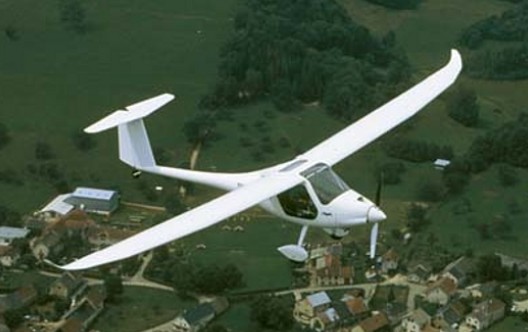
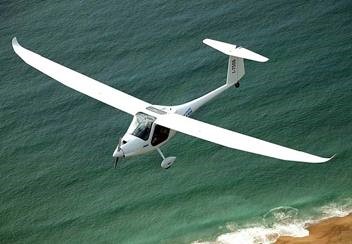
In 1995, Pipistrel d.o.o. Ajdovščina presented a two-seat ultralight aircraft with a wing-span of 15 meters, aimed also at glider pilots. The aircraft was the Sinus.
The Sinus team aimed at a two-seat composite-built aircraft with 15 meters of wingspan, which requires 100 meters of runway to take-off and reaches 200 km/h in horizontal flight, all on a 50 HP engine. The aircraft was is constructed according to EASA CS-22 rules (classic gliders), although it fits into the microlight category, with seats in side-by-side configuration.
The L/D ratio of the aircraft was be close to 1:30, which makes it a decent glider and provides extra safety in case of engine failure, since the engines for microlights are not certified, and must present Short Take-off and Landing (STOL) characteristicts. The aircraft is equipped with airbrakes, which enable the pilot do descent rapidly and use a high angle of approach onto typical ultralight airfields. The empty weight of the whole aircraft was not to exceed 285 kgs.
The small Pipistrel team developed their own airfoil and wing shape as well as a propeller with feathering capability, all drastically decreasing the drag and providing for a satisfactory glide ratio.
When the Sinus flew for the first time she was a subject of aviation magazines around the World and glider pilots began placing orders. They were willing to trade the imperfect glide ratio for the low cost of flying, freedom and independence from glider tow.
Sinus took the World Champion 2001 title, triggered a wave of imitators. Fully composite construction with a 15-meter wing span, which provide for a glide ratio touching 1:30, the Sinus is equipped with high-tech features such as flaperons, airbrakes and variable-pitch propeller, and can be had in both tricycle or tail dragger undercarriage configuration. Sinus comes in two variants, the 503 and 912 with corresponding Rotax two- and four- stroke engines. Fast cross country flights to destinations 1000 km and further away doing more than 200 km/h (110 kts) are a reality with Sinus, even while burning around 10 liters of automotive fuel (mogas) or avgas per hour.
The Pipistrel Sinus is a ULM certified composite two seater motorglider. The vario propeller with in flight adjustable pitch and possibility to set it in the feather position transform the Pipistrel Sinus in a real low resistance glider. All options are included in the basic 2009 price: 46900 EURO.
Electric starter, recycling fuel pump to fill the wing tanks, warning lights for fuel minimum level, cockpit hot air heating system, main wheel fairings, all engine and flight instruments, etc. The cabin is properly insulated from noise and very comfortable. The seats are ergonomic with an adjustable head rest. The pedals have wheel brake levers on them, are adjustable in flight and made in stainless steel. All controls are easy to use and reach from both seats, and both seats have pedals and sticks.
Sinus was the absolute winner of the World Championship in 2001 and came runner-up in 2005. In 2004 Sinus was the first light aircraft to fly around the World. Since then, our owners have performed remarkable long-range flights including a non-stop flight from Pisa to Lisbon, Athens – Nordkapp flight and the first ever light aircraft Australia – New Zealand crossing!
The Sinus entire cabin area is encased with energy absorbing structures made from Kevlar fibre. The Sinus can also be equipped with the ballistic parachute rescue system. Including honeycomb techniques, Titanium and Magnesium are used on parts of the aircraft.
The wing tanks have the fuel cap on top, as well as a visual check for the fuel level. The main landing gear is profiled, made of composite. The main wheels have strong hydraulic disk brakes. Back wheel is controlled by pedals. The airbrakes allow landing the Sinus in very short distances over high obstacles. Disassembling and assembling is very simple like on normal gliders, all wing control connections are automatically locked on annexation of the wings.
Pipistrel has delivered more than 1,000 aircraft worldwide. All Sinus models can be had as 51% EAB (Amateur-Built Experimental) kits (400 hours est.) too. Price 2014 US$97,450.
Sinus 503 Engine: Rotex 503 UL DCDI 2V 50hp at 6000 rpm Wing span: 14.97 m Wing area: 12.26 sq.m Aspect ratio: 18.3 Airfoil: IMD 029-b, (Orlando, Venuti) Empty Weight: 265 kg / 584 lb MTOW Weight: 472 kg / 1041 lb Stall: 34 kt / 39 mph / 63 kmh Cruise: 92 kt / 106 mph / 170 kmh VNE: 121 kt / 140 mph / 225 kmh Climb Ratie: 600 ft/min / 3.2 m/s Glide Ratio: 1:28 Take-off distance (50ft obstacle): 710 ft / 215 m Landing distance (50ft obstacle): 660 ft / 200 m Cockpit width: 44 in Seats: 2
Sinus 912 Engine: Rotax 912 UL2, 80 hp at 5800 rpm Propeller: Pipistrel VARIO Wing span: 14,97 m Length: 6,6 m Height: 1,70 m Wing area: 12,26 sq.m Airfoil: IMD 029-b, (Orlando, Venuti) Rudder area: 1,1 sq.m Tail area: 1,63 sq.m Aspect ratio: 18,3 Positive flaps: 9 deg, 18 deg Negative flaps: 5 deg Center of gravity: 20% – 39% Empty weight: 285 kg Empty weight light version: 275 kg Max take off weight (MTOW): 450 kg / 472.5 kg / 544kg Fuel tanks capacity: 2 x 30 l / 2 x 50 l Useful fuel: 2 x 27 l / 2 x 45 l Stall with flaps: 34 kt / 39 mph / 63 km/h Stall without flaps: 66 km/h Cruising speed (75% power): 108 kt / 124 mph / 200 km/h Max. Horizontal speed : 220 km/h Vne: 121 kt / 140 mph / 225 km/h Max speed with airbrakes out: 160 km/h Max speed with flaps down: 130 km/h Manoeuvring speed: 141 km/h Best climb speed: 120 km/h Max climb rate (450 kg): 6,5 m/sec Climb rate at 140 km/h: 1300 ft/min / 6,3 m/sec Min.sink speed: 90 km/h Min.sink (prop. 90 deg.): 1,03 m/sec Max. Sink with airbrakes: 5,5 m/sec Best glide ratio speed: 95 km/h Best glide (prop. 90 deg.): 1:27 Glide at 150 km/h (prop 90 deg): 1:18 Take off run ( 450 kg): 88 m Take off over 15 m obstacle (450 kg): 148 m Service ceiling ( 450 kg): 8800 m 45° – 45° roll time: 4,2 sec Fuel consum. At cruis. Speed: 9,2 l/hour Endurance (std tanks): 5,8 hours Range distance: 1200 km Max load factor permitted ( x 1,8): +4 g – 2 g Max load factor tested: + 7,2 g – 7,2 g Cockpit width: 44 in Seats: 2 2009 Price: 57900 EURO
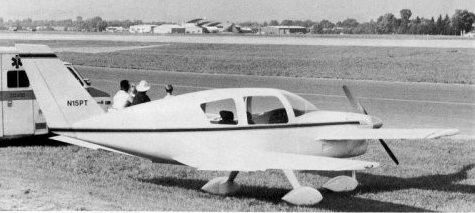
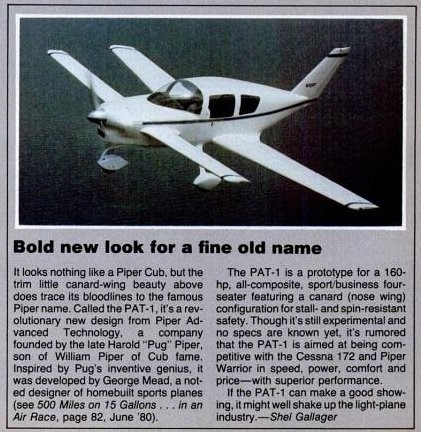
Designed by George Mead, the 1981 Piper Advanced Technology Inc PAT-1 Pugmobile was a four-place cabin, canard monoplane. Powered by a 160hp Lycoming O-320, the prototype, N15PT, had an approach speed of 75 mph.
The prototype crashed on 19 Nowember 1981 killing designer Mead and two passengers.
November 20, 1981 An experimental, single-engine airplane, designed for enhanced safety, crashed yesterday during a demonstration flight over the Chesapeake Bay, killing the aircraft’s designer and two employees of the National Aeronautics and Space Administration’s Langley Research Center. The propeller-driven, four-seater plane, outfitted with an unusual wing near its nose, plunged into the bay shortly before 11:25 a.m. near Gwynn Island, below the mouth of the Rappahannock River about 30 miles north of Hampton, Va. A NASA spokesman said the cause of the crash was not known. Among those killed was George Mead, an aeronautical engineer in his early 30s who designed the novel general aviation craft for Piper Advanced Technology Inc., a Kansas company established last year to build, test and market the plane. The firm, based in Wichita, was started by a son of the founder of the well-known Piper Aircraft Corp. but has no corporate relationship to the older enterprise, a company official said. The others who died in the crash were identified as Wendell Kelley, 41, of Newport News, Va., a NASA research pilot, and Paul F. Coy, 23, of Hampton, Va., a NASA engineer. The two men were aboard to “see how the plane handled,” Langley spokesman Maurice Parker said. A spokesman for the National Transportation Safety Board, which is expected to start investigating the crash today, said initial reports indicated the plane may have broken up in flight. Dennis Harms, one of the craft’s builders, said in a telephone interview from Wichita that the plane destroyed yesterday was the only existing prototype, designated PAT-1. The company has not yet decided whether to rebuild the aircraft, estimated to cost $75,000 to $100,000, and resume testing, he said. The small wing near the plane’s nose, known as a canard, was designed as a safety feature, Harms said. It was intended to prevent stall spin, an often fatal aviation phenomenon that may occur when a plane climbs too steeply, loses its upward lifting force and pitches back, spinning. There was no indication of stall spin in yesterday’s accident. Harms said the 160 horsepower plane — previously flown, chiefly by Mead, for 70 to 80 hours — was also designed for higher speeds than normally achieved by light planes without loss of fuel efficiency or cabin space. Its cruising speed, he said, was 165 miles an hour. NASA researchers were primarily interested in the aircraft’s canard feature, a subject of study for possible use in passenger and military planes, officials said. NASA spokesman Parker said the plane took off from Langley at 10:40 a.m. yesterday on its second day of demonstration flights for officials of the aeronautics agency. No distress call was received from the craft, whose crash was reported to a county sheriff in eastern Virginia. The Coast Guard recovered the three bodies and towed the plane ashore in two pieces, he said.
Initially flown for the first time on 30 November 1979, designated PA-46-300T, as an unpressurised development aircraft, the first real prototype flew on 21 August 1982. This was a pressurised, all-metal aircraft seating six, with retractable undercarriage.
Piper announced in late 1982 the intention to introduce in late 1983 a new aircraft which it claimed to be the world’s first cabin-class pressurised aircraft with a single piston engine.
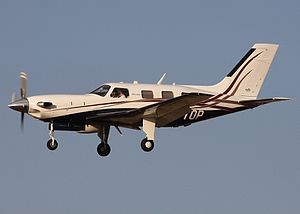
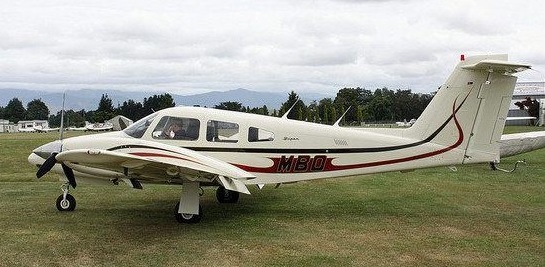
Designated Piper PA-46-310P Malibu, the aircraft is of cantilever low-wing monoplane configuration with retractable tricycle landing gear and powered by a Teledyne Continental TSIO-520-BE turbocharged engine, the pressurised cabin providing seating a pilot and five passengers.
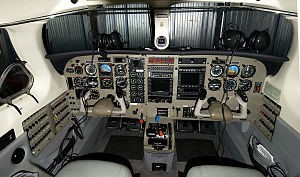
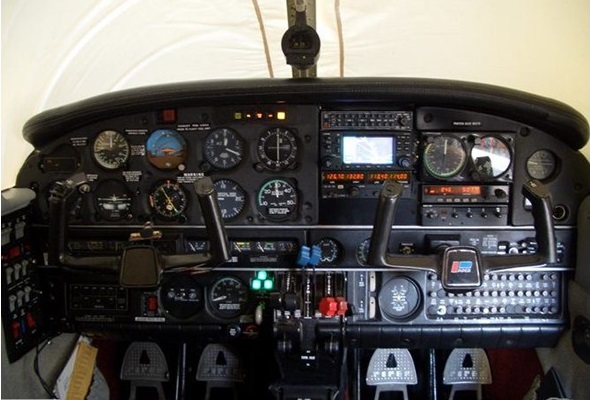
PA-46-350P Cockpit
The initial PA-46-310P Malibu production version received FAA certification on 27 September 1983 and deliveries into service began during November 1983. Fitted with a high aspect ratio wing, IFR avionics was standard and an airstair style door at the rear of the aircraft. Production was discontinued during 1988 after 344 had been built.
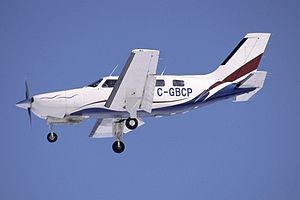
PA-46-310P Malibu
Certification (FAA A25SO) of the original PA-46-310P was achieved in September 1983 and deliveries commenced the following November and 402 were produced. Certification covered 46-8408001 to 46-8608067, and 4608007 to 4608007
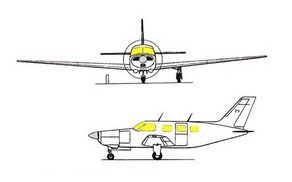
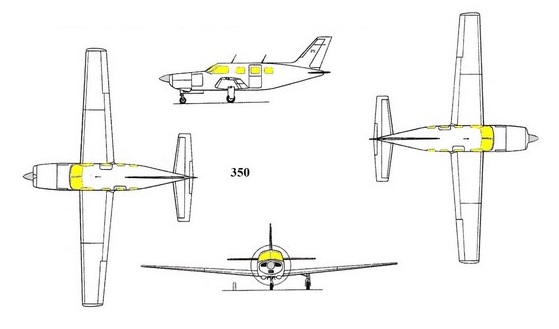
The turbocharged PA-46-350P Malibu Mirage was introduced in October 1988 replacing the -310, with deliveries beginning two months later at $679,900 as standard. This differed in having a 350 hp (261 kW) Textron Lycoming TIO-540-AE2A engine in place of the earlier 310 hp (231 kW) Teledyne Continental TSIO-520-BE. FAA certification was received on 30 August 1988.
PA-46 Malibu Mirage
Fitted with a new wing, revised interior and electrical system, and standard Bendix / King avionics packages, around 250 were produced. Other features include a redesigned flight deck, two-piece glareshield and a 40-lb (18-kg) increase in useful load.
By spring 1991 Piper had orders for over 100 of the PA-46-350P Malibu Mirage but, after several aircraft broke up in adverse weather conditions, the FAA revoked its IMC certification and began a Special Certification Review. Piper worked hard to clear the design’s reputation and by February 1992 the Malibu was returned to full operations.
The first Meridian, a non conforming example, flew summer 1988/89. On 21 June 2001 the first Malibu Meridian was certified by the UK CAA.
PA-46-500TP Malibu Meridian
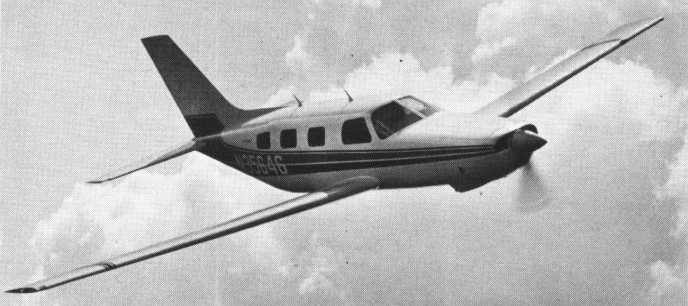
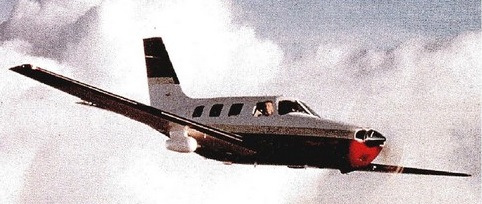
Plans to build a turbine powered Malibu was announced during 1987 and a prototype, N35646, was built which first flew on 26 September 1988. The prototype was powered by a 400 shp Pratt & Whitney Canada PT6A-11 turboprop and a revised type, the TP-600, was manufactured with a 600 shp PT6A-11 engine. New Piper were also producing the type, from 1994, with improvements to the autopilot, braking system and air-conditioning.
Rocket Engineering of Spokane, Washington produced turboprop conversions of Piper Malibu. Certificated during August 1998, around 90 320 and 350 types were converted to JetPROP models with Pratt & Whitney PT6A-34/35 engines. During 2003 the JetPROP DL conversions with Pratt & Whitney PT6A-21 engines were started, and by 2003 233 aircraft had been converted.
PA-46 Matrix
The PA-46R-350T is an unpressurised version of the Mirage, announced during October 2007 with deliveries Avidyne TAS610 dual antenna traffic advisory system and speed brakes. During 2010 a Garmin G1000 avionics system was available. Piper Aircraft received FAA certification of the G1000 NXi next generation integrated flight deck on both the M500 single engine turboprop and M350 pressurized, single-engine piston. Piper was set to offer it as a retrofit option (via STC) for fielded G1000 equipped Matrix, Mirage (M350), and Meridian (M500) aircraft.
PA-46-310 Max speed: 270 mph Cruise speed: 226 mph Max Cruise speed: 249 mph Stall: 67 mph ROC: 1143 ft/min Service ceiling: 25,000 ft Takeoff run: 1440 ft Takeoff to 50 ft: 2025 ft Ldg from 50 ft: 1520 ft Ldg run: 640 ft Range norm: 1531 mi Range max: 1790 mi Wing span: 43 ft 0 in Fuel capacity: 101.6 imp.gal / 122 USG Length: 28 ft 4.75 in Empty weight: 2275 lb Weight equipped: 2350 lb Loaded weight: 3850 lb Payload: 100 lb
PA-46-310P Malibu Engine: Teledyne Continental TSIO-520-BE, 310 hp Prop: Hartzell, 2 blade CS 6 ft 8 in Cabin length: 12 ft 4 in Cabin width: 49.5 in Cabin height: 47 in Rear pax door: 46 x 24 in Baggage door left side nose: 23 x 19 in Nose compartment capacity: 13 cu.ft / 100 lb unpressurised Rear baggage compartment: 20 cu.ft / 100 lb pressured
PA-46-350 Max speed: 273 mph Cruise long range: 193 mph Cruise Econ: 229 mph Cruise speed norm: 247 mph Cruise speed max: 259 mph Stall: 69 mph ROC: 1220 ft/min Service ceiling: 25,000 ft Takeoff run: 1530 ft Takeoff to 50 ft: 2375 ft Ldg from 50 ft: 1960 ft Ldg run: 1010 ft Range norm: 1172 mi Range econ: 1248 mi Range max: 1450 mi Wing span: 43 ft 0 in Fuel capacity: 101.6 imp.gal / 122 USG Length: 28 ft 11 in Empty weight: 3080 lb Weight equipped: 3121 lb Loaded weight: 4340 lb Payload: 100 lb
Piper 1998 PA-46-350P Malibu Mirage Engine make/model:Lyc. TIO-540AE2A, 350 hp TBO: 2000 hr Propeller: Const. spd. Landing gear: Tri/Retr. Gross weight: 4300 lb Empty weight, std: 3048 lb Useful load, std: 1252 lb Fuel: 120 USG Wingspan: 43 ft Overall length: 28 ft. 7 in Height: 11 ft. 6 in Wing area: 175 sq. ft Seating capacity: 5 Cabin width: 50 in Cabin height: 47 in Baggage capacity: 200 lb Cruise speed 75% power: 225 kt Cruise speed 65% power: 215 kt Max range (w/ res) 75% power: 990 nm Max range (w/ res) 65% power: 1056 nm Fuel consumption 75% power: 20 USgph Fuel consumption 65% power: 18 USgph Stall speed (gear, flaps down): 60 kt Best rate of climb: 1218 fpm Service ceiling: 25,000 ft Takeoff ground roll: 1530 ft Landing ground roll: 1018 ft
2001 New Piper Malibu Mirage Engine: Lycoming TIO-540-AE2A, 350 hp / 261kW @SL to 17,000 ft TBO: 2000 hr Fuel type: 100 Propeller: Hartzell CS Landing gear: Tri/Retr. Gross weight: 4340 lb Max landing weight: 4100 lb Empty weight, std: 3157 lb Useful load, std: 1183 lb Payload, full std. fuel: 463 lb Usable fuel, std: 120 USG Oil capacity: 12 qt Wingspan: 43 ft Overall length: 28 ft. 8 in Height: 11 ft. 6 in Wing area: 175 sq. ft Wing loading: 23.6 lbs./sq. ft Power loading: 12.3 lbs./hp Wheel base: 8 ft Wheel track: 12 ft. 3 in. Wheel size: 6.00 x 6 Seating capacity: 6 Cabin doors: 1 Cabin width: 50 in Cabin height: 47 in Baggage capacity: 200 lb Cruise speed @ 25,000 ft 75% power: 213 kt Cruise speed @ 25,000 ft 65% power: 203 kt Max range (w/ res) 75% power: 1065 nm Stall speed (gear, flaps down): 58 kt Best rate of climb (SL): 1218 fpm Service ceiling: 25,000 ft Takeoff ground roll: 1090 ft Takeoff over 50-ft. obstacle: 2090 ft Landing ground roll: 1020 ft Landing over 50-ft. obstacle: 1960 ft
2005 New Piper Mirage Base price: $970,000 Engine: Lycoming TIO-540-AE2A, 350 hp to 17,000 TBO: 2000 hr Fuel type: 100/100LL Propeller: Hartzell three blade 80 in Landing gear: Tri./Retr. Max ramp weight: 4340 lb Gross weight: 4340 lb Landing weight: 4100 lb Empty weight, std: 3100 lb Useful load, std: 1240 lb Payload, full std. fuel: 520 lb Usable fuel, std: 120 USG Oil capacity: 12 qt Wingspan: 43 ft Overall length: 28 ft. 6 in Height: 11 ft. 5 in Wing area: 175 sq. ft Wing loading: 24.8 lbs./sq. ft Power loading: 12.4 lbs./hp Wheel size: 6.00 x 6 Seating capacity: 6 Cabin doors: 1 Cabin width: 49 in Cabin height: 47 in Cruise speed 75% power: 213 kt Cruise speed 65% power: 199 kt Cruise speed 55% power: 166 kt Fuel consumption 75% power: 20.0 USgph Fuel consumption 65% power: 18.0 USgph Fuel consumption 55% power: 15.0 USgph Range, 55% power: 1055 nm Best rate of climb (SL): 1225 fpm Max operating altitude: 25,000 ft Vso: 58 kt Takeoff ground roll: 1090 ft Takeoff over 50-ft. obstacle: 2090 ft Landing ground roll: 1020 ft Landing over 50-ft. obstacle: 1960 ft
2006 Piper Mirage PA46 Engine: Lycoming TIO-540-AE2A, 350 ho @SL to 18,000 ft TBO: 2000 hr Fuel type: 100/100LL Propeller: Hartzell three-blade CS Landing gear: Tri./Retr. Max ramp weight: 4358 lb Gross weight: 4340 lb Landing weight: 4123 lb Empty weight, std: 3121 lb Useful load, std: 1237 lb Payload, full std. fuel: 517 lb Useful fuel: 120 USG Oil capacity: 12 qt Wingspan: 43 ft Overall length: 28 ft. 10 in Height: 11 ft. 4 in Wing area: 175 sq. ft Wing loading: 24.8 lbs./sq. ft Power loading: 12.4 lbs./hp Wheel size: 6.00 x 6 Seating capacity: 6 Cabin doors: 1 Cabin width: 50 im Cabin height: 45 in Cruise speed 75% power: 213 kt Fuel consumption 75% power: 20 USgph Fuel consumption 65% power: 18 USgph Vso: 58 kt Max operating altitude: 25,000 ft Best rate of climb (SL): 1220 fpm Takeoff ground roll: 1090 ft Takeoff over 50-ft. obstacle: 2090 ft Landing ground roll: 1065 ft Landing over 50-ft. obstacle: 1965 ft
PA-46R-350T Engine: TIO-540-AE2A, 350 hp Wingspan: 43 ft 0 in Length: 28 ft 11 in Height: 11 ft 4 in Empty weight: 2937 lb Loaded weight: 4340 lb Payload: 1421 lb Fuel capacity: 120 USG Service ceiling: 25,000 ft Takeoff to 50 ft: 2090 ft Landing from 50 ft: 1968 lb
2008 Piper Malibu PA46-350 Matrix Base price: $757,000 Engine: Lycoming O-TIO-540-AE2A. 350 hp TBO: 2000 hr Fuel type: 100/100LL Propeller: 3-blade Hartzell Landing gear: Tri./Retr. Max ramp weight: 4358 lb Gross weight: 4340 lb Landing weight: 4123 lb Empty weight, std: 2937 lb Useful load, std: 1421 lb Usable fuel:120 USG /720 lb Payload, full std. fuel: 701 lb Wingspan: 43 ft Overall length: 28 ft. 11 in Height: 11 ft. 4 in Wing area: 175 sq. ft Wing loading: 24.8 lbs./sq. ft Power loading: 12.4 lbs./hp Seating capacity: 6 Cabin doors: 1 Cabin width: 49.5 in Cabin height: 47 in Cruise speed 75% power @ 25,000 ft: 215 kt Cruise speed 75% power @ 10,000 ft: 190 kt Fuel consumption 75% power: 20 USgph Fuel consumption 65% power: 18 USgph Fuel consumption 55% power: 15 USgph Vso: 58 kt Best rate of climb (SL): 1150 fpm Service ceiling: 25,000 ft Takeoff ground roll: 1087 ft Takeoff over 50 ft. obstacle: 2090 ft Landing ground roll: 1020 ft Landing over 50 ft. obstacle: 1968 ft
PA-46 Malibu Meridian Engine: Pratt & Whitney PT6A-42A, 1090 shp Wingspan: 43 ft Wing Area: 183 sq. ft Max Ramp Weight: 5134 lb Useful Load: 1698 lb / 679 kg Fuel Capacity, Useable: 170 USG Cruise: 262 kt. Endurance: 4.8 hr. Vso: 69 kt Rate Of Climb: 1556 fpm Max Certified Altitude: 30,000 ft Max Cruise Speed: 260 kt Takeoff Distance: 1650 ft Takeoff Over 50 Ft. Obstacle: 2438 ft Landing Distance: 1020 ft Landing Over 50 Ft. Obstacle: 2110 ft
2005 New Piper PA46-500T Meridian Engine: Pratt & Whitney PT6A-42A, 500 shp @ FL200 TBO: 3500 hr Fuel type: Jet A Propeller: Hartzell CS Landing gear: Tri./Retr. Max ramp weight: 5134 lb Max takeoff weight: 5092 lb Empty weight, std: 3404 lb Useful fuel: 170 USG Payload, full std. fuel: 591 lb Wingspan: 43 ft Overall length: 29.6 ft Height: 11.3 ft Wing area: 183 sq. ft Wing loading: 10.8 lbs./sq. ft Power loading: 27.3 lbs./hp Wheel size: 6.00 x 6 Seating capacity: 6 Cabin doors: 1 Cabin width: 49 in Cabin height: 47 in Max cruise speed: 260 kt Fuel consumption: 37 USgph Range: 1000+ nm Best rate of climb (SL): 1556 fpm Max operating altitude: 30,000 ft Vso: 61 kt Takeoff ground roll: 1650 ft Takeoff over 50-ft. obstacle: 2438 ft Landing ground roll: 1020 ft Landing over 50-ft. obstacle: 2110 ft
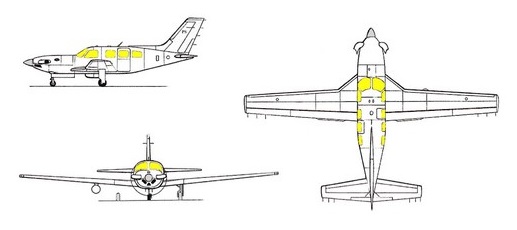
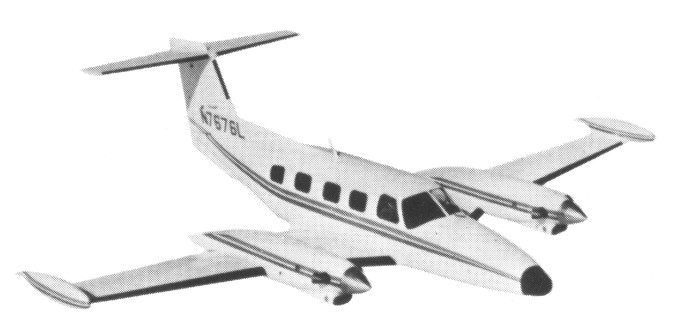
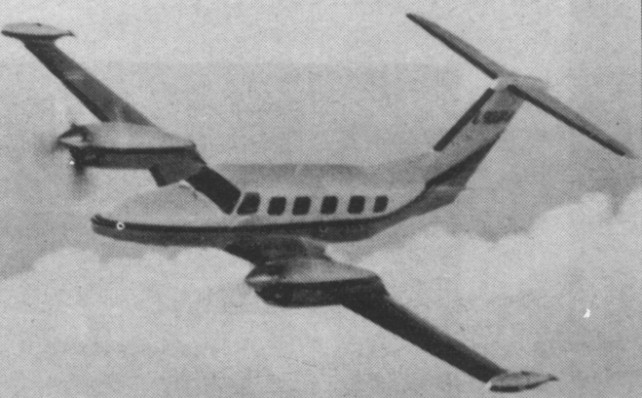
The PA 40 Arapaho was developed and ready to go, but Piper made the decision not to produce this airplane because of its projected high market price. Instead, they un¬dertook the PA 44 Seminole project in order to produce a more cost competitive light twin.
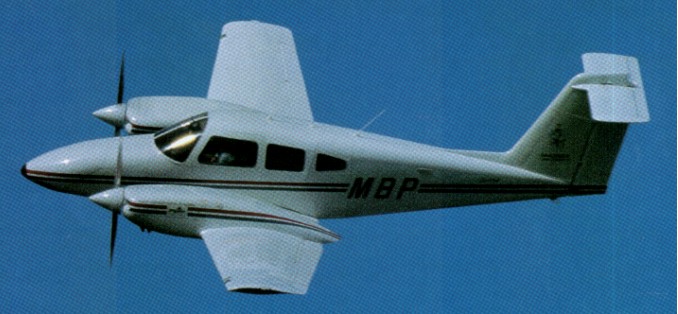
Announced on 21 February 1978, the Seminole is powered by 180-hp Lycomings, and will do 155 knots at 65-percent power and climb at 1,200 feet per minute. Single-engine service ceiling is 3,200 feet. Piper promised first deliveries in June 1978, and a base price of $73,900. A cantilever low-wing monoplane with a T-Tail, retractable tricycle landing gear and power provided by two Avco Lycoming O-360-E1AD counter-rotating engines.
A big help in holding cost down is commonality with existing airplanes. Most of its fuselage is from the Arrow III, from what would be the forward firewall to the aft cabin bulkhead. The T-tail was actually developed on the Seminole first, but introduced on the Lance II. The wings are basically beefed-up versions of the semi-tapered Arrow III to within four feet of the tip. Like the Seneca II and the Navajo C/R, the Seminole uses counter-rotating propellers for balanced thrust, and optional three-blade propellers in 1979 provided a quieter ride. Also in the same year, a propeller synchrophaser further reduced cabin noise levels.
PA-44T
Two 54-gallon fuel tanks are fitted in the engine nacelles, because the engines attach to the wing right where the gas tank is located on four place Piper singles, and placing fuel in the nacelles meant no drastic change in the wing outboard of that point. Piper opted for Lycoming’s new series of engines, which are made on automated equipment at a slightly lower cost. These engines are deeper than previous Lycomings, and thus the nacelles had to be thicker.
At 75% power and 7,000 feet, the Seminole cruises at 191 mph. When leaned to 65%, best-economy power cruise speed is 181 mph, and range is 898 miles with a 45-minute reserve. At 3,800 pounds gross, the Seminole weighs the same as Gulfstream American’s Cougar, which flies between a pair of 160-hp engines; thus, each Seminole horsepower must heft only 10.6 pounds compared to the Cougar’s 11.9 pounds/hp loading. From the beginning, Piper intended the Seminole as a relatively inexpensive alternative to high-performance singles.
The Seminole was complemented on 24 April 1980 by a turbocharged version designated PA-44-180T Turbo Seminole with TO-360-E1AD counter-rotating engines. At 65-percent power economy cruise, the Turbo Seminole can travel at 194 mph over a distance of 920 miles burning fuel at a rate of 19 gph. Standard equipment includes a built-in oxygen system that consists of a rear-mounted bottle with easy-to-reach overhead outlets, night-lighted pressure gauge, oxygen masks, and a control-wheel mike button.
Piper’s financial troubles brought Seminole production to an end in 1990 after 469 were built. Five years later, New Piper Aircraft resumed making the entry-level twin, the only remaining T-tail aircraft in the line, and 29 were delivered over the next three years.
The PA42-1000 Cheyenne IV was announced in 1983 as basically a Cheyenne III with more powerful engines. In September 1983 it was renamed Cheyenne C400LS. The PA-42-1000 Cheyenne 400LS received its type certificate FAA A23SO July 13, 1984. Forty-three were built.
Keeping company with all the new commuter aircraft, the Cheyenne 400 was slightly over-weight, necessitating a 100 lb increase to take-off and landing weights – now 12,050 and 11,100 lbs respectively. In spite of the increased weight Piper engineers have lowered the full flap stall speed from 92 knots to 84 knots I.A.S. and increased the single engine rate of climb from 980 to 997 feet/minute. Piper hoped to improve the accelerate-stop and accelerate-go figures, which were 3275 feet (998 metres) and 3485 feet (1062 metres) respectively.
On 30 June 1980 Piper began production deliveries of a new version, intended as a 6/11-seat corporate or commuter transport, this Cheyenne III differs considerably from its predecessors, having a wing of increased span, lengthened fuselage, a T-tail, and more powerful Pratt & Whitney Aircraft of Canada PT6A turboprop engines installed in lengthened nacelles.
The Cheyenne III in production was complemented by the Cheyenne IIIA which differs primarily by having 634kW PT6A-61 turboprop engines flat-rated at 537kW and offering performance improvements. 149 were built.
In addition to the Cheyenne III, Piper was involved in the certification programme of a new Cheyenne IV during 1983, with two 1,227kW Garrett TPE331-14A/14B counter-rotating turboprop engines, each of them flat-rated at 746kW. Deliveries of the Cheyenne IV began in the early summer of 1984. It was one of the fastest propeller light twins, at over 644km/h.
The Cheyenne was one of the very few Piper products to remain in volume production after the company’s financial reorganisation in 1991/92. Versions on offer included the Cheyenne IIIA of which 59 had been delivered by early 1993. Nine Cheyenne IIIs delivered to the US Drug Enforcement Administration, fitted with AN/APG-66 radar and a ventral FLIR, were used for day and night time surveillance missions. They are known as Customs High Endurance Tracker (CHET) aircraft. Cheyenne IIIs are joined at the Lock Haven production line by the PA-42-1000 Cheyenne 400. Originally the Cheyenne IV, it later became the Cheyenne 400LS. Deliveries total 43.
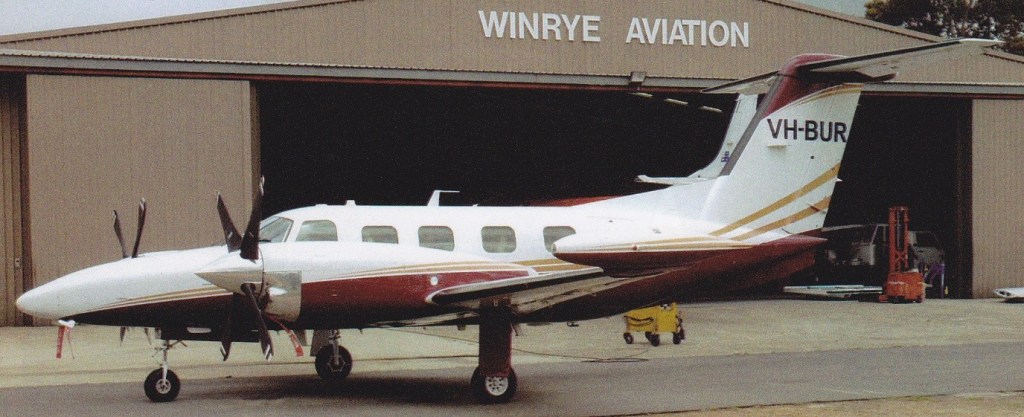
PA-42-1000 Cheyenne 400LS VH-BUR
PA-42-720 Cheyenne III First built: 1980 Engines: 2 x P&W PT6A-41, 720 shp / 537kW Props: Hartzell 3-blade, 95-in Seats: 9/11 Length: 13.23 m / 43 ft 5 in Height: 14.8 ft Wingspan: 47.7 ft Wing area: 293 sq.ft / 27.22 sq.m Wing aspect ratio: 7.8 Maximum ramp weight: 11,285 lb Maximum takeoff weight: 11,200 lb / 5080 kg Standard empty weight: 6389 lb / 2898 kg Maximum useful load: 4896 lb Zero-fuel weight: 9758 lb Maximum landing weight: 10,330 lb Wing loading: 38.2 lbs/sq.ft Power loading: 7.8 lbs/hp Maximum usable fuel: 3819 lb Best rate of climb: 2236 ft Certificated ceiling: 33,000 ft Max pressurisation differential: 6.3 psi 8000 ft cabin alt @: 28,500 ft Maximum single-engine rate of climb: 531 fpm @ 115 kt Single-engine climb gradient: 277 ft/nm Single-engine ceiling: 14,550 ft Maximum speed: 290 kt Normal cruise @ 28,000ft: 275 kt Fuel flow @ normal cruise: 516 pph Endurance at normal cruise: 6.4 hr Stalling speed clean: 99 kt Stalling speed gear/flaps down: 84 kt Turbulent-air penetration speed: 174 kt
PA-42-1000 Cheyenne IV Engines: 2 x Garrett TPE331-14, 1000shp Prop: Dowty-Rotol, 4 blade, 106 inch dia Length: 43.4 ft Height: 16.4 ft Wingspan: 47.7 ft Wing Area: 293 sq.ft Wing Aspect Ratio: 7.82 Standard Empty Weight: 7,546 lb Max Ramp Weight: 12,135 lb MTOW: 11,950 lb/12,050 lb MLW: 11,100 lb Max Zero fuel wt: 9600 lb Std useful load: 4985 lb Wing Loading: 41.1 lbs/sq.ft Power Loading: 6 lbs/hp Max Usable Fuel: 3,819 lb Max cruise 25,000ft: 351 kt (404 mph) Max cruise 30,000ft: 349 kt (402 mph) Max cruise 35,000ft: 341 kt (392 mph) Max cruise 41,000ft: 302 kt (348 mph) Max range @ 39,000 ft with 45 min res) 8 pax: 1400nm Max range @ 39,000 ft with 45 min res) 2 pax: 2240 nm ROC: 3242 fpm SE ROC: 980 fpm SE Best-rate of-climb Airspeed: 125 kt SE Climb Gradient: 479 ft/nm SE Ceiling: 27,000 ft TO dist 50 ft: 1930 ft Ldg dist 50 ft: 2780 ft Acc-stop dist: 2840 ft Seats: 7/9 Ceiling (Certificated): 41,000 ft Max Pressurization Differential: 7.5 psi 8,000 Foot Cabin Altitude At: 35,000 ft SE Rate Of Climb: 997 fpm Normal Cruise At 35,000 Feet: 334 kt Fuel Flow At Normal Cruise: 600 pph Endurance At Normal Cruise: 4.1 hr Stalling Speed, Clean: 93 kt Stalling Speed, Flaps/Gear Down: 84 kt Turbulent air Penetration Speed: 195 kt
Piper designed this Cheyenne model in the early 1980s to compete with the pro¬posed King Air 350, but ran out of money for development and certified it to lower weight and speed than its ultimate capability. Only 45 were made between 1984 and 1991, although a handful more came out of the Piper factory for Lufthansa trainers.
The PA-41 differs from other, Chieftain-based, Cheyennes with a new airframe and pair of 1000 shp Garrett TPE 331-14-801 big block engines. Counter-rotating Dowty Rotol composite propellers of 106 in diameter transfer the power to the air, giving the 400LS more speed and range than some small jets, with those capabilities being given more weight than large numbers of passengers.
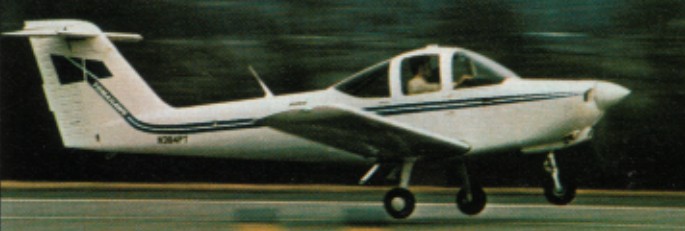
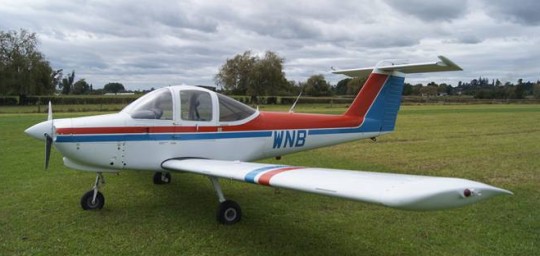
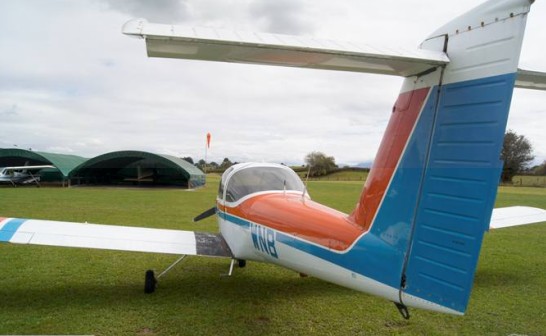
Piper canvassed 10000 flying instructors before it built the “ultimate” training machine for the seventies. A cantilever low-wing monoplane with fixed tricycle landing gear, a T-tail, and side-by-side enclosed accommodation, it was powered by an Avco Lycoming O-235-L2C engine, designated Piper PA-38-112 Tomahawk. The Tomahawk was designed around minimalism and low initial cost (around US$18,000 in 1978) and low ongoing costs.
First flown in mid-1973, Piper’s Tomahawk received FAA type certification (FAA A18SO) on 20 December 1977. The T-¬tail trainer was certified in both the normal and utility categories, and the production lines started rolling in January 1978. The FAA temporarily suspended the airworthiness certificate of Piper’s Toma¬hawk trainer, grounding over 700 Toma¬hawks because of magneto failures. For simplicity, the ailerons and flaps were attached by piano wire hinges and the doors were held closed and locked by wire.
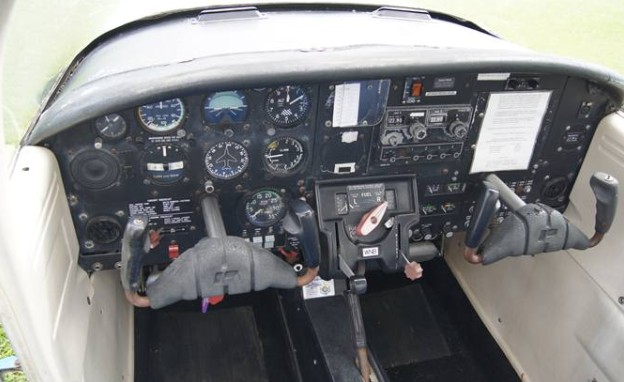
Fitted with a NASA created GA(W)-1 aerofoil, the Tomahawk’s heavy flight controls were intended to impersonate a bigger aircraft. The three position flaps, 34 deg, 21 deg, and up, is normally not used for takeoff. The wing has a fatigue limit of 11,000 hrs and modifications can increase that by 5000 hrs. One mod is to rivet a reinforcement plate to the wing’s spar plug.
Leading edge stall/airflow strips were installed on the aircraft’s wing to temper the stall/spin characteristics and the high crash/fatality rate dropped off noticeably. A 1983 AD required the installation of both inboard and outboard leading edge airflow strips.
Improvements introduced as standard in 1982 resulted in redesignation as the PA-38-112 Tomahawk II. The Tomahawk II introduced bigger wheels, and cured a nose wheel shimmy problem of the original.
Because of economic conditions production was suspended at the end of 1982, at which time 2,519 had been built, and output was nearing 200 units per year.
Piper hoped that it would be possible to resume production during 1984. This was not the case as the Tomahawk was one of the types most affected by the product liability laws and was already struggling to find a market.