The Pratt & Whitney PW2000, also known by the military designation F117, is a series of high-bypass turbofan aero engines with a thrust range from 37,000 to 43,000 lbf (165 to 190 kN). Built by Pratt & Whitney, they were designed for the Boeing 757. As a 757 powerplant, these engines compete with the Rolls-Royce RB211.
The PW2000 is a dual-spool, axial air flow, annular combustion, high by-pass turbofan with a dual-channel Full authority digital engine control (FADEC) system. It was certified in 1984 as the first civilian FADEC-controlled aviation engine.
MTU Aero Engines holds a 21.2% stake in the engine, having developed the low-pressure turbine and turbine exit casing as well as producing critical parts of the low-pressure turbine, the turbine exhaust casing, high-pressure compressor and high-pressure turbine components.
The first PW2000 series engine, the PW2037, powered the Boeing 757-200 and entered service with Delta Air Lines as the launch customer for the civil aviation version of the engine.
Other than the 757, the PW2000 series engines also power the C-17 Globemaster III military transport; the United States Department of Defense designation for the engine is F117, with the specific variant used on the C-17 being the F117-PW-100. The powerplant first flew on the C-17 in 1991.
The PW2000 also powered the abortive Ilyushin Il-96M; the engine first flew on the Il-96M in 1993. On October 16, 2008 the NTSB recommended that the FAA issue urgent new inspection procedures on the PW2037 model of the engine, following an uncontained turbine failure event in August 2008. The NTSB recommended that the FAA order PW2037 engines inspected beyond a threshold of flight hours or flight cycles less than that of the event engine, and be reinspected at regular intervals.
A later build standard, named PW2043, launched in 1994. It provides over 43,000 lbf (190 kN) of thrust. Previous generations of engines can be converted to the PW2043 version.
Applications: Boeing 757 Boeing C-32 Ilyushin Il-96M C-17 Globemaster III
The origins of the F135 afterburning turbofan lie with the Lockheed Corporation Skunk Works’s efforts to develop a stealthy STOVL strike fighter for the U.S. Marine Corps under a 1986 DARPA program. Lockheed employee Paul Bevilaqua developed and patented a concept aircraft and propulsion system, and then turned to Pratt & Whitney (P&W) to build a demonstrator engine. The demonstrator used the first stage fan from a F119 engine for the lift fan, the engine fan and core from the F100-220 for the core, and the larger low pressure turbine from the F100-229 for the low pressure turbine of the demonstrator engine. The larger turbine was used to provide the additional power required to operate the lift fan. Finally, a variable thrust deflecting nozzle was added to complete the “F100-229-Plus” demonstrator engine. This engine proved the lift-fan concept and led to the development of the current F135 engine.
P&W developed the F135 from their F119 turbofan, which powers the F-22 Raptor, as the “F119-JSF”. The F135 integrates the F119 core with new components optimized for the JSF. The F135 is assembled at a plant in Middletown, Connecticut. Some parts of the engine are made in Longueuil, Quebec, Canada, and in Poland.
The first production propulsion system for operational service was scheduled for delivery in 2007 for the F-35 Lightning II single-engine strike fighter. The F-35 will serve the U.S., UK, and other international customers. The initial F-35s will be powered by the F135, but the GE/Rolls-Royce team was developing the F136 turbofan as an alternate engine for the F-35 as of July 2009. Initial Pentagon planning required that after 2010, for the Lot 6 aircraft, the engine contracts will be competitively tendered. However since 2006 the Defense Department has not requested funding for the alternate F136 engine program, but Congress has maintained program funding.
The F135 team is made up of Pratt & Whitney, Rolls-Royce and Hamilton Sundstrand. Pratt & Whitney is the prime contractor for the main engine, and systems integration. Rolls-Royce is responsible for the vertical lift system for the STOVL aircraft. Hamilton Sundstrand is responsible for the electronic engine control system, actuation system, PMAG, gearbox, and health monitoring systems. Woodward is responsible for the fuel system.
The F135 family has several distinct variants, including a conventional, forward thrust variant and a multi-cycle STOVL variant that includes a forward lift fan.
The F135 is a two-shaft engine featuring a three-stage fan (low pressure) and a six-stage high pressure (HP) compressor. The hot section features an annular combustor with a single-stage HP turbine unit and a two-stage LP turbine. The afterburner features a variable converging-diverging nozzle.
The conventional and carrier aviation engines, the F135-PW-100 and F135-PW-400, have a maximum (wet) thrust of approximately 43,000 lbf (191 kN) and a dry thrust of approximately 28,000 lbf (125 kN). The major difference between the -100 and -400 models is the use of salt-corrosion resistant materials.
The STOVL variant, F135-PW-600, delivers the same 43,000 lbf (191 kN) of wet thrust as the other types in its conventional configuration. In STOVL configuration, the engine produces 18,000 lbf (80.1 kN) of lift thrust. Combined with thrust from the LiftFan (20,000 lbf or 89.0 kN) and two roll posts (1,950 lbf or 8.67 kN each), the Rolls-Royce LiftSystem produces a total of 41,900 lbf (186 kN) of thrust, almost the same vertical lifting force for slow speed flight as the same engine produces at maximum afterburner, without the extreme fuel use or exhaust heat as wet thrust.
The STOVL variant engages a clutch to extract around 35,000 shp (26,000 kW) from the LP turbine to turn the forward lift fans, while switching power cycle from mixed (turbofan) to unmixed (turboshaft). Power is transferred forward through shaft to a bevel gearbox, to drive two vertically mounted contra-rotating fans. The uppermost fan is fitted with variable inlet guide vanes and the fan discharges efflux (low-velocity unheated air) through a nozzle on the underside of the aircraft. This cool air from the lift fan has the added benefit of preventing hot exhaust gases from the core section from being reingested into the engine while hovering. Finally, bypass duct air is sent to a pair of roll post nozzles and the core stream discharges downwards via a thrust vectoring nozzle at the rear of the engine. Measured by lift thrust in full vertical lift mode, the engine operates as 43% turbojet, 48% turboshaft, and 9% turbofan. Improving engine reliability and ease of maintenance is a major objective of the F135. The engine has fewer parts than similar engines which should help improve reliability. All line-replaceable components (LRCs) can be removed and replaced with a set of six common hand tools. Additionally, the F135’s health management system is designed to provide real time data to maintainers on the ground, allowing them to troubleshoot problems and prepare replacement parts before the aircraft returns to base. According to Pratt & Whitney, this data may help drastically reduce troubleshooting and replacement time, as much as 94% over legacy engines.
The F-35 with F135/F136 engines are not designed to supercruise, but the F-35 can achieve a limited supercruise of Mach 1.2 for 150 miles.
Because the F135 is designed for a fifth generation jet fighter, it is the second afterburning jet engine to use special “low-observable coatings”.
As of 2009, P&W was developing a more durable version of the F135 engine to increase the service life of key parts. These parts are primarily in the hot sections of the engine (the combustor and high pressure turbine blades specifically) where current versions of the engine are running hotter than expected, reducing life expectancy. The test engine is designated XTE68/LF1. This redesign has caused “substantial cost growth.”
In 2013, Pratt found that the latest F135 issue to ground the fleet was not a design problem but likely poor workmanship, and was caused by using the afterburner during testing at four times the stress of normal operation.
The 100th engine was delivered in 2013. LRIP-6 was agreed in 2013 for $1.1 billion for 38 engines of various types, continuing the unit cost decreases.
Variants: F135-PW-100 : Used in the F-35A Conventional Take-Off and Landing variant F135-PW-400 : Used in the F-35C carrier variant F135-PW-600 : Used in the F-35B Short Take-Off Vertical Landing variant
Specifications: F135-PW-100 Type: Afterburning Turbofan. F-35B: also partially turboshaft Length: 220 in (5.59 m) Diameter: 51 in (1.29 m) Dry weight: 1,701 kg / 3,750 lbs Compressor: Axial 3 stage low-pressure compressor, 6 stage high-pressure compressor Combustors: Short, annular combustor Turbine: Single stage high pressure turbine, two stage low pressure turbine Maximum thrust: 43,000 lbf (191.35 kN) max, 28,000 lbf (124.6 kN) intermediate Specific fuel consumption: 0.886 lb/(hr·lbf) or 25,0 g/kN·s (w/o afterburner) Thrust-to-weight ratio: 11.467
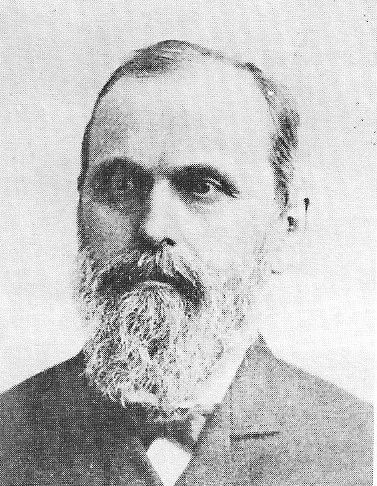
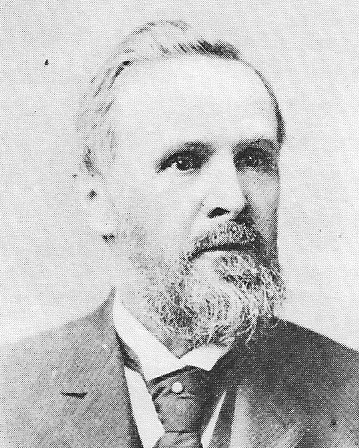
In 1925, Frederick Rentschler established the Pratt & Whitney Aircraft Company in Hartford, and Connecticut. Former president of the Wright Aeronautical Corporation of New Jersey, Rentschler was an astute businessman and visionary. Rentschler believed that the future of aviation lay in aircraft capable of carrying a large number of passengers’ great distances at ever-faster speeds. To do so required a more reliable, more powerful aircraft engine than was currently available, and this was where Rentschler focused his energies.
Pratt
Whitney
Within a year, Rentschler and his team had designed the air-cooled, radial Wasp engine, which together with its successor, the Hornet, provided increased power and reliability at a low relative weight. Both engines proved extremely successful. By 1929, Pratt & Whitney Aircraft had outgrown its Capitol Avenue plant in Hartford, and Rentschler moved the company to new headquarters on a 1,100-acre site in East Hartford, which included room for further expansion and an airfield to flight test his engines. Pratt & Whitney Aircraft was on its way to becoming one of the state’s largest employers.
Air power played a significant role in the Allied victory during World War II, and Pratt & Whitney Aircraft supplied much of that power. By the end of the war, Pratt & Whitney Aircraft had produced more than 350,000 engines for military use – more in number than any other American manufacturer and, in total horsepower, one half that of America’s combat air forces. In the meantime, Pratt & Whitney Aircraft became a division of the United Aircraft Corporation, which also manufactured the latest in aviation technology, the helicopter, invented by Igor Sikorsky in 1939.
During the post-war decades, Pratt & Whitney Aircraft continued to manufacture aircraft engines for commercial use and was also involved in the development of jet engines. During the 1950s, when government optimism in the peaceful uses of nuclear power was at its peak, Pratt & Whitney even investigated the possibility of using nuclear power in commercial aircraft at its Connecticut Aircraft Nuclear Engine Laboratory in Middletown.
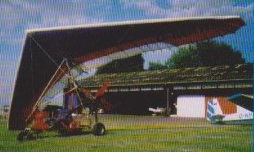
The Sabre is a high wing strut braced tail dragger. Structure utilises two aluminum tubes for spars and fibreglass ribs and leading edges. Fitted with large tires and steel spring suspension, the Sabre is designed for the farm and rough field work. A large pilot protection pod is fitted.
Engine: Konig 4-cyl – Rotax option Prop: 129 cm variable Wingspan: 8.23m Length: 4.5m Weight: 115 kg Fuel capacity: 22 ltr Econ cruise speed: 43 kt Stall: 26 kts Construction time: Ready to fly.
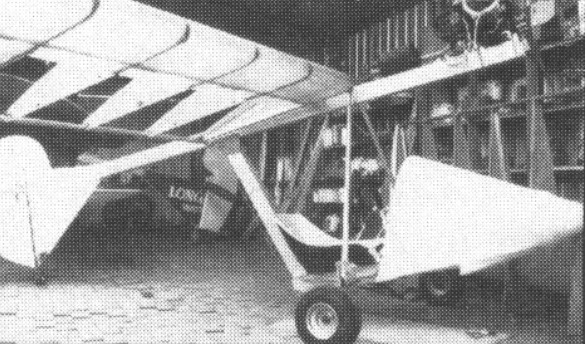
The P.220S Koala is a side-by-side two-seat version of the P.210 Coati.
In 1996 the production of the all-metal ultralight aircraft P-220 UL Koala was successfully launched. The production run until the end of 1999, totally 35 units of P-220 aircraft and 7 kits were sold.
Licenced production was undertaken by Aerotecknik (1998).
Aerotecknik obtained a licence to produce the Pottier 220 (1998).