RFB / Rhein-Flugzeugbau GmbH

Founded in 1957, RFB obtained a license from Rhein-West Flug to build the RW-3 Multoplane in 1957, flying the first production aircraft in 1958 and following with a small batch.

Built and flew the RF1 six-seat STOL transport in 1960; with two Lycoming engines geared to drive single pusher propeller in a wide-chord duct.

In 1968, VFW-Fokker acquired 65% of shares in RFB, and in 1969 RFB acquired a percentage holding in Sportavia company. Company became busy with military contracts for overhaul, and target towing for some years.

Built in collaboration with Grumman-American the Fanliner two-seat light aircraft with Wankel rotary engine, first flown in 1973. It was re-engined in 1976 with a Dowty Rotol ducted propulsor. Based on the Fanliner’s promise, the Federal German Government awarded a contract for two Fantrainer prototypes with ducted fan engines, first flown in 1977 and 1978. In the 1970s German interest in general aviation was maintained by one or two smaller companies, but there has also been quite a large R&D investment by Rhein Flugzeugbau, in ducted fan propulsion for a new generation of lightplanes represent¬ed by its Fanliner.

Production Fantrainer 400s and 600s were ordered only by Thailand, the first (a 600) flying in 1984 and most assembled in Thailand from kits. Projected Fantrainer 800 did not enter production; neither did the proposed Tiro-Trainer with a turbofan engine. Company ceased trading in 1997.
Rex Composites / Moniot

Philippe Moniot having previously designed for Wassmer, formed Avions Philippe Moniot.

In 1986 the joint stock company Rex Composites was created by Philippe Moniot with 300m² of workshop space.

In 1999 was the certification of the APM Lionceau, the first “all carbon” aircraft in the world.

2011 was the creation of the REXIAA Group and launch of a new strategic development project.
Commercialization of the APM 40, an “all carbon” 4-seater plane, designed and produced by all the companies in the REXIAA Group.

Revolution Voyager 500

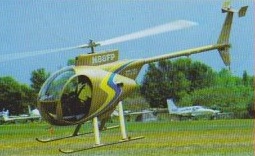
The two seat Voyager 500 was launched at the Sn ‘n Fun show in Florida in 1998. Still only in kit form, it featured a three cylinder two stroke engine.

Engine: US Airpower, 138 hp
Rotor span: 6.80 m
Blade area: 0.2 sq.m
MAUW: 515 kg
Empty weight: 276 kg
Fuel capacity: 76 lt
Max speed: 193 kph
Cruise speed: 152 kph
Minimum speed: 0 kph
Climb rate: 6 m/s
Seats: 2
Fuel consumption: 30 lt/hr
Kit price (1998): $48,500

Revolution Mini 500

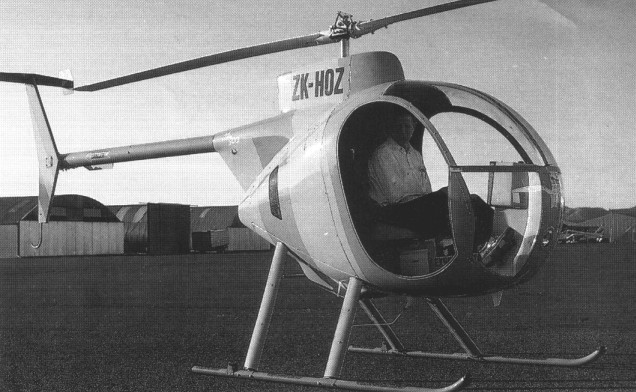
Designed by Augusto Cicare, the Mini 500 was developed by Dennis Fetters, and utilises a single, semi-rigid, teetering, underslung main rotor and free-teetering, rigid in-plane tail rotor, and first flew in 1992. A single seat fully enclosed helicopter. Steel tube frame covered with a composite body enclosure. Tail boom is aluminium.

By 1998 around 400 examples had been sold.

Engine: Rotax 582, 67 hp
Rotor blades: Composite 19’2”
Height: 8.3 ft
Length: 22.6 ft
Disk span: 19.2 ft
Tail rotor: aluminium 3’10”.
Fuel cap: 14.7 USG
Weight empty: 485 lb
Gross: 840 lb
Speed max: 115 mph
Cruise: 65-83 kt
Range: 225 sm
ROC: 1100 fpm
Service ceiling: 10,000 ft
Seats: 1
Landing gear: skids

Engine: Rotax 582, 64 hp
Rotor span: 6.85 m
Blade area: 0.2 sq.m
MAUW: 350 kg
Empty weight: 155 kg
Fuel capacity: 57 lt
Max speed: 155 kph
Cruise speed: 100 kph
Minimum speed: 0 kph
Climb rate: 5.5 m/s
Seats: 1
Kit price (1998): US$32,900

Revmaster R-2100

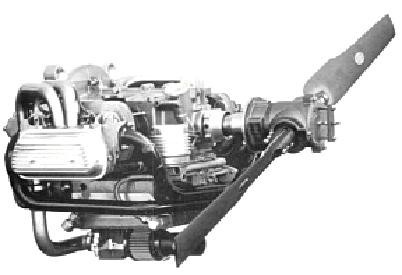
The Revmaster 2100D is a Volkswagen air-cooled engine modified for Homebuilt aircraft with dual magneto ignition. Designed by Joe Horvath the unit cost was US$1,095 in 1971

Two versions available were the R-2100 75 hp and the R-2100 turbo 80 HP. Originally, the R-2100 was equipped with POSA 28mm carburettors.

Specifications:
R-2100D
Bore: 92 mm
Stroke: 78 mm
Displacement: 2073cc
Valvetrain: Single overhead exhaust valve, single side inlet valve per cylinder
Fuel system: Single carburettor
Cooling system: Air-cooled
Tillotson Floatless Carburetor
Power output: 65hp

Replica Plans SE-5A

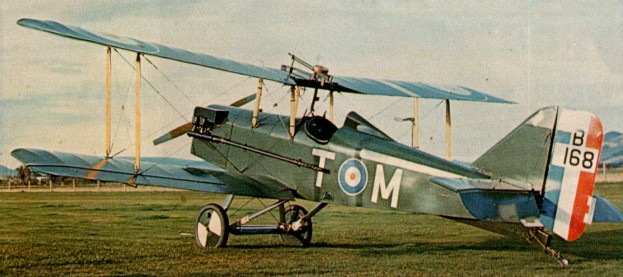
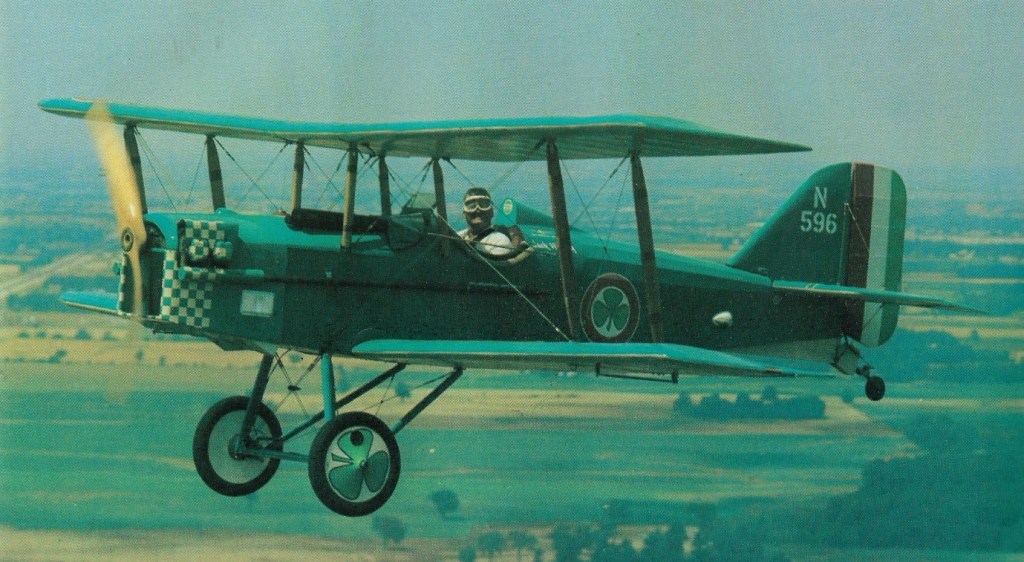
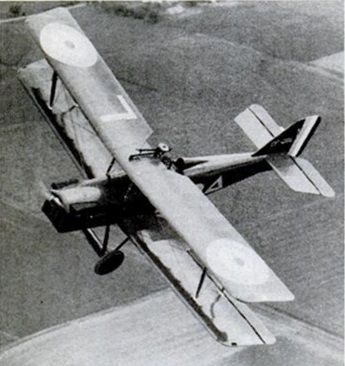
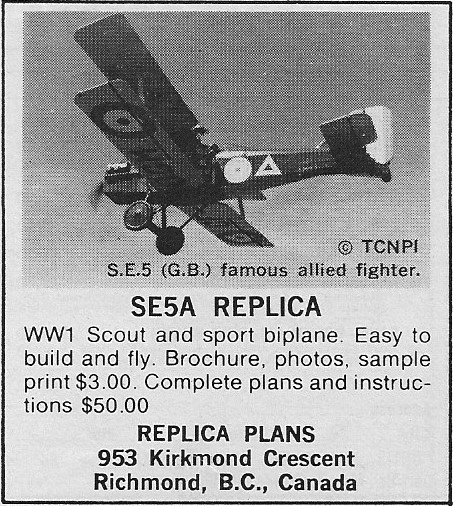
The 5/6th scale replica was designed as an easy and inexpensive representation of this famous First World War Fighter using modern materials and engines. The reduced scale allows for the use of 65 to 100 hp “flat four” engines although some examples have more powerful engines. Wood and fabric construction.

The prototype flew in Canada in 1970 and there were two flying in New Zealand with at least two more under construction. The wooden wing has a leading edge covered with either fibreglass or aluminum, the rest being fabric-covered. The plywood-covered box fuselage has a fabric-covered turtle-deck and aluminum-covered forward section. Performance from an 85 hp powered SE-5A Replica are a cruise speed of 135 km/h and 150 m/min climb rate.

Dec 73

Gallery

Engine: Continental O-200, 100 hp
HP range: 85-125
Height: 7.67 ft
Length: 18.18 ft
Wing span: 23.33 ft
Wing area: 146 sq.ft
Fuel cap: 18 USG
Weight empty: 750 lb
Gross: 1150 lb
Speed max: 110 mph
Cruise: 80 mph
Range: 250 sm
Stall: 35 mph
ROC: 900 fpm
Take-off dist: 400 ft
Landing dist: 550 ft
Service ceiling: 10,000 ft
Seats: 1
Landing gear: tail wheel

Remos REMOS GX / NX

Remos NXT

Remos of Germany continued in 2012 with three models of its GX line: the GX AVIATOR II, GXnES and GX eLite. A variety of standard features and options include Garmin aera 510 and GPSMAP696, Dynon SkyView EFIS, Dynon D100 and D120 EFIS and much more. 2012 prices range from $120,000 to $145,000, with many options.

GX
Engine: Rotax 912S, 100 hp
Propeller: Sensenich
Gross weight: 1320 lb
Empty weight, std: 670 lb
Useful load, std: 650 lb
Payload, full std. fuel: 518 lb
Fuel capacity: 22 lb
Wingspan: 30 ft. 6 in.
Overall length: 21 ft. 3 in.
Overall height: 7 ft. 5 in.
Wing area: 118 sq. ft
Wing loading: 11.2 lbs./sq. ft
Power loading: 13.2 lbs./hp
Seating capacity: 2
Cabin width: 46.8 in
Vso: 38 kt
Vne: 134 kt
Cruise speed: 113 kt
Max rate of climb: 1050 fpm
Takeoff over 50 ft. obstacle: 730 ft
Landing over 50 ft. obstacle: 760 ft