The RP-5 Peregrine N13NG c/n 101 was a 1998 biplane with a 150hp Lycoming O-320 engine.
It won the biplane class in 2003.
On 11 September 2007, the Rose Peregrine RP-5 biplane appeared to experience difficulties almost immediately after takeoff, at about 1745 local time. Witnesses say smoke billowed from plane at less than 100 feet after takeoff from Reno Stead Airport, practicing for the start of the 2007 Reno National Championship Air Races. The pilot, from Lemon Grove, Calif., was dead on impact. The Rose Peregrine was based at Montgomery Field in San Diego, and owned by David Rose. Rose was reportedly not the accident pilot.
Another example has been registered as a Peregrine 4 N111AY.
Romania Intreprinderea de Reparat Material Aeronautice was the Bucharest unit of the Centrala Industrial Aeronautica Romana, formed by reorganization of the national aircraft industry in 1968. Specialised in the repair and overhaul of aircraft and engines for Tarom and other airlines, and manufactured under license the Britten-Norman BN-2A Islander. Became lAv Bucuresti.
With a lineage that can be traced to 1920 (via companies including IRMA and lAv Bucuresti), this company assembled from British-supplied kits nine BAC One-Eleven airliners as 1-11s, the first appearing in 1982. Work, in 1999, included the manufacture of Britten-Norman BN2 Islanders (some 500 produced over 30 years) and the production of subassembles for Boeing and Galaxy Aerospace.
In January 1999 Britten-Norman of the U.K. received approval from the Board of Directors of Romania’s State Ownership Fund for its tender offer to acquire Romaero.
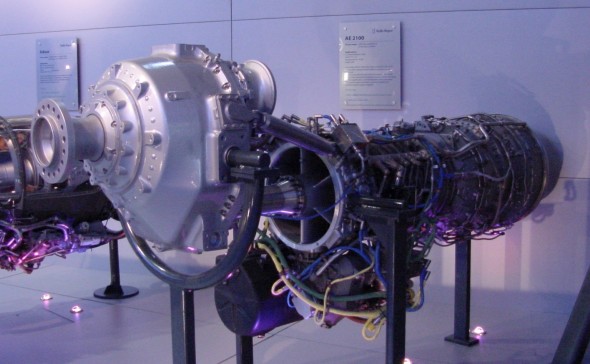
The Rolls-Royce AE 2100 is a turboprop developed by Allison Engine Company, now part of Rolls-Royce North America. A derivative of the Allison AE 1107C-Liberty (Rolls-Royce T406) turboshaft engine, the AE 2100 shares the same high-pressure core as that engine, as does the Rolls-Royce AE 3007. The engine is a two-shaft design, and was the first to use dual FADECs (full authority digital engine control) to control both engine and propeller. There are two versions of the engine: the civil AE2100A, and the AE2100D3 military variant.
The engine uses new six-bladed Dowty propellers for use on the 50-seat Saab 2000 and the Lockheed C-130J Hercules military transport. Each engine develops 4,591 shaft horsepower.
Applications:
AE2100A Saab 2000 Indonesian Aerospace N-250 – Prototype only
AE2100D2A Alenia C-27J Spartan
AE2100J ShinMaywa US-2
AE2100D3 Lockheed Martin C-130J Super Hercules Lockheed P-3 Orion (test-bed)
Specifications: AE 2100D2 Type: Turboprop Length: 118 in (3.0 m) Diameter: 28.7 in (0.73 m) Dry weight: 1,727 lb (783 kg) Compressor: 14-stage axial Turbine: 2-stage HP, 2-stage PT Maximum power output: 4,637 shp (3,458 kW) Overall pressure ratio: 16.6:1 Power-to-weight ratio: 2.7 shp/lb (4.53 kW/kg)
The Rolls-Royce BR700 family of engines was developed by BMW and Rolls-Royce plc through the joint venture company BMW Rolls-Royce AeroEngines GmbH to power regional jets and corporate jets. Rolls-Royce took full control of the company in 2000, which is known as Rolls-Royce Deutschland. The company was established in 1990 and the first engine run (BR710) took place in September 1994.
The engine is manufactured in Dahlewitz, Germany.
The BR710 is a twin shaft turbofan, entered service on the Gulfstream V in 1997 and the Bombardier Global Express in 1998. This version has also been selected to power the Gulfstream G550. Another rerated version, with a revised exhaust system, was selected for the now cancelled Royal Air Force Nimrod MRA4s.
The BR710 comprises a 48in diameter single stage fan, driven by a two stage LP turbine, supercharging a ten stage HP compressor (scaled from the V2500 unit) and driven by a two stage, air-cooled, HP turbine.
The BR715 is another twin shaft turbofan, this engine was first run in April 1997 and entered service in mid-1999. This version powers the Boeing 717.
A new LP spool, comprising a 58in diameter single stage fan, with two stage LP compressor driven by a three stage LP turbine, is incorporated into the BR715. The HP spool is similar to that of the BR710. The IP compressor booster stages supercharge the core, increasing core power and thereby net thrust. However, a larger fan is required, to keep the specific thrust low enough to satisfy jet noise considerations.
The BR725 is a variant of the BR710 with a three stage-axial flow low pressure turbine to power the Gulfstream G650. The engine has a maximum thrust of 17,000 pounds-force (75.6 kN). The BR725 has a bypass ratio of 4.2:1, and is 4 dB quieter than the predecessor BR710. Its 50-inch (127 cm) fan assembly consists of 24 swept titanium blades.
The BR725 prototype underwent component bench and its first full engine run in spring 2008 and European certification was achieved in June 2009. The first Gulfstream G650, with BR725 engines, was delivered in December 2011.
Variants: BR700-710A1-10 Variant with a 65.6kN take-off rating and a maximum diameter of 1820mm.
BR700-710A2-20 Variant with a 65.6kN take-off rating and a maximum diameter of 1820mm.
BR700-710B3-40 Variant with a 69kN take-off rating for the BAE Systems Nimrod MRA4.
BR700-710C4-11 Variant with a 68.4kN take-off rating and a maximum diameter of 1785mm.
BR700-715A1-30 Variant with an 83.23kN take-off rating for Boeing 717-200 basic gross weight variants.
BR700-715B1-30 Variant with an 89.68kN take-off rating.
BR700-715C1-30 Variant with a 95.33kN take-off rating for Boeing 717-200 high gross weight variants.
BR700-725A1-12 Variant with a 71.6kN take-off rating.
Applications: Bombardier Global Express Boeing 717 Gulfstream V Gulfstream G650 BAE Systems Nimrod MRA4 Rekkof/ Fokker XF70/XF100 Tupolev Tu-334
Specifications:
BR710-48 Thrust: 14,750-15,500 lb Dry Weight: 4640 lb Overall Length: 134.0 in Fan Diameter: 48.0 in
BR715-58 Thrust: 18,500-22,000 lb Dry Weight: 6155 lb Overall Length: 147.0 in Fan Diameter: 58.0 in
BR725-50 Thrust: 15,000-17,000 lb Dry Weight: 4912 lb appx Overall Length: 202.0 in nacelle Fan Diameter: 50.0 in
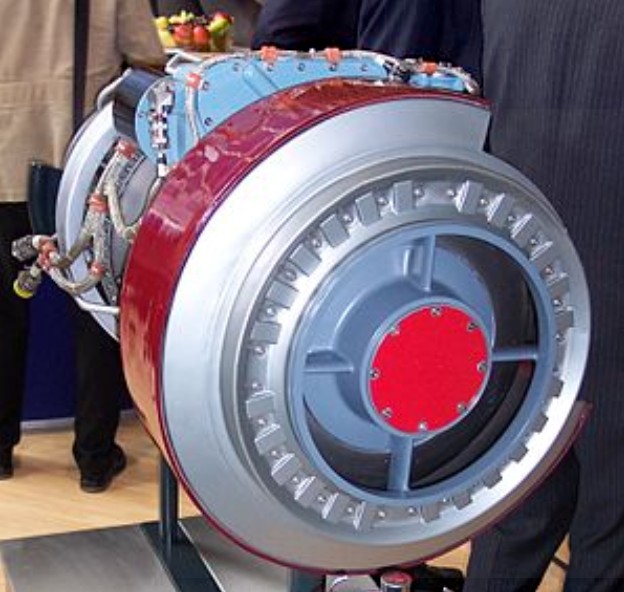
The Rolls-Royce Turbomeca RTM322 is a turboshaft engine produced by Rolls-Royce Turbomeca Limited, a joint venture between Rolls-Royce plc and Turbomeca. The engine was designed to suit a wide range of military and commercial helicopter designs. The RTM322 can also be employed in maritime and industrial applications.
The first order for the RTM322 was received in 1992 to power 44 Royal Navy Merlin HM1s which subsequently entered service in 1998. According to Rolls-Royce 1,500 engines are made or ordered, and about 80% of AW101’s use the engine.
Rolls-Royce Trent is the name given to a family of three-spool, high bypass turbofan aircraft engines manufactured by Rolls-Royce plc. All are developments of the RB211 with thrust ratings of 53,000 to 95,000 pounds-force (240 to 420 kN). The Trent has also been adapted for marine and industrial applications.
When Rolls-Royce was privatised in April 1987, its share of the large civil turbofan market was only 8%. Despite increasing sales success with the RB211, General Electric and Pratt & Whitney still dominated the market. At that time, the aircraft manufacturers were proposing new planes that would require unprecedented levels of thrust. Furthermore the Boeing 777 and Airbus A330 were to be twin-engined, and their airline customers were demanding that they be capable of operating in the Extended-range Twin-engine Operations (ETOPS) environment at the time of their initial introduction into service.
Rolls-Royce decided that to succeed in the large engine market of the future, it would have to offer engines for every large civil airliner. In view of the enormous development costs required to bring a new engine to market, the only way to do this would be to have a family of engines based on a common core. The three-shaft design of the RB211 was an ideal basis for the new family as it provided flexibility, allowing the high-pressure (HP), intermediate-pressure (IP) and low-pressure (LP) systems to be individually scaled. Freed from the restrictions of state ownership Rolls decided to launch a new family of engines, which was formally announced at the 1988 Farnborough Airshow. Reviving a name last used 30 years earlier, the new engine was named the Trent. The Trent name had been used for two previous Rolls-Royce engines. The first Trent was the world’s first turboprop engine. The name was reused again in the 1960s for the RB203 bypass turbofan designed to replace the Spey. Rated at 9,980 lbf (44.4 kN) it was the first three-spool engine, forerunner of the RB211 series, but it never entered service.
Rolls-Royce has obtained significant sums of “launch investment” from the British government for the Trent programmes, including £200 million approved in 1997 for Trent 8104, 500 and 600 and £250 million for Trent 600 and 900 in 2001. No aid was sought for Trent 1000. Launch investment is repaid to the government by a royalty on each engine sold.
Like its RB211 predecessor, the Trent uses a three-spool design rather than the more common two-spool configuration. Although inherently more complex, it results in a shorter, more rigid engine which suffers less performance degradation in service than an equivalent twin-spool. The advantage three spools gives is that the front-most fan (driven by the third, rearmost turbine) can be tuned to rotate at its optimal (fairly low) speed; the two compressors are driven by the two other turbines via their spools. The three spools are concentric, of course, like a matryoshka doll.
All the engines in the Trent family share a similar layout, but their three-spool configuration allows each engine module to be individually scaled to meet a wide range of performance and thrust requirements. For example, the large 116-inch (290 cm) diameter fan of the Trent 900 keeps the mean jet velocity at take-off at a relatively low level to help meet the stringent noise levels required by the Airbus A380’s customers. Similarly, core size changes enable the (High Pressure) turbine rotor inlet temperature to be kept as low as possible, thereby minimising maintenance costs. The overall pressure ratio of the Trent 800 is higher than the 700’s despite sharing the same HP system and Intermediate Pressure turbine; this was achieved by increasing the capacity of the IP compressor and the Low Pressure turbine.
Trent engines use hollow titanium fan blades with an internal Warren-girder structure to achieve strength, stiffness and robustness at low weight. The blades can rotate at 3300 RPM with a tip speed of 1730 km/h, well above the speed of sound. The single-crystal nickel alloy turbine blades are also hollow, and air is pushed through laser-drilled holes in them to cool them because the gas temperature is higher than the melting point of the blades. They each remove up to 560 kW from the gas stream.
The completely redesigned core turbomachinery delivers better performance, noise and pollution levels than the RB211. So significant are the improvements that Rolls-Royce fitted the Trent 700’s improved HP system to the RB211-524G and -524H, creating -524G-T and -524H-T respectively.
When the RB211 programme originally started, it was intended that none of the compression system would require variable stators, unlike the American competition. Unfortunately, it was found that, because of the shallow working line on the Intermediate Pressure Compressor (IPC), at least one row of variable stators was required on the IPC, to improve its surge margin at throttled conditions. This feature has been retained throughout the RB211 and Trent series. Although the original intent was not met, Rolls-Royce eliminated the need for many rows of variable stators, with all its inherent complexity, thereby saving weight, cost and improving reliability.
First run in August 1990 as the model Trent 700, the Trent has achieved significant commercial success, having been selected as the launch engine for both of the 787’s variants (Trent 1000), the A380 (Trent 900) and the A350 (Trent XWB). Its overall share of the markets in which it competes is around 40%. Sales of the Trent family of engines have made Rolls-Royce the second biggest supplier of large civil turbofans after General Electric, relegating rival Pratt & Whitney to third position.
On 17 January 2008, a British Airways Boeing 777-236ER, operating as BA038 from Beijing to London, crash-landed at Heathrow after both Trent 800 engines lost power during the aircraft’s final approach. The subsequent investigation found that ice released from the fuel system had accumulated on the fuel-oil heat exchanger, leading to a restriction of fuel flow to the engines. This resulted in Airworthiness Directives mandating the replacement of the heat exchanger. This order was extended to the 500 and 700 series engines after a similar loss of power was observed on one engine of an Airbus A330 in one incident, and both engines in another. The modification involves replacing a face plate with many small protruding tubes with one that is flat.
The initial variant, the Trent 600, was to power the McDonnell Douglas MD-11 with British Caledonian as the engine’s launch customer. However, British Airways cancelled the MD-11 order when it acquired British Caledonian in 1987. With the collapse in 1991 of Air Europe in the aftermath of the 1990-91 Gulf War, the only other Trent-powered MD-11 customer was lost. As the MD-11 was itself suffering poor sales due to its failure to meet its performance targets, the Trent 600 was downgraded to a demonstrator programme, engine development being switched to the Trent 700 for the Airbus A330.
Rolls-Royce Trent 700 In April 1989, Cathay Pacific became the first customer to specify an Airbus aircraft powered by Rolls-Royce engines when it ordered ten A330s powered by the Trent 700. The following month Trans World Airlines followed suit with an order for twenty A330s.
The Trent 700 first ran in August 1990, and certification was achieved in January 1994. 90 minutes ETOPS approval was achieved in March 1995, and this was extended to 120 minutes in December 1995 and 180 minutes in May 1996.
Rolls-Royce Trent 800 At the same time, Boeing was investigating an enlarged development of its 767 model dubbed the 767X, for which Rolls-Royce proposed the Trent 760. By 1990 Boeing abandoned its planned 767X and instead decided to launch a new, larger aircraft family designated 777 with a thrust requirement of 80,000 lbf (360 kN) or more. The Trent 700’s 2.47 m (97 in) diameter fan would not be big enough to meet this requirement, so Rolls proposed a new version with a 2.80 m (110 in) fan diameter, designated Trent 800.
Testing of the Trent 800 began in September 1993, and certification was achieved in January 1995. The first Boeing 777 with Trent 800 engines flew in May 1995, and entered service with Cathay Pacific in April 1996.
Initially Rolls-Royce had difficulty selling the engine; British Airways, traditionally a Rolls-Royce customer, submitted a large order for the competing General Electric GE90 engine. The breakthrough came when it won orders from Singapore Airlines, previously a staunch Pratt & Whitney customer, for its 34 Boeing 777s. The Trent 800 has a 41% share of the engine market on the 777 variants for which it is available.
In 1998 Boeing proposed new longer range variants of the 777X. Taking advantage of the Trent 800’s growth capability, Rolls-Royce designed and built an improved engine designated Trent 8104, which was later scaled upwards to the even larger 8115. This development was the first engine to break through 100,000 lbf (440 kN) thrust and subsequently the first to reach 110,000 lbf (490 kN). However, GE Aviation former president James McNerney (now Boeing CEO) successfully offered the aircraft manufacturer up to $500 million in money to develop the 777X in exchange for exclusivity in powering the family. Boeing agreed in July 1999 to such a deal with the GE90-110B and GE90-115B to be the sole engines on the long-range 777s. This resulted in the 8104 becoming just a demonstrator programme, despite setting further industry firsts for thrust levels achieved and the first to demonstrate the use of a fully swept wide chord fan.
Rolls-Royce Trent 500 In 1995, Airbus began considering an engine for two new long-range derivatives of its four-engine A340 aircraft, designated A340-500/-600. In April 1996, Airbus signed an agreement with General Electric to develop a suitable engine, but decided not to proceed when GE demanded an exclusivity deal on the A340. After a contest with Pratt & Whitney, Airbus announced on 15 June 1997 at the Paris Air Show that it had selected the Trent 500 to power the A340-500 and -600. Two year later, in May 1999, the Trent 500 first ran and certification was achieved in December 2000. It entered service on the A340-600 with Virgin Atlantic Airways in July 2002 and on the ultra-long range A340-500 with Emirates in December 2003.
As of January 2009, firm orders had been received from 15 customers for 139 A340s powered by Trent 500s; Lufthansa was the largest operator, with 21 in service.
In 1999 a derivative of the Trent 892, the Trent 895 received certification from both the UK and the European authorities. The 95,000 lb thrust engine was scheduled for British Airways Boeing 777-200s.
Rolls-Royce Trent 900
Rolls-Royce Trent 900 on testIn the early 1990s, Airbus had begun development of a larger successor to the Boeing 747, an aircraft designated A3XX, which was later to be formally launched as the Airbus A380. By 1996, its definition had progressed to the extent that Rolls-Royce was able to announce that it would develop the Trent 900 to power the A380. In October 2000, the Trent 900 became the A380’s launch engine when Singapore Airlines specified the engine for its order for 10 A380s; this was quickly followed by Qantas in February 2001.
The Trent 900 first ran on May 17, 2004 on Airbus’ A340-300 testbed, replacing the port inner CFM56-5 engine, and its final certification was granted by the European Aviation Safety Agency (EASA) on 29 October 2004 and the Federal Aviation Administration (FAA) on 4 December 2006. Rolls-Royce announced in October 2007 that production of the Trent 900 had been restarted after a twelve month suspension caused by delays to the A380.
On 27 September 2007, British Airways announced the selection of the Trent 900 to power 12 A380 aircraft, helping to take the engine’s share of the A380 engine market to 52% at the end of February 2009.
On 4 November 2010, a Trent 900 experienced an uncontained failure on Qantas Flight 32 over Singapore. After investigation, Rolls-Royce announced the problem was specific to the Trent 900, and in particular unrelated to failure of a Trent 1000 under test. However, others have noted that although the specific part may be only found in the 900, in both cases the intermediate pressure turbine and lubrication system are suspect.
In July 2000, Rolls-Royce signed an agreement with Boeing to offer the Trent 600 engine on developments of 767 and 747 aircraft. The 767 variant was to be a new longer-range version of the Boeing 767-400ER to be powered by the Trent 600 and Engine Alliance GP7172, although in the end this aircraft was never launched. When Boeing finally launched the 747-8 in 2005 it announced that the General Electric GEnx would be the only engine available for the 747-8.
On 6 April 2004 Boeing announced that it had selected two engine partners for its new 787, Rolls-Royce and General Electric. Initially, Boeing toyed with the idea of sole sourcing the powerplant for the 787, with GE being the most likely candidate. However, potential customers demanded choices and Boeing relented. For the first time in commercial aviation, both engine types will have a standard interface with the aircraft, allowing any 787 to be fitted with either a GE or Rolls-Royce engine at any time as long as the pylon is also modified.
In June 2004, the first public engine selection was made by Air New Zealand, who chose the Trent 1000 for its two firm orders. In the largest 787 order, that of Japan’s All Nippon Airways, Rolls-Royce was selected as the engine supplier on October 13, 2004. The deal is valued at $1 billion (£560 million) and covers 30 787-3s and 20 787-8s. The Trent 1000 will be the launch engine on all three current 787 models, the -8 with ANA and the -9 with Air New Zealand. On 7 July 2007, Rolls Royce secured its largest ever order from an aircraft leasing company when ILFC placed an order worth $1.3 billion at list prices for Trent 1000s to power 40 of the 787s which it has on order, and on 27 September 2007 British Airways announced the selection of the Trent 1000 to power 24 Boeing 787 aircraft. Trent 1000’s share of the 787 engine market was 40% at the end of August 2008.
The first run of the Trent 1000 was on 14 February 2006, with first flight on Rolls-Royce’s own flying testbed (a modified Boeing 747-200) successfully performed on June 18, 2007 from TSTC Waco Airport in Waco, TX. The engine received joint certification from the FAA and EASA on 7 August 2007 (written 7/8/7 outside the US). Entry into service has been delayed by more than two years to the last quarter of 2010 following a series of delays to the Boeing 787 programme. The Trent 1000, along with the General Electric GEnx, is distinguished from other turbofans with the use of noise-reducing chevrons on the engine nacelle when in use.
A Trent 500 replacement engine, known unofficially as the Trent 1500, was proposed for the Airbus A340-500/600 to help them compete with the Boeing 777-200LR/300ER. However, the announcement of the A350 XWB, which covers the A340 market, will most likely prevent the Trent 1500 from ever becoming a reality.
The Trent 1500 would retain the 2.47-metre (8 ft 1 in) fan diameter of the current Trent 500 engine, as well as the nacelle, but incorporates the smaller, more advanced, Trent 1000/XWB gas generator and LP turbine, suitably modified.
The Trent XWB is a series of turbofan engines, developed from the RB211 and it is used exclusively for the Airbus A350 XWB
Major applications: Airbus A330 Airbus A340 (-500 and -600 series only) Airbus A350 Airbus A380 Boeing 777 (-200, -200ER and -300 series only) Boeing 787 Dreamliner
Trent 553 Three-shaft high bypass ratio: 9.3 Fan diameter: 3.0 m (118 in) Fan: single stage, swept, low hub:tip ratio Airflow: approx. 1,440 kg (3,200 lb) per second Overall pressure ratio >=52:1 (Top-of-Climb) IP compressor: 8 stage axial HP compressor: 6 stage axial Static Thrust: 53,000 lbf Basic Engine Weight: 10,400 lb Thrust to Weight Ratio: 5.1 Length: 154 in Fan Diameter: 97.4 in Entry Into Service: 2003 Applications: Airbus A340-500
Trent 556 Three-shaft high bypass ratio: 9.3 Fan diameter: 3.0 m (118 in) Fan: single stage, swept, low hub:tip ratio Airflow: approx. 1,440 kg (3,200 lb) per second Overall pressure ratio >=52:1 (Top-of-Climb) IP compressor: 8 stage axial HP compressor: 6 stage axial Static Thrust: 56,000 lbf Basic Engine Weight: 10,400 lb Thrust to Weight Ratio: 5.4 Length: 154 in Fan Diameter: 97.4 in Entry Into Service: 2002 Applications: Airbus A340-500, Airbus A340-600
Trent 560 Three-shaft high bypass ratio: 9.3 Fan diameter: 3.0 m (118 in) Fan: single stage, swept, low hub:tip ratio Airflow: approx. 1,440 kg (3,200 lb) per second Overall pressure ratio >=52:1 (Top-of-Climb) IP compressor: 8 stage axial HP compressor: 6 stage axial Static Thrust: 60,000 lbf Basic Engine Weight: 10,400 lb Thrust to Weight Ratio: 5.76 Length: 154 in Fan Diameter: 97.4 in Entry Into Service: 2002 Applications: Airbus A340-600
Trent 600 Three-shaft high bypass ratio: 9.3 Fan diameter: 3.0 m (118 in) Fan: single stage, swept, low hub:tip ratio Airflow: approx. 1,440 kg (3,200 lb) per second Overall pressure ratio >=52:1 (Top-of-Climb) IP compressor: 8 stage axial HP compressor: 6 stage axial Static Thrust: 65,000 lbf Basic Engine Weight: 10,400 lb Thrust to Weight Ratio: 6.3 Length: 154 in Fan Diameter: 97.4 in Entry Into Service: Not Used
Trent 768 Three-shaft high bypass ratio: 9.3 Fan diameter: 3.0 m (118 in) Fan: single stage, swept, low hub:tip ratio Airflow: approx. 1,440 kg (3,200 lb) per second Overall pressure ratio >=52:1 (Top-of-Climb) IP compressor: 8 stage axial HP compressor: 6 stage axial Static Thrust: 67,500 lbf Basic Engine Weight: 10,550 lb Thrust to Weight Ratio: 6.4 Length: 154 in Fan Diameter: 97.4 in Entry Into Service: 1996 Applications: Airbus A330-200, Airbus A330-300
Trent 772 Three-shaft high bypass ratio: 9.3 Fan diameter: 3.0 m (118 in) Fan: single stage, swept, low hub:tip ratio Airflow: approx. 1,440 kg (3,200 lb) per second Overall pressure ratio >=52:1 (Top-of-Climb) IP compressor: 8 stage axial HP compressor: 6 stage axial Static Thrust: 71,100 lbf Basic Engine Weight: 10,550 lb Thrust to Weight Ratio: 6.7 Length: 154 in Fan Diameter: 97.4 in Entry Into Service: 1994 Applications: Airbus A330-200, Airbus A330-300
Trent 772B Three-shaft high bypass ratio: 9.3 Fan diameter: 3.0 m (118 in) Fan: single stage, swept, low hub:tip ratio Airflow: approx. 1,440 kg (3,200 lb) per second Overall pressure ratio >=52:1 (Top-of-Climb) IP compressor: 8 stage axial HP compressor: 6 stage axial Static Thrust: 71,100 lbf Basic Engine Weight: 10,550 lb Thrust to Weight Ratio: 6.7 Length: 154 in Fan Diameter: 97.4 in Entry Into Service: 1998 Applications: Airbus A330-200, Airbus A330-300
Trent 772C Three-shaft high bypass ratio: 9.3 Fan diameter: 3.0 m (118 in) Fan: single stage, swept, low hub:tip ratio Airflow: approx. 1,440 kg (3,200 lb) per second Overall pressure ratio >=52:1 (Top-of-Climb) IP compressor: 8 stage axial HP compressor: 6 stage axial Static Thrust: 71,100 lbf Basic Engine Weight: 10,550 lb Thrust to Weight Ratio: 6.7 Length: 154 in Fan Diameter: 97.4 in Entry Into Service: 2007 Applications: Airbus A330-200, Airbus A330-300
Trent 875 Three-shaft high bypass ratio: 9.3 Fan diameter: 3.0 m (118 in) Fan: single stage, swept, low hub:tip ratio Airflow: approx. 1,440 kg (3,200 lb) per second Overall pressure ratio >=52:1 (Top-of-Climb) IP compressor: 8 stage axial HP compressor: 6 stage axial Static Thrust: 75,000 lbf Basic Engine Weight: 13,100 lb Thrust to Weight Ratio: 5.7 Length: 172 in Fan Diameter: 110 in Entry Into Service: 1995 Applications: Boeing 777-200
Trent 877 Three-shaft high bypass ratio: 9.3 Fan diameter: 3.0 m (118 in) Fan: single stage, swept, low hub:tip ratio Airflow: approx. 1,440 kg (3,200 lb) per second Overall pressure ratio >=52:1 (Top-of-Climb) IP compressor: 8 stage axial HP compressor: 6 stage axial Static Thrust: 77,000 lbf Basic Engine Weight: 13,100 lb Thrust to Weight Ratio: 5.9 Length: 172 in Fan Diameter: 110 in Entry Into Service: 1996 Applications: Boeing 777-200
Trent 884 Three-shaft high bypass ratio: 9.3 Fan diameter: 3.0 m (118 in) Fan: single stage, swept, low hub:tip ratio Airflow: approx. 1,440 kg (3,200 lb) per second Overall pressure ratio >=52:1 (Top-of-Climb) IP compressor: 8 stage axial HP compressor: 6 stage axial Static Thrust: 84,000 lbf Basic Engine Weight: 13,100 lb Thrust to Weight Ratio: 6.4 Length: 172 in Fan Diameter: 110 in Entry Into Service: 1997 Applications: Boeing 777-200ER
Trent 890 Three-shaft high bypass ratio: 9.3 Fan diameter: 3.0 m (118 in) Fan: single stage, swept, low hub:tip ratio Airflow: approx. 1,440 kg (3,200 lb) per second Overall pressure ratio >=52:1 (Top-of-Climb) IP compressor: 8 stage axial HP compressor: 6 stage axial Static Thrust: 90,000 lbf Basic Engine Weight: 13,100 lb Thrust to Weight Ratio: 6.9 Length: 172 in Fan Diameter: 110 in Entry Into Service: 1998 Applications: Boeing 777-200ER
Trent 892 Three-shaft high bypass ratio: 9.3 Fan diameter: 3.0 m (118 in) Fan: single stage, swept, low hub:tip ratio Airflow: approx. 1,440 kg (3,200 lb) per second Overall pressure ratio >=52:1 (Top-of-Climb) IP compressor: 8 stage axial HP compressor: 6 stage axial Static Thrust: 92,000 lbf Basic Engine Weight: 13,100 lb Thrust to Weight Ratio: 7.0 Length: 172 in Fan Diameter: 110 in Entry Into Service: 1997 Applications: Boeing 777-200ER, Boeing 777-300
Trent 895 Three-shaft high bypass ratio: 9.3 Fan diameter: 3.0 m (118 in) Fan: single stage, swept, low hub:tip ratio Airflow: approx. 1,440 kg (3,200 lb) per second Overall pressure ratio >=52:1 (Top-of-Climb) IP compressor: 8 stage axial HP compressor: 6 stage axial Static Thrust: 93,400 lbf Basic Engine Weight: 13,100 lb Thrust to Weight Ratio: 7.1 Length: 172 in Fan Diameter: 110 in Entry Into Service: 1999 Applications: Boeing 777-200ER
Trent 8104 Three-shaft high bypass ratio: 9.3 Fan diameter: 3.0 m (118 in) Fan: single stage, swept, low hub:tip ratio Airflow: approx. 1,440 kg (3,200 lb) per second Overall pressure ratio >=52:1 (Top-of-Climb) IP compressor: 8 stage axial HP compressor: 6 stage axial Static Thrust: 104,000 lbf Basic Engine Weight: 14,400 lb Thrust to Weight Ratio: 7.2 Length: 172 in Fan Diameter: in Entry Into Service: 110
Trent 8115 Three-shaft high bypass ratio: 9.3 Fan diameter: 3.0 m (118 in) Fan: single stage, swept, low hub:tip ratio Airflow: approx. 1,440 kg (3,200 lb) per second Overall pressure ratio >=52:1 (Top-of-Climb) IP compressor: 8 stage axial HP compressor: 6 stage axial Static Thrust: 115,000 lbf Length: 172 in Fan Diameter: 120 in Entry Into Service: Not Used
Trent 970 Three-shaft high bypass ratio: 9.3 Fan diameter: 3.0 m (118 in) Fan: single stage, swept, low hub:tip ratio Airflow: approx. 1,440 kg (3,200 lb) per second Overall pressure ratio >=52:1 (Top-of-Climb) IP compressor: 8 stage axial HP compressor: 6 stage axial Static Thrust: 75,152 lbf Basic Engine Weight: 13,842 lb Thrust to Weight Ratio: 5.4 Length: 179 in Fan Diameter: 116 in Entry Into Service: 2007 Applications: Airbus A380-841
Trent 970B Three-shaft high bypass ratio: 9.3 Fan diameter: 3.0 m (118 in) Fan: single stage, swept, low hub:tip ratio Airflow: approx. 1,440 kg (3,200 lb) per second Overall pressure ratio >=52:1 (Top-of-Climb) IP compressor: 8 stage axial HP compressor: 6 stage axial Static Thrust: 78,304 lbf Basic Engine Weight: 13,842 lb Thrust to Weight Ratio: 5.6 Length: 179 in Fan Diameter: 116 in Entry Into Service: 2008 Applications: Airbus A380-841
Trent 972 Three-shaft high bypass ratio: 9.3 Fan diameter: 3.0 m (118 in) Fan: single stage, swept, low hub:tip ratio Airflow: approx. 1,440 kg (3,200 lb) per second Overall pressure ratio >=52:1 (Top-of-Climb) IP compressor: 8 stage axial HP compressor: 6 stage axial Static Thrust: 76,752 lbf Basic Engine Weight: 13,842 lb Thrust to Weight Ratio: 5.5 Length: 179 in Fan Diameter: 116 in Applications: Airbus A380-842
Trent 972B Three-shaft high bypass ratio: 9.3 Fan diameter: 3.0 m (118 in) Fan: single stage, swept, low hub:tip ratio Airflow: approx. 1,440 kg (3,200 lb) per second Overall pressure ratio >=52:1 (Top-of-Climb) IP compressor: 8 stage axial HP compressor: 6 stage axial Static Thrust: 80,231 lbf Basic Engine Weight: 13,842 lb Thrust to Weight Ratio: 5.8 Length: 179 in Fan Diameter: 116 in Applications: Airbus A380-842
Trent 977 Three-shaft high bypass ratio: 9.3 Fan diameter: 3.0 m (118 in) Fan: single stage, swept, low hub:tip ratio Airflow: approx. 1,440 kg (3,200 lb) per second Overall pressure ratio >=52:1 (Top-of-Climb) IP compressor: 8 stage axial HP compressor: 6 stage axial Static Thrust: 80,781 lbf Basic Engine Weight: 13,842 lb Thrust to Weight Ratio: 5.8 Length: 179 in Fan Diameter: 116 in Applications: Airbus A380-843F
Trent 977B Three-shaft high bypass ratio: 9.3 Fan diameter: 3.0 m (118 in) Fan: single stage, swept, low hub:tip ratio Airflow: approx. 1,440 kg (3,200 lb) per second Overall pressure ratio >=52:1 (Top-of-Climb) IP compressor: 8 stage axial HP compressor: 6 stage axial Static Thrust: 83,835 lbf Basic Engine Weight: 13,842 lb Thrust to Weight Ratio: 6.0 Length: 179 in Fan Diameter: 116 in Applications: Airbus A380-843F
Trent 980-84 Three-shaft high bypass ratio: 9.3 Fan diameter: 3.0 m (118 in) Fan: single stage, swept, low hub:tip ratio Airflow: approx. 1,440 kg (3,200 lb) per second Overall pressure ratio >=52:1 (Top-of-Climb) IP compressor: 8 stage axial HP compressor: 6 stage axial Static Thrust: 84,098 lbf Basic Engine Weight: 13,842 lb Thrust to Weight Ratio: 6.0 Length: 179 in Fan Diameter: 116 in Applications: Airbus A380-941
Trent 1000-A Three-shaft high bypass ratio: 9.3 Fan diameter: 3.0 m (118 in) Fan: single stage, swept, low hub:tip ratio Airflow: approx. 1,440 kg (3,200 lb) per second Overall pressure ratio >=52:1 (Top-of-Climb) IP compressor: 8 stage axial HP compressor: 6 stage axial Static Thrust: 63,800 lbf Basic Engine Weight: 11,924 lb Thrust to Weight Ratio: 5.4 Length: 160 in Fan Diameter: 112 in Entry Into Service: 2009 Applications: Boeing 787-8
Trent 1000-C Three-shaft high bypass ratio: 9.3 Fan diameter: 3.0 m (118 in) Fan: single stage, swept, low hub:tip ratio Airflow: approx. 1,440 kg (3,200 lb) per second Overall pressure ratio >=52:1 (Top-of-Climb) IP compressor: 8 stage axial HP compressor: 6 stage axial Static Thrust: 69,800 lbf Basic Engine Weight: 11,924 lb Thrust to Weight Ratio: 5.9 Length: 160 in Fan Diameter: 112 in Entry Into Service: 2009 Applications: Boeing 787-8, Boeing 787-9
Trent 1000-D Three-shaft high bypass ratio: 9.3 Fan diameter: 3.0 m (118 in) Fan: single stage, swept, low hub:tip ratio Airflow: approx. 1,440 kg (3,200 lb) per second Overall pressure ratio >=52:1 (Top-of-Climb) IP compressor: 8 stage axial HP compressor: 6 stage axial Static Thrust: 69,800 lbf Basic Engine Weight: 11,924 lb Thrust to Weight Ratio: 5.9 Length: 160 in Fan Diameter: 112 in Entry Into Service: 2009 Applications: Boeing 787-8, Boeing 787-9
Trent 1000-E Three-shaft high bypass ratio: 9.3 Fan diameter: 3.0 m (118 in) Fan: single stage, swept, low hub:tip ratio Airflow: approx. 1,440 kg (3,200 lb) per second Overall pressure ratio >=52:1 (Top-of-Climb) IP compressor: 8 stage axial HP compressor: 6 stage axial Static Thrust: 53,200 lbf Basic Engine Weight: 11,924 lb Thrust to Weight Ratio: 4.5 Length: 160 in Fan Diameter: 112 in Entry Into Service: 2009 Applications: Boeing 787-3
Trent 1000-H Three-shaft high bypass ratio: 9.3 Fan diameter: 3.0 m (118 in) Fan: single stage, swept, low hub:tip ratio Airflow: approx. 1,440 kg (3,200 lb) per second Overall pressure ratio >=52:1 (Top-of-Climb) IP compressor: 8 stage axial HP compressor: 6 stage axial Static Thrust: 58,000 lbf Basic Engine Weight: 11,924 lb Thrust to Weight Ratio: 4.9 Length: 160 in Fan Diameter: 112 in Entry Into Service: 2009 Applications: Boeing 787-3, Boeing 787-8
Trent 1000-J Three-shaft high bypass ratio: 9.3 Fan diameter: 3.0 m (118 in) Fan: single stage, swept, low hub:tip ratio Airflow: approx. 1,440 kg (3,200 lb) per second Overall pressure ratio >=52:1 (Top-of-Climb) IP compressor: 8 stage axial HP compressor: 6 stage axial Static Thrust: 73,800 lbf Basic Engine Weight: 11,924 lb Thrust to Weight Ratio: 6.2 Length: 160 in Fan Diameter: 112 in Entry Into Service: 2010 Applications: Boeing 787-9
Trent 1000-K Three-shaft high bypass ratio: 9.3 Fan diameter: 3.0 m (118 in) Fan: single stage, swept, low hub:tip ratio Airflow: approx. 1,440 kg (3,200 lb) per second Overall pressure ratio >=52:1 (Top-of-Climb) IP compressor: 8 stage axial HP compressor: 6 stage axial Static Thrust: 73,800 lbf Basic Engine Weight: 11,924 lb Thrust to Weight Ratio: 6.2 Length: 160 in Fan Diameter: 112 in Entry Into Service: 2010 Applications: Boeing 787-9
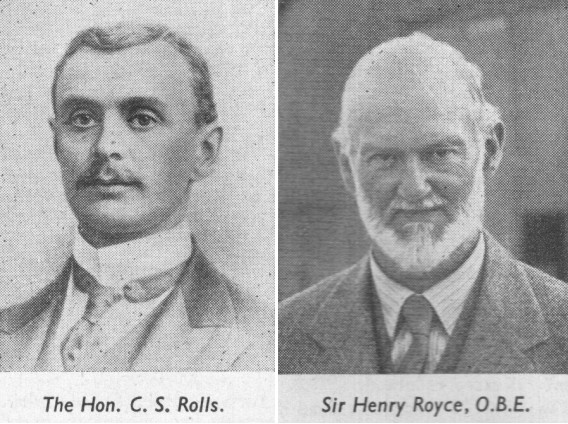
Rolls and Royce, met in Manchester in 1904. Rolls-the Hon. Charles Stewart Rolls-possessed wealth, an Eton-and-Cambridge education, a degree in mathematics and applied science, and a fine record as a motorist. He was a sportsman he had consistently displayed a daring at the wheel and a determined approach to the technical problems of motoring.
In the business of C. S. Rolls and Co., which he established with Claude Johnson in 1902. In 1903 he set a world speed record of 93 m.p.h.; but the car was a 70 h.p. Mors, and by the following year, when his books showed orders for a hundred Continental cars, he could still not find a British product which measured up to his standards.
At ten years of age Henry Royce started work as a telegraph boy, later attending a technical college, and serving a few years in the Great Northern locomotive shops at Peterborough. After a spell in an engineering works at Leeds, he set up a business in Manchester, making arc lamps and dynamos. The slump after the Boer War caused him to turn his ambition to cars. Disappointed with a foreign model which he acquired, he decided to put his own ideas into practice, and in 1903 he completed a two-cylinder car of 10 h.p., having handled much of the precision work himself.
One of his first three cars went to Henry Edmunds, who arranged the meeting in Manchester. The two men took to each other immediately, and having tried out Royce’s car, young Rolls undertook to sell its maker’s entire output. But he began to ply his partner with suggestions and demands.
The “two Rs” were first officially linked in business association at Christmas 1904, by a working agreement between the two firms; and thenceforth the Rolls-Royce car began.
By 1906 Royce’s production was large enough to allow Rolls to stop his sales of other makes of car, and Rolls-Royce, Ltd., was founded. Royce’s old partner, A. E. Claremont, became chairman; Rolls was technical managing director; and Royce was nominated chief engineer and works director.
Charles Stewart Rolls
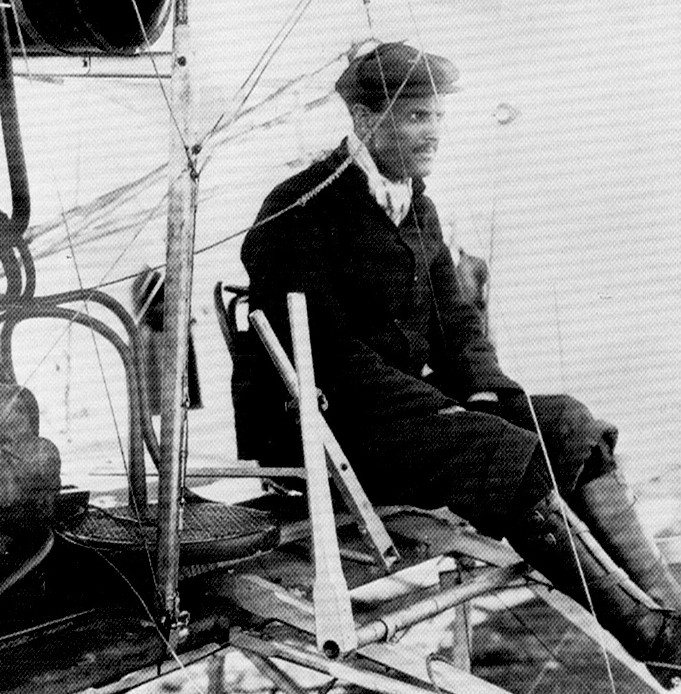
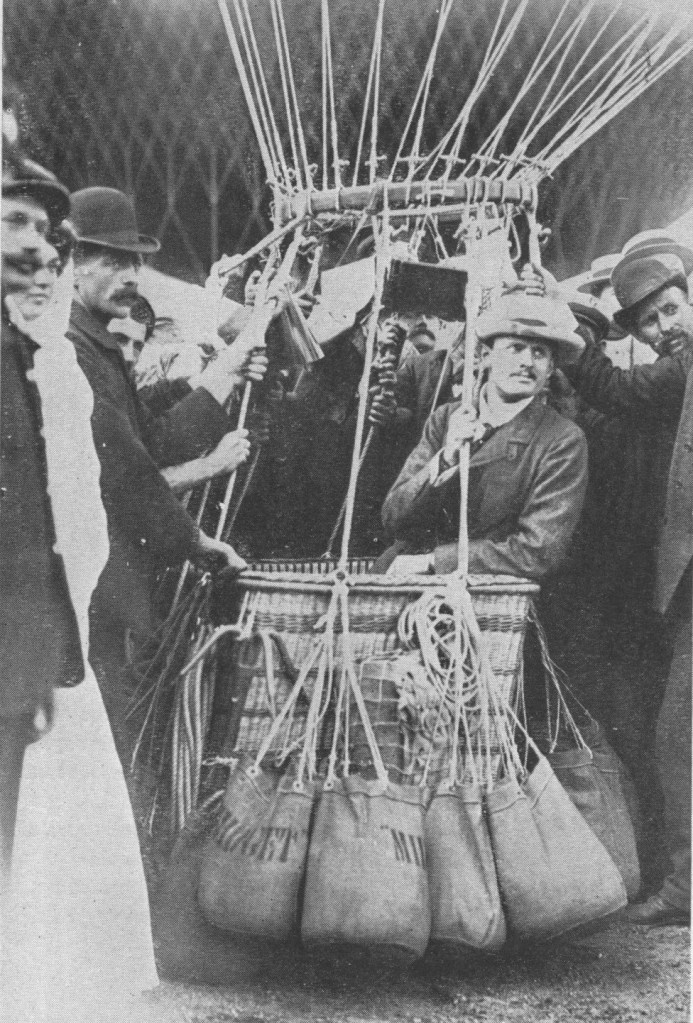
Rolls, who had become a member of the Aeronautical Society in 1901, was already a keen balloonist; then, having met the Wright brothers, he turned to heavier-than–aircraft. He was awarded his pilot’s certificate (No. 2) on March 8th, 1910-the very same day that Lord Brabazon received his No. 1. On the Wright biplane he made the first heavier-than-air crossing of the Channel by an Englishman, and the first double crossing by any aeroplane in history; but soon afterwards-on July 12th, 1910, he crashed to his death at the Bournemouth flying meeting, only 33 years of age. He was the first Englishman to die in an accident to a powered, heavier-than-air machine. His Wright Flyer broke up at 20 ft agl and he cracked his skull.
C.S. Rolls
In 1910 Royce became seriously ill and thereafter was absent for long periods from his new factory at Derby. He worked on in the south of France and on the south coast of England.
Following the British Schneider victory of 1929-made possible by the “R” engine-a baronetcy was conferred upon him, and he heard from his bed how an improved engine of this type sent a Supermarine S.6B to final victory in the Schneider Race of 1931. He died on April 22nd, 1933.
1914 Design of first Rolls-Royce aero engine-later named Eagle started. Company making engines of official pattern at Derby.
1915 Eagle on test six months after design initiated. Hawk designed and developed. Falcon designed
1918 Condor on test at 525 h.p.
1919 Alcock and Brown, in a Vickers Vimy (two Rolls-Royce Eagle Vills), mode first direct crossing of North Atlantic; flying time, 16 hir 12 min. Ross Smith and Keith Smith, in an Eagle-Vimy, made first flight from England to Australia11,130 miles in 124 hr flying time.
1920 Van Ryneveld and Quintin Brand, also in an Eagle-Vimy, made first flight from England to South Africa-6,281 miles in 92 hr 58 min flying time.
Between 1915 and 1924 Rolls-Royce Aero-engine production was: Eagle, 4,674; Hawk, 200; Falcon, 2,185; Condor, 327.
1925 Design of Rolls-Royce “F” series of engines (later called Kestrel) started.
1926 First “F” engine tested and delivered.
1927 The ” H ” engine-later the Buzzard-under development.
1929 Air Ministry decided in February to compete in Schneider Trophy Contest; Rolls-Royce asked to develop a racing engine. Within six months “R” engine was delivering 1,900 h.p. for a weight of 1,350 ]b. Installed in Supermarine S.6, which won Schneider Contest at 328.63 m.p.h.
1931 Rolls-Royce again asked to develop a Schneider Trophy engine to help secure a third victory, which would gain Trophy outright for Gt. Britain. Outcome was improved “R” engine of 2,360 h.p., weighing 1,630 lb. Schneider Trophy won outright. Later “R” engine gave 2,530 h.p. and enabled world speed record to be raised to 407.5 m.p.h.
By 1931, during the Great Depression, Bentley was having financial difficulties. When funds ran out in 1931, the receivers were negotiating with D.Napier & Sons Ltd for the sale of the remains of Bentley. However, Rolls-Royce put in a secret bid through a Liechtenstein company, and secured Bentley Motors for £125,256. For this, Rolls-Royce got the factory equipment, a number of incomplete car chassis, and the services of Walter Bentley for three years.
1932 Design of the P.V.12 engine (later called Merlin) started. (P.V. denoted private venture.)
1934 Merlin completed its first 100 hr run at 790 h.p.
1936 Merlin completed Service Type Test at 975 h.p.
1938 Building of Crewe factory started.
1939 First Merlin built at Crewe. Design and development work started on 37.V.12 engine, later named Griffon. Building of Glasgow factory begun in August. 1
1940 First Merlin built at Glasgow. First test run of Griffon.
1942 Quantity production of Griffon started.
1943 First Rolls-Royce turbojet-the Welland-passed its 100 hr type test; thrust, 1,700 lb, weight, 850 lb. Design of Derwent 1 started.
1944 Deliveries of Welland begun, for installation in Gloster Meteor. Design and development of Nene started.
1945 Meteor powered with Derwent Vs broke world air speed record at 606 m.p.h. In September a Meteor was flown with two Rolls-Royce Trent turboprops, being the first turboprop aircraft to fly. By this year power of Merlin had increased to over 2,000 h.p.
1946 World airspeed record again broken by a Derwent-Meteor; speed 616 m.p.h.
1947 Pratt and Whitney signed licence agreement for manufacture of Rolls-Royce Nene and Toy. Nenes in production at Derby. Trans-Canada Airlines started operations with Merlin powered Canadair North Stars.
1948 First public appearance ofAvon turbojet at S.B.A.C. Display. Belgium signed licence agreement for manufacture of Derwents.
1949 Dart turboprop type-tested at 1,000 h.p. B.O.A.C. intro- duced Merlin-powered Argonauts (similar to North Stars).
1950 Australia signed licence agreement to build Nene and Avon. Hispano signed agreement to make Nene and Toy.
1951 English Electric Canberra, with two Rolls-Royce Avons, made first non-stop transatlantic crossing by a jet aircraft the first of numerous record flights by Avon-Canberras.
1952 Sweden signed licence agreement to build Avon.
1953 Avon-Canberra flew from London Airport to Darwin, Northern Australia, in 22 hr 21 sec. Avon-powered Hawker Hunter established world air speed record of 726.6 m.p.h.; Avon-powered Supermarine Swift later raised record to 735.7 m.p.h. Ministry of Supply opened new factory at East Kilbride, Lanarkshire, to augment production of Avons for the R.A.F. (in addition, Avons were being made by the Bristol Aeroplane Co., Ltd., D. Napier and Son, Ltd., and the Standard Motor Company.)
1954 By May 1954 British-built Rolls-Royce gas turbines had completed 23 million flying hours; Merlins had cornpleted over 5.1 million flying hours in commercial service. By the end of the year over 185,000 Rolls-Royce piston and gas-turbine engines will have been built.
LHTEC (Light Helicopter Turbine Engine Company) is a joint venture between Rolls-Royce and Honeywell founded in 1985. The company was originally a partnership between the Allison Engine Company and AlliedSignal Aerospace . In 1995 Rolls-Royce acquired Allison, and AlliedSignal merged with Honeywell in 1999, and adopted its name.
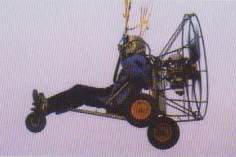
Instead of a complete trike unit, Martin Rütter supplies just an undercarriage, on to which any existing backpack can be mounted. The nosewheel is steerable.
Empty weight: 20 kg Certification: vVz Price (1998): 3400 DM