Founded by Elbert (Burt) L Rutan in 1969, Rutan Aircraft Factory first flew the VariViggen two/four-seat canard monoplane for construction by amateur builders from plans in 1972. Other aircraft followed, including VariEze two-seater (first flown 1974), Defiant four-seater (first flown 1978), Grizzly joined-wing/canard STOL transport (first flown 1982), and Voyager.
Rutan opted for a basic canard configuration, and has succeeded in developing several canard lightplanes with first-class flight characteristics.
1984: Rutan Aircraft Factory, Building 13, Mojave Airport, Mojave, CA 93501, USA.
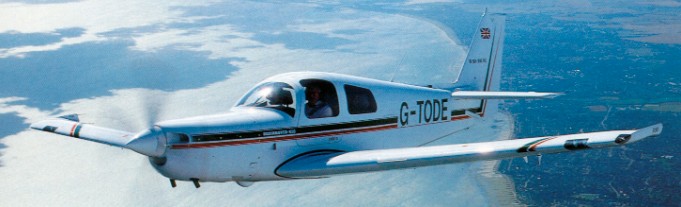
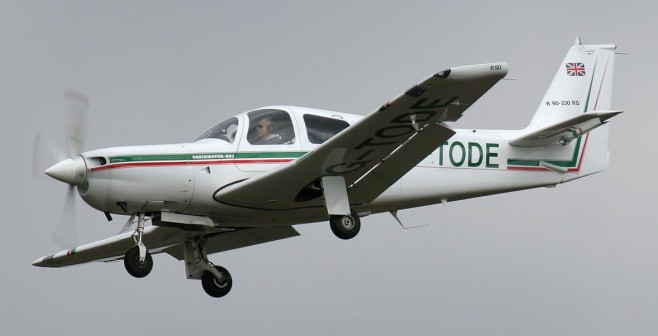
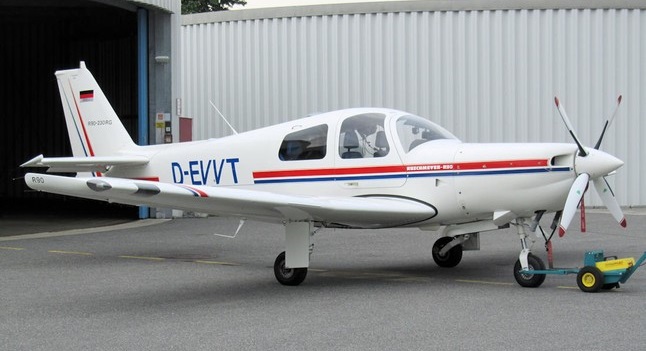
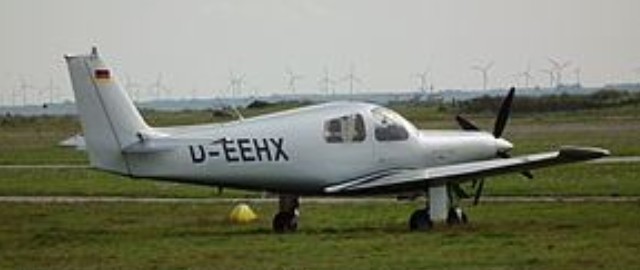
The R 90 was a new design based on the Ruschmeyer’s earlier MF85, making use of a range of modern technologies and materials. The MF85 series was powered by Porsche engines, but the unavailability of these powerplants led to the development of the Textron Lycoming powered R 90.
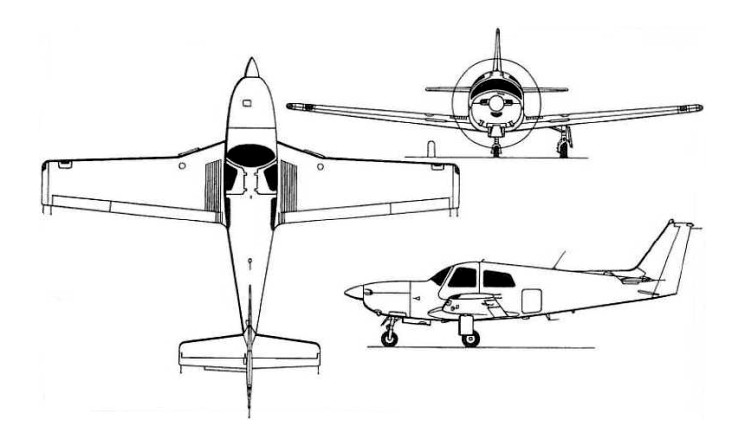
The Ruschmeyer R 90 possesses an aerodynamically clean airframe made possible by its glass fibre (with Rohacell core) construction. The advanced wing design features a `rain tolerant’ laminar flow aerofoil design, wet wing fuel tanks, upturned wingtips (for increased lateral stability, not drag reduction), small ailerons and inboard Fowler flaps.
A four-seat touring and IFR training monoplane first flown in 1991 and certificated 1992, the original R90-230 RG version with 230 hp engine and retractable undercarriage was to be joined by the R90-180 RG with a 180 hp engine and retractable undercarriage. Development of the definitive production version began in 1992 being followed by a production batch of 15 in the same year.
R-90-230RG
The initial R 90-230 RG production model was powered by a fuel injected Textron Lycoming IO540 flat six driving an advanced four blade composite construction propeller. A silencer on the engine, the four blade prop and the engine being derated to 170kW (230hp) from 195kW (260hp) combine to give low interior and exterior noise levels. Even though the engine has been derated, because of the R 90’s comparatively light structure its performance is quite strong.
All production R 90s were the high performance retractable undercarriage R 90-230 RG. This model first flew on August 8 1988 (as MF.85), with German certification awarded in June 1992.
Members of the planned R 90 family include the fixed gear, 175kW (235hp) O540J powered R 90230 FG and the fixed undercarriage 135kW (180hp) IO360 (flat rated to 150kW/200hp) powered R 90180 FG. The R 90350T RG, to be powered by a 185kW (250hp) turbocharged engine and capable of 435km/h (235kt) cruising speed, and the high performance five/six seat R 95 were also under development. An Allison 250B17 turboprop powered development, the R 90420 AT proof-of-concept model, was flown in 1993 and used only as a factory aircraft.
However Ruschmeyer was forced to file for bankruptcy in early 1996 and production has ceased. Twenty-two R 90-230 RGs were built before production ceased.
In 1999 Solaris Aviation was founded, and purchased the assets of Ruschmeyer. Solaris Aviation marketed the R90 as the Solaris Sigma.
R 90-230 RG Engine: 1 x Textron Lycoming IO-540-C4D5, 170kW (230hp) (derated from 195kW/260hp) Propeller: four blade constant speed Mühlbauer MTV-14-B composite. Wing span: 9.50m (31ft 2in) Length: 7.93m (26ft 0in) Height: 2.73m (8ft 11in) Wing area: 12.94 sq.m (139.3 sq ft). Standard empty: 898kg (1980lb) Max. takeoff weight: 1,350 kg (2,976 lb) Empty equipped: 920kg (2030lb) Fuel Capacity: 250 ltr Max takeoff: 1350kg (2976lb) Max speed: 324km/h (175kt, 200 mph) at 3,050 m (10,000 ft) Max cruising speed: 311km/h (168kt) Economical cruising speed: 267km/h (144kt) Stall speed: 108 km/h (58 knots, 67 mph) (landing configuration) Initial rate of climb: 1140ft/min / 5.8 m/s Service ceiling: 4,895 m (16,060 ft) Take Off Distance: 420 m Landing Distance: 480 m Max range with reserves: 1610km (870nm) Range: 2,740 km (1,479 nmi, 1,703 mi)(45% power at 915 m (3,000 ft)) Endurance: 7.8hr. Seating: four
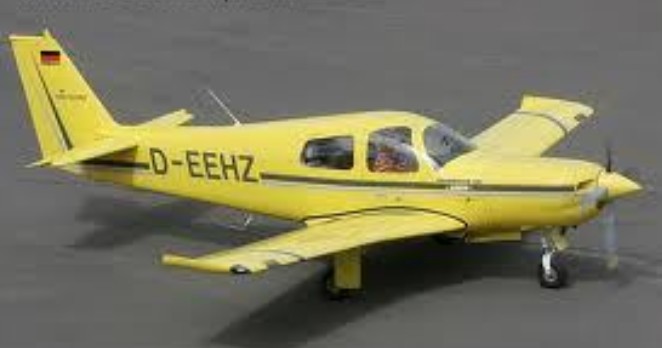
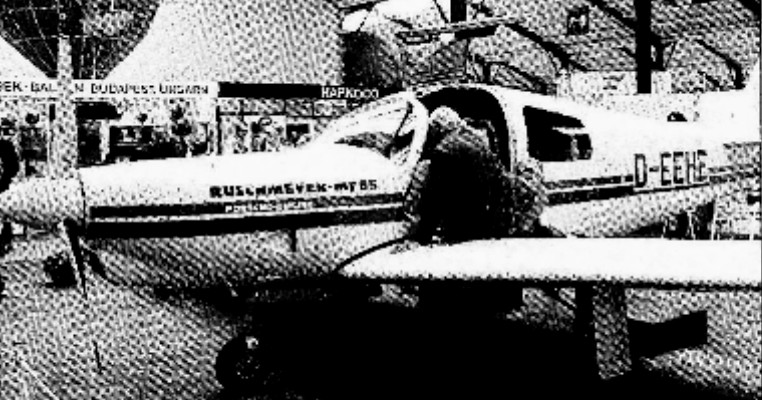
Debuted at Hannover 1987, the Ruschmeyer MF.85 prototype, D-EEHE, was built over three years by Horst Ruschmeyer’s fix based operation. The MF.85 is a composite four seat aircraft, planned to be offered with 180, 212, or 245 hp. Price was planned to be DM245,000 to DM325,000 (excluding avionics). The type could be specified as fixed undercarriage or retractable.
The prototype (V001 D-EEHE) flew with a 212 hp Porche PFM.3200N with a three bladed MTV.9 constant speed propeller engine on 8 August 1988, piloted by Horst Ruschmeyer.
V002 (D-EERO) flew on 23 September 1990, and V003 (D-EERH) on 12 February 1992.
The unavailability of the Porche PFM powerplants led to the development of the Textron Lycoming powered R 90.
Germany Established 1987, developed the R90 four-seat touring and IFR training monoplane of composites construction, first flown in 1991 and certificated 1992. Original R90- 230 RG version with 230 hp engine and retractable undercarriage is to be joined by the R90-180 RG with a 180 hp engine and retractable undercarriage, the R90-230 FG with 230 hp engine and fixed undercarriage, and R90- 300 T-RG with a supercharged 300 hp engine and retractable undercarriage. The R90-420 AT is a turboprop proof-of-concept model, first flown 1993 and used at present only as a factory aircraft.
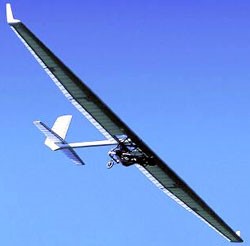
Designed by Roger Ruppert, the 1998 Archaeopteryx was conceived as a conventional glider configuration for foot launch. Primary targets were set to minimize the mass, allowing slowest possible flight speeds and providing good manoeuvrability based on a friendly stall behaviour as well as outstanding high-speed flight performances with full fairing on the cockpit. The concept permits a safe foot launch also in nil wind conditions. Excellent climb rates and an efficient riding out of extremely weak and slim thermals (microlift) are possible. No. Built: 1
Wing span: 13.6 m / 44.6 ft Wing area: 12.8 sq.m / 138 sq.ft Gross Weight: 160 kg / 353 lb Aspect ratio: 12.07 L/D Max: 24 MinSink: 0.44 m/s | 87 fpm Hang glider weight: 40 kg Minimum pilot weight: 70 kg Maximum pilot weight: 110 kg Minimum speed: 29 km/h Maximum speed: 140 km/h Packed length: 6 m Seats: 1
Hungary Ernő Rubik (Rubik Ernő in Hungarian usage) designed 28 gliders and 5 powered aircraft before his death in 1997. Only a few remained unbuilt projects. The most dramatic was the Rubik R-21 1.5-tonne military assault glider project.
Development of the RTAF-5 turboprop advanced trainer and forward air control aircraft was temporarily suspended until the Fantrainer-wing manufacturing programme was complete. The RTAF-5 is similar in general layout to the OV-10 Bronco, but is powered by a single Allison 250-B17C turboprop mounted on the rear of the fuselage in pusher configuration. Four underwing hardpoints are fitted for light stores. The prototype flew on October 5, 1984, with a fixed landing gear. A retraction mechanism and other systems were due to be installed during 1985.
RTAF-5 Engine: 1 x Allison 250 turboprop, 313 kW Span: 9.6 m Length: 10 m Wing area: 15.7 sq.m Empty wt: 1645 kg MTOW: 2154 kg Warload: 225 kg Max speed: 213+ kph Initial ROC: 91 m / min T/O run (to 15m): 700 m Ldg run (from 15m): 915 m Fuel internal: 219 lt
Royal Thai Air Force office of aeronautical engineering founded 1975. Produced RTAF-5 twin-boom and turboprop- powered forward-air-control aircraft (first flown 1984). Later undertook life extension program for Airtrainers and assembled Fantrainers for RTAF.