The 1910 Brunet Tandem biplane was designed and built by Brunet in France.
The 1910 Brunet Tandem biplane was designed and built by Brunet in France.
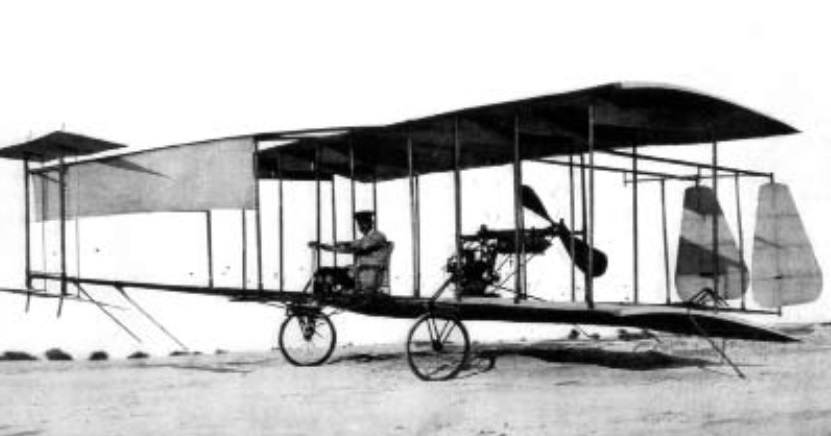
Juan Olivert, in company with his friend and engineer Gaspar Brunet, undertook the building a biplane inspired by that of the Wrights, but also influenced by the French Farman and Voisin. Built in Barcelona in the workshops of Rosell y Vilalta, with dried ash and beech wood, Brunet’s airplane had a double helm front and a rear stabilizer tail, on which a double rudder was supported, since the plane lacked ailerons. The flight controls consisted of a lever topped by a bicycle handlebar for attitude control and pedals for steering. The throttle control was operated by cables attached to a lever. The engine that propelled it had to be a 25 HP Anzani.
On Sunday September 5, 1909 and with the assistance of the Mayor of Valencia, Mr. Maestre, as well as the designer of the plane, Mr. Brunet, Juan Olivert climbed onto the wicker chair, then started and proceeded to an engine test, which was followed by a check of the suitability on the ground. Then, the makeshift pilot put on power and the plane flew, rising tens of centimeters off the ground, according to the press the next day, and traveling between 30 and 50 meters, until when Olivert tried to modify the course of his flight to avoid carob trees, the plane suggested a loss of speed, immediately returning to earth, where an existing trench in the ground damaged one of the wheels, later spreading to various parts of the plane. This being the first flight made in Spain. As for the plane, there are indications that it was repaired and even went on to do some other flight.
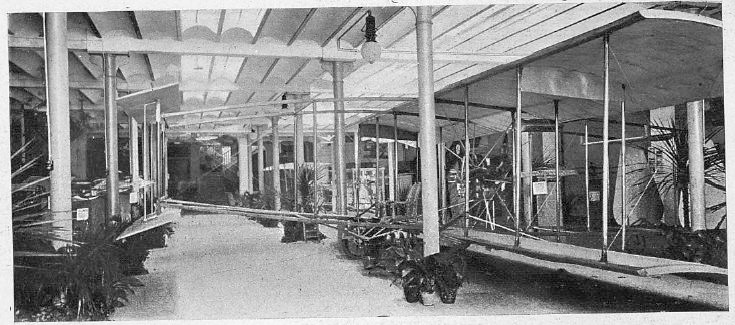
There’s at least one replica of the machine, at the Madrid “Museo del Aire”.
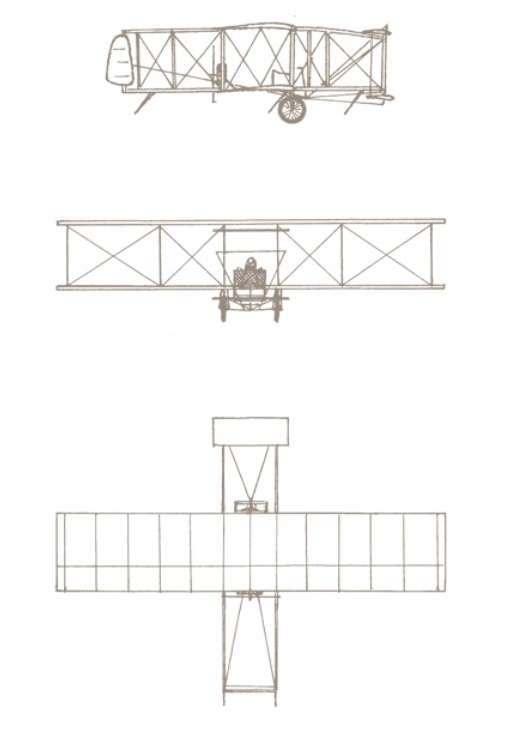
Engine: Anzani 25 HP
Wingspan: 10.50 m
Length: 7.50 m
Weight: 350 Kg
Total weight: 430 Kg
First flight: September 5, 1909

The “Brumah I” was the first machine built by the two seventeen-year-old Harry A. Bruno and Bernard H. Mahon (hence the name) of Montclair, New Jersey, crashed on its first flight from the barn. The Brumah II, with a span of only 16 feet, was called the world’s smallest monoplane. It was flown on sled runners down an ice-coated hill on Christmas Eve 1910. It crashed then too but might have been re-built, but there is no indication that it was ever actually fitted with a motor.
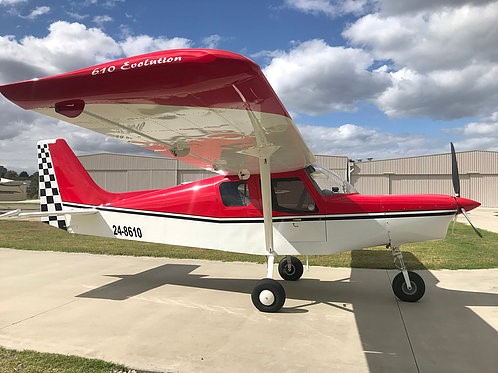
An Australian-made light sport aircraft factory built circa 2015.
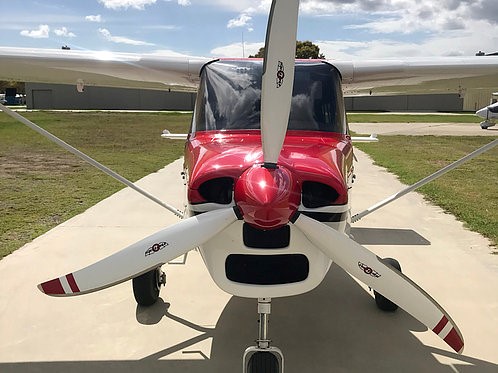
Feature include:
Cabin heat
Electric flaps
Rudder trim
Adjustable seats
Steerable nosewheel / dual brakes
Wiring for lighting and circuit breakers ready for full lights
Dual fuel valves (right and left wings)
Electric fuel gauge
Wheels 6” high profile
Full front oleo strut
Compass
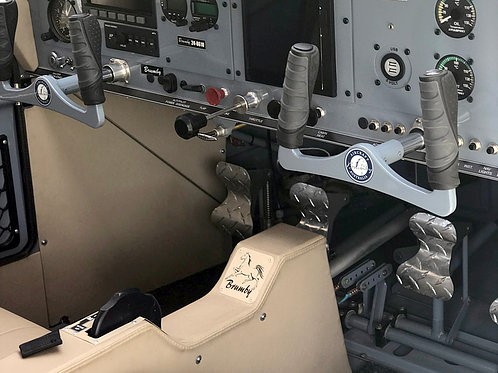
Engine: Rotax 912ULS
Propeller: Sensenich ground-adjustable, 3 blade
MTOW: 600kg
Fuel capacity: 136 Lt
Top speed: 100kts IAS
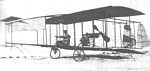
The Brunet-Olivert 1909 biplane was designed and built by G. Brunet y Viadera and J. Olivert in Spain.
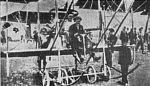
The 1911 Brumarescu “Columba” (dove) 2-seater biplane was designed and built by Dumitru Brumerescu in Romania.

Development of the Colibri MB-1 led to the MB.2 A wood and fabric construction, single seat, stressed for aerobatics: +11 and -6G. Suitable power is the VW1600.

Engine VW.
Span 19ft 8.25in.
Wing Area. 88.25 sq.ft.
Length 15ft 9in.
Max. wt. 7271bs.
Empty wt. 4741bs.
Cruise 86kt / 99 mph / 160 kmh
Climb Rate: 600 ft/min / 3 m/s
Stall: 32 kt / 37 mph / 60 kmh
VNE: 103 kt / 118 mph / 190 kmh
Empty Weight: 190 kg / 419 lbs

Max Brügger built a small all-wood single seat monoplane (HB-XVC-X) in 1965. This was essentially a Jodel D.9 fuselage mated to a Turbulent wing.
Development of the type led to the MB.2 Colibri.

El Bandido was designed by Clarence Brueggemann, of Norfolk, Neb. First flight was made during May 1970. Its cantilevered low wing uses the Clark- Y airfoil. Its modified 45-hp VW engine drives a two-bladed Thoyer metal prop.
Engine VW 1600cc, 45 hp.
Gross weight 630 lbs
Empty weight 380 lbs.
Fuel capacity 8 USgal.
Wingspan 18 ft.
Length 13ft
Vmax 120 mph.
Cruise speed 110 mph.
Climb rate 700 fpm.
Takeoff run 200ft
anding roll 300ft
Ceiling 11,000 ft.

The 1909 BRT biplane was built in France.

