Cadet Boorabee

Mk1

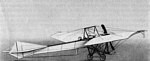
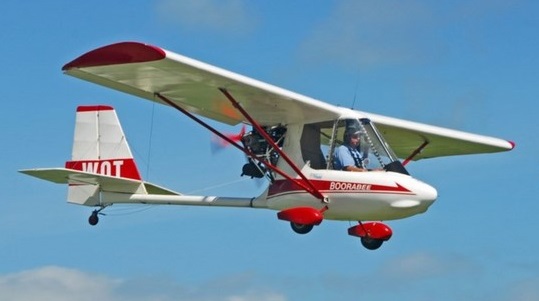
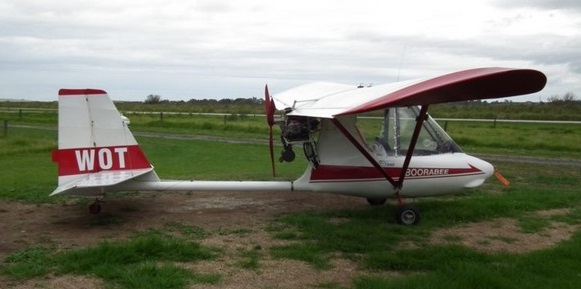
Tom Cadet designed and built the Mk1 Boorabee in 1992. The Mk1 Boorabees flew with a Rotax 503and the first aircraft has had at least 3 different engines including an HKS fitted in 2010.

The original fuselage pod mould for the Boorabee was made from the two halves taken from a crashed Rotec Panther, then modified by making the front more pointed and taking the aft section up to the wing. Tom also added a sheet alloy floor pan. A Maxair Drifter contributed the aluminium tube boom and empennage.

Dave Donohoe, a colleague of Tom Cadet, developed the Boorabee’s airfoil. This wing was mated to a new fuselage mould to use a 4 x 3 inch rectangular boom and Dave called the result the Shuttle.
For the Boorabee’s wing, Tom used fibreglass/Kevlar ribs with a glass/Kevlar leading edge. The main spar caps are 40 x 1.6mm drawn alloy tubes with 1.2mm sheet web plates; the rear spar is a 44 x 1.6mm tube.

Boorabees are extremely docile aircraft with few if any vices. The Mk1s are really powered gliders without air brakes (better than 12:1 glide) they tend to float so it requires a special technique to spot land them.

Cadet built two Mk1 Boorabees then made new moulds and simplified the design for the Mk2.

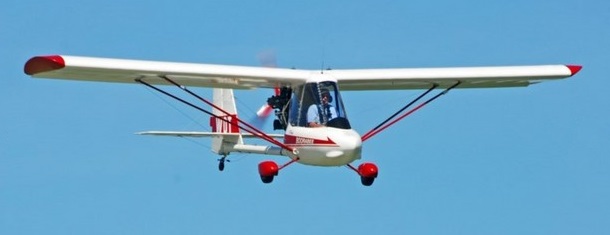
Three versions of the Boorabee appeared. The Mk 1 has a 30ft wing span. That of the Mk 2 was reduced to 29ft, and a new mould was made to improve the shape of the fuselage pod. Alloy shear plates were used to simplify wing construction, and flaperons adopted. Kevlar was used extensively to lighten the aircraft. Both the first Mk 1 and Mk 2 were registered in 1993.
Mk1

A lengthened pod, offering more foot space for the rear-seat passenger, was introduced with the Mk 3, which also had the shorter wing.

The choice of powerplant was usually the Rotax 582 or 618. A Rotax 503 was used by Bob Evans of Evans Head for his Mk 2, completed as a single seater with a more rounded tail.

There were nine Boorabees built in total before Cadet gave the fuselage plug to Dave Donohoe who modified it for a rectangular boom tube. Dave’s Shuttle shared the same wing but the boom, tail, undercarriage and controls were vastly different. Cadet loaned the moulds to persons he trusted, and gave them the CAD plans at no cost.

For several years, Tom freely provided scale drawings to those interested in building a Boorabee, the use of his moulds, and builder support. A dozen or so Boorabees were completed by local builders.
Mk1

As with all pusher aircraft, the airflow around the rear of the fuselage was a problem, causing slight instability in yaw as well as reduced thrust from the propeller. After experiments on the Mk 1s a line of vortex generators on the fuselage immediately solved the issues. Because the two blades of the original propeller disturbed the air at the wing trailing edge in unison, resulting in uncomfortable vibration at certain speeds, a three-blade propeller was found to be necessary. Apart from these annoyances the Boorabee proved very successful, with hundreds of hours logged by each aircraft.

No more Boorabees were built because it required a great deal of effort by Cadet for builder assistance and it became very difficult to get the 5″ boom tube and necessary drawn tubing to build the wing. He still had the moulds years later.

The first Boorabee has flown thousands of hours.

Boorabee Mk1
Engine: HKS 700 E 60hp
Wingspan: 9.2 m / 30 ft
Length: 5.85 m
Empty Weight: 284 kg
Maximum Take Off Weight: 554 kg
Fuel Capacity: 94 litres
Never exceed: 90 Kts
Cruise Speed: 60Kts
Stall Speed: 30 Kts
Take off roll: 200 meters
Rate of Climb: 500 ft per minute
Endurance: 10 hours
Seats: 1

Mk 2
Wing span: 29 ft

Mk 3
Wing span: 29 ft
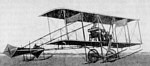
Bygate Tiger Hawk           

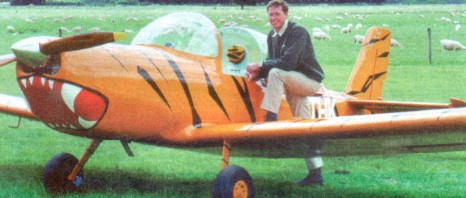
Of all-wood construction and covered with ceconite, the Tiger Hawk is finished with an Imron 700 paint system. All the de­sign, fabricate and construction was carried out by Tim Bygate. This is no mean feat when you have to design each component before con­structing it. The airframe contains a number of different timbers. Spruce was used for the spars, wing ribs, etc along with some Douglas Fir. The plywood covering found on the wings, turtle deck and seat was Birch and Hoop Pine. Tim found one of the trickier pieces to build was the Perspex canopy.

The Tiger Hawk was powered by an EA81 Subaru with a 2: 1 belt drive reduc­tion system made by Cannings Engineering in Christchurch, New Zealand. The engine was stripped by Tim and measured for wear and tear and when reassembled it produced approx. 80 hp at 5400 rpm.

All construction was carried out in a small shed at the Hanmer Springs Forestry Camp in New Zealand by Tim Bygate, the designer. This shed kept expanding as the aircraft grew until finally on the completion the whole front of the shed had to be removed to en­able the plane to be removed for its first flight on September 7, 2001.

BX Aviation Cherry BX-2

Designed by Max Braendli, the BX-2 Cherry two-seat monoplane (first flown 1982) has detachable wings and elevator.

Modified BX-2 TD

Thirty examples had been finished by 1998. The foldable wings allow it to be derigged for towing in 10 minutes.

Engine: Continental, Rotax
Wing span: 7 m
Wing area: 8.5 sq.m
MAUW: 550 kg
Empty weight: 325 kg
Fuel capacity: 78 lt
Max speed: 265 kph
Cruise speed: 200 kph
Minimum speed: 80 kph
Climb rate: 3 m/s
Seats: 2
Fuel consumption: 14 lt/hr
Plan price (1998): 880 FrS

Engine: Continental A-65, 65 hp.
HP range: 65-90.
Propeller: Brändli 1.60 m diameter
Wing span: 23 ft / 7 m
Wing area: 90 sq.ft. / 8.50 sq.m
Airfoil: NACA 747 A 415
C.G. range: 19% – 32% (MAC=1240mm)
Height: 6.6 ft / 2.02m
Length: 17.5 ft / 5.23m
Weight empty: 700 lb / 320 kg
Gross: 1222 lb / 550 kg
Fuel cap: 23 USG / 80 lt
G load limit: +3.8 / -1.9
Range: 600 sm.
Vno (max. struct. cruise): 219 km/h
Vfe (max. flaps): 142 km/h
Vne (never exceed): 275 km/h
Va (max. maneuvering): 170 km/h
Vh (horizontal): 200 km/h
Vs (stall, clean): 96 km/h
Vs0 (stall, flaps): 85 km/h
Vy (best rate of climb): 145 km/h
ROC: 680 fpm / 3m/s
Enduranace: 5:00 hr
Take-off dist: 1000 ft / 300 m
T/O 15m: 560 m
Landing dist: 500 ft.
Service ceiling: 14,000 ft.
Seats: 2.
Landing gear: retractable nose wheel.
Flaps: yes
Silencer: Brändli
Noise Chapt. 6: 62.3 dB

Buxton Transporter

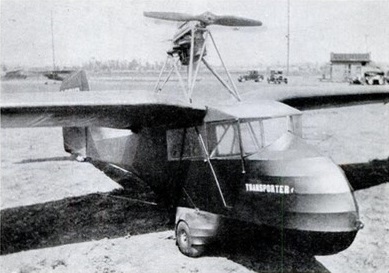
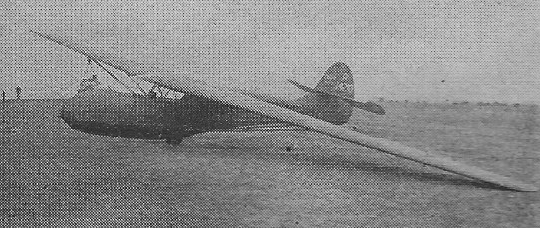
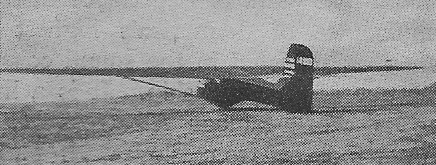
In 1935 Jay Buxton of Hawthorne, California, completed his Transporter powered glider. The engine is a 2 stroke inline, inverted type of unique design. It is a three cylinder, three port engine that weighs 115 lb and develops 35 hp at 2100 rpm.

The motor cabane is completely removed and replaced by a plain cabane when used for gliding.

Wingspan: 52.3 ft
Wing area: 240/255 sq.ft
Aspect ratio: 11.4
Length: 26.6 ft
Empty weight: 435 lb
Gross weight: 725/965 lb
Fuel capacity: 12 USG
Min sink: 2.5 f/sec
Glide ratio: 20-1
Seats: 2

Butterworth Westland Whirlwind  

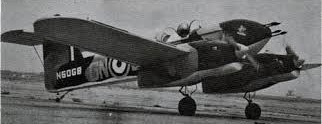
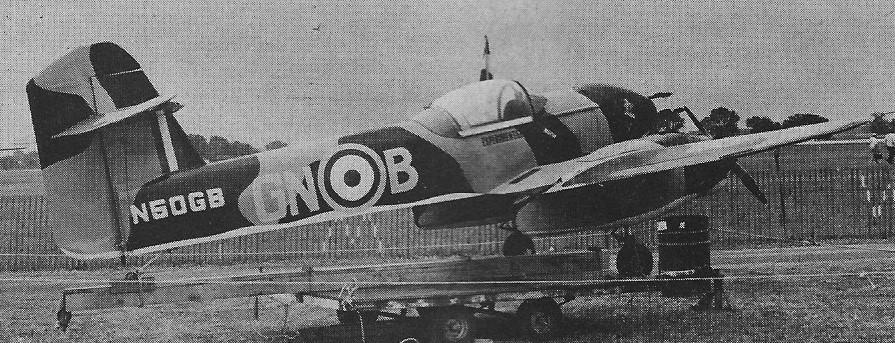
The Butterworth Westland Whirlwind was a 2/3 scale flying replica of the British Westland Whirlwind fighter aircraft of World War II that was built in the United States in the 1970s.

The aircraft was based on the wings and horizontal tail of a Grumman American AA-1A modified and mated to an all-new fuselage. Power was provided by two Volkswagen air-cooled horizontally opposed four-cylinder engines with the result bearing only a passing resemblance to the real Whirlwind.

First flying in July 1977, Butterworth marketed plans in the late 1970s and early ’80s, with at least 15 sets selling and at least three aircraft reportedly under construction by 1985.

Butterworth Westland Whirlwind
Engines: 2 × Volkswagen, 65 hp (49 kW) each
Wingspan: 28 ft 0 in (8.53 m)
Length: 19 ft 6 in (5.94 m)
Height: 7 ft 1 in (2.16 m)
Empty weight: 1,042 lb (472 kg)
Gross weight: 1,400 lb (635 kg)
Maximum speed: 145 mph (233 km/h, 126 kn)
Range: 700 mi (1,126 km, 610 nmi)
Service ceiling: 8,000 ft (2,440 m)
Crew: One pilot

Butterfly Banty

A folding wing, conventional wood and fabric design, with folding wings.

Engine: Rotax 277, 28 hp.
HP range: 20-36.
Wing span: 32 ft / 9.75 m
Wing area: 128 sq.ft / 11.90 sq.m
Height: 6 ft.
Length: 18.85 ft.
Weight empty: 237 lb / 107 kg
Gross: 500 lbs / 226 kg
Fuel consumption: 7.4 lt/hr
Speed max: 60 mph / 88 kph
Cruise: 50 mph / 80 kph
Range: 90 sm.
Stall: 27 mph / 40 kph
ROC: 400 fpm / 2.25 m/s
Take-off dist: 220 ft.
Landing dist: 200 ft.
Service ceiling: 9,000 ft.
Fuel cap: 5 USG / 19 lt
Seats: 1.
Landing gear: tail wheel.
Plan price (1998): US$25