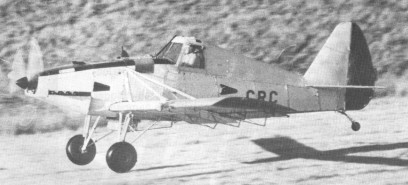
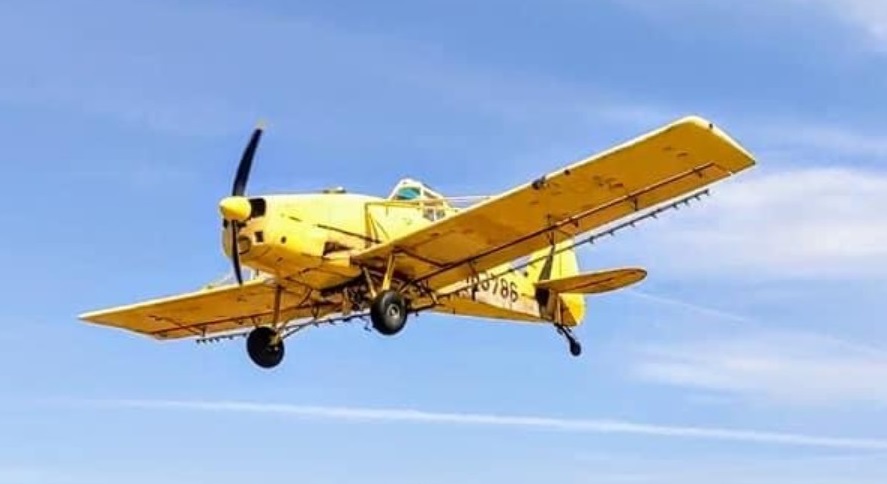
A scaled up version of the 235 hp CallAir A-9.
Production of the B-1 ceased after ownership of the design passed the North American Rockwell company as they favoured their S2R Thrush Commander.
Engine: 400 hp
Payload: 2600 lb.
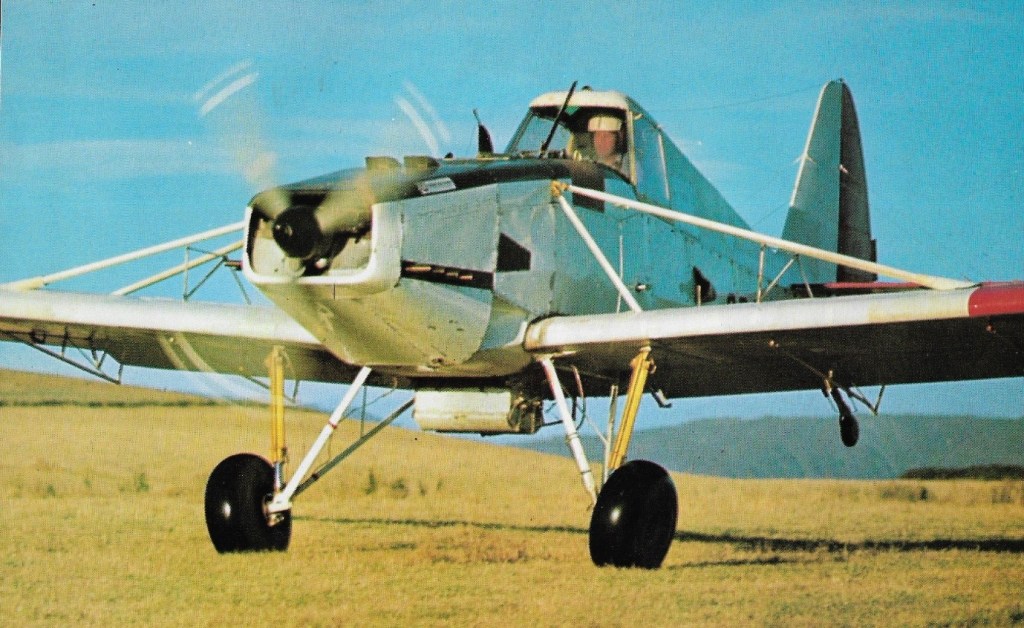
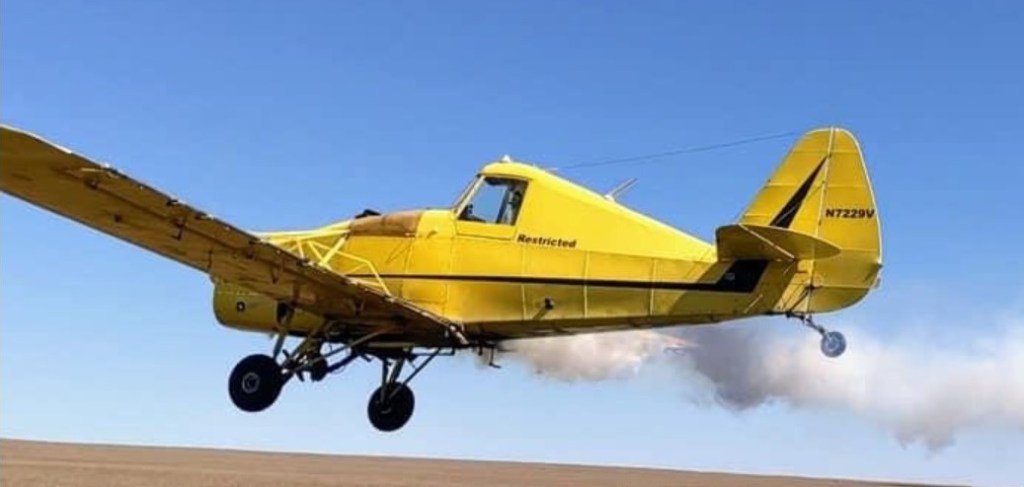
A scaled up version of the 235 hp CallAir A-9.
Production of the B-1 ceased after ownership of the design passed the North American Rockwell company as they favoured their S2R Thrush Commander.
Engine: 400 hp
Payload: 2600 lb.
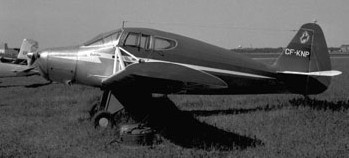
The first CallAir flew in 1941 and was designated the Model A. The last version was introduced in 1957 and was named the A-6. Throughout the years of its existence, the basic difference between any of the models was the powerplant; otherwise, the Model A-4 differed little externally from the original Model A. The CallAir was built with mixed construction: fabric-covered wooden wings and a fabric-covered steeltube fuselage.
The Model A-2, with a 125-hp Lycoming, and the Model A-3, with a 125-hp Continental, were produced during the years between 1946 and 1948.
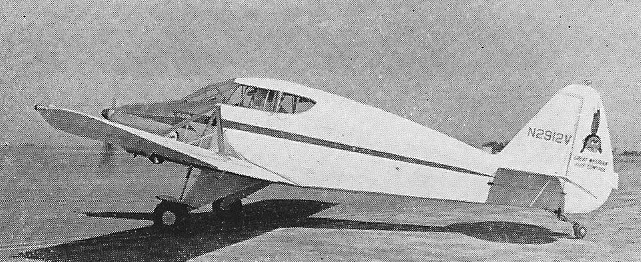
The first production models of the A-4 appeared in 1955, and the major refinement was the addition of 25 more horsepower with the installation of a 150-hp Lycoming. All models shared the same two-to three-seat cabin and low wing with exposed struts.
Another version of the CallAir was introduced in 1956 and was basically an agricultural development of the Model A-4. Designated the A-5, it was normally flown as a single-seater with the cockpit offset to the starboard side due to the inclusion of the dust hopper.
The Model A-6 flown in 1957 was identical, apart from another jump in horsepower to a 180-hp Lycoming.
The Intermountain Manufacturing Co. developed a series of low-priced agricultural aircraft from the CallAir, and the first airplane rolled off the production line in 1963. The A-9 featured a 235-hp Lycoming; its top speed was now 130 mph, and its climb rate was now 650 fpm. The dust hopper was moved to a position in front of the cockpit.
A-1
Seats 2-3
Gross wt. 1,550 lb
Empty wt. 1,000 lb
Fuel capacity 25 USG
Engine 100-hp Lycoming
Top 115 mph
Cruise 105 mph
Stall 40 mph
Initial climb rate 500fpm
Ceiling 13,000ft
Range 260sm
A-2
Seats 2
Gross wt. 1,550lb
Empty wt. 975lb
Fuel capacity 30USG
Engine 125- hp Lycoming
Top 120 mph
Cruise 109 mph
Stall 45 mph
Initial climb rate 1,000fpm
Ceiling 17,500ft
Range 456sm
Takeoff run 426ft
Landing roll 300ft
A-3
Seats 2
Gross wt. 1,550lb
Empty wt. 975lb
Fuel capacity 30USG
Engine 125- hp Continental
Top 120 mph
Cruise 109 mph
Stall 45 mph
Initial climb rate 1,000fpm
Ceiling 17,500ft
Range 456sm
Takeoff run 426ft
Landing roll 300ft
A-4
Engine 150-hp Lycoming
Seats 2-3
A-5
Seats 1
A-6
Engine 180-hp Lycoming
A-9
Engine 235-hp Lycoming
Top speed 130 mph
Climb rate 650 fpm.
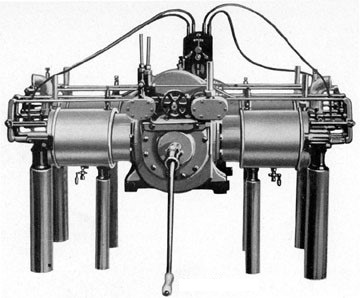
The 1910 Call E-2 /OL-595 was a 90-100hp, 593.8ci eight-cylinder, horizontally opposed, water cooled aero engine. The dry weight was 225 lb.
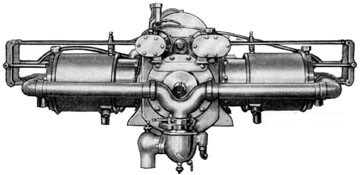
The 1910 Call E-1 /OL-295 was a 45-50hp, 296.31ci two-cylinder, horizontally opposed, water cooled aero engine. The dry weight was 135 lb.
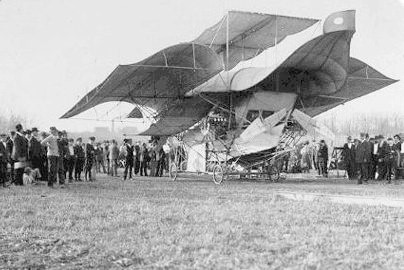
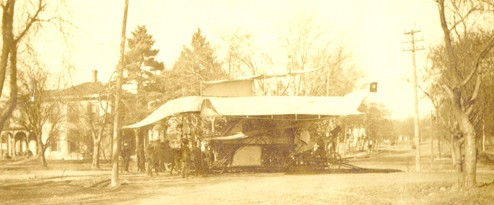
Henry Laurens Call was a writer, a member of the American Association for the Advancement of Science and the designer of this huge, complicated craft, which was powered by two 20hp Curtiss engines, spanned 41 feet and weighed 3,000lbs. It was intended to transport several passengers in the air, on water and on roads, with hot food and all kinds of comfort. However, Call stated that there were too many trees in Girard, Kansas where it was built, and the roads were not very good, so he was never been able to get up a speed of more than 18 miles per hour, rather than the thirty miles an hour he claimed was necessary for the ship to rise in the air.
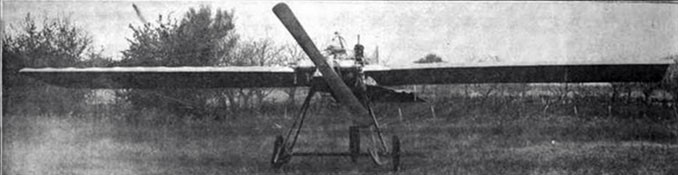
The 1911 Call 2 monoplane was created by the “Aerial Navigation Company of America” of Henry Laurens Call in 1911. It was powered by a 50 hp, horizontally opposed two-cylinder, four-stroke, Call Aviation Engine.
It made several flights before being destroyed by a tornado.

The CM-44 was designed and built by Scaled Composites for California Microwave (CMI). The aircraft was a canard pusher which carried 700 lbs of electronic gear for surveillance. It was test flown by Michael Melvill in April 1987 and found to have a several winglet induced yaw problem that Scaled could not fix. Hollmann contacted CMI and promised to fix it. Dr. Ilan Kroo from Stanford, set up a lattice element model of the CM-44 and fixed the problem and improved the design. Hollmann at ADI designed new wings, winglets and canard for the CM-44. High Tech Composites built the molds and parts. It was test flown by CMI and found to be significantly better than the original design.
First flown April 1930 Model A built for a new Cairns-designed engine
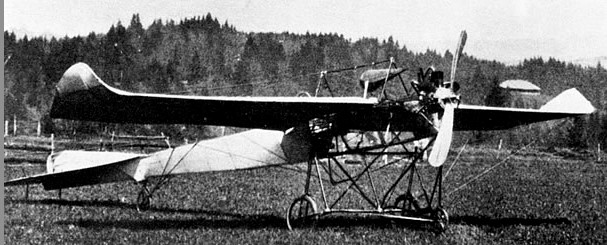
Georges Cailler, born in Vevey, Switzerland as the eldest son of Alexandre Cailler, founder of the well-known chocolate factory in Broc. He built four aeroplanes and flew them between Broc and Epagny. The parts of flying machines of Cailler were built by workers of the the chocolate factory. At the age of 18, he began construction of a biplane with the help of his friend Henri Magnenat from Lausanne, but their machine did not bring expected satisfaction. The trials with the new monoplane took eight days in spring 1910. The boys flew several hundred meters to a height of about 8 meters. They are believed to be the first Swiss aviators to fly a monoplane built entirely in Switzerland by Swiss. The machine is often attributed to Cailler alone.
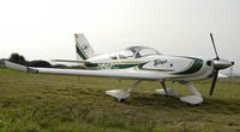
CAG Toxo is available with bigger engines in VLA version.
Toxo ultralight
Stall: 35 kt / 40 mph / 64 kmh
Cruise: 119 kt / 137 mph / 220 kmh
VNE: 189 kt / 217 mph / 350 kmh
Empty Weight: 284 kg / 626 lbs
MTOW Weight: 450 kg / 992 lbs
Climb Ratio: 1400 ft/min / 7,5 m/s
Glide Ratio: 16
Take-off distance (50ft obstacle): 160 ft / 49 m
Landing distance (50ft obstacle): 250 ft / 76 m

