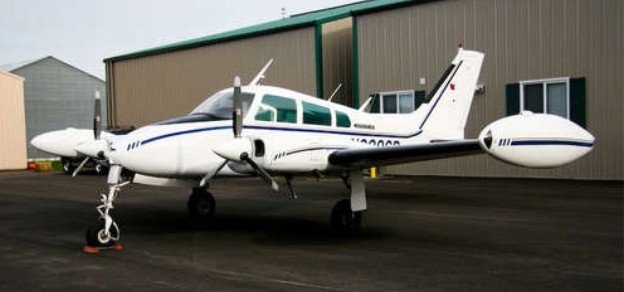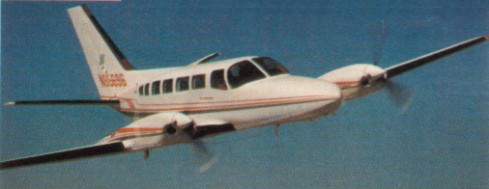
Cessna CE-404 Titan

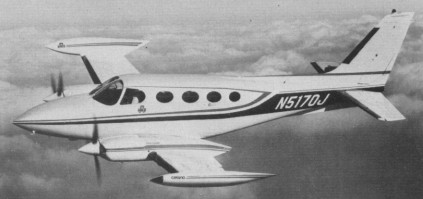
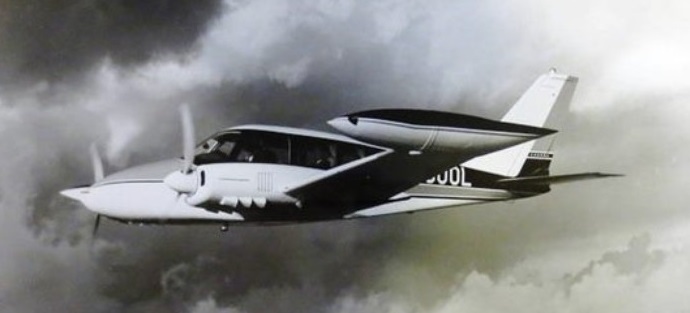
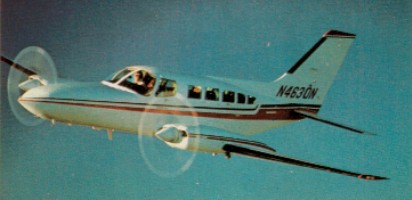
The Cessna Model 404 Titan prototype (N5404J), a new twin engine business/commuter/cargo aircraft, made its maiden flight at Wichita, Kansas, on 26 February 1975. Identified initially as the Cessna Model 404 and later named Titan, this new twin engine aircraft became available in Ambassador (with executive or standard passenger interior) and Courier (utility passenger/cargo) versions. In the summer of 1976, Cessna unveiled the large six to 10 place Titan, with 375 hp turbocharged engines, the airframe of which would also be used for the Conquest turboprop. The Titan was certificated in the latter part of 1976, initial deliveries began in October 1976 and at year’s end, 17 had been delivered. Its turboprop look alike is scheduled to receive FAA approval sometime in 1977. With greater wing area and more powerful engines, it was more economic than the earlier 402.
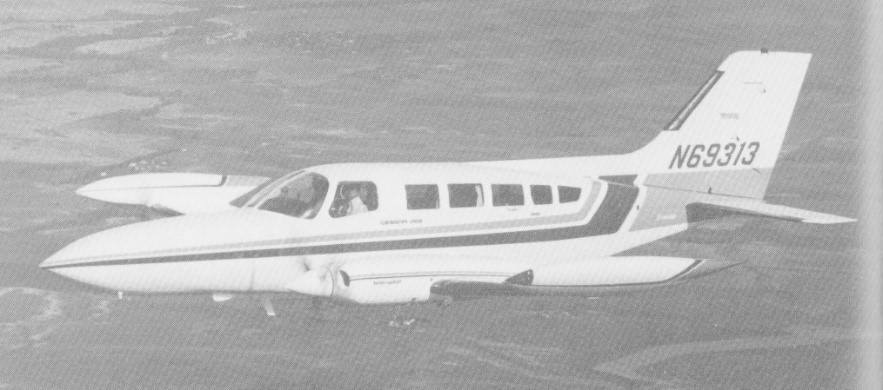
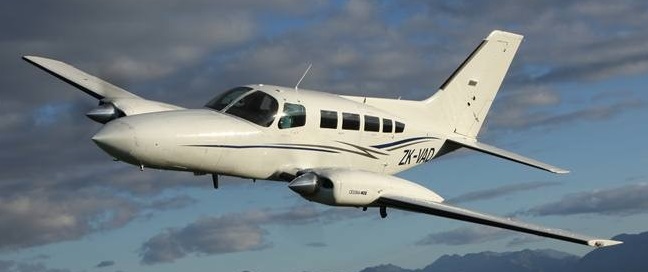
The Cessna 404 Titan shares the basic airframe of the 441 but is piston powered and not pressurized. Large cargo doors make it easy to load. A cockpit door allows entry after the cabin has been stacked to the ceiling.
Power is essentially the same as for the 421 375 hp Continentals and top cruise at 10,000 feet is 194 knots. Maximum useful load is 3,546 pounds, or about 500 pounds more than for the 421 and 1,000 pounds more than for the 402. Total fuel, in integral wing tanks, is 340 gal¬lons. Titan deliveries were to begin in mid ¬1976.
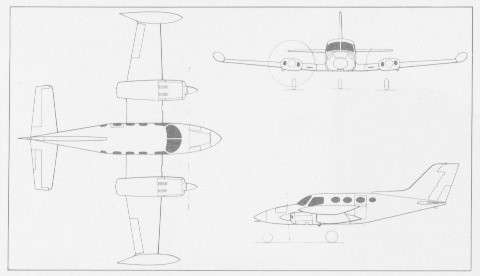
Essentially a stretched model 402B Titan was the first Cessna twin featuring a wet wing with out the characteristic tip tanks. Able to carry 10 passengers. The newly-designed wet wing of bonded, fail-safe construction has a relatively high aspect ratio of 8.7 which reduces induced drag. This feature gives an important spin-off to the operator in that the Titan can carry relative large payloads over long distances. At 10,000 ft and 65 percent power it can carry up to 2,500 lbs of cargo 690 nm at 188 kts with a 45 minute fuel reserve. In the passenger configuration it can carry ten people and 500 lbs of baggage 915 nm at 196 kts with the same fuel reserves. The hydraulically-operated Fowler flaps, of bonded, honeycomb construction, give the Titan reasonably good short-field capability. The geared 375 hp turbocharged Continental engines are installed in streamlined nacelles which are some 17 inches longer than other Cessna 400-series aircraft installations, due to the compartmented concept whereby certain “hot” engine components are partitioned from “cold” engine accessories. This results in efficient engine cooling obviating the need for cowl flaps. Further noticeable differences from other Cessna 400-series aircraft are the larger tailplane surfaces and the dihedral on the horizontal stabilizer. The trailing link undercarriage is designed for softer landings.
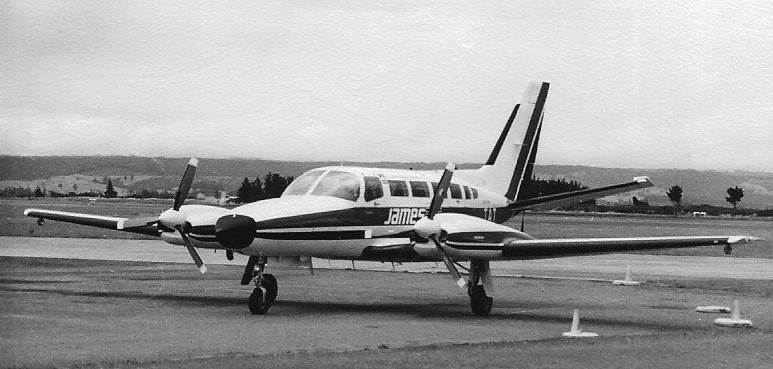
The Ambassador executive version offers luxurious seating accom¬modation which can be removed to carry freight, while the Courier version offers high density seating (up to 14 for the commuter model) that can quickly be removed to convert to a freight-carrying role. Both aircraft are available with 11 different options of accessories and avionics.
The Freighter is a twin engine cargo plane, with a utility interior and swing away cargo doors.
Until the spring of 1982, seven variants were available, comprising the standard Titan Ambassador, the Titan Ambassador II and Titan Ambassador III, the two latter having factory-installed avionic/equipment packages; the standard Titan Courier and Titan Courier II versions, the latter with the same avionic/equipment package as the Ambassador II; and the standard Titan Freighter and Titan Freighter II versions, both able to carry 1588kg of cargo and equipped with factory-installed avionics and impact resistant polycarbonate interiors to protect the fuselage from payload damage.
When Titan production ceased in April 1982, 378 had been sold.

CE-404 Titan
First built: 1976.
Engines: Continental GTSIO-520-M, 375 hp each.
TBO: 1600 hrs.
Props: McCauley 3-blade, 90-in.
Seats: 10.
Length: 39.5 ft.
Height: 13.3 ft.
Wingspan: 46.3 ft.
Wing area: 242 sq.ft.
Wing aspect ratio: 8.7.
Maximum ramp weight: 8450 lbs.
Maximum takeoff weight: 8400 lbs.
Standard empty weight: 4834 lbs.
Maximum useful load: 3616 lbs.
Zero-fuel weight: 8100 lbs.
Maximum landing weight: 8100 lbs.
Wing loading: 34.7 lbs/sq.ft.
Power loading: 11.2 lbs/hp.
Maximum usable fuel: 2064 lbs.
Best rate of climb: 1,575 fpm @ 96 kts.
Climb gradient: 984 ft/nm.
Rate of climb @ 8,000 ft: 1345 fpm.
Service ceiling: 26,000 ft.
Maximum single-engine rate of climb: 230 fpm @ 108 kts.
Single-engine climb gradient: 128 ft/nm.
Single-engine service ceiling: 10100 ft.
Maximum speed: 217 kts.
Cruise @ 65% pwr @ 8,000ft: 178 kts.
Cruise @ 65% power @ 18,000ft: 193 kts.
Fuel flow @ 65% pwr @ 18,000 ft: 230 pph.
Endurance at 65 % pwr @ 18,000 ft: 8.8 hrs
Stalling speed clean: 83 kts.
Stalling speed gear/flaps down: 70 kts.
Turbulent-air penetration speed: 158 kts.
T/O dist: 1788 ft (545m), (to 50 ft: 2367 ft (721m)).
Ldg dist: 1100 ft (335m), to 50ft: 2130 ft (649m).

CE-404 Titan Courier
Engines: 2 x Continental GTSIO 520 M, 375 hp.
Max speed: 232 kts.
Max cruise speed: 217 kts.
Max range: 1,836 nm.
Max usable fuel: 344 USG.
ROC: 1,575 fpm.
ROC SE: 230 fpm.
Service ceiling: 26,000 ft.
Service ceiling SE: 10,100 ft.
Takeoff dist 50 ft obstacle: 2,367 ft.
Landing dist 50 ft obstacle: 2,130 ft.
Empty wt: 4823 lb.
Useful load: 3577 lb.
Max ramp wt: 8,450 lbs.
Max zero fuel wt: 8,100 lbs.
Max Useful load: 3622 lbs.
Seats: 11.
Length: 39.5 ft.
MTOW: 8400 lb.

CE-404 Titan Ambassador
Engines: 2 x Continental GTSIO 520 M, 375 hp, 280kW.
Wingspan: 14.12 m / 46 ft 4 in
Length: 12.04 m / 39 ft 6 in
Height: 4.04 m / 13 ft 3 in
Wing area: 22.48 sq.m / 241.97 sq ft
Max speed: 232 kts.
Max cruise speed: 217 kts.
Max range: 1,836 nm.
Range @ 193 kt: 793nm.
Fuel cap: 1250 lb.
ROC: 1575 fpm.
ROC SE: 230 fpm.
Service ceiling: 26,000 ft.
SE service ceiling: 10,100 ft.
TO dist 50ft: 2367 ft.
Ldg dist 50 ft: 2130 ft.
Empty wt: 4803 lb.
Max ramp wt: 8,450 lbs.
Max Take-off weight: 3810 kg / 8400 lb
Max zero fuel wt: 8,100 lbs.
Max Useful load: 3643 lbs.
Max usable fuel: 344 USG.
Seats: 9.

Freighter
Engines: 2 x Continental GTSIO 520 M, 375 hp.
Max speed: 232 kts.
Max cruise speed: 217 kts.
Max range: 1,836 nm.
Max usable fuel: 344 USG.
ROC: 1,575 fpm.
ROC SE: 230 fpm.
Service ceiling: 26,000 ft.
Service ceiling SE: 10,100 ft.
Takeoff dist 50 ft obstacle: 2,367 ft.
Landing dist 50 ft obstacle: 2,130 ft.
Max ramp wt: 8,450 lbs.
Max zero fuel wt: 8,100 lbs.
Max Useful load: 3778 lbs.
Seats: 2.
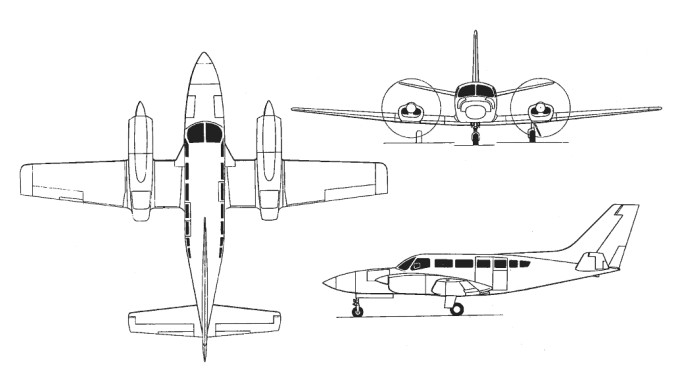
Cessna 401 / 402

CE-402C

On 26 August 1965 Cessna flew the prototype of an aircraft generally similar to the 411 which served for two new aircraft, the Model 401 and Model 402, and when FAA certification of the Model 401 prototype was awarded on 20 September 1966 it covered also the Model 402. These two aircraft represented lower-cost versions of the Model 411, differing primarily by having two 224kW Continental TSIO-520-E flat-six engines and some reduction in basic installed equipment. The Model 401 accommodated a crew of two and four to six passengers, but the Model 402 had a cabin layout which permitted a quick change from nine-seat commuter use to an all-cargo configuration.
Production of the Model 401 was phased out in mid-1972, with development then being concentrated on the Model 402 which, in December 1971, had been named Utiliner.
At the same time a new version of the Model 402 was introduced as the Businessliner. Both versions, powered by 242kW TSIO-520-VB engines, were progressively improved and remained in production for some time, as the 10-seat Utiliner II small convertible passenger/ cargo airliner and the Businessliner II executive transport able to carry 2-6 passengers. The final version was the Businessliner III corporate transport fitted with more sophisticated avionics, including weather radar.
Nearly 500 model 402 were built before the introduction of the improved model 402B. The 402C Utililiner converts from cargo hauler to ten seat commuter in a matter of minutes, with air conditioning, stereo, refreshment center as options.

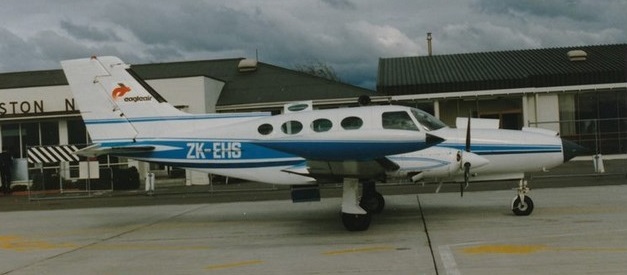
Cessna 402B ZK-EHS

Major changes were the large cargo doors and the additional square shaped windows.

There are some substantial differences between the B and C. Power per engine is up from 300 to 310 horsepower for normal operation and up to 325 for takeoff and single-engine operation. There’s almost five feet more wingspan. The 402C’s maximum gross weight is 550 pounds greater than the 402B’s, and the empty weights of comparably equipped airplanes are very close. So almost the whole increase goes to useful load.

Cessna 402 Businessliner

Available as Utililiner (for commuter work) or Businessliner (replacing the model 411), sales picked up so that a further 1400 had been built by 1978.

Cessna 402C

A downturn in sales led to production ceasing in 1986 by which time a total of 1,540 Cessna 402 variants had been built, including 12 delivered to the Royal Malaysian Air Force in 1975.

Scenic Air Lines, in 1977, acquired from American Jet Industries engineering and manufacturing rights for turboprop conversions of Cessna Models 402 and 414, now known as Turbo Star 402 and Turbo Star Pressurised 414.

Gallery

CE-402
Engines: 2 x Continental TSIO-520-E, 300 hp
Wingspan: 39 ft 10.25 in / 12.15 m
Length: 36 ft 1 in / 11.00 m
Empty weight – Utiliner: 3738 lb / 1695 kg
Empty weight – Businessliner: 3728 lb / 1691 kg
MTOW: 6300 lb / 2857 kg
Max cruise 75% 10,000ft / 3050m: 189 kt / 218 mph / 351 kph
Max ROC SL: 1610 fpm / 491 m/min
Service ceiling: 26,180 ft / 7980 m
Max range 25,000ft/7620m – 1218lb/552kg fuel-no res: 1423 nm / 1639 mi / 2637 km
Seats: 10
Cabin length: 15 ft 10 in / 4.83 m
Cabin max width: 4 ft 8 in / 1.42 m
Cabin max height: 4 ft 3 in / 1.30 m
Cabin volume: 222.4 cu ft / 6.30 cu m
Cabin baggage capacity: 500 lb / 227 kg
Nose baggage – 2: 350 lb / 159 kg & 250 lb / 113 kg
Wing lockers: 2 x 120 lb / 54 kg

CE-402B
Engine: 2 x TSIO-520-E, 300 hp.
Seats: 10.
Wing loading: 32.2 lb/sq.ft.
Pwr loading: 10.5 lb/hp.
Gross wt: 6300 lb.
Empty wt: 3864 lb.
Equipped useful load: 2066 lb.
Payload max fuel: 848 lb.
Range max fuel 75% pwr: 1132nm/5.3hr.
Range max fuel 55% pwr: 1206nm/7.1hr.
Service ceiling: 26,180 ft.
75% cruise: 210 kt.
55% cruise: 171 kt.
Vmc: 83 kt.
Stall: 73-83 kt.
1.3 Vso: 95 kt.
ROC: 1610 fpm.
SE ROC: 225 fpm @ 103 kt.
SE service ceiling; 11,320 ft.
Min field length: 2220 ft.
Fuel cap: 600/1218 lb.

CE-402C
Engines: Continental TSIO-520-VB, 325 hp each.
TBO: 1600 hrs.
Props: McCauley 3-blade, 76.5-in.
Seats: 6/8.
Length: 36.4 ft.
Height: 11.5 ft.
Wingspan: 44.1 ft.
Wing area: 226 sq.ft.
Wing aspect ratio: 8.7.
Maximum ramp weight: 6885 lbs.
Maximum takeoff weight: 6850 lbs.
Standard empty weight: 4077 lbs.
Maximum useful load: 2805 lbs.
Zero-fuel weight: 6515 lbs.
Maximum landing weight: 6850 lbs.
Wing loading: 30.3 lbs/sq.ft.
Power loading: 11.1 lbs/hp.
Maximum usable fuel: 1236 lbs.
Best rate of climb: 1,450 fpm @ 109 kts.
Climb gradient: 817 ft/nm.
Rate of climb @ 8,000 ft: 1325 fpm.
Service ceiling: 26,900 ft.
Maximum single-engine rate of climb: 301 fpm @ 104 kts.
Single-engine climb gradient: 176 ft/nm.
Single-engine service ceiling: 14,800 ft.
Maximum speed: 231 kts.
Cruise @ 65% pwr @ 8,000ft: 181 kts.
Cruise @ 65% power @ 18,000ft: 196 kts.
Fuel flow @ 65% pwr @ 18,000 ft: 196 pph.
Endurance at 65 % pwr @ 18,000 ft: 6.1 hrs:
Stalling speed clean: 78 kts.
Stalling speed gear/flaps down: 68 kts.
Turbulent-air penetration speed: 147 kts.

1979 402C Utililiner
Engines: 2 x Continental TSIO 520 VB, 325 hp.
Max speed: 231 kts.
Max cruise speed: 213 kts.
Max range: 1,234 nm.
Max usable fuel: 204 USG.
ROC: 1,450 fpm.
ROC SE: 301 fpm.
Service ceiling: 26,900 ft.
Service ceiling SE: 14,800 ft.
Takeoff dist 50 ft obstacle: 2,195 ft.
Landing dist 50 ft obstacle: 2,485 ft.
Max ramp wt: 6885 lbs.
Max zero fuel wt: 6,515 lbs.
Max useful load: 2,808 lbs.
Seats: 8.

1979 402C Businessliner
Engines: 2 x Continental TSIO 520 VB, 325 hp, 242kW.
Max Take-off weight: 3107 kg / 6850 lb
Empty weight: 1845 kg / 4068 lb
Wingspan: 13.45 m / 44 ft 2 in
Length: 11.09 m / 36 ft 5 in
Height: 3.49 m / 11 ft 5 in
Wing area: 20.98 sq.m / 225.83 sq ft
Max speed: 231 kts / 266 mph.
Max cruise speed: 213 kts / 191 mph.
Max range: 1,234 nm.
Max usable fuel: 204 USG.
ROC: 1,450 fpm.
ROC SE: 301 fpm.
Service ceiling: 26,900 ft / 8200 m.
Service ceiling SE: 14,800 ft.
Takeoff dist 50 ft obstacle: 2,195 ft.
Landing dist 50 ft obstacle: 2,485 ft.
Max ramp wt: 6,885 lbs.
Max zero fuel wt: 6515 lb.
Max useful load: 2,780 lbs.
Seats: 10.

CIDC Turbo Star 402 / CE-402
Engines: 2 x Allison 250-B17B, 420 hp.
Seats: 6/10.
Wing loading: 33.5 lb/sq.ft.
Pwr loading: 7.7 lb/hp.
Max TO wt: 6525 lb.
Empty wt: 3414 lb.
Equipped useful load: 2783 lb.
Payload max fuel: 1043 lb.
Range max fuel/cruise: 1050 nm/4.6 hr.
Range max fuel /range: 1459 nm/ 7 hr.
Service ceiling: 25,000 ft.
Max cruise: 228 kt.
Max range cruise: 210 kt.
Vmc: 81 kt.
Stall: 70-84 kt.
1.3 Vso: 91 kt.
ROC: 2180 fpm.
SE ROC: 510 fpm @ 86 kt.
SE ceiling: 13,800 ft.
Min field length: 1290 ft.
Fuel cap: 1344/1740 lb.

Cessna 401B

Cessna CE-340

CE-340A

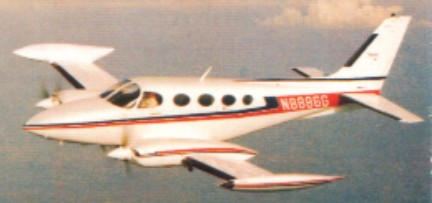
In December 1971 Cessna announced the introduction of the pressurised Model 340 developed from the Model 310. Powered by twin TSIO-520-NB engines each giving 213kW, the 340 incorporated the wing and tricycle landing gear developed for the Model 414, married to a new pressurised fuselage, but using the tail of the Model 310. Though aimed at the owner-pilot of light twins, the 340 has such features as center-aisle seating, an air-stair door and cruise performance of 241 mph at 20,000 feet.
The 1972 model 340, grosses at 5,975 pounds and offers a top speed at 16,000 feet of 260 mph. Pressurized to a maximum differential of 4.2 psi, the fuselage is more than five feet longer than that of the 310, and the horizontal tail surfaces have much more leverage. The result is significantly improved pitch control at landing speeds. Normal fuel is 50 gallons in each tip: optional inboard aux tanks hold 20 each and another 20 will fit in a tank at the rear of each engine nacelle, for a possible total of 184 gallons and a range of more than 1,200 miles with four aboard. Standard useful load of the 340 is 2,278 pounds. Allowable baggage includes 350 pounds in a 15.5 cubic foot nose compartment, 340 pounds in an 18.5 cubic foot rear fuselage compartment and 120 pounds in each nacelle locker for a total of 930 pounds. The 340 at sea level and gross weight will climb at a heady 1,500 fpm. At gross on one engine the airplane will climb at 250 f`pm with the gear up. But keep in mind that this airplane is turbocharged, and will hold that r/c for a long time: it can climb on one all the way to 12,100 msl and still be going up at100 fpm. When it is loaded the 340 is not a power-off airplane – not with a wing loading of 32.5 lbs/sq. ft. – nor is it a short field airplane. Takeoff over the 50 ft obstacle requires 2,430 feet at gross, whereas you can land over the same obstacle in only 1,840. Without troubling passengers or crew with oxygen masks it can go to 20,000 ft with a cabin altitude of only 8,000 feet.
This was followed in the mid-1970s by the Model 340A equipped with 231kW engines and later by the similarly powered Model 340A II fitted with comprehensive factory-installed avionics allowing IFR operation. In 1978 Cessna introduced the Model 340A III equipped with an improved avionics package including colour weather radar and this version remained available until 1985 when the type was taken out of production, by which time 1,287 had been delivered.
A lightweight unpressurised version of the Model 340 was offered to the market in 1979 as the Model 335, later available as the improved Model 335 II version, but production ended in 1980 after only 45 had been built.

Variations:
Riley Super 340

Cessna 340
Engines: 2 x Continental TSIO-520-K, 285 hp
Wingspan: 38 ft 1.3 in / 11.62 m
Length: 34 ft 4 in / 10.46 m
Empty weight: 3723 lb / 1688 kg
MTOW: 5975 lb / 2710 kg
Max cruise 75% 20,000ft/610m: 209 kt / 241 mph / 388 kph
ROC SL: 500 fpm / 457 m/min
Service ceiling: 26,500 ft / 8075 m
Range 75% 10,000ft/3050m 600lb/272kg fuel: 575nm / 663mi / 1067 km
Max range econ 175kt/202mph/325kph 1218lb/552kg fuel: 1402nm / 1615nm / 2600km
Seats: 6
Nose baggage: 350 lb / 159 kg
Wing lockers: 2 x 120 lb / 54.5 kg
Cabin length: 12 ft 8 in / 3.86 m
Cabin max width: 3 ft 10.5 in / 1.18 m
Cabin max height: 4 ft 1 in / 1.24 m
Cabin volume: 162.4 cu.ft / 4.6 cu.m
Rear cabin capacity: 340 lb / 154 kg

CE-340A
Engines: Continental TSIO-520-NB, 310 hp to 20,000 ft
TBO: 1400 hrs.
Fuel Type:100/100LL
Oil capacity (qts.): 12
Props: McCauley CS 3-blade, 76.5-in.
Seats: 6.
Landing Gear type: Tri./Retr.
Wingspan: 38 ft. 1 in.
Overall length: 34 ft. 4 in.
Height: 12 ft. 7 in.
Wing area: 184 sq.ft.
Wing aspect ratio: 7.2.
Maximum ramp weight: 6025 lbs.
Maximum takeoff weight: 5990 lbs.
Max landing weight (lbs.): 5990
Standard empty weight: 3948 lbs.
Maximum useful load: 2077 lbs.
Zero-fuel weight: 5630 lbs.
Fuel capacity: (total): standard: 102 USgal.
Fuel capacity with auxiliary tanks (40 gal. usable): 143 gal.
Fuel capacity with auxiliary tanks (63 gal. usable): 166 gal.
Fuel capacity with auxiliary tanks (63 gal.) and wing locker tanks, 207 gal.
Maximum landing weight: 5,990 lbs.
Wing loading: 32.5 lbs/sq.ft.
Power loading: 9.7 lbs/hp.
Best rate of climb: 1,650 fpm @ 108 kts.
Climb gradient: 930 ft/nm.
Rate of climb @ 8,000 ft: 1500 fpm.
Service ceiling (ft.): 29,800
Certificated ceiling: 30,000 ft.
8000ft cabin alt @: 20,000 ft.
Maximum single-engine rate of climb: 315 fpm @ 100 kts.
Single-engine climb gradient: 189 ft/nm.
Single-engine service ceiling: 15800 ft.
Maximum speed: 244 kts.
Cruise @ 65% pwr @ 8,000ft: 182 kts.
Cruise @ 65% power @ 18,000ft: 196 kts.
Fuel flow @ 65% pwr @ 18,000 ft: 180 pph.
Endurance at 65 % pwr @ 18,000 ft: 6.5 hrs.
Cruise speed (kts.) 75% power @ 25,000 ft.: 229
Cruise speed (kts.) 65% power @ 25,000 ft.: 219
Cruise speed (kts.) 55% power @ 25,000 ft.: 202
Max range (w/ reserve) (nm) 75% power @ 25,000 ft.: 1106
Max range (w/ reserve) (nm) 65% power @ 25,000 ft.:1248
Max range (w/ reserve) (nm) 55% power @ 25,000 ft.:1377
Stalling speed clean: 79 kts.
Stalling speed gear/flaps down: 71 kts.
Turbulent-air penetration speed: 155 kts.
SL cabin at: 9,000 ft
8000 foot cabin at 20,000 feet.
Takeoff ground roll (ft.): 1615
Takeoff over 50-ft. obstacle (ft.): 2175
Landing ground roll (ft.): 770
Landing over 50-ft. obstacle (ft.): 1850
Baggage allowable: 930 lbs.
Cabin doors: 1
Cabin width (in.): 46.5
Cabin height (in.): 49
Wheel track: 12 ft. 11 in.
Wheel base: 10 ft. 3 in.
1977 Price: $290,000

CE-340A
Engines Continental TSIO 520 M, 310 hp to 20,000 feet.
TBO 1,400 hrs.
Propellers constant speed, full ¬feathering, three blade, 76.5 in, diameter.
Length 34 ft. 4 in.
Height 12 ft. 7 in.
Wingspan 38 ft. 1 in.
Wing area 184 sq. ft.
Wing loading 32.5 lbs/sq.ft.
Seats 6.
Empty weight 4,527 lbs.
Useful load 1,463 lbs.
Gross weight 5,990 lbs.
Payload with full fuel 365 lbs.
Power loading 10.48 lbs./hp.
Usable fuel 183 USG./1,098 lbs.
Minimum runway requirement 2,175 ft.
Rate of climb 1,650 fpm.
Single engine rate of climb 315 fpm.
Service ceiling 29,800 ft.
Single engine service ceiling 15,800 ft.
Maximum speed 242 knots.
Maximum cruise (77.5% power @ 24,500 ft) 228 knots.
Economy cruise (56.1 % power @ 25,000 feet) 190 knots.
Range at maximum cruise (45 min res, 1,098 lbs. fuel) 996 nm.
Range at economy cruise (45 min res, 1,098 lbs. fuel) 1,133 nm.
Duration at maximum cruise, no res 5.23 hrs.
Stall speed (clean) 83 knots.
Stall speed (gear, flaps down) 71 knots.

CE-340A II
Engines: 2 x Continental TSIO 520 N, 310 hp.
Props: constant speed, full feathering, 3 blades, 76.5 inch dia.
Wing span: 38 ft. 1 in.
Wing area: 184 sq.ft.
Length: 34 ft. 4 in.
Height: 12 ft, 7 in.
MTOW: 5990 lbs.
Std empty wt: 4096 lbs.
Max altitude: 20,000 ft.
Max speed: 241 kt.
Max recommended cruise: 77.5% power: altitude: 10,000 ft. speed: 198 knots
Max recommended cruise: 77.5% power: altitude: 24,500 ft. speed: 220 knots.
Range max cruise 77.5% power: altitude: 10,000 ft, endurance: 2.18 hrs. range: 425 nm
Range max cruise 77.5% power: altitude: 24,500 ft. endurance: 3.99 hrs. range: 861 nm.
ROC sea level: twin engine: 1650 fpm
ROC single engine: 315 fpm.
Service ceiling: twin engined: 29,800 ft.
Ceiling single engine: 15,800 ft.
Ground run: 1615 ft. / 50 ft. obstacle: 2230 ft.
Ground roll: 760 ft. / 50 ft. obstacle: 1850 ft.
Baggage allowable: 930 lbs.
Wing loading: 32.55 lb/sq.ft.
Power loading: 9,66 lb/hp.
Fuel capacity: (total): standard: 102 gal. with auxiliary tanks (40 gal. usable): 143 gal.
Fuel capacity: with auxiliary tanks (63 gal. usable): 166 gal.
Fuel capacity: with auxiliary tanks (63 gal.) and wing locker tanks, 207 gal.
Price 1977: US$210,450

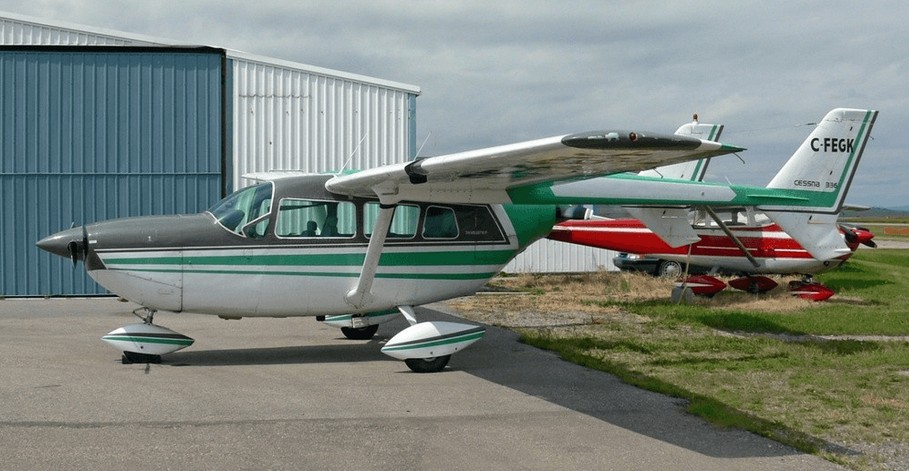
Cessna CE-337 Skymaster / O-2

CE-P337

The model 337 Skymaster (originally Super Skymaster) was developed from the fixed gear model 336 and introduced in 1965. Successive refinements include increased gross weight (1968 337C), improved instrumentation (1969 337D), further increased gross weight and conical-cambered glassfibre wingtips (1970), seat belts and other safety features (1971), improved cabin layout (1972), and detail airframe improvements (1973).

Cessna CE-337 Skymaster / O-2 Article

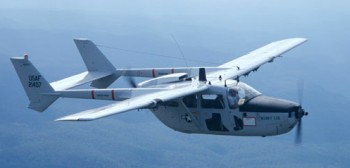
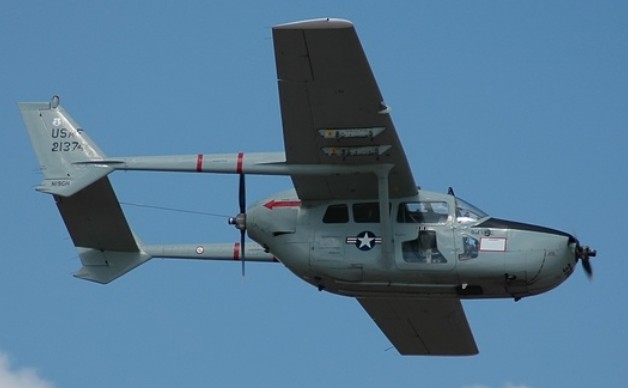
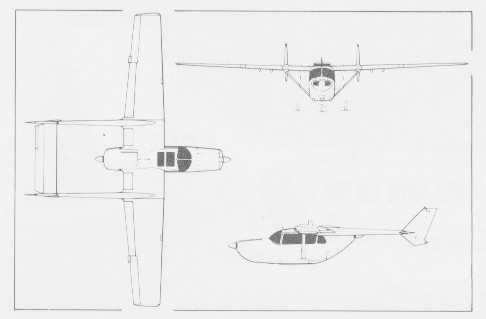
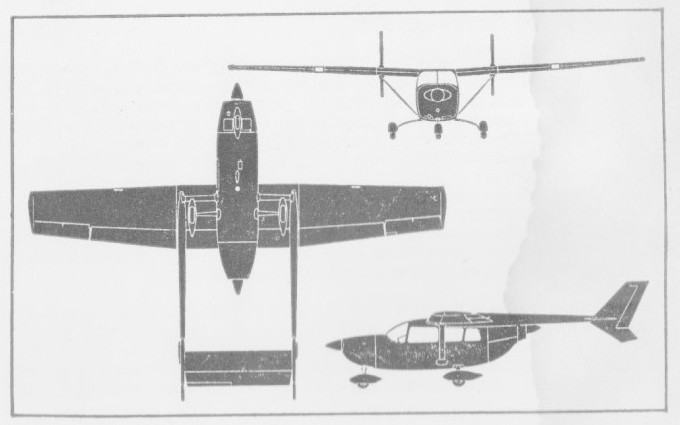
In 1966, the United States Air Force (USAF) realised it needed a replacement for its O-1 Bird Dogs in Vietnam. The Cessna 337 was selected and, with relatively minor modifications to incorporate four under wing weapons mounts and weapon release systems, was sent to war in Vietnam designated O-2A. The Cessna O-2A is an all metal, high wing, retractable gear aircraft incorporating twin tail booms and an engine mounted at the front and rear of its fuselage pod.
The first Cessna 0-2A was delivered to the 20th Tactical Air Support Squadron at Da Nang on 2 July 1967. 501 were supplied to the USAF designated O-2A. In addition, a version equipped for psychological warfare missions entered USAF service under the designation O-2B This carried an air-to-ground broadcasting system using three 600-watt amplifiers and a battery of highly directional speakers. Total procurement of O-2B aircraft amounted to 31.
Twelve O-2As were supplied to the Imperial Iranian air force in early 1970.
A twin-turboprop O-2T/O-2TT did not proceed beyond USAF evaluation.

O-2A

Detail improvements continued each year, and a turbocharged version, the Model T337 Super Skymaster, was introduced in 1970, but the prototype of a pressurised T337G Skymaster, powered by 168kW Continental TSIO-360 engines, flew in July 1971 (the word Super had then been dropped), and deliveries began in 1973.

Only 356 were produced by 1980, when production ceased.

In 1969, Reims Aviation in France began licence assembly of the Model 337, with primary structures supplied by Cessna and Continental engines built in the UK under licence by Rolls-Royce. The US and French production lines continued in parallel, the French versions being classified Reims F337. The name Milirole was applied to the basic unpressurised F337 for a short time. Since 1974 Reims have developed a special unpressurised STOL version, designated FTB337, which can be provided with a wide range of equipment to make it suitable for such duties as maritime or overland patrol and rescue, and the military FTMA Milirole with wing strongpoints and enlarged flaps.
Production of the Model 337 series by Cessna ended in mid-1980 by which time 1,821 Model 337s, 313 pressurised Model 337s and 544 military O-2s had been delivered. French production by Reims Aviation totalled 66 Model F337s, 27 F337Ps and 61 FTB337s.
US Basler Flight Service modified a CE-337 with a P&W PT6 at the rear, replacing both piston engines, and stretched the fuselage 2.1m to accommodate 10 passengers or freight.
The Summit Aviation Sentry O-2-337 Sentry is a military conversion of the Cessna T337 push-pull twin-piston-engined light aircraft with uprated 225 hp Continental TSI0-360 engines, similar in configuration and role to the O-2. Four underwing Nato-standard pylons can carry up to 160kg of stores including gun and rocket pods, and a combined search radar and speaker system pod. The Royal Thai Navy has taken delivery of ten O-2-337s.

Gallery

Variations:
Groen Hawk 6 / Revcon 6G / Cessna Skymaster

337
Engines: 2 x Continental IO-360-C, 210 hp
Wingspan: 38 ft 2 in / 11.63 m
Length: 29 ft 9 in / 9.07 m
Range max cruise no res: 677 nm / 780 mi / 1255 km
Seats: 4-6
Cabin length: 9 ft 11 in / 3.02 m
Cabin max width: 3 ft 8.25 in / 1.12 m
Cabin mas height: 4 ft 3.25 in / 1.30 m
Cabin volume: 138 cu.ft / 3.91 cu.m
Cabin baggage – 4 seat: 365 lb / 165 kg
Cargo pack under fuselage: 300 lb / 136 kg

Cessna 337
Engine: 2 x Continental IO-360-GB, 157kW, 210 hp
Max Take-off weight: 2100 kg / 4630 lb
Empty weight: 1264 kg / 2787 lb
Wingspan: 11.63 m / 38 ft 2 in
Length: 9.07 m / 29 ft 9 in
Height: 2.79 m / 9 ft 2 in
Wing area: 18.81 sq.m / 202.47 sq ft
Max. speed: 332 km/h / 206 mph
Cruise speed: 315 km/h / 196 mph
Ceiling: 5485 m / 18000 ft
Range: 1235 nm / 2288 km / 1422 miles
Crew : 2 + 4

CE-337A
Engines: 2 x Continental IO-360, 210 hp.
Fuel consumption: 70 lts total/hr.

Cessna 337 Super Skymaster
Engines: 2 x Continental IO 360 C, 310 hp
Length: 29 ft 9 in.
Wingspan: 38 ft 2 in.
Speed: 199 mph.
Ceiling: 18,000 ft.
Range: 755 mls.
Landing speed: 63 mph.
Landing dist: 575 ft.
Pax cap: 6.
Payload: 1,610 lb.

1977 CE-337 Skymaster
Engines: 2 x Continental IO-360-G, 210 hp.
Seats: 4/6.
Wing loading: 22.9 lb/sq.ft.
Pwr loading: 11 lb/hp.
Gross wt: 4630 lb.
Empty wt: 2786 lb.
Equipped useful load: 1730 lb.
Payload max fuel: 842 lb.
Range max fuel/75% pwr: 986 nm/5.8 hr.
Range max fuel / 55% pwr: 1199 nm/ 8.1 hr.
Service ceiling: 18,000 ft.
75% cruise: 169 kt.
55% cruise: 149 kt.
Stall: 61-69 kt.
1.3 Vso: 79 kt.
ROC: 1100 fpm.
SE ROC: 320 fpm @ 88 kt.
SE Service ceiling: 7100 ft.
Min field length: 1675 ft.
Fuel cap: 528/888 lb.
Undercarriage: retractable.

1979 Skymaster
Engine: 2 x Continental IO 360 G, 210 hp.
Max speed: 171 kts.
Max cruise speed: 169 kts.
Max range: 1155 nm.
Max usable fuel: 148 USG.
ROC: 925 fpm.
ROC SE: 300 fpm.
Service Ceiling: 16,100ft.
Service ceiling SE: 6900 ft.
Takeoff dist 50 ft obstacle: 1,675 ft.
Landing dist 50 ft obstacle: 1,650 ft.
Max ramp wt: 4648 lb.
Max useful load: 1848 lbs.
Seats: 6.

CE-T337G
Engine: 2 x 225 hp Continental TSIO-360-C, 210 hp.
Vne: 197 kts.
Max cruise: 205 kts.
Econ cruise: 147 kts.
ROC: 1100 fpm @ 110 kts.
SE ROC (87kts): (Front eng.) 400 fpm, (rear eng) 500 fpm.
Operational ceiling: 20,000 ft.
Range, no res @ 16,000ft: 1308 nm.
Empty wt: 3184 lbs.
MTOW: 4700 lbs.
Wing span: 38 ft 2 in.
Length: 29 ft 9 in.
Height: 9 ft 4 in.
Wing area: 202.5 sq.ft.
Seats: 6.
Stall: clean: 57 kts, Flap, u/c dn: 50 kts.

CE-P337
Engines: 2 x Continental TSIO 360 C, 225 hp.
TBO: 1,400 hrs.
Propellers: constant speed, full feathering, two blade.
Length: 29 ft. 10 in.
Height: 9 ft. 2 in.
Wingspan: 38 ft. 2 in.
Wing area: 202.5 sq.ft.
Wing loading: 23.2 lb/sq.ft.
Power loading: 10.4 lb/hp.
Gross weight: 4,700 lbs.
Empty weight: 3,311 lbs.
Useful load: 1,389 lbs.
Max ramp wt: 4,724 lbs.
Payload with full fuel: 511 lbs.
Rate of climb: 1,250 fpm.
Single engine rate of climb: 375 fpm.
Single engine climb gradient at 89 knots (Vyse): 253 ft./nm.
Service ceiling: 20,000 ft.
Single engine service ceiling: 18,700 ft.
Certificated ceiling: 20,000 ft.
Max speed: 217 kts.
Maximum cruise (75 % @ 20,000 ft.): 205 knots.
Intermediate cruise (75% @ 10,000ft): 186 knots.
Duration @ maximum cruise: 5.8 hrs.
Maneuvering speed: 139 knots.
Stall speed (clean): 70 knots.
Stall speed (gear, flaps down): 62 knots.
Pressurization differential: 3.35 psi.
10,000 foot cabin at 20,000 ft.
Usable fuel capacity: 148 USG/888 lbs.
Maximum takeoff weight: 4,700 lbs.
Maximum landing weight: 4,465 lbs.
Takeoff dist 50 ft obstacle: 1,500 ft.
Landing dist 50 ft obstacle: 1,675 ft.
Seats: 5.
Max range: 1,155 nm.

Turbo-System Super Skymaster
Engines: Continental TSIO-360-A/B, 210 hp

T337 Pressurised Skymaster
Engines: Continental TSIO-360, 225 hp

Reims Cessna FT.337G Turbo Super Skymaster

Cessna 0-2A
Engine: Two Continental IO-360-D, 210HP (158 kW)
Propeller: Two McCauley Constant Speed, Full Feathering 2 blade
Prop Diameter: 6 ft 6 in (1.95m)
Fuel: Aviation Gasoline 100 Octane
Wing Tank Capacity: 37 Imperial Gallons / 167 Litres / 44 U.S. Gallons
Reserve Tank Capacity (2): 15 Imperial Gallons / 68 Litres / 18 U.S. Gallons
Wingspan: 38 ft 0 in / 11.58 m
Length: 29 ft 2 in / 8.90 m
Wing Area: 201 sq. ft / 18.67 sq. m
Height: 9 ft 5 in / 2.87 m
Empty: 3,226 lb / 1,463 kg
Maximum Takeoff weight: 4,850 lb / 2,200 kg
Maximum Speed: 192 knots / 221 mph / 356 km/h
Cruise Speed: 140 knots / 161 mph / 261 km/h

O2-337
Engines: 2 x 225 hp Continental TSI0-360
Hardpoints: Four underwing
Hardpoint load: 160kg
.
Basler 337
Engine: 1 x P&W PT6.
Pax cap: 10.

Cessna CE-336 Skymaster

The push-pull concept, with engines driving one tractor and one pusher propeller, was adopted by Cessna in the late 1950s for a light, low cost, easy-to-fly twin, and one obvious advantage over a normal twin layout was that, in the event of an engine failure, there would be no asymmetric thrust problems.
First flew on February 18, 1961, but significant improvements to the design were made before production aircraft were delivered. Changes included more powerful engines, a larger fuselage, and revised wing, tail and rear engine cowling.
The first pre-production prototype was flown in August 1962 followed by the first production aircraft completed in November 1962. FAA certification took 15 months, with deliveries of the first production 336 beginning in May 1963. A total of 140 were sold that year.
Powered by two 157kW Continental IO-360-A engines, the new aeroplane was a four-seater with fixed tricycle landing gear, although alternative seating arrangements for up to six were available. Additional baggage space was available in an optional glassfibre pack with a capacity of 136kg, which could be carried beneath the fuselage.
However, fixed landing gear on light twins was becoming passe, and after 195 Model 336s had been built the type was replaced on the production line in early 1965 by the Model 337 Super Skymaster with retractable landing gear.

Engine: 2 x 195 hp Continental IO-360-A.
Max speed: 160 kts.
Max cruise: 150 kts.
Econ cruise: 107 kts.
ROC: 1340 fpm.
Service ceiling: 19,000 ft.
Range, no res, std fuel: 820 nm.
Range optional fuel: 1143 nm.
Empty wt: 2320 lbs.
MTOW: 3900 lbs.
Wing span: 38 ft.
Length: 29 ft 7 in.
Height: 9 ft 6 in.
Wing area: 201 sq.ft. Seats: 6

336 Skymaster
Engines: 2 x Teledyne Continental IO-360-G, 210 hp @ 2800 rpm.
Props; 2x Constant Speed, Full Feathering
Diameter; Front; 78 in, Rear; 76
Max Sea Level speed; 179 kts
Cruise, 75% Power at 5500 ft; 169 kts.
Range 75% power at 5500 ft: 545 nm
Endurance; 3.3 hrs.
Max range 10,000ft; 670 nm (528 lbs usable fuel),
Rate of Climb at Sea Level; Twin Engine; 1100 fpm.
Front Engine Only ROC; 270 fpm.
Rear Engine Only; 320 fpm.
Service Ceiling; Twin Engine; 18,000 ft.
Ceiling Front Engine Only; 6,100 ft.
Ceiling Rear Egine Only; 7,100 ft.
Take-off; Ground Roll; 1000 ft.
Total Distance Over 50 ft Obstacle; 1675 ft.
Landing; Ground Roll; 700 ft.
Over 50 ft Obstacle; 1650 ft.
Stall Speed; Flaps up, Power off; 70 kts
Flaps Down, Power off; 61 kts.
Max Take-off; 4630 lbs.
Max Landing; 4400 lbs.
Standard Empty; 2786 lbs .
Max Useful Load; 1844 lbs.
Baggage Allowance; 365 lbs.
Wing Loading; 22.9 lbs/sq.ft.
Power Loading; 11.0 lbs/hp.
Fuel Capacity; Standard; 90.6 US Gal.
Opyion al Long Range; 150.6 US Gal.

336 Skymaster II
Engines; 2 x Teledyne Continental IO-360-G, 210 hp @ 2800 rpm.
Props; 2x Constant Speed, Full Feathering.
Diameter; Front; 78 in, Rear; 76 in.
Max Sea Level speed; 179 kts.
Cruise, 75% Power at 5500 ft; 169 kts.
Cruise; 75% power at 5500 ft – Range; 545 nm, Endurance; 3.3 hrs.
Max range 10,000ft; 670 nm (528 lbs usable fuel)
Rate of Climb at Sea Level; Twin Engine; 1100 fpm.
ROC Front Engine Only; 270 fpm.
ROC Rear Engine Only; 320 fpm.
Service Ceiling; Twin Engine; 18,000 ft.
Ceiling Front Engine Only; 6,100 ft.
Ceiling Rear Egine Only; 7,100 ft.
Take-off; Ground Roll; 1000 ft.
Total Distance Over 50 ft Obstacle; 1675 ft.
Landing; Ground Roll; 700 ft.
Landing Over 50 ft Obstacle; 1650 ft.
Stall Speed; Flaps up, Power off; 70 kts,
Flaps Down, Power off; 61 kts.
Max Take-off; 4630 lbs.
Max Landing; 4400 lbs.
Standard Empty; 2911 lbs.
Max Useful Load; 1719 lbs.
Baggage Allowance; 365 lbs.
Wing Loading; 22.9 lbs/sq.ft.
Power Loading; 11.0 lbs/hp.
Fuel Capacity; Standard; 90.6 US Gal.
Optional Long Range Fuel; 150.6 US Gal.

Cessna CE-335

A lightweight unpressurised version of the Model 340 was offered to the market in 1979 as the Model 335, later available as the improved Model 335 II version, but production ended in 1980 after only 45 had been built.

1980 Cessna 335
Engine: Continental IO-520-EB, 300 hp@SL to 13,000 ft
TBO (hrs.): 1400
Fuel type: 100/100LL
Propeller type: 3-Blade/constant speed
Landing gear type: Tri./Retr.
Max ramp weight w/VGs (lbs): 6290
Gross weight w/VGs (lbs.): 6290
Landing weight (lbs.) 5990
Empty weight, std. (lbs.): 4240
Useful load, std. (lbs.): 2050
Useful fuel, std (USgals.): 183
Payload, full std. fuel (lbs.): 952
Wingspan: 38 ft. 1 in.
Overall length: 34 ft. 4 in.
Height: 12 ft. 7 in.
Wing area (sq. ft.): 185
Wing loading (lbs./sq.ft.): 32.6
Power loading (lbs./hp): 9.98
Wheel size (in.): 6.00 x 6
Seating capacity: 6
Cabin doors: 1
Cabin width: 46.5 in.
Cabin height: 49 in.
Cruise speed (kts.) 75% power: 211
Fuel consumption (USgph.): 75% power: 34
Vso (kts.): 71
Vso w/VGs (kts.): 64
Best rate of climb, SL (fpm): 1400
S/E rate of climb, SL (fpm): 200
Service ceiling (ft.): 26,800
S/E service ceiling (ft.): 11,500
Takeoff ground roll (ft.): 1850
Takeoff over 50-ft. obstacle (ft.): 2365
Landing ground roll (ft.): 770
Landing over 50-ft. obstacle (ft.): 1850

Cessna CE-320 Skynight

In 1965 Cessna announced an improved twin-engined turbocharged Skynight. It has a larger cabin, more baggage area, easier access to aircraft systems for servicing and complete new interior styling. Top speed: 271 mph. It carries six persions, full fuel and 231 lb of baggage.

The 320 has essentially the same structure as the twin engine retractable Cessna 310, but with two 285-hp, six cylinder, turbocharged Continental IO-520s.

The 310, 320 and 402 all share virtually the same wing and the 320 and 402 the same engines, with the only real difference being is that the 6 seat 320 is “derated” such that full throttle produces 32 inches of boost (285 hp).
The fuel selectors are found on the cabin floor directly between the two front seats and these control, by cable, the selectors in each wing. As there is some “give” in the cable system, selecting the fuel on requires the pilot to “feel” for the indent. Each engine has its own separate fuel system, but the two are interconnected with a crossfeed tube and each engine can be fed from either tan (necessary is you wish to balance the fuel in the two tanks, for example).

The tip tanks are, in fact, the main tanks, each holding 190 litres (50 gallons) usable fuel. The auxiliary tanks are slightly inboard and hold about 78 litres (20.5 gallons) each. There is space for additional fuel behind the engines.

Cessna 320E

Introduced as the premier model 310 version for the businessman, the turbo-charged 320 Skynight was never a big seller. Apart from the extra side windows the 320E is nearly identical to the non-turbo 310L. Only 575 model 320s were built.

Variations:
Riley Turbostream / Super 310/320

Cessna CE-319A

The US Navy Cessna 319A, an experimental Boundary Layer Control wing version of the OE-2, intended for investigation of STOL characteristics. The BLC ‘suction/ejection’ system reduced the stalling speed from 43 mph to 32 mph, and the take-off to 50ft from 600 ft to 450 ft.

The Cessna 319A carried no military markings other than the fuselage inscription ‘U.S. Naval Research Aircraft’.

With the stepdown rear fuselage of the OE-1 (L-19A) Bird Dog, the OE-2 posed the longer nose and more angular tail assembly of the Model 180.

Cessna CE-310 / L-27 / U-3

CE-310

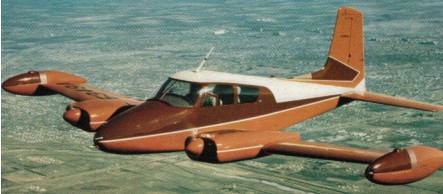
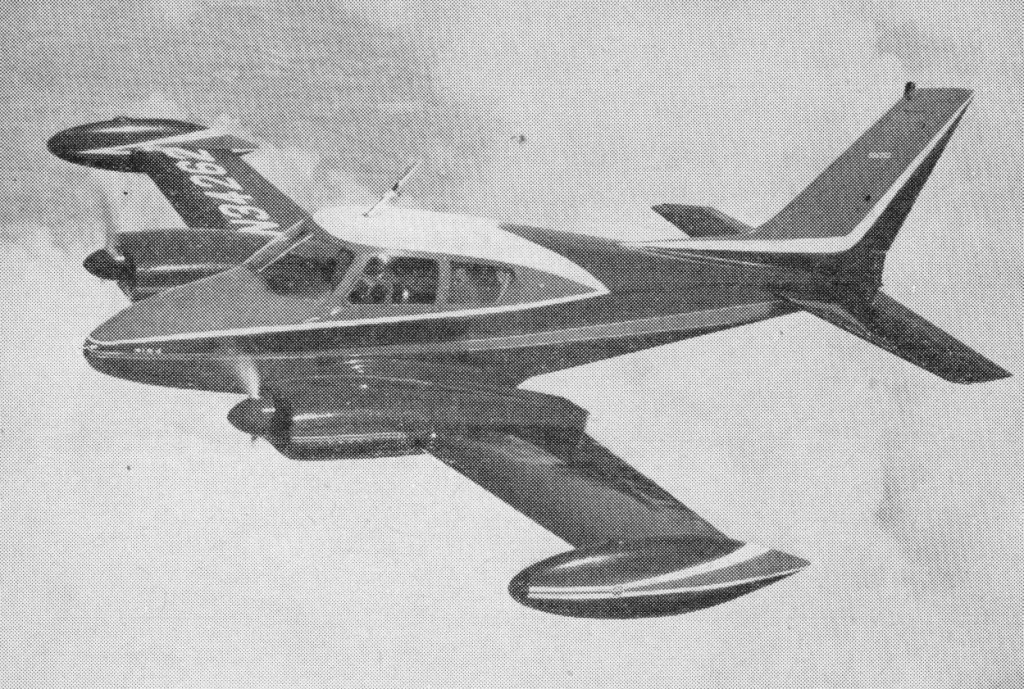
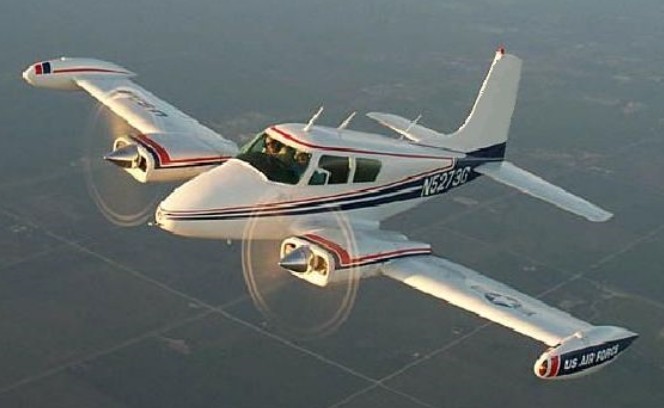
In 1952, Cessna initiated the design of a new five/six-seat twin-engined light monoplane designated Cessna Model 310. The prototype flew for the first time on 3 January 1953, proving in production form to be a popular twin. Of low-wing configuration and with tricycle landing gear, the prototype was powered by the 168kW Continental O-470, an engine developed originally for military use under the designation E225. Its use to power the Cessna Model 310 was one of its first civil applications, early production aircraft having the more powerful 194kW IO-470. An identification feature of the design at that time were the two wingtip fuel tanks, then representing the entire fuel tankage.

Cessna CE-310 / L-27 / U-3 Article

Production deliveries began in 1954, with steady product improvement continuing year by year. The swept tail came in 1960, the extra rear window in 1961, and now the slanted, sharpened tip tanks giving the 310G a totally updated appearance. The cabin was capable of seating five. It has a loaded weight of 4,830 lb., and cruises at 220 miles over a range of 825 miles.

1960 Cessna 310D

The 1964 310I Skynight had weather-proof compartments at the rear of both engine nacelles for an additional 120 lb of baggage, the same engines as the 310H, new light-weight props, redesigned control system, and an old price of $62,950.

A deluxe version with turbocharged engines, air-conditioning and an oxygen system as standard was introduced in 1966. This was then named the Turbo-System Executive Skyknight being known also for a short period as the Model 320, but later marketed as the Turbo T310.

Final versions were the basic Model 310 with 213kW Continental IO-520-MB engines, the structurally identical Model 310II which incorporated a factory installed avionics/equipment package, the Turbo T310 with TSIO-520-BB powerplants and the Turbo T310 II with the same additional equipment fit as the Model 310 II.

L-27A

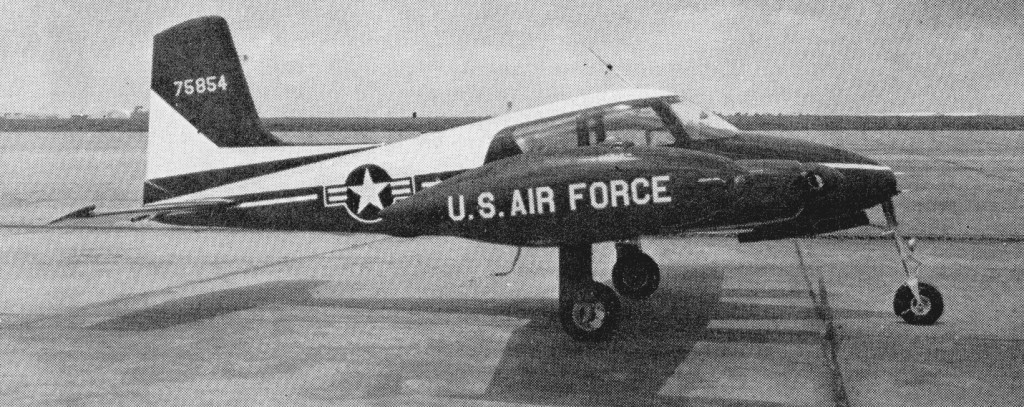
In the mid-1950s, following competitive selection, a slightly modified version of the Model 310 was ordered for light cargo-liaison duties with the US Air Force under the designation L-27A, subsequently redesignated U-3A A total of 160 were built followed by 36 U-3Bs equipped for all-weather operation, and all were nicknamed ‘Blue Canoes’.

Cessna L-27 (U-3A) Blue Canoe

The Turbo-System T310 was introduced in 1969 as Turbo-System 310P replaced the model 320 Skyknight in production.

The 1972 Cessna 310 had an Omni-Vision rear window installed in a slightly enlarged rear fuselage to provide more room for back seat passengers, together with a bigger front windshield, new easier-to read instruments, cleaner panels and detail refinements common to the entire line.
On some 310s, with extra wing locker tanks, the aircraft can carry 203 USG.
The Cessna 310 had well over 3,000 marketed by 1972.
The B55 Barons and the Cessna 310s are powered by 260 hp Continental IO 470 series engines, which have 1,500 hour TBOs, provided their exhaust valves are either nickel coated or ni¬monic; otherwise a 1,200 hour TBO applies.
With a wingspan of 36 ft 11 in (11.24 m), and two 260 hp engines, the Model 310 can fly safely on only one engine, and has a maximum range of about 1,700 miles (2,735 km).
The final development of the 1953 design came in 1975 when a longer nose was fitted as well as an overhead window for the rear seat passengers.

In the late 1980s Neil Armstrong sold his Cessna 310.
 
When production finished in May 1981, 5,241 commercial examples of the Model 310 had been built, including a small number for the French air force, plus the 196 delivered to the USAF.

1960 Cessna 310E with Colemill conversion

Gallery

Variations:
Riley Rocket
Riley Turbostream / Super 310/320

310
1954
CE-310
Engines: 2 x Continental O-470-B, 240 hp
Wingspan: 36 ft
Length: 27 ft
Height: 10 ft 6 in
Empty weight: 2850 lb
Max loaded weight: 4600 lb
Fuel capacity: 2 x 41.6 ImpG tip tanks
Max speed: 220 mph at SL
Cruise: 205 mph at 8000 ft
Range 60%: 875 mi at 10,000 ft
ROC: 1700 fpm
Service ceiling: 20,000 ft
Seats: 5

310B
1957

310C
1959

310D
1960

310F
1961

310G
1962

310H
1962

310I
1964

310J
1965

310K
1966

310L
1977

310N
1968

310P
1969

310Q
1970
Cruise: 180 kt.
Useful load: 1780 lb.
Seats: 6.

Turbo-System T310 / Turbo-System 310P
1969

1977 CE-310
Engines: 2 x Continental IO-520-M, 285 hp.
Seats: 4/6.
Wing loading: 30.73 lb/sq.ft.
Pwr loading: 9.65 lb/hp.
Gross wt: 5500 lb.
Empty wt: 3337 lb.
Equipped useful load: 2049 lb.
Payload max fuel: 831 lb.
Range max fuel/75% pwr: 1129 nm/5.8 hr.
Range max fuel / 55% pwr: 1382 nm/ 7.9 hr.
Service ceiling: 19,750 ft.
75% cruise: 194 kt.
55% cruise: 176 kt.
Vmc: 81 kt.
Stall: 72-79 kt. 1.3
Vso: 94 kt.
ROC: 1662 fpm.
SE ROC: 370 fpm @ 106 kt.
SE Service ceiling: 7400 ft.
Min field length: 1790 ft.
Fuel cap: 600/1218 lb.
Undercarriage: retractable.

1979 Cessna 310
Engines: 2 x Continental IO 520 MB, 285 hp, 213kW.
Wingspan: 11.25 m / 36 ft 11 in
Length: 9.74 m / 31 ft 11 in
Height: 3.25 m / 10 ft 8 in
Wing area: 16.63 sq.m / 179.00 sq ft
Max speed: 207 kts. / 383 km/h / 238 mph
Max cruise speed: 195 kts.
Max range: 1,511 nm.
Max usable fuel: 203 USG.
ROC: 1,662 fpm.
ROC SE: 370 fpm.
Service ceiling: 6020 m / 19,750 ft.
Service ceiling SE: 7,400 ft.
Takeoff dist 50 ft obstacle: 1,700 ft.
Landing dist 50 ft obstacle: 1,790 ft.
Take-off weight: 2495 kg / 5501 lb
Empty weight: 1523 kg / 3358 lb
Max ramp wt: 5,535 lbs.
Max zero fuel wt: 4,900 lbs.
Max useful load: 2,182 lbs.
Seats: 6.

1979 Turbo Cessna 310
Engines: 2 x Continental TS10 520 BB, 285 hp.
Max speed: 237 kts.
Max cruise speed: 223 kts.
Max range: 1,440 nm.
Max usable fuel: 203 USG.
ROC: 1,700 fpm.
ROC SE: 390 fpm.
Service ceiling: 27,400 ft.
Service ceiling SE: 17,200 ft.
Takeoff dist 50 ft obstacle: 1,662 ft.
Landing Dist 50 ft obstacle: 1,790 ft.
Max ramp wt: 5,535 lbs.
Max zero fuel wt: 5,015 lbs.
Max useful load: 2,062 lbs.
Seats: 6.

Turbo 310
Engines: 2 x Continental TSIO-520-B, 285 hp.
Seats: 4/6.
Wing loading: 30.73 lb/sq.ft.
Pwr loading: 9.65 lb/hp.
Gross wt: 5500 lb.
Empty wt: 3453 lb.
Equipped useful load: 1933 lb.
Payload max fuel: 715 lb.
Range max fuel/75% pwr: 1293 nm/5.7 hr.
Range max fuel / 55% pwr: 1316 nm/ 7.4 hr.
Service ceiling: 27,400 ft.
75% cruise: 223 kt.
55% cruise: 179 kt.
Vmc: 81 kt.
Stall: 72-79 kt. 1.3
Vso: 94 kt.
ROC: 1700 fpm.
SE ROC: 390 fpm @ 106 kt.
SE Service ceiling: 17,200 ft.
Min field length: 1790 ft.
Take-off dist, 50ft: 1670 ft.
Ldg dist 50 ft: 1795 ft.
Fuel cap: 600/1218 lb.
Undercarriage: retractable.

1979 Cessna Turbo 310-R
Engine: 2 x Continental TSIO-520-MB, 285 hp@2700 rpm
TBO hrs.: 1400
Fuel Type:100/100LL
Propeller: McCauley three-blade, full feathering/78 in
Landing Gear type: Tri./Retr.
Max ramp weight (lbs.): 5535
Gross weight (lbs.): 5500
Landing weight (lbs.): 5400
Zero-fuel weight (lbs.): 5015
Empty weight, std. (lbs.): 3723
Useful load, std. (lbs.): 1777
Payload, full std. fuel (lbs.): 1165
Usable fuel (USgals.): 100
Optional fuel (USgals.): 143 / 166 / 207
Oil capacity (qts.): 13 per engine
Wingspan: 36 ft. 11 in.
Overall length: 31 ft. 11.5 in.
Height: 10 ft. 8 in.
Wing area (sq. ft.): 179
Wing loading (lbs./sq. ft.): 30.73
Power loading (lbs./hp.): 9.65
Wheel track (in.): 6.50 x 10
Wheel size (in.): 6.50 x 6
Seating capacity: 6
Cabin doors: 1
Cabin width (in.): 48.5
Cabin height (in.): 50
Baggage capacity (lbs.): 950
Cruise speed (kts.) 75% power @ 20,000/10,000 ft.: 223/201
Cruise speed (kts.) 65% power @ 20,000/10,000 ft.: 204/185
Cruise speed (kts.) 55% power @ 20,000/10,000 ft.: 195/177
Max range @ 20,000 ft. (w/ reserve) (nm) 75% power 100/203 gals. usable: 519/1242
Max range @ 20,000 ft. (w/ reserve) (nm) 65% power 100/203 gals. usable: 545/1290
Max range @ 20,000 ft. (w/ reserve) (nm) 55% power 100/203 gals. usable: 570/1360
Max range @ 10,000 ft. (w/ reserve) (nm): 75% power 100/203 gals. usable: 491/1140
Max range @ 10,000 ft. (w/ reserve) (nm): 65% power 100/203 gals. usable: 515/1200
Max range @ 10,000 ft. (w/ reserve) (nm): 55% power 100/203 gals. usable: 540/1270
Stall speed (gear, flaps up) (knots): 78
Stall speed (gear, flaps down) (knots): 70
Best rate of climb (2 engines) (fpm): 1700
Single-engine rate of climb, SL (fpm): 390
Service ceiling (ft.): 27,400
Service-engine sevice ceiling (ft.): 17,200
Takeoff ground roll (ft.): 1306
Takeoff over 50-ft. obstacle (ft.): 1662
Landing ground roll (ft.): 640
Landing over 50-ft. obstacle (ft.): 1790

U-3A / L-27A
Engines: 2 x Continental O-470-M, 240hp
Props: Hartzell HC-C2YF-2CUF, C-2285
Fuel cap:133 USG
Cruise: 205 mph at 21-22GPH
Seats: 5

Colemill Executive 600 / Cessna 310
Engines: 2 x Continental IO-520-E, 300 hp.
Seats: 6.
Wing loading: 29.1 lb/sq.ft.
Pwr loading: 8.7 lb/hp.
Max TO wt: 5200 lb.
Empty wt: 3125 lb.
Equipped useful load: 1952 lb.
Payload max fuel: 1112 lb.
Range max fuel/ 75% cruise: 990 nm/4.3 hr.
Service ceiling: 19,500 ft.
75% cruise: 198 kt.
Vmc: 64 kt.
Stall: 64 kt. 1.3
Vso: 83 kt.
ROC: 2500 fpm.
SE ROC: 400 fpm @ 101 kt.
SE ceiling: 11,500 ft.
Min field length: 1795 ft.
Fuel cap: 840 lb.

310J