Built by James Church in 1929, the J-3 Marathon was a 41-46hp three-cylinder air-cooled, inline converted Henderson motorcycle engine.
Piston
Church JC-1 Midwing Sport Monoplane
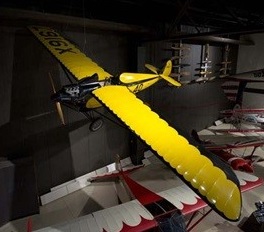
The Church Midwing was originally advertised as “the sportiest, safest, best-looking airplane in the light, single seat class,” and sold as a home-built kit.
Like the first Church aircraft, built by James Church in 1928, the Church Midwing has a Heath fuselage, which is wire-braced and bolted. The Midwing lacks a windscreen, providing the pilot protection from windblast with a cowling, which extends from the firewall to the instrument panel. The instrument panel itself consists only of a tachometer, and oil pressure and temperature gauges.
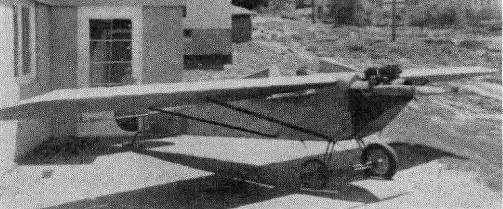
Gene Chase acquired the fuselage, stabilizer and elevator, Church wings with ailerons, windshield cowling, and a set of plans in the 1960’s. Working from those plans, which are copies of the original set drawn by James Church, Gene began a five-year restoration process. Gene’s restored Midwing made its first appearance at EAA during the 1970 Oshkosh fly-in. It made its first flight at the Ottumwa Fly-In in September of that year, witnessed by the plane’s creator, James Church. On May 29, 1972, James Church visited Gene Chase in Tulsa and flew the plane; he notes in the plane’s log book that this was, “my first flight in one of my Mid-Wings since 1941 (31 years ago).”
Ultralight replica:
RagWing Aircraft RW4 Midwing Sport
Engine: Heath-Henderson 83ci, 27 hp @ 2,700 r.p.m.
Length: 16 ft. 9 in.
Span: 26 ft. 8 in.
Wing area: 110 sq. ft.
Chord: 4 ft. 6 in.
Empty Weight: 367 lbs.
Gross Weight: 584 lbs.
Fuel capacity: 4 ½ USgals.
Oil capacity: 6 quarts
Fuel consumption: Approx. 2 g.p.h. @ 2,500 r.p.m.
Top speed: 90 m.p.h. (est.)
Cruising speed: 70 m.p.h. (est.)
Landing speed: 28 m.p.h. (est.)
Chudzik CC-2
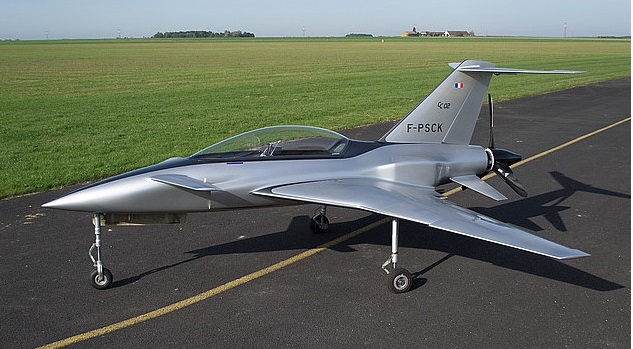
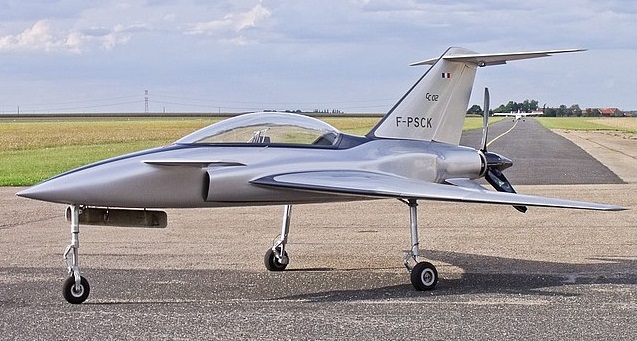
The Chudzik CC-02 F-PSCK (cn 1) ia a homebuilt, two seat, single engine aircraft, built by Claude Chudzik circa 2012.
Chu X-PO / AFAMF (Air Force Aircraft Manufacturing Factory) XP-0
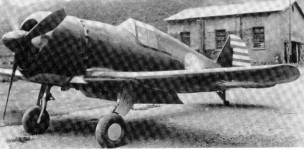
The reliance on foreign imports was not ideal, and so, despite having to pick up and move their comparatively new and basic aircraft industries further west as the Japanese advanced, the Chinese began to explore building their own aircraft designs. And this has led to two, known as the Chu XP-series.
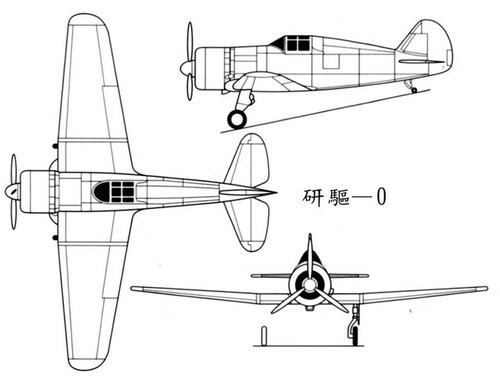
The first of these Chinese aircraft, the XP-0 was initiated in early 1941. Major General Chu Chia-Jen, who was Chief of the Air Force Technical Bureau, started development of an indigenous fighter that would be heavily based on the Curtis Hawk 75 export fighter.
This aircraft had been ordered in kit form from the United States and production had been attempted, but proved too much for the young aero industry, especially with the pressures of Japanese bombing and factory relocation. However, it was the most modern design that the Chinese had experience with, so it formed the basis of the XP-0.
Lacking modern aeronautical materials, the Chinese had to institute many compromises. Instead of the Hawk’s all metal structure, the XP-0 used a mixed construction, utilizing a welded tube metal fuselage which was clad in a plywood skin. The wings too were of wooden construction.
The engine was the Pratt & Whitney Twin Wasp that produced 1,200hp, an engine that was the most powerful available in any numbers to the Chinese.
A unique prototype was manufactured in 1943 by AFAMF-Yangling, using the tail surfaces of a Hawk 75, the centre section of the wing and the landing gear of a North American NA-6, the tailwheel from P-43 and the engine and cockpit of a P-66. The wings were built in wood/plywood.
There are some issues in the information on armament. Generally, it is stated that this aircraft had a rather heavy weapon load of either two or four 20mm cannons, which it carried in underwing fairings, and a centreline bomb rack. But for early 1941, that would be an extremely powerful punch for a single-engine fighter, and certainly a massive step up from the Hawk 75. As said, the available evidence is fragmentary. But it is possible that both may be correct. Because the design was initiated in early 1941, and the first prototype didn’t fly until 1943, it is conceivable that considering the development time involved, the weapon fit did evolve before that first flight.
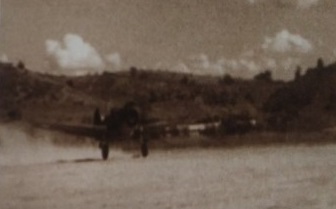
Apparently, the aircraft handled well in the air, but its performance as a fighter by 1943 standards was low. Top speed was reported as 313mph (c.503kp/h) and XP-0 seems to have been broadly comparable to aircraft of its generation.
How well it would have stood up to prolonged flight testing is also a question because on landing the aircraft ground looped and was written off. However, the pilot survived and his debrief apparently allowed at least one more prototype to be developed.
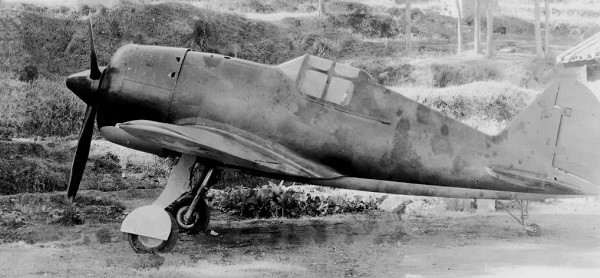
It is confusing as to how many other variants of the XP-0 were built, but some Chinese online sources assert that as many as nine improved models were built through 1944-46.
An upgraded X-P0 with different appearance was shown in 1944.
By mid-1941 China was the recipient of Lend-Lease aid from the United States, and though it would take a while to really build up the Nationalist forces, the massive influx of modern aircraft meant the need for a home-grown fighter was vastly diminished.
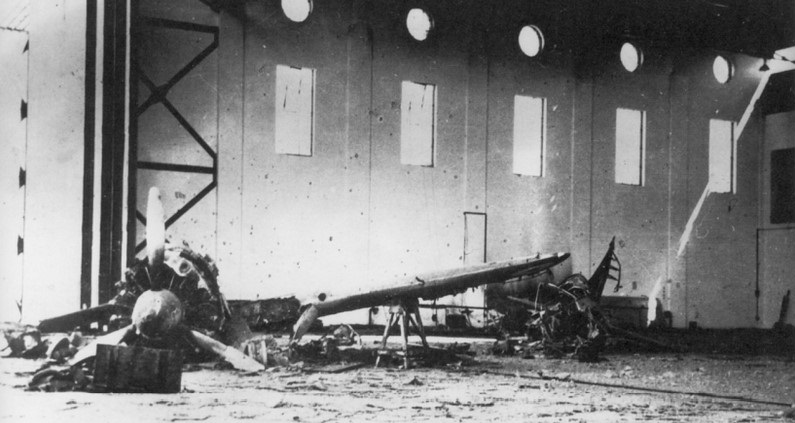
Engine: Pratt & Whitney Twin Wasp, 1,200hp
Wingspan: 11.4 m
Length: 8.8 m
Height: 3.70 m
Wing area: 22 sq.m
Max weight: 2,990 kg
est max speed: 504 kph
Range 1,400 km
Chu CJC-3
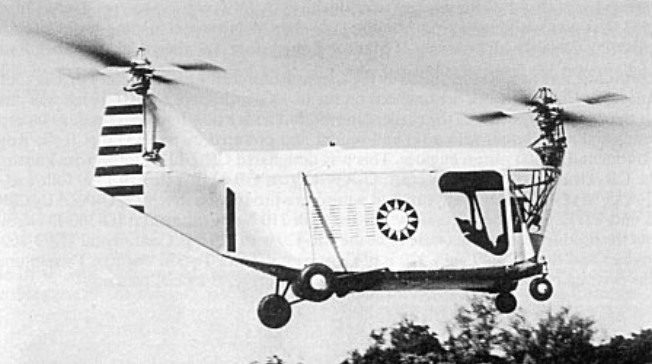
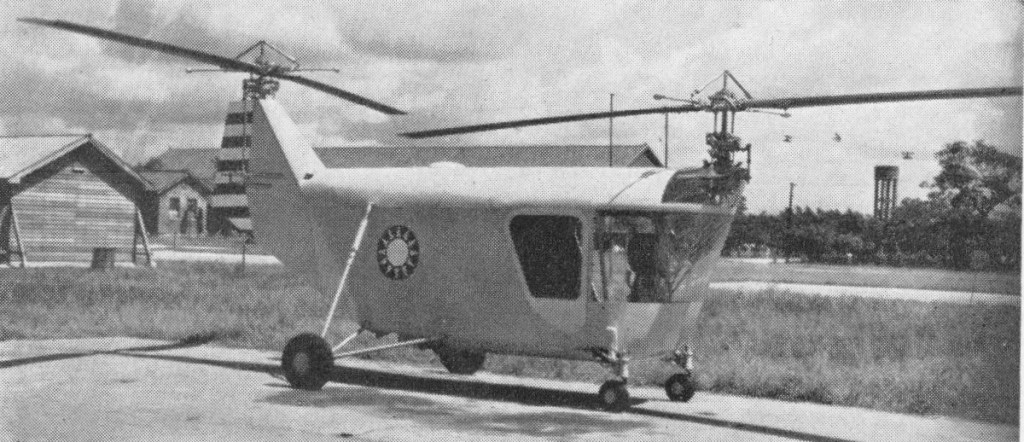
In 1952 Major-General C.J. Chu produced a small tandem-rotor helicopter known as the CJC-3 which was a side-by-side two-seater with a centrally-mounted 190hp Lycoming engine and fixed four-leg undercarriage.
CJC-3
Engine: 1 x Lycoming, 190hp
Rotor diameter: 6.47m / 25 ft
Overall length: 32 ft. 10 in.
Gross weight: 930kg
Empty weight: 680kg
Maximum speed: 180km/h
Cruising speed: 136km/h
Inclining climb: 466m/min
Ceiling: 3660m / 16,800 ft
Range: 216km / 130 miles at 68 m.p.h.
Seats: 2
Chu Humming Bird
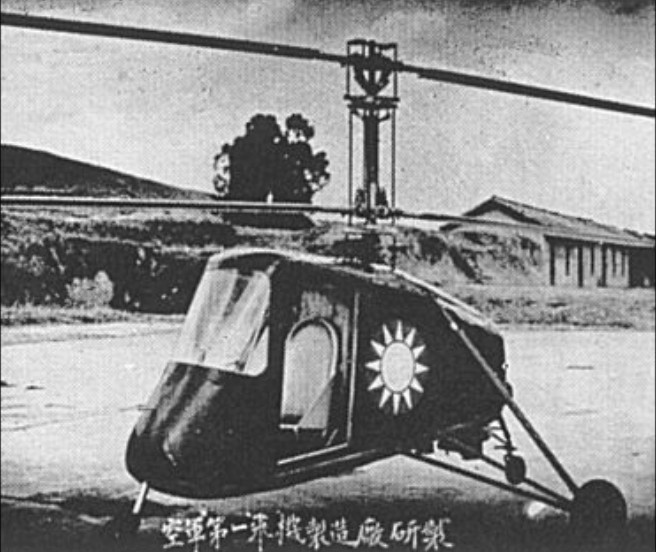
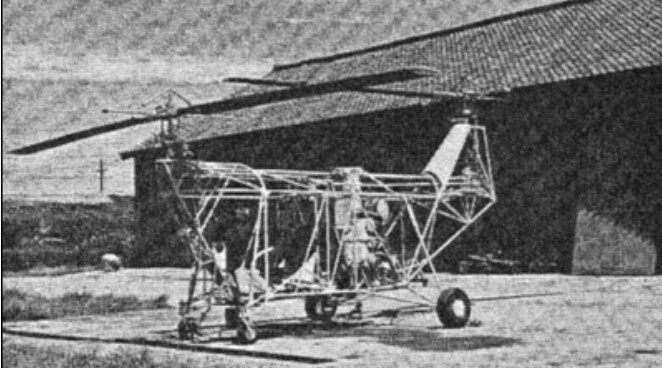
Though the helicopter principle, as is shown by the Chinese top, has been known in China for centuries, the first true Chinese helicopter goes back only as far as 1945. It was produced by Major-General Chu.
G.J.Chu studied aviation technology in the U.S.A, returned to China and was for thirteen years director of an aircraft manufacturing plant at Yunnan, which built various American aircraft and also the Soviet I-15 under licence.
In 1945 C.J.Ghu turned his attention to rotorcraft and designed a co-axial helicopter, known as the Humming Bird Model A. During the tie-down test, the ground screw came off with the rope, the Humming Bird tipped over and both its rotors were broken.
A start was immediately made on building a second version, the Humming Bird Model B.
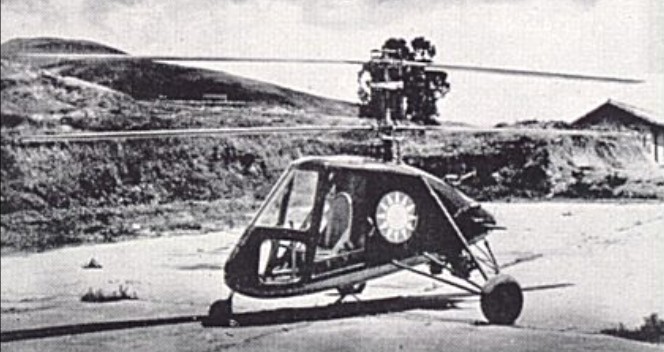
But, as the general tells the story: “Just as it was finished, however, I was sent to Formosa and for a variety of reasons we had to leave the ship on the mainland …”
While in Formosa, Chu became interested in the tandem configuration and set to work again. After eighteen months’ work, the aircraft was ready.
Humming Bird Model B
Engine: 1 x Kinner B-5, 125 hp
Rotor diameter: 7.62m
Width: 2.34m
Height: 2.63m
Gross weight: 725kg
Empty weight: 590kg
Maximum speed: 136km/h
Cruising speed: 112km/h
Inclining climb: 140m/min
Hover ceiling: 910m
Range: 219km
Chrysler IV-2220 / XI-2220

Chrysler had been carrying out paper studies of a very large engine for a brief period starting in May 1940 and decided to present their work to the United States Army Air Corps. They proposed a large engine to provide 2,500 hp initially, with room for growth upwards. They had decided to use a larger number of “normal sized” cylinders in a V-16 arrangement. The Army was interested, and sent them a development contract tender on June 22, 1940, to which Chrysler responded on July 2.
The extremely long profile of the new design meant that the crankshaft would be highly loaded if power was taken off at the propeller end. Chrysler’s solution to this problem was unique; power was instead taken from the middle of the engine, placing the propeller reduction gear in a gap between two V-8 cylinder banks and sending power to the front of the engine via a long extension shaft running below the crankshaft. Additionally many of the accessories were driven off the drive shaft instead of the crankshaft. This solution also raised the weight of the engine by the amount of the shaft, but it was apparently a price worth paying.
A single overhead cam drove the two-per-cylinder poppet valves, arranged at an angle to the piston in a hemi-spherical cylinder head, with the spark plug arranged between the valves. This arrangement allowed for “cross-flow” scavenging of the charge, and had been used on various race and performance car engines for some time. The hemi is actually less efficient than the design being used in most engines of the era, the penta engine, which improved airflow by allowing three or four valves per cylinder.
One early problem for the design was the lack of high-strength aluminum alloys; the original supplier, Alcoa, was able to deliver only half the required strength. Chrysler was able to address this through much improved production-line quality control, but the engine was nevertheless built with considerably more distance between the cylinders than normal, making the engine relatively long. This was not helped by the “gap” holding the propeller gearing in the middle of the engine, or the large accessories section at the end. The IV-2220 was comparatively huge; the Rolls-Royce Griffon of about the same displacement was 77 inches long, while the IV-2220 was 122.
Weight was not greatly affected, however, and the power-to-weight ratio was certainly competitive at 1.03 hp/lb. Some of this was no doubt due to the use of a turbocharger in addition to a supercharger for more continuous boost and less power draw on the engine. Turborchargers are generally “free,” powered not by the engine directly as in a supercharger, but by otherwise wasted exhaust energy. The IV-2220 also included a fairly advanced liquid-cooled intercooler between the turbocharger and supercharger, and an aftercooler behind the supercharger as well. This complex arrangement resulted in excellent altitude performance, keeping maximum rated power all the way to 25,000 ft.
The engine first flew on 26 July 1945, mounted on a converted P-47D-15-RE which was intended to serve as the prototype for the new P-47H series using this engine. A second example followed, but the war was already over and the need for a new engine in the jet age was gone. The only other design to select it was the Curtiss XP-60C in 1942, but the engine was so delayed that the P-60 moved onto other engines.
Only a few engines were built during the program, and it retained its ‘X’ designation the entire time as the XIV-2220, later XI-2220. The IV-2220 is historically important as it was Chrysler’s first hemi, a design that would re-appear for many years later and is now a Chrysler trademark.
Specifications:
XIV-2220-11
Type: 16-cylinder turbo-supercharged liquid-cooled 60° inverted V aircraft piston engine
Bore: 5.8 in (147.3 mm)
Stroke: 5.25 in (133.4 mm)
Displacement: 2,219 cu in (36.36 l)
Length: 122 in (3,098.8 mm)
Width: 33.5 in (850.9 mm)
Height: 33.5 in (850.9 mm)
Dry weight: 2,430 lb (1,102.2 kg)
Valvetrain: Single overhead camshaft actuating two valves per cylinder
Supercharger: With aftercooler
Turbocharger: With water-to-air intercooler
Fuel system: 1 x Bedix-Stromberg PD-16D1 2-barrel horizontal injection carburettor with automatic mixture control
Fuel type: 100/130 grade gasoline
Oil system: Pressure fed at 70 psi (482,633.0 Pa), dry sump, 120 S.U. (25.1 cs) grade oil.
Cooling system: Liquid-cooled
Power output:
2,500 hp (1,864.2 kW) at 3,400 rpm for takeoff
2,500 hp (1,864.2 kW) at 25,000 ft (7,620 m) METO
2,150 hp (1,603.3 kW) at 3,200 rpm normal rating
1,450 hp (1,081.3 kW) at 2,800 rpm cruise
Specific power: 1.13 hp/cu in (51.2 kW/L)
Compression ratio: 6.3:1
Fuel consumption: 0.42 lb/hp/hr (0.2555 kg/kW/hr)
Specific fuel consumption:
0.54 lb/(hp·h) (0.33 kg/kW/hr)) METO
0.43 lb/(hp·h) (0.26 kg/kW/hr)) normal rating
Oil consumption: 0.005 lb/hp/h (0.003 kg/kW/hr)
Power-to-weight ratio: 1.02 hp/lb (1.84 kW/kg)
Chrysler VZ-6
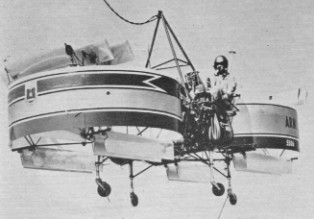
In 1959, the U.S. Army, through its Trans¬portation Research and Engineering Command, initiated the development of three types of VTOL research aircraft in a programme aimed at pro¬ducing a flying jeep. Fundamentally a cross between an Army jeep and a reconnaissance helicopter, this type was intended ultimately to operate at speeds of about 50 mph a few feet above the ground, carrying a payload of about 1000 lb. Contracts were placed with the Chrysler Corporation, Acrophysics Development Corp¬oration and Piasecki Aircraft Corp¬oration.
The Chrysler VZ 6, like the Piasecki flying jeep, was of the ducted fan type, using two fans in tandem with the pilot and engine in between. Work on this configuration had been going on at the Chrysler Defense Engineering Company since 1955 and a unique feature of the design was the use of rigid fixed pitch three blade rotors or fans.
Since the fans could not therefore contribute to control of the aircraft, Chrysler developed a system of control vanes. Pitch control came from lateral vanes across the duct intakes and yaw and roll control came from longitudinal vanes in the duct exit. The engine was located in the center of the rectangular-shaped vehicle, next to the off-set pilot’s position. Rubber skirts around the outside of the vehicle’s bottom edge helped sustain the fan-generated lift.
A 373 kW (500 hp) Lycoming engine powered the VZ 6, which weighed about 2,300 lb. fully loaded and was 23 ft. long. The diameter of the ducted fans was 8 ft. 6 in.
During 1959, the VZ 6 (58 5506) made some tethered hovering flights. On the first attempt at a free flight it got out of control and overturned. The prototype was not repaired and the second example (serial 58-5507) which had been ordered (58 5507) was not completed. Both prototypes were disposed of in 1960.
Chrysler VZ-6
Engine: 1 x Lycoming piston, 370kW
Rotor diameter: 2.6m
Length: 6.55m
Height: 1.58m
Take-off weight: 1080kg
Christofferson Hydro
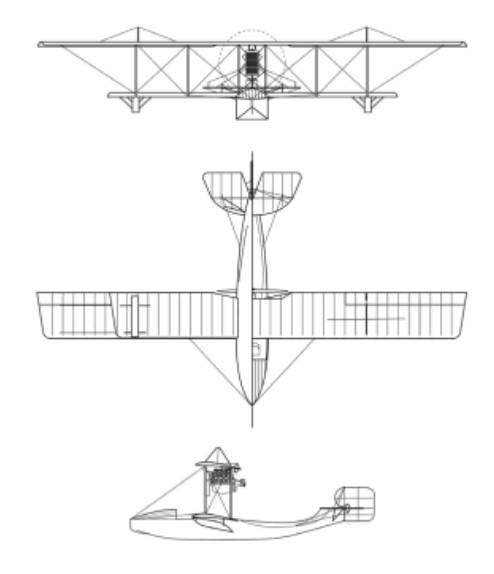
The Hydro flying boat built by Christofferson Aviation flew in 1913, and was probably designed by Alan Loughead who worked for Christofferson at the time.
A two-bay biplane, of the three or four examples known to have been completed in 1914, two were sold to explorer Roald Amundsen for a proposed Arctic flight (that never happened), and one was used by Silas Christofferson’s San Francisco-Oakland Aerial ferry in 1914. This was the second scheduled airline to operate in the US.
Another Hydro is listed as having been sold to Japan.
Engine: Hall-Scott V-8, 120 hp
Span: upper: 49′ lower 33’6″
Length: 28′
Chrysostomides Jaguar
The Jaguar began in 1969 as a biplane class racing aircraft Pete Tomalesky, was interested in racing and felt that, the recently evolved biplane class would be fertile ground to explore. The project was literally shelved in early 1970 as business matters took most of Tomalesky’s time. As often happens, interests change, and he abandoned the project to design and build a two-place, side-.by-side biplane he called the Tomcat. The aircraft bare bones were purchased by Stavros Chrysostomides, a South Carolina artist/homebuilder.
This aircraft was designed for an O-290 Lycoming of 125 hp, and the mount was welded directly to the airframe to save weight. A one-piece steel spring landing gear was formed and fitted with 500 x 5 wheels and tires, which were later sold to a fellow building a Knight Twister.
The negative staggerwing configuration was selected to provide the pilot maximum visibility in pylon turns, and since the top wing root was aft of the pilot’s head, the forward sweep of the top wings was needed to locate the wing properly in relation to the CC and the lower wing.
Chrysostomides discovered. the need to adjust the angle of a forward sweep since he was using a larger O-320 Lycoming. Also included was a statically balanced elevator to reduce chances of high-speed elevator flutter. The counterweight was attached to the elevator horn, and thereby completely concealed inside the Nselage. Calculations placed the top speed near 200 mph with a cruise near 150 mph.
The Jaguar was still flying in December 1979.

