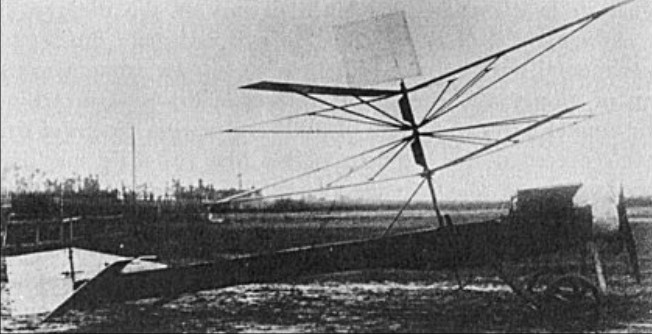
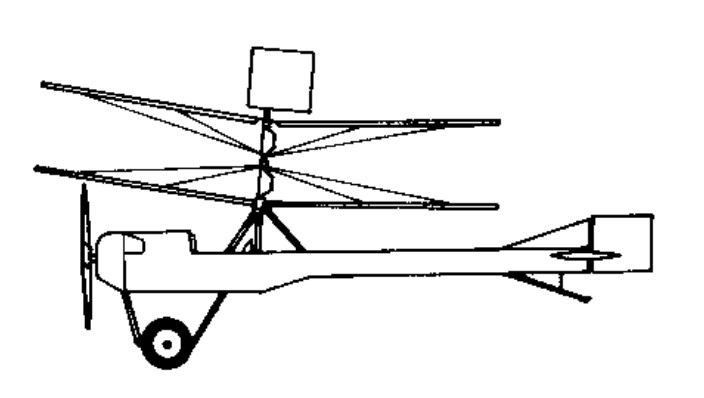
For this prototype built at Madrid in 1920, La Cierva used the fuselage of a Deperdussin, a French monoplane of pre-World War I vintage, on which were mounted two contra-rotating four-bladed rotors. The C.1 had a vertical surface above the rotor to give lateral control. This model never flew, since it proved impossible to control: the lift from the two rotors was unbalanced because of mutual interference.
In 1919 Cierva produced a large three-engine bomber that, piloted by Captain Julio Rios Argiieso, crashed in its initial flight when the aircraft stalled. Pondering the crash, Cierva’s brilliant insight was to see the wing differently – he reasoned that stall could be effectively eliminated if the wing itself moved independently of the aircraft. The rotor, a moving, stall-proof wing, was placed on top of a fuselage, and he patented the name” Autogiro”.
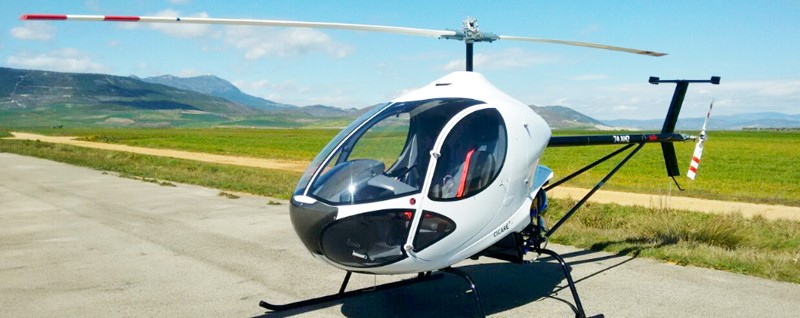
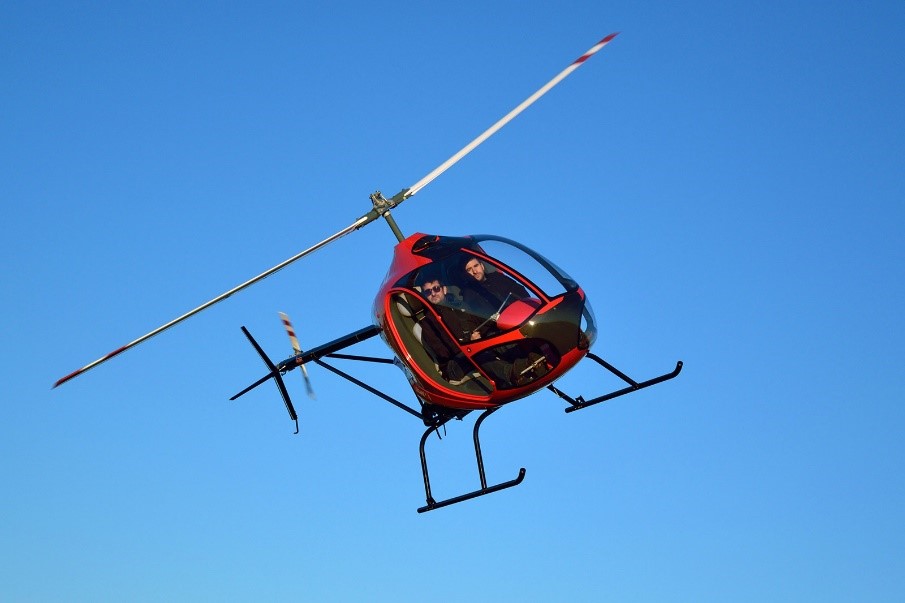
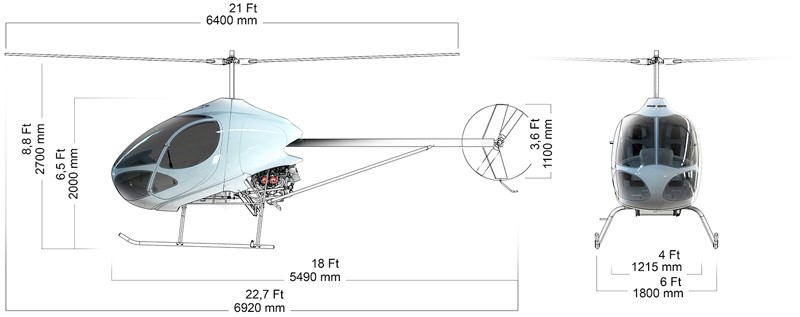
The objective of this project was to develop a two seat helicopter that fitted the ULM category, based on the platform of the Cicaré 7B and 7T, also to be sold as a kit.
The Cicaré 8 is built with aeronautical SAE 4130 chrome molybdenum steel and welded in spatial reticulated configuration and the cabin is a semi-monocoque made of composite carbon fiber and epoxy resin. The T-Shaped stabilizerhas a semi-monocoque type structure, built entirely in AL-2024 T3 and AL6061 T6.
Based on the ROTAX 900 series, with improved performance and features, the EPA POWER 917 is a block of Rotax engine with dual injection and carbon fiber components, which ensure a reliable and safe flight.
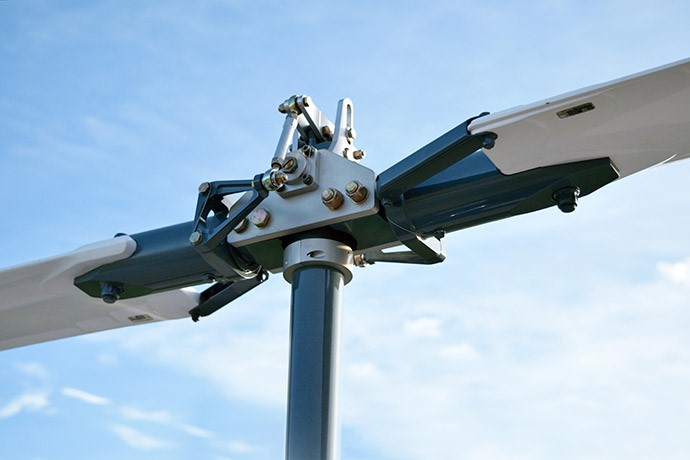
A semi-rigid, simple and optimum rotor, which is reflected in a soft and highly controllable helicopter. One highlight of the Cicare helicopters is the command system that was designed and patented by Augusto Cicaré under US PATENT: 5.165.854
The system ensures a smooth and seamless linkage between the engine and the transmission, allowing a gradual engagement which is almost imperceptible to the passengers in the cabin.
The kit price in 2021 was USD 121.500.
Engine: EPA R917 Ti, 135 hp Empty Weight: 280 Kg (620lb) MTOW: 480 Kg (1060lb) VNE: 194 Km/h Cruise speed: 150 km/h Climb rate: 7 m/s / 1400 ft/min Service Ceiling: 4500 m Fuel: 95 octane Endurance: 2,5 hrs
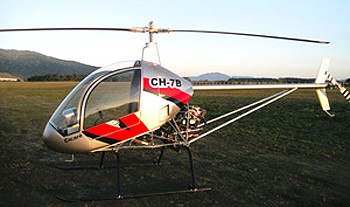
It is an evolution of the Ch-6 and CH-7 Angel helicopters with a notable increase in performance with the new refined version having been repowered with the Rotax 912 ULS 100HP four stroke engine adding to endurance, performance and reliability.
The CH-7B helicopter also features minor cabin changes along with engineering improvements. Quality Aeronautical components are used throughout its construction.
Augusto Cicare CH-7 2000VL
In 1996 Augusto Cicare created the Cicare CH-7 2000VL. It was later presented to the public in 2010. This was an ultralight helicopter with two separate and independent engines that can land with only one of the engines operating, thus giving greater security and minimizing risks from engine failure during flight.
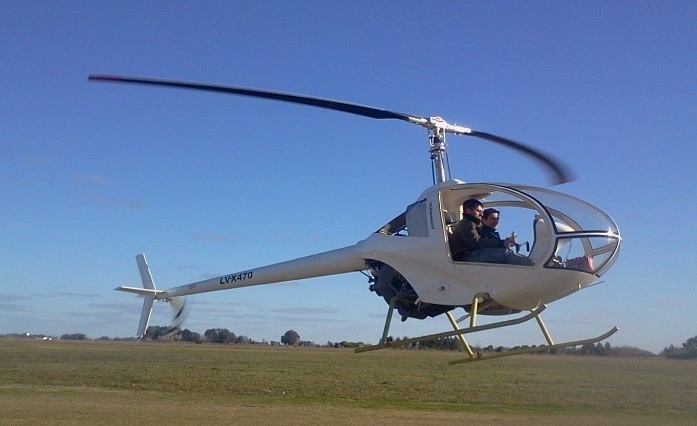
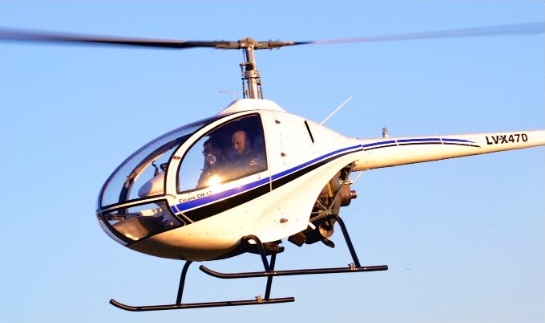
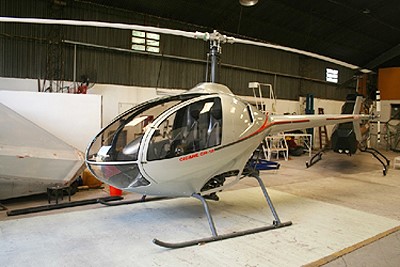
The Cicaré CH-12 side by side seat helicopter is built in the Argentne Republic, for private and recreational use. This particular design seems to incorporate the traditional style of helicopter swash plate along with a new composite cabin and tail boom.
It is equipped with a Subaru EJ25 engine, however it has been designed to also accept a Lycoming O-360.The airframe is made of SAE 4130 steel tubes. The skids are made of SAE 4130 steel tubes and aluminium.
The main and tail rotors are with composite blades. The vertical and horizontal stabilizer are aluminium and the cabin is composite. Dual controls are standard and two fuel tanks are fitted.
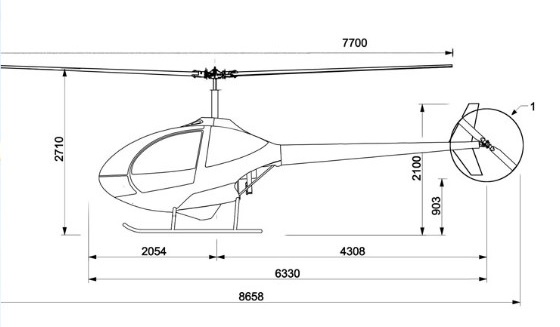
CH-12 Engine: Subaru EJ25 or Lycoming HIO-360- G1A Rotor diam: 7,70m Height: 2,71m Width: 2,20m MTOW: 700 Kg (1540 lbs) Empty Weight: 430 Kg (946 lbs) Maximum Speed (VNE): 205 Kmh (128 mph) Cruise Speed: 160 kph (100 mph) Climb Rate: 7 m/s (1380 ft/m) Service Ceiling: 3500 m (11,500 ft) Endurance: 3.0 hr Seats: 2 Fuel: AVGAS 100LL
The Cicaré 4CT2 is an Argentine air-cooled, four-cylinder, horizontally opposed, two-stroke, piston engine designed and built by Cicaré Aeronáutica as a light low cost engine. First run in 1973.
Application: Cicaré Helicopter # 1 Cicaré CK.1
Specifications: Type: Air-cooled four-cylinder horizontally opposed two-stroke piston engine Bore: 74 mm (2.91 in) Stroke: 76 mm (3.00 in) Length: 810 mm (31.89 in) Width: 660 mm (25.98 in) Height: 550 mm (21.65 in) Dry weight: 68 kg (150 lb) Valvetrain: 1 inlet and 1 exhaust valve per cylinder Fuel system: Updraught flow-type carburettor Fuel type: Mixture of 40 parts 80-octane to 1 part SAE40 oil Cooling system: Air-cooled Power output: 69 hp (67 kW) at 4,5000 rpm Compression ratio: 7.2:1
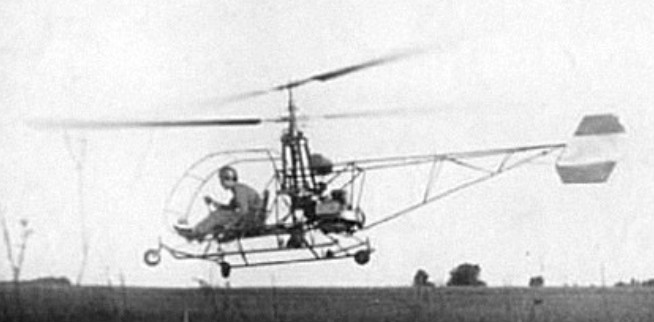
Argentinian engineer Augusto Cicare has designed and built a successful ultralight helicopter that weighs in at 135 kg, the CH IV. Powered by a Rotax 532, the prototype completed over 150 hours by 1988.
The first (1961) helicopter designed and built by Augusto Cicare is a single-seat single-engine with two counter-rotating coaxial rotors. Each rotor has two blades. The cyclic control varies the inclination of the rotors axis. The airframe is made of steel tubes. The four stroke, four opposite cylinders engine was also designed and built by Augusto.