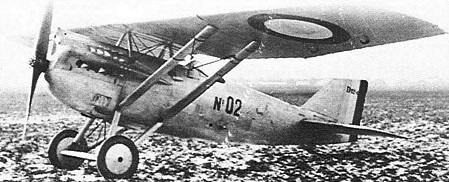
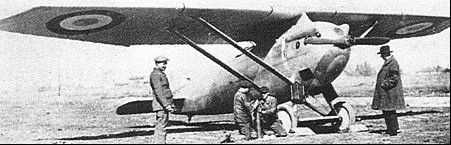
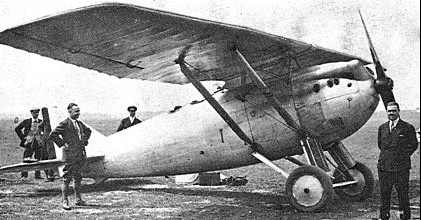
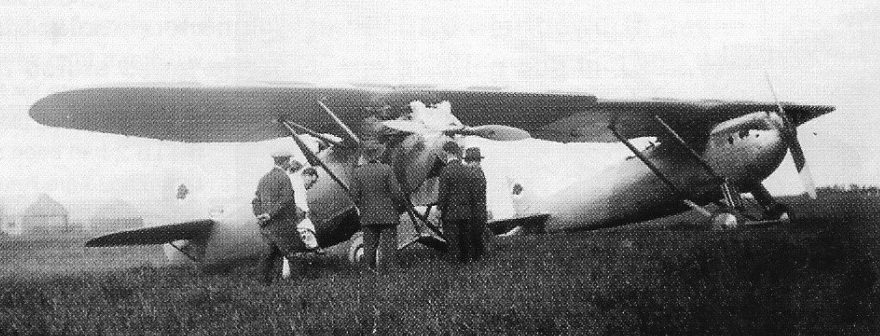
Evolved in parallel with the D 9 as a contender in the 1923 C1 programme, the larger, sin¬gle seat parasol D 12 fighter was powered by a 450hp Lorraine- Dietrich 12EW 12-cylinder W-type water-cooled engine and armed with two 7.7mm Vickers guns. With a basically similar fuselage to that of the D 1, the D 12 first flown in June 1924. In September 1924, the D 12 was fitted with a higher compression 450 hp Lor¬raine 12 Eb and a pair of 7.5mm Darne model 19 guns on the wing centre section. The paired Lamblin radiators on the undercarriage legs was replaced by a frontal radiator and a wing similar to that finally adopted on the D 9 was fitted. On 5 February 1926, the D 12 was written off in an accident at Cazaux. A second prototype had meanwhile entered flight test, having flown at the end of 1925, this having a W-type Hispano-Suiza 12Gb engine, but further development was discontinued. It was eventually to take third place in the 1923 C1 programme after the Nieuport-Delage 42 and the Gourdou- Leseurre 32.
Max take-off weight: 1636 kg / 3607 lb Empty weight: 1070 kg / 2359 lb Wingspan: 12.80 m / 41 ft 12 in Length: 7.60 m / 24 ft 11 in Height: 3.00 m / 9 ft 10 in Wing area: 25.00 sq.m / 269.10 sq ft Max. speed: 239 km/h / 149 mph
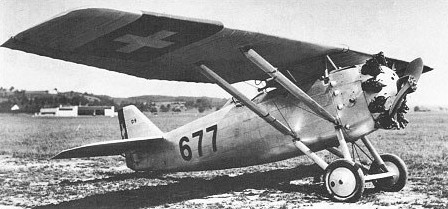
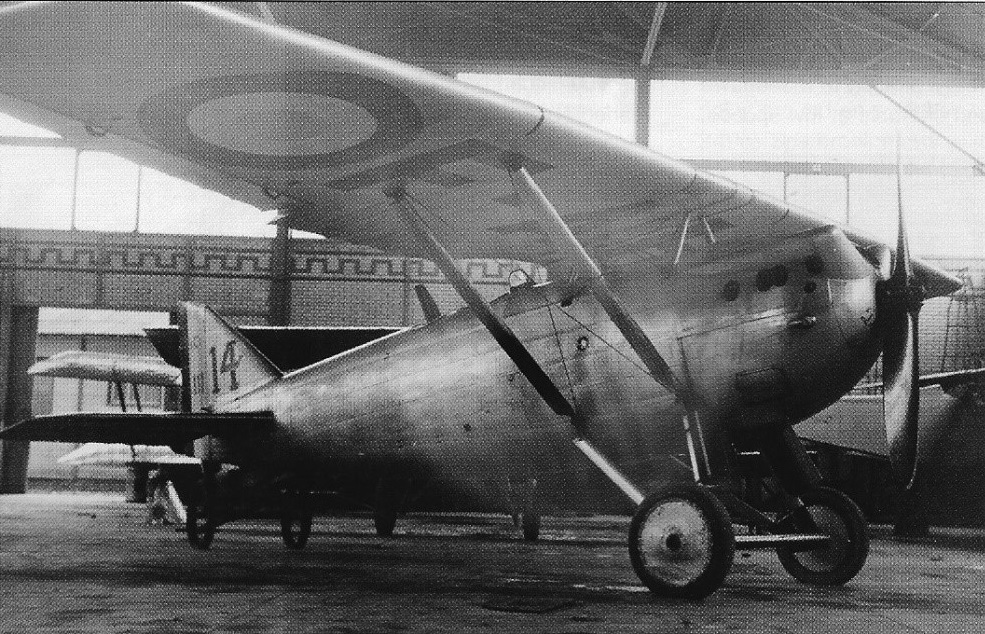
First flown in 1924, the Dewoitine D 9 was essentially a scaled¬ down development of the earlier D 1 single ¬seat parasol monoplane fighter, from which it differed mainly in being powered by a 420 hp Gnome Rhone 9 Ac radial engine, a licence-¬built version of the 9 cylinder Bristol Jupiter. Developed for participation in the 1923 C1 programme, two prototypes were completed. The Aviation Militaire purchased one for evaluation, but despite the extra available power the performance was not significantly improved, the D 9 took only 9 seconds less than the D 1 to reach 5000 m (16404 ft), and no French production contracts resulted. Early in the flight test programme, the standard D 1 wing was replaced with a new wing of 2.5 sq.m greater area. A six-month delay in the commencement of evaluation of the contenders in the C1 programme provided Dewoitine with the opportunity to increase wing area by yet a further 2.5sq.m. Armament consisted of two fuselage-mounted 7.7mm Vickers guns and two Darne model 19 guns of 7.5mm calibre mounted on the wing centre section outside the area of the propeller disc. The D 9, placed sixth among the contenders, was destroyed on 15 October 1925. Apart from the prototypes, only 13 were manufactured by Dewoitine, two for Belgium in 1925, Switzerland acquired the sec¬ond prototype and assembled three others in 1928 from French built components, and Yugoslavia (eight). The components of three were delivered in 1927 to the EKW (Eidg. Konstruktions-Werkstatte) in Switzerland for assembly, with delivery to the Fliegertruppe in 1928. The largest production was undertaken by Ansaldo in Italy, which built 147 for the Regia Aeronautica with the designation AC 3.
Max take-off weight: 1333 kg / 2939 lb Empty weight: 945 kg / 2083 lb Wingspan: 12.80 m / 41 ft 12 in Length: 7.30 m / 23 ft 11 in Height: 2.93 m / 9 ft 7 in Wing area: 25.00 sq.m / 269.10 sq ft Max. speed: 244 km/h / 152 mph Range: 400 km / 249 miles
In the autumn of 1922, Dewoitine submitted to the CEDANA (Commission d’Examen des Appareils Nouveaux pour l’Aeronautique) a high-altitude version of the D 1 (which had then still to fly) designated D 8. One category of fighter in the 1921 C1 programme called for a speed of 240km/h at 7000m and a practical ceiling of at least 8500m. After discarding the proposal to equip the D 8 with a Rateau turbo-compressor, Dewoitine adopted the higher compression Hispano-Suiza 8Fe engine of 360hp. A larger wing of wood rather than metal construction was introduced and the prototype was rolled out in the late summer of 1923. At Francazal, the D 8 attained an altitude of 2000m in 4.25 min, 3000m in 6.83 min, 4000m in 10.5 min and 5000m in 15.1 min. For publicity purposes this performance was attributed to the D 1 fighter. The C1 requirement for a high-altitude fighter having been abandoned, and, in June 1924, the D 8 was modified for an attempt on the world air speed record, fitted with a lightened version of the D 1 wing. On 23 December 1924, the D 8 established 100-, 200- and 500-km closed-circuit records while being flown by Marcel Doret, and, on 12 December, set a 1000km closed-circuit record of 221,775km/h.
Max take-off weight: 1100 kg / 2425 lb Empty weight: 780 kg / 1720 lb Wingspan: 12.80 m / 41 ft 12 in Length: 7.50 m / 24 ft 7 in Height: 2.75 m / 9 ft 0 in Wing area: 25.00 sq.m / 269.10 sq ft Max. speed: 245 km/h / 152 mph
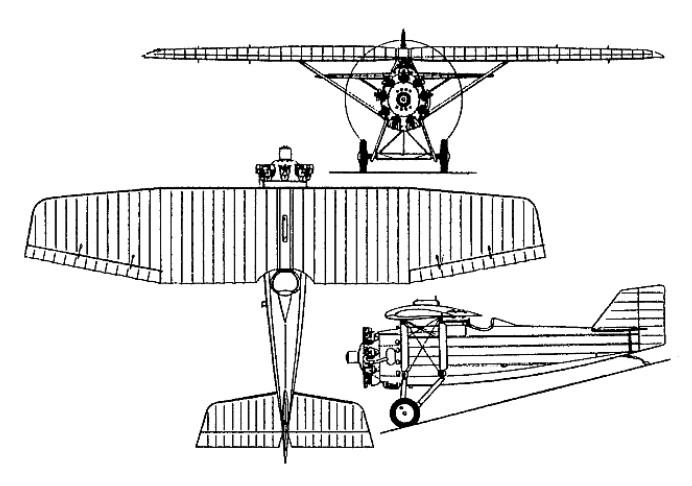
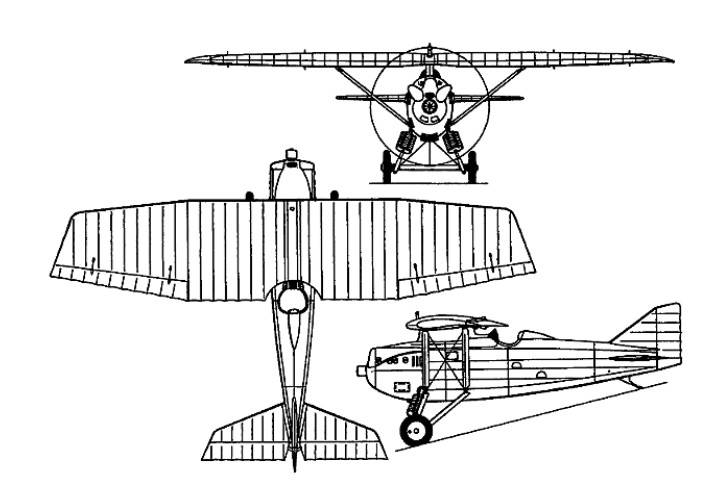
Designed by Emile Dewoitine to compete in the French C1 single ¬seat fighter competition of 1921, the prototype D 1 flew for the first time on November 18 1922. A high-wing monoplane with fabric-covered metal wings and an oval-section metal fuselage covered by duralumin sheet. Armament was two 7.7mm synchronised Vickers guns and power was provided by a 300hp Hispano-Suiza 8Fb (HS 42) eight-cylinder water-cooled engine. The principal criticism being the poor forward visibility. A 120mm pylon was therefore inserted between wing and fuselage, the fighter, now referred to as the D.1bis, becoming a parasol monoplane. This modification was completed in August 1923, by which time the first three (of 10) pre-series aircraft had been supplied for official evaluation in the initial configuration. Two of these were lost in accidents and the third was modified to D.1bis parasol form. After prolonged evaluation of all the 1921 contenders, the Dewoitine D 1 and Spad 80 each received a contract in 1924 for 80 aircraft, the two types being intended to replace Spad XIIIs and XXs in Aviation Militaire squadrons. A further 29 D 1 s were ordered subsequently f or the Aeronavale. Dewoitine’s chief test pilot, Marcel Doret, set speed records (with and without payload) of 233.10 km/h (144.84 mph) on December 23, 1924, and the D 1 could climb to 5000 m (16404 ft) in 15.1 minutes.
Union des Pilotes Civils festival, Orly, Paris 18 May 1930 Dewoitine D1ter No.3 F-AHAZ of Marcel Doret
The next five pre-series. aircraft (the fourth, fifth and sixth having been ordered by Czechoslovakia, Japan and Italy respectively, and the seventh and eighth by Switzerland) were all completed to D 1bis standard, but continuing criticism of forward view led to replacement of the shallow pylon between wing and fuselage by a cabane of inverted-vee struts on the prototype which thus became the D 1ter. The two pre-series aircraft for Switzerland were modified to this standard prior to delivery, the two lost during official trials) were completed as D 1ter fighters, the cabane struts being standardised for production D 1s. A contract had been placed in November 1923 on behalf of the Aeronautique Navale for 44 D 1s, with the government providing guarantees for 150 aircraft. The production contract was placed with the SECM (Societe d’Emboutissage et de Constructions Mecaniques) which flew its first series D 1 on 18 January 1925. The production aircraft required several successive structural reinforcements, and did not gain acceptance by the Aviation Militaire until 1929. The D 1 was of mixed construction, with an open cockpit and two 7.5 mm (0.295 in) machine guns in the engine upper decking. The final version, the D 1 ter, had a more conventional strut type centre section cabane.
Dewoitine D1C1 300hp Hispano
Most Aviation Militaire D ls were soon transferred to the Aeronavale units, including 3C2, 4C1, 7C1 and 7C3; by mid 1931 these units had re equipped with the Nieuport-¬Delage 62. The Aeronautique Navale took delivery of its D 1s from early 1925, and in the previous year an order for 20 had been placed on behalf of the Forces Aeriennes Terrestres, although these were never to equip a service unit. Dewoitine D ls were exported to Japan (one), Switzerland (two) and Yugo¬slavia (79), and a further 126 were built (with modifications) by Ansaldo at Turin for the Regia Aeronautica, with the designation AC 2.
Engine: 300hp Hispano-Suiza 8Fb (HS 42) Max take-off weight: 1240 kg / 2734 lb Empty weight: 820 kg / 1808 lb Wingspan: 11.50 m / 37 ft 8.75 in Length: 7.50 m / 24 ft 7 in Height: 2.75 m / 9 ft 0 in Wing area: 20.00 sq.m / 215.28 sq ft Max. speed: 247 km/h / 153 mph Range: 400 km / 249 miles Armament: two 7.7 mm (0.30 in) Vickers machine gun
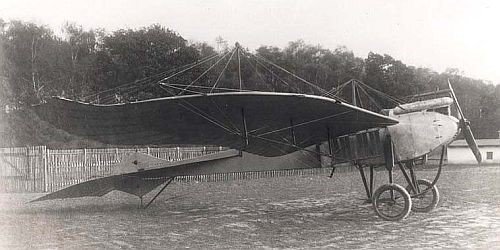
The D.F.W. Stahltaube was a licence built version of the Jeannin Stahltaube reconnaissance and training aircraft of 1913.
The Deutsche Flugzeug-Werke G.m.b.H. firm at Lindenthal, Leipzig received an order for 18 of these copies but delivered only two.
Engine: Mercedes G 4 F, 94 hp Length: 37.73 ft / 11.5 m Wingspan: 45.932 ft / 14.0 m Wing area: 322.92 sq.ft / 30.0 sq.m Max take off weight: 1896.3 lb / 860.0 kg Weight empty: 1323.0 lb / 600.0 kg Max weight carried: 573.3 lb / 260.0 kg Max speed: 59 kt / 109 km/h Cruising speed: 51 kt / 95 km/h Wing load: 5.95 lb/sq.ft / 29.0 kg/sq.m Range: 205 nm / 380 km Crew: 2
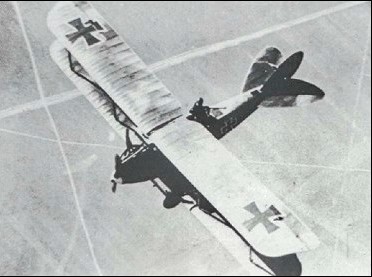
With the power of a 200hp Benz Bz IV, the top level speed was 155km/h at 1000m, while the C.V’s operational ceiling was 5000m. Built not just by DFW, but by four other sub-contractors. Just under 1,000 were in operation on every front at the end of September 1917. Armament comprised the standard 7.92mm guns, one fixed forward-firing and one mounted in the rear cockpit, plus light bombs.
Max. speed: 155 km/h / 96 mph Ceiling: 5000 m / 16400 ft
The Dynamic wings were designed by DTA and Jean Marc Rousellet and are manufactured exclusively for DTA by the Ellipse company in France.
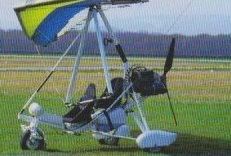
The Dynamic 503 16 is based on a stainless steel spaceframe. This trike has an articulated monopole under the seat for easy rigging of the wing, which is a Dynamic 16 produced by llipse on the company’s behalf.
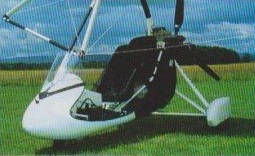
The Dynamic 582 Feeling is a higher performance version of the 16. The same structure is fitted with a Rotax 582, a fairing and smaller Dynamic 15 wing. A four stroke 912 is an option.
They feature individual composite seas.
Dynamic 582 Feeling
Dynamic 503 16 Empty weight: 152 kg Wing span: 10.30 m Wing area: 14.50 sq.m Fuel capacity: 50 lt Engine: Rotax 503, 50 hp MAUW: 400 kg Seats: 2 Max speed: 115 kph Cruise speed: 80 kph Minimum speed: 50 kph Climb rate: 3.6 m/s Fuel consumption: 11.5 lt/hr Price (1998): 93 540 F
Dynamic 582 Feeling Empty weight: 180 kg Wing span: 9.90 m Wing area: 15 sq.m Fuel capacity: 50 lt Engine: Rotax 582, 64 hp MAUW: 400 kg Seats: 2 Max speed: 136 kph Cruise speed: 100 kph Minimum speed: 56 kph Climb rate: 4.5 m/s Fuel consumption: 11 lt/hr Price (1998): 28 000 Fttc
Dynamic 15/430 Max take-off weight: 430 kg / 946 lbs Maximum speed: 86 mph Minimum speed: 32 mph Double surface: Yes
Dynamic 16 Max take-off weight: 400 kg / 880 lbs Maximum speed: 75 mph Minimum speed: 31 mph Double surface: Yes
Dynamic 450 Max take-off weight: 450 kg / 990 lbs Maximum speed: 85 mph Minimum speed: 31 mph Double surface: Yes