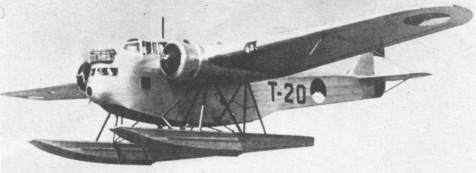
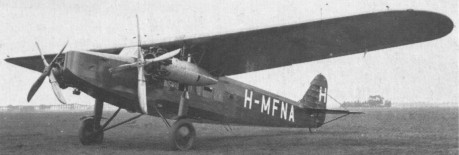
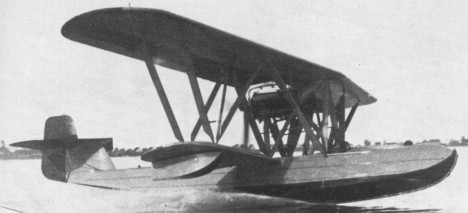
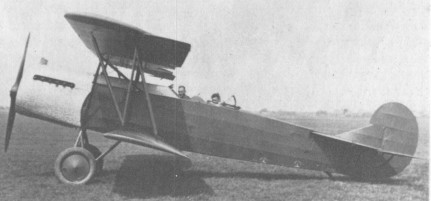
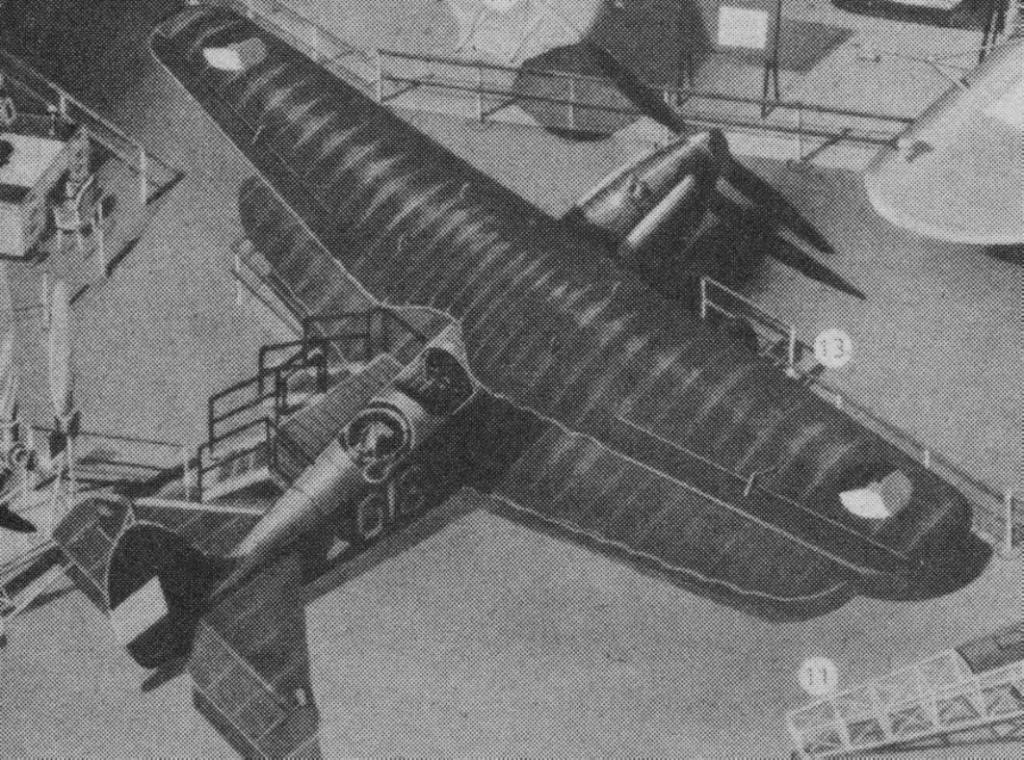
The T.IV, a large torpedo ¬bomber/scout on floats, was produced for the Naval Air Service in 1927. From 1927 to 1941 12 T-IVs were in service with the Naval Air Service at home and in the Netherlands East Indies. Portugal also acquired three of these aircraft. The T.IVA differed mainly in powerplant, having Wright Cyclone SR-1820-F2 radial engines in place of the T.IV’s 336kW Lorraine-Dietrich W-type engines. The more-powerful units required a strengthened airframe; at the same time an enclosed cockpit, as well as bow, dorsal and ventral gun positions, were installed. Twelve of these new aircraft were ordered for the Netherlands East Indies naval air force, and in 1936 the surviving T.IVs were brought up to T.IVA standard. Coastal and sea reconnaissance operations in the Netherlands East Indies were still being flown when the Japanese invasion began in 1942, and the T.IVA was also used for air-sea rescue work, proving to be reliable and seaworthy.
T.IVA Engines: 2 x Wright Cyclone SR-182.0-F2 radial, 559kW Max take-off weight: 7200 kg / 15873 lb Empty weight: 4665 kg / 10285 lb Wingspan: 26.20 m / 85 ft 11 in Length: 17.60 m / 57 ft 9 in Height: 6.00 m / 19 ft 8 in Wing area: 97.80 sq.m / 1052.71 sq ft Max. speed: 260 km/h / 162 mph Cruise speed: 215 km/h / 134 mph Ceiling: 5900 m / 19350 ft Range: 1560 km / 969 miles Armament: 3 x 7.9mm machine-guns, 800kg of bombs Crew: 4
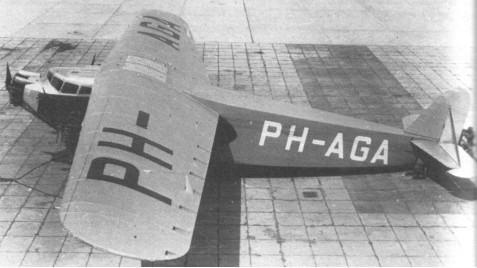
The F.IX, a 20 passenger airliner, two of which went into service KLM, was built under license in Czechoslovakia.
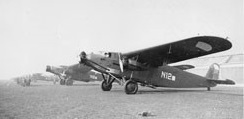
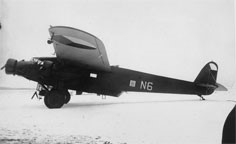
Though the Avia works produced some of Europe’s best fighters between the world wars, it was not judged economically feasible to attempt a heavy bomber. Accordingly, Avia, obtained a licence for the Fokker F.VII/3m, the pre-eminent civil transport of the 1920s, and while producing this for civil use also schemed a bomber version. The Czech army/air force, however, judged this aircraft too small. The upshot was a further licence for the Fokker F.IX, considerably bigger and weighing more than twice as much. In 1932, Avia built 12 F.IX bombers, powered by three Walter Jupiter VII engines rated at 450 hp, carrying an internal bomb load of up to 1500 kg (3307 lb) and with any of a variety of armament schemes involving manually-aimed Vickers 7.92-mm (0.312-in) Mk 30 guns above and below the fuselage and firing from beam windows. Some aircraft had a retractable ventral ‘dustbin’.
Avia F-IX
The Avia F-IX was used only in a bomber version through the 30s until the March 15, 1939 German Occupation.
Avia F-IX of No 5 Brno Bomber Regiment
Jugoslavia bought two slightly modified aircraft designated F 39, powered by 560 hp Gnome-Rhone Jupiters, and obtained a sub-licence for this version.
AVIA-Fokker F.IX Engines: 3 x Walter Jupiter VII, 450 hp Props: wood 2 blade Wing span: 27.5 m (90 ft 2.5 in) Length: 19.4 m (63 ft 7.75 in) Gross weight: 9160 kg (20194 lb) Empty weight: 5450 kg Maximum speed: 209 km/h (130 mph) Climb rate: 2.5 m/s Service ceiling: 5000 m Internal bomb load: 1500 kg (3307 lb) Undercarriage: fixed Crew: 2 pilots / 1 navigator
Designed to meet a KLM (Royal Dutch Airlines) requirement for a larger aircraft than the F.VII single-engined series, the 12 15 seat Fokker F.VIII flew in prototype form on 12 March 1927. The nose contained a hinged baggage compartment, and the two 358kW Gnome-Rhone Jupiter VI engines were slung beneath the wings and a crew of two.
The prototype and six production F.VIIIs were delivered to KLM in 1927-28. One of them, PH-OTO, was later converted to have two engines positioned in the wing leading edge. Another was delivered to the Hungarian airline MALERT in 1928, and Manfred Weiss in Budapest built two more for MALERT under licence and were completed as bombers with two machine gun posts.
The KLM aircraft were subsequently re-engined, various aircraft being powered by 515kW Wright R-1820 Cyclone or 373kW Pratt ‘& Whitney Wasp engines.
The only F.VIII to see service in military markings was the last Dutch production aircraft, sold by KLM to British Airways in 1936. It went to Sweden in 1939, and was subsequently donated to the Finnish air force, with whom it served in the Continuation War from 1941.
Engines: 2 x Gnome-Rhone Jupiter VI radial, 358kW Max take-off weight: 5700 kg / 12566 lb Empty weight: 3685 kg / 8124 lb Wingspan: 23.00 m / 75 ft 6 in Length: 16.75 m / 54 ft 11 in Height: 4.20 m / 13 ft 9 in Wing area: 83.00 sq.m / 893.40 sq ft Max. speed: 200 km/h / 124 mph Cruise speed: 170 km/h / 106 mph Ceiling: 5500 m / 18050 ft Range: 1045 km / 649 miles
In 1926 Fokker built another flying boat, the B.III long range reconnaissance aircraft. However, it was not succesful. Even after installing a cabin to adapt it for civil use, he was unable to find a buyer.
A semi-cantilever low-wing single-seat fighter monoplane originally intended for the 400hp Bristol Jupiter radial, the D XIV flew for the first time on 28 March 1925 with a 345hp Hispano-Suiza 8Fb eight-cylinder water-cooled engine.
The wooden wing was braced by lift struts to the ends of the rigid undercarriage axle, and featured commencing immediately aft of the frontal radiator. Before the initial flight trials, a 590hp HS 12Hb 12-cylinder engine was installed. At the same time, the rear fuselage was lengthened for C of G reasons and a smaller rudder fitted (the fighter had no fixed vertical surfaces). Armament consisted of two synchronised 7.92mm machine guns and the detachable engine mounting was designed so that various alternative power plants could be fitted. The D XIV proved both fast and manoeuvrable, and test pilots of the German Reichswehr who evaluated the prototype commented favourably on its performance and stability as a gun platform. The prototype spun in, killing its pilot, and further development was discontinued.
Max take-off weight: 1350 kg / 2976 lb Empty weight: 950 kg / 2094 lb Wingspan: 10.76 m / 35 ft 4 in Max. speed: 274 km/h / 170 mph
The C V series of 1924, was to have different engines, ranging from 250 to 730 hp, and five different sets of wings (C.V A, B and C having successively larger area) during its production life. The C.V-A was the prototype of the series. With steel tube and fabric fuselage and wooden wings, it was derived from the C.IV and the prototype flew in May 1924 and about 90 had been built by 1926 including C.V W floatplanes.
1925 Fokker C.VD
The Naval Air Service ordered six C.VC. They could be fitted with wheels or floats as required. In 1926 production switched to the C.V D with tapered sesquiplane wings with V struts, and the C.V E with larger wings with N-struts. In general the D was used as a two-¬seat fighter with a wing span of 12.5m and the E as a reconnaissance bomber with a wing span of 15.3m The C.VD of the Aviation Department had a 450 hp Hispano engine.
A batch of C.VD were delivered to the Dutch Army Air Service in 1925-37, first powered with a 450 hp Hispano-Suiza and later re-engined with the 540 hp Rolls-Royce Kestrel II-B.
The C VE of 1926 had a 450 hp Bristol Jupiter radial engine as supplied to Sweden’s Flygvapen. Though the C.VW seaplane type proved unsatisfactory in Holland, Sweden converted C.Vs into seaplanes and were very satisfied with them. A C.V exported to Japan for evaluation. Another version of the C.V aircraft was designated C. VI and had a 350 hp Hispano engine. More than 1000 of these basic mod¬els were made in the Netherlands, Italy, Denmark, Norway, Hungary and Switzerland, the last sub types being His¬pano engined models built at EKW and Dor¬nier in Switzerland until 1936, and 730 hp Pegasus engined Dutch, Danish and Swedish versions. Most of these were still in service in early 1940. CVs with various engines were delivered to the Dutch Aviation Depart¬ment, Naval Air Service and Royal Dutch East Indies Army, and to Bolivia, China, Denmark, Finland, Hungary, Italy, Japan, Norway, Sweden and Switzerland. The air¬craft was manufactured under license in five countries.
The Hungarian Royal Air Force acquired 76 Fokker C.V, mostly built under licence by Manfred Weiss (WM). WM improved the Fokker C.V which resulted in the WM-16 Budapest, with 18 built in two variants.
Officine Ferroviarie Meridionaii in 1925, obtained rights to build Fokker aircraft under license, including the C.V., which was fitted with an Italian-built Jupiter engine and known as the Ro.1.
Span: usually 12.5 or 15.3 m (41 ft or 50 ft 2in) Length: typically 9.14 9.75 (30 ft to 32 ft) Gross weight: 1900 2268 kg (4190 5000 lb) Maximum speed: typically 240 km/h (150 mph)
C.V A C.V-B C.V-C
C.V-D Engine: 450 hp Hispano Wing span: 12.5m
C.V-E Engine: 450 hp Bristol Jupiter Wing span: 15.3m
C.V W Undercarriage: floats
Span: usually 12.5 or 15.3 m (41 ft or 50 ft 2in) Length: typically 9.14 9.75 (30 ft to 32 ft) Gross weight: 1900 2268 kg (4190 5000 lb) Maximum speed: typically 240 km/h (150 mph)
The D XIII single seat fighter was essentially a re-engined and more powerful variant of the D XI developed for the German Reichswehr and powered by a 570hp Napier Lion XI 12-cylinder water-cooled engine. This first flew on September 12, 1924, pow¬ered by a 425 hp Napier Lion 12 eylinder liquid cooled engine, over which twin 7.92mm LMG 08/15 machine guns were mounted clandestine German Jagdlehrstaffel (fighter training squadron) at Lipezk in the USSR, ordered on their behalf by the Russians. On 16 July 1925, the production model was used to establish a series of world records for speed and load with 250 kg (551 lb) and 500¬kg (1102 lb) payloads. Production was, in the event, restricted to 50 aircraft ordered by Hugo Stinnes for the clandestine Reichswehr air training centre at Lipetsk, where they arrived in the summer of 1925. The D XIIIs continued in use at Lipetsk until 1933, when the centre was closed and the 30 surviving fighters of this type (which included two replacements) were handed to the Soviet government.
Span: 11.00 m (36 ft 1.5in) Length: 7.90 m (25 ft 11 in) Height: 2.90 m / 9 ft 6 in Wing area: 21.47 sq.m / 231.10 sq ft Empty weight: 1220 kg / 2690 lb Max takeoff weight: 1650 kg (3638 lb) Maximum speed: 257 km/h (160 mph). Range: 600 km / 373 miles
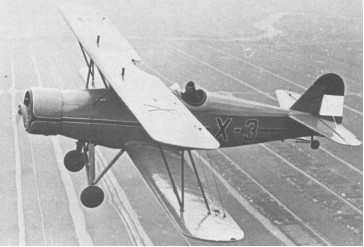
Designed as a replacement for the S.IV basic trainer, the Fokker S.IX was suitable also for aerobatic training. The S.IX was built in two versions. The first, designated S.IX/1, was powered by an Armstrong Siddeley Genet Major radial engine.
First flown in 1937, the type was used by the Netherlands army air force from 1938 to 1940 as a standard basic trainer, and a number of S.IX/1s were built by the Dutch manufacturer Kromhout. The Aviation Department ordered 40 S.IX, which at first were fitted with 125 h.p. Le Rhone-Oberursel engines. In 1926-1927 these were replaced by 148 h.p. Armstrong-Siddeley Mongoose engines. The first batch of 20 was delivered but for one, and a number escaped to France in May 1940.
The second version, designated S.IX/2 was powered by a 125kW Menasco Buccaneer inline engine. A total of 27 S.IX/2s was ordered for the Netherlands navy air force, but only 15 had been delivered when production was terminated by the German invasion. Army orders for the S.IX/1 totalled 24, but there is some uncertainty about whether or not all of these were built and delivered, for, according to Fokker records, only 20 were completed. Like many lightplanes used in service training schools, in the desperate circumstances which existed at the time of the German invasion the S.IXs were called upon to carry out roles for which they had never been intended, and S.IXs of both services were in use for liaison and evacuation duties until the end of Dutch resistance.
Fokker built three S.IX/1s after World War II had ended, these being powered by Kromhout-built Genet Major engines.
S.IX/1 Engine: 1 x Armstrong Siddeley Genet Major radial, 123kW Max take-off weight: 975 kg / 2150 lb Empty weight: 695 kg / 1532 lb Wingspan: 9.55 m / 31 ft 4 in Length: 7.65 m / 25 ft 1 in Height: 2.90 m / 9 ft 6 in Wing area: 23.00 sq.m / 247.57 sq ft Max. speed: 185 km/h / 115 mph Cruise speed: 150 km/h / 93 mph Ceiling: 4300 m / 14100 ft Range: 710 km / 441 miles
First flown in 1922, this two seat biplane was one of the first completely new products of the Fokker company after its post war move from Germany to Holland. Stemming from the C.1 prototype, it was built with two sizes of wing, which could be exchanged in about an hour. The small wings were used on the C.IV A and DC.1 fighters and the large on the more numerous C.IV B, C and seaplane W. Some dozens were used by the Dutch and other air forces. The prototype C.IV had a 400 hp Liberty engine. The C.IV was built as a successor to the C.I, being more spacious and able to transport more equipment. The C.IVA fighter-scout had less wing span, whilst the C.IVB and the C. IVC scouts had a greater span. Fokker manufactured 139 C.IVs and a number were also built in Spain. The C.IV was a float-plane. The C.IV was a great success, and was used in America (where it was known as the CO-4), Argentine, Italy, Holland and the Dutch East Indies, Russia and Spain. The C.IV was built in Madrid by Jorge Loring, under license from Fokker.
Span: 12.25 m (40 ft) Length: 9.14 m (30 ft) Gross weight: 1950 kg (4300 lb) Maximum speed: 233 kph (146 mph).
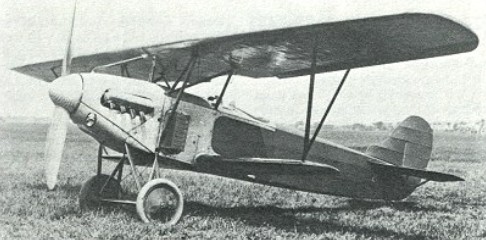
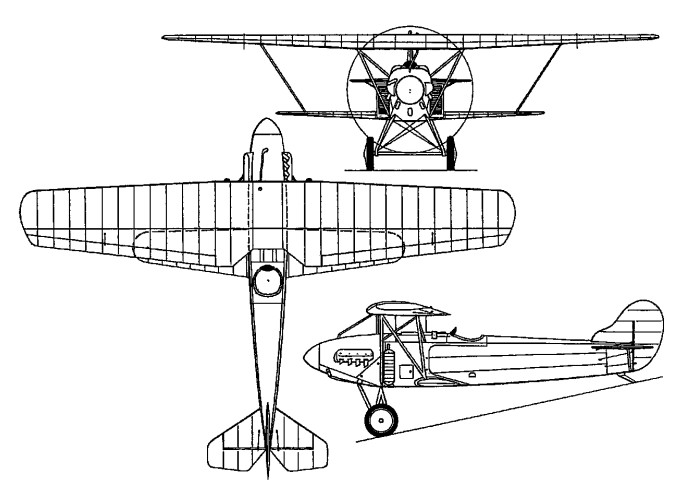
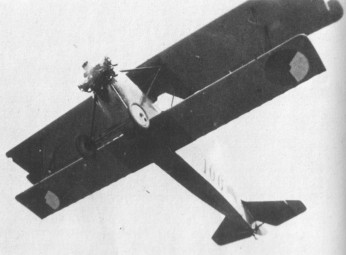
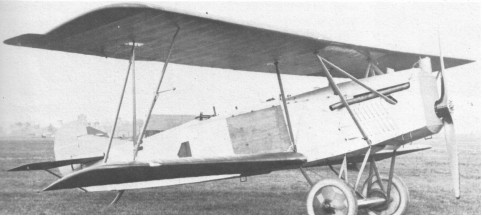
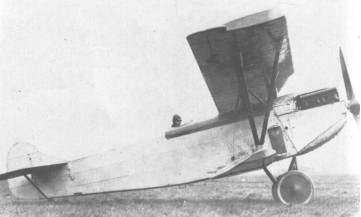
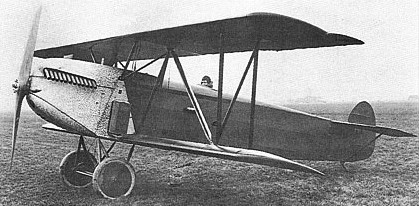
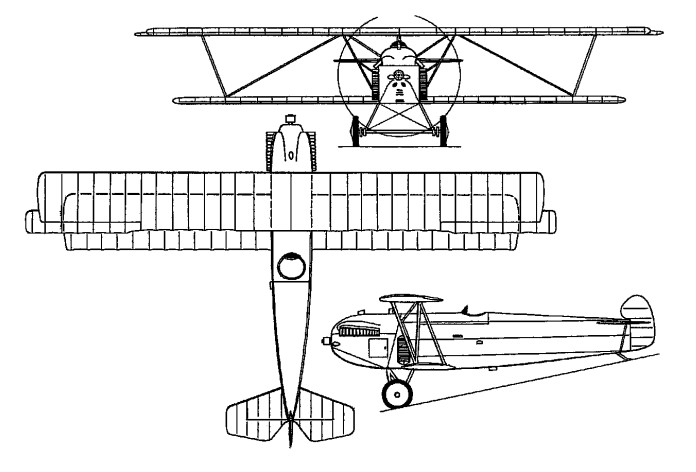
The evaluation of three modified D XI fighters by the US Army Air Service prompted the design of the D XII tailored specifically to the USAAS specification. Designed from the outset for the 385hp V-1150 (Curtiss D-12) water-cooled engine and having fabric instead of plywood covered wings. The D XII had no design commonality with the preceding D XI, but was of similar mixed construction and, initially, retained the sesquiplane configuration of its predecessor, the upper wing having some degree of leading-edge sweepback and overhung ailerons.
Flown for the first time on 21 August 1924, it was not accepted by the USAAC, as unsatisfactory characteristics displayed during initial trials necessitated major re-design, the sweepback being eliminated from the upper wing and a longer-span lower wing being introduced. Greater torsional rigidity was achieved by replacing the splayed V-type interplane struts with N-type struts and attaching these by single large-section struts to the top of the cabane strut system. At the same time, the small fixed tailfin was eliminated. The D XII still proved unacceptable to the USAAS and further development was abandoned after three were built.
Engine: 385hp V-1150 (Curtiss D-12) Max take-off weight: 1400 kg / 3086 lb Empty weight: 998 kg / 2200 lb Wingspan: 11.00 m / 36 ft 1 in Length: 6.74 m / 22 ft 1 in Height: 2.77 m / 9 ft 1 in Wing area: 21.83 sq.m / 234.98 sq ft Max. speed: 250 km/h / 155 mph Cruise speed: 220 km/h / 137 mph Range: 1100 km / 684 miles