Fokker D.XVI

Since the Luchtvaar¬tafdeling (Netherlands air force) had rejected the D.XI and D.XIII designs, by the late 1920s it was in desperate need of a more modern fighter to replace the now ageing D.VIIs.
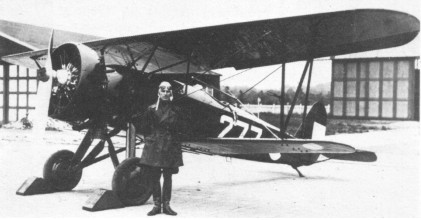
In 1928 the D.XVI was developed from a Fokker design (D.XV/D.XVa). It first flew in 1929, powered by a 450 hp Armstrong/Siddeley Jaguar engine.
The D XVI single-seat unequal-span biplane was powered by a 460hp Armstrong Siddeley Jaguar 14-cylinder air-cooled radial fitted with Townend rings and flew for the first time in 1929. Possessing a fabric-covered, welded, steel-tube fuselage and ply-and-fabric-covered wooden wings, it was armed with two synchronised 7.92mm machine guns in the upper front fuselage.
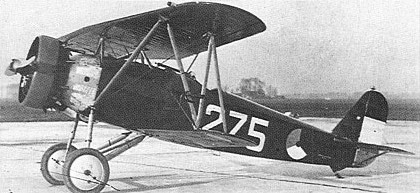
The D XVI was ordered by the LVA, 14 aircraft being delivered to that service, these having split-axle undercarriages rather than the crossaxle type of the prototype.
At first the D.XVI s 460 hp Jaguar engine usually seized up after a few hours. This problem became so widespread that the air¬craft were only permitted to fly in the vicinity of their own field, and long climbs were forbid¬den. Finally the factory (technical services) located at Soesterberg reduced away the pistons and solved the problem, though the D.XVI now used ten litres of oil per hour. Of the 15 ordered by the Aviation Department, five crashed within a short space of time and the other ten flew without mishap. One D XVI was subsequently re-engined with a Bristol Mercury radial for aerobatic display purposes.
Four Jupiter engined D.XVIs were sold to Hungary, and one was built for Italy but later sold to China.
Another was fitted with a Curtiss Conqueror engine for the Royal Dutch East Indies Army, and a further D XVI was built with a Curtiss V-1570 Conqueror 12-cylinder water-cooled engine to meet a KNIL (Koninklijk Nederlandslndisch Leger) requirement, although no production order was placed for this version.

Max take-off weight: 1400 kg / 3086 lb
Empty weight: 990 kg / 2183 lb
Wingspan: 9.40 m / 30 ft 10 in
Length: 7.20 m / 23 ft 7 in
Height: 2.70 m / 8 ft 10 in
Wing area: 18.50 sq.m / 199.13 sq ft
Max. speed: 330 km/h / 205 mph
Range: 640 km / 398 miles

Fokker F.XVIII

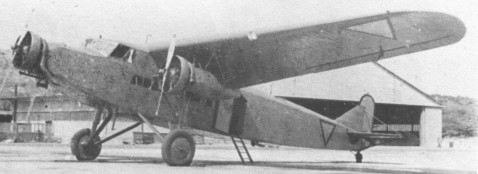
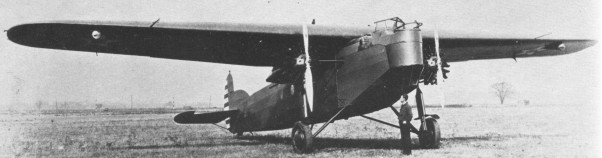
The Fokker F.XVIII retained the same basic design with metal fuselage structure and a high-set cantilever wooden wing but had a number of detail design improvements compared with earlier Fokker tri-motors.
Five F.XVIIIs were built in 1932 and all were put into service on the route from Amsterdam to Batavia in the Dutch East Indies. On this route to the East four passengers were accommodated in the main cabin in seats which converted for sleeping; the cabin also provided accommodation for the wireless operator and the navigator.
Several notable flights were made by F.XVIIIs. Between 15 and 22 December 1934 PH-AIS Snip (Snipe), re-engined with Pratt & Whitney Wasp T1D1 radials, covered 10300km from Amsterdam to Curasao in a flight time of 55 hours 58 minutes carrying 100kg of mail.

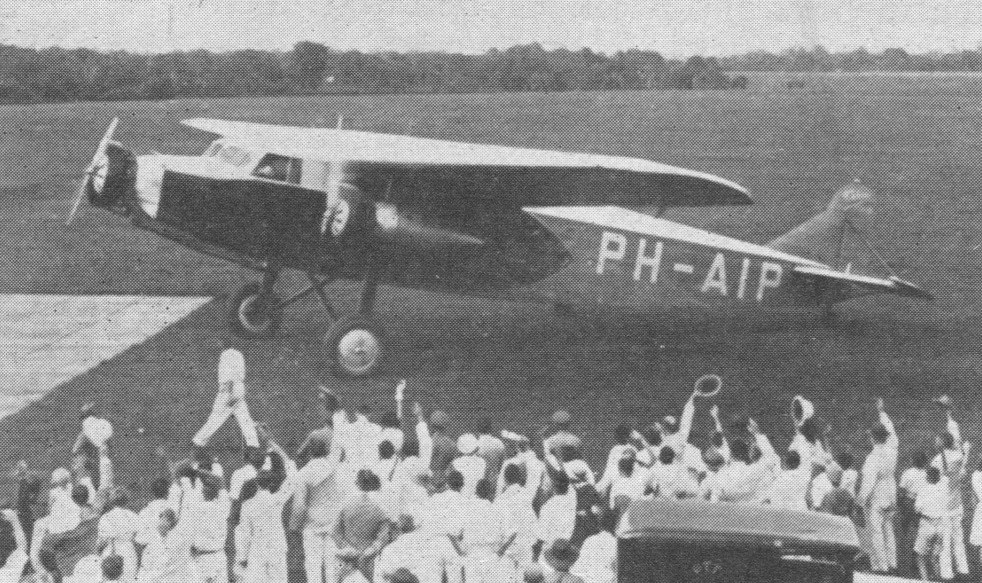
The F-XVIII Pelikaan PH-AIP left Amsterdam on 18 December 1933 and reached Jakarta four days later.

PH-AIP on arrival at Jarkata

The F.XVIIIs were withdrawn from the long-distance routes in 1935. PH-AIS was joined in the West Indies by PH-AIO Oriol and both remained in service until 1946. The Oriol was converted for military use during the war period and carried a defensive machine-gun.
Two F.XVIIIs were sold to the Czech national line CSA and operated the route from Prague to Berlin and Vienna, normally carrying 13 passengers. Another of the type was sold to a Palestine freight operator and the famous Pelikaan was bought in October 1936 by Air Tropic, a French company acting for the Spanish government, and it is believed that the Pelikaan ended its days on military liaison and transport duties during the Spanish Civil War.

Engine: 3 x Pratt & Whitney Wasp C radial, 313kW
Max take-off weight: 7850 kg / 17306 lb
Empty weight: 4623 kg / 10192 lb
Wingspan: 24.50 m / 80 ft 5 in
Length: 18.50 m / 60 ft 8 in
Wing area: 84.00 sq.m / 904.17 sq ft
Max. speed: 240 km/h / 149 mph
Cruise speed: 210 km/h / 130 mph
Ceiling: 4800 m / 15750 ft
Range: 1820 km / 1131 miles

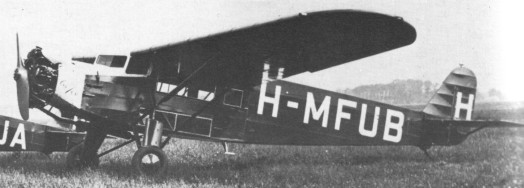
Fokker F.XII

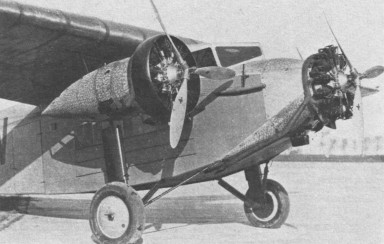
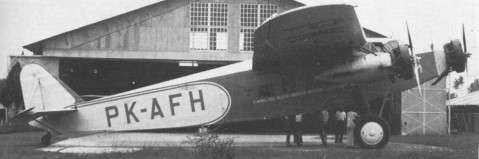
In 1933 Fokker produced the F.XII, an airliner with three 420hp Wasp engines and accommodation for 16 passengers.
The prototype made its maiden flight at the beginning of 1930 and entered service on the KLM route to Batavia in March 1931. Ten more were built by Fokker, all for operation by KLM and its Far Eastern subsidiary KNILM, except for the final machine which was sold to Sweden and operated by AB Aerotransport as the Varmland.
The Dutch-operated F.XIIs maintained the routes to the Far East for two years, and were then switched to the European services connecting Amsterdam with London, Paris, Berlin and other principal cities. On the European runs the F.XIIs carried a crew of two and 16 passengers, but on the Far East route only four passengers were carried in a fair degree of comfort on fully reclining seats.
The Danish Orlogsvaerftet built two F.XIIs under licence for the national airline DDL to operate on the Copenhagen-Berlin route. The second, delivered in May 1935, was designated F.XIIM and had some aerodynamic refinements resulting in improved performance.
Six Dutch F.XIIs were later sold to British operators, and in turn four of the British machines were re-sold to the Spanish government, which had already bought the last KLM-operated aircraft. All were flown in the Spanish Civil War and were lost during the course of the conflict.
Last survivors were the Swedish aircraft and the Danish F.XIIM, the first scrapped in 1946 and the second a year later.

Engines: 3 x Pratt & Whitney Wasp C radial, 317kW
Max take-off weight: 7250 kg / 15984 lb
Empty weight: 4350 kg / 9590 lb
Wingspan: 23.02 m / 75 ft 6 in
Length: 17.80 m / 58 ft 5 in
Height: 4.72 m / 15 ft 6 in
Wing area: 83.00 sq.m / 893.40 sq ft
Max. speed: 230 km/h / 143 mph
Cruise speed: 205 km/h / 127 mph
Ceiling: 3400 m / 11150 ft
Range: 1300 km / 808 miles
Passengers: 16

Fokker F.XI

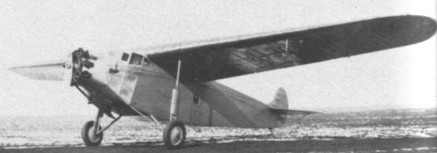
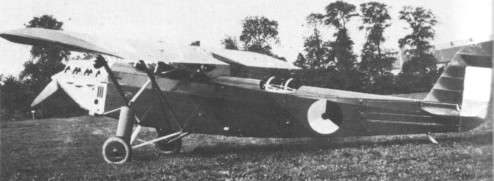
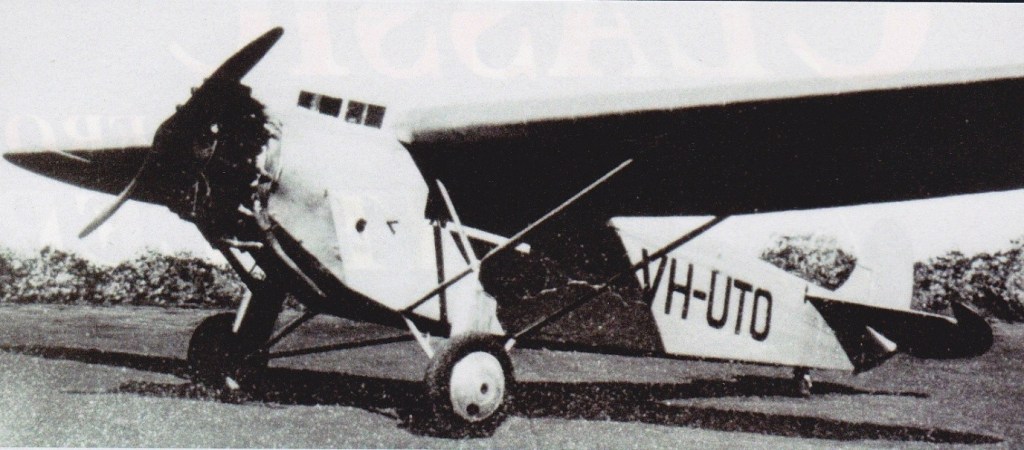
The F.XI was a feeder liner and air taxi, and was similar to the American Universal in appearance. However, it was definitely not the same aircraft. The Universal was designed in America by Noordwyn; the F. XI in Holland. The aircraft could carry four to six passengers and two pilots. Three aircraft of this type were built, two going to the Hungarian Company Malert, and the third to the Swiss Company Alpar.

Fokker F.XI Universal VH-UTO – Ansett Airways’ first aircraft – Began service between Hamilton and Melbourne 17 Feb 1936. Destroyed in a hanger fire at Essendon Feb 1939

Engine: 1 x 317kW Pratt & Whitney Wasp radial
Max take-off weight: 2390 kg / 5269 lb
Wingspan: 15.44 m / 50 ft 8 in
Length: 11.15 m / 36 ft 7 in
Height: 2.77 m / 9 ft 1 in
Max. speed: 190 km/h / 118 mph
Range: 1086 km / 675 miles
Crew: 2
Passengers: 6

Fokker B.IV / F.XI.A

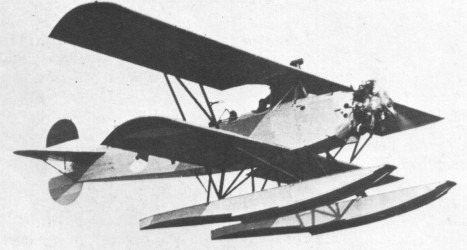
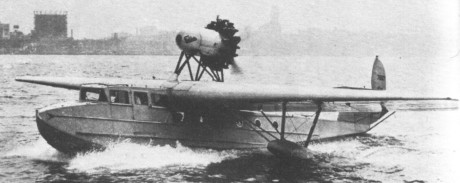
The original version of the B.IVA, the B. IV, also known as F.XI.A pure flying boat, only one was built.
The B.IVA amphibian flying boat had the wheel axles housed in stabilising floats which balanced the aircraft on water. During flight the wheels were retracted into recesses at the ends of the floats to reduce drag.
Twenty metal fuselages were constructed in Amsterdam, the B.IVA wings being made America. The B.IVA was the first Fokker flying boat to achieve any success, only one example of each of its predecessors having been made.
A number of these aircraft were sold, to companies as well as to individuals.
The PJ-1 flying boat developed from the B.4A.

B.IV / F.XI –
B.IVA / F.XIA –