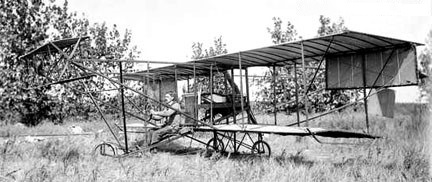
Gates 1910 Biplane
two-seat side-by-side
Development continued into the 1970s.
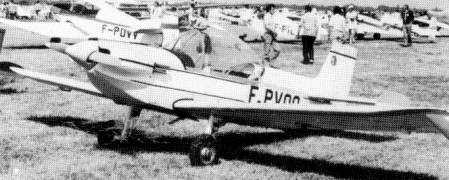
M. Albert Gatard’s Poussin (chick) has excellent aerobatic qualities with 20 seconds of inverted flying possible. Several are under construction around the world, including one in Zaire. The control system uses a unique, variable-incidence lifting tailplane of large area. The pilot lowers full-span slotted aileron/flaps and adjusts the tailplane to maintain pitching equilibrium. Aircraft is single-seat wooden low-winger, fixed gear.
Development continued into the 1970s.
Engine modified 24 hp VW, 1200cc.
Gross weight 617 lbs.
Empty weight 375 lbs.
Wingspan 21 ft.
Length 14 ft 10.5 in.
Wing area: 66 sq.ft.
Cruise speed 89 mph.
Climb rate 435 fpm.
A two-seater
Development continued into the 1970s.
Production of the D.H.83 reached a total of 98 aircraft completed in England, plus two examples in Australia and one copy in Japan. That machine was modelled after several original examples sold to that country, but it was fitted with a Gasuden Jimpu 3 radial engine of 150 hp. The aircraft went by the name of Gasuden KR-1 and was christened ‘Chidorigo’ (Plover). As far as is known, just this one example was built. The single Gasuden KR-1 was flown by the Japanese Aerial Transport Company.
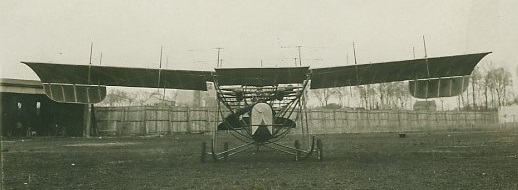
The Gassier Sylphe was a pusher monoplane with semi-circular ailerons at the trailing edge of the wings.
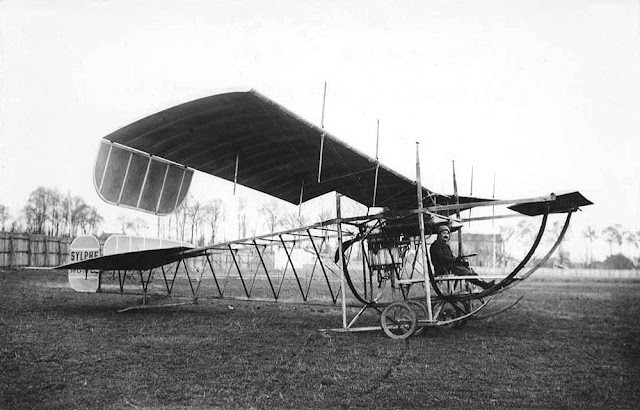
The 1911 Gassier “Sylphe” monoplane was designed and built by Hamelis, Delamare, Methieu and Gassier in France.
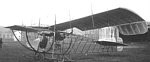
Span: 39’4″
Length: 36’1″
Weight: 660 lb
Speed: 60 mph
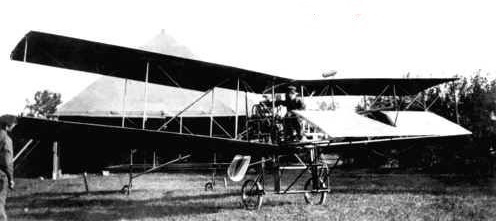
The Gasnier Biplane of 1908 was the first pusher biplane designed and built by René Gasnier. Powered by a 50 hp Antoinette motor and featuring a distinctive front elevator that could also be tilted to work as a rudder. This machine was damaged on its first day of flight.
Rene Gasnier said, “We are like children compared with the Wrights”.
A single-seat helicopter powered by Irbit two-cylinder motorcycle engine, from the spring of 1961. The aircraft is said to have gone into production for flying clubs following successful tests at Kirovograd in the Ukraine.

The “Flying Barrel” is the plane designed by William Pierce Gary and his Non-Capsizable Aeroplane Co.
It went through various evolution stages, from 1909 to 1913. With and without side winglets.

Apparently nicknamed “Hoople” because of its resemblance to a hoop.

It was destroyed when nosing over in a severe ground loop, as could be anticipated from such a design.


In 1913 the Garuda Flugzeug- und Propellerbau GmbH in Berlin-Neukölln built two monoplanes, inspired by the Geest monoplanes. One was powered by a 100 hp Argus engine and the other, shown at the ALA Berlin, was the quite different Militärtype H.12 Möwe.


